


How to Stop Uncontrolled Scope Creep from Derailing Project Goals
For over two decades in project management, I’ve witnessed countless projects, from multi-million dollar software rollouts to critical infrastructure upgrades, stumble and sometimes outright collapse. Often, the culprit isn't a lack of talent or resources, but a subtle, insidious force: uncontrolled scope creep.
This isn't just about minor adjustments; it's about the gradual, unapproved expansion of a project's requirements, objectives, or deliverables beyond its initially defined scope. It's the silent killer of budgets, timelines, and team morale, leaving a trail of frustrated stakeholders and unfulfilled promises. The pain points are palpable: missed deadlines, budget overruns, exhausted teams, and ultimately, a deliverable that barely resembles the original vision.
But it doesn't have to be this way. In this definitive guide, I will share the battle-tested strategies and frameworks I’ve developed and refined over years in the trenches. You'll learn not just what scope creep is, but how to proactively identify, prevent, and manage it, transforming your approach to project delivery. We’ll explore actionable steps, real-world analogies, and expert insights to equip you with the tools to stop uncontrolled scope creep from derailing project goals for good.
Understanding the Beast: What is Uncontrolled Scope Creep?
Before we can conquer scope creep, we must first understand its nature. At its core, scope creep is the uncontrolled expansion of project scope without adjustments to time, cost, or resources. It's the seemingly small, incremental changes or additions that, individually, seem harmless, but collectively, snowball into a monstrous deviation from the original plan.
I've seen it manifest in various forms:
- Feature Creep: Adding new functionalities to a product or system during development.
- Effort Creep: Expanding the work required for an existing feature due to poorly defined requirements.
- Requirement Creep: Continual changes or additions to the user stories or technical specifications.
- Expectation Creep: Stakeholders' understanding of what the project will deliver expands over time, often without formal agreement.
The common thread? A lack of formal process and agreement. When changes are introduced informally, without proper evaluation of their impact on the project baseline, they become uncontrolled. This leads to a domino effect: increased work, stretched resources, delayed schedules, and ultimately, compromised quality and stakeholder dissatisfaction.
"Uncontrolled scope creep is not just about adding features; it's about eroding the very foundation of your project's predictability and success."
Understanding these facets is the first step toward building a robust defense. We need to acknowledge that while some change is inevitable and even beneficial, uncontrolled change is a harbinger of failure.
The Foundation: Crystal-Clear Scope Definition
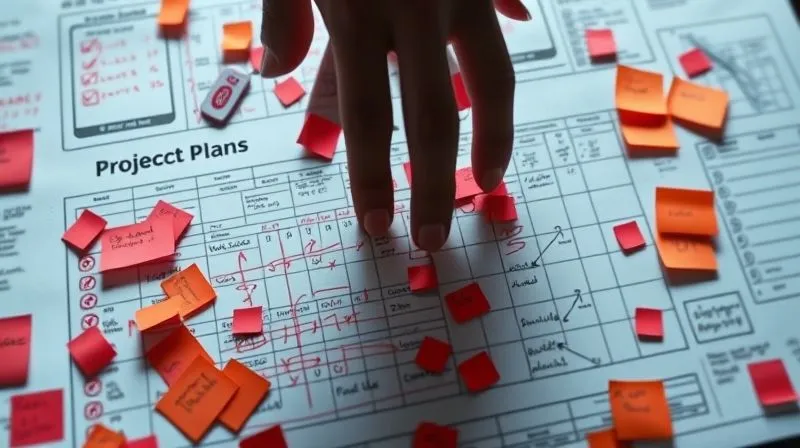
The most effective way to combat scope creep is to lay an unshakeable foundation: a meticulously defined project scope. This isn't just a formality; it's your project's North Star, guiding every decision and action. In my experience, many projects fail here, not because they lack a scope document, but because the document is vague, incomplete, or not universally understood.
A well-defined scope document, often called a Statement of Work (SOW) or Project Charter, should clearly articulate:
- Project Objectives: What are we trying to achieve?
- Deliverables: What specific outputs will be produced?
- Requirements: What are the functional and non-functional needs?
- Exclusions: Explicitly state what is NOT part of the project. This is crucial.
- Constraints: Any limitations like budget, timeline, or resources.
- Assumptions: Any factors assumed to be true for planning purposes.
Techniques for Precision:
To ensure precision, I advocate for several techniques:
- Work Breakdown Structure (WBS): Break down the project into smaller, manageable components. This visual hierarchy helps ensure no task is overlooked and clarifies the boundaries of work.
- SMART Objectives: Ensure all project objectives are Specific, Measurable, Achievable, Relevant, and Time-bound. This leaves no room for ambiguity.
- Requirements Traceability Matrix (RTM): Link each requirement back to a business objective and forward to a design component, test case, and deliverable. This ensures every requirement is necessary and accounted for.
- Scope Baseline: Once defined, this becomes the approved version of the project scope statement, WBS, and WBS dictionary. Any deviation from this baseline must go through a formal change control process.
Remember, your scope document isn't just a piece of paper; it's a living agreement. Ensure all key stakeholders review and formally sign off on it. This act of formal approval creates a shared understanding and commitment, making it much harder for informal changes to slip in later. For more insights on establishing a robust project baseline, the Project Management Institute (PMI) offers excellent resources on their website: PMI.org.
Engaging Stakeholders: Your First Line of Defense
Even the most meticulously defined scope can falter without active stakeholder engagement. Stakeholders, with their diverse needs and perspectives, are often the source of scope creep, whether intentionally or not. Therefore, managing their expectations and ensuring their continuous involvement is your first and most powerful line of defense.
I've learned that early and continuous engagement isn't just about communication; it's about co-creation and managing expectations proactively. Involve stakeholders from the outset in defining the scope. When they feel ownership over the initial definition, they are far less likely to challenge it or introduce unapproved changes later.
Techniques for Effective Stakeholder Management:
- Stakeholder Identification and Analysis: Don't just list names; understand their influence, interest, and potential impact on the project. A power/interest grid can be incredibly useful here.
- Clear Communication Plan: Establish how and when you will communicate with each stakeholder group. Tailor your message to their specific needs and concerns. Transparency is key.
- Regular Review and Feedback Sessions: Schedule recurring meetings to review progress against the defined scope. This provides a formal avenue for feedback and helps prevent informal requests from derailing the project.
- Education and Empathy: Educate stakeholders on the impact of scope changes – not just on the project, but on their own objectives. Show empathy for their evolving needs, but firmly guide them through the formal change process.
By systematically understanding and engaging your stakeholders, you transform them from potential sources of creep into allies who champion the approved scope. This proactive approach builds trust and ensures that everyone is working from the same playbook. Here's a simplified example of how you might structure stakeholder analysis:
| Stakeholder Group | Interest Level | Influence Level | Engagement Strategy |
|---|---|---|---|
| Executive Sponsor | High | High | Monthly 1:1, strategic updates, decision-making on major changes |
| End Users | High | Medium | Regular feedback sessions, UAT, progress demos |
| IT Department | Medium | High | Weekly technical syncs, resource allocation discussions |
| Marketing Team | Medium | Low | Bi-weekly email updates, ad-hoc consultations |
The Change Control Fortress: Establishing a Robust Process
Even with the most rigorous scope definition and proactive stakeholder engagement, change is inevitable. Business environments evolve, new opportunities arise, and unforeseen challenges emerge. The key isn't to prevent all change, but to manage it. This is where a robust change control process becomes your fortress against uncontrolled scope creep.
A formal change control process provides a structured, transparent mechanism for evaluating, approving, or rejecting any proposed changes to the project baseline. Without it, every 'small favor' or 'quick tweak' becomes a potential crack in your project's foundation.
Elements of an Effective Change Control Process:
- Formal Change Request (CR) Form: All proposed changes, no matter how minor, must be documented on a standardized form. This form should include the proposed change, its rationale, and the proposer.
- Impact Analysis: Before any decision, thoroughly analyze the potential impact of the change on the project's scope, schedule, budget, quality, and risks. This step is critical for informed decision-making.
- Change Control Board (CCB): Establish a designated group (e.g., project manager, key stakeholders, functional leads) responsible for reviewing and approving/rejecting change requests. This centralized authority prevents unilateral decisions.
- Approval Workflow: Define a clear approval hierarchy. Who needs to sign off? What's the threshold for executive approval versus team-level approval?
- Communication & Documentation: All approved and rejected changes, along with their rationale, must be communicated to relevant stakeholders and formally documented. Update all project baselines (scope, schedule, cost) accordingly.
- Version Control: Implement strict version control for all project documents, especially the scope statement and requirements. This ensures everyone is always working with the latest approved version.
Implementing a rigorous change control process might seem bureaucratic initially, but it quickly proves its worth by safeguarding your project's integrity. It ensures that every change is a conscious, informed decision rather than an accidental drift. For further reading on effective change management, I highly recommend exploring articles from reputable sources like the Harvard Business Review: HBR.org.
Communication: The Unsung Hero of Scope Management
In my career, I've seen complex technical challenges overcome with relative ease, yet simple communication breakdowns lead to catastrophic project failures. When it comes to managing scope creep, communication isn't just important; it's the lifeblood of prevention and control. Misunderstandings, uncommunicated assumptions, and a lack of transparency are fertile ground for creep to flourish.
Effective communication is about more than just sending emails. It's about fostering an environment of open dialogue, proactive sharing, and mutual understanding among all project stakeholders.
Strategies for Communication Excellence:
- Proactive Status Reporting: Regularly inform stakeholders about project progress, current scope, and any emerging issues. Don't wait for them to ask; anticipate their need for information.
- Visual Communication: Utilize dashboards, Gantt charts, and other visual aids to convey complex information clearly and concisely. A picture often speaks a thousand words and helps prevent misinterpretations.
- Active Listening: When stakeholders raise concerns or suggest changes, listen actively to understand the underlying need, not just the proposed solution. This allows you to address the root cause, potentially without expanding scope.
- Set Clear Expectations: From day one, communicate the project's scope, the change control process, and the implications of unapproved changes. Reinforce these messages consistently.
- Facilitate Open Dialogue: Create safe spaces for team members and stakeholders to voice concerns, ask questions, and propose ideas without fear of retribution. This can surface potential creep early.
Remember, silence is rarely golden in project management; it's often a breeding ground for assumptions and unmanaged expectations. By making communication a central pillar of your project strategy, you build a transparent environment where scope creep has fewer places to hide.
Monitoring & Adaptation: Keeping an Eye on the Horizon
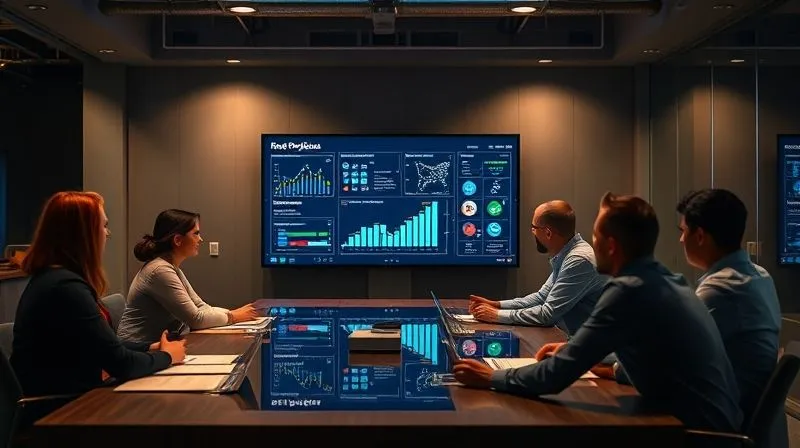
Even with the best planning and communication, projects are dynamic. The ability to continuously monitor your project's health and adapt swiftly to deviations is crucial in the fight against scope creep. Think of yourself as a ship captain: you've charted your course, but you're constantly checking the radar and adjusting to changing winds and currents.
Key Monitoring Techniques:
- Regular Scope Reviews: Schedule dedicated sessions to review the current project scope against the baseline. Involve key stakeholders to confirm alignment.
- Performance Metrics: Track key performance indicators (KPIs) related to scope, schedule, and budget. Any significant variance should trigger an investigation.
- Earned Value Management (EVM) Basics: While often seen as complex, understanding basic EVM concepts like Planned Value (PV), Earned Value (EV), and Actual Cost (AC) can provide early warnings of scope or budget issues. A Cost Performance Index (CPI) below 1.0, for instance, could indicate that more work is being done than planned for the budget spent, often a symptom of creep.
- Risk Management Integration: Continuously monitor identified risks and new emerging risks. Scope creep itself can be a risk, and early identification of its symptoms can prevent it from becoming a full-blown issue.
The goal is not just to identify creep when it happens, but to spot the early warning signs – the subtle shifts in requirements, the increasing number of informal requests, or the team working longer hours without clear justification. Early detection allows for early intervention, often through the formal change control process, before the creep becomes unmanageable.
Case Study: How Apex Solutions Tamed the 'Feature Frenzy'
Apex Solutions, a mid-sized software development firm, consistently struggled with project overruns. Their flagship product, 'NexusPro,' was perpetually late, often by months, and always over budget. The root cause? A culture of 'just one more feature' driven by client requests and internal product managers. By implementing a rigorous monitoring and adaptation framework, they achieved a remarkable turnaround.
They introduced bi-weekly scope review meetings where the project manager, lead developer, and key client representative formally reviewed progress against the approved WBS. They also started tracking a 'Scope Variance Index' – a simple metric comparing planned features to delivered features – which quickly highlighted deviations. Any request for a new feature, no matter how small, was immediately routed through their newly established Change Control Board. Within six months, NexusPro's next major release was delivered on time and 5% under budget, a first in the company's history. This success wasn't due to saying 'no' more often, but by ensuring every 'yes' was a conscious, controlled decision.
Empowering Your Team: Culture Against Creep
Ultimately, the fight against uncontrolled scope creep isn't just about processes and documents; it's deeply rooted in people and culture. A project team that feels empowered, informed, and accountable is your strongest asset. Conversely, a disempowered team, unsure of boundaries or afraid to speak up, can inadvertently facilitate creep.
Cultivating a Creep-Resistant Culture:
- Clarity of Roles and Responsibilities: Ensure every team member understands their role, their specific deliverables, and how their work contributes to the defined scope. This prevents 'stepping outside' their boundaries.
- Training and Awareness: Educate your team on what scope creep is, its impact, and the formal change control process. Empower them to identify potential creep and bring it to the project manager's attention.
- Psychological Safety: Create an environment where team members feel safe to raise concerns, ask clarifying questions, and even push back on informal requests without fear of reprisal. This is paramount for early detection.
- Celebrate Scope Adherence: Acknowledge and reward teams or individuals who proactively manage scope, stick to the plan, and successfully navigate change requests. This reinforces the desired behavior.
- Lead by Example: As a project manager or leader, you must consistently adhere to the defined scope and the change control process. If you bend the rules, your team will follow suit.
When your team is a well-oiled machine, aligned on the project's vision and empowered to protect its scope, you create a powerful internal defense mechanism against the insidious nature of creep. This cultural shift transforms reactive firefighting into proactive prevention.
Leveraging Technology: Tools for Taming the Beast
In today's complex project landscape, attempting to manage scope without the aid of technology is like trying to navigate a dense fog without radar. Modern project management tools and platforms offer invaluable capabilities to define, track, communicate, and control scope, significantly bolstering your defenses against uncontrolled scope creep.
Technological Allies Against Scope Creep:
- Project Management Information Systems (PMIS): Tools like Jira, Asana, Monday.com, or Microsoft Project provide centralized platforms for defining tasks, assigning responsibilities, tracking progress, and managing baselines. They offer a single source of truth for project data.
- Requirements Management Tools: Dedicated software (e.g., Jama Connect, IBM DOORS) helps meticulously capture, organize, trace, and manage complex requirements, ensuring they are linked to objectives and deliverables.
- Version Control Systems: For documents and code, systems like Git are indispensable. They track every change, allowing you to revert to previous versions and maintain a clear audit trail, critical for managing scope documents.
- Collaboration Platforms: Tools like Slack, Microsoft Teams, or Confluence facilitate structured communication, document sharing, and decision-making, reducing reliance on informal, untracked conversations.
- Reporting and Dashboarding Tools: Many PMIS or dedicated business intelligence tools can generate real-time dashboards showing project health, scope variance, and progress against the baseline, enabling quick identification of deviations.
While technology can't replace sound project management principles, it significantly enhances your ability to implement them consistently and efficiently. It provides the visibility and control necessary to spot creep early and act decisively. When choosing tools, prioritize those that integrate seamlessly and support your established change control processes. For a comprehensive overview of various project management software, refer to industry analysis reports from sources like Gartner: Gartner.com.

Frequently Asked Questions (FAQ)
What's the difference between scope creep and scope change? Scope creep refers to uncontrolled, unapproved additions or modifications to the project scope, often informal and without impact assessment. Scope change, on the other hand, is a formally requested, evaluated, approved, and documented modification to the project scope baseline, often accompanied by adjustments to time, cost, or resources. The key distinction is the formal process and approval.
Can some scope creep be beneficial? While uncontrolled scope creep is almost always detrimental, legitimate changes to scope can be beneficial if they arise from new market insights, technological advancements, or critical stakeholder feedback that enhances the project's value. However, these must be managed through a formal change control process, ensuring their impact is understood and approved, transforming them from 'creep' into 'controlled change.'
Who is ultimately responsible for preventing scope creep? While the project manager is typically the primary guardian of the project scope, preventing scope creep is a shared responsibility. It requires active participation from all stakeholders, including the client, project team members, and senior management. The project manager's role is to establish and enforce the processes, but everyone must adhere to them.
How do you handle a client who constantly requests changes outside the process? This requires a firm but diplomatic approach. Reiterate the agreed-upon change control process, explaining its necessity for project success (on-time, on-budget delivery). Document every informal request and gently guide them to submit a formal change request. Explain the impact of unapproved changes on their own goals (e.g., delays, increased costs). If persistent, escalate to your executive sponsor for support in reinforcing project governance.
What if the project starts with a very vague scope? A vague initial scope is a high-risk factor for scope creep. In such cases, the project manager's first priority must be to work with stakeholders to refine and clarify the scope as much as possible, perhaps using iterative or agile methodologies (e.g., creating a Minimum Viable Product - MVP). Implement more frequent review cycles and a very tight change control process from the outset, acknowledging that the initial baseline will likely need more frequent, but controlled, adjustments.
Key Takeaways and Final Thoughts
Uncontrolled scope creep is a persistent threat that can undermine even the most promising projects. However, it is not an insurmountable foe. By adopting a proactive, disciplined, and systematic approach, you can effectively stop uncontrolled scope creep from derailing project goals and ensure successful, predictable project delivery.
- Define Scope with Precision: Your project's foundation is a crystal-clear, agreed-upon scope baseline.
- Engage Stakeholders Proactively: Manage expectations and involve stakeholders throughout the project lifecycle.
- Implement Robust Change Control: Establish a formal process for evaluating and approving all scope modifications.
- Communicate Continuously: Foster transparency and open dialogue to prevent misunderstandings and informal changes.
- Monitor & Adapt: Continuously track progress, identify deviations, and adjust course as needed.
- Empower Your Team: Cultivate a culture where scope protection is a shared responsibility.
- Leverage Technology: Utilize modern tools to enhance scope management and control.
Remember, successfully managing scope isn't about rigid adherence to a static plan; it's about disciplined adaptability. It's about empowering your team, engaging your stakeholders, and utilizing robust processes to make informed decisions that keep your project aligned with its core objectives. Embrace these strategies, and you'll not only deliver projects successfully but also build a reputation for predictability and excellence in an unpredictable world. Go forth and conquer that creep!
Recommended Reading
- Mastering Global Remote Hiring: 7 Legal Pitfalls to Sidestep Now
- Unlock Success: Your Ultimate Guide to Preparing for a Business Consulting Engagement
- Unlock Explosive Revenue: How to Use Sales Pipeline Metrics for Growth?
- Safeguard Your Ideas: 5 Steps to Manage IP Risks in Open Innovation
- Unlock Your Potential: How to Develop an Inspiring Business Leadership Vision





Comments
Leave a comment below. Your email will not be published. Required fields marked with *