


How to turn raw customer data into actionable growth insights?
For over 15 years in the trenches of business analytics, I've seen countless companies collect mountains of customer data, yet struggle to derive any meaningful value from it. They invest heavily in CRM systems, data warehouses, and marketing automation, but often find themselves paralyzed by the sheer volume of information, unable to bridge the gap between 'what happened' and 'what to do next'.
This isn't just a technical challenge; it's a strategic one. The real pain point isn't a lack of data, but a lack of a clear, systematic process to transform that raw, unstructured noise into clear, actionable signals. Without this, marketing campaigns miss their mark, product development lags, and customer retention efforts fall flat, leaving valuable growth opportunities on the table.
In this definitive guide, I'll share my proven, step-by-step framework to help you navigate this complexity. You'll learn not just the 'how-to' but the 'why-to' behind each stage, equipping you with the expert insights, actionable strategies, and real-world examples needed to truly harness your customer data for tangible business growth. Let's turn your data into your most powerful strategic asset.
The Data Deluge: Understanding Your Starting Point
Before we can transform anything, we must first understand the raw material we're working with. Many businesses have data scattered across various systems, often in different formats, making a unified view nearly impossible. My first piece of advice is always to conduct a thorough data audit.
Identifying Key Data Sources
Your customer data lives everywhere: your CRM, marketing automation platform, website analytics, social media, customer service logs, transactional databases, and even offline interactions. The goal here isn't to collect *more* data, but to identify the *most relevant* data sources that speak to customer behavior, preferences, and interactions.
- CRM Systems: Customer demographics, interaction history, sales pipeline status.
- Web Analytics: Website visits, page views, time on site, conversion paths.
- Marketing Automation: Email opens, click-through rates, campaign engagement.
- Transactional Data: Purchase history, order value, frequency, product preferences.
- Customer Service Logs: Support tickets, call transcripts, common issues.
- Social Media: Brand mentions, sentiment, engagement with content.
Data Quality: The Unsung Hero
Garbage in, garbage out. This age-old adage is profoundly true in customer analytics. Poor data quality – duplicates, inaccuracies, missing values, inconsistent formats – can derail even the most sophisticated analysis. I've seen projects fail not because of flawed algorithms, but because the underlying data was fundamentally unreliable.
"Data quality isn't just a technical prerequisite; it's the bedrock of trustworthy insights. Without it, every 'actionable insight' you generate is built on quicksand."
Prioritizing data cleansing and validation from the outset will save you immeasurable headaches down the line. It ensures that the insights you derive are accurate and, crucially, lead to the right business decisions.
Phase 1: Structuring the Chaos – Data Collection & Cleansing
Once you've identified your key data sources, the next critical step is to bring them together and ensure they are clean, consistent, and ready for analysis. This is where the real work of transforming raw customer data begins.
Many organizations stumble here, either by attempting to manually stitch together disparate datasets or by overlooking the fundamental need for robust data governance. A structured approach is non-negotiable for reliable insights.
- Centralize Data: Implement a data warehouse or data lake to consolidate all relevant customer data. This provides a single source of truth, making subsequent analysis far more efficient.
- Standardize Formats: Ensure consistency in data types, naming conventions, and units across all merged datasets. For example, ensure 'California' isn't sometimes 'CA' and sometimes 'Calif.'.
- Remove Duplicates: Identify and merge duplicate customer records. This is crucial for accurate customer profiles and preventing inflated metrics.
- Address Missing Values: Decide on a strategy for handling missing data – imputation, removal, or specific flagging. The approach depends on the data type and analysis goals.
- Validate Data Accuracy: Implement checks to ensure data reflects reality. This might involve cross-referencing with external sources or setting up validation rules.
- Implement Data Governance: Establish clear policies and procedures for data collection, storage, access, and usage. This ensures ongoing data quality and compliance.
For a deeper dive into establishing robust data governance, I highly recommend exploring resources from industry leaders like Deloitte's insights on Data Governance, which emphasize its strategic importance.

Phase 2: Unearthing Patterns – Customer Segmentation & Profiling
With clean, centralized data, we can now move to the heart of customer analytics: understanding who your customers are and what drives their behavior. This is where you begin to see patterns emerge from the noise, moving beyond aggregate statistics to granular insights.
Why Segment? The Power of Personalization
Treating all customers the same is a recipe for mediocrity. Just as you wouldn't use a single marketing message for every potential lead, you shouldn't assume all existing customers have identical needs or value propositions. Segmentation allows you to divide your customer base into distinct groups based on shared characteristics, behaviors, or needs.
This enables highly personalized marketing, tailored product recommendations, and optimized customer service strategies. It's about moving from mass communication to meaningful engagement, which is a significant factor in how to turn raw customer data into actionable growth insights.
Common Segmentation Strategies
There are numerous ways to segment your customers, and the best approach often involves a combination of these methods:
- Demographic Segmentation: Age, gender, income, education, occupation.
- Geographic Segmentation: Location, region, climate.
- Psychographic Segmentation: Lifestyle, values, personality traits, interests.
- Behavioral Segmentation: Purchase history, product usage, website activity, engagement levels, loyalty. This is often the most powerful for driving growth.
- Value-Based Segmentation (RFM): Recency, Frequency, Monetary value – identifies your most valuable customers.
"Effective customer segmentation isn't about creating arbitrary groups; it's about identifying distinct cohorts that warrant unique strategic approaches to maximize their lifetime value."
Phase 3: The 'Why' Behind the 'What' – Behavioral & Predictive Analytics
Once you've segmented your customers, the next step is to delve deeper into their behaviors and, crucially, predict their future actions. This is where we transcend descriptive analytics (what happened) and move into diagnostic (why it happened) and predictive (what will happen) analytics – the true engine for actionable growth insights.
Analyzing Customer Journey & Touchpoints
Understanding the entire customer journey, from initial awareness to post-purchase support, is paramount. By mapping customer interactions across all touchpoints, you can identify pain points, moments of delight, and critical junctures where customers might churn or become advocates. Tools like path analysis and funnel analysis are invaluable here.
I've often found that seemingly small friction points in the customer journey, once identified through data, can have a disproportionately large impact on conversion rates and customer satisfaction.
Predicting Future Actions: Churn, LTV, and Next Best Offer
This is where customer analytics truly becomes proactive. By applying statistical models and machine learning to your historical data, you can predict:
- Customer Churn: Identify customers at risk of leaving before they actually do, allowing for targeted retention efforts.
- Customer Lifetime Value (CLTV): Estimate the total revenue a customer is expected to generate over their relationship with your company, informing acquisition and retention spend.
- Next Best Offer/Action: Recommend the most relevant product, service, or content to an individual customer at a specific point in time, boosting engagement and sales.
Case Study: How Connectify Boosted Customer Retention
Connectify, a mid-sized SaaS provider, was experiencing a 15% monthly customer churn rate among new users. By implementing a predictive analytics model based on early engagement metrics (login frequency, feature usage, support ticket submissions), they were able to identify at-risk users within their first 30 days. These users were then targeted with personalized onboarding assistance, proactive feature tutorials, and direct outreach from customer success managers. Within six months, their new user churn rate dropped to 8%, directly attributable to this data-driven intervention, resulting in a significant increase in recurring revenue.
For further reading on the power of predictive analytics in business, I recommend this insightful article from Harvard Business Review.
| Analytics Type | Question Answered | Example Use Case |
|---|---|---|
| Descriptive | What happened? | Monthly sales reports, website traffic summaries |
| Diagnostic | Why did it happen? | Root cause analysis of sales drop, identifying churn drivers |
| Predictive | What will happen? | Customer churn prediction, LTV forecasting, next best offer |
| Prescriptive | What should we do? | Optimizing marketing spend, personalized campaign recommendations |
Phase 4: Visualizing for Impact – Storytelling with Data
Even the most profound insights are useless if they can't be effectively communicated to decision-makers. This is where data visualization and storytelling come into play. It's not just about creating pretty charts; it's about translating complex data into clear, compelling narratives that drive understanding and action. This is a critical step in knowing how to turn raw customer data into actionable growth insights.
Beyond Bar Charts: Crafting Compelling Narratives
My advice here is to always start with the audience and the question you're trying to answer. A C-suite executive needs a different level of detail and focus than a marketing manager. The goal is to make the insights immediately digestible and relevant to their objectives.
- Know Your Audience: Tailor the complexity and level of detail to the specific stakeholders.
- Focus on Key Insights: Don't overwhelm with too much data. Highlight the most crucial findings that address the business problem.
- Use Appropriate Visualizations: Choose chart types that best represent the data and insights (e.g., trend lines for time series, scatter plots for correlations, heatmaps for density).
- Provide Context: Explain what the data means, why it's important, and what implications it has for the business.
- Call to Action: Always conclude with clear recommendations or next steps derived from the insights.

Phase 5: From Insight to Action – The Implementation Loop
An insight without action is merely an interesting observation. The true value of customer analytics lies in its ability to drive measurable business changes. This phase is about translating your data-driven discoveries into concrete strategies and experiments.
Designing A/B Tests and Experiments
Once you have an insight – for example, 'Segment X responds better to personalized email subject lines' – the next step is to test it. A/B testing is a powerful methodology for validating hypotheses and measuring the impact of your actions in a controlled environment. This allows you to quantify the uplift generated by your insights.
I've seen many companies jump straight to full-scale implementation without testing, only to find their 'insights' didn't yield the expected results. Always test, learn, and iterate.
Integrating Insights into Business Operations
For insights to truly drive growth, they must be embedded into your day-to-day operations. This means enabling sales teams with customer intelligence, informing product development with user feedback, and empowering marketing with personalized campaign strategies. It's about making data-driven decision-making a cultural norm.
- Pilot Programs: Start with small-scale tests or pilot programs to validate insights before a full rollout.
- Cross-functional Collaboration: Ensure insights are shared and understood across relevant departments (marketing, sales, product, customer service).
- Automate Where Possible: Use marketing automation, CRM, and other tools to operationalize personalized communications and offers based on insights.
- Training & Education: Equip your teams with the knowledge and tools to act on data-driven recommendations.
- Establish Feedback Loops: Create mechanisms to collect feedback on the effectiveness of implemented actions.
For best practices on running effective A/B tests, platforms like Optimizely's resources offer valuable guidance.
Measuring Success: The Feedback Loop for Continuous Growth
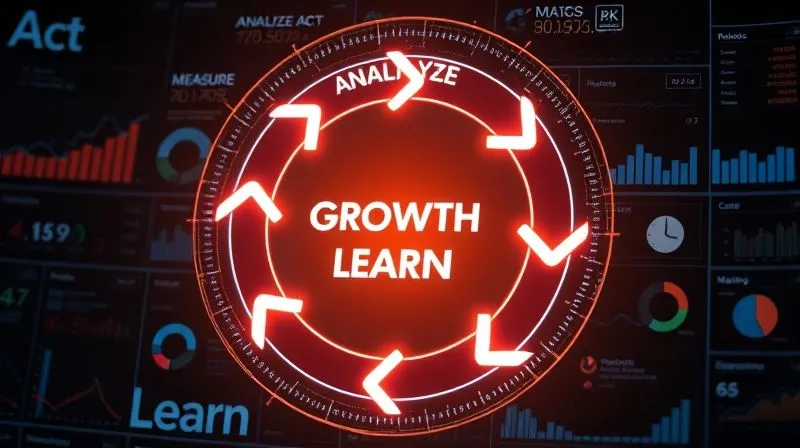
The journey of turning raw customer data into actionable growth insights isn't linear; it's a continuous loop. Once you've implemented actions based on your insights, the next critical step is to measure their impact, learn from the results, and refine your approach. This feedback loop is what drives sustainable, long-term growth.
Defining Key Performance Indicators (KPIs)
Before launching any initiative based on customer insights, clearly define the KPIs you will use to measure success. These metrics should directly reflect the intended outcome of your actions. For example, if your insight led to a personalized email campaign, KPIs might include email open rates, click-through rates, conversion rates from the email, and incremental revenue.
It's crucial that these KPIs are measurable, relevant, and tied back to specific business objectives. Without clear KPIs, it's impossible to objectively assess whether your data-driven actions are actually working.
Iterate, Learn, and Optimize
The results of your measurements will inform your next steps. Did the action yield the expected growth? If so, how can you scale it? If not, why not? This is where diagnostic analytics comes back into play – understanding the 'why' behind the results. This iterative process of insight-action-measurement-learning is the hallmark of a truly data-driven organization.
I always emphasize that failure in an experiment is not a setback; it's a learning opportunity. Each iteration brings you closer to optimal strategies for your customer base.
| Business Goal | Relevant KPIs |
|---|---|
| Increase Customer Retention | Churn Rate, Customer Lifetime Value (CLTV), Repeat Purchase Rate, Net Promoter Score (NPS) |
| Improve Customer Acquisition | Customer Acquisition Cost (CAC), Conversion Rate, Lead-to-Customer Rate, Marketing ROI |
| Boost Customer Engagement | Website Engagement (Time on Site, Pages/Session), Email Open/Click Rates, Feature Adoption Rate, Social Media Engagement |
| Enhance Product Development | Feature Usage Rate, User Satisfaction (CSAT), Bug Report Frequency, Product Adoption Rate |
Overcoming Common Pitfalls: My Expert Advice
Even with a solid framework, the path to leveraging customer data for growth isn't without its challenges. I've observed a few recurring pitfalls that can derail even the most well-intentioned efforts.
Avoiding 'Analysis Paralysis'
The sheer volume of data can be overwhelming, leading to endless analysis without ever taking action. This 'analysis paralysis' is a common trap. My advice: start small, focus on one key business question, and aim for 'good enough' insights to get started. Perfect is the enemy of good when it comes to data-driven action.
Cultivating a Data-Driven Culture
Ultimately, the success of your customer analytics efforts hinges on people and culture. If your organization doesn't value data, or if teams are siloed, even the best insights will gather dust. Foster curiosity, encourage experimentation, and celebrate data-driven successes.
"A truly data-driven culture isn't just about having the right tools; it's about embedding a mindset where every decision, big or small, is informed by evidence."
Building this culture requires leadership buy-in, cross-functional training, and a commitment to continuous learning. For strategies on fostering such an environment, articles on Forbes on building a data-driven culture offer excellent guidance.
Frequently Asked Questions (FAQ)
Q: What's the biggest mistake companies make when trying to use customer data? The most common mistake I've observed is collecting data without a clear hypothesis or business question in mind. Many companies collect everything they can, then try to figure out what to do with it. This often leads to overwhelm and a lack of focus. Always start with a business problem you're trying to solve or a question you want to answer.
Q: How important is data privacy and compliance in customer analytics? Extremely important. With regulations like GDPR and CCPA, ensuring data privacy and compliance isn't just a legal obligation, but a cornerstone of customer trust. Implement robust data governance, anonymize data where possible, and always be transparent with your customers about how their data is used. Ethical data handling enhances your brand reputation and mitigates significant risks.
Q: Do I need a team of data scientists to implement these steps? While a dedicated data science team can accelerate advanced analytics, you don't necessarily need one to start. Many steps, like data cleansing, basic segmentation, and visualization, can be handled by business analysts with strong analytical skills and access to modern BI tools. For more complex predictive modeling, external consultants or specialized tools can bridge the gap until you build internal capabilities. The key is to start somewhere.
Q: How long does it typically take to see results from customer analytics? The timeline varies widely depending on the complexity of your data, the maturity of your analytics infrastructure, and the specific insights you're pursuing. Simple segmentation and targeted campaigns might show results within weeks or a few months. More complex predictive models for churn or LTV might take 6-12 months to develop, validate, and integrate for measurable impact. The important thing is to set realistic expectations and focus on incremental improvements.
Q: What's the role of AI and Machine Learning in this process? AI and Machine Learning are powerful tools that can significantly enhance various stages of customer analytics, particularly in phases 3 (Behavioral & Predictive Analytics) and 5 (Implementation). They can automate data cleansing, identify subtle patterns in large datasets, build sophisticated predictive models (e.g., for churn or next best offer), and even personalize customer interactions at scale. However, they are tools, not magic wands; they require clean data, clear objectives, and human expertise to be truly effective.
Key Takeaways and Final Thoughts
- Data Quality is Paramount: Without clean, reliable data, your insights will be flawed. Prioritize data governance and cleansing.
- Segmentation Drives Personalization: Understand your diverse customer base to tailor strategies for maximum impact.
- Predictive Analytics Unlocks Proactive Growth: Move beyond 'what happened' to 'what will happen' to anticipate customer needs and risks.
- Visualize for Clarity: Translate complex data into compelling stories that resonate with stakeholders and drive action.
- Actionable Insights Require Implementation & Measurement: Test your hypotheses, integrate insights into operations, and continuously measure performance to refine your strategies.
- Cultivate a Data-Driven Culture: Empower your teams to use data, fostering curiosity and experimentation.
The journey to turn raw customer data into actionable growth insights is an ongoing one, requiring dedication, systematic effort, and a willingness to learn and adapt. But I can assure you, from years of experience, the rewards are immense. By embracing this framework, you won't just be collecting data; you'll be building a powerful engine for sustainable growth, driving smarter decisions, and forging deeper, more profitable relationships with your customers. Start today, and unlock the true potential hidden within your data.
Recommended Reading
- Unlock Leadership Resilience: How Executive Coaching Conquers Burnout
- 7 Proven Ways to Minimize FX Risk in Large International Payments
- Pinpoint & Solve Operational Bottlenecks: A Data-Driven Framework
- Scale Influencer Marketing Authentically: 7 Proven Strategies
- Navigate Unpopular Strategic Changes: 7 Steps to Prevent Team Backlash





Comments
Leave a comment below. Your email will not be published. Required fields marked with *