


My B2B Leads Are Plentiful But Don't Convert To Sales: 7 Fixes for Conversion Gaps
For over 18 years in the trenches of B2B business development and sales, I've seen countless companies invest heavily in lead generation, only to watch their sales teams struggle to close deals. It's a frustrating, often bewildering scenario: the CRM is bursting with prospects, marketing reports boast impressive lead volumes, yet the revenue needle barely moves. This isn't just a minor hiccup; it's a fundamental misalignment that can cripple growth and demoralize an entire organization.
The problem isn't usually a lack of effort or even a poor product; it's a systemic breakdown in the journey from lead capture to closed-won. You're bringing people to the party, but they're not staying for dinner, let alone signing up for the membership. This indicates deeper issues related to targeting, qualification, engagement, and sales execution that demand a rigorous, expert-led diagnosis.
In this definitive guide, I'll walk you through seven critical areas where your B2B leads are likely leaking out of your sales funnel. We'll explore actionable frameworks, real-world strategies, and data-driven insights to help you identify the root causes of your conversion woes and implement effective, sustainable solutions. Prepare to transform your plentiful leads into profitable sales.
1. The Root Cause: Misaligned ICP and Buyer Persona
The first, and often most overlooked, reason why your B2B leads are plentiful but don't convert to sales is a fundamental mismatch between who you're attracting and who you can actually serve successfully. Generating a high volume of leads from a broad demographic might look good on paper, but if those leads aren't a good fit for your solution, they're just noise.
Understanding Your Ideal Customer Profile (ICP)
Your Ideal Customer Profile (ICP) defines the type of company that would gain the most value from your product or service, and in return, provide the most value to your business. It's not about individual buyers yet, but about the organizational characteristics. Neglecting this step means you're casting too wide a net, catching everything from minnows to sharks when you only want tuna.
"If you're marketing to everyone, you're marketing to no one." - Seth Godin. This rings especially true in B2B where precision targeting is paramount.
To define your ICP effectively, consider these factors:
- Industry: Which sectors benefit most from your offering?
- Company Size: Revenue, employee count, market share.
- Geographic Location: Where are your best customers located?
- Budget: What is their typical budget range for solutions like yours?
- Pain Points: What specific, critical problems do they face that your solution solves?
- Technology Stack: Do they use complementary or conflicting technologies?
- Growth Trajectory: Are they growing, stable, or declining?
Developing Granular Buyer Personas
Once you've nailed your ICP, you need to understand the individuals within those organizations. Buyer personas are semi-fictional representations of your ideal customers based on real data and some educated speculation about demographics, behavior patterns, motivations, and goals. If your sales team doesn't understand the specific challenges, aspirations, and decision-making processes of their contacts, their pitches will fall flat.

Here’s how to develop robust buyer personas:
- Conduct Interviews: Talk to existing customers, lost prospects, and internal sales/support teams.
- Analyze Data: Use CRM data, web analytics, and social media insights to understand behavior.
- Identify Key Demographics: Job title, department, seniority, company size (from ICP).
- Uncover Psychographics: Goals, challenges, motivations, objections, preferred communication channels, decision-making process.
- Create a Story: Give your persona a name, a background, and a day-in-the-life narrative.
Actionable Step: Review your current lead sources against your refined ICP and buyer personas. Are you attracting the right companies and individuals? Adjust your marketing campaigns, ad targeting, and content strategy to focus on quality over sheer volume. According to a Forbes article on B2B personalization, understanding your audience deeply is paramount for conversion.
2. Weak Lead Qualification: Separating the Wheat from the Chaff
Even if your marketing efforts are attracting high-quality leads, the next common pitfall is inadequate qualification. Sales teams often spend precious time chasing leads that were never truly ready to buy, or simply don't have the budget, authority, need, or timeline (BANT) to become a customer. This leads to wasted effort, pipeline bloat, and the perception that "my B2B leads are plentiful but don't convert to sales."
Implementing a Robust Scoring System
A lead scoring system assigns points to leads based on their demographic information (e.g., job title, company size matching ICP) and their engagement behavior (e.g., website visits, content downloads, email opens). This helps prioritize leads, ensuring your sales team focuses on those most likely to convert.
Consider these elements for your scoring model:
- Fit: How closely does the lead match your ICP and buyer persona? (e.g., job title, industry, company size)
- Engagement: How actively is the lead interacting with your content and brand? (e.g., whitepaper downloads, webinar attendance, pricing page visits)
- Recency/Frequency: How recent and frequent are their interactions?
- Negative Actions: Deduct points for irrelevant actions (e.g., unsubscribing from emails, visiting career pages).
The BANT, MEDDIC, and SCOTS Frameworks
While lead scoring helps prioritize, sales qualification frameworks provide a structured approach for sales reps to assess a lead's genuine potential. These aren't just acronyms; they are powerful tools for deep discovery.
| Framework | Key Elements | Focus |
|---|---|---|
| BANT | Budget, Authority, Need, Timeline | Basic qualification, often used early in the sales cycle. |
| MEDDIC | Metrics, Economic Buyer, Decision Criteria, Decision Process, Identify Pain, Champion | Enterprise sales, complex deals, understanding the buyer's internal landscape. |
| SCOTS | Solution, Competition, Originality, Timeline, Size | Competitive analysis, understanding the unique value proposition and urgency. |
Actionable Step: Train your sales team rigorously on one or more of these qualification frameworks. Integrate qualification questions into your discovery calls. If a lead doesn't meet critical criteria, move them to a nurturing track rather than continuing to pursue a dead end. This ensures that when you say "my B2B leads are plentiful," you're referring to *qualified* leads.
3. Ineffective Lead Nurturing: The Silent Killer of Conversions
Even perfectly qualified leads rarely convert on the first touch. B2B sales cycles are long and complex, often involving multiple stakeholders and extensive research. If your nurturing strategy is weak or non-existent, those valuable leads will simply go cold, reinforcing the feeling that my B2B leads are plentiful but don't convert to sales.
Crafting a Multi-Touchpoint Nurturing Journey
Lead nurturing is about building relationships and trust over time, providing value at each stage of the buyer's journey. It's a strategic sequence of interactions designed to educate, engage, and guide prospects towards a purchase decision. A robust nurturing strategy isn't just a series of emails; it's a holistic approach.
- Email Sequences: Drip campaigns tailored to specific personas and their stage in the funnel.
- Content Marketing: Blog posts, whitepapers, case studies, webinars that address their pain points.
- Personalized Outreach: Sales reps reaching out with relevant insights, not just sales pitches.
- Retargeting Ads: Display ads that remind prospects of your solution after they've visited your site.
- Social Media Engagement: Interacting with prospects on platforms like LinkedIn.
Content Personalization and Value Delivery
Generic content is ignored. Personalized content, however, resonates deeply. Leverage the data from your ICP and buyer personas to deliver content that speaks directly to their industry, role, challenges, and goals. Focus on providing genuine value, solving micro-problems, and demonstrating expertise, rather than constantly pushing your product.

Actionable Step: Map out your buyer's journey and identify content gaps for each stage. Create segmented nurturing tracks based on lead source, persona, and engagement level. Automate as much as possible, but ensure there's a human touch point at critical junctures. According to HubSpot's guide on lead nurturing, companies that excel at lead nurturing generate 50% more sales-ready leads at 33% lower cost.
Case Study: ElevateTech's Nurturing Success
ElevateTech, a B2B SaaS provider for logistics, struggled with a high volume of demo requests that rarely converted. Their sales team felt that "my B2B leads are plentiful but don't convert to sales." Upon analysis, we discovered their nurturing was non-existent between the initial inquiry and the demo. We implemented a 5-step automated email sequence that delivered industry insights, customer testimonials, and a short video explaining their unique value proposition. This sequence was triggered immediately after a demo request. Within three months, their demo-to-opportunity conversion rate improved by 40%, and their sales cycle shortened by two weeks. The key was providing continuous, relevant value, not just waiting for the demo.
4. Sales Process Breakdowns: Leaks in Your Funnel
Even with qualified and nurtured leads, a poorly defined or inconsistently executed sales process can be a massive conversion killer. If your sales team is improvising, or if there are critical steps missing, leads will inevitably fall through the cracks. This is where the complaint "my B2B leads are plentiful but don't convert to sales" often finds its most frustrating manifestation.
Mapping Your Current Sales Process
You can't fix what you don't understand. The first step is to meticulously map out your existing sales process from the moment a lead is qualified to the point of a closed deal. This should involve input from your sales team, sales managers, and even marketing.
Consider these stages:
- Lead Qualification
- Initial Outreach / Discovery Call
- Needs Assessment / Deep Dive
- Solution Presentation / Demo
- Proposal Submission
- Negotiation
- Closing
- Onboarding Handover
Identifying Friction Points and Drop-Offs
Once you have your process mapped, analyze where leads are consistently stalling or dropping out. Your CRM data should be invaluable here. Look for:
- Stage-to-Stage Conversion Rates: Which stages have unusually low conversion?
- Time in Stage: Are leads getting stuck in particular stages for too long?
- Common Objections: What are the recurring reasons for lost deals at each stage?
- Sales Rep Variance: Are some reps performing significantly better or worse at certain stages?
"A sales process is a series of repeatable steps that a sales team takes to move a prospect from an early stage of awareness to a closed customer." - This definition from McKinsey & Company underscores the need for structure and repeatability.
Actionable Step: Standardize your sales process. Create playbooks for each stage, outlining best practices, required actions, and success metrics. Implement regular pipeline reviews to identify and address stalled opportunities. Ensure your CRM accurately reflects your sales process and mandates specific actions at each stage to prevent shortcuts or missed steps.
5. Sales Team Skill Gaps and Inconsistent Messaging
Even with the best leads and a well-defined process, human error and skill deficiencies can derail conversions. If your sales team lacks the necessary skills or delivers inconsistent messaging, prospects will quickly lose interest or trust. This is a direct contributor to the sentiment that "my B2B leads are plentiful but don't convert to sales."
Training for Consultative Selling
Today's B2B buyer doesn't want to be sold to; they want to be advised. Sales professionals need to transition from product pushers to trusted consultants. This requires a shift in skills:
- Active Listening: Truly understanding the prospect's challenges, not just waiting to speak.
- Discovery Skills: Asking insightful, open-ended questions to uncover deeper needs and motivations.
- Problem-Solving: Positioning your solution as a direct answer to their specific problems.
- Objection Handling: Addressing concerns empathetically and effectively, turning them into opportunities.
- Value Articulation: Clearly communicating the ROI and unique benefits, not just features.
Ensuring Consistent Value Proposition Delivery
Your marketing team spends significant effort crafting a compelling value proposition. If sales reps are delivering different messages, or worse, unsure of the core value, it creates confusion and erodes credibility. Every interaction should reinforce a consistent, clear, and compelling message about why your solution is the best choice.
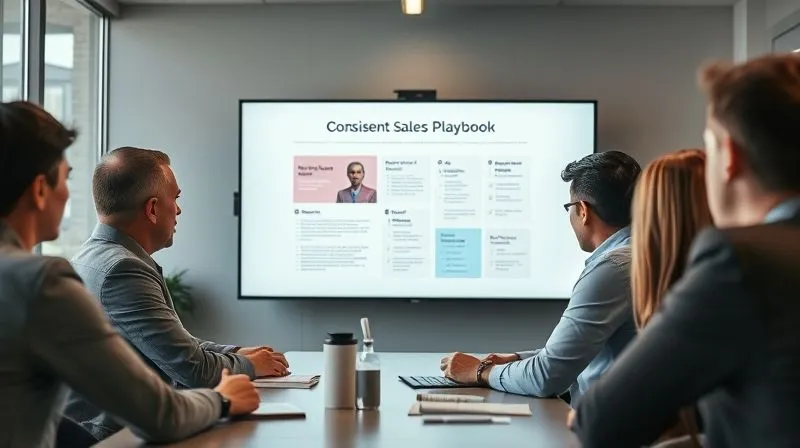
| Skill Area | Current Level | Training Priority | Resources |
|---|---|---|---|
| Active Listening | Developing | High | Role-play exercises, call recordings review |
| Discovery Questions | Proficient | Medium | Advanced questioning techniques workshop |
| Value Articulation | Inconsistent | High | Value proposition workshops, case study practice |
| Objection Handling | Developing | High | Common objections playbook, peer coaching |
Actionable Step: Implement continuous sales training programs focused on consultative selling skills. Develop a centralized "sales enablement" library with battle cards, objection handling guides, and approved messaging. Conduct regular role-playing exercises and call reviews to ensure consistency and identify areas for improvement. As noted by Harvard Business Review, sales enablement is crucial for modern sales effectiveness.
6. Neglecting Post-Lead Engagement and Follow-Up Strategy
One of the most common reasons why my B2B leads are plentiful but don't convert to sales is simply a lack of persistent, value-driven follow-up. Sales reps often give up too soon, or their follow-ups are generic and uninspiring. In the busy B2B world, persistence, coupled with relevant value, is key.
The Power of Persistence and Value-Driven Follow-Up
The average B2B sale requires multiple touchpoints – often 8 to 12 or more – before a deal closes. Many sales reps abandon leads after just a few attempts. The key is not just persistence, but *intelligent* persistence. Every follow-up should add value, provide a new insight, or refer back to a previous conversation point.
- Vary Your Channels: Don't just send emails. Mix in phone calls, LinkedIn messages, and even personalized video messages.
- Offer New Insights: Share a relevant article, a new case study, or a piece of industry data.
- Refer Back to Previous Conversations: "Following up on our discussion about X, I thought you might find Y useful..."
- Provide a Clear Next Step: Always end with a low-friction call to action.
Leveraging CRM for Smart Reminders and Insights
Your CRM isn't just a database; it's a powerful tool for managing follow-up. Utilize its features to set reminders, track interactions, and automate certain tasks. A well-maintained CRM provides a complete history of every interaction, allowing reps to pick up conversations seamlessly and personalize their outreach.
Actionable Step: Develop a structured follow-up cadence with a minimum number of touchpoints over a defined period. Train your team to use CRM effectively for scheduling and logging interactions. Implement "breakup emails" for leads that go completely cold, offering a final piece of value before archiving them for future re-engagement campaigns. This ensures that no valuable lead is left behind simply due to poor follow-up.
7. Data Blind Spots: Measuring What Truly Matters
Finally, if you're still saying "my B2B leads are plentiful but don't convert to sales," it's possible you're looking at the wrong metrics or not analyzing your data deeply enough. Focusing solely on lead volume can mask critical issues further down the funnel. Data should be your compass, guiding your optimization efforts.
Key Metrics Beyond Lead Volume
While lead volume is important, these metrics provide a clearer picture of your conversion health:
- Lead-to-SQL Conversion Rate: The percentage of raw leads that become Sales Qualified Leads.
- SQL-to-Opportunity Conversion Rate: The percentage of SQLs that progress to a sales opportunity.
- Opportunity-to-Win Rate: The percentage of opportunities that close as won deals.
- Average Sales Cycle Length: How long it takes to close a deal from first contact.
- Customer Acquisition Cost (CAC): The total cost of sales and marketing divided by new customers.
- Churn Rate: How many customers you lose over a period (indicating long-term fit and value).
A/B Testing and Iterative Optimization
Business development is not a "set it and forget it" endeavor. It requires continuous testing, analysis, and refinement. A/B test different elements of your sales process, from email subject lines and call scripts to demo presentations and proposal structures. Use the data from these tests to make informed decisions and iteratively improve your conversion rates.

"What gets measured gets managed." - A timeless adage that perfectly applies to sales and marketing. Ensure you have the right metrics in place.
Actionable Step: Implement a robust analytics framework that tracks key conversion metrics across your entire sales funnel. Hold regular cross-functional meetings between marketing and sales to review performance, identify bottlenecks, and brainstorm solutions. Foster a culture of continuous improvement, where experimentation and learning are encouraged. This data-centric approach will move you past merely saying "my B2B leads are plentiful but don't convert to sales" to understanding *why* and *how* to fix it.
Frequently Asked Questions (FAQ)
Question: How quickly should I expect to see results after implementing these changes? The timeline for results can vary significantly based on the depth of your existing issues and the complexity of your sales cycle. Minor adjustments to qualification or nurturing might show improvements within a quarter. Overhauling your ICP, sales process, and team skills could take 6-12 months to yield substantial, sustainable gains. Consistency and diligent tracking are key to observing progress.
Question: Is it better to focus on lead quality or lead quantity first? If your primary complaint is "my B2B leads are plentiful but don't convert to sales," then your immediate focus should be on lead quality. Generating more low-quality leads will only exacerbate the problem. Once your qualification and conversion processes are optimized for quality, you can then strategically scale lead generation efforts.
Question: What's the biggest mistake B2B companies make when leads aren't converting? The biggest mistake is often blaming the sales team or simply generating more leads without diagnosing the underlying systemic issues. It's rarely a single point of failure but rather a combination of misaligned strategy, poor process, and skill gaps across the entire lead-to-revenue funnel. A holistic diagnostic approach is essential.
Question: How can I get my marketing and sales teams to work better together on this issue? Foster open communication and shared goals. Implement regular "smarketing" meetings to discuss lead quality, conversion rates, and feedback from the field. Establish a Service Level Agreement (SLA) between marketing (for lead quantity/quality) and sales (for follow-up/conversion). Shared CRM access and joint training initiatives can also bridge the gap.
Question: My sales team says the leads are "bad." How do I verify this claim? Don't just take their word for it. Analyze the data. Look at the lead sources for the "bad" leads. Are they converting well for other reps? Do they align with your ICP? Conduct "listening sessions" where sales and marketing review actual lead interactions and call recordings together to objectively assess lead quality and identify any misinterpretations or communication breakdowns.
Key Takeaways and Final Thoughts
The frustration of having plentiful B2B leads that don't convert to sales is a common, yet solvable, challenge. It's a clear signal that your lead generation efforts are effective, but there are critical breakdowns in your conversion machinery. By systematically addressing the seven areas we've discussed, you can transform your pipeline from a leaky sieve into a powerful engine for growth.
- Align your ICP and Buyer Personas: Ensure you're attracting the right prospects.
- Strengthen Lead Qualification: Prioritize and focus on genuinely viable opportunities.
- Master Lead Nurturing: Build relationships and deliver continuous value.
- Optimize Your Sales Process: Eliminate friction and standardize best practices.
- Empower Your Sales Team: Train for consultative selling and consistent messaging.
- Refine Follow-Up Strategies: Be persistently valuable, not just persistent.
- Embrace Data-Driven Decisions: Measure the right metrics and iterate constantly.
Remember, success in B2B business development isn't just about filling the top of the funnel; it's about meticulously optimizing every stage to ensure those valuable leads translate into loyal customers and sustained revenue. Take these insights, apply them diligently, and watch your conversion rates soar. The solution to "my B2B leads are plentiful but don't convert to sales" lies in proactive, data-informed, and expert-driven execution.
Recommended Reading
- Navigating High-Risk Markets: 7 Strategies for Untapped Global Success
- Mastering Global Success: How to Develop Effective Global Leadership Strategies?
- How Can Businesses Respect Human Rights? The Ultimate Guide
- Unlock the Secrets: Mastering Your Master Franchise Agreement Terms
- Breach of Shareholder Agreement? 5 Steps to Enforce It Now





Comments
Leave a comment below. Your email will not be published. Required fields marked with *