


Optimizing Post-Purchase Customer Experience in E-commerce
Ever wondered why some customers become loyal advocates for a brand, making repeat purchases and spreading positive word-of-mouth, while others disappear after their very first transaction?
The truth is, many e-commerce businesses pour significant resources into attracting new customers, focusing heavily on pre-purchase marketing, website conversion, and the initial 'buy now' click. However, they often neglect the equally, if not more, critical phase that begins immediately after a purchase: the post-purchase customer experience. This oversight leaves a massive opportunity on the table for building lasting relationships and driving sustainable growth.
This comprehensive guide will unravel the secrets to transforming your post-purchase journey into a powerful engine for customer retention, brand loyalty, and sustained growth. By the end of this reading, you will understand not just the 'what' but the 'why' and 'how' of creating a delightful post-purchase experience that converts one-time buyers into lifelong customers.
Why Post-Purchase Experience is Your Secret Weapon for E-commerce Growth
In today's hyper-competitive e-commerce landscape, simply making a sale is no longer enough. The real battle for market share and customer loyalty is won in the moments following the transaction. The post-purchase experience directly impacts customer satisfaction, retention, and ultimately, your bottom line.
Beyond the Transaction: Building Lasting Relationships
Think of a purchase not as an endpoint, but as the beginning of a relationship. How a brand treats a customer after they've handed over their money speaks volumes about its values and commitment. A seamless, delightful post-purchase journey reinforces the customer's decision, validates their trust, and sets the stage for future interactions. It's about nurturing that initial spark into a roaring flame of loyalty.
According to a study by Forrester, customer experience leaders saw nearly 5x higher revenue growth than CX laggards. This highlights the profound impact of a well-orchestrated customer journey, extending far beyond the point of sale.
The Link Between CX and Customer Lifetime Value (CLV)
The higher your customer lifetime value (CLV), the more profitable your business becomes. CLV is directly influenced by customer retention and repeat purchases. A superior post-purchase experience significantly boosts both. When customers feel valued, informed, and supported after their purchase, they are far more likely to return, make additional purchases, and even recommend your brand to others. This organic growth through existing customers is often far more cost-effective than constantly acquiring new ones.
Optimizing post-purchase customer experience in e-commerce is not just a nice-to-have; it's a strategic imperative for long-term profitability.
The Anatomy of a Stellar Post-Purchase Journey
A truly exceptional post-purchase experience is a carefully orchestrated sequence of touchpoints designed to inform, delight, and reassure the customer. It covers everything from order confirmation to post-delivery follow-ups.
Order Confirmation and Tracking: Setting Expectations
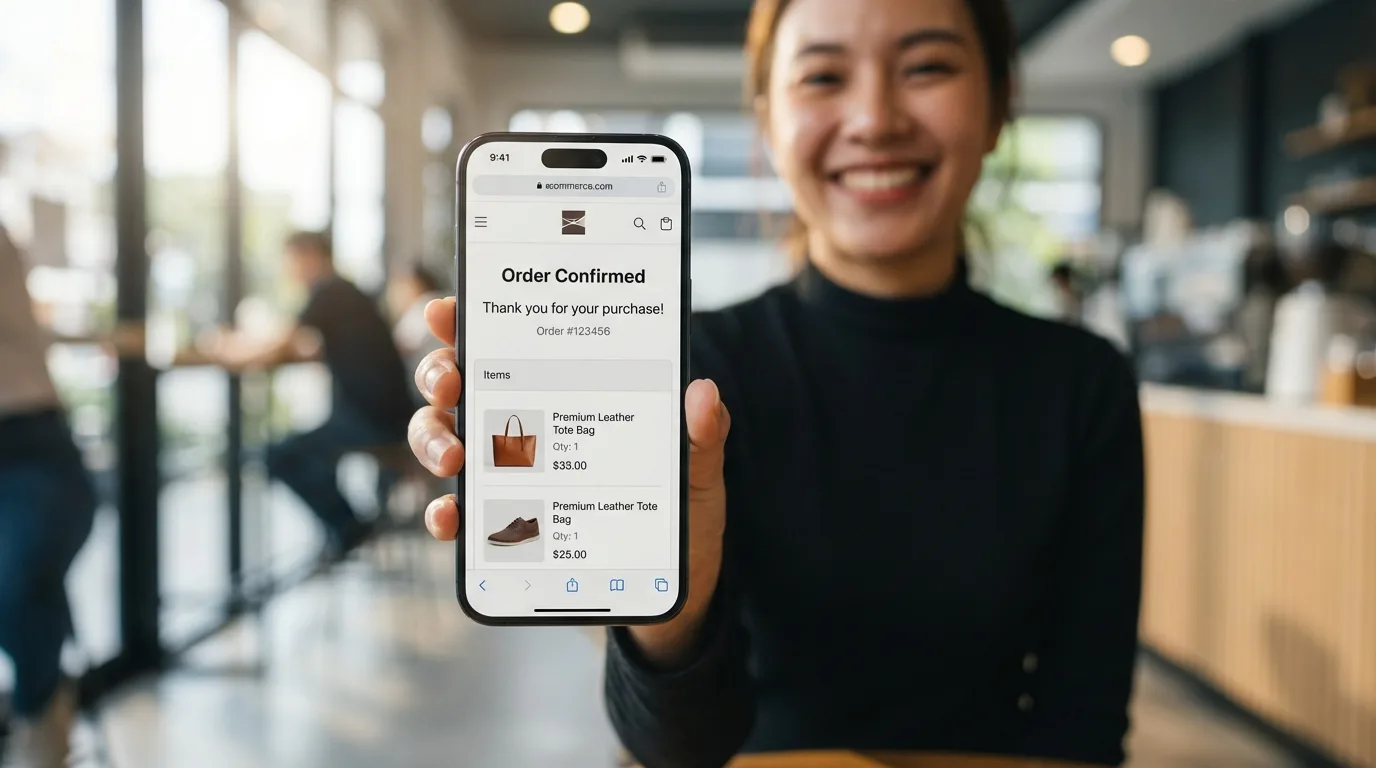
The moment a customer clicks 'purchase', anxiety can set in. Did it go through? When will it arrive? A prompt, clear, and detailed order confirmation email is crucial. It should include:
- Order number and summary: All items purchased, quantities, and total cost.
- Estimated delivery date: Be realistic and err on the side of caution.
- Tracking link: A prominent, easy-to-find link to track the shipment in real-time.
- Contact information: Clear ways to reach customer support if needed.
Beyond the initial email, consider sending proactive updates at key stages: order shipped, out for delivery, and delivered. This transparency builds trust and reduces customer inquiries.
Packaging and Unboxing: The Physical Touchpoint
For physical products, the unboxing experience is a powerful, tangible extension of your brand. It's an opportunity to create a memorable moment that goes beyond simply protecting the product.
- Branded packaging: Custom boxes, tissue paper, and stickers reinforce your brand identity.
- Personalized touches: A handwritten note, a small complimentary sample, or a unique insert can make a customer feel special.
- Product presentation: Ensure the product itself is neatly and attractively presented within the package.
- Sustainability: Many customers appreciate eco-friendly packaging, aligning with their values.
A well-executed unboxing experience can turn a simple delivery into shareable content, fostering organic social media buzz.
Delivery and Fulfillment: The Moment of Truth
This is where expectations meet reality. Seamless delivery is paramount. Any hiccups here can quickly sour the entire experience. Key considerations include:
- Reliable shipping partners: Choose carriers known for their efficiency and customer service.
- Delivery options: Offer choices like standard, expedited, or even local pickup if applicable.
- Clear communication: If delays occur, communicate them proactively and provide updated timelines.
- Proof of delivery: Ensure a smooth handover and confirmation.
For more insights on optimizing delivery, resources like the Shopify shipping guide offer comprehensive advice on fulfillment strategies.
Proactive Communication: Keeping Customers Informed and Engaged
Silence after a purchase can be deafening. Proactive and personalized communication is key to maintaining engagement and addressing potential issues before they escalate.
Personalized Updates: Beyond Generic Emails
Automated emails are great, but personalization elevates them. Use customer data to tailor messages. For example:
- Product care instructions: Send a follow-up email with tips on how to get the most out of their specific product.
- Related product recommendations: Based on their purchase history, suggest complementary items they might love.
- Loyalty program invitations: Encourage enrollment in your loyalty program after their first successful purchase.
- Educational content: Share blog posts or videos relevant to their new product.
This shows you understand their needs and care about their experience beyond the initial transaction.
Soliciting Feedback: The Voice of the Customer
Actively ask for feedback after delivery. This demonstrates that you value their opinion and are committed to continuous improvement. Common methods include:
- Post-purchase surveys: Short, targeted surveys sent a few days after delivery.
- Product reviews: Encourage customers to leave reviews on your website or third-party platforms.
- Net Promoter Score (NPS) surveys: A simple 'How likely are you to recommend us?' question.
Critically, don't just collect feedback; analyze it and act upon it. This closes the loop and shows customers their input matters.
Handling Issues Gracefully: Turning Problems into Opportunities
Mistakes happen. How you handle them defines your brand. A problem, if resolved efficiently and empathetically, can actually strengthen customer loyalty. Key principles:
- Responsiveness: Address issues quickly.
- Empathy: Acknowledge their frustration.
- Solution-oriented: Focus on resolving the problem to their satisfaction.
- Proactive compensation: If appropriate, offer a discount or credit for future purchases.
A negative experience turned positive can be a powerful testament to your commitment to customer satisfaction. According to a Statista report, poor customer service is a leading reason for customer churn.
Leveraging Technology for Seamless Post-Purchase CX
Technology is an invaluable ally in optimizing post-purchase customer experience in e-commerce. It enables personalization at scale, automation of routine tasks, and efficient problem resolution.
AI-Powered Chatbots and Self-Service Portals
Many common post-purchase queries (e.g., 'Where is my order?') can be handled by AI chatbots or comprehensive FAQ sections and self-service portals. This provides instant answers to customers 24/7, reducing the burden on your customer service team and improving resolution times.
CRM Systems: A Unified View of the Customer
A robust Customer Relationship Management (CRM) system is essential. It centralizes all customer data – purchase history, interactions, preferences, and feedback – giving your team a 360-degree view. This enables highly personalized communication and more effective problem-solving, as agents have full context for every interaction.
Automation Tools for Follow-ups and Surveys
Marketing automation platforms can schedule and send personalized follow-up emails, product review requests, birthday messages, and re-engagement campaigns based on customer behavior and purchase history. This ensures consistent communication without manual effort, enhancing the overall post-purchase journey.
Transforming Returns and Exchanges into Positive Interactions
Returns are an inevitable part of e-commerce. Instead of viewing them as a loss, see them as another opportunity to provide excellent customer service and potentially salvage a sale.
Streamlined Processes: Simplicity is Key
Make the returns process as easy and intuitive as possible. Complicated forms, obscure instructions, or hidden fees will only frustrate customers. Provide clear, step-by-step instructions, pre-paid shipping labels, and multiple return options (e.g., mail, in-store drop-off).
Clear Policies and Proactive Communication
Your returns policy should be easy to find, understand, and fair. Proactively communicate return windows and conditions. If a return is initiated, keep the customer updated on its status (received, refunded, exchanged). Transparency builds trust, even when a transaction isn't going as planned.
Turning Returns into Future Sales
Even if a customer returns an item, it doesn't mean they're lost forever. Offer exchanges for different sizes or products. Provide store credit instead of a direct refund, encouraging them to browse your other offerings. A positive return experience can lead to a future purchase, demonstrating the power of optimizing post-purchase customer experience in e-commerce even in challenging scenarios.
Building Community and Fostering Loyalty Post-Purchase
The post-purchase phase is ideal for transforming customers into a community and driving deep loyalty.
Exclusive Content and Loyalty Programs
Reward repeat customers with exclusive access to content, early product launches, special discounts, or tiered loyalty programs. This makes them feel like VIPs and incentivizes continued engagement. A well-designed loyalty program can significantly boost CLV.
User-Generated Content (UGC) and Reviews
Encourage customers to share their experiences and products on social media using a branded hashtag. Feature their content on your website or social channels. Positive UGC acts as powerful social proof, attracting new customers while deepening the connection with existing ones. Similarly, showcasing authentic product reviews builds trust.
Community Forums and Social Engagement
Consider creating a community forum where customers can share tips, ask questions, and interact with each other and your brand. Engaging with customers on social media, responding to comments, and running interactive campaigns also fosters a sense of belonging and strengthens brand affinity.
Measuring Success: Key Metrics for Post-Purchase Optimization
To truly understand the impact of your efforts in optimizing the post-purchase experience, you need to track relevant metrics.
Customer Satisfaction (CSAT) and Net Promoter Score (NPS)
These are direct measures of how happy your customers are. CSAT (typically on a scale of 1-5 or 1-10) measures satisfaction with specific interactions or the overall experience. NPS (on a scale of 0-10) gauges how likely customers are to recommend your brand, categorizing them as Promoters, Passives, or Detractors.
Repeat Purchase Rate and Churn Rate
These metrics directly reflect customer loyalty. A high repeat purchase rate indicates success in retaining customers, while a low churn rate (customers who stop buying from you) signifies effective retention strategies. Monitor these trends over time to see the impact of your post-purchase initiatives.
Customer Service Interaction Volume
While not directly a satisfaction metric, a decrease in the volume of 'where is my order?' or 'how do I return this?' inquiries can indicate that your proactive communication and streamlined processes are working effectively, leading to a better overall experience.
Frequently Asked Questions (FAQ)
What is post-purchase customer experience in e-commerce? It refers to the entire journey a customer undertakes after they have completed a purchase, including order confirmation, shipping, delivery, unboxing, product use, customer support, returns, and follow-up communications.
Why is optimizing post-purchase experience important for e-commerce businesses? It's crucial for building customer loyalty, increasing customer lifetime value (CLV), reducing churn, generating positive word-of-mouth, and ultimately driving repeat purchases and sustainable revenue growth.
What are the key elements of a great post-purchase experience? Key elements include clear and proactive communication (order confirmations, shipping updates), delightful packaging and unboxing, efficient delivery, easy returns processes, responsive customer support, and personalized follow-ups that offer value.
How can technology help improve post-purchase CX? Technology like CRM systems, marketing automation platforms, AI-powered chatbots, and robust tracking systems can help personalize communication, automate routine tasks, provide self-service options, and offer real-time updates, enhancing efficiency and customer satisfaction.
How do you measure the success of post-purchase optimization efforts? Success can be measured through metrics like Customer Satisfaction (CSAT) scores, Net Promoter Score (NPS), repeat purchase rate, customer churn rate, and the volume of customer service inquiries.
Recommended Reading
- How to Report Unethical Business Practices: A Complete Guide
- Beyond the Grind: Navigating Loneliness in the Startup Founder Journey
- The Ultimate Guide: Steps for Effective Change Management Consulting Success
- Unlock the Secret: How to Reduce Customer Churn Through Exceptional Service
- Mastering Change: How Leaders Overcome Resistance to Organizational Change
Conclusion
In the competitive world of e-commerce, the transaction itself is merely the opening act. The true performance, the one that captivates and retains your audience, unfolds in the post-purchase journey. By meticulously optimizing post-purchase customer experience in e-commerce, you transform mundane transactions into memorable interactions, turning one-time buyers into ardent brand advocates. Focus on proactive communication, delightful unboxing, seamless logistics, empathetic support, and leveraging technology, and you will not only meet but exceed customer expectations, securing a loyal customer base and ensuring the long-term success of your e-commerce venture. Start investing in your post-purchase experience today, and watch your customer loyalty and revenue flourish.




Comments
Leave a comment below. Your email will not be published. Required fields marked with *