

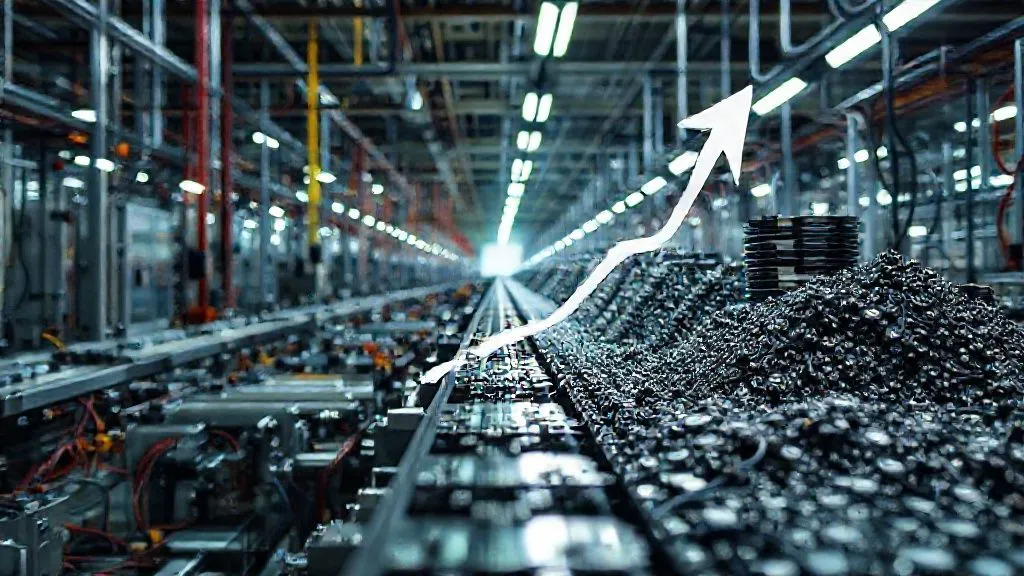
Optimizing Production Flow to Reduce Bottleneck Impact by 15%?
For over two decades in operations management and production planning, I've witnessed firsthand the silent killer of profitability: the bottleneck. It’s a pervasive issue, often insidious, that drains resources, inflates lead times, and can severely compromise customer satisfaction. My career has been dedicated to untangling these complex operational knots, transforming frustrating choke points into engines of efficiency.
These choke points aren't just minor inconveniences; they ripple through your entire value chain, inflating costs, delaying deliveries, and frustrating teams. Many leaders feel trapped, endlessly firefighting symptoms without ever truly addressing the root causes. The constant pressure to meet targets while battling internal inefficiencies can be incredibly demoralizing for an entire organization, stifling innovation and growth.
But what if I told you that a targeted, strategic approach could not only identify these bottlenecks but systematically reduce their impact by a significant 15% or more? In this definitive guide, I'll share the frameworks, tools, and real-world strategies I've honed to achieve precisely that. We'll move beyond theory to actionable steps, leveraging expert insights, data-driven methods, and a culture of continuous improvement.
The Anatomy of a Bottleneck: Why 15% Matters
Before we can conquer bottlenecks, we must first understand them. A bottleneck is any point in a production process where the capacity is less than the demand placed upon it, thereby limiting the overall throughput of the entire system. Think of it as the narrowest part of a funnel; no matter how much you pour into the top, only so much can exit the bottom at any given time.
The impact of a bottleneck isn't confined to a single workstation. It creates queues of work-in-progress (WIP) upstream, causing delays and increasing inventory holding costs. Downstream, it starves subsequent processes, leading to idle time and missed deadlines. This ripple effect undermines your entire operational efficiency, making a targeted reduction in bottleneck impact absolutely critical.
Why 15%? In my experience, a 15% reduction in bottleneck impact is an ambitious yet entirely achievable goal that translates into tangible, significant benefits. It’s enough to noticeably improve lead times, reduce costs, and free up capacity without requiring a complete overhaul of your entire system. This measurable target provides a clear focus for your optimization efforts, making success quantifiable and motivating.
The true cost of a bottleneck isn't just the delay at that single point; it's the cumulative cost of wasted time, excess inventory, lost opportunities, and diminished customer trust across your entire value chain. Addressing it is an investment, not an expense.
Identifying Your Bottlenecks: More Than Just a Gut Feeling
One of the biggest mistakes I've seen companies make is relying on intuition to identify bottlenecks. While tribal knowledge is valuable, it often points to symptoms rather than the root cause. True bottleneck identification requires a systematic, data-driven approach that transcends anecdotal evidence.
Start with a comprehensive process map or value stream map (VSM) of your entire production flow. This visual representation helps to highlight every step, input, output, and resource involved. By meticulously mapping out the flow of materials and information, you can begin to pinpoint areas where work accumulates or where processing times are disproportionately long.
Conduct Gemba walks – physically go to the shop floor and observe the process in action. Talk to your operators, ask what slows them down, what causes them frustration. Combine these qualitative insights with quantitative data, such as cycle time analysis for each step, throughput rates, and work-in-progress (WIP) levels. A significant buildup of WIP before a particular station is a strong indicator of a bottleneck.
Tools for Precise Identification
- Value Stream Mapping (VSM): Visually represents the flow of materials and information, highlighting value-adding and non-value-adding steps.
- Cycle Time Analysis: Measures the time it takes to complete one unit at each process step. The longest cycle time often indicates the bottleneck.
- Throughput Analysis: Measures the rate at which units are completed by the entire system. Any process operating significantly below the system's potential throughput is a suspect.
- Work-In-Progress (WIP) Monitoring: Excessive inventory build-up before a process step is a clear sign of a constrained resource.
- Simulation Software: Advanced tools can model your production line, allowing you to test scenarios and predict where bottlenecks will emerge under different conditions without disrupting actual operations.
Case Study: How TechSolutions Uncovered Hidden Bottlenecks
TechSolutions, a mid-sized electronics manufacturer, struggled with erratic lead times and frequent missed delivery dates. Initially, management believed their bottleneck was in final assembly, as that's where products often piled up. However, after implementing a rigorous value stream mapping exercise and detailed cycle time analysis across their entire process, they discovered a critical bottleneck further upstream in their component testing department.
The testing equipment, while state-of-the-art, was frequently under-utilized due to complex setup procedures and a lack of skilled operators for specific tests. This created a 'starvation' effect on subsequent processes, including final assembly, which then had to scramble to catch up. By focusing their efforts on streamlining setup times, cross-training staff, and implementing a simple scheduling improvement for the testing department, TechSolutions saw a 20% improvement in overall throughput within three months, significantly reducing their lead times and enabling them to reliably meet customer demand.
Lean Principles: The Foundation of Flow Optimization
Once identified, the next step is to strategically address these bottlenecks. This is where lean principles, honed over decades in diverse industries, become invaluable. Lean manufacturing is fundamentally about eliminating waste (Muda) and maximizing value for the customer by creating a continuous, smooth flow.
The core philosophy of lean directly opposes the very existence of bottlenecks, as they represent a massive form of waste – waiting, excess inventory, and unnecessary movement. By systematically applying lean methodologies, you can not only relieve existing bottlenecks but also build a more resilient and agile production system that inherently resists their formation.
Key Lean Methodologies for Bottleneck Reduction
- Just-in-Time (JIT): Producing only what is needed, when it is needed, in the amount needed. This reduces WIP and prevents upstream processes from overproducing and overwhelming a bottleneck.
- Kanban: A visual signaling system that controls the flow of production, ensuring that work is pulled through the system only when there is demand. This helps to manage WIP and prevent bottlenecks from becoming overloaded.
- 5S (Sort, Set in Order, Shine, Standardize, Sustain): A methodology for workplace organization and standardization that can dramatically improve efficiency and reduce the likelihood of operational delays that contribute to bottlenecks.
- Poka-Yoke (Mistake-Proofing): Designing processes and tools to prevent errors, which often cause rework and disruptions that exacerbate bottlenecks.
Implementing a pull system, for instance, means that no process begins work until the next process downstream signals it has capacity. This directly prevents the accumulation of WIP before a bottleneck, reducing its impact by ensuring a more measured and controlled flow. For a deeper dive into these transformative principles, I highly recommend exploring resources from the Lean Enterprise Institute: Lean Enterprise Institute.
Data-Driven Decisions: Metrics for Measuring Bottleneck Impact
You can't manage what you don't measure. This adage is particularly true when it comes to optimizing production flow and reducing bottleneck impact. Establishing clear Key Performance Indicators (KPIs) and consistently tracking them is paramount to understanding where you stand, identifying improvement opportunities, and verifying the success of your interventions.
Without a robust measurement framework, any efforts to optimize production flow are essentially flying blind. You might make changes that feel right but don't actually move the needle on your 15% reduction target. The right metrics provide an objective lens, highlighting areas of success and pinpointing where further adjustments are needed.
Setting Your Baseline and Tracking Progress
- Define Your Current State: Before making any changes, accurately measure your existing performance against the chosen KPIs. This baseline is your starting point.
- Set Clear Targets: Based on your baseline, establish specific, measurable, achievable, relevant, and time-bound (SMART) targets for each KPI, aligning with your 15% bottleneck impact reduction goal.
- Implement a Monitoring System: Use dashboards, regular reports, and visual management boards to track KPI performance in real-time or near real-time.
- Analyze Variances: Regularly review performance against targets. Investigate any significant deviations to understand their root causes and adjust your strategies accordingly.
- Communicate Results: Transparently share progress with your team. Celebrate successes and collectively strategize on areas needing improvement. This fosters accountability and engagement.
| Metric | Baseline | Target (15% Inc.) | Actual (Month 1) |
|---|---|---|---|
| Throughput (Units/Hr) | 100 | 115 | 105 |
| WIP Inventory (Units) | 500 | 425 | 470 |
| Lead Time (Days) | 5 | 4.25 | 4.5 |
Data is not just numbers; it's the unbiased truth of your operation. Embrace it, understand it, and let it guide every decision you make in your quest to optimize production flow. Without it, you're merely guessing.
Strategic Approaches to Bottleneck Relief
Once you've identified your bottleneck and established your metrics, it's time for action. My preferred framework for addressing bottlenecks is often rooted in Eli Goldratt's Theory of Constraints (TOC), which offers a powerful, systematic approach to improving system performance. TOC emphasizes that every system has at least one constraint (bottleneck) that limits its overall output, and improving this constraint is the most effective way to improve the entire system.
The beauty of TOC lies in its focus: instead of trying to optimize every part of the system simultaneously (which is inefficient), you concentrate your efforts on the constraint. This disciplined approach ensures that your resources are always directed to where they will have the greatest impact, making your 15% reduction goal not just achievable but often surpassed.
Applying the Theory of Constraints (TOC)
- Identify the Constraint: As discussed, this is the first and most crucial step. It's the 'I' in Goldratt's 'Five Focusing Steps.'
- Exploit the Constraint: Maximize the output of the bottleneck using existing resources. Ensure it's never idle, always running at its peak efficiency. This might mean optimizing its schedule, reducing setup times, or ensuring it always has work.
- Subordinate Everything Else to the Constraint: All other processes in the system must be adjusted to support the bottleneck. This means upstream processes should produce just enough to keep the bottleneck busy, and downstream processes should be ready to receive its output. Avoid overproduction that merely creates more WIP.
- Elevate the Constraint: If, after exploiting and subordinating, the bottleneck still limits your desired output, consider investing in its capacity. This could involve purchasing new equipment, adding more staff, improving technology, or outsourcing some work.
- Go Back to Step 1 (Continuous Improvement): Once a constraint is broken, another part of the system will become the new constraint. The process is continuous, fostering an ongoing cycle of improvement.
This systematic approach, deeply explored in Goldratt's seminal work, 'The Goal,' provides a clear roadmap. To delve deeper into TOC and its profound implications for operations, I highly recommend exploring resources from the Goldratt Group: Goldratt Group.
Technology as an Enabler: Smart Manufacturing & Automation
In today's rapidly evolving industrial landscape, technology is not just a tool; it's a strategic imperative for optimizing production flow. Smart manufacturing, encompassing Industry 4.0 technologies, offers unprecedented opportunities to identify, mitigate, and even prevent bottlenecks before they occur. I've seen countless operations transform by intelligently integrating these digital solutions.
From advanced Enterprise Resource Planning (ERP) systems that provide real-time visibility into production schedules and inventory, to Manufacturing Execution Systems (MES) that manage and monitor work-in-progress, these platforms create a connected ecosystem. They allow for predictive analytics, enabling proactive maintenance that prevents machine breakdowns – a common cause of unexpected bottlenecks. The insights derived from these technologies are critical for making informed, data-driven decisions that propel efficiency forward.
Leveraging Digital Tools for Enhanced Flow
- Real-time Data Analytics: Utilize sensors (IIoT - Industrial Internet of Things) on equipment to collect data on performance, uptime, and throughput. AI and machine learning algorithms can then analyze this data to predict potential bottlenecks or equipment failures.
- Automated Material Handling: Implement Automated Guided Vehicles (AGVs) or robots to ensure a consistent, timely flow of materials to and from bottleneck workstations, reducing waiting times and manual intervention.
- Digital Twins: Create virtual models of your production line to simulate changes and test optimization strategies without impacting physical operations. This allows for risk-free experimentation and validates improvements before implementation.
- Predictive Maintenance: Use AI-powered tools to monitor machine health and predict failures, scheduling maintenance proactively rather than reactively. This significantly reduces unexpected downtime at critical points.
- Advanced Scheduling Software: Optimize production schedules to maximize bottleneck utilization, considering factors like setup times, material availability, and downstream demand.
The integration of these technologies can create a truly responsive and adaptive production system, drastically reducing the impact of constraints. For more insights into how Industry 4.0 is reshaping operations, consider this article from Forbes: The Power Of Industry 4.0 In Modern Manufacturing.
The Human Element: Training, Empowerment, and Culture
While technology provides powerful tools, it's the human element that truly drives sustainable production flow optimization. In my experience, even the most sophisticated systems will falter without a skilled, engaged, and empowered workforce. Your people are not just operators; they are problem-solvers, innovators, and the frontline experts who experience the bottlenecks daily.
Investing in comprehensive cross-training programs is critical. When operators are skilled in multiple tasks, your system gains flexibility. If a bottleneck arises due to a specific skill gap or absence, cross-trained personnel can quickly step in, minimizing downtime. This not only mitigates bottleneck impact but also boosts employee morale and job satisfaction by providing opportunities for growth.
Fostering a Culture of Continuous Improvement (Kaizen)
- Empower Frontline Workers: Encourage operators to identify problems and suggest solutions. They often have the most practical insights into what's hindering flow. Implement suggestion systems and act on viable ideas.
- Regular Communication: Keep teams informed about production goals, bottleneck challenges, and the impact of their efforts. Transparency builds trust and shared ownership.
- Celebrate Small Wins: Acknowledge and reward teams for improvements, no matter how small. This reinforces positive behaviors and motivates continued engagement.
- Provide Continuous Training: Beyond cross-training, invest in ongoing education about lean principles, problem-solving techniques, and new technologies.
- Lead by Example: Management must visibly commit to continuous improvement, participating in Gemba walks, advocating for resources, and demonstrating a willingness to learn and adapt.
A culture that values learning, problem-solving, and continuous improvement (often referred to as Kaizen) is the most powerful antidote to recurring bottlenecks. It transforms your workforce from passive participants into active architects of efficiency. This collective mindset is essential for not just achieving, but sustaining, that 15% reduction in bottleneck impact.
Sustaining the Gains: Monitoring and Adaptation
Achieving a 15% reduction in bottleneck impact is a significant accomplishment, but the journey doesn't end there. Production environments are dynamic; demand fluctuates, equipment ages, and new products are introduced. What was a bottleneck today might be a smooth operation tomorrow, while a new constraint emerges elsewhere. The key to long-term success lies in continuous monitoring and adaptive strategies.
Implementing robust feedback loops is crucial. Regular performance reviews, daily stand-up meetings, and monthly operational audits ensure that deviations from optimal flow are quickly identified. Don't just react to problems; proactively seek out potential constraints by analyzing trends in your KPIs. This agile approach to operations management treats optimization as an ongoing process, not a one-time project.
Building Resilience into Your Production System
- Regular Process Audits: Schedule periodic reviews of your entire production process to ensure adherence to optimized procedures and to identify any new inefficiencies or emerging bottlenecks.
- KPI Dashboards: Maintain real-time, visual dashboards that track key metrics related to flow, throughput, and bottleneck performance. Make these accessible to all relevant teams.
- Cross-Functional Teams: Establish permanent or ad-hoc cross-functional teams dedicated to continuous improvement. These teams can address emerging issues and drive ongoing optimization initiatives.
- Scenario Planning: Regularly conduct 'what-if' analyses to understand how changes in demand, supply, or equipment might impact your production flow and identify potential future bottlenecks.
- Leverage External Expertise: Don't hesitate to bring in external consultants or industry experts periodically for fresh perspectives and to challenge internal assumptions.
| Phase | Action | Frequency |
|---|---|---|
| Identify | Value Stream Mapping, Gemba Walks | Annually/When Issues Arise |
| Analyze | Cycle Time, OEE, WIP Analysis | Monthly/Weekly |
| Implement | TOC, Lean Principles, Automation | Ongoing Project Basis |
| Monitor | KPI Dashboards, Regular Reviews | Daily/Weekly |
| Adapt | Feedback Loops, Kaizen Events | Continuous |
Remember, the goal isn't just to fix a bottleneck; it's to build a resilient, continuously improving production system. For a broader perspective on building robust operational systems, I suggest this resource from Harvard Business Review: How to Build a More Resilient Supply Chain.
Frequently Asked Questions (FAQ)
How quickly can I expect to see a 15% reduction in bottleneck impact? The timeline can vary significantly based on the complexity of your operation, the nature of the bottleneck, and the resources you commit. Simple changes derived from exploiting the constraint can show results within weeks. More extensive changes involving elevation or significant automation might take several months. However, with a focused effort and consistent monitoring, a noticeable improvement towards the 15% target can often be observed within 3-6 months.
What if my bottleneck shifts after I address the first one? This is a very common and expected outcome, often referred to as 'the traveling bottleneck.' It simply means your optimization efforts have been successful! According to the Theory of Constraints, once one bottleneck is relieved, another part of the system will become the new constraint. This is why continuous monitoring and the 'Go Back to Step 1' principle of TOC are so crucial. It's an ongoing cycle of identification, exploitation, subordination, elevation, and repetition.
Is this applicable to service operations, not just manufacturing? Absolutely. While the terminology might differ, the principles of identifying constraints, optimizing flow, and reducing impact are universally applicable to any process. In service industries, bottlenecks might manifest as long customer wait times, slow administrative processes, or delays in project completion. The methodologies like Value Stream Mapping, cycle time analysis, and the Theory of Constraints are highly effective in service environments too.
What's the biggest mistake companies make when trying to optimize flow? In my experience, the biggest mistake is trying to optimize every process equally or focusing on non-bottleneck processes. This often leads to wasted resources, increased WIP, and no significant improvement in overall system throughput. The critical insight from TOC is that you must focus your efforts almost exclusively on the single constraint that limits your entire system's output. Another common error is failing to involve and empower frontline employees in the problem-solving process.
How do I get buy-in from senior management for these initiatives? Demonstrate the financial impact. Quantify the costs of your current bottlenecks (e.g., lost revenue from missed orders, increased inventory carrying costs, overtime expenses). Present a clear plan with measurable targets (like the 15% reduction) and a projected ROI. Highlight successful case studies (internal or external). Emphasize that these aren't just 'efficiency projects' but strategic moves to enhance competitiveness, customer satisfaction, and profitability. Regular, transparent reporting on progress is also key to maintaining support.
Key Takeaways and Final Thoughts
Optimizing production flow to reduce bottleneck impact by 15% isn't merely an operational goal; it's a strategic imperative that directly influences your bottom line, customer satisfaction, and long-term competitiveness. It's a journey that demands a blend of expert insight, data-driven decisions, and a commitment to continuous improvement. I've seen firsthand how these principles, when applied diligently, can transform struggling operations into highly efficient powerhouses.
- Identify with Precision: Don't guess; use Value Stream Mapping, Gemba walks, and data analytics to pinpoint true bottlenecks.
- Embrace Lean & TOC: Leverage proven methodologies like Just-in-Time, Kanban, and the Theory of Constraints to systematically address constraints.
- Measure Relentlessly: Establish clear KPIs and track progress diligently to ensure your efforts are yielding tangible results.
- Empower Your People: Invest in training, foster a culture of continuous improvement, and empower your frontline teams as problem-solvers.
- Leverage Technology: Utilize smart manufacturing tools, automation, and predictive analytics to enhance visibility and prevent future bottlenecks.
- Sustain the Gains: Recognize that optimization is an ongoing process. Continuously monitor, adapt, and seek out the next area for improvement.
The path to a 15% reduction in bottleneck impact is challenging, but it is undeniably rewarding. By applying the strategies I've outlined, you're not just fixing a problem; you're building a more resilient, efficient, and profitable future for your operations. Take these insights, apply them with conviction, and watch your production flow transform. Your journey to operational excellence starts now, and the rewards are well within your reach.
Recommended Reading
- 7 Critical Steps: How to Avoid Losing Money on a Bad Franchise Investment
- 7 Proven Ways Remote Managers Prevent Isolation & Boost Engagement
- 5 Essential Strategies: Minimize Personal Guarantee Risks in Franchising
- Rejected Deliverable? 7 Steps to Recover Your Project & Trust
- Unlock Growth: 5 Steps to Identify Small Business Bottlenecks


Comments
Leave a comment below. Your email will not be published. Required fields marked with *