


Our KPIs Aren't Reflecting True Operational Bottlenecks: A Deep Dive
For over two decades in operations management, I've witnessed a common, insidious problem: companies with dashboards glowing green, boasting 'healthy' KPIs, yet secretly hemorrhaging efficiency, resources, and morale. It’s a paradox – the metrics say one thing, but the reality on the ground shouts another. This disconnect isn't just frustrating; it's a silent killer of productivity and profitability.
The pain point is palpable: you invest in performance monitoring, you set what you believe are the right key performance indicators, but your teams are still overwhelmed, projects are delayed, and customer satisfaction dips. Your KPIs aren't reflecting true operational bottlenecks, leaving you blind to the real friction points hindering your growth and operational excellence. This isn't a failure of effort; it's often a failure of strategic metric design and interpretation.
In this definitive guide, I'll draw upon my extensive experience to provide you with a robust framework for diagnosing and resolving these hidden bottlenecks. We'll move beyond superficial metrics, explore actionable strategies, delve into real-world case studies, and equip you with expert insights to transform your operational monitoring from a misleading exercise into a powerful engine for genuine improvement. Prepare to uncover the truth behind your numbers and unlock your organization's full potential.
The Illusion of Performance: Why Traditional KPIs Often Fail
The problem often begins with a fundamental misunderstanding of what a KPI should truly represent. Many organizations adopt industry-standard metrics without adequately tailoring them to their unique processes and strategic objectives. This leads to a dashboard full of 'vanity metrics' – numbers that look good but don't offer any actionable insight into operational health.
I've seen countless companies proudly display high 'output per employee' or 'on-time delivery rate' while simultaneously struggling with excessive rework, high employee burnout, or escalating customer complaints. The issue is that these traditional KPIs are often lagging indicators, telling you what has already happened, rather than providing foresight into potential problems or highlighting the root causes of current ones. As operations management guru Eli Goldratt famously illustrated with his Theory of Constraints, focusing on non-bottleneck processes, even if they show improvement, does not improve the overall system.
"When a measure becomes a target, it ceases to be a good measure." - Goodhart's Law. This principle perfectly encapsulates why poorly designed KPIs can actively mislead, encouraging teams to optimize for the metric itself, rather than the underlying operational health.
The Trap of Lagging vs. Leading Indicators
Understanding the distinction between lagging and leading indicators is crucial. Lagging indicators measure historical performance (e.g., quarterly revenue, customer churn rate). While important for historical context, they offer little predictive power or insight into operational friction. Leading indicators, conversely, predict future performance and are often directly actionable (e.g., number of defects per batch, average time spent in a specific process step, employee training hours).
If your KPIs aren't reflecting true operational bottlenecks, it's highly likely you're over-relying on lagging indicators. To truly diagnose and fix operational issues, you need metrics that provide an early warning system, allowing you to intervene before small issues escalate into major problems. These leading indicators are the magnifying glass that helps you pinpoint the precise points of friction in your operational flow.

Shifting Your Lens: Moving Beyond Surface-Level Metrics
To identify true operational bottlenecks, we must shift our focus from generic organizational KPIs to process-centric metrics. This means delving into the actual workflows that deliver value to your customers and identifying where the flow is impeded. It's about understanding the journey, not just the destination.
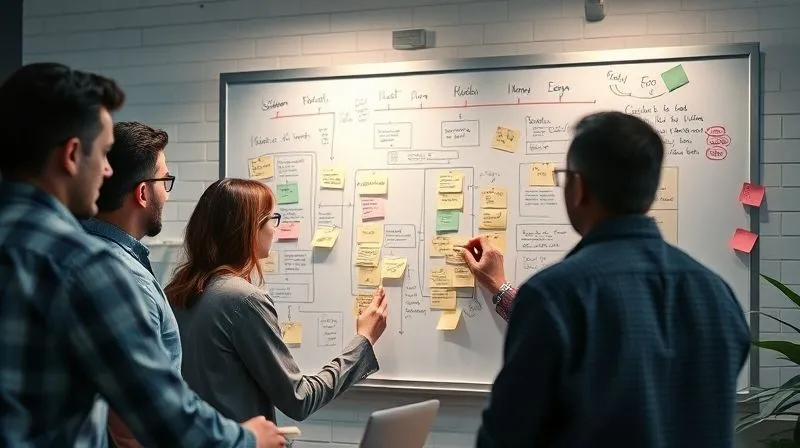
One of the most powerful tools for this shift is Value Stream Mapping (VSM). VSM visually represents the entire flow of materials and information required to bring a product or service to a customer. By mapping every step, from raw material to delivery, you can clearly see where delays, waste, and inefficiencies reside – the tell-tale signs that your KPIs aren't reflecting true operational bottlenecks.
Mapping Your Value Stream for Bottleneck Visibility
Value Stream Mapping is more than just drawing boxes; it's a diagnostic exercise that reveals the current state of your operations. It highlights non-value-added activities and quantifies critical metrics at each step, such as cycle time, lead time, and processing time. This granular view is essential for pinpointing where the system is truly constrained.
- Identify the Product/Service Family: Choose a specific product or service that represents a significant value stream.
- Draw the Current State Map: Physically walk the process, documenting every step, including information flow, material flow, and key data points (e.g., inventory levels, number of people, machine uptime, defect rates).
- Collect Data: For each step, measure cycle time (time to complete one unit), lead time (total time a unit spends at that step, including waiting), and rework rates.
- Identify Waste and Bottlenecks: Look for areas where lead time significantly exceeds processing time, where inventory builds up, or where quality issues are prevalent. These are your operational bottlenecks.
- Design the Future State Map: Based on your findings, brainstorm and design an improved process flow, eliminating waste and addressing bottlenecks.
By comparing cycle time (the time spent actively working on an item) with lead time (the total time an item spends in a process, including waiting), you can immediately spot where delays are occurring. A large disparity indicates significant waiting times, which are often symptoms of a bottleneck upstream or downstream. For instance, if a task's cycle time is 10 minutes, but its lead time is 2 hours, there's a 1 hour 50 minute wait that your high-level 'tasks completed per day' KPI will completely miss.
The Power of Granularity: Deconstructing Operational Processes
When high-level KPIs mask underlying issues, the solution lies in drilling down. We need to dissect complex operations into their constituent parts and assign specific, measurable indicators to each micro-process. This granular approach helps us identify precisely where the system is failing, rather than just knowing that it is failing.
Think of it like a car engine. A high-level KPI might be 'miles per gallon'. If that's low, you know there's a problem, but you don't know if it's the spark plugs, the fuel filter, or the transmission. Granular metrics would be 'spark plug firing efficiency', 'fuel pressure at injector', or 'transmission fluid temperature'. These provide direct, actionable insights.
Identifying Micro-Bottlenecks with Process Mining
Process mining is an advanced analytical technique that automatically discovers, monitors, and improves real processes by extracting knowledge from event logs readily available in today's information systems. Unlike traditional process mapping, which can be subjective and time-consuming, process mining uses actual data to reconstruct the 'as-is' process flow, highlighting deviations, rework loops, and, critically, bottlenecks with astounding accuracy.
According to a Harvard Business Review article on process mining, it can uncover inefficiencies that no human observation or interview could detect. It’s an invaluable tool when your traditional KPIs aren't reflecting true operational bottlenecks because it provides an objective, data-driven map of your real processes, not just how you think they work.
Here's a comparison of how traditional, often misleading, KPIs stack up against the granular, bottleneck-focused metrics we should be tracking:
| Process Step | Traditional KPI | Granular KPI (Bottleneck Focus) | Target |
|---|---|---|---|
| Order Intake | Orders Processed/Day | Average Time to Validate Order Data | < 1 hour |
| Product Assembly | Units Produced/Hour | Defect Rate at Station 3 | < 0.5% |
| Customer Support | Tickets Closed/Day | Average Time to First Response (Complex Tickets) | < 2 hours |
Introducing "Constraint-Based" Performance Monitoring
The Theory of Constraints (TOC), developed by Dr. Eliyahu Goldratt, posits that every system has at least one constraint, and this constraint dictates the system's overall performance. If your KPIs aren't reflecting true operational bottlenecks, it's often because you're trying to optimize every part of the system equally, rather than focusing on the single weakest link.
Constraint-based performance monitoring involves identifying your system's primary constraint and then designing your KPIs to monitor its health and utilization. All other activities and metrics should then be subordinated to ensure this constraint operates at maximum efficiency. This ensures that improvements made elsewhere actually translate into overall system improvement, rather than just creating excess capacity in non-bottleneck areas.
"The capacity of the system is determined by the capacity of the bottleneck." - Eliyahu M. Goldratt. This simple truth is often overlooked, leading to wasted effort and misleading performance indicators.
Case Study: Streamlining Logistics at GlobalFreight Inc.
GlobalFreight Inc., a mid-sized international shipping company, was struggling with inconsistent delivery times despite impressive 'fleet utilization' and 'warehouse throughput' KPIs. Their high-level metrics painted a picture of efficient operations, but customer complaints about delays persisted. Their KPIs weren't reflecting true operational bottlenecks.
I advised them to apply a constraint-based approach. Through deep dives into their end-to-end logistics process, they discovered their true bottleneck wasn't the fleet or the warehouse, but rather the customs clearance process in specific destination countries, which was highly variable and prone to delays. This was a process step they had little direct control over, yet it dictated their overall delivery speed.
GlobalFreight Inc. then shifted their focus and KPIs. They began tracking 'average time in customs clearance' and 'percentage of shipments exceeding 24-hour customs hold' as their primary bottleneck KPIs. They proactively engaged with customs brokers, implemented automated documentation, and even rerouted certain shipments through less constrained ports. Within six months, their overall average delivery time improved by 15%, and customer satisfaction scores rose significantly, all without increasing their fleet or warehouse capacity. This success came from accurately identifying and elevating their true constraint.
For more on applying this powerful framework, explore resources on the Theory of Constraints Institute.
Leveraging Technology: Advanced Analytics and AI for Deeper Insights
In today's data-rich environment, relying solely on manual observation or rudimentary spreadsheets to identify bottlenecks is akin to navigating with a paper map in the age of GPS. Modern technology, particularly advanced analytics and Artificial Intelligence (AI), offers unprecedented capabilities for real-time monitoring and proactive bottleneck detection, especially when your traditional KPIs aren't reflecting true operational bottlenecks.
These tools can process vast amounts of operational data from diverse sources – ERP systems, CRM platforms, IoT sensors, and more – to reveal patterns and anomalies that would be invisible to the human eye. They move beyond simple averages to provide a dynamic, granular view of your operations.
Predictive Analytics for Proactive Bottleneck Detection
Predictive analytics uses historical data and statistical algorithms to forecast future outcomes. In operations, this means identifying potential bottlenecks before they occur. For example, by analyzing past equipment failure rates, maintenance schedules, and production loads, AI can predict when a machine is likely to break down, allowing for proactive maintenance and preventing a production bottleneck.
Similarly, in service operations, predictive models can anticipate surges in customer inquiries or resource shortages based on seasonal trends, marketing campaigns, or even external events, enabling managers to adjust staffing levels or reallocate resources in advance. This shifts your operational stance from reactive problem-solving to proactive prevention.
Real-time Monitoring and Anomaly Detection
IoT sensors on machinery, real-time tracking of orders, and continuous monitoring of software performance generate streams of data that, when analyzed by AI, can immediately flag deviations from normal operational parameters. Anomaly detection algorithms can identify unusual spikes in waiting times, unexpected drops in processing speed, or sudden increases in defect rates – often the first indicators of a developing bottleneck.
This real-time feedback loop is invaluable. It shortens the time between a problem occurring and its detection, drastically reducing the impact of operational bottlenecks. When your KPIs aren't reflecting true operational bottlenecks, these technologies can provide the missing, immediate context.

Building a Culture of Continuous Improvement and Adaptive KPIs
Identifying and resolving operational bottlenecks is not a one-time project; it's an ongoing journey. The operational landscape is constantly evolving due to market shifts, technological advancements, and internal changes. Therefore, your KPI strategy must also be dynamic and adaptive. A rigid set of KPIs, no matter how well-designed initially, will eventually fail to reflect true operational bottlenecks if not regularly reviewed and refined.
This requires fostering a culture of continuous improvement (Kaizen) where every team member is encouraged to identify inefficiencies, suggest improvements, and take ownership of their respective process metrics. It's about empowering your workforce to be problem-solvers, not just task executors.
Regular KPI Audits and Feedback Loops
Just as you audit your financial statements, you must regularly audit your KPIs. This involves questioning their relevance, accuracy, and effectiveness in reflecting operational realities. A good rule of thumb is to conduct a comprehensive KPI audit at least annually, or whenever there are significant changes in your operational processes or strategic goals.
- Review Relevance: Are these KPIs still aligned with our strategic objectives and current operational challenges?
- Assess Actionability: Do these KPIs provide clear guidance on what actions need to be taken?
- Validate Data Integrity: Is the data feeding these KPIs accurate, reliable, and timely?
- Gather User Feedback: Solicit input from the teams who use and are measured by these KPIs. Do they find them helpful or misleading?
- Benchmarking: Compare your KPIs against industry best practices and competitors, where possible.
Empowering Teams to Own Their Metrics
The most effective KPI systems are those where the people doing the work feel ownership over the metrics. When teams are involved in defining, tracking, and interpreting their own operational KPIs, they are far more likely to engage with the data and proactively seek solutions to bottlenecks. This bottom-up approach ensures that the chosen metrics are relevant to daily operations and directly actionable.
Providing training on data literacy, process analysis, and problem-solving methodologies empowers employees to become 'citizen analysts' who can identify and articulate where their KPIs aren't reflecting true operational bottlenecks. As discussed in McKinsey's insights on operations, this level of empowerment is critical for agile and resilient operations.
Practical Framework: 5 Steps to Uncover Your True Bottlenecks
Having explored the theoretical underpinnings and technological enablers, let's consolidate this into a practical, step-by-step framework you can implement immediately to ensure your KPIs aren't reflecting true operational bottlenecks.
- Define Your Value Stream: Begin by clearly mapping out the end-to-end process that delivers value to your customer. Use Value Stream Mapping to visualize all steps, from initial request to final delivery. Document cycle times, lead times, resource utilization, and any waiting periods or rework loops. This foundational step reveals the current state and highlights initial areas of friction.
- Identify Potential Constraints: Once your value stream is mapped, systematically look for areas where work piles up (queues), resources are consistently overworked, or there's a significant disparity between cycle time and lead time. These are your potential bottlenecks. Don't just guess; use data from process mining, time studies, and employee feedback.
- Measure the Constraint's Impact: Quantify the specific impact of the identified constraint. How much delay does it cause? What is its financial cost in terms of lost productivity, missed opportunities, or increased overhead? What is the quality impact? This step helps prioritize which bottleneck to address first – focus on the one causing the most significant harm to your overall system performance.
- Exploit the Constraint: Before investing heavily, optimize the existing constraint. This means ensuring the bottleneck resource is never idle, only processing perfectly prepared inputs, and eliminating any non-essential tasks from its workload. For instance, if a specific machine is a bottleneck, ensure it has a constant supply of materials and that its setup times are minimized. Subordinate all other non-bottleneck processes to the pace of the constraint.
- Elevate and Re-evaluate: If exploiting the constraint isn't enough, consider elevating it. This might involve investing in new technology, additional staffing, outsourcing, or redesigning the process around the constraint. Once the original bottleneck is elevated, the constraint will likely shift to another part of the system. This necessitates a continuous loop of re-evaluation and identification of the next bottleneck, ensuring your KPIs remain relevant to the current operational reality.
This iterative process ensures that your performance monitoring is always focused on the most critical levers for improvement, preventing the scenario where your KPIs aren't reflecting true operational bottlenecks.
| Step | Action | Key Tool |
|---|---|---|
| 1. Map Value Stream | Visualize all steps from customer request to delivery. | Value Stream Mapping |
| 2. Identify Constraints | Look for queues, idle resources, or excessive rework. | Process Observation, Data Analysis |
| 3. Measure Impact | Quantify delay, cost, or quality issues caused by the constraint. | Cycle Time Analysis, Cost Accounting |
| 4. Exploit Constraint | Optimize existing resources at the bottleneck without major investment. | Scheduling Optimization, Workload Balancing |
| 5. Elevate & Re-evaluate | Invest in improving the constraint (e.g., new tech, training) and identify the next bottleneck. | Continuous Improvement Loops |
Frequently Asked Questions (FAQ)
Q: How often should I review my KPIs for bottlenecks? A: I recommend a formal review of your core operational KPIs at least quarterly, and a comprehensive audit annually. However, if you implement real-time monitoring and anomaly detection, you should be continuously alert to deviations that signal a new or shifting bottleneck. The key is to embed a culture of continuous improvement where KPI relevance is always under scrutiny.
Q: What if my team resists new KPI methodologies or increased scrutiny? A: Resistance is often rooted in a fear of blame or a lack of understanding. Start by involving your teams in the KPI design process. Explain the 'why' – that these metrics are tools for improvement, not just judgment. Frame it as empowering them to solve their own challenges. Provide training, celebrate small wins, and ensure leadership models the desired behavior. Emphasize that the goal is to improve the system, not to find fault with individuals.
Q: Can small businesses also benefit from these advanced techniques like Process Mining? A: Absolutely! While dedicated process mining software can be an investment, the principles apply universally. Small businesses can achieve significant insights through manual value stream mapping, simple time studies, and analyzing existing data from their CRM or accounting systems. The core idea is to understand your process flow and identify where work gets stuck, regardless of the tools used. Start small, be consistent, and scale up as you see value.
Q: How do I prioritize which bottleneck to address first if I find multiple? A: Focus on the bottleneck that has the greatest negative impact on your overall system's goal (e.g., profitability, customer satisfaction, throughput). Use quantitative data from 'Step 3: Measure the Constraint's Impact' in our framework to guide this. Sometimes, a smaller, easier-to-fix bottleneck can have a disproportionately large positive impact, freeing up resources to tackle larger issues. Consider both impact and feasibility.
Q: Is it possible for KPIs to be too granular? A: Yes, it is. While granularity is crucial for identifying bottlenecks, excessive granularity can lead to 'analysis paralysis' and overwhelm teams. The goal is to find the right level of detail that provides actionable insight without creating unnecessary overhead in data collection and reporting. Focus on metrics that directly correlate to process flow, quality, and resource utilization at critical junctures. If a metric doesn't inform a decision or highlight a potential issue, it might be too granular.
Key Takeaways and Final Thoughts
The journey to truly understanding and optimizing your operations begins with an honest acknowledgment: if your KPIs aren't reflecting true operational bottlenecks, you're flying blind. This isn't a minor oversight; it's a fundamental obstacle to achieving sustained efficiency and growth. But with the right mindset, tools, and methodologies, this challenge becomes your greatest opportunity.
- Shift Your Focus: Move from generic, lagging indicators to process-centric, leading metrics that illuminate the actual flow of work.
- Embrace Granularity: Deconstruct your operations, using tools like Value Stream Mapping and Process Mining to identify micro-bottlenecks.
- Adopt Constraint Thinking: Identify your system's primary constraint and subordinate all other efforts to its optimization, as per the Theory of Constraints.
- Leverage Technology: Utilize advanced analytics and AI for real-time monitoring and predictive bottleneck detection.
- Cultivate Continuous Improvement: Foster a culture where KPIs are dynamic, regularly audited, and owned by the teams they measure.
Remember, operational excellence is not a destination but a continuous journey of refinement. By diligently applying these strategies, you'll transform your performance monitoring from a source of frustration into a powerful engine for strategic decision-making and sustainable competitive advantage. The truth is in the process, and now you have the map to uncover it.
Recommended Reading
- Unlock Project Success: Mastering the Stakeholder Prioritization Process
- Unraveling the Mystery: Overcoming Challenges in Measuring Strategic Partnership ROI
- Why 70% of Leadership Programs Fail to Retain Top Talent
- Unmasking Profit Drains: 7 Steps to Identify Hidden Costs
- Unlock Business Insights: The Ultimate Guide to Solving Data Quality Issues





Comments
Leave a comment below. Your email will not be published. Required fields marked with *