


Urgent: How to Scale E-commerce Online Support for Holiday Rush?
For over 15 years in the dynamic world of e-commerce, I've seen countless businesses navigate the exhilarating, yet often terrifying, holiday rush. It's a period that can make or break a year, a time when sales figures skyrocket, but so too can the pressure on your customer support infrastructure. The difference between a triumphant season and a catastrophic one often boils down to one critical factor: your ability to scale online support effectively.
The holiday season presents a paradox: increased sales bring increased customer inquiries, returns, shipping questions, and technical glitches. Without a robust, scalable support system, this surge can quickly overwhelm your team, leading to long wait times, frustrated customers, negative reviews, and ultimately, lost revenue and damaged brand reputation. Many e-commerce businesses fall into the trap of reacting rather than proactively preparing, leaving their customer experience in jeopardy.
This definitive guide is born from my extensive experience and the hard-won lessons learned from scaling e-commerce operations through multiple peak seasons. I'll provide you with 7 urgent, actionable strategies, complete with frameworks, real-world insights, and expert advice, designed to not just help you survive the holiday rush, but to transform your online customer support into a competitive advantage that fosters loyalty and drives repeat business. Let's dive into how you can solve the critical challenge: Urgent: how to scale e-commerce online support for holiday rush?
The Proactive Playbook: Anticipate, Don't React
The first and most crucial step in scaling your e-commerce online support for the holiday rush is to shift from a reactive to a proactive mindset. Waiting for the floodgates to open before you start building your dam is a recipe for disaster. Effective planning begins months in advance, leveraging data and foresight to predict and prepare for the inevitable surge.
Data-Driven Demand Forecasting
Understanding what’s coming is half the battle. You need to predict customer contact volume, types of inquiries, and peak times with as much accuracy as possible. This isn't guesswork; it's science.
- Analyze Historical Data: Look at your previous holiday seasons. When did contact volumes peak? What were the common issues? Which channels saw the most activity? Identify trends in order volume, website traffic, and support tickets.
- Consider Current Growth Trajectories: If your business has grown significantly since last year, factor that into your projections. Don't just add a flat percentage; analyze your current growth rate and apply it conservatively.
- Account for Marketing Campaigns & Promotions: Coordinate with your marketing team. Specific campaigns or flash sales will generate spikes in inquiries. Align your support staffing with these planned events.
- Monitor External Factors: Be aware of industry trends, supply chain issues, or even major news events that could impact customer behavior or shipping times.
According to a Deloitte study, consumers are increasingly demanding seamless, proactive support. Forecasting accurately allows you to meet this demand head-on.

Optimize Your Omnichannel Strategy for Peak Performance
In today's e-commerce landscape, customers expect to interact with your brand on their preferred channel, seamlessly. During the holiday rush, a fragmented support system will break. An optimized omnichannel strategy is paramount to provide consistent, efficient service.
Unified Communication Hubs
Your agents need a single, comprehensive view of every customer interaction, regardless of the channel. This means integrating your CRM, live chat, email, social media, and phone systems into one unified platform.
- Benefits: Reduces agent training time, eliminates redundant questions for customers, speeds up resolution times, and improves customer satisfaction.
- Implementation: Invest in robust customer service software that offers true omnichannel capabilities. Ensure all historical interactions, order details, and customer preferences are accessible from a single dashboard.
Leveraging Self-Service: Your First Line of Defense
Many common holiday inquiries don't require human intervention. Empowering customers to find answers themselves is a highly effective way to deflect tickets and reduce agent workload.
- Expand Your Knowledge Base: Update and expand your FAQ section with holiday-specific questions (shipping deadlines, gift returns, tracking issues). Make it easily searchable.
- Implement AI-Powered Chatbots: Deploy chatbots on your website and social channels to handle routine questions like 'Where's my order?' or 'What's your return policy?' These can operate 24/7, providing instant answers.
- Create Intuitive Self-Service Portals: Allow customers to initiate returns, check order status, or update information independently through a user-friendly online portal.
As customer experience guru Shep Hyken often emphasizes, 'The best customer service is no customer service,' meaning customers prefer to solve simple issues themselves quickly.
| Channel | Pros | Cons |
|---|---|---|
| Live Chat | Instant, High CSAT for simple issues | Resource intensive, Can't handle complex problems quickly |
| Asynchronous, Detailed responses possible | Slower resolution, High volume can create backlogs | |
| Phone | Personalized, Good for complex issues | Very resource intensive, High hold times during rush |
| Self-Service (FAQ/Chatbot) | 24/7, Cost-effective, Instant answers | Limited scope, Can frustrate users if not comprehensive |
Empower Your Team: Training, Tools, and Trust
Your support team is your frontline during the holiday rush. Their preparedness, tools, and morale are directly proportional to your customer satisfaction. Investing in them is not an expense; it's an investment in your brand's reputation.
Cross-Training and Skill Matrix Development
Avoid single points of failure. Ensure your agents are cross-trained across various channels and common inquiry types. A skill matrix can help identify gaps and ensure coverage.
- Benefits: Increased flexibility in staffing, faster resolution times as agents can handle a wider range of issues, and improved team morale through skill development.
- Implementation: Develop a structured training program well before the holiday season. Use role-playing scenarios, shadow sessions, and knowledge tests.
Investing in AI-Powered Support Tools
Beyond chatbots, AI can significantly augment your human agents, making them more efficient and effective.
- Sentiment Analysis: Identify urgent or emotionally charged customer interactions, allowing agents to prioritize and tailor their responses.
- Smart Routing: Automatically direct complex inquiries to the most qualified agent, reducing transfers and resolution times.
- Knowledge Management Systems: Provide agents with instant access to comprehensive, up-to-date information, scripts, and troubleshooting guides.
"The best way to empower your customer service team during peak periods is to give them the right tools, comprehensive knowledge, and the autonomy to make quick, customer-centric decisions. Trust your people, and they will deliver exceptional service." - Industry Veteran Insight
Strategic Staffing: Beyond Just More Bodies
Simply throwing more people at the problem isn't always the most efficient or effective solution. Strategic staffing involves carefully planning your workforce, considering various models to meet fluctuating demand without compromising quality or breaking the bank.
Flexible Workforce Models: Outsourcing & Seasonal Hires
For many e-commerce businesses, a hybrid approach to staffing is the most pragmatic solution for the holiday rush.
- Seasonal Hires: Train temporary staff specifically for common holiday inquiries. Start recruitment and training early to ensure they are fully onboarded before the peak.
- Outsourcing: Partner with a reputable BPO (Business Process Outsourcing) provider. Ensure they understand your brand values, have robust training programs, and can integrate with your existing systems. Clearly define escalation paths for complex issues.
- Internal Task Force: Consider temporarily reassigning staff from other departments (e.g., marketing, operations) to handle simple support tasks during peak hours, after providing them with basic training.
Case Study: How 'SwiftShip E-tailers' Mastered Seasonal Staffing
SwiftShip E-tailers, a mid-sized online fashion retailer, faced chronic understaffing issues every holiday season, leading to 48-hour email response times and plummeting CSAT scores. In 2022, I advised them to implement a three-pronged staffing strategy. They hired 50% more seasonal staff than previous years, focusing on remote workers for flexibility. They also partnered with a specialized BPO for overflow email support and cross-trained their internal marketing team to handle basic live chat queries for two hours daily during peak times. This resulted in a 35% reduction in average response time, a 15% increase in FCR (First Contact Resolution), and their highest ever holiday CSAT score, proving that strategic staffing is key to surviving and thriving during the holiday rush.
Automate the Mundane, Humanize the Critical
Automation isn't about replacing humans; it's about freeing them up to focus on interactions that truly require empathy, problem-solving, and a human touch. This balance is crucial for scaling effectively while maintaining a high-quality customer experience.
Workflow Automation for Common Inquiries
Many customer contacts are repetitive and predictable. Automating these workflows can significantly reduce your support team's load.
- Order Status Updates: Implement automated email or SMS notifications for shipping updates, delivery confirmations, and potential delays.
- Returns & Exchanges: Streamline the returns process with automated online forms and clear instructions, reducing the need for direct agent involvement.
- Password Resets & Account Issues: Offer self-service options that guide customers through resetting passwords or recovering accounts without agent intervention.
- Canned Responses/Macros: Equip agents with a library of pre-written, customizable responses for frequently asked questions, speeding up their workflow.
Personalization at Scale: When to Intervene
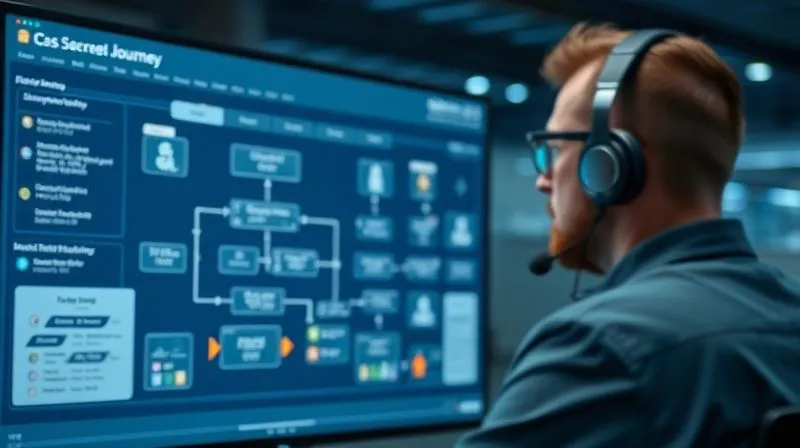
While automation handles the routine, personalization elevates the experience. Use data to identify high-value customers or those with complex issues that warrant human intervention. Implement triggers that alert agents to step in when automation is insufficient or when a customer's sentiment indicates frustration.
Real-time Monitoring & Agile Response
Even the best-laid plans need real-time adjustments. During the holiday rush, monitoring your support performance is not a 'set it and forget it' task. It requires constant vigilance and the ability to pivot quickly.
Key Performance Indicators (KPIs) to Track Religiously
Focus on metrics that give you immediate insights into your operational health and customer satisfaction.
- First Contact Resolution (FCR): The percentage of issues resolved on the first interaction. High FCR reduces repeat contacts and improves efficiency.
- Average Handle Time (AHT): How long, on average, an agent spends on an interaction. Monitor this to identify training needs or process bottlenecks.
- Customer Satisfaction (CSAT) Score: Crucial for understanding how happy customers are with their support experience.
- Net Promoter Score (NPS): A broader measure of customer loyalty, often collected post-interaction.
- Wait Times/Queue Lengths: Direct indicators of staffing levels versus demand.
Implementing a Rapid Response Protocol
When issues arise (and they will), your team needs a clear protocol for rapid response and escalation. This includes:
- Defined Escalation Paths: Who handles what? When does an issue need to be escalated to a supervisor or another department?
- Crisis Communication Plan: How will you communicate widespread issues (e.g., shipping delays, website outages) to customers and agents?
- Daily Briefings: Start each day with a quick team briefing to discuss yesterday's challenges, today's priorities, and any new information.
As Harvard Business Review research suggests, reducing customer effort is often more impactful than trying to 'delight' them. Agile response focuses on effort reduction.
| KPI | Target for Holidays | Impact |
|---|---|---|
| First Contact Resolution (FCR) | 75%+ | Reduces repeat contacts, boosts efficiency |
| Average Handle Time (AHT) | < 5 minutes (chat/phone) | Improves agent productivity, reduces wait times |
| Customer Satisfaction (CSAT) | 85%+ | Direct measure of customer happiness and loyalty |
| Queue Length (Live Chat/Phone) | < 5 waiting | Prevents customer abandonment and frustration |
Post-Holiday Debrief: Learning for Next Year
The holiday rush isn't truly over until you've conducted a thorough post-mortem. This critical step ensures that the lessons learned this year are applied to improve future performance. It's how you build long-term resilience and continuous improvement into your support operations.
Comprehensive Performance Review
Gather your team and review every aspect of your holiday support strategy. What worked exceptionally well? What bottlenecks emerged? Where did your forecasts fall short?
- Data Analysis: Dive deep into all the KPIs you tracked. Compare them against targets and previous years.
- Team Feedback: Conduct surveys or focus groups with your agents. They are on the front lines and have invaluable insights into what customers experienced and what processes failed or excelled.
- Customer Feedback: Analyze CSAT scores, NPS comments, social media mentions, and review sites. Look for recurring themes.
Customer Feedback Loop Integration
Don't just collect feedback; act on it. Use the insights gained to refine your self-service options, update your knowledge base, improve agent training, and even influence product development or marketing messaging for the next year.

The Ethical Imperative: Balancing Efficiency with Empathy
In the frantic push to scale and optimize, it's easy to lose sight of the human element. While automation and efficiency are vital for handling high volumes, true customer loyalty is built on empathy and genuine connection. This is a critical aspect when considering Urgent: how to scale e-commerce online support for holiday rush?
Avoiding the 'Robot' Trap
Over-reliance on scripts, rigid processes, or poorly implemented automation can make customers feel like just another ticket number. Train your agents to recognize when to deviate from the script, when to offer a personalized solution, and when to simply listen.
- Empowerment: Give agents the authority to offer small gestures of goodwill (e.g., a small discount, expedited shipping) when appropriate, without needing layers of approval.
- Active Listening: Reinforce the importance of truly hearing the customer's problem, not just processing their request.
Training for Empathy in High-Pressure Situations
It's challenging to be empathetic when an agent is overwhelmed, but it's precisely when it matters most. Provide training on de-escalation techniques, stress management, and maintaining a positive attitude under pressure.
"In the rush to scale, remember that customer service is fundamentally about human connection. Technology should augment empathy, not replace it. A truly scalable solution for the holidays prioritizes both efficiency and the warm, human touch that defines your brand." - Industry Veteran Insight
The holiday rush is an opportunity to strengthen customer relationships, not just process orders. By focusing on both the operational efficiencies and the empathetic connections, you create loyal customers who return year after year.
Frequently Asked Questions (FAQ)
Question: How early should I start planning my e-commerce holiday support strategy? Ideally, planning should begin 4-6 months before the holiday season. This allows ample time for data analysis, technology implementation, staff recruitment and training, and process refinement. Proactive preparation is key to avoiding last-minute panic and ensuring a smooth operation when the rush hits.
Question: What's the ideal agent-to-customer ratio for holidays? There isn't a universal 'ideal' ratio, as it depends heavily on your industry, product complexity, average order value, and the effectiveness of your self-service options. However, a good starting point is to calculate your projected contact volume and then determine how many agents you need to maintain your target AHT and FCR. Many businesses find they need to increase their agent count by 50-100% or more during peak holiday periods compared to off-peak. Tools and automation can significantly reduce the need for a linear increase in human agents.
Question: Can AI truly replace human agents during peak times? No, AI cannot fully replace human agents, especially during complex or emotionally charged interactions. AI, particularly chatbots and sentiment analysis tools, excels at handling routine, repetitive queries, providing instant answers, and deflecting a significant portion of tickets. This frees up human agents to focus on high-value, complex, or sensitive issues that require empathy, nuanced problem-solving, and human judgment. The goal is augmentation, not replacement, creating a powerful human-AI hybrid support model.
Question: How do I manage agent burnout during the holiday rush? Agent burnout is a serious concern. Proactive measures include: ensuring adequate staffing to prevent overwork, scheduling regular breaks, offering flexible shifts, providing mental health resources, fostering a supportive team environment, celebrating small wins, and empowering agents with the right tools to reduce frustration. Post-holiday, consider offering extra time off or wellness activities to help your team recover.
Question: What are the most common holiday support issues I should prepare for? The most frequent holiday inquiries typically revolve around: 'Where is my order?' (shipping status), return/exchange policies and processes, gift card issues, product information, technical issues with website/checkout, and post-delivery problems (damaged goods, missing items). Prioritizing self-service options and comprehensive training for these categories is crucial.
Key Takeaways and Final Thoughts
The holiday rush is an inevitable, exhilarating, and challenging period for any e-commerce business. But with the right strategies, it doesn't have to be a source of dread. My 15+ years in this industry have taught me that success hinges on a blend of proactive planning, smart technology adoption, empowered teams, and an unwavering commitment to the customer experience. Addressing the urgent need of how to scale e-commerce online support for holiday rush? isn't just about surviving; it's about seizing an opportunity to build lasting customer loyalty.
- Start Early: Proactive planning and forecasting are non-negotiable.
- Embrace Omnichannel: Provide seamless, consistent support across all customer touchpoints.
- Empower Your Team: Invest in training, tools, and trust to boost morale and efficiency.
- Strategize Staffing: Utilize flexible models like seasonal hires and outsourcing intelligently.
- Automate Smartly: Let AI handle the mundane, freeing humans for critical, empathetic interactions.
- Monitor & Adapt: Use real-time KPIs to make agile adjustments.
- Learn & Grow: Conduct thorough post-mortems to continuously improve.
- Prioritize Empathy: Remember the human element in every interaction.
By implementing these urgent strategies, you're not just preparing for a busy season; you're building a resilient, customer-centric operation that can handle any surge. Approach the holidays not as a burden, but as your biggest opportunity to shine. Your customers, and your bottom line, will thank you for it. Go forth and conquer the holiday rush with confidence!
Recommended Reading
- Unlock Mobile Sales: The Ultimate Guide to E-commerce Conversion Strategies
- 7 Proven Strategies: Prevent Call Center Burnout & Slash Turnover by 40%
- 5 Critical Steps: What to Do When Your Top Employee Resigns Unexpectedly?
- Master Revenue Forecasting: Financial Analytics Secrets Revealed!
- Unlock Talent: The Ultimate Employee Benefits Package for Small Business




Comments
Leave a comment below. Your email will not be published. Required fields marked with *