


What if Legal Due Diligence Misses Critical Environmental Risks? 7 Steps to Prevent Catastrophe
For over 15 years in the legal business, specifically within the M&A and corporate compliance spheres, I've seen promising deals collapse and established companies face devastating financial and reputational fallout, often for a single, preventable reason: a blind spot in environmental legal due diligence. It's not just about identifying obvious pollution; it's about unearthing the invisible, the historical, and the emerging environmental liabilities that can lurk beneath the surface of any transaction.
The problem isn't always a lack of effort; it's often a lack of depth, foresight, or specialized expertise. Stakeholders, from investors to board members, assume that 'due diligence' covers all bases. But when it comes to environmental risks – from legacy contamination to evolving climate change liabilities – a standard legal review can easily miss critical elements, leaving you vulnerable to clean-up costs, regulatory fines, and protracted litigation that can dwarf the initial acquisition price.
This article isn't just a warning; it's a practical guide. I'll share my insights and provide a robust framework, complete with actionable steps, real-world analogies, and expert strategies, to help you navigate this complex terrain. You'll learn how to identify, assess, and mitigate environmental risks far beyond the conventional checklist, ensuring your legal due diligence is truly comprehensive and resilient.
The Silent Catastrophe: Understanding the True Cost of Overlooked Environmental Liabilities
Imagine acquiring a seemingly pristine asset, only to discover years later that its historical operations contaminated the groundwater, leading to a multi-million dollar cleanup order and a class-action lawsuit. This isn't hyperbole; it's a scenario I've witnessed firsthand. The financial repercussions are often staggering, extending far beyond direct cleanup costs to include legal fees, diminished asset value, operational disruptions, and punitive damages.
Beyond the direct monetary hit, the reputational damage can be irreparable. In today's environmentally conscious world, a company embroiled in an environmental scandal can face consumer boycotts, investor divestment, and significant talent retention issues. The social license to operate, once taken for granted, can be revoked almost overnight. According to a Deloitte study on environmental risk in M&A, environmental liabilities are increasingly a deal-breaker or a significant value detractor.
"Environmental liabilities are not merely line items on a balance sheet; they are potential long-term strategic threats that can redefine a company's future, often with irreversible consequences if not identified and addressed pre-transaction." - An experienced legal specialist.
Moreover, the legal ramifications are constantly evolving. New regulations, stricter enforcement, and increased public scrutiny mean that what was compliant yesterday might be a liability tomorrow. Overlooking these risks can lead to criminal charges for individuals, injunctions against operations, and severe civil penalties. The true cost is a cascading effect that can undermine the very foundations of a business.
Beyond the Checklist: Redefining the Scope of Environmental Due Diligence
Many organizations approach environmental due diligence with a standardized checklist, often focusing on readily available permits and recent compliance records. While essential, this approach is fundamentally insufficient for identifying the nuanced and often hidden risks. A truly robust environmental due diligence process must go 'beyond the checklist' to embrace a proactive, deep-dive analytical approach.
It's about understanding the entire lifecycle of a property or business, not just its current state. This includes historical land use, past industrial processes, and even the geology of the site itself. What might appear as a clean site today could harbor legacy contamination from decades ago, only awaiting a trigger – like new construction or a change in groundwater levels – to surface as a costly problem. This is precisely where standard legal due diligence misses critical environmental risks.
- Historical Land Use Analysis: Investigating prior ownership, industrial activities, and potential waste disposal practices.
- Emerging Contaminants: Assessing the presence and potential liability of substances like PFAS, microplastics, or pharmaceutical residues, which may not yet be fully regulated but pose future risks.
- Regulatory Horizon Scanning: Anticipating future environmental legislation and how it might impact current operations or assets.
- Supply Chain Environmental Footprint: Understanding the environmental risks inherent in the target's supply chain, particularly for companies with complex global operations.
Integrating ESG and Climate Risk into Legal Diligence Frameworks
The landscape of corporate responsibility has dramatically shifted, with Environmental, Social, and Governance (ESG) factors now central to investment decisions and corporate strategy. For legal due diligence, this means expanding the scope to explicitly include ESG and climate-related risks, which can manifest as significant legal and financial exposures. Ignoring these is a prime example of what if legal due diligence misses critical environmental risks in the modern era.
Climate risk, in particular, presents a dual challenge: physical risks and transitional risks. Physical risks include direct impacts like extreme weather events, rising sea levels, and resource scarcity, which can damage assets, disrupt supply chains, and increase operational costs. Transitional risks arise from the shift to a low-carbon economy, encompassing new regulations (e.g., carbon taxes), technological obsolescence, and evolving consumer and investor preferences.
Legal teams must assess a target company's climate resilience, its carbon footprint, and its adherence to voluntary or mandatory climate-related disclosures. This requires scrutinizing internal policies, energy consumption data, emissions reporting, and adaptation strategies. It's not just about compliance with existing law, but anticipating future legal obligations and market pressures related to climate change.
For more insights on this, refer to the Harvard Law Review's discussions on environmental justice and corporate law, which highlight the growing legal scrutiny on corporate environmental impact.
The Power of Specialized Expertise: When to Call in the Environmental Heavy Hitters
I cannot overstate the importance of bringing in specialized environmental expertise. Legal teams, while adept at contractual review and regulatory interpretation, often lack the scientific and technical background required to truly assess complex environmental risks. This is a critical area where legal due diligence misses critical environmental risks if not augmented.
Environmental consultants, scientists, engineers, and specialized environmental legal counsel are not luxuries; they are necessities for any significant transaction involving real estate, industrial operations, or companies with a substantial environmental footprint. They can conduct Phase I and Phase II Environmental Site Assessments (ESAs), analyze complex data, interpret scientific reports, and provide expert opinions on potential liabilities and remediation strategies.
- Early Engagement: Involve environmental specialists at the earliest stages of due diligence, not as an afterthought.
- Clear Scope Definition: Work closely with specialists to define a precise scope of work tailored to the specific target and its industry.
- Cross-Disciplinary Team: Foster collaboration between legal, financial, and environmental experts to ensure a holistic risk assessment.
- Independent Review: Ensure environmental reports are independent and thorough, not merely rubber-stamping existing claims.
Case Study: How GreenTech Acquisitions Averted a Superfund Nightmare
GreenTech Acquisitions, a mid-sized private equity firm, was in the final stages of acquiring a manufacturing facility with a long operational history. Their initial legal due diligence, while thorough in many respects, raised some red flags regarding historical waste disposal. Rather than relying solely on the seller's assurances, GreenTech engaged an independent environmental consulting firm and a specialized environmental law team.
The specialists conducted a deep dive, uncovering historical aerial photographs, reviewing decades of obscure local permits, and performing targeted soil and groundwater testing. They discovered significant, undocumented contamination from a solvent used in the 1970s, now classified as a hazardous substance, extending off-site. This contamination would have triggered Superfund liability, costing GreenTech tens of millions in remediation and legal fees.
Armed with this expert assessment, GreenTech was able to renegotiate the acquisition price, secure an ironclad environmental indemnity from the seller, and establish a robust remediation plan funded by the previous owner. This proactive, expert-driven approach saved them from what would have been a catastrophic post-acquisition nightmare, demonstrating precisely why you need to address what if legal due diligence misses critical environmental risks head-on.
Data, Data, Data: Unearthing Hidden Risks Through Advanced Analytics and Geospatial Tools
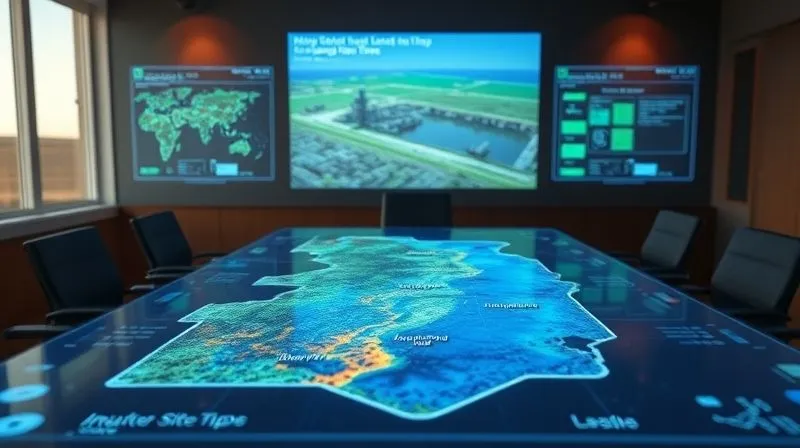
In the digital age, environmental due diligence is no longer limited to paper records and site visits. Advanced data analytics and geospatial tools offer unprecedented capabilities to unearth hidden risks that traditional methods might miss. This technological integration is crucial for preventing scenarios where legal due diligence misses critical environmental risks.
Satellite imagery, for instance, can reveal historical changes in land use, unauthorized dumping, or changes in water bodies around a site over decades. Geographic Information Systems (GIS) can layer various data points – historical maps, geological surveys, regulatory databases, and environmental monitoring data – to create a comprehensive risk profile, identifying potential contamination pathways or areas of concern that aren't immediately obvious.
"Leveraging big data and geospatial analytics transforms environmental due diligence from a reactive review into a proactive, predictive exercise, allowing for the identification of patterns and anomalies that indicate hidden risks." - Industry expert on environmental tech.
Furthermore, predictive analytics can model potential future environmental impacts, such as flood risks under different climate change scenarios or the spread of contaminants based on soil and hydrological data. This allows for a more forward-looking assessment of long-term liabilities and resilience.
Here's a comparison of traditional versus advanced environmental due diligence methods:
| Aspect | Traditional Due Diligence | Advanced Due Diligence |
|---|---|---|
| Data Sources | Paper records, basic site visits, limited public databases | Satellite imagery, GIS, historical aerials, advanced environmental databases, predictive modeling |
| Risk Detection | Primarily current, visible risks; relies heavily on self-reporting | Historical and emerging risks; identifies patterns, anomalies, and potential future liabilities |
| Scope | Often limited to immediate site and known issues | Broader geographical context, supply chain, climate impact, long-term projections |
| Expertise Required | Legal counsel, general environmental consultants | Environmental scientists, data analysts, GIS specialists, specialized environmental lawyers |
Regulatory Labyrinth: Navigating Evolving Environmental Laws and Compliance
Environmental law is a dynamic field, constantly evolving at local, national, and international levels. What constitutes compliance today might be a violation tomorrow. A significant challenge is navigating this regulatory labyrinth, especially in cross-border transactions where multiple jurisdictions' laws apply. This constant flux means that if legal due diligence misses critical environmental risks, it's often due to a failure to account for future regulatory shifts.
Staying abreast of legislative changes, proposed regulations, and enforcement trends is paramount. This includes understanding the nuances of laws like the Clean Air Act, Clean Water Act, RCRA (Resource Conservation and Recovery Act), CERCLA (Comprehensive Environmental Response, Compensation, and Liability Act, or Superfund), and state-specific equivalents. Furthermore, international agreements and directives, such as those from the European Union (e.g., REACH, RoHS), can impose significant obligations on global operations.
Effective legal due diligence must include a forward-looking regulatory analysis. This involves not just identifying current non-compliance but also assessing the likelihood of future regulatory changes that could impose new costs or liabilities on the target company. For example, a company heavily reliant on fossil fuels might face increasing regulatory burdens and carbon taxes in the coming years, impacting its financial viability.
Consulting official documentation from bodies like the U.S. Environmental Protection Agency (EPA) or the European Commission's Directorate-General for Environment is crucial for understanding the current and projected regulatory landscape.
Mitigation and Remediation Strategies: From Discovery to Resolution
Identifying an environmental risk is only the first step; the true value lies in developing a strategy for mitigation and remediation. This phase requires a collaborative effort between legal, financial, and environmental experts to formulate a plan that minimizes exposure and maximizes value. This proactive approach ensures that even if legal due diligence misses critical environmental risks initially, a robust response mechanism is in place.
Once a risk is identified, the legal team's role shifts to structuring the deal to address it. This might involve:
- Purchase Price Adjustment: Negotiating a reduction in the acquisition price to account for remediation costs.
- Indemnities and Escrows: Securing indemnification from the seller for specific environmental liabilities, often backed by an escrow fund to cover potential future costs.
- Environmental Insurance: Exploring specialized environmental insurance policies (e.g., pollution legal liability, cost cap policies) to transfer or mitigate residual risks.
- Remediation Agreements: Structuring clear agreements with the seller on who is responsible for conducting and funding any necessary cleanup or remediation activities post-closing.
- Covenant and Warranties: Ensuring robust environmental covenants and warranties are included in the transaction documents, providing recourse if new issues arise.
The chosen strategy will depend on the nature and magnitude of the risk, the negotiating leverage of the parties, and the overall risk appetite of the acquirer. A well-crafted mitigation plan can transform a potential deal-breaker into a manageable challenge, preserving the value of the transaction.

Post-Acquisition Vigilance: Continuous Monitoring and Risk Management
The completion of a transaction does not mark the end of environmental risk management; it's merely the beginning of a new phase. Environmental risk is not static; it evolves with operations, regulatory changes, and environmental conditions. Therefore, post-acquisition vigilance and continuous monitoring are absolutely crucial to ensure that what if legal due diligence misses critical environmental risks doesn't become a long-term problem.
Establishing robust internal controls, ongoing environmental audits, and a clear chain of responsibility for environmental compliance are essential. This includes regular site inspections, monitoring of emissions and discharges, waste management audits, and periodic reviews of environmental permits and licenses. Training employees on environmental best practices and compliance procedures is also vital for fostering a culture of environmental responsibility.
Furthermore, companies should implement a system for tracking emerging environmental regulations and scientific developments that could impact their operations or assets. This proactive 'horizon scanning' allows for adjustments to be made before a new regulation becomes a compliance burden or a previously unknown contaminant becomes a liability.
Here's a framework for post-acquisition environmental monitoring:
| Monitoring Area | Frequency | Key Actions |
|---|---|---|
| Regulatory Compliance | Quarterly/Annually | Permit review, audit reports, legislative tracking, internal policy updates |
| Operational Impact | Continuous/Monthly | Emissions/discharge monitoring, waste generation tracking, energy consumption analysis |
| Site Conditions | Annually/Bi-annually | Groundwater/soil testing, infrastructure integrity checks, land use changes |
| Supply Chain | Annually | Supplier environmental audits, ESG performance review, risk mapping |
| Climate Resilience | Annually | Physical risk assessments, transitional risk modeling, adaptation strategy review |
Frequently Asked Questions (FAQ)
What's the difference between Phase I and Phase II ESAs, and when is each necessary? A Phase I Environmental Site Assessment (ESA) is a non-intrusive investigation conducted to identify potential or existing environmental contamination liabilities. It involves site reconnaissance, historical record reviews, and interviews. If a Phase I identifies 'Recognized Environmental Conditions' (RECs), a Phase II ESA is usually recommended. A Phase II is intrusive, involving sampling and laboratory analysis of soil, groundwater, or building materials to confirm the presence and quantify the extent of contamination. Phase I is standard for most property transactions, while Phase II is necessary when the Phase I indicates a high probability of contamination or when specific concerns arise.
How do emerging contaminants (like PFAS) complicate traditional due diligence? Emerging contaminants like PFAS (per- and polyfluoroalkyl substances) pose a significant challenge because they were not traditionally regulated or even known liabilities. They are widespread, persistent, and increasingly linked to health concerns, leading to evolving regulatory scrutiny and litigation. Traditional due diligence might not have screened for these, meaning historical operations could have created significant, unknown liabilities. Addressing them requires specialized testing, a deep understanding of evolving science and regulation, and often, proactive engagement with environmental counsel to assess future risks.
Can environmental insurance truly protect against all liabilities? While environmental insurance can be a powerful tool for risk transfer, it's crucial to understand its limitations. Policies are highly specific, often covering only known or unknown conditions discovered within certain timeframes, for specific contaminants, and up to defined limits. They typically exclude pre-existing conditions not disclosed, punitive damages, or fines. It's not a blanket solution but a strategic component of a broader risk mitigation plan, requiring careful negotiation and expert review of policy terms.
What are the key red flags indicating potential environmental risks during initial screening? Key red flags include: historical industrial or commercial use (e.g., manufacturing, dry cleaning, gas stations); proximity to landfills, waste disposal sites, or other contaminated properties; evidence of spills or leaks on site; unusual soil or vegetation conditions; the presence of underground storage tanks (USTs); a history of environmental enforcement actions or violations; and a target company's lack of robust environmental management systems or a history of high water/energy consumption.
How can small to medium-sized businesses afford comprehensive environmental due diligence? For SMBs, the cost of comprehensive due diligence can seem daunting, but the cost of missing critical risks is far greater. Strategies include: prioritizing the most critical assets for deeper dives; leveraging technology for more cost-effective initial screenings; negotiating with sellers to share due diligence costs; utilizing environmental indemnities and escrows to transfer some risk; and focusing on a phased approach where initial assessments guide further, more targeted investigations. The key is to view it as a necessary investment, not an optional expense.
Key Takeaways and Final Thoughts
The question of 'What if legal due diligence misses critical environmental risks?' is not theoretical; it's a very real threat to any transaction or business operation. In my experience, preventing such oversights requires a paradigm shift from a checklist mentality to a comprehensive, forward-looking, and multidisciplinary approach.
- Expand Your Scope: Look beyond current compliance to historical land use, emerging contaminants, and future regulatory trends.
- Integrate ESG and Climate Risk: Actively assess physical and transitional climate-related liabilities as part of your legal review.
- Leverage Specialized Expertise: Engage environmental scientists and specialized legal counsel early and often.
- Embrace Data and Technology: Utilize geospatial tools and advanced analytics to uncover hidden risks.
- Plan for Mitigation: Develop robust strategies for indemnities, escrows, and insurance to manage identified risks.
- Maintain Vigilance: Implement continuous post-acquisition monitoring and risk management programs.
By adopting these strategies, you can transform your legal due diligence from a potential vulnerability into a powerful strategic asset. Don't let environmental blind spots derail your ambitions. Proactive, expert-driven due diligence isn't just about avoiding catastrophe; it's about building a resilient, sustainable, and truly valuable enterprise for the long term.
Recommended Reading
- 7 Proactive Strategies: How to Mitigate Software Royalty Payment Disputes
- Avoid Costly Misclassifications: 7 Steps to Legally Classify Contractors vs. Employees
- 7 Reasons Your E-commerce Ad ROAS Misses & How to Fix It
- 5 Pillars: How to Secure Sensitive Company Data on Remote Personal Devices
- Compliance Audit Triggers: What Every Legal Business Needs to Know

![Breach of Contract: Fixing Vendor Agreements FAST [Expert Guide]](/uploads/businessspur/posts/breach-of-contract-fixing-vendor-agreements-fast-expert-guide-jw5hy.webp)



Comments
Leave a comment below. Your email will not be published. Required fields marked with *