


What Specific Red Flags Stop VCs from Funding My Seed Round?
For over 15 years, navigating the intricate world of venture capital, I've witnessed countless brilliant ideas and passionate founders stumble at the seed round stage, not because their vision wasn't compelling, but because they inadvertently triggered a series of red flags. It’s a disheartening sight when a promising startup fails to secure vital early-stage capital.
The journey to securing seed funding is often portrayed as a linear path, but in reality, it's more akin to a minefield. Many founders, brimming with innovation, often overlook critical details that, to a seasoned investor, scream 'risk'. This oversight can quickly derail even the most promising venture, leaving founders frustrated and their dreams unfunded.
In this definitive guide, I'll pull back the curtain on the most common and often subtle red flags that stop VCs from funding your seed round. You'll gain access to actionable frameworks, real-world scenarios, and expert insights to not only identify these pitfalls but also proactively address them, significantly boosting your chances of securing the capital you need to thrive.
The Unprepared Founder & Flawed Pitch Deck
One of the first and most glaring red flags for any VC is an unprepared founder. Your pitch deck isn't just a presentation; it's a reflection of your understanding, your dedication, and your ability to execute. A haphazard or incomplete deck signals a lack of seriousness and foresight.
Lack of Market Insight and Understanding
VCs invest in markets, not just products. If you can't articulate the size, trends, and nuances of your target market, it's a significant concern. I’ve seen founders passionately describe their product without a clear grasp of who their actual customers are, how many exist, or what their purchasing power truly is.
- Vague Total Addressable Market (TAM): Presenting an impossibly large TAM without clear segmentation or justification.
- Ignorance of Market Dynamics: Not understanding regulatory shifts, technological advancements, or socio-economic factors impacting your industry.
- Poor Customer Definition: Inability to clearly define your ideal customer profile (ICP) and their pain points.
Vague Business Model & Go-to-Market Strategy
A brilliant product without a clear path to profitability and customer acquisition is a hobby, not a business. VCs want to see a well-thought-out plan for how you'll make money and how you'll reach your customers efficiently and effectively.
- Define Your Revenue Streams: Clearly outline how your product or service will generate income. Be specific about pricing models, subscription tiers, or transaction fees.
- Detail Your Customer Acquisition Channels: Identify your primary and secondary channels for reaching customers (e.g., digital marketing, partnerships, direct sales). Provide estimated costs per acquisition (CAC).
- Illustrate Your Sales Funnel: Show how leads will move from awareness to conversion. This demonstrates a strategic approach to growth.
- Project Key Milestones: Outline the measurable steps you'll take to achieve product-market fit and scale.
Case Study: The 'Visionary' Who Lacked a Map
AuraTech, a promising AI-driven content creation tool, approached investors with a stunning demo but a nebulous business model. The founder, while charismatic, couldn't clearly articulate how they would monetize beyond a generic 'subscription' or how they would acquire their first 10,000 paying users. Their TAM was presented as 'everyone who writes online,' lacking any real segmentation. Despite the innovative tech, VCs quickly flagged this as a high-risk investment due to the absence of a viable path to commercialization and scalable growth.
Expert Insight: "A compelling vision is essential, but without a concrete business model and a clear go-to-market strategy, it remains just that – a vision. VCs fund executable plans, not just dreams."
Weak Team Dynamics & Lack of Domain Expertise
Investors often say they invest in teams first, then ideas. A strong, cohesive, and experienced team can pivot from a bad idea, but a weak team will sink even the best one. This is a critical area where red flags frequently emerge.
Incomplete or Imbalanced Founding Team
A common pitfall is a team that lacks crucial skill sets. A solo founder, or a team of all engineers without a business development lead, or vice versa, presents a significant imbalance. VCs look for a 'dream team' covering product, technology, marketing, and operations.
- The Solo Founder Syndrome: While admirable, solo founders often struggle with the immense workload and lack diverse perspectives.
- Missing Key Roles: A tech startup without a strong technical lead, or a B2B SaaS without a sales expert, raises immediate questions.
- Lack of Complementary Skills: If all founders share similar backgrounds and skills, it can lead to blind spots and a lack of critical challenge within the team.
Poor Communication & Conflict Resolution
Internal team friction, unresolved disputes, or a lack of clear communication within the founding team are immediate deal-breakers. VCs often probe this during diligence, looking for signs of dysfunction.

I've seen situations where founders contradict each other during a pitch or demonstrate clear signs of unresolved tension. This signals instability and a high probability of future operational issues, which is one of the most significant red flags that stop VCs from funding your seed round.
Unrealistic Financial Projections & Valuation Expectations
Numbers tell a story, and if your story is pure fantasy, VCs will quickly lose interest. Unrealistic financial projections and an overinflated valuation are common reasons for rejection.
Hockey Stick Projections Without Basis
Every founder projects growth, but VCs are wary of exponential, unjustified 'hockey stick' curves. These projections need to be grounded in realistic assumptions about market penetration, customer acquisition costs, and operational scaling.
- No Bottom-Up Analysis: Relying solely on top-down market size estimates without breaking down how you'll acquire specific customers.
- Ignoring Competition: Assuming you'll capture an unrealistic market share without accounting for competitive pressures.
- Lack of Unit Economics: Not understanding or presenting your cost per acquisition, customer lifetime value (LTV), or gross margins.
Overinflated Valuation
Founders often anchor their valuation based on recent headlines or aspirational figures, rather than what's justifiable for their stage, traction, and market. An unreasonable valuation signals either naiveté or arrogance, both of which are off-putting to investors.
| Valuation Mistake | VC Perception | Solution |
|---|---|---|
| Anchoring to unrealistic comps | Lack of market understanding | Research comparable seed-stage deals, justify with traction |
| Ignoring dilution impact | Inexperience with equity dynamics | Understand future funding rounds, model dilution |
| Projecting future value as current | Overconfidence, lack of realism | Base valuation on current traction, team, and market opportunity |
| No clear use of funds | Undisciplined capital allocation | Present a detailed budget and milestones tied to funding |
Remember, VCs are looking for a return on investment. If your valuation leaves no room for significant upside, or if it implies a level of maturity you haven't achieved, they'll simply pass.
Absence of Product-Market Fit & Traction
In the seed stage, VCs are looking for early signals that your product resonates with a specific market need. The absence of this 'product-market fit' or demonstrable traction is a major deterrent.
Solving a Non-Existent Problem
Many founders fall in love with their solution before adequately validating the problem it solves. Building a product nobody needs, no matter how innovative, is a recipe for failure. VCs want to see evidence that your target customers genuinely experience the pain point you're addressing.
Lack of Early User Validation and Traction
Even at the seed stage, some form of traction is crucial. This doesn't necessarily mean millions in revenue, but it could be:
- Engaged Early Users: A growing base of beta users who actively use and provide feedback on your product.
- Positive User Feedback: Testimonials, case studies, or data showing high satisfaction and usage.
- Waitlists: A significant number of sign-ups for a product not yet launched, demonstrating strong demand.
- Pilot Programs: Successful trials with key customers, ideally with letters of intent or early contracts.

As Harvard Business Review often emphasizes, product-market fit is the ultimate indicator of a startup's potential. Without it, scaling becomes an uphill battle.
IP Issues & Competitive Landscape Blind Spots
Protecting your innovation and understanding your competitive environment are fundamental to building a defensible business. Lapses here are significant red flags.
Undefined or Unprotected Intellectual Property
If your business relies on unique technology, algorithms, or processes, VCs will want to know it's protected. A lack of clarity on IP ownership, or failure to secure patents, trademarks, or copyrights where appropriate, exposes the business to unnecessary risk.
- No Clear IP Strategy: Not having a plan for how you'll protect your core innovations.
- Co-founder IP Disputes: Ambiguity around who owns what, especially if founders leave.
- Open Source Misuse: Unknowingly using open-source code in a way that creates licensing liabilities.
Ignoring Key Competitors
A founder who claims to have 'no competition' immediately raises a red flag. It suggests either a lack of research or a fundamental misunderstanding of the market. Every business has competitors, even if they're indirect or 'do-nothing' alternatives.
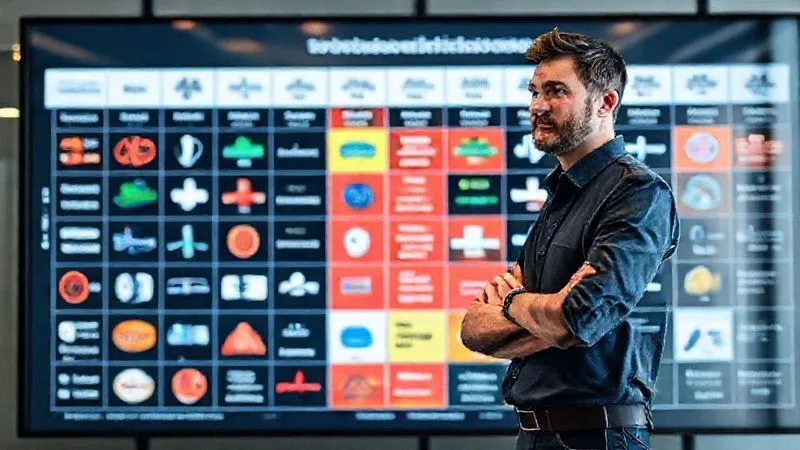
VCs expect you to know your competitors inside out – their strengths, weaknesses, and how you differentiate. A robust competitive analysis shows you're grounded in reality and have a defensible strategy.
Regulatory & Legal Compliance Gaps
Ignoring legal and regulatory frameworks can lead to catastrophic consequences, from hefty fines to forced shutdowns. VCs are highly sensitive to these risks.
Overlooking Industry-Specific Regulations
Different industries come with different regulatory hurdles. Whether it's healthcare (HIPAA), finance (PCI DSS), or data privacy (GDPR, CCPA), a lack of awareness or a plan for compliance is a major red flag. This is particularly true for startups operating in highly regulated sectors.
Poor Corporate Governance
How your company is structured and managed legally speaks volumes. Issues like unissued founder shares, unclear cap tables, or a lack of proper legal documentation (e.g., shareholder agreements, employment contracts) indicate disorganization and potential future legal battles.
As Forbes often highlights, strong corporate governance is foundational to building a scalable and trustworthy business. Neglecting it is a surefire way to trigger investor concern.
Misalignment with Investor Thesis & Fund Strategy
Sometimes, the red flag isn't about your company's intrinsic quality, but about its fit with the specific investor you're pitching. This is a common and often overlooked reason why VCs stop funding your seed round.
Pitching the Wrong VC
Not all VCs are created equal. Each fund has a specific investment thesis – preferred industries, stage of investment (seed, Series A, etc.), geographic focus, and typical check size. Pitching a B2B SaaS company to a VC that only invests in deep tech biotech is a waste of everyone's time and signals a lack of due diligence on your part.
Ignoring Due Diligence Requests
Once a VC shows interest, they'll initiate due diligence. This involves requests for detailed financial data, legal documents, product roadmaps, and more. Slow responses, incomplete data, or an inability to provide requested information are serious red flags. It suggests either disorganization, a lack of transparency, or something to hide.

Being prepared for due diligence means having a data room ready and a clear understanding of every aspect of your business. This proactive approach builds immense trust.
| Criterion | Founder Action | Red Flag if Ignored |
|---|---|---|
| Sector Fit | Research VC's portfolio, identify common industries | VC invests in SaaS, you're biotech |
| Stage Fit | Confirm VC invests in seed/pre-seed | VC only does Series A+ |
| Geographic Focus | Check VC's regional investment history | VC only invests in Silicon Valley, you're in Europe |
| Check Size | Understand average investment amount | You need $2M, VC's minimum is $5M |
| Value-Add | Identify how VC's expertise/network aligns | No clear synergy beyond money |
Poor Storytelling & Inability to Inspire Confidence
Beyond the facts and figures, VCs invest in people and their ability to articulate a compelling future. A dry, uninspired pitch, or an inability to clearly communicate your vision, can be a fatal red flag.
Generic Pitch, No Passion
If your pitch sounds like a template, lacking your unique voice and passion, it's hard to get investors excited. VCs hear hundreds of pitches; yours needs to stand out. Enthusiasm is infectious, and its absence is palpable.
Inability to Articulate Vision and Impact
Can you clearly explain your 'why'? What problem are you solving, and what impact will your solution have on the world, your industry, or your customers' lives? A founder who struggles to convey their long-term vision or the broader significance of their work often fails to connect with investors on an emotional level.
As communication experts like Seth Godin consistently remind us, storytelling is paramount. Your ability to weave a narrative around your data and vision is what truly inspires confidence and makes your pitch memorable.
Frequently Asked Questions (FAQ)
What if I'm a solo founder? Is that an automatic red flag? While it can be a red flag, it's not always an automatic rejection. VCs will scrutinize your ability to delegate, hire, and build a strong team around you. Having a robust advisory board, demonstrating exceptional domain expertise, and a clear plan for key hires can mitigate this concern. It's about showing you understand the demands of scaling a company and aren't trying to do everything yourself.
How much traction is 'enough' for a seed round? 'Enough' is subjective and depends heavily on your industry and business model. For B2C, it might be significant user growth and engagement metrics. For B2B, it could be a few paying pilot customers or strong letters of intent. The key is demonstrating clear evidence of product-market fit, even if nascent, and a repeatable customer acquisition model, however small. It's less about the absolute number and more about the quality and trend of your early data.
My valuation is higher than average for my stage. How do I justify it? Justifying a higher valuation requires compelling evidence. This could include exceptional intellectual property, a truly unique and proven technology, a founding team with a strong track record of exits, or early traction that significantly outperforms peers. You must back up your valuation with concrete, defensible reasons, not just optimism. Be prepared to show how your company is an outlier.
Should I disclose internal team conflicts to VCs during due diligence? Transparency is crucial, but strategic. Minor disagreements are normal in any startup. However, significant, unresolved conflicts that impact operations or leadership stability should be addressed internally before pitching. If a serious conflict is discovered during diligence, it will be a major red flag. It's better to demonstrate how you've successfully navigated challenges and built a stronger team.
What if my market research is limited due to a completely novel product? For truly novel products, traditional market research might be scarce. In such cases, VCs look for strong 'first-principles' thinking. This means demonstrating a deep understanding of fundamental human needs or technological shifts, extensive customer discovery interviews (qualitative data), and early experiments or prototypes that validate demand. Focus on the underlying problem you're solving and why existing solutions are inadequate, even if indirect.
Key Takeaways and Final Thoughts
Securing seed funding is a challenging but immensely rewarding endeavor. By understanding and proactively addressing the specific red flags that stop VCs from funding your seed round, you significantly increase your chances of success. It's about presenting a holistic, well-thought-out, and defensible business that instills confidence.
- Preparation is Paramount: Know your market, your business model, and your numbers inside out.
- Build a Balanced Team: Ensure your founding team covers all critical skill sets and demonstrates strong cohesion.
- Validate Early & Often: Show clear evidence of product-market fit and early traction.
- Protect Your Assets: Have a clear IP strategy and robust corporate governance.
- Target Strategically: Pitch to VCs whose investment thesis aligns with your company's stage and sector.
- Master Your Narrative: Tell a compelling story that inspires confidence and articulates your vision.
Remember, every 'no' is an opportunity to learn and refine. Take feedback, iterate on your approach, and continuously strengthen your business foundation. The venture capital journey is a marathon, not a sprint. By meticulously preparing and strategically avoiding these common pitfalls, you're not just seeking funding; you're building a resilient, investable company that's ready to make its mark.
Recommended Reading
- Consultants: 7 Steps to Deep Expertise for New Industry Clients
- Unlock Global Visibility: 7 Strategies for Beyond Tier 1 Supply Chain Transparency
- Franchise Consultant: Is the Cost Really Worth It? Find Out!
- Cash Crisis? 5 Fast Small Business Loan Options & How to Secure Them Now
- Navigating the Leader's Dilemma: 7 Steps for Tough Calls with Incomplete Data





Comments
Leave a comment below. Your email will not be published. Required fields marked with *