


What to do when product innovation ideas consistently fail to launch?
For over 20 years in innovation management, I've witnessed countless brilliant product ideas wither on the vine, never seeing the light of day. The enthusiasm at the ideation stage is palpable, the whiteboard sessions are vibrant, but somewhere between concept and commercialization, the momentum dies. This isn't just a minor setback; it's a profound drain on resources, morale, and ultimately, a company's competitive edge.
The pain points are universal: wasted R&D budgets, frustrated teams, missed market opportunities, and a growing skepticism about the entire innovation process. You're not alone if you've felt this sting. The challenge isn't usually a lack of good ideas, but rather a systemic breakdown in how those ideas are nurtured, validated, and brought to market. It's a complex interplay of strategy, execution, and culture.
In this definitive guide, I'll share my insights and battle-tested frameworks on what to do when product innovation ideas consistently fail to launch. We'll explore the root causes, dissect common pitfalls, and, most importantly, provide you with actionable steps, expert strategies, and real-world considerations to transform your innovation pipeline from a graveyard of good intentions into a vibrant launchpad for market-leading products.
1. Re-evaluate Your Innovation Thesis: Are You Solving the Right Problem?
The first and most critical step when product innovation ideas consistently fail to launch is to pause and scrutinize your fundamental innovation thesis. Are you truly addressing a significant, unmet customer need or merely chasing a technological novelty? In my experience, many innovation efforts stumble because they begin with a solution looking for a problem, rather than a deep understanding of customer pain points.
The Pitfall of Solution-First Thinking
Innovation often gets derailed when teams become enamored with a particular technology or feature set without adequately validating its necessity in the market. This 'build it and they will come' mentality is a relic of a bygone era and a recipe for consistent failure. As Steve Blank, the father of Customer Development, consistently preaches, 'no business plan survives first contact with customers.'
“True innovation doesn't just create new things; it creates new value by solving old problems in novel ways, or by addressing problems people didn't even realize they had.”
To shift from solution-first to problem-first, consider these actionable steps:
- Conduct Deep Empathy Research: Go beyond surface-level surveys. Spend time observing your target customers in their natural environment. Conduct ethnographic studies, in-depth interviews, and 'day-in-the-life' analyses to uncover latent needs and frustrations.
- Map the Customer Journey: Visualize every touchpoint your customer has with your product category or problem space. Identify friction points, emotional highs and lows, and moments of unmet desire. This often reveals unexpected innovation opportunities.
- Define the Problem Statement Clearly: Before any solution ideation, articulate the problem you're trying to solve with crystal clarity. Use frameworks like 'Jobs-to-be-Done' (JTBD) to understand the fundamental job customers are hiring your product to do, rather than focusing on product features.
- Validate Problem Significance: Quantify the size and impact of the problem. How many people experience it? How often? What's the cost (financial, emotional, time) of the problem going unsolved? This data is crucial for prioritizing innovation efforts.

By rigorously defining and validating the problem *before* designing the solution, you dramatically increase the chances that your innovation will resonate with the market. This foundational work is non-negotiable for sustainable innovation success.
2. Master the Art of Customer-Centric Validation
Once you're confident you're tackling a real problem, the next common stumbling block is insufficient or flawed customer validation of your proposed solutions. Many companies rush to build a fully-fledged product based on internal assumptions, only to discover post-launch that it doesn't quite hit the mark. This is why product innovation ideas consistently fail to launch – the market simply isn't ready or interested.
Beyond Surveys: Deep Dive into User Needs
Effective validation goes far beyond simple 'yes/no' surveys. It's an iterative process of building, measuring, and learning. It requires putting rough prototypes and minimum viable products (MVPs) into the hands of real users as early and often as possible. According to a Harvard Business Review article on innovation failure, a significant cause is a lack of rigorous experimentation and learning from customers.
Consider these validation stages and their typical outcomes:
| Validation Stage | Methodology | Outcome |
|---|---|---|
| Problem Validation | Interviews, Ethnography, JTBD | Confirms significant unmet need |
| Solution Validation | Low-fidelity prototypes, Concept testing | Identifies preferred solution approaches |
| Product Validation | MVPs, A/B testing, Pilot programs | Confirms product desirability, viability, and feasibility |
| Market Validation | Beta launches, Targeted campaigns | Assesses market acceptance and growth potential |
Case Study: How 'Connectify' Pivoted to Success
Connectify, a fictional startup aiming to revolutionize professional networking, initially built a feature-rich platform based on internal brainstorming. They spent 18 months in development before launching. The launch was a flop; users found the platform overwhelming and didn't see a clear value proposition over existing tools. Their innovation idea failed to launch because they skipped crucial validation steps.
After realizing their mistake, they paused, went back to basics, and conducted extensive problem validation interviews. They discovered professionals primarily needed a simpler, more secure way to share contact details and follow up after events, not another social network. They then built a bare-bones MVP focused solely on secure contact exchange with a unique QR code system. They launched this MVP to a small group, iterated based on feedback, and within six months, had a viral product gaining traction. This iterative, customer-centric approach transformed their trajectory.
“The market doesn't care how brilliant your idea is; it cares how well it solves its problems. Listen, learn, and adapt relentlessly.”
Embrace a lean startup methodology, focusing on rapid experimentation and data-driven decision-making. This iterative validation process ensures you're building something people actually want and need, significantly reducing the risk of launch failure.
3. Fortify Your Cross-Functional Collaboration & Communication
A silent killer of innovation is the siloed organizational structure. When R&D, marketing, sales, operations, and leadership operate in their own bubbles, critical information gets lost, misinterpretations abound, and the cohesive vision required for a successful launch evaporates. This breakdown in collaboration is a major reason why product innovation ideas consistently fail to launch.
Breaking Down Silos: The Innovation Catalyst
Innovation is inherently a team sport. It requires diverse perspectives, expertise, and buy-in from across the organization. I've often seen projects with immense potential falter because the marketing team wasn't involved early enough to shape the value proposition, or sales wasn't brought in to provide critical market feedback, or operations couldn't scale the proposed solution. These disconnects create friction, delay, and ultimately, failure.
To foster robust cross-functional collaboration:
- Establish Dedicated Innovation Teams: Form small, empowered, cross-functional teams with representatives from all key departments (e.g., product, engineering, design, marketing, sales, legal). These teams should have clear mandates and autonomy.
- Implement Shared Goals and Metrics: Ensure that all team members, regardless of their departmental origin, are aligned around common innovation goals and success metrics. This fosters a shared sense of ownership and accountability.
- Regular, Transparent Communication: Schedule frequent stand-ups, review sessions, and communication channels (e.g., shared project management tools) to ensure everyone is always on the same page regarding progress, challenges, and decisions.
- Physical or Virtual Co-location: Whenever possible, have innovation teams work together in a dedicated physical space or leverage robust virtual collaboration tools to mimic that proximity.
- Leadership Endorsement: Senior leadership must actively champion cross-functional collaboration, breaking down departmental barriers and rewarding collaborative behaviors.

Effective communication isn't just about sharing information; it's about building shared understanding, trust, and a collective commitment to the innovation's success. When everyone is rowing in the same direction, the likelihood of a successful launch dramatically increases.
4. Optimize Your Product-Market Fit Strategy
Even with a validated problem and a well-designed solution, failure to achieve product-market fit (PMF) is a significant barrier to launch success. PMF, famously defined by Marc Andreessen, is 'being in a good market with a product that can satisfy that market.' It's the sweet spot where your product truly resonates with a large enough segment of customers who actively need and desire what you offer.
The Iterative Journey to Market Resonance
Achieving PMF is rarely a 'big bang' event; it's an iterative process of refinement, learning, and adaptation. Many product innovation ideas consistently fail to launch because companies either assume PMF or stop iterating too soon. They launch a product that's 'good enough' but not 'must-have.' Forbes often highlights the critical role of PMF in startup success and product longevity.
“Product-market fit isn't a destination; it's a state of being where your product's value proposition so perfectly aligns with a market's need that growth becomes almost organic.”
Here's how to optimize your PMF strategy:
- Define Your Target Market Segments: Be incredibly precise about *who* you are building for. Create detailed buyer personas that go beyond demographics to include psychographics, behaviors, and pain points.
- Articulate a Unique Value Proposition (UVP): Clearly state what makes your product different and better than existing alternatives. Why should a customer choose *your* solution? This UVP should directly address the validated problem.
- Test Your UVP and Messaging: Before launch, test different messaging and positioning with your target audience. Do they understand the value? Does it resonate? Use A/B testing on landing pages or concept ads.
- Monitor Key PMF Metrics: Post-launch, relentlessly track metrics that indicate PMF. These include:
- Retention Rate: Are users sticking around?
- Engagement Rate: How often and deeply are they using the product?
- Net Promoter Score (NPS) / Customer Satisfaction (CSAT): Are users happy enough to recommend it?
- Word-of-Mouth Referrals: Is organic growth happening?
- Usage Frequency: How often do users return to the product?
- Iterate Based on Feedback: Use the data and qualitative feedback from your PMF metrics to continuously refine your product, messaging, and target audience. PMF is a moving target that requires constant calibration.
Without a strong PMF, even the most innovative product will struggle to gain traction. It's the engine that drives sustainable growth and ensures your innovation isn't just launched, but truly adopted.
5. Enhance Your Go-to-Market (GTM) Execution
A brilliant product idea, even with strong PMF, can still fail if its go-to-market (GTM) strategy is flawed or poorly executed. The GTM plan is the blueprint for how you will reach your target customers, communicate your value, and sell your product. Many product innovation ideas consistently fail to launch because the GTM strategy is an afterthought, rather than an integrated part of the innovation process.
From Idea to Impact: A Seamless Transition
The GTM strategy encompasses everything from pricing and distribution channels to marketing campaigns and sales enablement. It requires meticulous planning and seamless coordination across marketing, sales, and product teams. I've witnessed spectacular products languish because of an inadequate GTM, proving that execution is just as vital as innovation itself.
Key components of a robust GTM strategy include:
- Pricing Strategy: How will you price your product to reflect its value, attract target customers, and achieve profitability? Consider value-based pricing, competitive pricing, or freemium models.
- Distribution Channels: How will customers access your product? Will it be direct-to-consumer, through partners, marketplaces, or a sales force?
- Marketing & Messaging: What are the core messages you'll convey? Which channels (digital, PR, events) will you use to reach your audience? Develop a comprehensive content strategy.
- Sales Enablement: If applicable, equip your sales team with the tools, training, and materials they need to effectively sell the new product.
- Launch Plan & Timeline: A detailed roadmap outlining all pre-launch, launch, and post-launch activities, responsibilities, and deadlines.
| GTM Element | Key Question | Action |
|---|---|---|
| Target Audience | Who are we selling to? | Detailed buyer personas, market segmentation |
| Value Proposition | What problem do we solve? | Clear, concise UVP, benefits-driven messaging |
| Pricing Strategy | How will we monetize? | Research competitive pricing, value-based models |
| Channel Strategy | Where will we sell? | Identify optimal distribution channels (online, retail, direct) |
| Marketing Strategy | How will we generate demand? | Content marketing, social media, PR, advertising |
| Sales Strategy | How will we close deals? | Sales training, tools, lead qualification process |
According to McKinsey & Company's research, a well-executed GTM strategy can significantly accelerate growth and market penetration. Don't underestimate its power. Treat your GTM plan with the same rigor and strategic thinking as your product development, and you'll dramatically improve your launch success rate.
6. Cultivate a Culture of Experimentation and Learning
When product innovation ideas consistently fail to launch, it often points to a deeper cultural issue: an aversion to failure and a lack of psychological safety for experimentation. In organizations where failure is punished rather than seen as a learning opportunity, teams become risk-averse, leading to paralysis by analysis or the premature abandonment of promising ideas.
Embracing Failure as a Stepping Stone
True innovation is inherently risky. Not every idea will succeed, and many will need significant pivots. A culture that fosters experimentation understands that 'failure' is simply data – information that helps refine the path forward. As Thomas Edison famously said, 'I have not failed. I've just found 10,000 ways that won't work.'
“Innovation thrives not in the absence of failure, but in the presence of a culture that learns from it, adapts, and encourages bold, calculated risks.”
To cultivate a learning-oriented innovation culture:
- Promote Psychological Safety: Leaders must explicitly communicate that experimentation and even 'failed' experiments are valued. Create an environment where employees feel safe to propose unconventional ideas and admit when things aren't working.
- Celebrate Learning, Not Just Success: Recognize teams not just for successful launches, but also for valuable insights gained from experiments, even those that didn't lead to a product. Share these learnings widely.
- Allocate 'Discovery Time': Encourage employees to dedicate a portion of their time to exploring new ideas, technologies, or customer problems without immediate pressure for commercialization.
- Implement Post-Mortems/Retrospectives: After every innovation project, successful or not, conduct thorough retrospectives. Focus on 'what did we learn?' and 'what can we do better next time?' rather than assigning blame.
- Lead by Example: Senior leaders must demonstrate a willingness to take calculated risks, admit when their own assumptions were wrong, and openly discuss lessons learned from their own 'failures.'
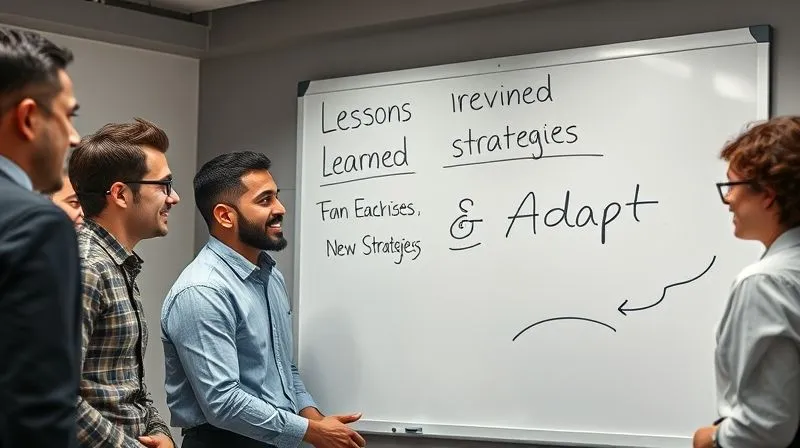
A culture of continuous learning and experimentation transforms setbacks from roadblocks into launchpads. It ensures that valuable insights are captured and applied, making your innovation pipeline more robust and resilient over time.
7. Establish Robust Metrics and Continuous Feedback Loops
Finally, a critical reason why product innovation ideas consistently fail to launch, or fail to thrive post-launch, is the absence of clear, measurable metrics and a consistent feedback mechanism. Without these, innovation efforts operate in a vacuum, making it impossible to assess progress, identify issues early, and make data-driven decisions.
Measuring What Truly Matters
What gets measured gets managed. This adage is particularly true in innovation. From the initial concept to post-launch optimization, every stage of the innovation process should be guided by specific, quantifiable metrics. These metrics shouldn't just be about financial returns, but also about customer engagement, problem-solving effectiveness, and operational efficiency. The importance of metrics in innovation is well-documented by Gartner.
Consider establishing a comprehensive measurement framework:
- Define KPIs for Each Stage:
- Ideation: Number of validated problems, diversity of ideas generated.
- Validation: Number of customer interviews, prototype testing completion rates, user feedback scores.
- Development: On-time completion rates, bug density, performance metrics.
- Launch: Adoption rate, initial sales, customer acquisition cost (CAC), market share.
- Post-Launch: Retention rate, engagement metrics, Net Promoter Score (NPS), customer lifetime value (CLTV), revenue growth.
- Implement Feedback Loops:
- Internal: Regular cross-functional reviews, project retrospectives, 'lessons learned' sessions.
- External: Customer surveys, user testing, beta programs, social media monitoring, direct customer support feedback, competitive analysis.
- Utilize Data Analytics Tools: Invest in tools that allow you to collect, analyze, and visualize data effectively. Dashboards should provide real-time insights into key innovation metrics.
- Regular Review and Adaptation: Schedule regular meetings (e.g., weekly, monthly, quarterly) to review performance against KPIs, discuss feedback, and make necessary adjustments to the product or strategy. Don't be afraid to pivot if the data indicates it's necessary.
- Benchmark Against Best Practices: Compare your innovation metrics against industry benchmarks and leading innovators to identify areas for improvement.

Robust metrics and continuous feedback are the navigation system for your innovation journey. They provide the necessary visibility to steer clear of obstacles, correct course when needed, and ultimately ensure that your product innovation ideas not only launch but thrive in the market.
Frequently Asked Questions (FAQ)
Question? What's the single biggest reason why product innovation ideas consistently fail to launch, and how can I address it immediately?
Answer: In my experience, the single biggest reason is a lack of rigorous, continuous customer validation from problem identification through solution development. Many companies build what they *think* customers want, rather than what customers *actually* need and are willing to pay for. To address this immediately, implement a 'discovery sprint' where you conduct 10-15 in-depth customer interviews focused solely on understanding their pain points in a specific area, without discussing your proposed solution. This shifts your focus from building to learning, providing invaluable insights.
Question? My team is very technical, and they struggle with the 'soft skills' of customer empathy and market research. How can I bridge this gap?
Answer: This is a common challenge. First, integrate product managers or designers with strong customer-centric skills into your technical teams, ensuring they act as the voice of the customer. Second, provide training specifically on user research methodologies, active listening, and empathy mapping for your technical staff. Third, arrange direct exposure: have engineers observe customer interviews, participate in usability testing, or even spend a 'day in the life' with a customer. Seeing the problem firsthand can be incredibly motivating and enlightening for technical teams.
Question? We have many ideas, but they get stuck in an endless 'incubation' phase. How do we move from ideation to action and launch?
Answer: The 'incubation trap' often stems from a lack of clear decision-making criteria and a fear of committing resources. Implement a structured stage-gate process with clearly defined deliverables and 'kill points' at each stage. Each gate should require specific evidence (e.g., validated problem, tested MVP, confirmed PMF) before proceeding. Also, establish a dedicated innovation budget and allocate resources with strict timelines, forcing decisions to be made. Remember, a quick 'no' is often better than a prolonged 'maybe.'
Question? Our company culture is very risk-averse. How can I begin to foster a culture of experimentation without alienating senior leadership?
Answer: Start small and demonstrate tangible wins. Identify a low-risk, high-learning potential project. Frame it as an 'experiment' to test a hypothesis, not a guaranteed success. Clearly define the hypothesis, the metrics for success (or learning), and the limited resources allocated. Share the learnings (even from 'failures') and the resulting adaptations transparently with leadership. Over time, these small successes will build trust and demonstrate the value of experimentation, making it easier to advocate for broader cultural shifts. Quantify the cost of inaction or missed opportunities to underscore the need for calculated risk-taking.
Question? What role does leadership play when product innovation ideas consistently fail to launch, beyond just funding?
Answer: Leadership's role is absolutely paramount. Beyond funding, they must champion the innovation vision, clearly communicate its strategic importance, and actively remove organizational roadblocks. This includes fostering psychological safety, allocating dedicated resources (time, budget, talent), celebrating learning, and modeling the desired behaviors (e.g., embracing experimentation, admitting mistakes). They must also protect innovation teams from internal politics and short-term pressures, allowing them the space to truly innovate. Without active, engaged leadership, even the best innovation initiatives are likely to falter.
Key Takeaways and Final Thoughts
- Solve Real Problems: Begin by rigorously validating significant, unmet customer needs before developing solutions.
- Validate Continuously: Embrace iterative customer validation with prototypes and MVPs, learning and adapting at every stage.
- Collaborate Seamlessly: Break down silos and foster robust cross-functional teamwork and transparent communication.
- Achieve Product-Market Fit: Relentlessly pursue the sweet spot where your product genuinely resonates with a receptive market.
- Execute Flawlessly: Develop and implement a comprehensive go-to-market strategy that is as robust as your product.
- Cultivate Learning: Foster a culture of experimentation where 'failure' is seen as a valuable data point for future success.
- Measure & Adapt: Establish clear KPIs and continuous feedback loops to guide your innovation journey and enable data-driven pivots.
The journey from a nascent idea to a successful product launch is fraught with challenges, but it's far from insurmountable. When product innovation ideas consistently fail to launch, it's a signal to look deeper, not to abandon innovation altogether. By systematically addressing the root causes – from flawed problem definition to inadequate GTM execution – and by building a resilient, customer-centric, and learning-oriented innovation process, you can transform your organization's ability to bring truly impactful products to market. Embrace these strategies, and watch your innovation pipeline flourish, delivering not just new products, but sustained growth and competitive advantage.
Recommended Reading
- Startup Growth: Best Customer Acquisition Strategies to Explode!
- Cut Procurement Spend by 15%: Quality-First Strategies for Smarter Savings
- How to Effectively Prevent Project Scope Creep & Save Timelines
- 7 Steps: How to Effectively Measure ROI for Inbound Marketing?
- 5 Proven Steps: Resolve Conflicting Priorities in Cross-Functional Teams





Comments
Leave a comment below. Your email will not be published. Required fields marked with *