


What to do when project scope creep threatens execution success?
For over two decades in the trenches of project management, I've witnessed firsthand the silent assassin that lurks in the shadows of every project: scope creep. It starts innocently enough – a small, seemingly harmless 'tweak' here, a 'minor addition' there. But before you know it, your meticulously planned project, once a lean, mean execution machine, has bloated into an unrecognizable beast, devouring resources, time, and morale.
This insidious expansion of project requirements beyond the initially agreed-upon scope is more than just an annoyance; it’s a direct threat to your project’s very existence. It strains budgets, extends timelines, compromises quality, and ultimately, can lead to outright project failure. The pain points are palpable: missed deadlines, burned-out teams, dissatisfied stakeholders, and a reputation for underperformance. I’ve seen countless promising initiatives crumble under its weight.
But here’s the critical insight: scope creep is not an inevitable fate. In this definitive guide, I will share the battle-tested strategies and frameworks I’ve developed and refined over years to not just manage, but actively combat scope creep. You’ll learn how to identify its subtle early warnings, implement robust preventative measures, master the art of change control, and ultimately, ensure your project execution remains on track, delivering the intended value without compromise. Let's reclaim control of your projects.
Understanding the Anatomy of Scope Creep: Why It Happens
Before we can truly master what to do when project scope creep threatens execution success, we must first understand its origins. Scope creep doesn't just appear; it's often a symptom of underlying issues within project planning and stakeholder engagement. In my experience, it rarely stems from malicious intent, but rather from a confluence of factors that erode the clarity of your project's boundaries.
Common Causes and Their Impact
- Poorly Defined Scope: This is the cardinal sin. If your initial project scope statement, requirements, and deliverables are vague, ambiguous, or incomplete, you've essentially invited creep to the party. A lack of specific, measurable, achievable, relevant, and time-bound (SMART) objectives leaves too much open to interpretation.
- Lack of Formal Change Control: Without a clear, documented process for requesting, evaluating, and approving changes, every suggestion becomes a potential addition. This is where projects spiral out of control, as ad-hoc changes pile up without proper assessment of their impact.
- Evolving Stakeholder Requirements: Business environments are dynamic. Stakeholders' needs or market conditions can genuinely shift during a long project. While some changes are necessary, without careful management, these can quickly lead to scope expansion.
- Gold Plating: This occurs when the project team, in an attempt to deliver 'more' or 'better,' adds features or functionalities not requested by the client. While well-intentioned, it's still unauthorized scope expansion.
- Lack of Stakeholder Engagement: When key stakeholders aren't adequately involved in the initial scope definition, their 'new' ideas or forgotten requirements will inevitably surface later, often as change requests.
- Optimistic Estimating: Overly ambitious timelines and budgets can lead teams to cut corners on planning, leaving gaps that are later filled with 'necessary' additions.
Understanding these root causes is the first step towards building a resilient project execution strategy. It's about proactive identification and prevention, not just reactive damage control.
Early Warning Signs: Detecting Creep Before It Strangles Your Project
One of the most valuable lessons I've learned is that scope creep rarely announces itself with a trumpet fanfare. Instead, it often manifests as subtle shifts, whispered suggestions, and seemingly minor requests. The ability to spot these early warning signs is paramount to maintaining control and knowing what to do when project scope creep threatens execution success.

Indicators Your Project is Drifting
- Increase in Informal Requests: Are team members or stakeholders frequently asking for 'just one more thing' via email, chat, or hallway conversations, bypassing formal channels? This is a red flag.
- Unexplained Increases in Workload: If your team is consistently working overtime or struggling to meet internal deadlines without a clear reason, investigate whether new, unapproved tasks have silently been absorbed.
- Changes in Meeting Agendas: Are project meetings increasingly discussing new features, requirements, or deliverables that were never part of the original scope? Pay close attention to these discussions.
- Stakeholder Dissatisfaction with 'Completed' Work: If stakeholders are expressing that a completed deliverable 'isn't quite what they wanted' or 'needs a little extra,' it often indicates a misalignment with the original scope, or that their expectations have shifted.
- Budget and Schedule Pressure: While not always directly linked to creep, unexplained pressure on your project's budget or timeline can be a symptom. More work means more cost and time.
- Team Morale Drop: A team constantly battling new, unapproved work will eventually suffer from burnout and frustration. Watch for signs of low morale or increased complaints about workload.
By tuning into these signals, you can intervene early, before these small shifts morph into significant derailments. According to a Project Management Institute (PMI) study, projects with poorly defined scope and ineffective change control are significantly more likely to fail.
Strategy 1: Fortify Your Foundation with a Rock-Solid Scope Definition
The first and most critical line of defense against scope creep is an impeccably defined project scope. Think of it as laying the concrete foundation for a skyscraper; any cracks or weaknesses here will compromise the entire structure. This is where you proactively address what to do when project scope creep threatens execution success.
Key Elements of a Bulletproof Scope
- Develop a Comprehensive Project Charter: This high-level document, signed by key stakeholders, defines the project's purpose, objectives, high-level scope, and overall authority. It's your initial north star.
- Craft a Detailed Scope Statement: This is your bible. It must explicitly state what is IN scope and, just as importantly, what is OUT of scope. Be specific about deliverables, features, functions, and work products.
- Gather and Document Requirements Meticulously: Use techniques like interviews, workshops, prototyping, and use cases. Every requirement must be clear, unambiguous, testable, and directly traceable to a business need.
- Create a Work Breakdown Structure (WBS): Decompose your project deliverables into smaller, manageable components. This visual hierarchy ensures everyone understands the full extent of the work required and helps identify any missing elements.
- Obtain Formal Sign-Off: Crucially, get all key stakeholders to formally sign off on the project charter, scope statement, and requirements documentation. This creates a shared understanding and commitment, making it harder for scope creep to gain traction later.
"A project without a clear scope is like a ship without a rudder; it will drift aimlessly until it runs aground." – My personal mantra forged over years of managing complex initiatives.
This upfront investment in clear documentation and agreement saves exponential headaches down the line. It provides the necessary baseline against which all future changes will be evaluated.
Strategy 2: Implement a Robust, Transparent Change Control Process
Even with the best initial scope, changes will inevitably arise. The key is not to prevent all changes (some are necessary and beneficial), but to manage them systematically. This is the heart of what to do when project scope creep threatens execution success.
Steps for Effective Change Control
- Establish a Change Control Board (CCB): This is a designated group (project manager, key stakeholders, technical leads) responsible for reviewing, evaluating, and approving or rejecting all change requests.
- Mandate Formal Change Requests: All proposed changes, no matter how small, must be submitted via a standardized change request form. This form should detail the proposed change, its rationale, and the requestor.
- Assess Impact Thoroughly: Before any change is approved, the CCB must analyze its impact on the project's scope, schedule, budget, resources, quality, and risks. This quantitative assessment is critical.
- Communicate Decisions Clearly: Once a decision is made, it must be communicated promptly to all affected stakeholders. Document the decision, its rationale, and any adjustments to the project baseline.
- Update Project Documentation: If a change is approved, immediately update all relevant project documents (scope statement, requirements, WBS, schedule, budget) to reflect the new baseline.
- Track All Changes: Maintain a comprehensive change log that details every request, its status, impact analysis, and decision. This provides an audit trail and valuable lessons learned.
| Change Request ID | Description | Requested By | Impact on Scope | Impact on Schedule | Impact on Budget | Status | Date Approved |
|---|---|---|---|---|---|---|---|
| CR-001 | Add user authentication via social media | Marketing Lead | High | +2 weeks | +$5k | Approved | 2023-10-26 |
| CR-002 | Change report format to include new metrics | Operations Manager | Medium | +1 week | +$2k | Rejected | 2023-10-28 |
| CR-003 | Integrate with third-party analytics tool | Product Owner | High | +3 weeks | +$7k | Pending | 2023-11-01 |
This structured approach ensures that every change is a conscious decision, not an accidental drift. As Harvard Business Review often highlights, effective governance and change management are hallmarks of successful projects.
Strategy 3: Master Stakeholder Engagement and Communication
Many instances of scope creep can be traced back to inadequate stakeholder engagement. When stakeholders feel unheard or uninformed, they are more likely to introduce changes or express dissatisfaction with what they perceive as missing functionality. Proactive communication is a powerful weapon in your arsenal for what to do when project scope creep threatens execution success.
Techniques for Proactive Stakeholder Management
- Identify All Key Stakeholders Early: Don't just focus on the primary client. Map out everyone who has an interest in or can influence the project, from end-users to regulatory bodies.
- Conduct Regular, Structured Reviews: Schedule regular meetings to review progress against the approved scope. Use these as opportunities to demonstrate completed work and reiterate what's next.
- Manage Expectations Continuously: Consistently remind stakeholders of the agreed-upon scope, deliverables, and the formal change control process. Be firm but polite when new requests emerge, guiding them through the proper channels.
- Educate Stakeholders on Impact: When a change request is submitted, clearly articulate the ripple effects on budget, schedule, and other project constraints. Help them understand the trade-offs.
- Leverage Visual Tools: Use dashboards, prototypes, and visual progress reports to keep stakeholders informed and engaged, ensuring they have a clear understanding of what's being built.
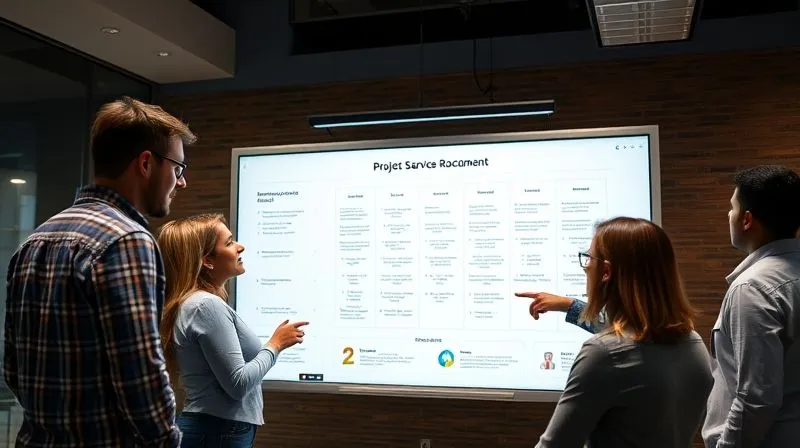
Case Study: How InnovateTech Salvaged Their Flagship Product Launch
InnovateTech, a fast-growing SaaS company, was developing a new AI-powered analytics platform. Midway through development, their Sales Director, driven by competitive pressure, began demanding several 'must-have' features not in the original scope. The project manager, Sarah, recognized the signs of creep. Instead of rejecting the ideas outright, she scheduled a dedicated 'Scope Review Workshop' with all key stakeholders, including the Sales Director.
In the workshop, Sarah presented the original scope, the current progress, and a detailed impact analysis of each proposed new feature on the project's timeline and budget. She used a visual 'feature vs. impact' matrix. This transparency allowed the Sales Director to see the tangible trade-offs. Together, they prioritized the critical new features, formally submitted them as change requests, and agreed to defer non-essential additions to a Phase 2 release. By engaging stakeholders proactively and transparently, InnovateTech avoided a costly derailment, delivering a successful Phase 1 on time and budget, with a clear roadmap for future enhancements.
Strategy 4: Utilize Agile Principles for Iterative Scope Management
While often associated with flexibility, Agile methodologies, when correctly applied, can be a powerful antidote to uncontrolled scope creep. The iterative nature and focus on validated learning help manage expectations and prioritize features, providing a structured approach for what to do when project scope creep threatens execution success.
Agile Practices to Mitigate Creep
- Prioritized Backlog: Maintain a well-groomed product backlog where all potential features are listed and prioritized. Only the highest-priority items are pulled into sprints. This forces conscious decision-making about what truly adds value.
- Fixed Sprints/Iterations: Agile teams work in fixed-time sprints (e.g., 2-4 weeks). Once a sprint begins, the scope for that sprint is locked. This creates natural boundaries and prevents 'in-sprint' creep.
- Definition of Done (DoD): A clear, agreed-upon Definition of Done ensures that deliverables meet specific quality and functional criteria. It prevents the team from endlessly 'polishing' or adding features beyond what's required for completion.
- Regular Demos and Feedback: Frequent demonstrations of working software to stakeholders allow for early feedback. This minimizes surprises and ensures that any necessary adjustments are made incrementally, rather than large, disruptive changes late in the project.
- Product Owner Role: The Product Owner is the single voice of the customer and is responsible for the backlog. This centralized decision-making authority helps prevent conflicting requests from different stakeholders.
| Feature | Priority | Estimated Effort (Story Points) | Status | Sprint |
|---|---|---|---|---|
| User Registration | High | 8 | In Progress | Sprint 1 |
| Basic Search Functionality | High | 13 | To Do | Sprint 1 |
| Advanced Filtering | Medium | 5 | To Do | Sprint 2 |
| User Profiles | Medium | 8 | To Do | Sprint 2 |
| Email Notifications | Low | 3 | Backlog | N/A |
While Agile offers flexibility, it's crucial to remember that 'flexible' doesn't mean 'unbounded.' The discipline comes from strict adherence to sprint boundaries and a well-managed backlog, ensuring that what to do when project scope creep threatens execution success is always a structured, informed decision.
Strategy 5: Ruthless Prioritization and Trade-off Management
In my career, I've seen countless project managers struggle with the inability to say 'no.' However, effective project management, especially when confronting scope creep, often boils down to mastering the art of prioritization and making difficult trade-offs. This isn't about being adversarial; it's about being a strategic partner who protects the project's viability.
How to Prioritize and Manage Trade-offs
- Use a Prioritization Framework: Employ techniques like MoSCoW (Must-have, Should-have, Could-have, Won't-have), Kano Model, or Value vs. Effort matrices. This provides a data-driven way to evaluate new requests against the existing scope.
- Quantify the Impact: For every proposed change, quantify its impact on the project's 'triple constraints' (scope, time, cost) and quality. Present these numbers clearly.
- Facilitate Trade-off Discussions: When a new feature is requested, ask stakeholders directly: "If we add X, what are we willing to remove or defer?" or "Are we willing to extend the deadline by Y weeks or increase the budget by Z dollars?" This forces a conscious choice.
- Focus on Minimum Viable Product (MVP): Especially for new products or features, aim for the smallest set of functionalities that delivers core value. Additional features can be planned for subsequent phases.
- Document Deferred Items: If a feature is deferred, document it in a 'parking lot' or future release backlog. This acknowledges the request without allowing it to derail the current project.
"The art of leadership is saying no, not yes. It is very easy to say yes." – Tony Blair. This holds profoundly true in project management when facing scope creep.
Effective prioritization and trade-off discussions transform potential conflicts into collaborative problem-solving opportunities, keeping the project aligned with its core objectives. For instance, Forbes often emphasizes the importance of strong leadership in navigating these challenging conversations.
Strategy 6: Continuous Monitoring and Performance Measurement
Even with robust planning and change control, vigilance is key. Scope creep can be subtle, and continuous monitoring is essential to catch any deviations early. This proactive stance is fundamental to what to do when project scope creep threatens execution success.
Metrics and Tools for Vigilance
- Earned Value Management (EVM): Use EVM metrics like Cost Variance (CV) and Schedule Variance (SV) to track project performance against the baseline. Significant negative variances can signal scope creep, as more work is being done than planned for the budget/schedule.
- Regular Scope Audits: Periodically review the work being performed against the approved scope statement and WBS. Are there tasks being done that aren't on the WBS? Are deliverables matching the requirements?
- Burn-down/Burn-up Charts: In Agile environments, these charts visually represent work remaining or completed. An unexpected flattening of a burn-down chart or a steep increase in a burn-up chart (without corresponding scope change approval) can indicate creep.
- Resource Utilization Reports: Keep an eye on how your team's time is being spent. If team members are consistently over-allocated or working on tasks not tied to the current scope, it's a red flag.
- Risk Management: Actively manage risks related to scope. Identify potential sources of creep and develop mitigation strategies.

By keeping a close watch on these metrics, you empower yourself with the data needed to initiate conversations, justify interventions, and effectively address what to do when project scope creep threatens execution success.
Strategy 7: Post-Mortem Analysis and Lessons Learned
Every project, whether a resounding success or a challenging battle against scope creep, offers invaluable learning opportunities. A thorough post-mortem analysis is not just good practice; it's a critical strategy for future success, ensuring you're better prepared next time you face the question of what to do when project scope creep threatens execution success.
Extracting Value from Project Endings
- Conduct a Formal Lessons Learned Session: Gather the project team and key stakeholders to discuss what went well, what could have been better, and specifically, where and how scope creep impacted the project.
- Analyze Root Causes of Creep: Dig deep into why scope creep occurred. Was it poor initial definition? Weak change control? Unmanaged stakeholder expectations? Document these root causes.
- Identify Preventative Measures: Based on the root causes, brainstorm and document specific, actionable steps to prevent similar instances of scope creep in future projects.
- Update Organizational Process Assets: Incorporate the lessons learned into your organization's project management methodologies, templates, and best practices. This institutionalizes the learning.
- Share Knowledge Across the Organization: Don't keep these insights to yourself. Share them with other project managers and teams to build a collective intelligence against scope creep.
This commitment to continuous improvement transforms challenges into strategic advantages, building a more resilient and effective project management culture within your organization. It ensures that the lessons from one project strengthen the execution of the next, making your team increasingly adept at handling the inevitable pressures of project evolution.
Frequently Asked Questions (FAQ)
Q: What's the difference between scope creep and scope change? Scope creep refers to uncontrolled changes or continuous growth in a project’s scope without corresponding adjustments to time, cost, or resources, and often without formal approval. Scope change, on the other hand, is a formally approved modification to the project scope, following the established change control process, with all impacts (time, cost, resources) properly assessed and adjusted. The key differentiator is control and formal approval.
Q: Can scope creep ever be a good thing? While the term 'scope creep' typically carries negative connotations due to its uncontrolled nature, the underlying requests for additional features or functionalities might sometimes represent genuinely valuable improvements or necessary adaptations to market changes. The problem isn't the change itself, but the lack of controlled management. If a 'creeping' idea is formally submitted, evaluated, approved, and integrated via your change control process, it becomes a beneficial scope change, not detrimental creep. The 'good' is in the outcome, not the uncontrolled process.
Q: How do I handle a senior stakeholder who constantly demands new features outside the process? This requires a delicate balance of firmness and diplomacy. First, always acknowledge their input and validate their ideas – make them feel heard. Then, gently but consistently redirect them to the formal change control process. Explain that adhering to the process ensures proper impact assessment, resource allocation, and ultimately, project success. Offer to help them complete the change request form. If resistance persists, involve your project sponsor to reinforce the importance of project governance and the approved baseline. Frame it as protecting the project's ability to deliver the agreed-upon value, rather than simply rejecting their idea.
Q: What if I discover scope creep late in the project? Is it too late to act? It's never too late to act, though the later you discover it, the more challenging and costly the recovery. Your first step is to immediately halt any unapproved work and conduct an urgent scope audit to identify all unauthorized additions. Then, convene your Change Control Board or key stakeholders to assess the full impact of the creep on the remaining project. You'll likely need to make difficult decisions: de-scope certain features, request additional budget/time, or prioritize ruthlessly. Transparency with stakeholders about the situation and proposed recovery plan is crucial. Focus on stabilizing the project and delivering the most critical value.
Q: How can I prevent 'gold plating' by my own team members? Gold plating often stems from a well-intentioned desire to impress or deliver perfection. To prevent it, foster a culture where 'done is better than perfect' (within quality standards). Emphasize the Definition of Done (DoD) for every task and feature, making it clear that once the DoD is met, the work is complete. Encourage team members to raise any ideas for 'extra' features through the formal change control process, just like any other stakeholder. Regular reviews of work in progress and clear communication about what constitutes 'completion' are also vital.
Key Takeaways and Final Thoughts
Mastering project execution in the face of scope creep isn't about rigid adherence to an initial plan; it's about dynamic control, clear communication, and strategic decision-making. As an experienced industry specialist, I’ve seen that the most successful project managers aren't those who avoid change, but those who manage it with expertise and authority. Remember these critical takeaways:
- Fortify Your Foundation: A detailed scope statement and formal sign-off are non-negotiable.
- Embrace Change Control: Implement a clear, transparent process for managing all change requests.
- Communicate Relentlessly: Proactive stakeholder engagement and expectation management are your best allies.
- Prioritize Ruthlessly: Learn to say 'no' or 'not yet,' and facilitate informed trade-offs.
- Monitor Continuously: Use metrics and regular audits to detect early warning signs.
- Learn and Adapt: Every project offers lessons that refine your approach to future challenges.
The threat of scope creep is ever-present, but it doesn't have to define your project's fate. By implementing these seven proven strategies, you equip yourself and your team with the tools and mindset to confidently navigate project complexities, protect your execution success, and consistently deliver value. Take control, lead with clarity, and transform potential project chaos into a testament to your project management prowess.
Recommended Reading
- Unlock Your Edge: Market Analysis for Competitive Advantage
- Calculated Risk Fails? 5 Steps to Pivot, Recover & Grow Stronger
- Best Accounting Software for New Small Businesses: Top Choices
- Sales Team Consistently Missing Targets? 8 Proven Fixes From a Veteran
- Why Do Risk Assessments Fail? 7 Ways to Predict & Prevent Project Disasters





Comments
Leave a comment below. Your email will not be published. Required fields marked with *