


Why are our performance indicators not driving action?
For over 15 years in business analytics and strategic performance management, I've witnessed a recurring, frustrating pattern: companies invest heavily in data collection, dashboard creation, and KPI tracking, yet their performance indicators (PIs) sit there, inert, failing to spark any meaningful change or improvement. It's like having a sophisticated car dashboard that lights up with warnings, but the driver just shrugs, unsure what to do or even if the warnings are truly important.
This isn't just an inefficiency; it's a profound drain on resources, morale, and competitive advantage. The pain point is palpable: teams feel overwhelmed by data, executives question the value of analytics, and critical business problems persist because the insights—the actionable intelligence—remain locked within the numbers. If your PIs aren't translating into deliberate, impactful actions, you're not alone, but it's a problem that demands immediate attention.
In this definitive guide, I'll peel back the layers on **why your performance indicators are not driving action**. We’ll move beyond superficial fixes to explore the core issues—from strategic misalignment to cultural barriers—and, more importantly, I’ll equip you with proven frameworks, actionable strategies, and expert insights to transform your PIs from mere metrics into powerful catalysts for growth and operational excellence. Prepare to bridge the gap between data and decisive action.
The Foundational Flaw: Misaligned PIs and Strategy
Problem: PIs Without Strategic Context
One of the most common reasons I see performance indicators failing to drive action is a fundamental disconnect from the organization's overarching strategy. Too often, PIs are chosen because they are easy to measure, industry-standard, or simply because 'that's what we've always tracked.' This creates a dashboard full of numbers that, while technically correct, don't tell a coherent story about strategic progress.
When PIs aren't directly tied to specific strategic objectives, teams struggle to understand their relevance. They become abstract data points rather than clear signals for decision-making. Imagine trying to navigate a ship with gauges showing engine temperature and fuel levels, but no compass or map to tell you if you're heading in the right direction. Without a clear 'why' behind each PI, action becomes arbitrary or non-existent.
Solution: The Strategic Cascade Approach
To ensure your PIs are potent drivers of action, they must be meticulously cascaded down from your highest-level strategic objectives. This involves a deliberate process of linking every metric to a clear, measurable outcome that contributes directly to the company's vision.
- Define Your North Star: Begin with your organization's core vision and 3-5 critical strategic objectives. These are the big-picture goals that define success for your company in the next 3-5 years.
- Deconstruct Objectives into Key Results: For each strategic objective, identify 2-3 measurable Key Results (KRs). These KRs should be ambitious but achievable, quantifying the success of your objectives. This is where the OKR (Objectives and Key Results) framework proves invaluable.
- Identify Departmental Contributions: Each department or team must then articulate how its work contributes to these KRs. What specific outcomes is *this* team responsible for that will move the needle on a company-level KR?
- Select Actionable PIs: Only now do you select the PIs. These PIs should directly measure progress towards the departmental outcomes that, in turn, feed into the company's KRs. Each PI must have a clear owner and a defined threshold for 'good' vs. 'needs action.'
- Regular Review and Adjustment: Strategy is not static. Regularly review your PI alignment (quarterly is ideal) to ensure they remain relevant as market conditions or strategic priorities shift.
This cascading approach ensures that every team member can see how their daily actions, reflected in their PIs, contribute to the larger strategic narrative. It transforms PIs from mere reporting tools into powerful instruments for strategic execution and accountability. As Harvard Business Review emphasizes in its discussions on the Balanced Scorecard, linking performance measures directly to strategy is paramount for driving performance.
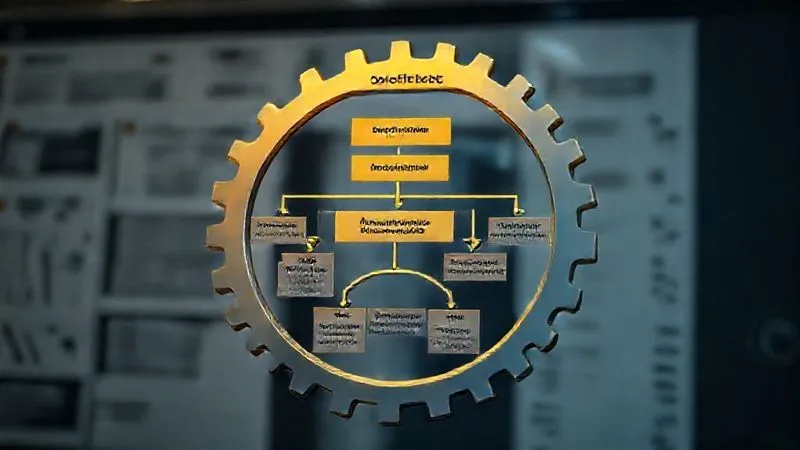
Beyond Vanity Metrics: Focusing on Leading vs. Lagging Indicators
Lagging Indicators: The Rear-View Mirror Problem
Another prevalent issue I encounter is an over-reliance on lagging indicators. Lagging indicators measure outcomes that have already occurred. Think of them as looking in the rearview mirror: revenue, profit, customer churn, employee turnover, project completion rates. While essential for understanding past performance and historical trends, they tell you *what happened*, not *why* or *what to do next* to change the future.
If your entire dashboard is filled with lagging indicators, you're constantly reacting to history. By the time you see a dip in revenue, the underlying issues—poor lead quality, declining customer satisfaction, ineffective marketing campaigns—have already caused significant damage. This reactive stance often leaves teams feeling powerless, as the opportunity to intervene proactively has passed.
Leading Indicators: Your Proactive Compass
The true power to drive action lies in leveraging leading indicators. These are predictive metrics that provide insight into future performance. They measure the activities and inputs that drive your lagging outcomes. For instance, instead of just tracking customer churn (lagging), you might track customer engagement scores, support ticket resolution times, or product usage frequency (leading).
By focusing on leading indicators, you gain the ability to intervene *before* problems manifest as negative lagging outcomes. They act as an early warning system, allowing you to adjust strategies and tactics in real-time. This proactive approach empowers teams to take ownership and make timely, impactful decisions.
| Problem Area | Lagging Indicator | Leading Indicators |
|---|---|---|
| Customer Churn | Monthly Churn Rate | Customer Satisfaction Score (CSAT), Product Engagement Rate, Support Ticket Volume, Feature Adoption Rate |
| Sales Performance | Quarterly Revenue | Sales Qualified Leads (SQLs), Demo Completion Rate, Proposal Acceptance Rate, Average Deal Size |
| Employee Productivity | Project Completion Rate | Employee Engagement Score, Training Hours Completed, Cross-Functional Collaboration Metrics, Time-to-Competency for New Hires |
"The problem with measuring what's easy is that it often isn't what's important. The goal is to measure what matters, not just what's convenient." - Peter Drucker (adapted)
The shift from lagging to leading indicators is fundamental for answering **why our performance indicators are not driving action**. It moves your organization from merely reporting on results to actively shaping them. This requires a deeper understanding of your business's cause-and-effect relationships and a commitment to tracking the inputs that truly influence success.

Data Overload & Lack of Clarity: When More Data Means Less Action
The Paradox of Choice in Data Presentation
In our data-rich world, many organizations suffer from what I call 'data obesity.' They collect everything, display everything, and then wonder **why their performance indicators are not driving action**. The irony is that an abundance of data, if not curated and presented effectively, can lead to paralysis rather than insight. Dashboards become cluttered, reports are dense and indecipherable, and the critical signals get lost in the noise.
When stakeholders are overwhelmed by too many metrics, complex visualizations, or jargon-filled reports, their natural response is to disengage. They can't quickly discern what's important, what requires their attention, or what specific action they should take. This creates a barrier between the data and the decision-maker, rendering even the most strategically aligned PIs inert.
Solution: The '3 C's' of Data Communication
Effective data communication is an art and a science. It's about distilling complexity into clarity, ensuring that every PI presented serves a purpose and prompts a specific type of action. I advocate for the '3 C's' approach:
- Clarity: Simplify your dashboards. Focus on the 5-7 most critical PIs for any given audience. Use clear, intuitive visualizations (bar charts for comparison, line charts for trends, pie charts for proportions). Avoid unnecessary clutter, 3D effects, or overly complex graphs that require a legend to understand. Each PI should have a clear title, unit of measure, and a target or benchmark.
- Conciseness: Get to the point. Reports should be executive summaries, not data dumps. Highlight key trends, anomalies, and insights upfront. Use annotations or call-out boxes to draw attention to critical areas. If a PI is off-track, immediately present the context and potential implications.
- Call to Action: This is perhaps the most crucial 'C'. Every dashboard, every report, every PI presented should implicitly or explicitly suggest an action. Instead of just showing a red number, frame it: 'Revenue is 15% below target. This requires immediate review of Q3 sales pipeline.' Or: 'Customer churn increased to 8%. We need to launch the retention campaign planned for next month, this week.' Make it clear what the data *means* for behavior.
By embracing these principles, you transform raw data into actionable intelligence. For more insights into effective data visualization, consider the principles laid out by experts like Stephen Few or Edward Tufte, who advocate for visualizing data with precision and clarity.
The Human Element: Culture, Accountability, and Skill Gaps
Problem: Lack of Ownership and Training
Even with perfectly aligned, clear, and actionable PIs, the human element can be a significant bottleneck. If employees don't feel a sense of ownership over the PIs relevant to their roles, or lack the skills to interpret them and translate them into action, the entire system breaks down. I've frequently observed scenarios where:
- Accountability is diffuse: No single person or team is clearly responsible for a PI, leading to a 'not my problem' mentality.
- Fear of failure: Employees are afraid to act on PIs that show negative trends, fearing blame rather than seeing it as an opportunity for improvement.
- Skill gaps: Teams lack the analytical literacy or problem-solving skills to diagnose issues revealed by PIs and formulate effective solutions.
- Cultural resistance: The organizational culture doesn't genuinely value data-driven decision-making, preferring intuition or 'gut feelings' over evidence.
These cultural and capability challenges are often the silent assassins of performance indicator effectiveness, explaining **why your performance indicators are not driving action** despite best intentions.
Solution: Building a Data-Driven Culture
Cultivating a data-driven culture requires more than just tools; it demands leadership, training, and a shift in mindset. Here’s how to foster an environment where PIs thrive:
- Assign Clear Ownership: For every critical PI, assign a clear owner who is responsible for tracking, interpreting, and initiating action based on its performance. This creates accountability.
- Invest in Data Literacy: Provide training for all employees on how to read, interpret, and act upon data relevant to their roles. This doesn't mean turning everyone into a data scientist, but empowering them with foundational analytical skills.
- Promote Psychological Safety: Leaders must create an environment where poor performance on a PI is seen as a learning opportunity, not a reason for punishment. Encourage experimentation, acknowledge failures as steps toward success, and celebrate data-driven improvements.
- Lead by Example: Senior leadership must consistently use PIs in their own decision-making, reference them in meetings, and ask data-backed questions. This models the desired behavior for the entire organization.
- Integrate PIs into Performance Reviews: Link individual and team performance directly to the PIs they influence. This reinforces their importance and fosters a sense of personal responsibility.
Case Study: How InnovateTech Transformed Employee Engagement
InnovateTech, a rapidly growing software company, was struggling with a high rate of employee attrition, a critical lagging indicator. Their standard HR PIs showed the problem, but no one seemed to know how to stop it. They came to me asking, "Why are our performance indicators not driving action?" My advice: focus on the human element.
We implemented a multi-pronged approach: First, we assigned 'engagement champions' in each department responsible for tracking specific leading indicators like 'manager 1:1 frequency,' 'peer feedback submission rates,' and 'participation in company innovation challenges.' Second, we trained all managers on basic data interpretation and the importance of these new PIs. Third, leadership publicly acknowledged the attrition issue and committed to using data to solve it, emphasizing that negative trends were opportunities to learn, not to blame.
Within six months, manager 1:1 frequency increased by 40%, peer feedback doubled, and innovation challenge participation saw a 60% boost. These leading indicators directly impacted the lagging one: InnovateTech saw a 25% reduction in voluntary attrition within a year, saving millions in recruitment and training costs. This success was driven not just by data, but by empowering people to understand and act on it.

Building a data-driven culture is a continuous journey, but it's essential for translating PIs into tangible results. As Deloitte's research consistently shows, organizations with strong data cultures significantly outperform their peers.
Ignoring the 'Why': Failing to Uncover Root Causes
The Symptom vs. Cause Trap
A common pitfall that renders PIs ineffective is treating symptoms rather than diagnosing root causes. A PI might flag a problem – for example, 'website conversion rate is down by 10%.' The immediate, superficial action might be to launch a new promotional campaign. However, if the root cause is actually a broken checkout process or slow page load times, that campaign will be a costly band-aid.
When teams jump to solutions without understanding the underlying reasons for a PI's performance, they waste resources, time, and often exacerbate the problem. This failure to dig deeper is a prime reason **why our performance indicators are not driving action** effectively; they highlight *what* is happening, but not *why* it's happening, leaving action ambiguous or misdirected.
Solution: The 5 Whys and Beyond
To move from symptom to cause, and thus to truly effective action, organizations must embed root cause analysis into their PI review processes. The '5 Whys' technique, though simple, is incredibly powerful:
- Start with the Problem PI: Identify the PI that is off-target. (e.g., "Website conversion rate is down 10%").
- Ask 'Why?' (1st time): Why is the website conversion rate down? (e.g., "Fewer visitors are completing purchases.")
- Ask 'Why?' (2nd time): Why are fewer visitors completing purchases? (e.g., "Many are abandoning their carts at the payment stage.")
- Ask 'Why?' (3rd time): Why are they abandoning at the payment stage? (e.g., "The payment gateway is slow and occasionally errors out.")
- Ask 'Why?' (4th time): Why is the payment gateway slow and erroring out? (e.g., "It's an older system that struggles under peak load.")
- Ask 'Why?' (5th time): Why hasn't this older system been upgraded? (e.g., "Budget was reallocated, and the project was delayed.")
Now, the action isn't just 'launch a promo,' but 'prioritize upgrading the payment gateway and address budget allocation.' This is a far more impactful and sustainable solution. For more complex issues, consider techniques like Fishbone (Ishikawa) diagrams or Fault Tree Analysis.
| Problem PI | Why 1 | Why 2 | Why 3 | Why 4 | Why 5 | Actionable Solution |
|---|---|---|---|---|---|---|
| Customer Support Response Time (Avg.) Increased by 25% | Too many tickets are coming in, overwhelming the team. | Many tickets are for common, repetitive issues. | Customers can't find answers in our FAQ/knowledge base. | The knowledge base is outdated and hard to navigate. | No one is assigned to regularly update and optimize the knowledge base. | Assign a dedicated owner and allocate resources to overhaul and maintain the customer knowledge base, coupled with promoting its use. |
By consistently applying root cause analysis, you move from reactive firefighting to strategic problem-solving, ensuring that the actions driven by your PIs are not just busywork, but targeted interventions that address the core issues.
Feedback Loop Failure: No Iteration, No Improvement
The Static Dashboard Dilemma
Finally, a critical reason **why our performance indicators are not driving action** is the absence of a robust feedback loop. Many organizations treat their dashboards and reports as static artifacts. Data is collected, presented, and then... nothing. There's no systematic process for reviewing PIs, discussing implications, deciding on actions, implementing those actions, and then *measuring the impact of those actions* on the PIs themselves.
Without this closed-loop system, PIs become mere historical records. Teams might take a few ad-hoc actions, but they rarely know if those actions actually moved the needle. This lack of feedback stifles learning, discourages experimentation, and ultimately leads to cynicism about the value of performance measurement.
Solution: Implementing Agile Performance Reviews
To ensure PIs are living, breathing tools for improvement, you need to establish a continuous feedback loop. Adopt an agile mindset to performance management:
- Regular, Structured Reviews: Schedule weekly or bi-weekly meetings dedicated solely to reviewing critical PIs. These aren't just reporting sessions; they are problem-solving and decision-making forums.
- Focus on 'So What?' and 'Now What?': For each PI, ask: 'So what does this trend tell us?' and 'Now what action will we take?' Document these actions, assign owners, and set deadlines.
- Measure Impact: Crucially, track whether the implemented actions actually improved the relevant PIs. This closes the loop. If an action didn't work, learn from it and try something else. This fosters a culture of continuous improvement.
- Iterate and Adapt: Be prepared to adjust your PIs, targets, or even your strategic objectives based on what you learn. The feedback loop isn't just about improving performance; it's about improving the performance measurement system itself.
"What gets measured gets managed. What gets measured and *fed back* gets managed well." - W. Edwards Deming (adapted)
This iterative approach transforms PI reviews into dynamic strategy sessions, making them central to organizational learning and adaptation. It ensures that every action taken is a deliberate step towards a measurable improvement, reinforcing the direct link between data and impact. For further reading on this, explore frameworks like the McKinsey Agile Organization model and its implications for performance management.

Frequently Asked Questions (FAQ)
Q: How do I convince skeptical leadership that our PIs need an overhaul? You need to speak their language: impact and ROI. Start by showcasing the current cost of inaction – missed opportunities, wasted resources, or declining market share, directly linking it to the lack of actionable PIs. Then, present a clear, phased plan focusing on 2-3 critical PIs that, if made actionable, could yield significant, measurable improvements. Frame it as an investment in strategic agility and competitive advantage, not just a data project. Highlight the potential for predictive insights and proactive problem-solving.
Q: What's the biggest mistake companies make when setting PIs? The single biggest mistake is setting PIs in isolation, without clear alignment to strategic objectives or without involving the teams responsible for influencing them. This leads to vanity metrics, PIs that are impossible to act upon, or PIs that simply don't matter to the business's core success. PIs must be a collaborative effort, from strategy to execution.
Q: How can small businesses with limited resources effectively implement these strategies? Start small and focus. Instead of overhauling everything, pick 1-2 critical strategic objectives and identify just 3-5 core PIs (mixing leading and lagging) that directly measure progress. Use simple tools like spreadsheets for tracking if advanced BI software isn't feasible. The principles of strategic alignment, clarity, ownership, and feedback loops are scalable; it's about disciplined application, not necessarily expensive tools.
Q: My team is overwhelmed by data. How do I simplify without losing important insights? Embrace the 'less is more' philosophy. Conduct an audit of your current PIs: For each, ask "What specific decision or action does this PI inform?" If you can't answer definitively, it's likely noise. Prioritize the 5-7 most critical PIs for each team or stakeholder group. Use clear, intuitive dashboards that highlight deviations from targets and suggest potential actions. The goal is to present actionable intelligence, not raw data.
Q: How often should we review and update our PIs? Strategic PIs tied to long-term objectives might be reviewed quarterly or annually. Operational PIs, especially leading indicators, should be reviewed much more frequently – weekly or bi-weekly – to allow for timely intervention. The key is to establish a cadence that matches the speed at which you can realistically take action and observe changes. Your PI system itself should also be reviewed and refined at least annually to ensure ongoing relevance.
Key Takeaways and Final Thoughts
The journey from data to decisive action is often fraught with challenges, but understanding **why our performance indicators are not driving action** is the first, most crucial step towards overcoming them. It's not enough to simply collect data; we must transform it into a powerful engine for organizational change and growth.
- Align PIs to Strategy: Ensure every metric directly contributes to your strategic objectives.
- Prioritize Leading Indicators: Shift focus from reactive reporting to proactive intervention. Simplify & Clarify: Present data in a way that is easily digestible and actionable for your audience.
- Cultivate a Data-Driven Culture: Foster ownership, provide training, and promote psychological safety.
- Uncover Root Causes: Go beyond symptoms to diagnose and address the true origins of performance issues.
- Establish Feedback Loops: Implement continuous review, action, and learning cycles.
As an industry veteran, I can tell you that the difference between thriving organizations and those that stagnate often lies in their ability to truly leverage their data. By meticulously addressing these core areas, you won't just track performance; you'll actively shape it. Embrace these strategies, empower your teams, and watch your performance indicators transform from inert numbers into dynamic catalysts for unprecedented success.
Recommended Reading
- Unlock Hybrid Team Success: Effective Communication for Leaders Revealed!
- Stop Budget Bleed: 7 Proven Steps to Tame Scope Creep & Save Projects
- 7 Ways to Avoid Greenwashing: Promote Green Initiatives Authentically
- 7 Steps to Recover Organic Traffic After a Google Algorithm Update
- Core Supplier Fails Ethical Audit? 7 Steps to Navigate Crisis & Rebuild





Comments
Leave a comment below. Your email will not be published. Required fields marked with *