


Why are our service quality scores declining despite training?
For over 15 years in the customer service and operational excellence space, I've witnessed a perplexing and frustrating phenomenon: companies pour significant resources into training their service teams, only to see their service quality scores stagnate or, even worse, decline. It’s a head-scratcher that often leaves leadership scratching their heads, wondering where they went wrong.
You’ve invested in the best trainers, state-of-the-art modules, and countless hours of employee time. Yet, the customer feedback still points to dissatisfaction, and your internal metrics are flashing red. This isn't just a minor setback; it's a significant drain on resources, morale, and ultimately, your brand's reputation and bottom line. The assumption that 'more training equals better service' is a common, yet often flawed, premise.
In this definitive guide, I'll pull back the curtain on the underlying issues that training alone cannot fix. We'll explore the often-overlooked factors contributing to declining service quality, provide actionable frameworks, and share expert insights to help you build a truly resilient and customer-centric service operation. Prepare to uncover the real reasons and discover how to implement lasting change.
The Training-Application Gap: When Knowledge Doesn't Translate
One of the most common pitfalls I've observed is the significant gap between what's learned in a training room and what's actually applied on the front lines. Employees might ace their quizzes and role-playing scenarios, but when faced with real-world pressure, complex customer emotions, or unexpected technical glitches, the learned behaviors often vanish.
This isn't necessarily a failure of the training content itself, but rather a lack of effective reinforcement and practical application strategies. Without consistent coaching, immediate feedback, and opportunities to practice new skills in a safe environment, knowledge decays rapidly. It's like learning to ride a bike in a classroom – you understand the theory, but you won't truly learn until you hit the pavement.
Expert Insight: "Training is an event, but learning is a process. Without ongoing reinforcement and opportunities for practice, the initial investment in training yields diminishing returns very quickly."
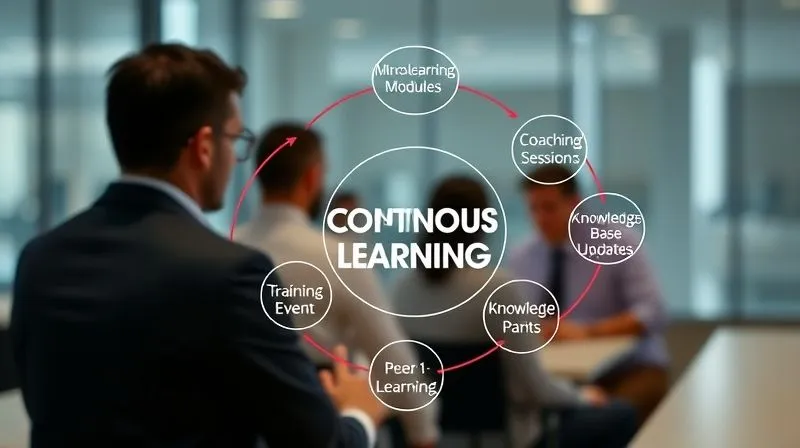
To bridge this crucial gap, organizations must move beyond one-off training events. This requires a strategic shift towards continuous learning and development that integrates directly into the daily workflow.
- Post-Training Coaching & Mentorship: Implement a structured coaching program where team leaders or senior agents provide regular, personalized feedback and guidance immediately after training. This helps solidify new skills.
- Scenario-Based Practice & Simulations: Create realistic, low-stakes environments where agents can practice new skills with complex customer issues. Use internal tools or mock-ups to simulate real interactions without real-world consequences.
- Peer Learning & Shadowing Programs: Encourage experienced agents to mentor newer ones. Shadowing provides invaluable real-time learning and allows for immediate clarification of doubts in a practical context.
- Microlearning Modules: Break down complex topics into short, digestible microlearning modules that can be accessed on-demand. These can serve as quick refreshers for specific scenarios.

Misaligned Metrics & Missing Feedback Loops: Measuring the Wrong Things
Another critical reason I've seen service quality decline is a fundamental disconnect between what companies measure and what truly drives customer satisfaction. Many organizations rely heavily on metrics like 'Average Handle Time' (AHT) or 'First Call Resolution' (FCR) as primary indicators of service quality. While these have their place, an overemphasis can inadvertently lead to poor customer experiences.
For instance, pushing agents to reduce AHT might lead them to rush customers, cut conversations short, or provide incomplete solutions, all of which negatively impact the customer's perception of service. Similarly, a high FCR might hide deeper issues if the resolution was superficial or required significant customer effort.
My Experience: I once worked with a client who had excellent FCR scores, but their Net Promoter Score (NPS) was abysmal. We discovered agents were closing tickets quickly but often left customers feeling unheard or frustrated, leading to churn despite the 'resolution'. This highlights the danger of isolated metrics.
True service quality is often better reflected in metrics that capture the customer's perception and effort, such as Customer Effort Score (CES), Customer Satisfaction (CSAT), and Net Promoter Score (NPS). Moreover, the absence of robust, real-time feedback loops prevents agents and managers from understanding where improvements are truly needed.
| Metric Type | Example Metrics | Potential Pitfalls | Recommendation |
|---|---|---|---|
| Efficiency-Focused | Average Handle Time (AHT), First Call Resolution (FCR) | Rushed interactions, superficial solutions, negative customer perception | Use for operational efficiency; balance with CX metrics |
| Customer Experience (CX)-Focused | Customer Satisfaction (CSAT), Net Promoter Score (NPS), Customer Effort Score (CES) | Can be subjective, requires consistent surveying | Prioritize for understanding customer sentiment and loyalty |
| Agent Performance | Quality Assurance (QA) Scores, Adherence to Script, Training Completion Rate | Can be overly prescriptive, may stifle agent autonomy | Crucial for coaching; link to CX outcomes where possible |
To fix this, you need a holistic approach to measurement and a robust feedback system:
- Balance Metrics: Create a dashboard that balances efficiency metrics with customer experience metrics. Ensure agents understand how their actions impact both.
- Implement Real-Time Feedback: Use post-interaction surveys (CSAT, CES) and share results directly with agents and their supervisors promptly.
- Quality Assurance (QA) with Coaching: QA shouldn't just be about scoring; it should be a coaching opportunity. Focus on behaviors that drive positive customer outcomes, not just adherence to a script.
- Voice of the Customer (VoC) Programs: Go beyond surveys. Analyze customer comments, social media mentions, and support tickets for recurring themes and pain points. Share these insights widely within the organization.
Beyond Skills: The Pervasive Impact of Organizational Culture & Leadership
Training can equip individuals with skills, but it cannot fundamentally alter a toxic work environment or compensate for poor leadership. In my journey, I've seen firsthand how a company's culture and the behaviors of its leaders can either amplify or completely undermine even the best service training initiatives. If the organization doesn't genuinely value service excellence, why would employees prioritize it?
A culture where agents feel undervalued, micromanaged, or constantly under pressure to meet unrealistic targets will inevitably lead to disengagement and a decline in service quality. When leaders don't model the desired service behaviors, or when internal processes are cumbersome and frustrating for employees, it sends a clear message that customer service isn't a true priority.
Case Study: How ‘ConnectCo’ Realigned Culture to Boost ServiceCase Study: How ConnectCo Realigned Culture to Boost Service
ConnectCo, a mid-sized telecom provider, struggled with consistently low CSAT scores despite regular product and soft skills training. Upon deeper analysis, I found that agents felt their feedback was ignored, and leadership rarely acknowledged their efforts. The culture was one of 'blame the agent.' By implementing a new leadership development program focused on empathy, active listening, and empowering front-line staff, and by creating a 'Voice of the Agent' council, ConnectCo saw a 15% increase in CSAT within six months. Agents felt valued, leading to a natural improvement in their interactions.
Leadership plays a pivotal role in setting the tone. Leaders must actively champion service quality, celebrate successes, and address systemic issues that hinder agents. They need to demonstrate that they trust their teams and are willing to remove obstacles.
- Lead by Example: Leaders must embody the service values they expect from their teams. This includes treating internal customers (employees) with the same respect and empathy.
- Empower Front-Line Teams: Give agents the autonomy and resources to resolve issues effectively without constant escalation. Trust them to make good decisions.
- Foster a 'Blameless' Culture: When mistakes happen, focus on learning and process improvement rather than assigning blame. This encourages transparency and problem-solving.
- Recognize & Reward: Implement recognition programs that specifically celebrate behaviors contributing to exceptional service quality, not just quantitative metrics.
As Harvard Business Review often emphasizes, culture eats strategy for breakfast. Without a supportive culture and strong leadership, even the most robust training programs will struggle to make a lasting impact on service quality.
Systemic Roadblocks: Technology, Processes, and Resource Constraints
Sometimes, the decline in service quality has less to do with individual agent performance and more to do with the environment they operate within. Outdated technology, convoluted processes, and insufficient resources can cripple even the most well-trained and motivated team. Imagine trying to run a marathon with your shoelaces tied together – no matter how fit you are, you're at a disadvantage.
Agents are often forced to navigate clunky CRM systems, switch between multiple applications, or follow overly rigid scripts that don't allow for nuanced problem-solving. These technological and procedural hurdles consume valuable time, increase agent frustration, and ultimately detract from the customer experience. Customers don't care about your internal struggles; they just want their issue resolved efficiently and pleasantly.

Furthermore, resource constraints – whether it's understaffing leading to long wait times, or a lack of access to necessary tools and information – directly impact an agent's ability to deliver quality service. Training cannot magically create more staff or fix a broken system.
- Audit Technology & Tools: Regularly assess your customer service technology stack. Is your CRM intuitive? Do agents have access to a comprehensive knowledge base? Are there too many disjointed systems?
- Streamline Processes: Map out typical customer journeys and agent workflows. Identify bottlenecks, redundant steps, and areas where processes are overly rigid. Involve agents in this process, as they often have the best insights.
- Empower with Information: Ensure agents have immediate access to all relevant customer information and product/service knowledge. Reduce the need for customers to repeat themselves.
- Adequate Staffing & Resources: Analyze call volumes, chat requests, and email backlogs to ensure appropriate staffing levels. Invest in tools that automate repetitive tasks, freeing agents for more complex interactions.
Addressing these systemic issues requires cross-functional collaboration. It's not just an HR or customer service problem; it's an organizational challenge that needs buy-in from IT, operations, and senior leadership to truly transform the service delivery infrastructure.
The Human Element: Employee Burnout, Engagement, and Empowerment
Even with the best training, culture, and systems, service quality will inevitably suffer if your employees are burnt out, disengaged, or feel disempowered. Customer service can be an incredibly demanding role, emotionally and mentally. Agents deal with frustrated customers, complex issues, and often repetitive tasks, all while being expected to maintain a positive and empathetic demeanor.
When employees are exhausted, stressed, or feel their efforts are unappreciated, their capacity for empathy, patience, and proactive problem-solving diminishes significantly. This leads to shorter, less helpful interactions, a decline in active listening, and a general lack of enthusiasm that customers can readily sense. Training might teach them what to say, but it can't instill genuine care if the agent is struggling.
My Observation: "Many companies focus on customer churn but overlook employee churn. High employee turnover in customer service is a direct indicator of burnout and a predictor of declining service quality."
Engagement and empowerment are critical antidotes to burnout. Engaged employees are more likely to go the extra mile, take ownership of customer issues, and act as brand ambassadors. Empowered employees feel trusted to make decisions, leading to quicker resolutions and a more satisfying experience for both parties.
- Prioritize Well-being: Implement programs that support employee mental health, provide stress management resources, and encourage work-life balance.
- Foster Engagement: Create opportunities for agents to contribute ideas, participate in decision-making, and feel connected to the company's broader mission. Regularly solicit their feedback.
- Empower Decision-Making: Provide agents with clear guidelines and the authority to resolve common issues without needing constant supervisor approval. This builds confidence and speeds up service.
- Career Pathing & Development: Show agents a clear path for growth within the company. Investing in their future demonstrates value and encourages long-term commitment.
Remember, your employees are your first customers. If they're not happy and supported, it's incredibly difficult for them to make your external customers happy. Addressing the human element is not a 'soft' skill; it's a strategic imperative for service quality.
The "Set It and Forget It" Fallacy: Lack of Continuous Reinforcement
Many organizations treat training as a one-time inoculation against poor performance. They schedule an annual training session, check the box, and then wonder why service quality scores decline six months later. This 'set it and forget it' mentality is a significant contributor to the problem we're discussing.
The reality is that skills decay over time, market conditions change, customer expectations evolve, and new products or services are introduced. Without continuous reinforcement, refreshers, and updates, even the most effective initial training will lose its impact. It's like expecting a professional athlete to maintain peak performance without ongoing practice, coaching, and strategy updates.
According to a study cited by Forbes, employees forget an average of 70% of new information within 24 hours and 90% within a week if it's not reinforced. This highlights the critical need for continuous learning.
Continuous reinforcement isn't about constant, exhaustive retraining. It's about embedding learning into the daily rhythm of the organization and providing 'just-in-time' resources.
- Regular Skill Refreshers: Implement short, focused refreshers on key skills (e.g., active listening, de-escalation) on a quarterly or bi-annual basis.
- Knowledge Base Updates: Ensure your internal knowledge base is always up-to-date with the latest product information, policies, and troubleshooting guides. Make it easily searchable.
- Performance Reviews with Development Plans: Link performance reviews directly to individual development plans that include targeted training or coaching based on identified skill gaps.
- Leverage Peer Knowledge: Create platforms or forums where agents can share best practices, ask questions, and learn from each other's experiences.
- Manager Check-ins: Encourage managers to have regular, informal check-ins with their team members to discuss challenges, offer support, and reinforce positive behaviors.
Crafting a Holistic Framework for Sustainable Service Excellence
Addressing declining service quality despite training requires a holistic, multi-faceted approach. There's no single silver bullet, but rather a combination of strategic interventions that work in concert. I advocate for a framework that considers people, processes, technology, and culture as interconnected pillars of service excellence.
This framework moves beyond reactive training and focuses on proactive design and continuous improvement. It acknowledges that service quality is a shared responsibility, not just an individual agent's burden. It’s about creating an ecosystem where excellence is not just expected, but enabled and celebrated.
Here's a strategic framework to guide your efforts:
| Pillar | Key Actions | Expected Outcome |
|---|---|---|
| People & Culture | Empowerment, well-being, leadership modeling, continuous coaching, recognition | Engaged, empathetic, and motivated workforce |
| Processes & Systems | Streamlined workflows, intuitive tools, robust knowledge bases, effective feedback loops | Efficient operations, reduced agent friction, consistent service delivery |
| Measurement & Analytics | Balanced CX/efficiency metrics, real-time feedback, VoC programs, root cause analysis | Data-driven decisions, targeted improvements, clear understanding of impact |
| Continuous Learning | Reinforcement, microlearning, skill refreshers, career development, peer learning | Adaptive skills, sustained performance, growth mindset |
By systematically addressing each of these pillars, you can move beyond simply 'training' your way out of a problem and instead build a truly resilient, customer-centric organization. This approach fosters an environment where service quality isn't just an aspiration, but a consistent reality.
Frequently Asked Questions (FAQ)
Q: How often should we retrain our service teams? A: Instead of 'retraining,' think 'continuous learning.' Formal refreshers on key skills might be beneficial quarterly or bi-annually, but the focus should be on daily reinforcement, microlearning, and just-in-time resources that keep skills sharp and knowledge current. Integrate learning into daily workflows rather than relying solely on periodic, intensive sessions.
Q: What's the role of technology in improving service quality beyond training? A: Technology is a powerful enabler. It can streamline processes (e.g., CRM integration), provide instant access to information (knowledge bases), automate routine tasks (chatbots for FAQs), and facilitate efficient communication. Critically, it should empower agents to serve customers better, not complicate their work. Poor technology can be a major systemic roadblock, regardless of training quality.
Q: Can poor leadership truly undermine good training? A: Absolutely. Leaders are the cultural architects. If they don't model desired behaviors, create a supportive environment, or address systemic issues, employees will quickly disengage. Training provides the 'how,' but leadership provides the 'why' and the enabling environment. A disconnect between leadership's actions and training's message is a recipe for failure.
Q: How do we measure the *true* impact of service quality improvements? A: Move beyond isolated metrics. A true impact assessment combines quantitative data (CSAT, NPS, CES, churn rates, repeat business) with qualitative insights (customer comments, agent feedback, QA reviews). Look for trends, correlate improvements with specific initiatives, and consider the holistic customer journey, not just individual interactions. The ultimate measure is sustained customer loyalty and positive brand perception.
Q: Is it always about the employees, or are there deeper issues? A: While employee performance is crucial, it's rarely *just* about the employees. As discussed, systemic issues like outdated technology, inefficient processes, lack of resources, and a negative organizational culture often play an equally, if not more, significant role. A truly effective strategy addresses all these interconnected layers, recognizing that employees are often symptoms of deeper organizational challenges, not the sole cause.
Key Takeaways and Final Thoughts
- Training is a vital component of service excellence, but it's rarely the sole solution to declining quality scores.
- The **training-application gap** is real; without continuous reinforcement and practical coaching, learned skills quickly decay.
- **Misaligned metrics** can inadvertently incentivize poor service behaviors; focus on customer-centric KPIs.
- **Organizational culture and leadership** are foundational; they can either enable or undermine any training effort.
- **Systemic roadblocks** like outdated technology and inefficient processes directly hinder agents, irrespective of their training.
- **Employee well-being and empowerment** are critical; burnout and disengagement erode the capacity for empathy and quality service.
- Adopt a **holistic framework** that addresses people, processes, technology, culture, and continuous learning for sustainable service excellence.
The journey to superior service quality is complex, but it's also incredibly rewarding. By looking beyond the obvious and diving into the underlying causes of declining scores, you're not just fixing a problem; you're building a more resilient, customer-centric, and ultimately, more successful organization. Embrace these insights, empower your teams, and watch your service quality not just recover, but flourish.
Recommended Reading
- Prevent IT Budget Overruns: 5 Steps to Curb Scope Creep
- Avoid Rejection: 7 Steps to a Winning Angel Investor Pitch Deck
- 7 HR Strategies to Stop Workplace Arguments & Boost Team Morale
- Project Forecasts Wrong? 5 Proven Strategies to Master Budget Control Now
- What Common Pitch Deck Mistakes Deter VCs? 9 Blunders to Avoid





Comments
Leave a comment below. Your email will not be published. Required fields marked with *