


Why do my high-value prospects consistently choose competitors?
For over 15 years in the trenches of business development and client acquisition, I've seen countless promising companies, with genuinely excellent products or services, consistently miss out on high-value prospects. It's a frustrating, often perplexing scenario that can leave even the most seasoned sales teams questioning their entire strategy. I've witnessed the disheartened faces of founders and sales leaders when a seemingly 'sure thing' deal slips away to a competitor that, frankly, didn't appear to offer anything superior.
This isn't just about losing a single deal; it's about a systemic issue that erodes confidence, wastes resources, and stunts growth. The pain point is palpable: you know your offering is strong, you've invested heavily in lead generation, and your team is working hard, yet those prime, high-value prospects—the ones that could truly transform your business—are consistently opting for someone else. It feels like you're doing everything right, but the results tell a different story.
In this definitive guide, I'm going to pull back the curtain on the underlying reasons why high-value prospects choose competitors. More importantly, I'll provide you with actionable frameworks, real-world case studies, and expert insights to diagnose these leaks in your sales funnel and implement robust strategies to plug them. Prepare to gain not just answers, but a clear, strategic roadmap to start winning those coveted deals.
The Invisible Gaps: Unpacking Your Value Proposition
One of the most common, yet often overlooked, reasons high-value prospects walk away is a poorly articulated or misunderstood value proposition. It’s not enough to have value; you must communicate it in a way that resonates deeply with your target audience’s specific needs and aspirations. Many businesses mistakenly believe their value is self-evident, or they focus on features rather than the profound transformation they offer.
Are You Truly Unique? Or Just "Better"?
In today's crowded marketplace, simply being "better" is rarely enough, especially for high-value prospects who have complex problems and are seeking genuine solutions, not just incremental improvements. They're looking for a clear differentiator that addresses their unique challenges and aligns with their strategic objectives. If your offering sounds too similar to your competitors', or if you can't articulate a compelling reason to choose you beyond a slight price advantage or a few extra features, you're already at a disadvantage.
I've seen companies spend millions on R&D only to fail in communicating their innovation effectively. High-value prospects aren't just buying a product or service; they're investing in an outcome. They want to know how you will solve their specific, often deeply entrenched, problems and contribute to their bottom line or strategic goals.
Beyond Features: Selling Transformation
When I work with clients, we often start by dissecting their current messaging. A common pitfall is dwelling on product features – "Our software has X modules," "Our service includes Y hours." While features are important, high-value prospects care more about the benefits derived from those features, and ultimately, the transformation they will experience. Will it save them millions? Will it reduce their operational risk? Will it unlock new market opportunities?
Your value proposition isn't what your product is, it's what your product does for your customer, specifically how it solves their most pressing problems and helps them achieve their most ambitious goals.
Consider the difference between saying "Our CRM has advanced reporting tools" versus "Our CRM provides real-time, customisable dashboards that empower your sales managers to identify pipeline bottlenecks within minutes, reducing sales cycle times by 15% and increasing forecast accuracy by 20% challenges." The latter speaks to tangible business outcomes.
Actionable Steps: Refining Your Value Proposition
- Conduct "Jobs-to-Be-Done" Interviews: Don't just ask prospects what they want; ask them what "job" they're trying to "hire" your product or service to do. Understand their underlying motivations, struggles, and desired outcomes.
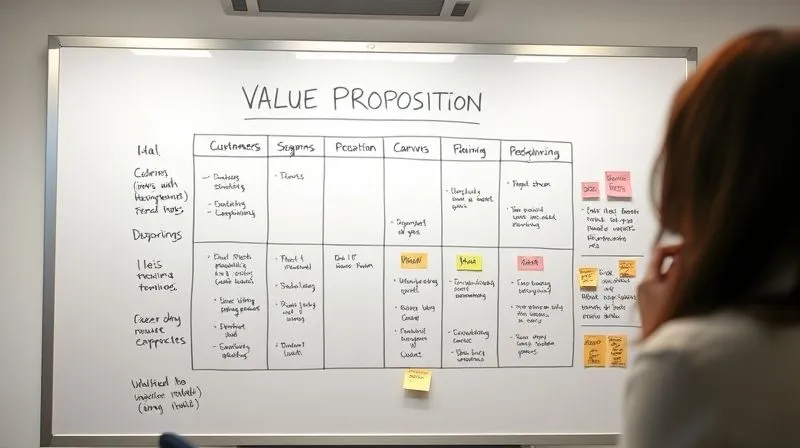
- Map Your Value Proposition Canvas: Use a structured framework to clearly define your customer segments, their pains, gains, and jobs, then align your products/services, pain relievers, and gain creators. This visual exercise often reveals gaps.
- Develop "Outcome-Oriented" Messaging: Rewrite all your marketing and sales collateral to focus on the specific, measurable outcomes your high-value prospects will achieve by choosing you. Quantify benefits whenever possible.
- Test and Iterate: Your value proposition isn't static. Continuously test different messaging with prospects, gather feedback, and refine your narrative.
The Trust Deficit: Why Credibility Crumbles
Trust is the bedrock of any high-value transaction. When the stakes are high, prospects are naturally risk-averse. They're not just evaluating your product; they're evaluating your company's reliability, expertise, and integrity. A trust deficit, even a subtle one, is a significant reason why high-value prospects consistently choose competitors, even if your offering seems technically superior. They want a partner they can depend on, not just a vendor.
The Silent Killer: Inconsistent Messaging
In my experience, one of the quickest ways to erode trust is through inconsistent messaging across different touchpoints. If your website says one thing, your sales rep says another, and your marketing materials hint at something else entirely, it creates confusion and suspicion. High-value prospects are astute; they notice these discrepancies. It signals a lack of internal alignment, which translates to a potential lack of reliability in their minds.
This inconsistency can manifest in many forms: varying pricing structures, conflicting promises about support, or even a different tone of voice from one department to another. For a prospect contemplating a significant investment, these red flags are enough to send them running to a competitor who presents a unified, coherent front.
Proof Points: Show, Don't Just Tell
Authority and credibility aren't built on claims; they're built on evidence. High-value prospects demand proof. They want to see that you've successfully solved similar problems for businesses like theirs. This is where robust case studies, compelling testimonials, industry recognition, and strategic thought leadership become indispensable. According to a Harvard Business Review article on customer empathy, understanding and addressing customer pain points with tangible proof is crucial for building lasting trust.
Case Study: How InnovateTech Rebuilt Trust and Won Back Market Share
Case Study: How InnovateTech Rebuilt Trust
InnovateTech, a mid-sized SaaS provider, was struggling to close deals despite having a cutting-edge platform. Their sales team reported that prospects often expressed concerns about "reliability" or "long-term partnership." Upon closer inspection, I discovered their marketing focused heavily on innovation, but their sales process lacked sufficient proof points, and their customer service reviews were mixed.
We implemented a three-pronged approach: First, we standardized all external communications, ensuring a consistent message about their proven track record and robust support. Second, we developed three in-depth video case studies featuring delighted high-profile clients, focusing on quantifiable ROI. Third, we launched a proactive thought leadership campaign, positioning InnovateTech's CEO as an industry expert on data security and compliance, directly addressing a key concern of their target market. Within six months, their win rate for high-value prospects increased by 25%, and they successfully secured two major enterprise contracts that had previously gone to competitors.
Actionable Steps: Building Unshakeable Credibility
- Standardize Messaging: Conduct an audit of all your external communications. Ensure your website, marketing materials, sales pitches, and customer support scripts are aligned and consistent.
- Showcase Success Stories: Develop detailed case studies, video testimonials, and client success stories that resonate with your high-value prospects. Focus on the challenges faced, your solution, and the measurable results achieved.
- Leverage Social Proof: Actively seek and promote reviews on industry-specific platforms, G2, Capterra, or LinkedIn. Feature client logos prominently where appropriate.
- Become a Thought Leader: Invest in content marketing (blog posts, whitepapers, webinars) that positions your team as experts. Share valuable insights without always selling. This builds authority over time.
Misunderstanding the Buyer's Journey (and Their Pain)
Many businesses mistakenly apply a one-size-fits-all sales approach, or they assume they understand their high-value prospects' needs based on superficial interactions. However, high-value prospects have complex decision-making processes, often involving multiple stakeholders, extended timelines, and unique pain points that aren't immediately obvious. Failing to deeply understand and cater to this intricate journey is a primary reason why high-value prospects consistently choose competitors.
The Empathy Gap: Are You Listening?
The biggest mistake I've observed is talking too much and listening too little. Sales teams often rush to present their solution without truly comprehending the nuances of the prospect's problem. High-value prospects aren't just looking for a solution; they're looking for someone who understands their world, their challenges, and their aspirations better than they do themselves. An empathy gap signals that you might not be the right partner.
This means asking insightful, open-ended questions that uncover not just the symptoms, but the root causes of their pain. It means listening actively, reflecting their concerns, and validating their experiences before ever mentioning your product. When a prospect feels truly heard and understood, a significant barrier is removed.
Mapping the Decision-Making Unit
For high-value deals, the "buyer" is rarely a single person. It's often a complex Decision-Making Unit (DMU) comprising various stakeholders: economic buyers, technical buyers, user buyers, champions, and even saboteurs. Each member of the DMU has different priorities, concerns, and criteria for evaluation. Ignoring this complexity, or focusing solely on one or two contacts, is a recipe for disaster.
You need a clear strategy to identify all key stakeholders, understand their individual motivations and concerns, and tailor your communication to address each of them specifically. If you're only selling to the technical lead, but the economic buyer cares primarily about ROI and risk mitigation, you're likely to lose the deal.
| Stakeholder Role | Primary Concern | How to Address |
|---|---|---|
| Economic Buyer | ROI, Budget, Strategic Alignment | Business case, financial projections, long-term vision |
| Technical Buyer | Integration, Security, Performance | Detailed specs, security audits, technical demos |
| User Buyer | Ease of Use, Productivity, Training | User testimonials, walk-throughs, support plans |
| Champion | Internal Advocacy, Success | Empower with information, support their internal pitch |
Actionable Steps: Mastering the Buyer's Journey
- Deep-Dive Discovery Calls: Train your sales team to conduct thorough discovery. Focus on asking "why" questions, exploring the impact of their problems, and understanding their desired future state.
- Develop Detailed Buyer Personas: Go beyond demographics. Create rich profiles of each key stakeholder in the DMU, including their professional goals, challenges, preferred communication channels, and criteria for success.
- Map the Decision Process: Work with prospects (where possible) to understand their internal approval process. Who needs to sign off? What are their budget cycles? What are their internal political dynamics?
- Tailor Content and Communication: Ensure your proposals, presentations, and follow-up communications are customized to address the specific needs and concerns of each stakeholder you've identified.

The Flawed Sales Process: Where High-Value Deals Get Lost
Even with a compelling value proposition and a deep understanding of your prospects, a disjointed or inefficient sales process can derail high-value deals. Many businesses operate with an outdated or reactive sales methodology, failing to guide prospects effectively through their decision-making process. This friction, confusion, or lack of proactive engagement often leads high-value prospects to choose competitors who offer a smoother, more confident sales experience.
Inefficient Qualification: Chasing the Wrong Leads
Time is a finite resource, especially for high-value prospects and your sales team. A common pitfall is failing to rigorously qualify leads early in the process. Chasing prospects who aren't a good fit – either because they lack the budget, the need, or the authority – is a drain on resources and distracts from truly promising opportunities. This dilutes focus and can lead to burnout, impacting the quality of engagement with genuine high-value prospects.
Effective qualification isn't about rejecting prospects; it's about identifying alignment. It ensures that both parties are investing their time wisely and that your solution genuinely addresses a critical need for them. If your qualification criteria are vague, you'll find yourself investing heavily in deals that are destined to fail.
The Art of the Follow-Up (and Follow-Through)
High-value deals often have long sales cycles. The quality and consistency of your follow-up are paramount. It’s not just about sending an email; it’s about providing value at each touchpoint, addressing new questions, reiterating benefits, and maintaining momentum. A lack of structured follow-up, or generic, uninspired communication, can make prospects feel neglected or less important, pushing them towards a competitor who is more attentive and proactive. As the Salesforce blog emphasizes, a well-defined sales process, including robust follow-up, is critical for conversion.
Furthermore, "follow-through" is equally crucial. If you promise to send a specific piece of information, set up a demo, or connect them with an expert, deliver on that promise promptly and professionally. Small failures in follow-through accumulate and chip away at trust, reinforcing any existing doubts the prospect might have.
Actionable Steps: Optimizing Your Sales Process
- Define Strict Qualification Criteria: Implement a clear qualification framework (e.g., BANT - Budget, Authority, Need, Timeline; or MEDDIC - Metrics, Economic Buyer, Decision Criteria, Decision Process, Identify Pain, Champion). Train your team to adhere to it rigorously.
- Standardize Sales Stages: Clearly define each stage of your sales process, from initial contact to closing. Assign specific activities and exit criteria for each stage to ensure consistency and measurability.
- Implement a Value-Driven Follow-Up Cadence: Develop a strategic follow-up plan that goes beyond "just checking in." Provide new insights, relevant content, or address potential objections proactively. Personalize every communication.
- Leverage CRM Effectively: Use your CRM not just as a data repository, but as a strategic tool to track interactions, manage tasks, forecast accurately, and ensure no high-value prospect falls through the cracks.
Competitor Intelligence: Knowing Your Enemy (and Yourself Better)
It's astonishing how many businesses operate with only a superficial understanding of their competitors. If you don't know why high-value prospects consistently choose competitors, you're essentially fighting blind. You need to move beyond simply listing competitor features and delve into their strategies, their market positioning, and critically, their perceived strengths and weaknesses from the prospect's perspective. This deep understanding is vital for effective differentiation.
Beyond the Obvious: Uncovering Hidden Strengths
Many businesses focus on direct competitors, but high-value prospects might be considering alternative solutions you haven't even thought of – internal solutions, doing nothing, or entirely different approaches. Furthermore, simply knowing a competitor's features isn't enough. You need to understand their sales process, their pricing models, their customer service reputation, and how they articulate their value proposition. What are they doing that resonates so strongly with your shared target audience?
This isn't about copying them; it's about identifying their advantages and either neutralizing them or, better yet, highlighting where you truly excel. Often, competitors have "hidden strengths" – perhaps a reputation for unparalleled support, a deeply integrated ecosystem, or a strong community – that aren't immediately apparent but are powerful decision drivers for high-value clients.
Strategic Differentiation: Creating Your Blue Ocean
Once you understand the competitive landscape, the next step is to strategically differentiate yourself. This doesn't mean having *more* features; it means having *relevant* and *unique* advantages that matter most to your high-value prospects. Can you offer a superior level of service? A more specialized solution? A unique pricing model? A better overall customer experience?
The goal is to create a "blue ocean" – a market space where you face little to no competition – rather than fighting in a "red ocean" of bloody competition. This requires creativity and a willingness to challenge industry norms. It means not just reacting to competitors, but proactively shaping your unique position in the market.
| Competitor | Perceived Strengths | Perceived Weaknesses | Our Differentiator |
|---|---|---|---|
| Competitor A (Large Incumbent) | Brand recognition, extensive features, established support | Slow innovation, high cost, impersonal service | Agile development, specialized niche focus, personalized concierge support |
| Competitor B (Niche Upstart) | Cutting-edge tech, lower price point, strong community | Lack of enterprise features, scalability concerns, unproven track record | Enterprise-grade stability, proven ROI, comprehensive security & compliance |
Actionable Steps: Mastering Competitive Intelligence
- Conduct Regular Competitor Analysis: Go beyond a simple feature comparison. Analyze their messaging, pricing, target audience, sales tactics, and customer reviews. Use tools for social listening and web scraping.
- Interview Lost Prospects: When a deal is lost, respectfully ask prospects why they chose a competitor. This direct feedback is invaluable for uncovering your blind spots and competitor strengths.
- Identify Your Unique Selling Proposition (USP): Clearly define what makes you genuinely different and better, specifically for your high-value prospects. Ensure this USP is consistently communicated.
- Monitor Industry Trends: Keep an eye on emerging technologies, market shifts, and new entrants. Proactive adaptation prevents competitors from blindsiding you.
The Post-Proposal Paralysis: Why Deals Stall at the Finish Line
You've navigated the discovery, built rapport, delivered a compelling presentation, and submitted a detailed proposal. The prospect seems enthusiastic, but then… silence. Or endless delays. This "post-proposal paralysis" is a frustrating reality for many sales professionals, and it's a critical juncture where high-value prospects often slip away to competitors who manage to maintain momentum and alleviate final anxieties. It's not always about price; it's often about perceived risk and the clarity of the next steps.
Overcoming Risk Aversion
High-value prospects, especially at the enterprise level, are inherently risk-averse. A significant investment in a new solution represents not just a financial outlay, but also potential operational disruption, integration challenges, and the risk of failure that could impact careers. Your proposal, no matter how impressive, can inadvertently amplify these fears if it doesn't explicitly address them. As McKinsey research suggests, reducing perceived risk and friction is paramount in complex B2B sales.
Competitors often win by offering a more reassuring path forward, perhaps through stronger guarantees, more robust implementation support, or clearer escalation paths. Your role at this stage is to be a trusted advisor, not just a vendor, helping them de-risk their decision and visualize a smooth transition.
The Power of the "Next Step"
A common mistake is submitting a proposal and then waiting for the prospect to respond. This passive approach cedes control and allows momentum to dissipate. High-value prospects are busy, and without clear, agreed-upon next steps, your deal can easily get lost in their internal priorities. Competitors who proactively guide the prospect through the final stages, with clear milestones and commitments, often gain the upper hand.
This means always ending every interaction with a clear "next step" – whether it's scheduling a follow-up call, arranging a technical deep-dive, or defining the internal review process. It's about collaboratively building the path to a decision, rather than leaving it to chance.
Actionable Steps: Closing Strong and Overcoming Paralysis
- Proactive Risk Mitigation: Anticipate potential objections and concerns related to implementation, integration, security, and ROI. Address these directly in your proposal and follow-up conversations. Offer guarantees, pilot programs, or phased rollouts to reduce perceived risk.
- Co-Create the Implementation Plan: Work with the prospect to outline a high-level implementation plan even before the deal is closed. This helps them visualize success and feel more in control.
- Establish Clear Next Steps: Before ending any meeting or call, explicitly agree on the next action item, who is responsible, and by when. Send a follow-up email summarizing these commitments.
- Leverage Internal Champions: Empower your internal champions with the information and support they need to advocate for you within their organization. Provide them with executive summaries, FAQs, and compelling data points.

Internal Alignment: The Unseen Saboteur
While much of our focus has been on external factors, a significant, yet often overlooked, reason why high-value prospects consistently choose competitors lies within your own organization: a lack of internal alignment. When sales, marketing, product, and customer success teams operate in silos, it creates friction, inconsistency, and ultimately, a subpar customer experience that drives prospects away.
Sales & Marketing Disconnect
I've observed this disconnect countless times. Marketing generates leads based on one set of promises, while sales attempts to close deals with a slightly different value proposition. Or, marketing focuses on broad brand awareness, while sales needs highly specific, bottom-of-funnel content. This misalignment leads to wasted leads, frustrated sales teams, and confused prospects who receive conflicting messages or feel that your internal teams aren't "on the same page."
Effective client acquisition for high-value prospects requires a seamless handoff and consistent narrative from the very first touchpoint to the final close. If your marketing team isn't feeding sales with the right kind of qualified leads, or if sales isn't leveraging the content marketing provides, you're operating with one hand tied behind your back.
Product/Service Delivery Gaps
Even if sales and marketing are perfectly aligned, a gap between what is promised during the sales process and what is delivered post-sale can be catastrophic. High-value prospects are making a significant investment, and they expect the experience to match the expectations set. If your product doesn't perform as advertised, or your customer success team isn't equipped to deliver the promised support, not only will future deals be jeopardized, but current clients may churn.
This gap can be subtle: perhaps the implementation process is more complex than described, or the training provided is insufficient. These seemingly minor discrepancies can quickly erode trust and lead to negative word-of-mouth, which is poison for high-value client acquisition. Your internal teams must function as a cohesive unit, all working towards delivering on the initial promise.
Actionable Steps: Fostering Internal Synergy
- Establish Shared Goals & KPIs: Align sales, marketing, and customer success teams around common revenue and customer satisfaction goals. Ensure their individual KPIs contribute to these overarching objectives.
- Implement Regular Cross-Functional Meetings: Facilitate regular meetings where teams can share insights, discuss challenges, and provide feedback. Sales can inform marketing about prospect objections, and marketing can share campaign results.
- Create a "Single Source of Truth": Ensure all customer-facing teams have access to consistent messaging, product information, pricing, and sales enablement content. A centralized knowledge base or CRM is essential.
- "Walk the Talk" on Customer Experience: Foster a company-wide culture where every department understands their role in delivering an exceptional customer journey, from initial contact through long-term partnership.

Frequently Asked Questions (FAQ)
Q: My prospects say our pricing is too high, even though we offer more value. How do I address this? This often indicates a failure to effectively communicate your value proposition, not necessarily an issue with your price itself. High-value prospects are willing to pay more for solutions that deliver significant, measurable ROI. Focus on quantifying the financial impact of your solution – how much money will they save, how much revenue will they generate, how much risk will they mitigate? Break down your pricing to show the cost per unit of value, rather than just the total cost. If you can demonstrate that your "expensive" solution is actually a far better investment, the price objection often dissipates.
Q: How can I get honest feedback from lost high-value prospects? They often just say "we went with another vendor." It requires a delicate approach. First, ensure the request for feedback comes from a place of genuine learning, not an attempt to reopen the deal. A neutral party (e.g., a senior leader or an external consultant) might be more effective than the sales rep who lost the deal. Frame the request as a way to improve your service for future clients. Offer a small incentive (e.g., a relevant whitepaper, a brief industry insight). Ask open-ended questions about their decision-making criteria, what swayed them, and what they perceived as your strengths and weaknesses compared to the chosen competitor. Sometimes, a quick, anonymous survey can also yield insights.
Q: We're a smaller company competing against larger, more established players. How do we win against their brand recognition? As a smaller player, your advantage often lies in agility, specialization, and personalized service. While larger competitors offer breadth, you can offer depth and a tailored experience. Focus on a niche where you can be the undisputed expert. Highlight your responsiveness, flexibility, and direct access to senior leadership. Showcase case studies where you've delivered exceptional results for clients who felt underserved by larger firms. Your "weakness" (smaller size) can be reframed as a strength (more focused attention, faster innovation, stronger partnership).
Q: How do I identify the true "economic buyer" in a complex organization? Identifying the economic buyer is crucial. This person controls the budget and has the ultimate authority to sign off on the deal. They are often focused on the strategic impact and ROI. Look for cues: Who asks about budget early? Who brings up strategic objectives? Who holds the most influence in meetings? Don't be afraid to ask directly, "Who is ultimately responsible for approving the budget for a solution like this?" or "Who needs to be convinced of the strategic value for this project to move forward?" Your internal champion can also be an invaluable resource in navigating the organizational chart.
Q: Our sales cycle is very long. How can we maintain momentum with high-value prospects without being pushy? Long sales cycles are common for high-value deals. The key is to provide continuous value, not just continuous contact. Each touchpoint should offer something new: a relevant industry insight, a piece of content addressing a specific challenge, an introduction to a subject matter expert, or an invitation to an exclusive event. Co-create a mutual action plan with the prospect that outlines key milestones and responsibilities for both sides. This shifts the dynamic from "us selling to them" to "us partnering with them" to achieve a shared objective. Regular, scheduled check-ins that are focused on progress and value, rather than just "where are we on the deal?", are far more effective.
Key Takeaways and Final Thoughts
Losing high-value prospects to competitors is a frustrating, but ultimately solvable, problem. It rarely boils down to a single factor. Instead, it's often a confluence of subtle weaknesses across your value proposition, trust-building, understanding of the buyer's journey, sales process efficiency, competitive intelligence, and internal alignment.
- Refine Your Value: Clearly articulate your unique, outcome-driven value proposition that speaks directly to your prospects' deepest pains and aspirations.
- Build Unshakeable Trust: Ensure consistent messaging and back up every claim with compelling proof points and genuine expertise.
- Deeply Understand Your Buyers: Invest in truly understanding the complex needs and decision-making processes of all stakeholders in the DMU.
- Optimize Your Sales Process: Implement a rigorous, value-driven sales methodology that qualifies effectively and maintains momentum.
- Know Your Competitive Landscape: Go beyond surface-level comparisons to truly understand why competitors win and how you can strategically differentiate.
- Master the Final Stages: Proactively mitigate risk and guide prospects through the post-proposal phase with clear next steps and compelling reassurance.
- Foster Internal Alignment: Break down silos between sales, marketing, product, and customer success to deliver a seamless, consistent experience.
Addressing these areas requires a holistic, introspective approach, but the rewards are immense. By diagnosing these critical areas and implementing the actionable strategies I've outlined, you won't just stop losing high-value prospects; you'll begin to consistently win them. It's time to transform your approach, plug those leaks, and ensure your business secures the partnerships it truly deserves. Go forth and win those deals!
Recommended Reading
- Mastering R&D: Risk Assessment Methods for Project Portfolios
- Ex-Employee Stole Trade Secrets? Your 5-Step Legal Action Plan
- 7 Proven Steps: Revitalizing Your Top Talent's Lost Motivation
- 5 Steps to Eliminate Workflow Bottlenecks with Automation & Boost Efficiency
- Boost Remote Employee Morale Fast: Proven Strategies for Success





Comments
Leave a comment below. Your email will not be published. Required fields marked with *