


Why Isn't My Small Business Website Converting Visitors to Sales?
For over 15 years in the digital marketing trenches, I've witnessed countless small businesses pour their hearts, souls, and hard-earned cash into building a beautiful website, only to be met with a frustrating silence: visitors, but no sales. It's a common, disheartening scenario that I've personally helped dozens of entrepreneurs navigate.
You’ve invested time and resources, perhaps even hired a professional designer, yet your website seems to be more of a digital brochure than a revenue-generating machine. You see traffic numbers, but those visitors aren't taking the desired actions – signing up, inquiring, or, most importantly, buying. This disconnect can feel like a deep mystery, leaving you wondering what critical piece of the puzzle you’re missing.
In this definitive guide, I’ll pull back the curtain on the most common, yet often overlooked, reasons your small business website isn't converting visitors to sales. We'll delve into actionable frameworks, real-world mini case studies, and expert insights, providing you with a clear roadmap to transform your website from a passive presence into an active, high-performing sales engine. Get ready to fix those leaks in your sales funnel.
1. Your Value Proposition is Vague or Absent
One of the most fundamental reasons a small business website struggles with conversions is a weak or unclear value proposition. Your value proposition isn't just a tagline; it's the promise of value you deliver, the primary reason a prospect should buy from you instead of a competitor. If visitors can't immediately grasp what you offer, how it benefits them, and why it's unique, they'll leave.
Think about it: in a sea of online choices, attention spans are fleeting. If your homepage doesn't instantly communicate "This is for YOU, and this is how I solve YOUR problem better than anyone else," you've lost them. Many small businesses focus too much on what they do (e.g., "We offer web design services") rather than why it matters to the customer (e.g., "We build stunning, conversion-focused websites that get you more leads").
Actionable Steps to Refine Your Value Proposition:
- Identify Your Target Audience's Core Problem: What specific pain point or desire does your product/service address? Be hyper-specific.
- Articulate Your Unique Solution: How exactly do you solve that problem? What specific features or benefits are involved?
- Highlight Your Differentiators: Why are you better or different from competitors? Is it price, quality, speed, customer service, a unique approach?
- Quantify Benefits Where Possible: Instead of "faster," say "saves you 10 hours per week."
- Test and Iterate: Use A/B testing on headlines and messaging to see what resonates most with your audience.
"Your value proposition is the single most important element of your entire marketing message. If you don't nail it, nothing else matters." - Alex Hormozi, Business Acumen & Entrepreneur
2. Poor User Experience (UX) and Design
Even with a compelling offer, a website that's difficult to navigate, visually unappealing, or slow to load will send visitors running. User Experience (UX) isn't just about aesthetics; it's about how easily and pleasantly a user can interact with your site to achieve their goals. A poor UX creates friction, frustration, and ultimately, abandonment. This is a crucial factor when asking, "Why isn't my small business website converting visitors to sales?"
Mobile Responsiveness is Non-Negotiable
In today's mobile-first world, if your website isn't perfectly optimized for smartphones and tablets, you're alienating a significant portion of your audience. Google even prioritizes mobile-friendly sites in its search rankings. A cramped layout, unclickable buttons, or tiny text on a mobile device is a guaranteed conversion killer.
Cluttered Layout and Slow Load Times
Visitors expect speed and clarity. A website that takes more than 2-3 seconds to load will see a dramatic increase in bounce rate. Similarly, a cluttered design with too much text, too many pop-ups, or confusing navigation overwhelms users and makes it hard for them to find what they're looking for. Simplicity and intuitive design are key.
According to Google research, as page load time goes from 1 second to 3 seconds, the probability of bounce increases by 32%. This directly impacts your ability to convert visitors into customers. Prioritizing speed and a clean, user-friendly interface isn't just good practice; it's essential for your bottom line.
3. Lack of Clear Calls-to-Action (CTAs)
Imagine walking into a store, browsing for a while, and then realizing there's no checkout counter or sales associate to help you buy. That's what many websites feel like without clear Calls-to-Action (CTAs). A CTA is a prompt that tells your visitor what to do next – whether it's "Buy Now," "Sign Up for Our Newsletter," "Get a Free Quote," or "Learn More." If your visitors don't know what step to take, they simply won't take any.
Effective CTAs are not just about having a button; they're about strategic placement, compelling copy, and visual prominence. They guide the user through their journey, eliminating guesswork and driving them towards conversion. Without them, your website becomes a dead end, leaving you wondering "Why isn't my small business website converting visitors to sales?"
Optimizing Your CTAs:
- Be Specific and Action-Oriented: Instead of "Click Here," use "Download Your Free Ebook" or "Request a Demo."
- Create Urgency or Scarcity (Ethically): "Limited-Time Offer," "Only 3 Spots Left."
- Ensure Visual Prominence: Use contrasting colors, appropriate sizing, and strategic placement (above the fold, at the end of relevant sections).
- Test Different Wording and Designs: A/B test everything from button color to text to see what performs best.
- Match CTA to User Intent: A visitor reading a blog post about a problem might prefer "Learn More" or "Download a Guide" over "Buy Now."
Case Study: How 'Bloom & Grow' Boosted Conversions with CTA Optimization
Bloom & Grow, an online plant nursery, struggled with high bounce rates on product pages. Their primary CTA was a generic "Add to Cart" button, often lost amidst product descriptions. After analyzing user behavior, they implemented a two-pronged approach:
- They redesigned their "Add to Cart" button to be a vibrant green, significantly larger, and positioned consistently above the fold on all product pages.
- They added secondary, softer CTAs within the product description, such as "See Our Care Guide" (linking to a helpful blog post) and "Sign Up for Plant Care Tips" (leading to their email list).
This strategic optimization resulted in a 28% increase in "Add to Cart" clicks and a 15% uplift in overall sales conversions within three months, proving the power of clear and well-placed CTAs.
4. Missing Trust Signals and Social Proof
In the anonymous world of the internet, trust is the currency of conversion. Visitors, especially to small business websites, are inherently skeptical. They want reassurance that you are legitimate, reliable, and capable of delivering on your promises. If your website lacks trust signals and social proof, potential customers will hesitate, second-guess, and ultimately leave without converting.
Building trust isn't just about having an "About Us" page; it's about embedding credibility throughout your entire site. Without these elements, your visitors will constantly question your legitimacy, making it impossible to answer "Why isn't my small business website converting visitors to sales?" positively.
Essential Trust Signals & Social Proof:
- Customer Testimonials & Reviews: Authentic feedback from satisfied customers. Video testimonials are gold.
- Star Ratings: Especially for products or services, integrate aggregated star ratings.
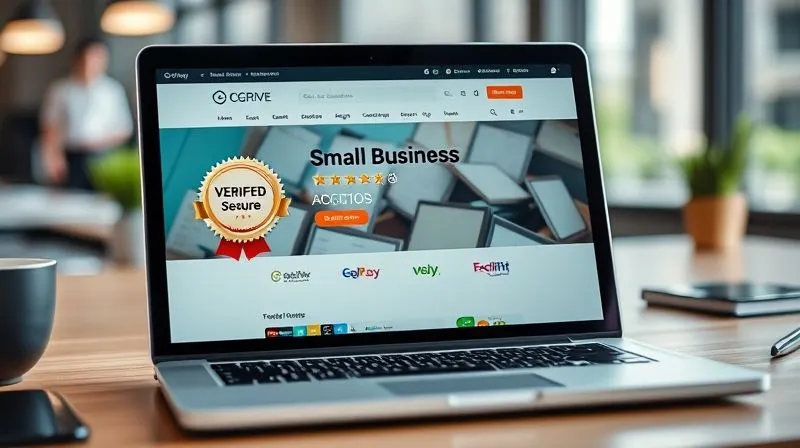
- Security Badges: SSL certificates, payment gateway logos (e.g., PayPal, Stripe, Visa), and trust seals (e.g., Norton Secured).
- Media Mentions: Logos of reputable publications or news outlets that have featured your business.
- Client Logos: If you serve other businesses, showcasing well-known client logos adds immense credibility.
- Guarantees & Return Policies: Clearly stated, easy-to-understand policies reduce perceived risk.
- Contact Information: Prominently displayed phone number, email, and physical address (if applicable).
- "About Us" Page: Share your story, your team, and your mission to humanize your brand.
As Harvard Business Review notes, customer trust is paramount in the digital age, influencing everything from purchase decisions to brand loyalty. Actively showcasing your reliability can dramatically improve conversion rates.
5. Ineffective Content Strategy or Messaging
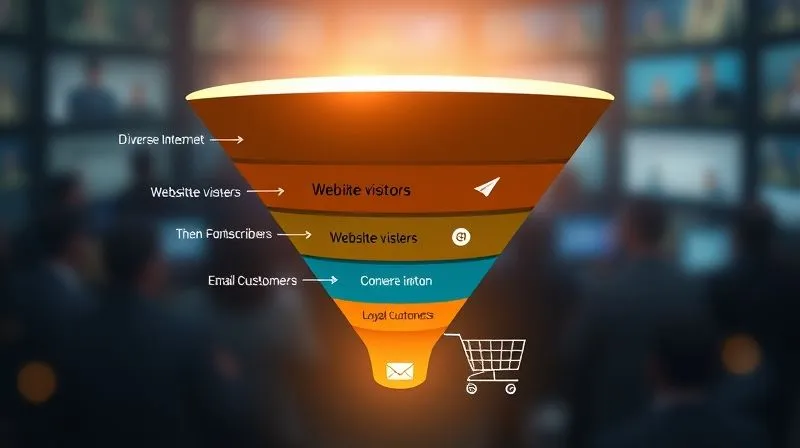
Content is king, but only if it's the right content for the right audience at the right time. Many small business websites suffer from content that is either too generic, too self-promotional, or simply doesn't address the specific needs and questions of their target customers. If your content isn't engaging, informative, and persuasive, it won't move visitors further down the sales funnel.
Are You Speaking Their Language?
Your website content should resonate with your audience's language, pain points, and aspirations. Avoid jargon they won't understand. Focus on the benefits your product or service provides, not just a list of features. Show them how you can make their lives better, easier, or more successful.
Beyond the Product Specs: Solving Problems
While product descriptions are necessary, your content strategy needs to go deeper. Blog posts, guides, FAQs, and videos that address common customer challenges and offer valuable solutions position you as an authority and a helpful resource, not just a seller. This builds rapport and trust before the sales pitch even begins.
"Don't tell me what you sell. Tell me what problem you solve for me." - A foundational principle in effective marketing.
For instance, if you sell accounting software, don't just list features. Create content like "5 Common Tax Mistakes Small Businesses Make" or "How to Streamline Your Monthly Bookkeeping in 30 Minutes." This type of content attracts visitors who are actively searching for solutions to their problems, making them much more likely to convert once they see you offer the ultimate solution.
6. Neglecting Website Analytics and A/B Testing
One of the most profound mistakes I see small businesses make is treating their website as a "set it and forget it" asset. Without continuously monitoring your website's performance through analytics and actively testing different elements, you're essentially flying blind. You won't know why your small business website isn't converting visitors to sales, or more importantly, what to change to fix it.
Website analytics tools (like Google Analytics) provide invaluable insights into visitor behavior: where they come from, what pages they visit, how long they stay, and where they drop off. A/B testing (or split testing) allows you to compare two versions of a webpage element (e.g., a headline, a button color, an image) to see which one performs better in terms of conversions.
Steps to Leverage Analytics & A/B Testing:
- Install and Configure Analytics: Ensure Google Analytics 4 (GA4) or an equivalent is properly set up and tracking key events (form submissions, button clicks, purchases).
- Identify Key Conversion Goals: Define what a "conversion" means for your business (e.g., a sale, a lead form submission, an email signup).
- Analyze User Flow & Drop-Off Points: Look at your analytics to see where visitors are leaving your site. Is it a specific product page? The checkout process?
- Formulate Hypotheses: Based on your analysis, hypothesize why a particular page or element isn't performing. "I believe changing the CTA text from 'Submit' to 'Get My Free Quote' will increase form submissions."
- Run A/B Tests: Use tools like Google Optimize (or alternatives) to test your hypotheses. Test one variable at a time for statistically significant results.
- Implement Winning Variations: Once a test concludes with a clear winner, implement that change permanently.
- Repeat: Conversion Rate Optimization (CRO) is an ongoing process.
Consider the impact of even small improvements. A 1% increase in conversion rate can mean thousands of dollars in additional revenue annually. Ignoring this data is like trying to navigate a ship without a compass.
| Test Element | Original (Control) | Variation A | Conversion Rate Change |
|---|---|---|---|
| CTA Button Text | Submit | Get My Free Quote | +18% |
| Product Image Placement | Right Side | Left Side | +5% |
| Headline Wording | Our Services | Solve Your [Problem] | +12% |
For deeper insights into your website's performance and to identify areas for improvement, tools like Google Analytics and heatmapping software can be invaluable. They provide the data you need to stop guessing and start making informed decisions.
7. Inadequate Follow-Up and Nurturing
Not every visitor is ready to buy on their first visit, and that's perfectly normal. Many small businesses make the mistake of assuming a visitor who doesn't convert immediately is a lost cause. However, a significant portion of potential sales are nurtured over time. If you lack a strategy for follow-up and lead nurturing, you're leaving money on the table and failing to address why your small business website isn't converting visitors to sales in the long run.
The Power of Email Marketing Automation
One of the most effective ways to nurture leads is through email marketing automation. By offering a valuable lead magnet (e.g., a free guide, checklist, discount code) in exchange for an email address, you gain permission to continue the conversation. A well-crafted email sequence can educate, build trust, overcome objections, and gently guide prospects towards a purchase.
Think about the customer journey: a visitor might land on your site, read a blog post, and then sign up for your newsletter. They're not ready to buy yet, but they've shown interest. An automated email sequence can then deliver more helpful content, introduce your products/services more deeply, share testimonials, and eventually present a relevant offer.
"The fortune is in the follow-up." - A classic sales adage that holds true in digital marketing.
This nurturing process is crucial. Marketing automation platforms can help you segment your audience and send personalized messages, increasing the likelihood of conversion significantly. It transforms passive visitors into engaged prospects and eventually, loyal customers.
Frequently Asked Questions (FAQ)
What's the most common mistake small businesses make that prevents conversions? In my experience, the single most common mistake is not clearly articulating their unique value proposition. If visitors don't immediately understand what you offer and why it matters to them, all other efforts fall flat. It's foundational.
How quickly should I expect to see conversion rate improvements after implementing changes? It varies depending on the severity of the initial issues and the traffic volume. Small, impactful changes like CTA optimization or fixing mobile responsiveness can show results in weeks. Larger content strategy shifts or comprehensive UX overhauls might take a few months to yield statistically significant data. Consistency and ongoing testing are key.
Is it better to focus on getting more traffic or improving conversion rate? Both are important, but I always advise clients to focus on conversion rate optimization (CRO) first. Why? Because if your website has leaks, sending more traffic to it is like pouring water into a leaky bucket – you're just wasting resources. Fix the leaks first, then amplify your traffic efforts. A 1% conversion rate increase on existing traffic is often more cost-effective than a 10% traffic increase.
How often should I review my website analytics and make adjustments? Ideally, you should review your core conversion metrics weekly or bi-weekly to spot trends. Deeper dives into user behavior and A/B test results can be done monthly. CRO is not a one-time project; it's an iterative process that requires continuous monitoring and optimization to stay competitive.
What if I have a very niche product/service? Do these rules still apply? Absolutely. In fact, for niche businesses, these rules are even more critical. A clear value proposition helps you stand out, excellent UX keeps your specific audience engaged, and strong trust signals reassure them. Your content strategy should be hyper-focused on solving the unique problems of your niche, and analytics will tell you precisely what resonates with that specific audience.
Key Takeaways and Final Thoughts
Transforming your small business website from a digital brochure into a powerful sales tool isn't magic; it's a methodical process of understanding your audience, optimizing their experience, and clearly communicating your value. The question "Why isn't my small business website converting visitors to sales?" has many answers, but each one leads to an actionable solution.
- Clarify Your Value: Ensure your unique selling proposition is front and center.
- Prioritize User Experience: A fast, mobile-friendly, and intuitive design is non-negotiable.
- Guide with Clear CTAs: Tell visitors exactly what you want them to do next.
- Build Trust: Showcase social proof, security, and transparency.
- Create Valuable Content: Speak to your audience's needs, not just your features.
- Embrace Data: Use analytics and A/B testing to make informed decisions.
- Nurture Leads: Implement follow-up strategies to convert interested prospects over time.
Remember, your website is your 24/7 salesperson. It deserves constant attention, refinement, and strategic optimization. By systematically addressing these common pitfalls, you won't just increase your conversion rates; you'll build a more resilient, profitable, and customer-centric small business. The journey to higher sales starts with these fundamental steps – take them, and watch your website finally deliver on its potential.
Recommended Reading
- 5 Steps: How to Pivot Business Model When Disruption Hits Suddenly
- Unlock Resilience: Design Operational Systems That Thrive Under Pressure
- Unlock Efficiency: How to Reduce Waste in Small Business Operations Permanently
- Convert Networking Contacts: 7 Steps to Consistent Client Conversion
- 7 Reasons Your Business Insights Fail: Drive Strategic Decisions Now!





Comments
Leave a comment below. Your email will not be published. Required fields marked with *