


How to Accurately Attribute ROI Across Integrated Campaign Channels?
For over 15 years in marketing strategy, I've witnessed countless businesses grapple with a fundamental, often frustrating, challenge: truly understanding where their marketing dollars are making an impact. It’s a common scenario – a brilliant integrated campaign launches, leads pour in, sales soar, but when the leadership asks, "Which channel truly drove that ROI?", silence often fills the room.
The problem isn't a lack of effort; it's the inherent complexity of modern customer journeys. Buyers interact with brands across a multitude of touchpoints – from social media ads and email nurturing to content downloads and in-store experiences – making it incredibly difficult to assign credit fairly and accurately. This ambiguity leads to misallocated budgets, missed optimization opportunities, and a constant struggle to prove marketing's value.
In this definitive guide, I'll share a battle-tested framework for mastering ROI attribution across your integrated campaigns. We'll delve into practical strategies, advanced models, technological solutions, and real-world insights that will empower you to move beyond guesswork and confidently demonstrate the true impact of every marketing initiative. Get ready to transform your marketing analytics from a black box into a clear roadmap for growth.
The Evolving Landscape of Integrated Campaigns and the Attribution Quagmire
The days of linear customer journeys are long gone. Today's consumer journey is a winding, multi-channel path, often starting with a social media interaction, moving to a blog post, perhaps an email, a review site, and finally, a conversion. This interconnectedness is the very essence of integrated campaigns, designed to create a cohesive brand experience across all touchpoints.
However, this integration, while powerful for customer engagement, creates an attribution quagmire. When a customer sees an ad on Facebook, clicks an email, reads a blog, then searches on Google and converts, which touchpoint gets the credit? And more importantly, how to accurately attribute ROI across integrated campaign channels? This isn't just an academic question; it directly impacts budget allocation, strategic planning, and the perceived value of your marketing efforts.
"Ignoring the complexity of multi-touch attribution is akin to sailing without a compass; you might reach your destination, but you won't know how you got there or if there was a better route." - Your Expert Voice
Demystifying Attribution Models: From Simplicity to Sophistication
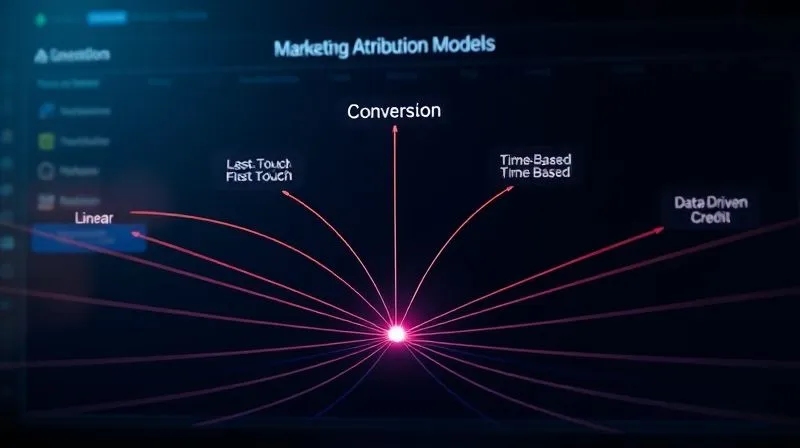
Before we can accurately attribute ROI, we must understand the tools at our disposal: attribution models. These are the rules, or sets of rules, that determine how credit for a conversion is assigned to different touchpoints in the customer journey. Choosing the right model is paramount to getting meaningful insights.
Let's explore the spectrum, from the most basic to the most advanced. No single model is perfect for every business or campaign, so understanding their nuances is key to knowing how to accurately attribute ROI across integrated campaign channels effectively.
Single-Touch Attribution Models
These models are straightforward but often oversimplify the customer journey, assigning 100% of the credit to a single interaction.
- First-Touch Attribution: Gives all credit to the very first interaction a customer has with your brand. Great for understanding initial awareness drivers.
- Last-Touch Attribution: Assigns all credit to the final interaction before conversion. Excellent for optimizing conversion-focused channels.
- Last Non-Direct Click: Similar to last-touch, but ignores direct traffic if another channel preceded it. Useful for filtering out brand searches as the sole credit.
Multi-Touch Attribution Models
These models acknowledge the collaborative effort of multiple touchpoints, distributing credit more fairly across the customer journey. They offer a much more realistic view of integrated campaign performance.
- Linear Attribution: Divides credit equally among all touchpoints in the conversion path. Simple, but doesn't account for varying impact.
- Time Decay Attribution: Gives more credit to touchpoints closer in time to the conversion. Useful for shorter sales cycles or campaigns with a clear end goal.
- Position-Based (U-Shaped) Attribution: Assigns 40% credit to the first and last interactions, distributing the remaining 20% evenly among middle interactions. Balances awareness and conversion drivers.
- W-Shaped Attribution: Similar to U-shaped, but also gives significant credit to a "middle" touchpoint, often a lead generation event or key content interaction.
- Algorithmic/Data-Driven Attribution: The most sophisticated, using machine learning to assign credit based on actual historical data and unique customer journey patterns. This is often the gold standard for truly understanding how to accurately attribute ROI across integrated campaign channels.
| Attribution Model | Key Benefit | Key Drawback |
|---|---|---|
| First-Touch | Highlights awareness | Ignores conversion drivers |
| Last-Touch | Optimizes conversion channels | Ignores initial engagement |
| Linear | Fair distribution | Doesn't weigh impact |
| Time Decay | Favors recent interactions | Less credit for early influence |
| Position-Based | Balances first/last touch | Arbitrary middle weighting |
| Data-Driven | Most accurate, granular | Requires significant data/tech |
Laying the Groundwork: Data Collection, Integration, and Cleanliness
No attribution model, however sophisticated, can deliver accurate insights without robust, integrated, and clean data. This is often where many organizations stumble. My experience has taught me that the foundation of accurate ROI attribution is meticulous data management.
Step 1: Define Your Conversion Events and Micro-Conversions
Before you track anything, clearly define what constitutes a "conversion" for your business. Is it a sale, a lead form submission, a download, a demo request? Beyond primary conversions, also identify key micro-conversions (e.g., email sign-ups, video views, content downloads) that indicate progress along the customer journey. These are crucial for understanding the impact of early-stage channels.
Step 2: Implement Consistent Tracking Across All Channels
This is non-negotiable. Every digital touchpoint must be tagged consistently. Use UTM parameters for all campaigns (source, medium, campaign, content, term). Ensure your CRM, marketing automation platform, website analytics (Google Analytics 4, Adobe Analytics), and advertising platforms (Google Ads, Facebook Ads, LinkedIn Ads) are all configured to capture the same data points.
"Garbage in, garbage out. No attribution model can magically fix poor data collection. Invest in your tracking infrastructure first." - Your Expert Voice
Step 3: Centralize and Integrate Your Data
Siloed data is the enemy of integrated campaign attribution. You need a way to bring all your data sources together. This could involve:
- Data Warehouses: Solutions like Google BigQuery, Snowflake, or Amazon Redshift allow you to store vast amounts of data from disparate sources.
- Customer Data Platforms (CDPs): These platforms are designed to unify customer data from marketing, sales, and service channels, creating a single, comprehensive customer profile.
- Business Intelligence (BI) Tools: Tools like Tableau, Power BI, or Looker Studio can connect to various data sources and visualize the consolidated data, making it easier to analyze.
The goal is a holistic view of the customer journey, enabling you to connect the dots between various touchpoints and ultimately determine how to accurately attribute ROI across integrated campaign channels.
Harvard Business Review emphasizes that data alone isn't enough; insights are what truly matter. Without proper integration, insights remain elusive.
Implementing Advanced Attribution Models and Overcoming Challenges
Once your data foundation is solid, you can move towards implementing more sophisticated attribution models. This often means moving beyond the default models offered by individual ad platforms, which inherently favor their own channels.
Choosing the Right Model for Your Business
There's no one-size-fits-all. Your choice depends on your business goals, sales cycle length, and available data:
- Short Sales Cycle (e-commerce): Last-Click or Time Decay might be sufficient for quick optimization.
- Long Sales Cycle (B2B, high-value): Position-Based, W-Shaped, or Data-Driven models are essential to credit the numerous touchpoints involved in nurturing a lead.
- Brand Awareness Focus: First-Touch can be useful, but should be combined with multi-touch for overall ROI.
My advice? Don't pick one and stick to it forever. Test different models. Compare their outputs. What insights do they reveal? This comparative analysis is crucial for understanding your unique customer journey.
Case Study: How ‘ConnectFlow’ Refined Its B2B Attribution
ConnectFlow, a SaaS company specializing in marketing automation, struggled with proving the ROI of its content marketing and PR efforts. Their sales team attributed nearly all conversions to "Direct" or "Organic Search" – the last touchpoints. Using a Last-Click model, their content team’s perceived value was minimal.
By shifting to a W-Shaped Attribution Model and integrating data from their CRM, marketing automation platform, and website analytics, they discovered a different story. Blog posts, webinars, and PR mentions were consistently the "first touch" or "middle touch" before a demo request (the "conversion event"). This model revealed that while Google Search was often the final touch, the journey *started* with their valuable content. As a result, they reallocated 15% of their ad budget to content promotion and saw a 20% increase in MQLs (Marketing Qualified Leads) from content within six months, directly impacting pipeline growth.

Addressing the 'Black Box' of Algorithmic Models
Data-driven attribution models, powered by machine learning, offer the most accurate insights by analyzing every customer path and assigning fractional credit based on the probability of conversion. However, their "black box" nature can be daunting.
My recommendation: While you may not understand every calculation, focus on the actionable insights. What channels are consistently undervalued by simpler models? Which touchpoints contribute significantly at different stages of the funnel? Use these insights to inform your strategy, rather than blindly trusting the algorithm without critical thought. Remember, you're looking for how to accurately attribute ROI across integrated campaign channels, not just a number.
A Deloitte study highlights the power of advanced attribution in revealing hidden value.
Beyond Digital: Attributing Offline Channels and Holistic ROI
Integrated campaigns aren't just digital. Many businesses invest heavily in offline channels like TV, radio, print, events, direct mail, and even word-of-mouth. Accurately attributing ROI from these channels presents a unique set of challenges, but it's crucial for a truly holistic view of your marketing performance.
Methods for Offline Attribution:
- Promo Codes/Unique URLs: Assign specific, trackable codes or URLs to offline ads. This allows you to directly link an offline touchpoint to an online conversion.
- Call Tracking: Use unique phone numbers for different offline campaigns. Advanced call tracking can even integrate with your CRM to link calls to customer profiles.
- Surveys & Post-Purchase Questions: Ask customers "How did you hear about us?" during checkout or in follow-up surveys. While self-reported, it provides valuable qualitative data.
- Geo-Targeting & Foot Traffic Analysis: For local businesses or events, measure changes in foot traffic or online searches within a specific geographic area after an offline campaign.
- Media Mix Modeling (MMM): This is a top-down, statistical approach that uses historical sales and marketing spend data to determine the incremental impact of various marketing channels (both online and offline) on overall business outcomes. It helps understand the macro effect, rather than individual customer journeys.
- Experimental Design (A/B Testing): Run controlled experiments. For example, launch a print ad in one region and not another, then compare sales or website traffic.
Integrating these offline insights with your digital attribution models is complex but essential for a complete picture of how to accurately attribute ROI across integrated campaign channels. It often requires a blend of top-down (MMM) and bottom-up (digital attribution, promo codes) approaches.

Leveraging Technology: Platforms and Tools for Seamless Attribution
The good news is that you don't have to build sophisticated attribution systems from scratch. A robust tech stack can significantly streamline the process of understanding how to accurately attribute ROI across integrated campaign channels.
Key Technologies to Consider:
- Google Analytics 4 (GA4): Offers event-based data modeling, which is far more flexible for multi-touch attribution than its predecessor. It has built-in data-driven attribution capabilities.
- Customer Data Platforms (CDPs): As mentioned, CDPs like Segment, mParticle, or Tealium are crucial for unifying customer data from all sources, creating persistent customer profiles that can be used for advanced attribution.
- Marketing Attribution Software: Dedicated platforms like AppsFlyer (mobile), Branch (mobile), Bizible (B2B), or LeadsRx offer advanced multi-touch attribution models and integrate with various ad platforms and CRMs.
- Business Intelligence (BI) & Data Visualization Tools: Tools such as Tableau, Power BI, Looker Studio, or even advanced Excel/Google Sheets can be used to connect your data sources and create custom attribution reports and dashboards.
- CRM Systems: Your CRM (Salesforce, HubSpot, Zoho CRM) is vital for tracking lead progression, sales outcomes, and connecting marketing efforts to revenue. Ensure it integrates well with your analytics and attribution tools.
The synergy between these tools is what truly unlocks powerful insights. A CDP feeds clean, unified data into your attribution software, which then provides insights that can be visualized in your BI tool and used to optimize campaigns within your ad platforms and marketing automation system.
Forbes highlights the transformative power of CDPs in modern marketing.
Iterate, Optimize, and Refine Your Attribution Strategy
Attribution is not a one-and-done task; it's an ongoing process of learning, testing, and refinement. The market changes, customer behavior evolves, and your campaigns adapt. Your attribution strategy must be equally dynamic.
Actionable Steps for Continuous Improvement:
- Regularly Review and Compare Models: Don't just rely on one model. Compare insights from last-click, linear, and a data-driven model. Note discrepancies and investigate why. This helps you understand different aspects of your funnel.
- Test Hypotheses: Use your attribution data to form hypotheses. For example, "If we increase investment in early-stage content (first-touch), we'll see an uplift in overall conversions, even if the direct ROI isn't immediate." Then, test it.
- Share Insights Across Teams: Attribution data is gold for sales, product, and even customer service. Share dashboards and key findings to align strategies and foster a data-driven culture.
- Adjust Budget Allocation: The ultimate goal of attribution is to optimize spend. Reallocate budgets to channels and touchpoints that are demonstrably driving ROI at various stages of the customer journey, not just the last click.
- Stay Updated with Technology: The marketing tech landscape is constantly evolving. Keep an eye on new tools, platform updates, and methodological advancements that can enhance your attribution capabilities.
"Attribution is not just about assigning credit; it's about understanding influence and optimizing for future growth. It's a continuous feedback loop." - Your Expert Voice
Common Pitfalls and How to Avoid Them in ROI Attribution
Even with the best intentions and tools, there are common mistakes that can derail your efforts to understand how to accurately attribute ROI across integrated campaign channels. Being aware of these pitfalls is the first step to avoiding them.
Pitfall 1: Relying Solely on Last-Click Attribution
Why it's a pitfall: As discussed, last-click ignores all preceding touchpoints, severely undervaluing awareness and consideration channels. This can lead to under-investment in crucial top-of-funnel activities.
How to avoid: Embrace multi-touch attribution models. Start with linear or time decay if data-driven feels too complex, and gradually move towards more sophisticated models as your data capabilities grow.
Pitfall 2: Disconnected Data Silos
Why it's a pitfall: When data from different channels (e.g., social, email, CRM, offline) isn't integrated, you get an incomplete picture of the customer journey, making accurate attribution impossible.
How to avoid: Invest in a robust data strategy, including consistent tagging (UTM parameters), data warehousing, or a CDP. Prioritize data integration as a foundational project.
Pitfall 3: Ignoring the Customer Journey Complexity
Why it's a pitfall: Assuming all customer journeys are linear or follow a simple pattern. In reality, they are messy and non-linear.
How to avoid: Adopt a customer-centric mindset. Map out common customer journeys. Use attribution models that reflect this complexity, such as position-based or data-driven models.
Pitfall 4: Neglecting Offline Channel Attribution
Why it's a pitfall: If a significant portion of your marketing budget goes to offline channels, but you only attribute digital, you're missing a huge piece of the ROI puzzle.
How to avoid: Implement specific tracking for offline channels (promo codes, call tracking, surveys, MMM). Integrate these insights with your digital data for a holistic view.
Pitfall 5: Analysis Paralysis
Why it's a pitfall: Getting bogged down in too much data or constantly tweaking models without taking action. The goal is insights for optimization, not perfect theoretical accuracy.
How to avoid: Start simple, learn, and iterate. Focus on actionable insights that can lead to measurable improvements. Don't let the perfect be the enemy of the good when it comes to optimization.
Pitfall 6: Misinterpreting Correlation for Causation
Why it's a pitfall: Just because two things happen together doesn't mean one caused the other. For example, a surge in direct traffic after a TV ad might be correlation, but proving causation requires more rigorous analysis (e.g., MMM or controlled experiments).
How to avoid: Be critical of your data. Use experimental design where possible. Understand the limitations of different attribution models and supplement with qualitative data and market research.
| Pitfall | Impact | Solution |
|---|---|---|
| Solely Last-Click | Undervalues awareness | Use multi-touch models |
| Disconnected Data | Incomplete customer view | Integrate data via CDP/warehouse |
| Ignoring Offline | Inaccurate holistic ROI | Implement offline tracking (promo codes, MMM) |
| Analysis Paralysis | No actionable insights | Focus on actionable insights, iterate |
Frequently Asked Questions (FAQ)
Q: Which attribution model is best for my business? There's no single "best" model. The ideal model depends on your business goals, sales cycle length, industry, and the complexity of your customer journey. For awareness-focused campaigns, first-touch might be valuable. For conversion-focused, last-touch or time decay. For a holistic view, multi-touch models like position-based or data-driven are generally recommended. My advice is to experiment with a few and compare their outputs to gain a comprehensive understanding.
Q: How long does it take to implement an advanced attribution strategy? Implementing an advanced attribution strategy, especially one involving data integration and potentially a CDP or dedicated attribution software, is a significant undertaking. It can take anywhere from 3-6 months for initial setup and configuration, followed by continuous refinement. The timeline heavily depends on your current data infrastructure, technical resources, and the complexity of your marketing stack. However, starting with consistent UTM tagging and a basic multi-touch model can yield immediate improvements.
Q: Can I accurately attribute ROI for channels like PR or word-of-mouth? Attributing PR and word-of-mouth (WOM) is challenging but not impossible. For PR, look at spikes in direct/organic traffic, branded searches, and mentions after media coverage, using tools like Meltwater or Cision. For WOM, surveys asking "How did you hear about us?" are crucial. While not as direct as digital tracking, these methods, combined with Media Mix Modeling, can provide strong directional insights into their impact on overall brand health and and conversions.
Q: What if I don't have the budget for a dedicated attribution platform? Even without a dedicated platform, you can significantly improve your attribution. Start with meticulous UTM tagging. Leverage Google Analytics 4's built-in attribution reports (which include data-driven attribution). Use spreadsheets to manually combine data from different ad platforms. While more labor-intensive, a strategic approach to data collection and basic multi-touch models (like linear or time decay) can still provide far greater insights than relying solely on last-click. Focus on consistent data, even if the tools are simpler.
Q: How often should I review my attribution models and data? I recommend a monthly review of your attribution reports to identify trends, channel performance shifts, and opportunities for optimization. A deeper dive, perhaps quarterly, should involve comparing different models, assessing the impact of new campaigns, and potentially adjusting your attribution strategy based on evolving business goals or market conditions. Remember, attribution is an ongoing process, not a static report.
Key Takeaways and Final Thoughts
- Embrace Multi-Touch: Move beyond single-touch models to gain a realistic view of how channels collaborate.
- Data is Foundation: Invest in consistent tracking, integration, and cleanliness across all digital and offline touchpoints.
- Choose Wisely, But Test: Select attribution models based on your business goals and sales cycle, but don't be afraid to test and compare different models.
- Leverage Technology: Utilize CDPs, GA4, and dedicated attribution software to streamline data collection and analysis.
- Holistic View: Don't forget offline channels. Integrate their impact using methods like promo codes, call tracking, and Media Mix Modeling.
- Iterate & Optimize: Attribution is a continuous process. Regularly review, test hypotheses, and adjust your strategies for ongoing improvement.
Mastering how to accurately attribute ROI across integrated campaign channels is no longer a luxury; it's a necessity for any business aiming for sustainable growth and optimized marketing spend. It requires patience, a commitment to data integrity, and a willingness to challenge conventional wisdom. But the rewards – clear insights, optimized budgets, and undeniable proof of marketing's impact – are truly transformative. Start today, and turn your marketing investments into a measurable engine of growth.
Recommended Reading
- Mastering Project Boundaries: How to Prevent Scope Creep in Complex Consulting Projects
- 5 Proven Tactics: 'I Need to Think About It' to Close Sales
- Avoid Costly Misclassifications: 7 Steps to Legally Classify Contractors vs. Employees
- Decoding Dilution: Can a Majority Shareholder Legally Dilute Your Shares?
- 7 Proven Strategies to Stop Affiliate Fraud Draining Your Marketing Budget





Comments
Leave a comment below. Your email will not be published. Required fields marked with *