


How to Accurately Estimate Project Timelines and Costs?
For over 15 years in project management, I've seen companies of all sizes, from nimble startups to global enterprises, stumble over a fundamental challenge: inaccurate project estimates. It's a recurring nightmare – the initial optimism giving way to budget overruns, missed deadlines, and ultimately, eroded trust. I've been in the trenches, witnessing firsthand how a flawed estimate can derail even the most promising initiatives.
The pain points are universal: stakeholders grow frustrated, teams burn out, and the project's value diminishes. Poor estimation isn't just a minor hiccup; it's a systemic problem that impacts financial health, team morale, and an organization's reputation. Many project managers feel trapped, pressured to provide 'best-case' scenarios that rarely materialize, leading to a perpetual cycle of reactive management rather than proactive planning.
But what if there was a way to break free from this cycle? In this definitive guide, I'll share battle-tested frameworks, practical techniques, and expert insights on how to accurately estimate project timelines and costs. We'll move beyond guesswork to embrace a data-driven, systematic approach that empowers you to deliver projects on time and within budget, building a foundation of reliability and success.
The Foundation: Defining Scope and Requirements
Before you can even think about numbers, you must have an impeccable understanding of what you're building. This might sound obvious, but I've seen countless projects falter because the scope was a moving target or, worse, never clearly defined to begin with. Without a crystal-clear scope, any estimate you generate is akin to shooting in the dark.
Clarity is King: The Project Charter and Scope Statement
Every successful project begins with a well-articulated Project Charter and a detailed Scope Statement. These documents aren't just bureaucratic hurdles; they are your project's North Star. The charter authorizes the project and names the project manager, while the scope statement outlines the project's objectives, deliverables, boundaries, and acceptance criteria. It defines what is IN and what is OUT of the project.
- Objective Clarity: What problem does this project solve? What value does it create?
- Deliverables: What specific outputs will the project produce? Be explicit.
- Boundaries: What will the project NOT do? This is crucial for managing stakeholder expectations.
- Acceptance Criteria: How will success be measured? What conditions must be met for deliverables to be accepted?
Breaking Down the Work: Work Breakdown Structure (WBS)
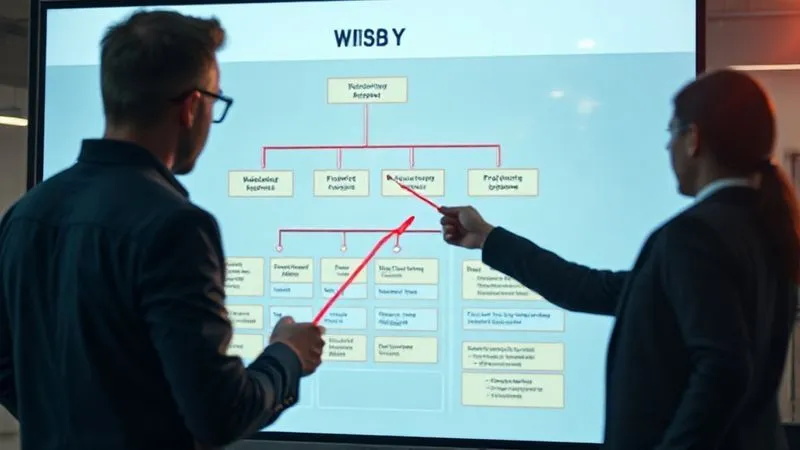
Once the scope is clear, the next critical step is to decompose the project into manageable components using a Work Breakdown Structure (WBS). A WBS is a hierarchical decomposition of the total scope of work to be carried out by the project team to accomplish the project objectives and create the required deliverables. It's not a list of tasks; it's a deliverable-oriented hierarchy.
In my experience, a well-constructed WBS is the backbone of accurate estimation. It allows you to estimate individual work packages, which are far easier to quantify than a vague, overarching project. Each level of the WBS should represent a progressively more detailed definition of the project work.
- Identify Major Deliverables: Start with the main outputs of the project.
- Decompose into Sub-Deliverables: Break these down further into smaller, more manageable components.
- Define Work Packages: At the lowest level, identify the specific work packages – the smallest units of work that can be realistically estimated and managed.
- Assign Owners: Each work package should have a clear owner responsible for its completion.
Leveraging Historical Data and Expert Judgment
Once you have a clear understanding of the work, it's time to bring in the data. The past is often the best predictor of the future, and ignoring historical project data is a common, costly mistake. Coupled with the wisdom of experienced professionals, these methods form a powerful estimation toolkit.
Analogous Estimating: Learning from the Past
Analogous estimating, also known as top-down estimating, uses parameters from a previous, similar project as the basis for estimating the duration or cost of a future project. For instance, if a similar software development project took 6 months and cost $500,000, you might use that as a starting point for your current project, adjusting for differences in complexity, size, and resources.
This method is quick and effective when there's a strong historical precedent and the current project is genuinely comparable. However, its accuracy relies heavily on the similarity between projects and the expertise of the estimator to identify and account for differences.
Parametric Estimating: Scaling with Data
Parametric estimating uses a statistical relationship between historical data and other variables (parameters) to calculate an estimate. For example, if you know it takes, on average, 20 hours to develop one user story of a certain complexity, and your project has 100 such user stories, you can estimate 2000 hours of development time. It's more accurate than analogous estimating because it uses specific parameters.
This technique is particularly useful in industries where there are established metrics, such as construction (cost per square foot) or software development (lines of code, function points, or story points). The key is having reliable historical data and a statistically valid relationship between the parameter and the cost/duration.
Three-Point Estimating: Battling Uncertainty
No project is entirely predictable. This is where three-point estimating shines. It acknowledges uncertainty by asking for three estimates for each activity or work package:
- Optimistic (O): The best-case scenario, assuming everything goes perfectly.
- Pessimistic (P): The worst-case scenario, assuming everything goes wrong.
- Most Likely (M): The realistic estimate, considering typical conditions.
These three values are then used to calculate a more robust estimate, often using the PERT (Program Evaluation and Review Technique) formula: (O + 4M + P) / 6. This provides a weighted average that accounts for the most likely scenario more heavily, giving a statistically sounder estimate than a single point estimate. As a project manager, I always advocate for this method when dealing with tasks that have inherent variability.
"Expert judgment is invaluable, but it should always be informed by data, not replace it. The most accurate estimates blend seasoned intuition with empirical evidence." - My personal philosophy.
Deconstructing Costs: From Resources to Contingencies
Project costs extend far beyond just salaries. To truly understand how to accurately estimate project timelines and costs, you need to dissect every potential expense. This requires a comprehensive view of all resources, tools, and the often-overlooked 'what ifs'.
Resource Planning and Rate Cards
The most significant cost component for many projects is human resources. This involves not just identifying the roles needed but also understanding their availability, skill sets, and associated costs. Developing internal rate cards for different roles (e.g., senior developer, junior designer, project manager) based on salary, benefits, and overhead can streamline this process.
- Internal Resources: Calculate loaded costs (salary + benefits + overhead) per hour/day.
- External Resources: Obtain quotes from contractors, freelancers, or agencies.
- Material Costs: Identify and price all physical materials required.
- Equipment Costs: Lease or purchase costs for specialized equipment.
Software and Tooling Costs
In today's digital landscape, software licenses, subscriptions to SaaS tools, and development environments can accumulate quickly. Don't forget to factor in these recurring or upfront costs. This includes project management software, design tools, testing frameworks, cloud infrastructure, and any specialized industry-specific applications.
Contingency Reserves: The Unforeseen Factor
This is where many estimates go wrong. Projects rarely unfold exactly as planned. Unexpected issues – a team member falling ill, a technical challenge, a scope clarification – are inevitable. A contingency reserve is a planned amount of money or time added to a project's budget or schedule to account for identified risks. It's not padding; it's a scientifically derived buffer.
Typically, contingency reserves are calculated as a percentage of the total estimated cost, ranging from 5% to 20% depending on the project's complexity, novelty, and risk profile. For highly innovative or research-heavy projects, I've seen contingencies go even higher. Failing to include this reserve is a recipe for budget overruns and timeline delays.
| Cost Category | Estimated Cost | Notes |
|---|---|---|
| Human Resources (Internal) | $150,000 | Development, QA, PM, Design |
| External Contractors | $40,000 | UI/UX Specialist, Content Writer |
| Software Licenses & Tools | $15,000 | PM Software, Design Suite, Cloud Services |
| Hardware & Equipment | $5,000 | Testing devices, server upgrades |
| Travel & Training | $8,000 | Team workshops, client meetings |
| Contingency Reserve (15%) | $32,700 | For unforeseen risks and changes |
| Total Project Cost | $252,700 |
Mastering Timeline Estimation Techniques
Just as costs need careful dissection, timelines demand rigorous planning. Effective scheduling means understanding dependencies, critical paths, and embracing different methodologies for different project types. This is fundamental to how to accurately estimate project timelines and costs.
Critical Path Method (CPM): Identifying Key Dependencies
The Critical Path Method (CPM) is a project modeling technique used to analyze and visualize the activities involved in a project, their dependencies, and their durations. It identifies the 'critical path' – the longest sequence of tasks that must be completed on time for the project to finish on schedule. Any delay on a critical path activity will delay the entire project.
By mapping out all tasks and their interdependencies, CPM allows you to:
- Identify the shortest possible project duration.
- Pinpoint activities that have 'float' or 'slack' (can be delayed without affecting the project end date).
- Focus resources and monitoring efforts on critical activities.
I always start with CPM for complex projects to gain a clear understanding of the project's core sequence. It's an indispensable tool for proactive scheduling.
PERT (Program Evaluation and Review Technique): Probabilistic Timelines
As mentioned with three-point estimating for costs, PERT is equally valuable for durations. It applies the same optimistic, pessimistic, and most likely estimates to task durations, calculating an expected duration and, crucially, a standard deviation. This allows you to express estimates as a range (e.g., 'this task will take 8-12 days') and even calculate the probability of completing the project by a certain date.
PERT is particularly powerful for projects with a high degree of uncertainty, where single-point estimates are inherently risky. It provides a more realistic and statistically defensible timeline.
Agile Estimation: Story Points and Velocity
For agile projects, traditional hour-based estimates can be less effective. Instead, agile teams often use story points to estimate the relative effort required for user stories, considering complexity, risk, and effort. Story points are abstract units, not tied to hours, fostering a focus on relative sizing rather than absolute time.
Velocity is then calculated as the average number of story points a team completes per sprint. Over time, a team's stable velocity becomes a highly reliable metric for predicting how much work they can accomplish in future sprints, helping to estimate release timelines and overall project duration. This iterative feedback loop is a core strength of agile estimation.
The Art of Risk Management in Estimation
Estimates are inherently forward-looking, and the future is uncertain. Ignoring potential risks is like building a house without a foundation. Effective risk management is not just about identifying problems; it's about quantifying their potential impact on your estimates and proactively planning for them. This is a crucial element in understanding how to accurately estimate project timelines and costs.
Identifying and Quantifying Risks
Start by brainstorming potential risks across all project areas: technical, operational, external, financial, and resource-related. Once identified, each risk needs to be assessed for its:
- Probability: How likely is it to occur (e.g., low, medium, high)?
- Impact: If it occurs, what will be its effect on cost, schedule, and quality?
Multiplying probability by impact gives you a risk score, allowing you to prioritize. For instance, a low-probability, high-impact risk might warrant a specific contingency, while a high-probability, low-impact risk might be accepted. According to a Deloitte study, organizations with mature risk management practices achieve significantly better project outcomes.
Mitigation Strategies and Their Cost Implications
For high-priority risks, develop mitigation strategies – actions taken to reduce the probability or impact of the risk. Crucially, these strategies often come with their own costs and timelines, which must be factored into your overall estimates. For example, to mitigate a technical risk, you might plan for an additional prototyping phase, which adds time and budget.
Other strategies include risk transference (e.g., insurance), risk avoidance (changing the plan), or risk acceptance (planning for the consequences). Each choice has a direct bearing on your project's financial and schedule estimates.
Case Study: How InnovateTech Mastered Risk-Based Estimation
InnovateTech, a mid-sized software company, was notorious for project overruns. Their flagship product, a new AI-powered analytics platform, was at risk of significant delays due to ambitious technical requirements and an untested integration with a third-party API. Traditional estimation methods predicted a 9-month delivery at $750,000.
I advised them to implement a rigorous risk assessment. They identified the API integration as a high-probability, high-impact risk. Their mitigation strategy involved dedicating a small, senior engineering team to build a proof-of-concept for the integration in parallel with core development, adding 3 weeks and $30,000 to the initial estimate. They also allocated an additional 10% contingency reserve specifically for technical unknowns.
During the project, the proof-of-concept revealed significant compatibility issues with the API that would have caused a 3-month delay had they discovered it later. Because they proactively addressed it, they adjusted their integration strategy early, incurred a minor additional cost, and delivered the project just 4 weeks late, well within their revised timeline and budget. This resulted in a successful product launch and saved them an estimated $200,000 in potential rework and extended project costs.
Tools and Technology for Enhanced Accuracy
In the digital age, relying solely on spreadsheets and intuition is no longer sufficient. Modern project management offers a wealth of tools and technologies that can significantly enhance your ability to accurately estimate project timelines and costs. Leveraging these resources is not just an advantage; it's a necessity for competitive project delivery.
Project Management Software
Tools like Jira, Asana, Microsoft Project, Monday.com, and Trello provide integrated platforms for planning, tracking, and reporting. They help in:
- WBS Creation: Easily break down projects into tasks and subtasks.
- Dependency Mapping: Visualize task relationships and critical paths.
- Resource Allocation: Assign resources to tasks and track their utilization.
- Cost Tracking: Monitor actual costs against estimated budgets in real-time.
- Historical Data Collection: Automatically log task durations and resource efforts, building a valuable repository for future estimates.
The real power of these tools lies in their ability to centralize information and provide real-time insights, allowing for continuous adjustment and refinement of estimates.
AI and Machine Learning in Estimation
The frontier of project estimation is being reshaped by Artificial Intelligence and Machine Learning. AI-powered tools can analyze vast amounts of historical project data, identify complex patterns, and predict project outcomes with a level of accuracy that human estimators simply cannot match. They can:
- Identify Hidden Correlations: Uncover subtle relationships between project variables and outcomes.
- Predict Risks: Foresee potential delays or cost overruns based on current project data and past trends.
- Generate Probabilistic Forecasts: Provide not just a single estimate but a range of possible outcomes with associated probabilities.
While still evolving, integrating AI into your estimation process can provide a significant competitive edge, moving you closer to truly predictive project management.
"Technology amplifies human judgment, it doesn't replace it. The best project managers use tools to gain deeper insights, allowing them to make more informed and strategic decisions." - A core belief for modern PMs.
Continuous Refinement: Iteration and Communication
Estimation is not a one-time event; it's an ongoing process. Projects are dynamic, and external factors can shift. To maintain accuracy, you must embrace continuous refinement and transparent communication. This iterative approach is key to truly understanding how to accurately estimate project timelines and costs over the entire project lifecycle.
Baseline Management and Change Control
Once your initial estimates are approved, they form the project's baseline for scope, schedule, and cost. This baseline is your reference point for measuring performance. However, changes are inevitable. Instead of letting them derail your project, manage them through a formal change control process.
Any proposed change to the scope, schedule, or budget must be formally reviewed, assessed for its impact on estimates, approved by relevant stakeholders, and then officially incorporated into the baseline. This prevents 'scope creep' and ensures that your estimates remain relevant and accurate throughout the project.
Stakeholder Communication: Managing Expectations
Even the most accurate estimate is useless if stakeholders don't understand it or have unrealistic expectations. Regular, transparent communication is paramount. This means:
- Explaining Assumptions: Clearly state the assumptions underpinning your estimates.
- Communicating Ranges: Present estimates as ranges (e.g., '6-8 months,' '$250k-$300k') rather than single, definitive numbers, especially early in the project.
- Reporting Progress: Regularly update stakeholders on actual performance versus the baseline.
- Addressing Variances: Explain any deviations from the plan and what actions are being taken.
As Harvard Business Review often highlights, managing expectations is as critical as managing the project itself.
| Estimation Technique | Pros | Cons |
|---|---|---|
| Analogous | Quick, useful for early stages | Low accuracy, relies on strong similarity |
| Parametric | Higher accuracy, uses historical metrics | Requires robust historical data, specific parameters |
| Three-Point (PERT) | Accounts for uncertainty, statistically sound | More time-consuming, requires multiple inputs |
| Bottom-Up | Highest accuracy, detailed breakdown | Most time-consuming, requires full WBS |
| Agile (Story Points/Velocity) | Adaptive, team-driven, good for iterative projects | Less precise for fixed-price, upfront contracts |
Frequently Asked Questions (FAQ)
Q: Why are project estimates so often wrong? Project estimates are often wrong due to a combination of factors: unclear scope, optimistic bias, lack of historical data, failure to account for risks and contingencies, pressure from stakeholders for aggressive timelines, and underestimating complexity. Many also fail to update estimates as new information emerges, treating it as a one-time activity.
Q: How do you estimate projects with high uncertainty or new technology? For projects with high uncertainty, I recommend a combination of techniques: use three-point estimating (PERT) to account for a wide range of possibilities, break down the work into very small iterations (like in Agile), and plan for early prototyping or proof-of-concepts to reduce technical risk. Increase your contingency reserve significantly and communicate estimates as broad ranges. Phased approaches, where a small phase informs the estimate for the next, are also highly effective.
Q: What's the role of stakeholder input in estimation? Stakeholder input is absolutely critical. They often possess valuable domain knowledge, understand business priorities, and can clarify requirements. Involving them in the WBS creation, risk identification, and even reviewing estimates fosters buy-in and helps manage expectations. However, remember to filter and validate their input against expert judgment and data, as their perspectives might sometimes carry an optimistic bias.
Q: Can AI truly replace human judgment in project estimation? While AI and machine learning are powerful tools that can analyze vast datasets and identify patterns far beyond human capability, they are unlikely to fully replace human judgment. AI excels at quantitative analysis and prediction based on historical data. However, human project managers bring intuition, empathy, negotiation skills, and the ability to navigate unique, unprecedented situations that AI cannot yet fully comprehend. The most effective approach is a synergistic one, where AI augments and enhances human decision-making.
Q: What's the biggest mistake project managers make in estimation? In my experience, the single biggest mistake is providing a single, definitive 'best-case' estimate early in the project lifecycle, without clearly stating assumptions, accounting for risks, or including contingencies. This sets unrealistic expectations from day one and leaves no room for the inevitable complexities and changes that arise in nearly every project. Embracing ranges and probabilistic estimates, especially when uncertainty is high, is a far more professional and ultimately more accurate approach.
Key Takeaways and Final Thoughts
Mastering how to accurately estimate project timelines and costs is not a mystical art; it's a disciplined science, refined by experience and supported by robust methodologies. It demands a commitment to clarity, data, and continuous learning. As we've explored, the journey involves:
- Defining Scope Rigorously: Starting with a clear WBS and scope statement.
- Leveraging Data: Utilizing analogous, parametric, and three-point estimating.
- Deconstructing Costs: Accounting for all resources, tools, and crucial contingency reserves.
- Mastering Timelines: Employing CPM, PERT, and agile velocity for realistic schedules.
- Proactive Risk Management: Identifying, quantifying, and mitigating potential roadblocks.
- Embracing Technology: Utilizing PM software and exploring AI for enhanced insights.
- Continuous Refinement: Managing baselines, controlling changes, and communicating transparently.
Remember, an estimate is a living document, not a rigid prophecy. By adopting these expert strategies, you're not just predicting the future; you're actively shaping it. You're empowering your teams, building stakeholder trust, and establishing a reputation for reliable project delivery. Take these steps, apply them diligently, and watch your project success rates soar. The precision you bring to your planning today will define the success of your projects tomorrow.
Recommended Reading
- Founder's Guide: Improve Leadership Skills & Skyrocket Your Startup
- Why Is Your Profitable Business Always Short on Cash? 7 Fixes
- 7 Proven Strategies: How to Stop High-Value Customers from Suddenly Churning?
- Franchise Sale Stalled? 7 Ways to Conquer Transfer Approval Delays
- Stop the Bleed: 7 Proven Fixes for Sales Funnel Qualification Drop-Offs




Comments
Leave a comment below. Your email will not be published. Required fields marked with *