


How to Accurately Estimate Task Durations for Tight Project Deadlines?
For over two decades in the trenches of project management, I've seen countless projects falter, not from a lack of talent or resources, but from a fundamental flaw: inaccurate task duration estimates. This isn't just about missing a deadline; it's about eroding trust, burning out teams, and ultimately, delivering subpar results. The pressure of tight project deadlines often exacerbates this, pushing teams to make rash, optimistic estimations that inevitably lead to chaos.
The pain points are universal: missed milestones, scope creep, budget overruns, and a constant scramble to catch up. I empathize deeply with project managers who feel like they're perpetually firefighting, caught between demanding stakeholders and a team struggling to meet unrealistic expectations. It’s a vicious cycle, and without a robust, data-driven approach, it’s incredibly difficult to break free.
In this definitive guide, I'll share the frameworks, techniques, and expert insights I’ve refined over years of managing complex projects. We’ll move beyond guesswork to embrace actionable strategies for how to accurately estimate task durations for tight project deadlines, ensuring your projects are not just completed, but completed successfully, on time, and within scope. Prepare to transform your approach to project scheduling.
The Perils of Poor Estimation: Why It Matters More Than You Think
Before we dive into solutions, let's acknowledge the profound impact of poor task estimation. It's not merely an administrative oversight; it's a strategic vulnerability. When estimates are consistently off, it signals a deeper systemic issue within project planning and execution. This can lead to a cascade of negative consequences that extend far beyond a single project.
“An estimate is merely a guess, but a good estimate is an educated guess, backed by data and experience. Without it, you’re not managing a project; you’re merely hoping for the best.” – My personal mantra.
The ripple effect of inaccurate estimates includes strained client relationships, decreased team morale due to constant pressure and overtime, damage to your organization's reputation, and ultimately, a significant hit to profitability. Understanding these stakes is the first step towards committing to better estimation practices.
Foundation First: Deconstructing Your Project into Manageable Tasks
You can’t accurately estimate what you haven’t clearly defined. This might sound obvious, but I've witnessed many projects jump straight to duration estimates without fully understanding the granular work involved. The secret to precision lies in meticulous decomposition.
Step 1: Create a Robust Work Breakdown Structure (WBS)
A Work Breakdown Structure (WBS) is the cornerstone of effective project planning. It's a hierarchical decomposition of the total scope of work to be carried out by the project team to accomplish the project objectives and create the required deliverables. Think of it as breaking down your Everest into manageable climbing sections.
- Identify Major Deliverables: Start with the highest-level project deliverables. What are the big chunks of work?
- Decompose into Sub-Deliverables: Break each major deliverable into smaller, more manageable components.
- Define Work Packages: Continue breaking down until you reach 'work packages' – the lowest level of the WBS. A work package should be small enough to be estimated accurately, assigned to a single person or small team, and have a clear start and end. Ideally, a work package should not exceed 80 hours of effort.
- Verify Completeness: Ensure that 100% of the project scope is captured in the WBS and that there's no overlap.
Step 2: Define Deliverables and Dependencies
Once your WBS is solid, you need to clearly define what each work package produces (its deliverable) and how it relates to other tasks. Dependencies are critical for sequencing and understanding potential bottlenecks.
- Task Definition: For each work package, write a clear, concise description of the work to be performed and its expected output.
- Dependency Identification: Determine which tasks must be completed before others can start (finish-to-start), which can start at the same time (start-to-start), or other relationships. This is crucial for building a realistic project schedule and identifying the critical path.
Leveraging Data & Expertise: Proven Estimation Techniques
Once your tasks are well-defined, it's time to apply proven estimation techniques. Relying solely on a single method is a rookie mistake; a combination often yields the most accurate results, especially for how to accurately estimate task durations for tight project deadlines.
Technique 1: Three-Point Estimation (PERT)
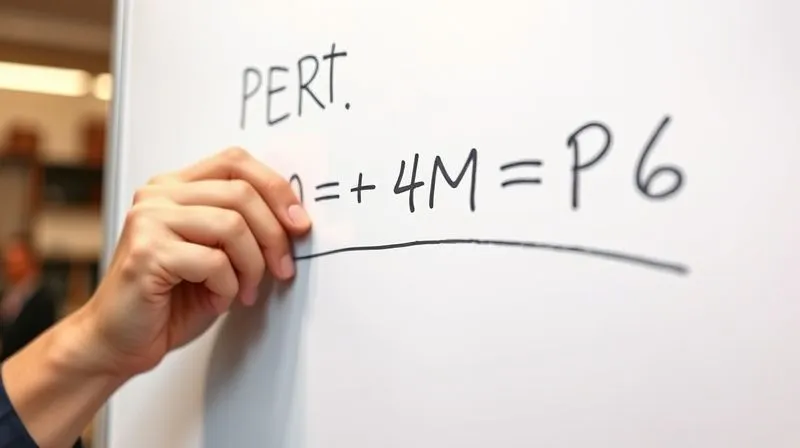
Program Evaluation and Review Technique (PERT) is a powerful method that accounts for uncertainty by considering three estimates for each task: optimistic, pessimistic, and most likely. This moves beyond a single, often biased, guess.
The PERT formula is: (Optimistic + 4 * Most Likely + Pessimistic) / 6
- Optimistic (O): The best-case scenario duration, assuming everything goes perfectly.
- Most Likely (M): The most realistic duration, considering normal conditions and typical challenges.
- Pessimistic (P): The worst-case scenario duration, accounting for foreseeable problems and delays.
- Calculate Expected Duration: Apply the PERT formula to get a weighted average, which tends to be more realistic than the 'most likely' alone.
- Consider Standard Deviation: PERT also allows for calculating the standard deviation, giving you a sense of the estimate's reliability.
Technique 2: Analogous and Parametric Estimation
These techniques leverage historical data to make informed estimates, invaluable when trying to accurately estimate task durations for tight project deadlines.
- Analogous Estimation: This involves using data from a similar, past project to estimate the duration of a current project. It's quick and effective when there's good historical data and the current project is genuinely comparable. It's often used at the early stages of a project when details are scarce.
- Parametric Estimation: This is more precise, using a statistical relationship between historical data and other variables (parameters) to calculate an estimate. For example, if you know it takes X hours to write one page of code, and your project requires Y pages, you can estimate the total coding time (X * Y). This requires robust historical data and measurable units of work.
“Don't just estimate; calculate. The difference between a guess and a calculated risk is data.”
Technique 3: Expert Judgment and Delphi Technique
Sometimes, raw data isn't enough, or the project is unique. That's when expert judgment becomes indispensable. I always advocate for bringing in seasoned professionals who have 'been there, done that'.
- Expert Judgment: Seek input from individuals with specialized knowledge or experience in the type of work being estimated. This could be senior developers, subject matter experts, or external consultants. Their insights can uncover hidden complexities or efficiencies.
- Delphi Technique: This is a structured communication technique, originally developed as a systematic, interactive forecasting method which relies on a panel of experts. The experts answer questionnaires in two or more rounds. After each round, a facilitator provides an anonymized summary of the experts' forecasts and the reasons they provided for their judgments. Experts are then encouraged to revise their earlier answers in light of the replies of other members of the panel. This process helps to minimize bias and achieve a consensus. For more on leveraging expert insights, see this article on Harvard Business Review.
Technique 4: Historical Data Analysis
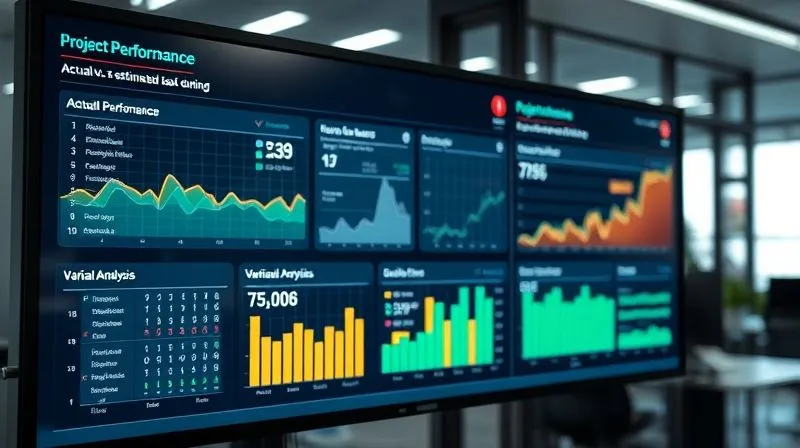
Your past projects are a goldmine of information. Analyzing how previous tasks were estimated versus how long they actually took provides invaluable lessons for future planning. This is where you identify your organization's 'estimation bias' – are you consistently optimistic or pessimistic?
Implement a system to track actual vs. estimated durations for every task. Over time, this data becomes your most reliable estimation tool. It helps you calibrate your team's typical velocity and identify common areas of underestimation.
| Task Category | Average Estimate (Days) | Average Actual (Days) | Variance |
|---|---|---|---|
| Software Development | 10 | 13 | 30% Overrun |
| Content Creation | 5 | 4 | 20% Underrun |
| QA Testing | 7 | 9 | 28% Overrun |
| Documentation | 3 | 3 | 0% |
Building in Buffers & Managing Uncertainty: The Art of Contingency
Even with the most rigorous estimation techniques, projects are inherently uncertain. Tight deadlines amplify this uncertainty. The key isn't to eliminate uncertainty (which is impossible) but to manage it proactively by building in strategic buffers.
Strategic Buffers: Not Just Padding
Buffers are not 'fat' in your schedule; they are carefully calculated reserves to absorb unforeseen delays and risks. They prevent a minor hiccup from derailing your entire project. I always advocate for two types of buffers:
- Task-Level Contingency: A small percentage (e.g., 5-15%) added to individual task estimates, particularly for high-risk or uncertain tasks. This is often an output of PERT's standard deviation.
- Project-Level Reserve (Management Reserve): A larger buffer held at the project level, typically 10-20% of the total project duration, for unknown-unknowns or significant scope changes. This is managed by the project manager and often requires stakeholder approval to use. Understanding the difference between contingency and management reserves is crucial for effective project scheduling, as discussed by the Project Management Institute.
Risk Assessment and Mitigation Planning
Buffers are a reactive measure; risk management is proactive. Identify potential risks that could impact task durations and develop mitigation strategies.
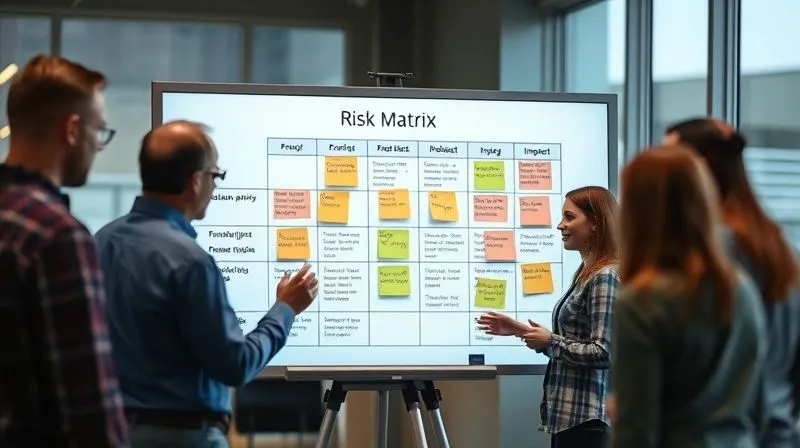
- Identify Risks: Brainstorm all potential internal and external factors that could cause delays (e.g., resource unavailability, technology issues, scope changes, external dependencies).
- Analyze Risks: Assess the probability of each risk occurring and the impact it would have on your schedule.
- Plan Responses: Develop specific actions to reduce the probability or impact of high-priority risks. This might involve creating alternative plans, acquiring backup resources, or conducting additional testing.
Refining Estimates: Iteration, Review, and Stakeholder Buy-in
Estimation is not a one-time activity; it's an iterative process. As you gather more information and progress through the project, your estimates should be continually refined. This is especially true for how to accurately estimate task durations for tight project deadlines, where adaptability is paramount.
Iterative Refinement: Agile Principles for All Projects
Even if you're not running a purely Agile project, adopting iterative estimation principles can significantly improve accuracy. This means revisiting estimates at key milestones, after major deliverables, or when new information emerges.
- Rolling Wave Planning: Plan in detail for the near term, and at a higher level for the distant future. As the project progresses, the near-term becomes the present, and you detail the next phase. This allows for continuous adjustment.
- Regular Reviews: Schedule dedicated sessions with your team to review task progress, compare actuals to estimates, and adjust future estimates. This fosters a culture of accountability and learning.
Stakeholder Engagement: Gaining Consensus and Commitment
Accurate estimates are worthless if stakeholders don't buy into them. Transparent communication is vital.
- Educate Stakeholders: Explain your estimation methodology, including the assumptions and potential risks. Help them understand the 'why' behind the numbers.
- Involve Key Stakeholders: Where appropriate, involve key stakeholders in the estimation process, especially for tasks they own or have significant input on. This builds ownership and commitment.
- Manage Expectations: Clearly communicate the range of potential durations (using PERT, for example) rather than a single fixed number. Explain the implications of tight deadlines and the trade-offs involved. Effective stakeholder engagement is a skill that can make or break a project, as highlighted by publications like Forbes.
Case Study: Phoenix Labs' Deadline Dilemma
Phoenix Labs, a mid-sized software company, was notorious for missing deadlines on their flagship product updates. Their development cycles, typically 6-month sprints, consistently stretched to 8-9 months, impacting market share and team morale. Their problem was a reliance on 'gut feeling' estimates from individual developers, often pressured into optimistic projections.
I was brought in as a consultant to help them tackle how to accurately estimate task durations for tight project deadlines. Our first step was implementing a standardized WBS, followed by mandatory three-point estimation for all development tasks. We also instituted a 'post-mortem' analysis for every completed sprint, meticulously comparing estimated vs. actual hours and identifying root causes for variances.
The impact was profound. Within two product cycles, Phoenix Labs reduced their average project overrun from 35% to less than 10%. They achieved this by: (1) training their developers on PERT, (2) integrating historical data into their estimation templates, and (3) establishing a 15% project-level contingency buffer. This resulted in improved predictability, happier teams, and a significant boost in customer satisfaction due to reliable delivery dates.
Tools and Technologies for Enhanced Estimation Accuracy
While techniques and methodologies are paramount, the right tools can significantly streamline and improve your estimation process, especially when you need to accurately estimate task durations for tight project deadlines.
- Project Management Software: Tools like Jira, Asana, Microsoft Project, and Monday.com offer features for task breakdown, dependency tracking, resource allocation, and even some basic estimation functionalities. They help visualize schedules (Gantt charts) and track progress against baselines.
- Specialized Estimation Tools: Some tools focus specifically on estimation, often integrating with PM software. These can offer more advanced features like Monte Carlo simulations for risk analysis or AI-driven predictive analytics based on historical data.
- Spreadsheets (Excel/Google Sheets): For smaller projects or initial planning, a well-structured spreadsheet can be a powerful, flexible tool for applying PERT, tracking estimates, and performing basic data analysis.
| Tool Category | Example | Key Feature for Estimation |
|---|---|---|
| PM Software | Jira | Task breakdown, sprint planning, velocity tracking |
| Forecasting/Simulation | @RISK (Excel Add-in) | Monte Carlo simulation for risk-adjusted schedules |
| Resource Management | Resource Guru | Real-time resource availability, capacity planning |
| Spreadsheet | Microsoft Excel | Customizable formulas for PERT, historical data analysis |
Frequently Asked Questions (FAQ)
Question? What's the biggest mistake project managers make when estimating tasks for tight deadlines? The single biggest mistake is underestimating the human element – the 'optimism bias' – and failing to account for 'unknown unknowns'. Project managers often assume perfect conditions and neglect to build in adequate buffers or conduct thorough risk assessments. They also frequently skip engaging the actual people doing the work in the estimation process, leading to unrealistic targets.
Question? How do I handle scope creep affecting my estimates after the project has started? Scope creep is the bane of tight deadlines. The best defense is a robust change control process. Any requested change must go through formal evaluation, including its impact on schedule and budget. Don't be afraid to push back or negotiate for additional time/resources. Clearly communicate the trade-offs: either the deadline shifts, or something else must be deprioritized. Re-estimate affected tasks immediately and update the project plan.
Question? Is it always better to be conservative with estimates, especially for critical tasks? While a healthy dose of realism is crucial, being overly conservative can also lead to problems. It can demotivate teams, make your project appear less competitive, and lead to inflated project budgets. The goal is accuracy, not just conservatism. Use techniques like PERT to understand the *range* of possible outcomes, and then apply strategic buffers based on identified risks, rather than just adding arbitrary 'fat' to every task.
Question? How can I improve my team's estimation skills over time? It's a continuous learning process. Foster a culture of transparency where actuals are compared to estimates without blame. Conduct regular 'lessons learned' sessions after projects or sprints, focusing on what went well and what could be improved in estimation. Provide training on estimation techniques, encourage peer reviews of estimates, and ensure consistent use of historical data. The more they practice and reflect, the better they'll become.
Question? What role does AI play in future task estimation for project management? AI and machine learning are rapidly transforming estimation. AI can analyze vast amounts of historical project data much faster and more accurately than humans, identifying patterns and correlations that inform predictive models. It can forecast task durations, identify potential risks, and even suggest optimal resource allocation. While AI won't replace human judgment entirely, it will become an indispensable tool for providing highly data-driven, objective baseline estimates, particularly beneficial for how to accurately estimate task durations for tight project deadlines.
Key Takeaways and Final Thoughts
- Decompose Thoroughly: A robust Work Breakdown Structure (WBS) is the absolute foundation for accurate estimates.
- Employ Multiple Techniques: Combine PERT, analogous, parametric, and expert judgment for a holistic view.
- Leverage Historical Data: Your past projects are your best teachers; track and analyze actuals versus estimates.
- Build Strategic Buffers: Account for uncertainty with task and project-level contingencies, not just arbitrary padding.
- Manage Risks Proactively: Identify potential delays and plan mitigation strategies before they impact your schedule.
- Iterate and Communicate: Estimation is a continuous process; refine estimates and maintain transparent communication with stakeholders.
- Utilize Technology: Leverage project management software and specialized tools to enhance precision and efficiency.
Mastering how to accurately estimate task durations for tight project deadlines is not about magic; it's about discipline, data, and a commitment to continuous improvement. By adopting these expert strategies, you're not just improving your project schedules; you're building a foundation for consistent project success, empowering your teams, and earning the trust of your stakeholders. Go forth and estimate with confidence!
Recommended Reading
- 7 Steps to Flawless Year-End Financial Reports: Prevent Inaccuracies Now
- 7 Reasons New Franchise Owners Fail (And How to Avoid Them)
- 7 Crucial Friction Points: Solving Shopping Cart Abandonment
- 7 Shipping Hacks: Stop E-commerce Customer Churn with Smart Logistics Now
- Sustainable Supply Chains: Your Ultimate How-To Guide





Comments
Leave a comment below. Your email will not be published. Required fields marked with *