


How to Accurately Forecast Sales for Predictable Revenue Growth
For over 15 years in the sales growth trenches, I've witnessed firsthand the profound impact—both positive and disastrous—that sales forecasting can have on a business. It's not just a numbers game; it's the heartbeat of strategic planning, resource allocation, and ultimately, sustainable growth. Without a clear vision of future revenue, companies often stumble, reacting to market shifts rather than proactively shaping their destiny.
The common pain point I observe among ambitious leaders is the struggle with unpredictability. Erratic revenue cycles, missed targets, and a constant scramble to meet quarterly expectations can drain resources, morale, and investor confidence. This uncertainty isn't just frustrating; it actively hinders innovation, expansion, and the ability to make confident, long-term decisions.
In this definitive guide, I'll pull back the curtain on how to accurately forecast sales for predictable revenue growth. You'll gain access to battle-tested frameworks, practical methodologies, and expert insights that I've refined over years. My goal is to equip you with the knowledge to transform your sales predictions from guesswork into a strategic superpower, ensuring a stable, thriving future for your business.
Why Accurate Sales Forecasting Isn't Just a 'Nice-to-Have'
Many view sales forecasting as a necessary evil, a quarterly chore for the finance department. However, in my experience, accurate sales forecasting is the bedrock upon which all other business functions stand. It's the critical input that drives everything from inventory management and staffing levels to marketing spend and capital investment.
Think about it: if you consistently overestimate sales, you're tying up capital in excess inventory, potentially leading to costly write-offs and storage fees. Conversely, underestimating sales means missed opportunities, stockouts, and dissatisfied customers who might turn to competitors. Neither scenario is conducive to predictable revenue growth.
A precise forecast empowers leadership to make informed decisions. It allows operations to optimize production, HR to plan hiring and training, and marketing to allocate budgets effectively for lead generation. According to a study published by Harvard Business Review, companies with superior forecasting capabilities consistently outperform their peers in profitability and market share. This isn't coincidence; it's the direct result of operational efficiency and strategic agility born from clear foresight.
"Accurate sales forecasting is not about predicting the future with 100% certainty; it's about reducing uncertainty to a manageable level, allowing for proactive strategic maneuvers rather than reactive damage control."
Furthermore, accurate forecasting builds trust with stakeholders—investors, board members, and even your own team. When you consistently meet or exceed your revenue projections, it signals stability and competence, making it easier to secure funding, attract top talent, and foster a culture of confidence. This directly impacts your ability to achieve predictable revenue growth.
The Foundational Pillars of Robust Sales Forecasting
Before diving into specific methodologies, it's crucial to understand the foundational elements that underpin any effective sales forecasting process. Ignoring these pillars is like building a house on sand; it might stand for a while, but it's destined to collapse under pressure. I've seen countless companies struggle because they lacked one or more of these fundamental components.
Pillar 1: Deep Dive into Historical Data
Your past performance is often the best indicator of future trends, assuming consistent market conditions. This pillar involves meticulous analysis of historical sales data, segmenting it by product, region, customer type, sales representative, and even seasonality.
We're not just looking at total sales numbers here. We need to dig into average deal sizes, sales cycle lengths, conversion rates at each stage of the funnel, and even the impact of past marketing campaigns. Identifying patterns, trends, and anomalies in this data is paramount. For instance, do sales consistently spike in Q4 due to holiday demand? Does a particular product line perform better in certain geographic areas?
Actionable Steps for Historical Data Analysis:
- Collect Granular Data: Ensure your CRM (Customer Relationship Management) system captures detailed information on every interaction, deal stage, and outcome.
- Segment Data: Break down historical sales by relevant categories (e.g., new vs. repeat customers, product A vs. product B, enterprise vs. SMB).
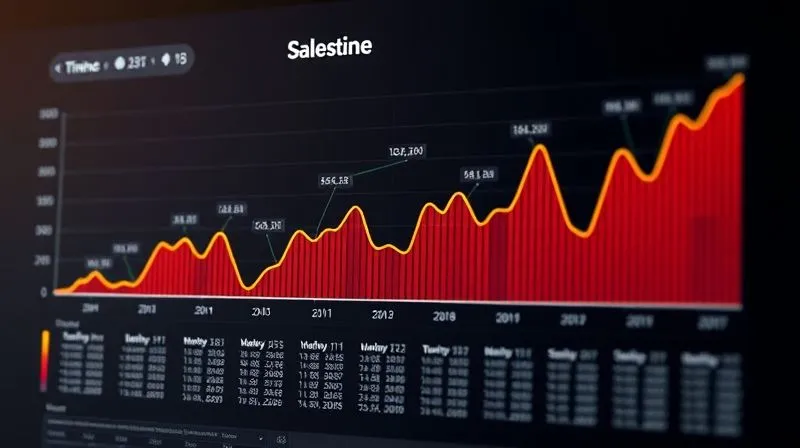
- Identify Trends and Seasonality: Use charting tools to visualize sales over time, looking for upward/downward trends, cyclical patterns, and outliers.
- Calculate Key Metrics: Determine average deal size, win rates, and sales cycle duration for different segments.
Pillar 2: Understanding Your Sales Pipeline Dynamics
Your sales pipeline is a living, breathing entity, and its health directly correlates with your future revenue. This pillar focuses on understanding the quantity, quality, and velocity of opportunities moving through your sales funnel at any given time.
Each stage of your sales pipeline should have an associated probability of closing. For example, a 'Discovery Call' stage might have a 10% win rate, while a 'Proposal Sent' stage might have a 70% win rate. By applying these probabilities to the value of deals in each stage, you can arrive at a weighted forecast.
Key aspects to analyze:
- Pipeline Coverage: Do you have enough opportunities in your pipeline to meet your target? (e.g., 3x your target in weighted pipeline value).
- Stage-to-Stage Conversion Rates: How efficiently do opportunities move from one stage to the next?
- Average Deal Velocity: How long does it typically take for a deal to progress from initial contact to close?
- Lead Source Effectiveness: Which lead sources generate the highest quality (and most likely to close) opportunities?
Pillar 3: Market Conditions and External Factors
While historical data and pipeline analysis are internal, ignoring external forces is a grave mistake. The market is constantly shifting, influenced by economic trends, competitor actions, regulatory changes, and technological advancements. This pillar emphasizes incorporating these macro and micro environmental factors into your forecast.
Consider the broader economic outlook: Is there a recession looming, or is the economy booming? What are your competitors doing? Are they launching new products, cutting prices, or expanding into new markets? Are there new regulations that might impact your industry or customer base? As Gartner frequently highlights, technological disruptions can rapidly alter customer expectations and buying behaviors.
Factors to consider:
- Economic Indicators: GDP growth, inflation rates, interest rates, consumer spending indices.
- Competitive Landscape: New entrants, competitor product launches, pricing strategies.
- Industry Trends: Emerging technologies, shifts in customer preferences, regulatory changes.
- Geopolitical Events: Trade wars, political instability, global crises (e.g., pandemics) that can have far-reaching effects.
Step-by-Step: Building Your Sales Forecasting Model
Now that we've laid the groundwork with our foundational pillars, let's construct a robust sales forecasting model. This isn't a one-size-fits-all solution, but a flexible framework you can adapt to your specific business context. I've found that a structured approach is essential to how to accurately forecast sales for predictable revenue growth.
Step 1: Choose Your Forecasting Method Wisely
There are various methods, each with its strengths and weaknesses. The best approach often involves combining several for a more balanced view. Here are the most common ones:
- Opportunity Stage Forecasting (Weighted Pipeline): As discussed, assign probabilities to each stage of your sales pipeline. Multiply the value of deals in each stage by its probability to get a weighted forecast.
- Historical Trend Forecasting: Uses past sales data to project future sales, often employing moving averages or exponential smoothing to smooth out fluctuations.
- Sales Team Composite: Each salesperson estimates their future sales, which are then aggregated. This leverages their direct customer knowledge but can be prone to optimism or pessimism.
- Lead-to-Close Ratio: Projects sales based on the number of new leads generated and the historical conversion rate from lead to customer.
- Regression Analysis: A more sophisticated statistical method that identifies relationships between sales and other variables (e.g., marketing spend, website traffic, economic indicators).
For most businesses, a combination of Opportunity Stage and Historical Trend forecasting provides a solid starting point. Supplementing this with Sales Team Composite offers valuable ground-level insights.
| Method | Strength | Weakness | Best For |
|---|---|---|---|
| Opportunity Stage | Reflects current pipeline health | Relies on accurate stage probabilities | Short-term, active sales cycles |
| Historical Trend | Objective, data-driven | Assumes past predicts future, ignores sudden shifts | Stable markets, long-term projections |
| Sales Team Composite | Leverages rep insights | Subjective, prone to bias | Cross-referencing, validating other methods |
| Regression Analysis | Identifies causal relationships | Requires robust data, complex to implement | Understanding drivers, large datasets |
Step 2: Data Collection and Cleansing – The Unsung Hero
Garbage in, garbage out. The accuracy of your forecast is directly tied to the quality of your data. This step is often overlooked but is absolutely critical. I've seen promising forecasting initiatives fail simply because the underlying data was incomplete, inconsistent, or outdated.
Actionable Steps for Data Quality:
- Standardize Data Entry: Implement strict guidelines for how sales reps and other team members input data into your CRM.
- Regular Audits: Schedule weekly or monthly audits of your CRM data to identify and correct inconsistencies.
- Automate Where Possible: Use integrations to automatically pull data from other systems (e.g., marketing automation, billing) to reduce manual errors.
- Remove Duplicates and Inaccuracies: Dedicate time to cleaning up old, irrelevant, or incorrect records.
Step 3: Leverage Technology: CRM and AI Tools
In today's landscape, trying to forecast manually is like trying to navigate with a paper map in the age of GPS. Modern CRM systems like Salesforce or HubSpot are indispensable. They provide the infrastructure for data collection, pipeline management, and even built-in forecasting modules.
Beyond basic CRM, consider advanced analytics and AI-powered forecasting tools. These platforms can analyze vast datasets, identify complex patterns that humans might miss, and even suggest adjustments based on external market signals. They can significantly enhance your ability to how to accurately forecast sales for predictable revenue growth.

Step 4: Incorporate Sales Team Insights and Adjustments
While data is king, human intelligence remains invaluable. Your sales team is on the front lines, interacting directly with customers and sensing market shifts before they appear in reports. Their qualitative input can provide crucial context and identify potential risks or opportunities that quantitative models might miss.
Regular forecast meetings should be more than just reporting sessions. They should be collaborative discussions where reps share deal-specific insights, potential roadblocks, and competitive intelligence. This qualitative overlay helps refine the purely statistical forecast.
"Never underestimate the 'street smarts' of your sales team. Their anecdotal evidence, when validated and integrated, can be the secret sauce that elevates a good forecast to a great one."
Step 5: Regular Review and Iteration
Sales forecasting is not a static exercise; it's an ongoing process of continuous improvement. Your models need to be constantly reviewed, refined, and iterated upon. The market changes, your product evolves, and your sales strategy adapts—your forecast must too.
Actionable Steps for Review and Iteration:
- Compare Forecast vs. Actuals: At the end of each forecasting period (weekly, monthly, quarterly), rigorously compare your projections to actual sales performance.
- Analyze Variances: Understand *why* there were discrepancies. Was it an unexpected market event? A misjudgment of a large deal? A change in sales rep performance?
- Adjust Assumptions: Based on your variance analysis, adjust your forecasting parameters, probabilities, or methodology.
- Document Learnings: Keep a log of what worked, what didn't, and why, to build institutional knowledge.
Common Pitfalls and How to Avoid Them
Even with the best intentions, sales forecasting can go awry. I've observed several recurring pitfalls that undermine accuracy and lead to unreliable revenue predictions. Recognizing these traps is the first step to avoiding them, ensuring you stay on track for predictable revenue growth.
Pitfall 1: Over-Reliance on Gut Feeling
While intuition plays a role, especially from seasoned sales leaders, relying solely on 'gut feeling' is a recipe for disaster. It introduces significant bias, often skewed by recent successes or failures, leading to wildly inaccurate forecasts. I've seen leaders confidently predict massive deals that never materialize, simply because they 'felt good' about them.
Solution: Always back up intuition with data. Use your gut feeling as a hypothesis, then test it against historical trends, pipeline probabilities, and market indicators. If the data contradicts the gut, challenge the gut.
Pitfall 2: Ignoring External Market Shifts
Focusing purely on internal metrics (like pipeline size) without considering external market dynamics is a common oversight. A robust pipeline means little if a sudden economic downturn or a disruptive competitor product makes those deals less likely to close. I recall a client who had a seemingly healthy pipeline, but failed to account for a new regulation that severely impacted their target market's buying power, leading to a massive forecast miss.
Solution: Integrate market intelligence into your regular forecasting reviews. Assign someone (or a team) to monitor economic indicators, competitor activities, and industry news. Use tools and reports from organizations like Deloitte Insights to stay informed.
Pitfall 3: Lack of Data Granularity
Many companies collect sales data but don't collect enough *detail*. They might know total sales, but not sales by product line, customer segment, or lead source. Without this granularity, it's impossible to identify specific trends, diagnose problems, or make targeted adjustments to your forecast.
Solution: Invest in a comprehensive CRM and ensure consistent, detailed data entry. Segment your data rigorously and analyze performance at a micro-level. The more detailed your data, the more precise your insights will be.
Case Study: Revolutionizing Revenue with Precise Forecasting
Case Study: How 'Innovate Solutions' Achieved 25% Predictable Growth
Innovate Solutions, a B2B SaaS company, faced persistent challenges with erratic quarterly revenue. Their sales forecasts were often off by 20-30%, leading to hiring freezes, missed investor expectations, and operational inefficiencies. They were struggling with how to accurately forecast sales for predictable revenue growth.
My team worked with them to implement a multi-pronged forecasting approach. First, we cleaned and standardized their CRM data, ensuring every opportunity had accurate stage probabilities and deal values. Second, we trained their sales managers to conduct weekly 'forecast review' meetings, focusing not just on numbers, but on the *reasons* behind projections and potential roadblocks.
Crucially, we introduced a 'market sentiment' factor, where managers would adjust forecasts based on recent competitive wins/losses and broader economic news. Within six months, their forecast accuracy improved to within 5-7% of actuals. This predictability allowed them to confidently invest in R&D, hire key talent ahead of demand, and launch a successful expansion into a new market. Their year-over-year revenue growth stabilized at a predictable 25%, attracting a new round of investment and significantly boosting employee morale.
Measuring Success: Key Performance Indicators for Forecast Accuracy
Once you've implemented your forecasting model, how do you know if it's working? Measurement is key. You need clear KPIs to assess your forecast accuracy and identify areas for improvement. This iterative feedback loop is essential for continuous refinement and for truly understanding how to accurately forecast sales for predictable revenue growth.
Primary KPIs for Forecast Accuracy:
- Forecast Accuracy Percentage: The most direct measure. Calculate it as: `(1 - |(Actual Sales - Forecasted Sales) / Actual Sales|) * 100%`. Aim for 90%+ accuracy.
- Mean Absolute Percentage Error (MAPE): A common metric that measures the average magnitude of error in a set of forecasts, expressed as a percentage. Lower MAPE indicates higher accuracy.
- Bias: Determines if your forecasts consistently overestimate (positive bias) or underestimate (negative bias) actual sales. A consistent bias indicates a systemic issue in your model or assumptions.
- Forecast Variance: The difference between your forecast and actual sales, ideally monitored over time to identify trends in accuracy.
| Month | Forecasted Sales | Actual Sales | Variance | Accuracy |
|---|---|---|---|---|
| January | $500,000 | $480,000 | -$20,000 | 96% |
| February | $520,000 | $530,000 | +$10,000 | 98% |
| March | $550,000 | $525,000 | -$25,000 | 95.5% |
| Q1 Total | $1,570,000 | $1,535,000 | -$35,000 | 97.7% |
Integrating Forecasting with Strategic Business Planning
Accurate sales forecasting shouldn't live in a silo. Its true power is unleashed when it's seamlessly integrated into your broader strategic business planning. This is where the 'predictable revenue growth' part of our discussion truly comes to life. When sales forecasts are reliable, they become the foundation for every major decision your company makes.
Consider how a robust forecast influences:
- Budgeting and Financial Planning: Accurate revenue projections allow for precise allocation of funds across departments, ensuring resources are available for growth initiatives.
- Resource Allocation: Knowing future demand enables proactive hiring, training, and deployment of sales, marketing, and customer service teams.
- Product Development: Forecasts can highlight emerging demand for new features or products, guiding R&D investments.
- Marketing Strategy: Understanding projected sales allows marketing to align campaigns with expected growth areas, optimizing spend for maximum impact.
- Supply Chain Management: For product-based businesses, accurate demand forecasts are critical for optimizing inventory levels, reducing waste, and preventing stockouts.
By consistently delivering on your forecasts, you build a culture of accountability and confidence. Your sales team knows their targets are realistic, your operations team can plan efficiently, and your leadership team can make bold, informed decisions. This holistic integration is the ultimate goal when learning how to accurately forecast sales for predictable revenue growth.

Frequently Asked Questions (FAQ)
What's the difference between a sales forecast and a sales goal? A sales goal is a target you *want* to achieve, an aspiration. A sales forecast is your best estimate of what you *will* achieve, based on data, historical trends, and market conditions. While goals motivate, forecasts inform strategy and resource allocation. Ideally, your forecast should demonstrate a plausible path to achieving or exceeding your goals.
How often should I update my sales forecast? The frequency depends on your business's sales cycle length and market volatility. For most businesses, a monthly update is ideal, with a deeper quarterly review. High-velocity sales environments might benefit from weekly updates, especially for short-term projections. The key is to update it often enough to react to changes but not so often that it becomes a distraction.
What if my forecast is consistently inaccurate? Consistent inaccuracy signals a systemic problem. First, review your data quality and collection methods. Second, scrutinize your forecasting methodology—are you using the right models for your business? Third, assess external factors and internal biases. It's often a combination of these elements. Don't be afraid to experiment with different approaches and involve cross-functional teams in the review process.
Can small businesses effectively forecast sales? Absolutely. While small businesses might have less historical data or fewer advanced tools, the principles remain the same. Focus on granular data collection (even if it's in a spreadsheet), understand your sales pipeline, and regularly solicit insights from your sales team. Start simple, perhaps with historical trend analysis combined with a sales team composite, and build complexity as your business grows.
How do I account for new product launches or market expansions in my forecast? New initiatives introduce a degree of uncertainty. For new product launches, leverage market research, competitor benchmarks, and pilot program results. For market expansions, analyze similar market entries or consult industry reports. Initially, these forecasts will be more qualitative and assumption-heavy. As data accumulates, you can integrate them into your quantitative models. Always create a separate, more conservative forecast for highly uncertain initiatives.
Key Takeaways and Final Thoughts
- Data is Your Foundation: Meticulously collect, cleanse, and analyze historical sales data and pipeline dynamics.
- Embrace a Multi-Method Approach: Combine quantitative models (historical trends, weighted pipeline) with qualitative insights from your sales team.
- Leverage Technology: Utilize CRM and advanced analytics tools to automate and enhance your forecasting capabilities.
- Integrate External Factors: Always consider market conditions, economic trends, and competitive actions in your projections.
- Iterate and Refine: Sales forecasting is an ongoing process; regularly compare forecasts to actuals, analyze variances, and adjust your models.
Mastering how to accurately forecast sales for predictable revenue growth is not a mythical quest; it's a discipline built on data, process, and continuous learning. By diligently applying the principles and steps outlined in this guide, you will transform your sales predictions from a source of anxiety into a powerful strategic asset. This will not only stabilize your revenue but also unlock new opportunities for confident decision-making, sustainable growth, and long-term success. The future of your business hinges on it.
Recommended Reading
- 5 Ethical Pillars: How to Personalize Service Without Invading Privacy
- Unlock Leadership Resilience: How Executive Coaching Conquers Burnout
- 7 Steps to Safeguard Your Business's Trade Secrets from Ex-Employees
- 7 Proven Steps: Raise Small Business Prices & Keep Loyal Customers
- 7 Metrics: Quantifying Your Genuine SDG Business Impact?





Comments
Leave a comment below. Your email will not be published. Required fields marked with *