


How to Avoid Personal Liability During Initial Business Formation Legal Steps?
For over 15 years in the legal business formation landscape, I've witnessed countless entrepreneurs pour their hearts, souls, and often their life savings into new ventures, only to face devastating personal financial ruin when the business encounters unforeseen challenges. It's a heartbreaking scenario that, in many cases, could have been entirely prevented with proper legal groundwork from day one.
The dream of entrepreneurship is powerful, but it comes with inherent risks. One of the most significant, and often overlooked, is the potential for your business's liabilities to bleed into your personal finances. Without the correct legal structures and diligent adherence to formalities, a business lawsuit, debt, or bankruptcy could jeopardize your home, savings, and personal assets.
This article isn't just a guide; it's a strategic roadmap. I'll share my insights, actionable frameworks, and even a real-world (albeit fictionalized) case study to show you precisely how to avoid personal liability during initial business formation legal steps. My goal is to equip you with the knowledge to build a robust legal foundation, ensuring your entrepreneurial journey is both exciting and secure.
Understanding the Veil: Why Personal Liability is a Threat
Before we dive into solutions, it's crucial to grasp the gravity of the problem: personal liability. When you operate a business without a distinct legal separation between yourself and the entity, you are, in the eyes of the law, one and the same. This means any debts, lawsuits, or other legal obligations incurred by the business can directly impact your personal assets.
Imagine a scenario where your small business faces a lawsuit for breach of contract or an unforeseen accident on its premises. If you haven't established a proper legal entity, the plaintiff can pursue your personal bank accounts, your car, your home – essentially anything you own. This concept is often referred to as 'piercing the corporate veil' when referring to established entities, but for sole proprietorships or general partnerships, there's often no veil to begin with.
Expert Insight: "The 'corporate veil' isn't just a legal construct; it's your financial firewall. Failing to establish or maintain it is akin to building a beautiful house without a foundation – it looks good until the first storm hits."
The threat extends beyond lawsuits. Consider business loans or lines of credit. Many lenders, especially for new businesses, require personal guarantees. While sometimes unavoidable, understanding how to minimize their impact or avoid them altogether is a critical part of protecting your personal wealth. The goal is to build a business that stands on its own, legally and financially, shielding you from its potential misfortunes.
Choosing the Right Legal Structure: Your First Line of Defense
The single most foundational step in how to avoid personal liability during initial business formation legal steps is selecting the appropriate business entity. This choice dictates the legal separation between you and your business, and thus, the extent of your personal liability. Each structure has its own implications for liability, taxation, and administrative burden.
Sole Proprietorship and General Partnership: The Riskiest Paths
Many first-time entrepreneurs default to a sole proprietorship, largely because it's the simplest to set up. You just start doing business. However, it offers absolutely no personal liability protection. The same applies to a general partnership, where you and your partners are personally liable for all business debts and obligations, including those incurred by your partners.
Limited Liability Company (LLC): The Popular Choice for Small Businesses
For most small to medium-sized businesses, the LLC is an excellent choice. It provides personal liability protection, meaning your personal assets are generally shielded from business debts and lawsuits. An LLC combines the pass-through taxation benefits of a sole proprietorship or partnership with the liability protection of a corporation.
Corporations (C-Corp and S-Corp): For Growth and Investment
Corporations offer the strongest personal liability protection. A C-Corp is a separate legal entity, owned by shareholders, and is often preferred by businesses looking to raise venture capital or eventually go public. An S-Corp is a tax election that allows profits and losses to be passed through directly to the owner's personal income without being subject to corporate tax rates, similar to an LLC, but with more stringent operational requirements.
- Assess Your Risk Profile: Consider the inherent risks of your industry. A consulting business might have lower liability risks than a manufacturing company.
- Understand Tax Implications: While liability is key, tax efficiency is also important. Consult with a tax professional to understand how each entity type impacts your personal and business taxes.
- Consider Future Growth: If you plan to seek outside investment or expand significantly, a corporation might be more suitable in the long run.
- Consult Legal Counsel: This is not a decision to take lightly. I always advise my clients to speak with an attorney who specializes in business formation to tailor the choice to their specific needs.
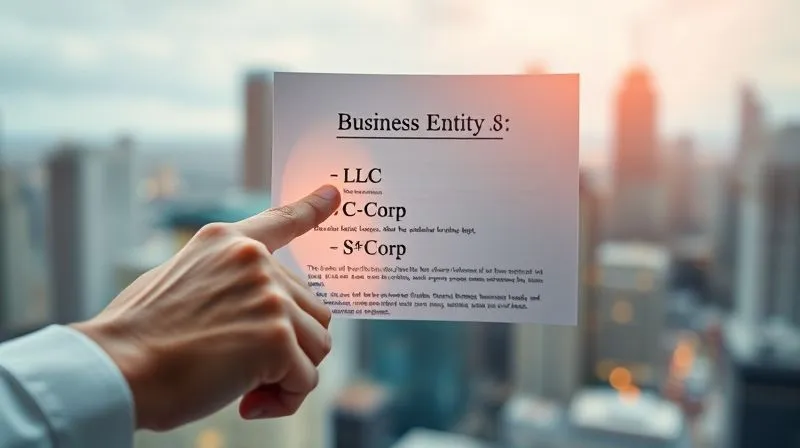
Comparative Overview of Business Entities
| Entity Type | Personal Liability Protection | Ease of Setup | Taxation | Formalities |
|---|---|---|---|---|
| Sole Proprietorship | None (Full personal liability) | Very Easy | Pass-through (personal income) | Minimal |
| General Partnership | None (Joint & several personal liability) | Easy | Pass-through (personal income) | Minimal |
| LLC (Limited Liability Company) | High | Moderate | Pass-through (default), or C/S-Corp option | Moderate |
| C-Corporation | Highest | Complex | Double taxation (corporate & shareholder) | High |
| S-Corporation | Highest | Complex | Pass-through (avoids double taxation) | High |
The Imperative of Formalities: Maintaining Your Corporate Veil
Simply choosing an LLC or a corporation isn't enough to guarantee personal liability protection. The 'corporate veil' – the legal separation between you and your business – is only effective if you actively maintain it. This means adhering to certain formalities and treating your business as a distinct legal entity. Failure to do so can lead to a court 'piercing the corporate veil,' making you personally liable despite your chosen structure.
Key Formalities to Uphold:
- Separate Bank Accounts: This is non-negotiable. Never commingle personal and business funds. All business income and expenses must flow through dedicated business bank accounts.
- Maintain Clear Records: Keep meticulous financial records, including income statements, balance sheets, and expense reports. This demonstrates that the business operates independently.
- Formal Meetings & Minutes: Corporations and, to a lesser extent, LLCs, require regular meetings of directors/members and shareholders/managers. Document these meetings with formal minutes, even if you're the sole owner.
- Proper Documentation: Ensure all business contracts, invoices, and official communications clearly state the legal name of your entity (e.g., "Acme Widgets LLC," not "Acme Widgets").
- Adequate Capitalization: The business must have sufficient capital to operate. Undercapitalization can be a factor courts consider when deciding to pierce the veil.
- Annual Filings & Fees: Keep up with all state and federal annual report filings and pay any required fees. Missing these can lead to the dissolution of your entity, stripping away liability protection.
I've seen entrepreneurs make the mistake of treating their LLC like a personal piggy bank, blurring the lines between personal and business expenses. This is a direct invitation for creditors or litigants to argue that the business was merely an 'alter ego' of the owner, thus negating the liability protection. Diligence in these formalities is paramount to how to avoid personal liability during initial business formation legal steps.
Crafting Robust Agreements: Contracts, Bylaws, and Operating Agreements
Beyond the fundamental entity choice, the internal legal documents that govern your business are critical for liability protection and smooth operation. These agreements clarify roles, responsibilities, decision-making processes, and how disputes will be resolved, both internally and externally.
Operating Agreements (for LLCs) and Bylaws (for Corporations)
An LLC Operating Agreement or Corporate Bylaws are the foundational documents for your business's internal governance. They outline:
- Ownership Structure: Who owns what percentage of the company.
- Management Structure: How decisions are made, who has authority.
- Member/Shareholder Rights and Responsibilities: What each owner can and cannot do.
- Profit and Loss Distribution: How money is shared among owners.
- Exit Strategies: What happens if an owner leaves, retires, or passes away.
- Dispute Resolution: Procedures for resolving conflicts among owners.
Without a clear, well-drafted operating agreement or bylaws, internal disputes can quickly escalate, potentially leading to lawsuits that expose the business, and even owners, to liability. These documents also serve as proof that your business is a legitimate, separate entity, reinforcing the corporate veil.
External Contracts and Agreements
Every business interacts with external parties – customers, vendors, employees, landlords. Each interaction should be governed by a clear, legally sound contract. Poorly drafted or absent contracts are a common source of business disputes and liability exposure.
- Service Agreements: Clearly define the scope of work, deliverables, payment terms, and liability limitations with clients.
- Vendor Contracts: Establish terms for goods or services received, including warranties and indemnification clauses.
- Employment Agreements: For employees, define roles, compensation, confidentiality, and intellectual property ownership. Independent contractor agreements are crucial for contractors to avoid misclassification issues.
- Leases: Ensure your business, not you personally, is the named tenant on commercial leases.

Case Study: The Proactive Partnership
How Legal Agreements Saved 'InnovateTech Solutions'
InnovateTech Solutions, a burgeoning tech startup, was founded by three ambitious partners. Early on, they invested in a comprehensive operating agreement drafted with legal counsel. This agreement meticulously detailed each partner's equity, responsibilities, decision-making thresholds, and, crucially, a clear process for partner exit and dispute resolution. Two years in, a disagreement arose regarding strategic direction, with one partner wishing to pursue a different path. Because their operating agreement clearly outlined the valuation method for a departing partner's shares and the buy-out process, they were able to negotiate an amicable separation without litigation or damage to the company's operations. The agreement prevented a potentially messy and financially draining legal battle that could have personally implicated all partners and threatened the company's existence. This foresight in their initial business formation legal steps proved invaluable.
Navigating Funding and Finances Without Personal Guarantees
Even with a robust legal entity, the early stages of business financing can still expose you to personal liability, primarily through personal guarantees. Many lenders require these, especially for new businesses with little credit history or collateral. However, there are strategies to minimize this exposure.
Understanding Personal Guarantees
A personal guarantee means you, as an individual, promise to repay a business debt if the business defaults. This completely bypasses your corporate veil. While sometimes unavoidable, especially for SBA loans or initial lines of credit, aim to:
- Negotiate Limitations: Try to limit the amount of the guarantee or its duration.
- Seek Unsecured Business Loans: As your business grows and builds credit, you may qualify for loans that don't require personal guarantees.
- Build Business Credit: Establish a strong business credit profile early on, separate from your personal credit.
Alternative Funding Sources
Explore funding options that don't rely on personal guarantees:
- Equity Financing: Attracting investors who take an ownership stake means you're not personally liable for repayment.
- Crowdfunding: Platform-based funding can provide capital without personal guarantees.
- Government Grants: Non-dilutive funding that doesn't create debt or equity obligations.
According to a report by the Small Business Administration (SBA), securing business credit separate from personal credit is a critical step for long-term financial stability and liability protection. Building this separation takes time but is essential. For more information, you can refer to the official SBA website.
Insurance as a Strategic Shield: Beyond Legal Structures
While legal structures provide a crucial layer of protection, they don't cover every risk. This is where business insurance becomes an indispensable part of how to avoid personal liability during initial business formation legal steps. Insurance acts as a financial backstop against various operational risks, preventing them from becoming personal liabilities.
Essential Business Insurance Types:
- General Liability Insurance: Covers claims of bodily injury or property damage that occur on your business premises or as a result of your operations. This is often the first policy a business needs.
- Professional Liability Insurance (Errors & Omissions - E&O): Crucial for service-based businesses (consultants, designers, IT professionals). It protects against claims of negligence, errors, or omissions in your professional services.
- Product Liability Insurance: If your business manufactures, distributes, or sells products, this covers claims of injury or damage caused by those products.
- Workers' Compensation Insurance: Required in most states if you have employees, it covers medical treatment, lost wages, and rehabilitation for employees injured on the job.
- Commercial Property Insurance: Protects your business property (buildings, equipment, inventory) from perils like fire, theft, and vandalism.
- Cyber Liability Insurance: Increasingly vital for businesses handling sensitive data. It covers costs associated with data breaches, cyberattacks, and privacy violations.
Expert Insight: "Think of insurance as a second skin for your corporate veil. Your legal entity protects you from the 'who,' but insurance protects you from the 'what' – the unpredictable accidents, errors, and disasters that can financially cripple a business."
Choosing the right insurance policies requires a thorough risk assessment of your specific industry and operations. Don't just get the cheapest policy; ensure it adequately covers your potential exposures. Consulting with a commercial insurance broker who understands your industry can be invaluable. For an overview of different types of business insurance, resources like Investopedia provide excellent starting points.
Proactive Compliance and Record-Keeping: Your Ongoing Protection
Establishing the right legal structure and securing insurance are initial steps, but ongoing vigilance in compliance and record-keeping is what sustains your personal liability protection. This isn't a one-time setup; it's a continuous process that demonstrates your business's independent operation and adherence to legal requirements.
Key Areas for Ongoing Compliance:
- Tax Compliance: File all federal, state, and local tax returns accurately and on time. This includes income tax, sales tax, and payroll taxes. Tax non-compliance can lead to severe penalties and, in some cases, personal liability.
- Regulatory Compliance: Understand and adhere to all industry-specific regulations. For example, a food business has different health regulations than a tech company. Staying informed about changes in these regulations is crucial.
- Employment Law Compliance: If you have employees, ensure you comply with labor laws regarding wages, working conditions, discrimination, and benefits.
- Contract Management: Regularly review and update your contracts. Ensure all agreements are signed by an authorized representative of the business, not you personally.
- Intellectual Property Protection: Register trademarks and copyrights where appropriate to protect your brand and creations, reducing the risk of infringement lawsuits.
Meticulous record-keeping supports all these compliance efforts. Maintain organized files for all legal documents, financial transactions, contracts, employee records, and meeting minutes. This discipline is not just good business practice; it's a critical defense mechanism. In the event of an audit or lawsuit, clear records prove your business's legitimate operation and adherence to formalities, making it much harder to pierce the corporate veil.

When to Seek Expert Counsel: The Value of Legal Partnership
While this guide provides a comprehensive overview, it's impossible to cover every nuance of business law. The landscape is complex and constantly evolving. This is why one of the most important aspects of how to avoid personal liability during initial business formation legal steps is knowing when to bring in a legal professional.
Don't Go It Alone For:
- Entity Selection and Formation: A business attorney can help you choose the absolute best entity for your specific situation, draft the necessary formation documents (articles of incorporation/organization), and ensure proper registration.
- Drafting Core Agreements: Operating agreements, bylaws, shareholder agreements, and critical external contracts are not DIY projects. A lawyer will ensure these documents are legally sound, comprehensive, and protect your interests.
- Navigating Complex Transactions: Mergers, acquisitions, significant fundraising rounds, or complex commercial deals always warrant legal review.
- Compliance Audits: Periodically, have an attorney review your business practices to ensure ongoing compliance with relevant laws and regulations.
- Responding to Legal Threats: If you receive a cease and desist letter, a notice of a lawsuit, or any legal demand, contact your attorney immediately.
Think of a business attorney not just as someone you call when there's a problem, but as a strategic partner. Proactive legal advice is almost always less expensive than reactive litigation. Investing in sound legal counsel upfront is an investment in your business's stability and your personal financial security. For further reading on the importance of legal counsel for small businesses, resources like Harvard Business Review often publish articles on strategic legal management.
Summary of Key Legal Protection Elements
| Element | Benefit | Action |
|---|---|---|
| Legal Entity Choice | Establishes corporate veil, separates personal/business assets. | Consult attorney, file articles of incorporation/organization. |
| Formalities Adherence | Maintains corporate veil, prevents piercing. | Separate bank accounts, keep minutes, annual filings. |
| Robust Agreements | Governs internal/external relationships, resolves disputes. | Draft Operating Agreement/Bylaws, use strong contracts. |
| Insurance Coverage | Financial backstop against operational risks. | Assess risks, obtain adequate General Liability, E&O, etc. |
| Proactive Compliance | Ensures legal standing, avoids penalties. | Stay current on tax, regulatory, employment laws, meticulous records. |
Frequently Asked Questions (FAQ)
Question: Can I just form an LLC online myself to save money? While it's technically possible to file the initial paperwork for an LLC yourself through various online services, I strongly advise against it without understanding the full implications. These services often provide basic filing but don't offer tailored advice on your specific state's nuances, the critical importance of a robust operating agreement, or how to maintain the corporate veil. Cutting corners here can be a classic example of 'penny wise, pound foolish,' potentially leading to significant personal liability down the road. An attorney ensures your structure is sound and protects your unique business needs.
Question: What's the biggest mistake entrepreneurs make regarding personal liability? In my experience, the single biggest mistake is commingling personal and business funds. This lack of financial separation is a red flag for courts and creditors, making it easy to argue that your business isn't truly a separate entity. Even if you have an LLC, using its bank account for personal expenses or vice-versa is a direct threat to your personal liability protection. Maintaining distinct finances is foundational.
Question: How often should I review my business's legal structure and agreements? I recommend reviewing your legal structure and core agreements (Operating Agreement, Bylaws) at least annually, or whenever there's a significant change in your business. This includes bringing on new partners, raising substantial capital, entering new markets, or experiencing significant growth. Laws can also change, so an annual check-up with your legal counsel ensures you remain compliant and protected.
Question: Does having an LLC protect me from all personal liability, including my own negligence? No. While an LLC generally protects you from business debts and liabilities, it does not shield you from liability for your own negligent or wrongful acts. For example, if you personally commit fraud or cause an accident, your LLC won't protect you from the personal consequences of those actions. The protection extends to the business's liabilities, not your individual misconduct. This is why professional liability insurance (E&O) is so vital for many service providers.
Question: What if my business partner is negligent? Am I personally liable for their actions in an LLC? In a properly formed and maintained LLC, generally, you are not personally liable for the negligence or misconduct of your business partners, provided you were not directly involved or complicit in their actions. The LLC structure creates a shield between individual members and the actions of other members or the business itself. However, a well-drafted operating agreement can further clarify responsibilities and indemnification clauses to protect innocent members.
Key Takeaways and Final Thoughts
Navigating the initial legal steps of business formation is more than just paperwork; it's about building a robust fortress around your personal assets. Learning how to avoid personal liability during initial business formation legal steps is not optional; it's a fundamental requirement for sustainable entrepreneurship.
- Choose Wisely: Select the right legal entity (LLC, C-Corp, S-Corp) that aligns with your risk profile and growth ambitions.
- Maintain the Veil: Strictly separate personal and business finances and adhere to all corporate formalities.
- Document Everything: Implement strong operating agreements, bylaws, and external contracts.
- Insure Against Risk: Secure adequate business insurance to cover operational eventualities.
- Stay Compliant: Commit to ongoing tax, regulatory, and legal compliance.
- Seek Expert Counsel: Partner with legal professionals for critical decisions and ongoing guidance.
The journey of entrepreneurship is filled with excitement and challenges. By taking these proactive legal measures, you're not just protecting your personal wealth; you're empowering your business to grow on a solid, secure foundation. Invest in your legal framework from day one, and you'll free yourself to focus on what truly matters: building your vision and achieving your business goals with confidence.
Recommended Reading
- Quantify Operational Failures: 7 Steps to Measure Financial Impact
- B2B Leads Abundant but No Sales? 7 Fixes for Conversion Gaps
- 5 Proven Strategies: What's the Best Way to Rescue a Struggling Franchise System?
- 5 Strategies: What to do when geopolitical conflict halts a critical supply line?
- 8 Steps: When Your JV Partner Fails to Perform, What to Do?

![Breach of Contract: Fixing Vendor Agreements FAST [Expert Guide]](/uploads/businessspur/posts/breach-of-contract-fixing-vendor-agreements-fast-expert-guide-jw5hy.webp)



Comments
Leave a comment below. Your email will not be published. Required fields marked with *