


How to Boost Customer Service Feedback Survey Response Rates?
For over 15 years in the customer service and experience trenches, I've witnessed countless businesses invest heavily in their support infrastructure, training their teams, and refining their processes. Yet, many of these same businesses falter at the crucial step of truly understanding if their efforts are paying off: collecting meaningful customer feedback. It's a common pitfall, a silent killer of progress, and frankly, a missed opportunity for exponential growth.
The problem isn't always a lack of trying; it's often a lack of strategy. Companies send out surveys, hopeful for a deluge of insights, only to be met with a trickle of responses. This low engagement leaves them guessing, making decisions based on incomplete data, or worse, abandoning feedback collection altogether. This isn't just frustrating; it's a direct impediment to improving customer satisfaction, reducing churn, and fostering loyalty.
But what if I told you there are proven, actionable strategies to dramatically increase your customer service feedback survey response rates? In this definitive guide, I'll share nine expert-backed tactics, honed through years of practical application and observation, designed to transform your feedback collection from a hopeful endeavor into a powerful, data-driven engine for continuous improvement. We'll dive into the psychology of feedback, practical survey design, strategic timing, and much more, providing you with the frameworks and insights you need to unlock the voice of your customer.
Understanding the 'Why': The Psychology Behind Low Response Rates
Before we dive into solutions, we must understand the root causes. Why do customers often ignore our carefully crafted survey requests? From my experience, it boils down to a few fundamental psychological barriers.
Time Scarcity & Cognitive Load
In our hyper-connected world, everyone is short on time. A survey, even a short one, represents a demand on a customer's precious mental resources. If it looks long, complicated, or requires too much thought, the cognitive load feels too high, and they'll simply move on. They're not being malicious; they're optimizing their own time.
Lack of Perceived Value
Customers are transactional. They ask themselves: "What's in it for me?" If they don't believe their feedback will genuinely lead to an improved experience for them or others, they see no value in participating. They've likely filled out surveys before that seemed to disappear into a black hole, yielding no visible change.
Survey Fatigue
This is a big one. Companies often bombard customers with survey requests after every interaction, every purchase, or every month. This over-solicitation leads to weariness, resentment, and eventually, outright ignoring all survey requests. It's like crying wolf, but with data collection.
Expert Insight: "The biggest barrier to feedback isn't apathy; it's a lack of perceived purpose and an overload of demands. Address these, and you're halfway to success."
Strategy 1: Optimize Timing & Trigger Points
Timing is everything. Asking for feedback at the wrong moment is like trying to sell ice to an Eskimo – ill-timed and irrelevant. The key is to capture the customer's sentiment when the experience is fresh in their mind, but after the immediate interaction or problem has been resolved.
In my experience, the most effective moments are:
- Immediately Post-Interaction: After a customer service call, chat, or email exchange has concluded. The experience is fresh, and their feelings are immediate.
- After Issue Resolution: Once a problem has been fully resolved, not just acknowledged. This captures satisfaction with the solution, not just the process.
- Key Milestones: After onboarding, a major product update, or a significant account review. These moments reflect a broader experience.
According to a study published by Harvard Business Review, customers are most likely to provide feedback when the event is recent and relevant to their current state of mind. Delaying the request can lead to diluted memories and less specific, less actionable feedback.
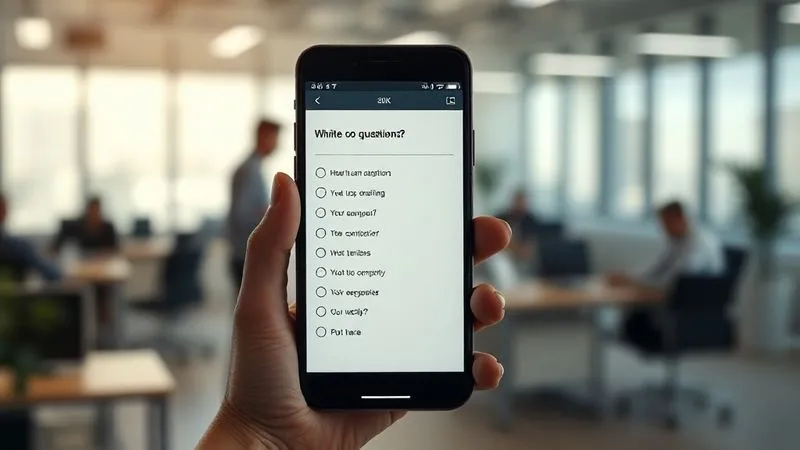
Strategy 2: Craft Compelling & Concise Surveys
This might seem obvious, but it's where many companies fail. A long, convoluted survey is a death sentence for response rates. Remember the cognitive load we discussed? Reduce it ruthlessly.
Keep it Short and Sweet
Aim for no more than 5-7 questions for transactional surveys (e.g., post-service interaction). For relationship surveys, you might extend to 10-12, but only if absolutely necessary. Each question should have a clear purpose and contribute directly to an actionable insight. If a question doesn't meet this criterion, cut it.
Clear, Unambiguous Language
Avoid jargon, acronyms, or overly complex sentence structures. Use simple, direct language that any customer can understand without effort. Frame questions neutrally to avoid leading the respondent.
- Avoid Double-Barreled Questions: "Was our agent friendly and did they resolve your issue quickly?" (This asks two things at once).
- Use Rating Scales Consistently: Stick to a 5-point or 7-point Likert scale for consistency, clearly labeling each point.
- Offer Open-Ended Options Sparingly: While valuable, too many open-ended questions can overwhelm. Use them strategically after a rating question to understand the 'why.'
A well-designed survey respects the customer's time and makes it easy for them to provide valuable input.
Strategy 3: Personalization & Empathy in Invitations
A generic survey invitation screams "mass email" and is easily ignored. Personalization, however, shows that you value them as an individual and remember their specific interaction.
Address by Name, Reference Interaction
Start your invitation email or message with the customer's name. Refer to the specific service interaction they just had. "Hi [Customer Name], we hope you're happy with the resolution of your recent query regarding [Product/Service Issue]." This immediately makes the request relevant and less robotic.
Explain 'Why' Their Feedback Matters
Don't just ask; explain the impact. "Your feedback helps us improve our service for you and other customers." Or, "We're constantly striving to deliver the best support possible, and your input is crucial to help us identify areas for improvement." This addresses the 'lack of perceived value' barrier directly.
Expert Insight: "Personalization isn't just a marketing tactic; it's a fundamental principle of human connection. When you show a customer you see them, they're more likely to engage."
Strategy 4: Offer Incentives (Wisely)
While not always necessary, strategic incentives can significantly boost response rates, especially for longer surveys or when surveying a particularly busy demographic.
Types of Incentives
- Small Discounts: A percentage off their next purchase.
- Gift Cards: Small value gift cards (e.g., $5-$10) for coffee or popular online retailers.
- Entry into a Draw: A chance to win a larger prize (e.g., a product, a significant gift card). This can be cost-effective for larger audiences.
- Donation to Charity: Offer to donate a small amount to a charity of their choice upon completion. This appeals to altruistic motivations.
Ethical Considerations & Transparency
Be transparent about the incentive. Clearly state what it is and how they'll receive it. Ensure the incentive doesn't bias the responses. Avoid making it so large that it attracts professional survey-takers rather than genuine customers. A study by Forbes highlighted that while incentives boost response rates, the type and value of the incentive must align with the target audience and survey goals to avoid skewed data.
Case Study: How TechSolutions Boosted Feedback with Targeted Incentives
TechSolutions, a B2B SaaS company, struggled with a sub-10% response rate on their post-support surveys. Their customers, IT managers, were notoriously time-poor. I advised them to implement a small, targeted incentive: a $5 coffee gift card for every completed survey, coupled with a personalized invitation. Within three months, their response rate climbed to over 35%. The cost was minimal compared to the value of the actionable insights gained, which led to significant improvements in their support portal and a measurable increase in customer satisfaction (CSAT) scores.
Strategy 5: Multi-Channel Distribution & Accessibility
Customers interact with your brand across various touchpoints. Your feedback collection strategy should reflect this multi-channel reality. Don't limit yourself to just email.
Email, SMS, In-App, Website Pop-ups
- Email: Still a primary channel, especially for detailed feedback.
- SMS: Ideal for very short, transactional surveys (e.g., a single CSAT question) immediately after an interaction. High open rates.
- In-App/In-Product: For digital products, trigger surveys directly within the application after a feature use or support interaction. Less intrusive than email for active users.
- Website Pop-ups/Widgets: Can be effective for general website experience feedback, but use sparingly to avoid annoyance.
- QR Codes: For physical locations or product packaging, a QR code linking to a mobile-friendly survey can be very effective.
Mobile-First Design
Regardless of the channel, ensure your surveys are fully responsive and optimized for mobile devices. A clunky mobile experience is a guaranteed way to lose respondents. Test it yourself on various devices!

Here's a comparison of common distribution channels:
| Channel | Pros | Cons | Best Use Case |
|---|---|---|---|
| Detailed feedback, rich formatting, good for relationship surveys | Lower open rates, can be ignored | Post-resolution, relationship surveys | |
| SMS | High open rates, immediate, ideal for short surveys | Character limits, less detail, perceived as intrusive | Transactional CSAT, quick pulse checks |
| In-App/In-Product | Contextual, high engagement, less intrusive for active users | Limited to digital products, can interrupt workflow | Feature feedback, post-support within app |
| Website Pop-up/Widget | Captures general site experience, broad reach | Can be annoying, low completion rates if not targeted | Website experience, general feedback |
Strategy 6: Close the Loop & Show Action
This is perhaps the most critical, yet often overlooked, strategy for long-term feedback success. If customers feel their feedback disappears into a void, they won't bother providing it again. Closing the loop builds trust and demonstrates that their voice truly matters.
Acknowledge, Act, Inform
- Acknowledge: Thank the customer for their feedback, especially if it's critical. A simple, automated "Thank you for your input!" is a start. For critical feedback, a personal follow-up is essential.
- Act: Use the feedback to identify trends, fix issues, and improve processes. This is the core purpose of feedback.
- Inform: Crucially, communicate back to your customer base (or directly to the individual, if appropriate) about the changes you've made based on their input.
Publicizing Changes
Use your blog, social media, email newsletters, or even in-app notifications to announce improvements that were directly driven by customer feedback. Phrases like "You asked, we listened!" or "Based on your valuable feedback, we've improved X" are powerful. This reinforces the value of participation and encourages future engagement.
Expert Insight: "Feedback is a gift. When someone gives you a gift, you don't just put it in a closet; you open it, use it, and show appreciation. Do the same with customer insights."
As detailed in an article by Zendesk, closing the feedback loop is fundamental to building a culture of customer-centricity and ensuring sustained engagement in your feedback programs.
Strategy 7: Leverage NPS, CSAT, and CES for Quick Insights
Not all feedback needs to be a multi-question survey. Sometimes, a single, powerful question is all you need to gauge sentiment and track trends. These standardized metrics are highly effective for capturing quick, actionable insights.
Understanding Each Metric
- Net Promoter Score (NPS): "How likely are you to recommend [Company/Product/Service] to a friend or colleague?" (Scale of 0-10). Measures overall customer loyalty.
- Customer Satisfaction (CSAT): "How satisfied are you with your recent interaction?" (Scale of 1-5 or 1-10). Measures satisfaction with a specific interaction or product.
- Customer Effort Score (CES): "How easy was it to handle your issue with [Company]?" (Scale of 1-7, or "very difficult" to "very easy"). Measures the effort a customer had to exert to resolve an issue or complete a task.
When to Use Which
I advise using CSAT and CES for transactional feedback (e.g., post-support interaction) as they are immediate and context-specific. NPS is best for relationship feedback, administered less frequently (e.g., quarterly or semi-annually) to gauge overall loyalty and sentiment towards the brand.
Here's a quick comparison:
| Metric | Measures | Best Use | Typical Frequency |
|---|---|---|---|
| NPS | Customer Loyalty & Likelihood to Recommend | Overall brand sentiment, relationship surveys | Quarterly, semi-annually |
| CSAT | Satisfaction with a Specific Interaction/Product | Post-service, post-purchase, feature feedback | Immediately post-interaction |
| CES | Customer Effort to Resolve an Issue/Task | Post-support, onboarding, troubleshooting | Immediately post-interaction |
Strategy 8: A/B Test Your Survey Approach
In the world of customer feedback, what works for one audience or industry might not work for another. The best way to optimize your approach is through continuous experimentation.
Test Subject Lines, Question Order, Incentives
Don't just set up a survey and forget it. Continuously test different elements:
- Email Subject Lines: "Your feedback matters!" vs. "Quick question about your recent support."
- Survey Length: 3 questions vs. 5 questions.
- Question Phrasing: "How satisfied were you?" vs. "Please rate your satisfaction."
- Incentive Type: Discount vs. prize draw.
- Call-to-Action Buttons: "Start Survey" vs. "Share Your Thoughts."
- Timing: 5 minutes post-interaction vs. 30 minutes post-interaction.
Data-Driven Optimization
Use your A/B testing results to make informed decisions. If a particular subject line consistently yields higher open rates, adopt it. If a shorter survey version has significantly higher completion rates without sacrificing critical data, make it your standard. This iterative process is how you truly optimize your feedback collection strategy over time.
Strategy 9: Integrate Feedback into the CX Journey
Feedback collection shouldn't be an afterthought; it should be an integral, seamless part of the entire customer experience journey. When feedback opportunities feel natural and expected, customers are more likely to engage.
Make Feedback a Natural Part
Think about where feedback can naturally fit into your customer's journey. For instance, after a customer uses a new feature for the first time, a small, unobtrusive in-app prompt might appear. After resolving a complex issue, a follow-up email with a CSAT survey is appropriate. The goal is to make the request feel like a helpful interaction, not an interruption.
Proactive vs. Reactive
Don't wait for problems to arise. Proactively seek feedback at various stages of the customer lifecycle. This includes onboarding surveys, periodic check-ins, and even exit surveys if a customer churns. This holistic approach ensures you're gathering insights at every critical touchpoint, not just when things go wrong.
Frequently Asked Questions (FAQ)
What's the ideal survey length for customer service feedback? For transactional customer service interactions, I strongly recommend keeping surveys to 3-5 questions. This minimizes cognitive load and maximizes completion rates. For broader relationship surveys, you might extend to 7-10 questions, but always prioritize conciseness and relevance. Every question should serve a clear, actionable purpose.
Should I always offer incentives for survey completion? Not necessarily. While incentives can significantly boost response rates, they aren't always required. For short, highly contextual transactional surveys (like a one-question CSAT after a support call), the perceived value of providing feedback immediately after a fresh experience is often enough. Incentives are more effective for longer surveys, when targeting busy demographics, or when you're struggling with very low response rates. Always consider the potential for response bias when using incentives.
How often should I survey customers about their service experience? This depends on the type of feedback and the frequency of interaction. For transactional feedback (CSAT, CES), you can survey after every relevant interaction, but be mindful of survey fatigue. Many companies implement a 'wait period' (e.g., don't survey the same customer more than once every 30-90 days for similar interactions). For relationship feedback (NPS), quarterly or semi-annually is often sufficient to track long-term sentiment without over-soliciting.
What should I do if I receive negative feedback? Negative feedback is a gift! It highlights areas for improvement. First, acknowledge it promptly and empathetically. If possible and appropriate, follow up directly with the customer to understand their experience in more detail and offer a resolution. Internally, analyze the feedback for patterns and root causes. Use it to drive specific improvements in your service processes, agent training, or product. Remember, a customer who complains is giving you a chance to fix things; many unhappy customers simply leave.
How can I prevent survey fatigue among my customers? Preventing survey fatigue involves a multi-pronged approach: keep surveys short and focused, optimize timing to make requests highly relevant, use various channels strategically to avoid over-solicitation on one platform, implement 'cool-down' periods so customers aren't bombarded, and most importantly, close the loop by showing customers that their previous feedback led to action. When customers see their input makes a difference, they're more willing to participate again.
Key Takeaways and Final Thoughts
Boosting customer service feedback survey response rates isn't about magic tricks; it's about a strategic, empathetic, and persistent approach. Having spent years refining feedback loops for businesses of all sizes, I can confidently say that these strategies, when implemented thoughtfully, will yield significant results.
- Respect Customer Time: Keep surveys short, relevant, and easy to complete.
- Personalize & Justify: Make every invitation feel personal and explain why their feedback truly matters.
- Act on Feedback: Close the loop, show customers you're listening, and demonstrate how their input drives tangible improvements.
- Test & Optimize: Continuously A/B test your approach to find what resonates best with your unique audience.
Don't let low response rates obscure the voice of your customer any longer. By embracing these nine expert strategies, you're not just collecting data; you're building stronger relationships, fostering loyalty, and paving the way for continuous, customer-centric growth. Start implementing these changes today, and watch your feedback rates—and your customer satisfaction—soar.
Recommended Reading
- 5 Ways to Reignite Your Entrepreneur Mentor's Challenge to Your Strategy
- Future Innovation Management: Trends Impacting Your Business
- 7 Strategies to Rapidly Accelerate Technology Adoption in Innovation
- Why Loyal Clients Suddenly Disengage: 7 Core Reasons & Solutions
- Solving BI Adoption: 7 Strategies for Large Firms' Success





Comments
Leave a comment below. Your email will not be published. Required fields marked with *