


Mastering Strategy: How to Develop Strategic Thinking Amidst Daily Operational Chaos?
For over two decades leading teams and advising C-suites across various industries, I've witnessed a recurring, almost insidious challenge that derails even the most promising leaders: the gravitational pull of daily operational chaos. It's a relentless current that threatens to drag visionaries into a reactive whirlpool, leaving them exhausted and their organizations adrift without a clear strategic compass.
The relentless barrage of emails, urgent meetings, immediate crises, and the sheer volume of tactical demands can easily consume every ounce of a leader's energy and attention. This isn't just about being busy; it's about the erosion of the capacity to step back, connect the dots, anticipate future challenges, and proactively steer the ship towards a desired destination. The problem isn't a lack of desire for strategic thinking; it's the profound difficulty of cultivating it when the immediate environment screams for instant solutions.
This article isn't just another theoretical discourse on strategy. It will equip you with actionable frameworks, battle-tested methodologies, and a mindset shift that allows you to not only survive the daily grind but to thrive strategically within it. We'll explore practical steps, real-world analogies, and expert insights to help you carve out space for foresight, foster a future-oriented perspective, and embed strategic thinking into your leadership DNA, even amidst the most demanding operational environments.
Understanding the Strategic-Operational Divide
The core tension lies in the fundamental difference between strategic and operational thinking. Operational thinking is about the 'how' and the 'now' – optimizing current processes, meeting immediate targets, and addressing urgent problems. It's essential for execution and short-term survival. Strategic thinking, however, is about the 'what' and the 'why' – defining the future direction, identifying opportunities and threats, allocating resources for long-term growth, and understanding the broader landscape. It's about foresight and purposeful evolution.
The challenge arises when these two modes compete for the same limited resources: your time, energy, and cognitive bandwidth. In the heat of daily operations, the urgent often trumps the important, leaving little room for the reflective, analytical, and imaginative work that strategic thinking demands. Many leaders find themselves perpetually in firefighting mode, mistaking busyness for progress, and reacting to market shifts rather than shaping them.
“Without a strategic lens, operational efficiency can become akin to meticulously rearranging deck chairs on the Titanic. You might be doing it perfectly, but you're still heading for an iceberg.”
Recognizing this divide is the first step. It's not about choosing one over the other, but about consciously integrating both. It requires a deliberate effort to create boundaries and processes that protect and nurture your strategic capacity. This integration allows you to leverage operational insights to inform strategy, and conversely, to ensure that daily actions are aligned with long-term objectives.

The Power of the 'Strategic Pause': Carving Out Time
One of the most common laments I hear from leaders is, "I just don't have time to think strategically." My response is always the same: "You don't *find* time; you *make* time." Strategic thinking isn't a luxury; it's a necessity, and like any critical task, it demands dedicated, protected time. The 'strategic pause' is a deliberate act of disengagement from the immediate to engage with the future.
This isn't about clearing your entire calendar for a week-long offsite (though those have their place). It's about integrating regular, shorter periods of strategic reflection into your routine. Think of it as intellectual whitespace – moments where you intentionally step away from the operational treadmill to gain perspective, analyze patterns, and connect disparate pieces of information.
Techniques for Time Blocking and Sacred Strategic Slots
- Daily 30-Minute 'Deep Work' Block: Start your day with 30-60 minutes dedicated solely to strategic reflection. No emails, no meetings, no interruptions. Use this time to review long-term goals, analyze market trends, or brainstorm future initiatives.
- Weekly 'Strategy Sprint' Session: Block out 2-4 hours once a week. Treat this as a non-negotiable meeting with yourself. Use it for deeper analysis, reviewing progress on strategic objectives, or scenario planning.
- Monthly 'Off-Site' Half-Day: Even if it's just a coffee shop, a quiet park, or a different office location, physically remove yourself from your usual environment once a month. This change of scenery can dramatically shift your perspective and foster creative strategic thinking.
- The 'Pre-Mortem' Exercise: Before launching a major initiative, gather your team for a 'pre-mortem.' Imagine the initiative has failed spectacularly in a year. What went wrong? This forces strategic foresight, identifying potential pitfalls before they become operational crises.
Case Study: How InnovateTech Reclaimed Strategic Focus
InnovateTech, a rapidly growing software company, was struggling with high employee burnout and a lack of clear product direction. Their CEO, Sarah, felt constantly overwhelmed by daily demands. By implementing a 'Strategic Friday' initiative – blocking out every Friday afternoon for leadership team strategic planning and individual deep work – they transformed their approach. Within six months, they launched a new product line that captured a significant market share, refined their talent retention strategy, and saw a 20% reduction in leadership meeting hours, as many operational issues were now being addressed by empowered teams. Sarah reported feeling less stressed and more in control of the company's destiny, all thanks to carving out that sacred time.
Cultivating a Future-Oriented Mindset: Beyond Today's To-Do List
Strategic thinking isn't just about allocating time; it's about a fundamental shift in how you perceive your role and your organization's trajectory. It means moving beyond the immediate 'to-do' list and constantly asking, "What's next?" and "Are we truly prepared for it?" As management guru Peter Drucker famously stated, "The best way to predict the future is to create it." This requires a proactive, rather than reactive, stance.
To cultivate this mindset, you must regularly challenge your assumptions about the present and actively seek out signals of future change. This involves expanding your awareness beyond your immediate operational bubble and engaging with broader industry trends, technological advancements, and societal shifts. It's about connecting seemingly unrelated dots and anticipating their potential impact on your business.
- Regularly ask 'Why?': Don't just execute; understand the underlying purpose of every task and initiative. Does it align with a larger strategic goal?
- Embrace the 'Beginner's Mind': Approach problems and opportunities with curiosity, as if you're seeing them for the first time. This helps you question established norms and uncover innovative solutions.
- Practice Peripheral Vision: Actively seek information outside your immediate domain. Read industry reports, follow economic forecasts, engage with thought leaders from diverse fields.
- Question the Status Quo: Don't assume that what worked yesterday will work tomorrow. Challenge existing processes and business models.
| Question Type | Example Question | Impact |
|---|---|---|
| Operational Focus | How can we reduce customer service response time by 10% this quarter? | Immediate efficiency, short-term gain |
| Strategic Focus | What emerging technologies could fundamentally change customer expectations for service in the next 3-5 years? | Long-term competitive advantage, market shaping |
| Operational Focus | What's the best way to handle the current backlog of orders? | Problem resolution, current capacity utilization |
| Strategic Focus | How might shifts in supply chain geopolitics impact our raw material costs and availability over the next decade, and what's our diversification strategy? | Risk mitigation, future resilience |
Leveraging Data for Strategic Insights, Not Just Reporting
In today's data-rich environment, leaders are often drowning in metrics without truly leveraging them for strategic advantage. Operational data – sales figures, website traffic, production costs – is crucial for managing the present. However, strategic thinking demands that we look beyond the 'what happened' to discern the 'why it happened' and, more importantly, 'what it means for the future.'
Transforming raw data into strategic insight requires a different approach to analysis. It's not just about compiling reports; it's about asking deeper questions, identifying trends, recognizing anomalies, and using data to validate or challenge strategic hypotheses. As a Harvard Business Review article on data-driven decision-making emphasizes, true insight comes from combining quantitative analysis with qualitative understanding and a strategic mindset.
From Metrics to Meaning: The Analytical Shift
- Define Your Strategic Questions First: Before diving into data, articulate the strategic questions you're trying to answer. Are you trying to understand market penetration, customer lifetime value, or the impact of a new competitor?
- Look for Patterns and Trends, Not Just Individual Data Points: Strategic thinking involves identifying broader shifts. Are sales declining in a specific segment, or is it a broader market trend? What does this trend signify for future product development or market entry?
- Benchmark Against Competitors and Industry: How do your operational metrics compare to industry leaders? Are you falling behind, or are there areas where you can gain a competitive edge? This external perspective is vital for strategic positioning.
- Test Hypotheses: Use data to prove or disprove your strategic assumptions. If you believe a new marketing channel will attract a younger demographic, track the data to see if your hypothesis holds true.
- Visualize for Clarity: Complex data can be overwhelming. Use dashboards and visualizations to simplify information and highlight key strategic insights, making them easier to communicate and act upon.

Building a Strategic Filter: Prioritizing with Long-Term Vision
In the midst of operational chaos, every incoming task or request can feel equally urgent. Without a strategic filter, leaders risk dissipating their energy on low-impact activities, constantly reacting to the loudest voice or the most immediate problem. Strategic thinking provides this filter, allowing you to evaluate every decision, project, and resource allocation against your long-term vision and objectives.
This isn't about ignoring operational demands, but about consciously deciding which ones to tackle, which to delegate, and which to defer or even eliminate. It's about making choices that move the organization closer to its strategic goals, even if they don't offer immediate gratification. This requires discipline and a clear understanding of your organizational priorities.
The 'Impact vs. Urgency' Matrix in Strategic Context
While the Eisenhower Matrix (Urgent/Important) is a great tool, a strategic filter adds another layer: long-term impact. When evaluating a task, ask:
- Is it Urgent? (Does it require immediate attention?)
- Is it Important Operationally? (Does it impact current performance or stability?)
- Is it Important Strategically? (Does it contribute to our long-term vision, competitive advantage, or future growth?)
The goal is to prioritize tasks that are *strategically important*, even if they aren't immediately urgent. These are the activities that often get pushed aside but are critical for sustainable success. This approach aligns with advice from many leadership experts, including those often featured in Forbes' leadership section, who emphasize the importance of distinguishing between activity and productivity that truly moves the needle.
“The art of strategic leadership is not about doing everything, but about doing the right things exceptionally well, and having the courage to say 'no' to everything else that doesn't align with your strategic compass.”
Empowering Your Team for Operational Excellence (Freeing Your Strategic Bandwidth)
One of the most effective ways for a leader to develop strategic thinking amidst daily operational chaos is to **stop doing the operational chaos themselves.** This isn't about shirking responsibility; it's about intelligent delegation and empowerment. When your team is highly competent and autonomous in managing day-to-day operations, it frees up your most valuable resource – your time and cognitive energy – for higher-level strategic work.
Building an empowered team requires trust, clear communication, and a commitment to developing your people. It means moving from a directive leadership style to one that coaches, mentors, and trusts team members to make decisions within defined boundaries. This not only lightens your load but also fosters a more engaged, innovative, and resilient workforce.
Developing Autonomy and Accountability
- Define Clear Roles and Responsibilities: Ensure every team member understands their domain and decision-making authority. Ambiguity leads to dependency.
- Provide Necessary Resources and Training: Equip your team with the tools, knowledge, and skills they need to perform effectively without constant oversight.
- Establish Clear Performance Metrics and Feedback Loops: Hold individuals accountable for results, not just effort. Provide constructive feedback that helps them grow.
- Foster a Culture of Problem-Solving: Encourage your team to identify and solve operational challenges independently before escalating them. Empower them to experiment and learn from mistakes.
- Delegate Authority, Not Just Tasks: Give your team the power to make decisions related to the tasks you delegate. This builds confidence and ownership.
By effectively delegating operational tasks, you create a virtuous cycle: your team gains valuable experience and grows, while you gain the mental space and time to focus on strategic initiatives that drive the entire organization forward. This shift transforms your role from a bottleneck to a strategic enabler.

Scenario Planning and Contingency: Preparing for the Unforeseen
Strategic thinking isn't solely about mapping out a perfect future; it's also about preparing for multiple possible futures, including the less desirable ones. In a volatile, uncertain, complex, and ambiguous (VUCA) world, operational chaos can often stem from unexpected external shocks. Strategic leaders anticipate these shocks through scenario planning and build robust contingency plans.
Scenario planning is a powerful tool that forces you to think beyond your current assumptions and consider a range of plausible futures. It's not about predicting the future with certainty, but about understanding potential trajectories and their implications, allowing you to develop more resilient strategies. This proactive approach helps mitigate the reactive panic that often accompanies unforeseen operational disruptions.
The 'What If' Exercise: A Strategic Muscle Builder
- Identify Key Uncertainties: What are the biggest unknown variables that could impact your business? (e.g., new regulations, technological breakthroughs, economic downturns, competitor actions).
- Define Critical Driving Forces: What are the major trends and factors that will shape your industry? (e.g., demographic shifts, consumer preferences, supply chain dynamics).
- Develop 2-4 Plausible Scenarios: Combine these uncertainties and driving forces to create distinct, coherent narratives about how the future might unfold. Give them evocative names (e.g., 'The Green Economy Boom,' 'The Regulatory Clampdown,' 'The Tech Disruption Wave').
- Analyze Implications for Each Scenario: For each scenario, ask: How would this impact our customers, products, operations, finances, and competitive position?
- Formulate Strategic Responses: What strategic moves would we make in each scenario? What early warning indicators should we monitor? This helps build flexibility into your strategy.
By engaging in this 'what if' exercise, you not only prepare for potential challenges but also uncover new opportunities that might not be visible when focused solely on the present. This foresight is a hallmark of truly strategic leadership.
| Scenario Title | Key Drivers | Strategic Implications | Contingency Plan Element |
|---|---|---|---|
| Global Economic Downturn | Inflation, interest rate hikes, geopolitical instability | Reduced consumer spending, increased cost of capital, supply chain disruption | Diversify revenue streams, reduce fixed costs, strengthen cash reserves |
| Rapid Technological Disruption | AI advancements, automation, new platform economies | Obsolete products/services, talent skill gaps, new market entrants | Invest in R&D, upskill workforce, strategic partnerships, agile product development |
| Shifting Consumer Values (Sustainability Focus) | Environmental awareness, ethical sourcing, demand for transparency | Brand reputation risk, pressure for green products, supply chain overhaul | Develop sustainable practices, transparent reporting, eco-friendly product innovation |
Fostering a Culture of Strategic Dialogue
Strategic thinking shouldn't be confined to the executive suite or annual planning retreats. To truly embed it amidst daily operational chaos, it must become a pervasive cultural norm, fostered through regular, meaningful dialogue at all levels of the organization. When strategic conversations are encouraged, team members begin to connect their daily tasks to the larger organizational purpose, enhancing engagement and alignment.
A culture of strategic dialogue means moving beyond simply reporting on operational metrics to actively discussing 'why' certain actions are taken, 'what if' scenarios, and 'how' individual contributions fit into the bigger picture. It's about creating psychological safety where team members feel comfortable questioning assumptions, offering different perspectives, and contributing to the organization's future direction. As leadership expert Simon Sinek often emphasizes, starting with 'why' inspires action and fosters a deeper connection to purpose.
Best Practices for Strategic Discussions
- Allocate dedicated time in meetings: Beyond operational updates, reserve a portion of every team meeting for strategic discussion. Ask open-ended questions about future trends, competitive landscape, or customer needs.
- Encourage cross-functional perspectives: Break down silos. Strategic insights often emerge from connecting different parts of the business. Invite diverse voices to strategic discussions.
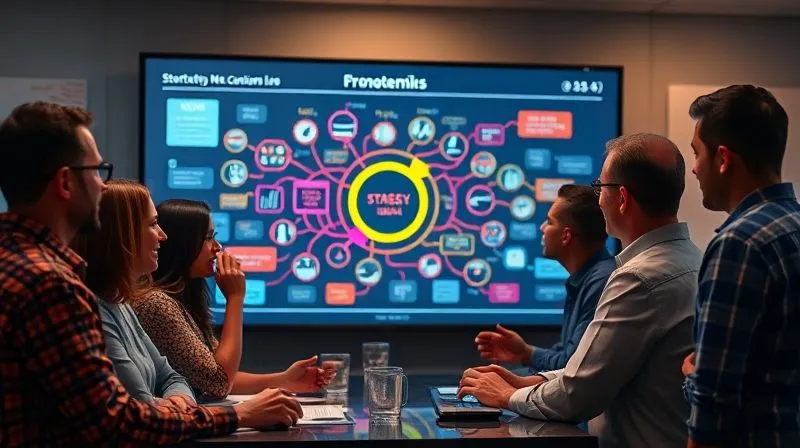
- Use visual aids: Maps, diagrams, and whiteboards can help facilitate complex strategic conversations, making abstract concepts more tangible and fostering shared understanding.
- Ask provocative questions: Challenge your team to think beyond the immediate. "If we had unlimited resources, what would we do differently?" or "What's the one thing our competitors are doing that we should be worried about?"
- Model strategic thinking: As a leader, consistently articulate your strategic rationale behind decisions. Explain the 'why' behind the 'what,' demonstrating how you connect daily actions to long-term goals.
By making strategic dialogue a regular part of your organizational rhythm, you transform your team from mere executors of tasks into active participants in shaping the future. This collective intelligence is a powerful antidote to the narrow focus that operational chaos often imposes.
Frequently Asked Questions (FAQ)
How do I convince my team/boss to adopt strategic thinking when they're swamped with daily operational tasks? The key is to frame strategic thinking not as an added burden, but as a solution to their current pain points. For your team, explain how strategic alignment reduces rework and makes their daily tasks more meaningful. For your boss, demonstrate how strategic foresight can mitigate future crises, identify growth opportunities, and ultimately save time and resources in the long run. Start small by integrating strategic questions into existing meetings, or by sharing a compelling market insight that demands a strategic response. Lead by example, showing how your own strategic pauses yield tangible benefits.
What's the quickest way to start developing strategic thinking if I'm already overwhelmed? Begin with the 'Strategic Pause' – even just 15-30 minutes at the start of your day, dedicated solely to reflecting on your top 1-2 long-term goals. During this time, ask yourself: "What's one thing I could do today that would move us closer to this goal, even if it's not urgent?" Also, try the 'Pre-Mortem' exercise with your team before a new project to identify potential future problems. These small, consistent actions build the strategic muscle over time.
How do I measure the impact of strategic thinking on our business? Measuring direct impact can be challenging, but you can track proxy metrics. Look for improvements in: 1) Proactive problem-solving (fewer reactive crises), 2) Successful market entries or product launches, 3) Higher employee engagement and retention (due to clearer purpose), 4) Improved long-term financial performance against strategic goals, and 5) Enhanced competitive positioning. Regularly review your progress against strategic KPIs that you define based on your long-term objectives.
Can strategic thinking be taught, or is it an innate trait? While some individuals may have a natural inclination towards big-picture thinking, strategic thinking is absolutely a skill that can be developed and honed. It involves a combination of analytical abilities, creative problem-solving, foresight, and systematic thinking – all of which can be learned through deliberate practice, exposure to diverse perspectives, mentorship, and applying structured frameworks. It's a muscle that strengthens with consistent exercise.
What's the biggest mistake leaders make when trying to be strategic amidst chaos? The biggest mistake is attempting to be strategic *while* simultaneously engaged in operational tasks, or expecting strategic insights to emerge spontaneously from the daily grind. Strategic thinking requires dedicated, protected mental space and time. Another common error is mistaking tactical planning for strategic planning. Strategic thinking defines *where* you're going and *why*; tactical planning details *how* you'll get there. Without the 'where' and 'why,' the 'how' becomes directionless and inefficient.
Key Takeaways and Final Thoughts
- Prioritize the 'Strategic Pause': Actively carve out non-negotiable time for deep strategic reflection, away from daily distractions.
- Cultivate a Future-Oriented Mindset: Regularly challenge assumptions, ask 'why,' and look beyond immediate tasks to anticipate future trends and opportunities.
- Transform Data into Insight: Leverage data not just for reporting, but for answering strategic questions and validating hypotheses about the future.
- Implement a Strategic Filter: Evaluate every decision against its long-term impact and alignment with your overarching vision, saying 'no' to non-strategic demands.
- Empower Your Team: Delegate operational responsibilities effectively to free up your own strategic bandwidth and foster a more capable, engaged workforce.
- Embrace Scenario Planning: Prepare for multiple possible futures to build resilience and identify opportunities in an unpredictable world.
- Foster Strategic Dialogue: Embed strategic conversations into your organizational culture, encouraging all team members to think and contribute beyond their immediate roles.
Developing strategic thinking amidst daily operational chaos is not a passive endeavor; it's a deliberate, ongoing commitment. It requires discipline, a shift in mindset, and the courage to step back when every instinct tells you to dive into the fray. But the rewards are immense: greater clarity, more effective decision-making, a resilient organization, and ultimately, the ability to proactively shape your future rather than merely reacting to it. Start today, one strategic pause at a time, and watch your leadership—and your organization—transform.
Recommended Reading
- Proving Tangible ROI: 8 Strategies for SDG-Aligned CSR Programs
- Unlock Sales Success: How to Build Rapport Quickly in Any Conversation
- Startup Cash Crunch? How to Solve Cash Flow Problems - Fast!
- 7 Reasons Why Your Franchise Unit Economics Fail to Scale Profitably
- Master Revenue Forecasting: Financial Analytics Secrets Revealed!





Comments
Leave a comment below. Your email will not be published. Required fields marked with *