


How to Disconnect from Remote Work When Living in Your Office?
For over a decade and a half in the business world, specializing in remote team dynamics, I've observed a subtle yet insidious problem emerge as remote work became the norm: the complete blurring of lines between professional and personal life. What started as a flexible perk often morphs into an endless workday, especially for those whose 'office' is literally their living room.
This isn't just about longer hours; it's about the erosion of mental and emotional space, leading to burnout, strained relationships, and a profound sense of never truly 'switching off.' The challenge of how to disconnect from remote work when living in your office is a silent epidemic, impacting productivity during work hours and quality of life after them.
In this definitive guide, I'll draw upon my extensive experience and the latest research to provide you with actionable frameworks, practical routines, and psychological insights. We'll explore expert-backed strategies to help you reclaim your personal space, establish robust boundaries, and foster a healthier work-life integration, even when your commute is just a few steps.
The Invisible Wall: Why Boundaries Are Non-Negotiable
In the physical office, the commute itself often served as a natural buffer, a liminal space where you could mentally transition from your work persona to your home self. When your home *is* the office, that buffer vanishes. This isn't merely inconvenient; it's detrimental to your mental health and long-term productivity. I've seen countless professionals struggle with this, often feeling guilty about taking breaks or ending their workday at a reasonable time.
The absence of clear boundaries leads to what I call 'work-life creep,' where professional responsibilities slowly but surely infringe upon personal time, space, and energy. This constant state of 'on-call' significantly contributes to remote work burnout and diminishes overall well-being. According to a Harvard Business Review article, establishing clear boundaries is one of the most critical factors for remote work success and preventing exhaustion.
"Boundaries aren't about restricting your work; they're about protecting your life. Without them, your personal identity dissolves into your professional demands, leaving little room for genuine rest or recreation." - Industry Specialist Insight
Understanding this fundamental need for separation is the first step in learning how to disconnect from remote work when living in your office. It's not a luxury; it's a necessity for sustainable remote work.
Crafting Your 'Commute': Establishing a Start and End Routine
Since you don't have a physical commute, you need to create a psychological one. These rituals signal to your brain that it's time to switch roles. I've found that consistency is key here, even if it feels a little forced at first. Think of it as putting on your 'work hat' and then taking it off at the end of the day.
Morning Rituals: Gearing Up for Work
Your day should start with intention, not just rolling out of bed and onto your laptop. This helps create a mental separation from your sleep space and your workspace.
- Physical Preparation: Get dressed in clothes you'd wear to an office (or at least something other than pajamas). Shower, do your hair, whatever makes you feel 'ready' for the day.
- Mindful Transition: Before checking emails, spend 15-30 minutes on a non-work activity. This could be reading, meditating, exercising, or enjoying a slow breakfast. This is your personal 'pre-commute' time.
- Workspace Activation: Go to your designated workspace, organize your desk, and open only the necessary work applications. This acts as a clear signal to your brain that 'work mode' is now active.
Evening Rituals: Powering Down and Disconnecting
The end-of-day routine is arguably even more crucial for learning how to disconnect from remote work when living in your office. This is your deliberate 'digital detox home' strategy.
- The Digital Shutdown: Close all work applications, email, and communication platforms. If possible, shut down your work computer entirely.
- Physical Disengagement: Leave your designated workspace. If you can, physically move something (e.g., put your laptop in a drawer, cover your desk). This makes the space less 'active.'
- Transition Activity: Engage in a non-work activity immediately. Go for a walk, listen to music, call a friend, make dinner. This replaces the mental processing time of a real commute.
- Review and Plan (Briefly): Spend 5-10 minutes reviewing your accomplishments for the day and quickly outlining priorities for tomorrow. This helps 'empty your mental inbox' and reduces the urge to check emails later.

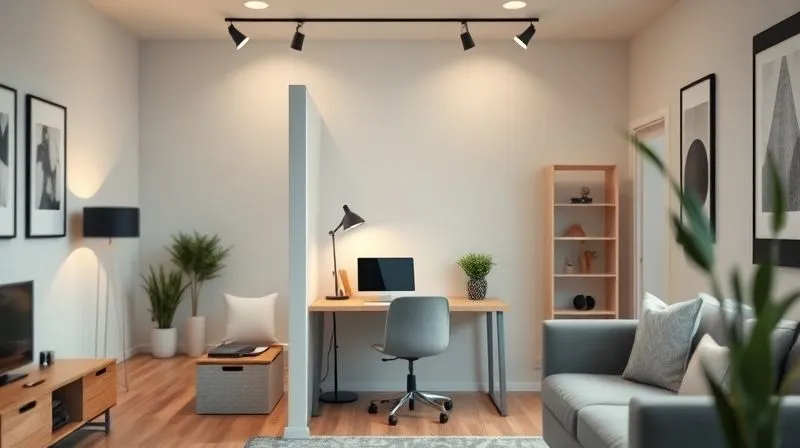
Physical Separation: Even a Corner Can Be Your Office
One of the biggest culprits in the blur between work and life is the lack of a distinct physical boundary. When your living room is also your boardroom, your bedroom your cubicle, it's incredibly hard for your brain to differentiate. My experience tells me that even the smallest designated space can make a monumental difference.
Ideally, you'd have a separate room for your office. But for many, especially those living in smaller apartments or shared spaces, this isn't feasible. The good news is that you can still create effective physical separation. The goal is to make your workspace feel distinctly different from your relaxation space.
Strategies for Creating Dedicated Work Zones:
- The 'Office' Nook: Dedicate a specific corner of a room, perhaps with a small desk and chair, solely for work. Avoid working from your bed or sofa.
- Visual Dividers: Use a screen, a bookshelf, or even a strategically placed plant to create a visual barrier between your workspace and the rest of your living area.
- Portable Office: If you must use a shared surface (like a dining table), make it a 'pack up' office. At the end of the day, put away your laptop, monitor, and work files into a drawer or a box. Out of sight, out of mind.
Case Study: Sarah's Studio Apartment Solution
Sarah, a freelance graphic designer living in a studio apartment, initially struggled immensely with how to disconnect from remote work when living in her office. Her bed was feet away from her desk, and she felt like she was always 'at work.' After implementing my advice, she invested in a beautiful, collapsible room divider and a small, dedicated desk that she placed against a wall. She also started packing her laptop and drawing tablet into a decorative box at 5 PM sharp.
The results were transformative: within two weeks, Sarah reported a significant reduction in her stress levels and a clearer mental distinction between work and personal time. Her productivity during work hours also increased because she felt more 'present' in her dedicated workspace.
The Digital Disconnect: Taming Notifications and Devices
In our hyper-connected world, digital devices are often the strongest tether to work. Even if you physically leave your desk, the ping of an email or a Slack message on your phone can instantly pull you back into work mode. Mastering the digital disconnect is paramount for achieving true work-life separation.
I've learned that it's not enough to just close your laptop; you need a comprehensive strategy for all your devices. This is where many remote workers falter, allowing their smartphones to become a 24/7 portal to their job, undermining all other efforts to disconnect.
Strategies for Digital Disengagement:
- Dedicated Work Phone (If Possible): For some, having a separate work phone that gets turned off after hours is a game-changer.
- Notification Audit: Go through all your apps. Turn off notifications for work-related apps on your personal devices outside of work hours. Seriously, all of them.
- 'Do Not Disturb' Schedules: Utilize your phone's 'Do Not Disturb' feature to automatically silence notifications from specific apps or contacts during your non-work hours.
- No-Work Zones for Devices: Establish physical areas in your home (e.g., the bedroom, the dinner table) where work devices are absolutely forbidden.
- Scheduled 'Digital Detox' Blocks: Plan specific times, even short ones, where you intentionally put your phone away and engage with the real world.
| Notification Type | Work Strategy | Personal Strategy |
|---|---|---|
| Only check on work laptop during work hours | Turn off push notifications; check personal email only | |
| Messaging Apps (Slack, Teams) | Log out or mute channels after hours | Use 'Do Not Disturb' for work contacts |
| Phone Calls | Forward to voicemail after hours | Silence unknown numbers; communicate availability clearly |
| Calendar Reminders | Sync only work calendar to work device | Ensure personal calendar is separate and work-free |
Scheduled Breaks and Micro-Resets: Recharging Throughout the Day
The concept of 'working straight through' is a myth of productivity. My extensive experience shows that consistent, intentional breaks are not a luxury but a fundamental component of sustained focus and mental well-being. When you're living in your office, it's easy to fall into the trap of never truly stepping away, even for a few minutes.
These aren't just coffee breaks; these are 'micro-resets' designed to clear your head, reduce eye strain, and prevent mental fatigue from accumulating. They are crucial for maintaining mental acuity and preventing the feeling of being perpetually 'on,' which directly impacts your ability to disconnect from remote work when living in your office later.
Effective Break Strategies:
- The Pomodoro Technique: Work for 25 minutes, then take a 5-minute break. After four 'pomodoros,' take a longer 15-30 minute break. This structured approach forces regular pauses.
- Movement Breaks: Stand up, stretch, walk around your apartment, or even step outside for some fresh air. Physical movement boosts circulation and energy.
- Mindfulness Moments: Use short guided meditations (5-10 minutes) or simply focus on your breath. This helps to calm your nervous system and bring you back to the present moment.
- Hydration and Nutrition: Use breaks to grab water, a healthy snack, or prepare a proper lunch away from your screen. Avoid eating at your desk.
"The brain isn't a machine that can run indefinitely. It's more like a muscle that needs periods of rest and recovery to perform optimally. Ignoring breaks is like trying to run a marathon without ever stopping for water." - Expert Analogy
By integrating these small, intentional pauses throughout your day, you prevent burnout and ensure you have the mental energy required for a proper disconnect when your workday officially ends.
Communication Protocols: Setting Expectations with Your Team and Clients
A significant part of learning how to disconnect from remote work when living in your office involves managing the expectations of others. If your colleagues or clients believe you're always available, they will continue to contact you outside of your working hours, making genuine disconnection almost impossible. This requires proactive and clear communication.
In my career, I've seen that ambiguity in communication is a leading cause of blurred boundaries. People often assume the worst or make their own interpretations if you're not explicit. Take control of the narrative around your availability.
Establishing Clear Communication Boundaries:
- Define Your Working Hours: Clearly state your start and end times to your team, manager, and key clients. Put it in your email signature, your Slack/Teams status, and project management tools.
- Set Status Messages: Use 'Do Not Disturb' statuses on communication platforms and set custom messages indicating when you'll be back online.
- Email Auto-Responders: For urgent matters outside of hours, an auto-responder can inform senders of your unavailability and provide alternative contacts if truly critical.
- Emergency Protocols: Establish a clear, *rarely used* channel for genuine emergencies, ensuring that all other non-urgent communications can wait.
- Lead by Example: As a leader or team member, model good behavior by respecting others' boundaries and not sending non-urgent messages outside of their stated working hours. This fosters a culture of mutual respect.
For more insights on effective remote communication, consider this Forbes article on setting boundaries in remote work.
The Weekend and Vacation Reset: True Time Off in a Remote World
Even with daily disconnect strategies, the struggle to truly switch off during weekends and vacations remains a significant hurdle for many remote workers. The proximity of your 'office' can make it feel like you're always just 'one quick check' away from work. But true rest and recovery are essential, not just for your well-being, but for your long-term productivity and creativity.
My experience has shown that without intentional and complete breaks, the benefits of daily disconnection are eroded, leading to a slow creep of exhaustion and resentment. Learning how to disconnect from remote work when living in your office extends to these longer periods of respite.
Strategies for a Full Weekend/Vacation Disconnect:
- Complete Digital Detox: Turn off work phones, log out of work accounts on personal devices, or even delete work apps temporarily. Communicate this unavailability clearly beforehand.
- Delegation and Handover: Prior to your break, delegate urgent tasks and provide clear handover instructions to colleagues. Ensure key stakeholders know who to contact in your absence.
- Set Expectations: Inform your team and clients well in advance about your time off and when you'll return. Use out-of-office messages effectively.
- Plan Engaging Activities: Fill your time off with activities that genuinely excite you and pull you away from thinking about work – travel, hobbies, social events, nature.
As Seth Godin famously says, "If you don't build your dream, someone else will hire you to help build theirs." This applies to your time off too. Protect it fiercely. Taking real time off is not just a perk; it's a strategic investment in your long-term output and mental health. For further reading on the importance of taking vacations, see this Psychology Today article.
Mindset Shift: Embracing the Power of 'Offline'
Ultimately, the most profound shift required to master how to disconnect from remote work when living in your office isn't just about routines or physical barriers; it's a fundamental change in mindset. It's about consciously embracing the power and necessity of being 'offline' – not just from work, but from the constant demands of digital life.
I've observed that many professionals, even when physically away from their work, struggle to mentally disengage. This 'always-on' mentality is a deeply ingrained habit, often fueled by a fear of missing out or a perceived need to be indispensable. Overcoming this requires self-compassion and a deliberate cultivation of an 'offline' identity.
Cultivating an Offline Mindset:
- Re-engage with Hobbies: Rediscover passions that have nothing to do with your professional life. Whether it's painting, gardening, playing an instrument, or hiking, these activities provide mental escape and fulfillment.
- Prioritize Social Connections: Spend quality time with family and friends, focusing on in-person interactions rather than screen-based communication.
- Practice Mindfulness and Presence: Learn to be fully present in non-work moments. When you're with your family, be *with* your family. When you're eating, savor your food. This intentional presence strengthens your ability to disengage from work thoughts.
- Accept Imperfection: Understand that you don't need to be perfect or always available. It's okay for things to wait until the next workday. Trust your team and the processes you've put in place.
- Celebrate Your Disconnection: Acknowledge and appreciate the moments when you successfully disconnect. Reinforce the positive feelings associated with personal time and mental freedom.

Frequently Asked Questions (FAQ)
Q: What if my job genuinely requires me to be 'always on' for emergencies? A: For roles with true emergency requirements, establish a specific, limited 'on-call' protocol. This means only responding to a designated emergency channel (e.g., a specific phone number or messaging group) and clearly defining what constitutes an 'emergency.' Communicate this protocol explicitly to your team and clients, ensuring all non-urgent matters are handled during regular hours. This protects your boundaries while addressing critical needs.
Q: How do I deal with the guilt of disconnecting, especially when I see colleagues online late? A: Guilt is a common hurdle. Remind yourself that disconnecting isn't laziness; it's a strategic move for long-term productivity and mental health. Your ability to perform at your best *during* work hours relies on proper rest. Your colleagues' habits don't dictate yours. Focus on your output and well-being, not on perceived availability. Over time, as you experience the benefits, the guilt will diminish.
Q: My partner/family struggles with my work-life boundaries; how can I involve them? A: Open communication is vital. Explain to your family *why* these boundaries are important for your well-being and their quality time with you. Involve them in your transition rituals – perhaps they join you for a post-work walk, or you designate a 'no-phone at dinner' rule. When you're 'off,' be truly present. Their understanding and support can be a powerful reinforcement for your new habits.
Q: Is it better to have a separate home office or can a flexible setup work? A: A separate home office is ideal for maximum physical and mental separation. However, if space is limited, a 'flexible' setup can work *if* it involves strict rituals. The key is dedicated use during work hours and complete transformation/packing away outside of them. The less permanent your 'office' is in your personal space, the easier it is to disconnect. Consistency in the ritual of setting up and packing away is more important than the size of the space itself.
Q: How can I measure if my disconnect strategies are working? A: Pay attention to both subjective and objective indicators. Subjectively, notice if you feel less stressed, more energized, and more present in your personal life. Are you sleeping better? Do you feel less irritable? Objectively, track your work hours – are you consistently finishing on time? Is your productivity during work hours improving? Are you taking fewer 'quick checks' after hours? Consider a simple weekly self-assessment or even journaling to track your progress and identify what's working best.
Key Takeaways and Final Thoughts
Mastering how to disconnect from remote work when living in your office is not a one-time fix but an ongoing practice. It demands intention, discipline, and a deep understanding of your own psychological needs. As an industry specialist, I've witnessed firsthand the transformative power of these strategies on individuals' well-being and their overall career longevity.
- Prioritize Boundaries: Recognize that clear boundaries are non-negotiable for mental health and sustainable productivity.
- Create Rituals: Establish consistent morning and evening routines that act as psychological 'commutes.'
- Define Physical Space: Even a small, dedicated, and packable workspace makes a difference.
- Master Digital Disconnect: Tame notifications and set strict rules for work devices after hours.
- Embrace Breaks: Utilize micro-resets and scheduled breaks to recharge throughout the day.
- Communicate Clearly: Set explicit expectations with colleagues and clients about your availability.
- Protect Time Off: Guard your weekends and vacations fiercely for complete rejuvenation.
- Shift Your Mindset: Cultivate an 'offline' identity and actively engage in non-work passions.
Remember, the goal isn't to create a rigid separation that diminishes the flexibility of remote work, but to foster a healthier integration. By implementing these expert-backed strategies, you're not just improving your work-life balance; you're investing in a more fulfilling, sustainable, and joyful life, both inside and outside your home office. Take the first step today, and reclaim your personal space and peace of mind.
Recommended Reading
- 7 Proven Steps: Overcoming Employee Resistance to Lean Manufacturing Changes
- 7 Reasons Your Business Insights Fail: Drive Strategic Decisions Now!
- Tight Budget? How Small Businesses Can Win More Customers Now
- Unlock Consulting Success: How to Create Value for Clients
- Boost Profits: Mastering E-commerce Returns with a Clear Policy Guide





Comments
Leave a comment below. Your email will not be published. Required fields marked with *