


How to Drastically Cut Payment Gateway Transaction Fees for E-commerce?
For over 15 years in the e-commerce trenches, I've witnessed countless promising businesses struggle, not because of poor sales or marketing, but due to a silent, insidious drain on their profits: exorbitant payment gateway transaction fees. It's a common oversight, often brushed aside as "the cost of doing business," but in my experience, it's one of the most critical, yet frequently ignored, areas for significant cost savings.
This isn't just about a few cents here and there. These fees accumulate, silently eroding your hard-earned revenue, turning healthy profit margins into razor-thin ones. Many e-commerce entrepreneurs are simply unaware of the complex structures behind these fees, leaving money on the table – money that could be reinvested into growth, product development, or marketing.
Today, I'm going to pull back the curtain on this often-opaque world. You'll learn not just what these fees are, but actionable frameworks, expert insights, and real-world strategies that I've seen implemented successfully to drastically cut payment gateway transaction fees for e-commerce businesses, often by 25% or more. Get ready to transform your operational costs into competitive advantages.
The Silent Profit Drain: Understanding Your E-commerce Payment Gateway Fees
Before we can cut costs, we must first understand them. Many e-commerce merchants simply accept the monthly statement from their payment processor, glancing at the total without truly dissecting the individual line items. This is a critical mistake. Your payment gateway statement is a treasure map to potential savings, if you know how to read it.
Decoding the Jargon: Interchange, Assessment, and Markups
At its core, your payment gateway fees are typically composed of three main elements:
- Interchange Fees: These are the lion's share of the cost, paid directly to the card-issuing bank (e.g., Chase, Wells Fargo) for processing the transaction. These rates are set by the card networks (Visa, Mastercard, American Express) and vary based on card type (debit, credit, rewards, corporate), transaction type (card-present, card-not-present), and industry. They are largely non-negotiable for processors.
- Assessment Fees: These are fees paid directly to the card networks (Visa, Mastercard, etc.) for using their network. They are a smaller percentage but also non-negotiable by your processor.
- Processor Markup: This is where your payment gateway or processor adds their own fee for their services, which includes the gateway, fraud tools, customer support, and reporting. This is the component where you have the most leverage for negotiation.
Flat Rate vs. Interchange-Plus: Which Model is Draining Your Wallet?
Understanding your pricing model is paramount. There are generally three common models:
- Flat Rate Pricing: Popular with smaller businesses for its simplicity (e.g., 2.9% + $0.30 per transaction). While easy to understand, it often means you're overpaying for cheaper transactions (like debit cards) to subsidize more expensive ones.
- Interchange-Plus Pricing: This is generally the most transparent and often the most cost-effective for medium to high-volume merchants. You pay the direct interchange and assessment fees, plus a small, fixed markup from your processor (e.g., Interchange + 0.20% + $0.10). This model clearly separates the non-negotiable costs from the negotiable ones.
- Tiered Pricing: This is often the least transparent and most expensive. Your processor categorizes transactions into "qualified," "mid-qualified," and "non-qualified" tiers, each with a different rate. They often push transactions into higher-cost tiers, leading to unexpected expenses. I strongly advise against this model if you have any other option.
If you're on a flat-rate or tiered model and processing a significant volume, you're likely leaving money on the table. My recommendation for most growing e-commerce businesses is to pursue an Interchange-Plus pricing model for maximum transparency and control.
| Pricing Model | Pros | Cons | Best For |
|---|---|---|---|
| Flat Rate | Simple, predictable for small volume | Often more expensive for high volume, less transparency | Very small businesses, low transaction count |
| Interchange-Plus | Transparent, generally lowest cost for high volume, clear markup | More complex statements | Medium to large e-commerce, growing businesses |
| Tiered | Appears simple initially | Least transparent, high likelihood of hidden fees and upcharges | Almost never recommended |
Unmasking Hidden Fees: From PCI Compliance to Batch Fees
Beyond the core transaction costs, processors often levy an array of additional fees. These can include:
- PCI Compliance Fees: For adhering to Payment Card Industry Data Security Standards.
- Statement Fees: For providing your monthly statement.
- Batch Fees: A small fee each time you "settle" your daily transactions.
- Gateway Fees: For the use of the payment gateway itself, often a separate monthly charge.
- Chargeback Fees: A significant penalty charged for each chargeback you receive, in addition to the lost sale.
- Annual/Monthly Minimums: If your processing volume doesn't meet a certain threshold.
Actionable Step: Pull your last 6-12 months of payment gateway statements. Go line by line. Highlight every fee you don't understand. Calculate the percentage of your total processing volume that goes to fees. This data is your ammunition.
Strategic Negotiation: Turning Your Current Processor into a Partner, Not Just a Provider
Many merchants assume their payment processing rates are fixed. This couldn't be further from the truth. In my experience, almost every e-commerce business has room to negotiate, especially if they've been with the same provider for a while and their volume has grown. Remember, your business is valuable, and processors want to keep it.
The Power of Data: What to Bring to the Negotiation Table
When you approach your current processor, don't just ask for a lower rate. Present a compelling case. Use the data you gathered from your statement audit:
- Your Current Volume: Show them your consistent, growing transaction volume.
- Average Transaction Value (ATV): Demonstrate the value of each sale.
- Low Chargeback Rate: If your chargeback rate is low, highlight it. You're a "safe" merchant.
- Your Current Effective Rate: This is your total fees divided by your total processing volume. If it's higher than industry benchmarks (often 1.5% - 2.5% for e-commerce, depending on factors), you have a strong argument.
Leveraging Competitive Bids: Your Secret Weapon
The most effective negotiation tactic is to have competitive offers in hand. Reach out to 2-3 other reputable payment processors and request quotes based on your actual processing data. Don't just get a "teaser rate"; ask for a full breakdown, ideally on an Interchange-Plus model. Once you have these, go back to your current provider.
"Never walk into a negotiation empty-handed. Data and competing offers aren't just leverage; they're the language of serious business. Show them you're informed, and they'll treat you with respect."
Mini Case Study: Eco-Wear's Fee Feat
Case Study: How Eco-Wear Slashed Their Processing Costs
Eco-Wear, an online sustainable apparel brand, had been with the same payment processor for five years. Their monthly volume had grown from $20,000 to over $150,000, but their rates hadn't budged. After auditing their statements, they discovered they were on a tiered pricing model with an effective rate of 2.9%. They then solicited quotes from two other top-tier processors, receiving Interchange-Plus offers averaging 1.8% + $0.10. Armed with this data, Eco-Wear approached their current provider. Initially, the processor was reluctant, but when faced with losing a high-volume client, they matched one of the competitive Interchange-Plus offers. This move alone saved Eco-Wear over $1,650 per month, directly boosting their profit margins by more than 1%.
Optimizing Contract Terms: Beyond Just the Rate
Don't just focus on the percentage rate. Also negotiate:
- Contract Length: Aim for month-to-month or a short-term contract (12 months) to maintain flexibility. Avoid multi-year lock-ins.
- Early Termination Fees (ETFs): Ensure there are no, or minimal, ETFs.
- Hidden Fees: Get a clear, written guarantee that all fees are disclosed and that no new "administrative" fees will appear.
Beyond the Mainstream: Exploring Niche & Alternative Payment Processors
Sometimes, your current processor simply can't or won't meet your needs. Or perhaps your business has specific requirements that a generalist provider can't address efficiently. It's crucial to understand that the payment processing landscape is vast and diverse.
Diversifying Your Payment Stack: Why One Gateway Isn't Enough
Relying on a single payment gateway can be risky, not just for rates but also for redundancy. If your primary gateway goes down, so does your ability to accept payments. Consider a "payment orchestration" strategy where you use multiple gateways and route transactions based on cost, reliability, or geographic location.
Localized Payment Solutions: Unlocking Regional Savings
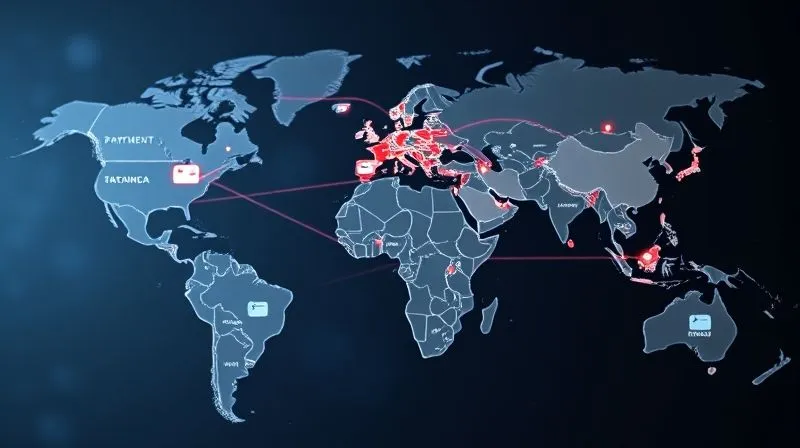
If you sell internationally, using a local payment processor in each region can drastically cut costs. For instance, processing payments in Europe through a European acquirer often results in lower fees than routing them through a U.S.-based one due to fewer cross-border fees and different interchange structures. This also improves authorization rates and customer experience.
Direct Merchant Accounts: Cutting Out the Middleman
Some providers offer "aggregated" merchant accounts (like Stripe or PayPal), which are easy to set up but might charge higher fees. A direct merchant account, obtained from an acquiring bank, can sometimes offer lower rates, especially for high-volume or specific industry types. This often involves a more rigorous application process but can yield significant long-term savings.
Transaction Optimization: Smart Routing and Encouraging Lower-Cost Methods
Beyond who you process with, *how* you process and *what* payment methods you encourage can dramatically impact your overall fee structure. This is where strategic thinking truly pays off.
Least-Cost Routing (LCR): A Deep Dive into Smart Transaction Pathways
LCR is an advanced strategy where a payment orchestration platform automatically routes each transaction through the cheapest available payment gateway or processor. This is particularly effective if you accept multiple card types or operate across different regions with varying interchange rates. The system dynamically analyzes the transaction details (card type, issuing bank, country, currency) and sends it down the most cost-efficient path in real-time. Implementing LCR can be complex, often requiring specialized software, but the savings for high-volume merchants can be substantial.
Incentivizing ACH and Debit Payments: Shifting Consumer Behavior
Credit card transactions, especially premium rewards cards, carry the highest interchange fees. Debit card transactions are generally cheaper, and ACH (Automated Clearing House) payments, which are direct bank transfers, are often the least expensive, sometimes just a flat fee of a few cents. Consider offering a small discount or loyalty points for customers who choose to pay via ACH or debit.
According to a Deloitte report on the future of payments, consumer preferences are shifting, making it more feasible to introduce alternative payment methods without significantly impacting conversion rates, especially if there's a clear benefit to the customer.
The Role of Payment Orchestration Platforms
These platforms sit atop your existing payment infrastructure, allowing you to manage multiple gateways, apply LCR, and gain unified reporting. They provide a single interface to control your entire payment flow, optimizing for cost, performance, and redundancy. While an additional cost, the savings they unlock often far outweigh their fees, especially for growing and international e-commerce businesses.
The Chargeback Conundrum: Indirectly Slashing Fees Through Prevention
Chargebacks are not just about losing a sale; they come with hefty fees from your processor (often $20-$50 per chargeback), impact your merchant account reputation, and can even lead to account termination if your rate is too high. Preventing chargebacks is a powerful, indirect way to drastically cut payment gateway transaction fees for e-commerce.
Proactive Fraud Detection: Tools and Strategies
Investing in robust fraud prevention tools is no longer optional. Look for solutions that offer:
- AI-powered fraud scoring: Real-time analysis of transaction data.
- Address Verification Service (AVS) and Card Verification Value (CVV): Basic but essential checks.
- 3D Secure (e.g., Visa Secure, Mastercard Identity Check): Shifts liability for fraudulent chargebacks from you to the card issuer.
- Device fingerprinting: Identifies suspicious patterns across different transactions.

Enhancing Customer Service: The First Line of Defense
Many chargebacks are "friendly fraud" or "customer disputes" where the customer simply doesn't recognize a charge or is unhappy with a product/service. An excellent customer service team can intercept these before they escalate to a chargeback. Make your contact information prominent, respond quickly to inquiries, and offer clear return/refund policies.
Mastering the Dispute Resolution Process
When a chargeback does occur, don't just accept it. Gather all relevant evidence (proof of delivery, customer communication, order details) and fight illegitimate chargebacks. Many processors offer tools or services to help with this. While time-consuming, a successful dispute means you retain the revenue and avoid the chargeback fee. For further guidance on chargeback prevention, consult resources like the FTC's business guidance on chargeback fraud.
Volume, Bundling, and Consolidation: Maximizing Your Merchant Power
The more business you bring to a payment processor, the more leverage you have. This principle underpins several strategies for reducing your fees.
Centralizing All Payments: One Provider, Better Rates
If you're using different processors for different parts of your business (e.g., one for online sales, another for subscription billing, a third for in-person events), consider consolidating. Bringing all your volume to a single processor significantly increases your negotiating power, potentially qualifying you for lower rates across the board. The goal is to become a "bigger fish" in their pond.
Negotiating Tiered Pricing: Hitting Higher Volume Breaks
Many processors have volume-based pricing tiers. As your monthly processing volume grows, you should proactively reach out to your provider to see if you qualify for a lower tier. Don't wait for them to offer it; they often won't. Track your volume religiously and initiate these conversations when you cross significant thresholds.
The Benefits of a Strong Merchant Account Relationship
Building a good relationship with your account manager can pay dividends. They can be your advocate internally, helping you access better rates, new features, and faster support. A processor is more likely to offer concessions to a valued, communicative client than to an anonymous merchant.
Leveraging Technology: Analytics, Automation, and API Integrations
In the digital age, technology isn't just about processing payments; it's about optimizing every aspect of your financial operations, including fee management. Smart use of tech can uncover hidden savings and automate tedious tasks.
Advanced Analytics for Fee Monitoring and Forecasting
Beyond your monthly statement, many payment gateways and third-party tools offer detailed analytics dashboards. These can break down your fees by card type, transaction type, time of day, and even product category. Use this data to identify patterns: Are certain products attracting higher fee transactions? Is there a peak time for international cards? This granular insight allows for targeted optimization strategies.
Automated Reconciliation and Reporting
Manual reconciliation of transactions and fees is time-consuming and prone to error. Integrate your payment gateway with your accounting software (e.g., Xero, QuickBooks) to automate this process. This not only saves staff time but also ensures that every fee is accounted for and any discrepancies are flagged immediately, allowing you to dispute incorrect charges quickly.
Custom Integrations for Bespoke Savings
For larger e-commerce operations, custom API integrations can offer unparalleled control. You can build logic to automatically route specific transaction types to the cheapest processor, implement dynamic pricing based on payment method, or even integrate with in-house fraud detection systems. While requiring development resources, the long-term savings and flexibility can be immense. For more insights into how FinTech innovations are shaping payment processing, consider reading articles from industry leaders like Harvard Business Review on FinTech trends.
The Surcharge & Cash Discount Debate: Proceed with Caution and Strategy
This is a more aggressive strategy to offset payment processing costs, directly shifting some or all of the fee burden to the customer. While potentially controversial, when implemented correctly and compliantly, it can drastically cut payment gateway transaction fees for e-commerce businesses.
Navigating the Legal Landscape: State Laws and Card Network Rules
Surcharging credit card transactions is legal in most U.S. states, but some, like Connecticut and Massachusetts, still have restrictions. More importantly, card networks (Visa, Mastercard, Discover, American Express) have strict rules you must follow:
- Disclosure: You must clearly disclose the surcharge at the point of sale (both online and in-person) before the customer completes the transaction.
- Maximum Surcharge: The surcharge cannot exceed your actual cost of acceptance for that card brand, or 4%, whichever is lower.
- Debit Cards: You cannot surcharge debit card transactions.
- Branding: The surcharge must be applied to all credit cards of a specific brand (e.g., all Visa cards), not just certain types.
Failing to comply can result in fines and termination of your merchant account. Always check the latest regulations for your region and consult official card network guidelines, such as those provided by Visa's surcharging FAQ.
Implementing a Compliant Surcharge Program
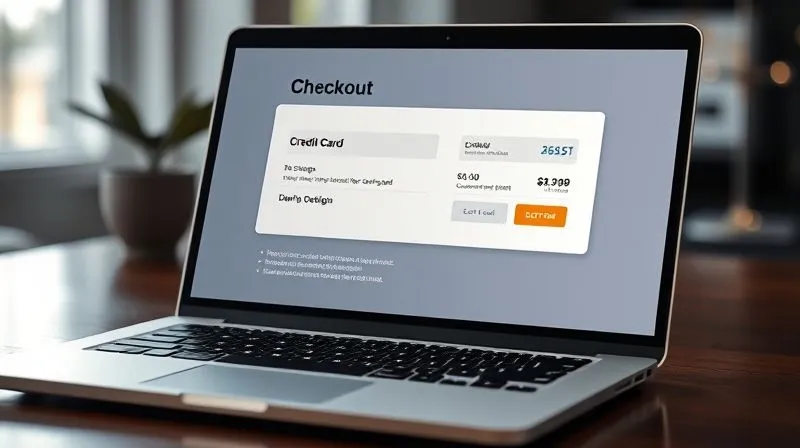
If you decide to surcharge, your payment gateway must support it, and your e-commerce platform needs to display it correctly. It typically works by adding a small percentage to the credit card total at checkout. Be transparent and consider how it might impact customer perception. Some customers might be turned off, so weigh the cost savings against potential customer churn.
The Psychology of Cash Discounts: Communicating Value
An alternative to surcharging is offering a "cash discount" or "non-cash adjustment." Instead of adding a fee for credit card use, you display a higher "standard" price and offer a discount for paying with cash, debit, or ACH. Psychologically, customers often react more positively to receiving a discount than being charged an extra fee. This method is generally more widely accepted and less legally complex than surcharging, as it focuses on incentivizing a cheaper payment method rather than penalizing a more expensive one.
Frequently Asked Questions (FAQ)
Q: Is it possible to eliminate payment gateway fees entirely? A: No, it's not realistically possible to eliminate all payment gateway fees. There will always be interchange fees (paid to the issuing bank) and assessment fees (paid to the card networks), which are non-negotiable for processors. What you can drastically cut are the processor markups and various ancillary fees. Strategies like cash discounts or surcharging can shift the burden to the customer, but the underlying costs remain.
Q: What's the difference between a payment gateway and a payment processor? A: A payment gateway is the technology that securely authorizes payments, encrypting sensitive data and transmitting it from the customer to the processor. A payment processor (or acquirer) is the financial institution that actually handles the transaction, moving funds from the customer's bank to your merchant account. Often, a single company provides both services, blurring the lines, but understanding their distinct roles helps in fee analysis.
Q: How often should I renegotiate my payment gateway rates? A: I recommend re-evaluating your rates and statements at least once a year. If your processing volume has significantly increased (e.g., by 20% or more) or if you've been with the same provider for over two years without a review, it's definitely time to negotiate. The market for payment processing is competitive, and rates are always changing.
Q: Are there specific industries that get better rates? A: Yes, certain industries are considered "lower risk" by payment processors and often qualify for better rates. Examples include general retail with low average transaction values and low chargeback rates. High-risk industries like online gambling, adult content, or certain subscription models typically face higher fees due to increased fraud potential and chargeback rates.
Q: What are the risks of switching payment gateways? A: While the benefits can be significant, switching carries risks. These include potential downtime during the migration, integration challenges with your existing e-commerce platform, and the need to update recurring billing profiles for subscription customers. Always plan carefully, test thoroughly, and communicate proactively with your customers during a transition to minimize disruption.
Key Takeaways and Final Thoughts
Navigating the complex world of payment gateway fees can feel daunting, but as I've outlined, it's an absolutely crucial area for any e-commerce business looking to optimize its profitability. Ignoring these costs is akin to leaving money on the table, month after month.
- Audit Your Statements: Understand every single line item and calculate your effective rate. This is your foundation.
- Negotiate Aggressively: Leverage your volume and competitive bids. Don't settle for the first offer.
- Explore Alternatives: Look beyond your current provider, consider niche processors, and diversify your payment stack.
- Optimize Transactions: Implement least-cost routing and encourage lower-cost payment methods like ACH.
- Prevent Chargebacks: Invest in fraud tools and superior customer service to avoid costly disputes.
- Leverage Technology: Use analytics and automation to monitor and manage your fees proactively.
- Consider Surcharges/Discounts: If appropriate for your business, implement these compliantly to offset costs.
Remember, every percentage point you save on transaction fees directly impacts your bottom line. By implementing these strategies, you're not just cutting costs; you're building a more resilient, profitable, and future-proof e-commerce business. The power to drastically cut payment gateway transaction fees for e-commerce is in your hands – it's time to seize it.
Recommended Reading
- Unlock 15% B2B Lead Conversion Growth in 90 Days: An Expert's Blueprint
- Series A Pitch Deck Examples: Secure Funding Like a Pro
- 7 Steps: Reduce Customer Churn from Inconsistent Service Delivery
- Unlock the Secret: How to Successfully Commercialize Your New Product Idea
- Slash QA Budget Overruns by 15%: Actionable Strategies for Project Success





Comments
Leave a comment below. Your email will not be published. Required fields marked with *