


How to eliminate unconscious bias in remote hiring interviews?
For over 15 years in the business of talent acquisition and remote team building, I've seen countless companies, even those with the best intentions, inadvertently undermine their own growth by falling prey to unconscious biases in their hiring processes. It's a subtle saboteur, often invisible, yet its impact on diversity, innovation, and ultimately, profitability, is profound.
The shift to remote work has only amplified this challenge. Without the benefit of in-person cues, our brains tend to fill in the gaps with assumptions, stereotypes, and gut feelings, leading to hiring decisions that aren't based on merit or potential. This isn't about malicious intent; it's about the inherent wiring of our minds, which can lead to homogeneous teams and missed opportunities.
In this definitive guide, I'll share actionable frameworks, research-backed strategies, and expert insights to help you systematically dismantle unconscious bias in your remote hiring interviews. You'll learn not just *what* to do, but *how* to implement practical changes that foster truly equitable and effective talent acquisition.
The Subtle Saboteur: Understanding Unconscious Bias in Remote Settings
What is Unconscious Bias, Really?
Unconscious bias, also known as implicit bias, refers to the attitudes or stereotypes that affect our understanding, actions, and decisions in an unconscious manner. These biases are deeply ingrained, often formed from our experiences, cultural background, and societal conditioning, operating outside of our conscious awareness.
In hiring, this can manifest as affinity bias (favoring someone like ourselves), confirmation bias (seeking information that confirms our existing beliefs), or halo/horn effect (one positive or negative trait overshadowing others). The critical point is that these aren't deliberate acts of discrimination; they are automatic mental shortcuts that can lead to unfair judgments.
Why Remote Hiring Amplifies the Problem
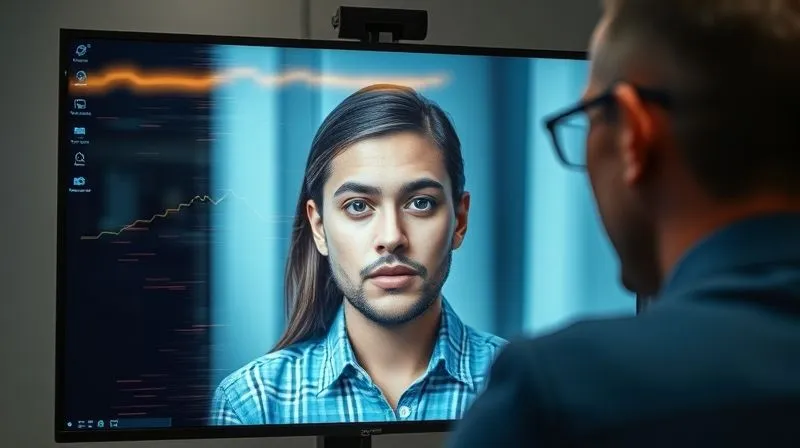
Remote hiring, while offering unparalleled access to a global talent pool, paradoxically exacerbates the challenge of unconscious bias. The lack of physical presence means interviewers rely heavily on limited visual and auditory cues through a screen. This can lead to an overemphasis on superficial aspects like background aesthetics, internet connection quality, or even perceived confidence over actual competence.
Furthermore, the informal nature that sometimes creeps into virtual interactions can blur professional boundaries, making it easier for personal preferences to sway decisions. Without structured environments, interviewers might unconsciously prioritize candidates who share similar hobbies or communication styles, rather than those who possess the most relevant skills and experience.
Foundational Frameworks: Building a Bias-Resistant Remote Hiring Process
Standardizing Every Step: The Cornerstone of Fairness
The single most powerful weapon against unconscious bias is standardization. When every candidate experiences the same rigorous, objective process, the opportunity for subjective judgment is drastically reduced. This isn't about stifling individuality; it's about creating a level playing field.
- Define Clear Job Requirements: Before even writing the job description, meticulously outline the essential skills, experiences, and behaviors required. Distinguish between 'must-haves' and 'nice-to-haves'.
- Craft a Consistent Application Process: Use the same application form, ask for the same information, and consider blind resume reviews where names, photos, and educational institutions are removed.
- Develop Standardized Interview Questions: Every candidate for the same role must be asked the same core set of questions, ensuring direct comparison.
- Implement a Uniform Evaluation Method: Use a consistent scoring rubric for all interviewers, focusing on measurable criteria directly tied to the job requirements.
As Harvard Business Review often emphasizes, structured interviews are significantly more predictive of job performance than unstructured ones, precisely because they minimize bias.
The Power of Diverse Interview Panels
A homogeneous interview panel, no matter how well-intentioned, is more susceptible to groupthink and shared biases. Introducing diversity—in terms of gender, ethnicity, age, background, and even thought processes—can act as a powerful countermeasure.
When multiple perspectives are involved in evaluating a candidate, individual biases are more likely to be challenged and neutralized. A diverse panel can spot strengths and weaknesses that a single-perspective interviewer might miss, leading to a more holistic and fair assessment. Aim for at least two interviewers per candidate, ensuring the panel itself reflects the diversity you seek to build within your organization.
"Diversity isn't just about optics; it's about cognitive diversity. A diverse panel brings different lenses to evaluation, making it harder for any single bias to dominate the decision-making process." - Industry Specialist
Crafting Objective Interviews: Beyond Gut Feelings
Behavioral and Situational Questions: The Gold Standard
Moving beyond hypothetical questions or 'what would you do' scenarios, behavioral and situational questions are designed to elicit specific examples of past performance or how candidates would handle realistic work challenges. These questions focus on demonstrated skills and experiences, which are far more objective than subjective opinions.
- Behavioral Questions (Past Performance): Ask candidates to describe how they handled specific situations in previous roles. Example: "Tell me about a time you had to adapt to a sudden change in project scope. How did you react?"
- Situational Questions (Future Performance): Present a hypothetical, yet realistic, scenario and ask candidates how they would respond. Example: "Imagine you're leading a remote team, and a critical deadline is approaching, but a key team member is unresponsive. How would you handle this?"
- Use the STAR Method: Encourage candidates to answer using the STAR method (Situation, Task, Action, Result) to provide structured, comprehensive responses. This makes it easier for interviewers to compare answers objectively.
Scoring Rubrics: Quantifying Objectivity
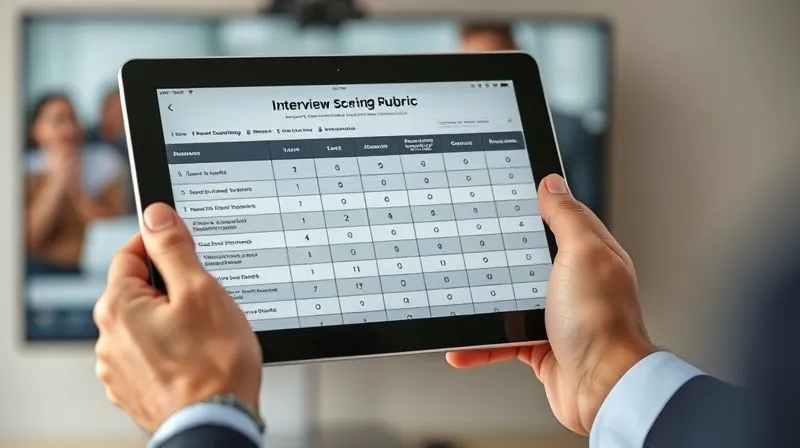
A scoring rubric is an essential tool for standardizing candidate evaluation. It moves interviewers away from vague impressions and towards concrete, measurable criteria. Each question should have specific criteria for what constitutes an 'excellent,' 'good,' 'average,' or 'poor' answer.
Before interviews begin, define a scoring scale (e.g., 1-5) for each key competency or question. Provide clear descriptors for each point on the scale. This ensures that all interviewers understand what they are looking for and how to rate responses consistently. Train your interviewers on how to use the rubric effectively, emphasizing that they should score based *only* on the evidence presented in the interview, not on personal feelings or assumptions.
| Competency | 1-2 (Needs Dev) | 3 (Meets Expect.) | 4-5 (Exceeds Expect.) |
|---|---|---|---|
| Problem-Solving | Struggles to identify core issue, offers no solutions. | Identifies issue, offers standard solutions. | Identifies root cause, proposes innovative, data-driven solutions. |
| Communication | Unclear, disorganized, struggles to articulate ideas. | Communicates clearly, answers questions directly. | Articulates complex ideas simply, actively listens, engages effectively. |
| Team Collaboration | Prefers solo work, struggles with remote team dynamics. | Works well with others, participates in discussions. | Proactively fosters remote team cohesion, mediates conflicts, drives collective success. |
Mitigating Bias in Action: During the Interview
Active Listening and Note-Taking Strategies
During a remote interview, it's incredibly easy for attention to waver or for an interviewer to start formulating their next question before fully absorbing the candidate's answer. This can lead to missed information or, worse, confirmation bias where you only hear what you expect to hear.
Train interviewers in active listening techniques: focus entirely on the candidate, avoid distractions, and practice reflective listening. Crucially, emphasize factual note-taking. Interviewers should document direct quotes and observations related to the scoring rubric, rather than subjective interpretations or personal feelings. These notes are critical for the debriefing stage and serve as objective evidence for decisions.
The "Blind" Review: Focusing on Competence
While a full 'blind' interview is challenging in a video format, elements of it can be incorporated. One powerful technique is to focus intently on the candidate's answers and skills, consciously trying to ignore non-essential factors. This requires mental discipline and specific interviewer training.
For example, interviewers can be instructed to explicitly avoid making judgments based on a candidate's appearance, accent, or background environment. If possible, consider anonymizing initial application stages, such as reviewing written assignments or portfolios without knowing the candidate's name or demographic details. This ensures initial screening is purely based on competence.
"The goal isn't to be blind to diversity; it's to be blind to bias. We want to see the full potential of every candidate, unclouded by preconceived notions." - Industry Specialist
Post-Interview Protocol: Data-Driven Decisions
Structured Debriefs: Averting Groupthink
The post-interview debrief is where many biases can creep back in if not managed carefully. Unstructured conversations often devolve into discussions of 'gut feelings' or personal anecdotes. To combat this, implement a highly structured debrief process.
Each interviewer should present their scores and justifications for each question, referencing their factual notes. Encourage interviewers to discuss discrepancies in scores and articulate their reasoning, rather than simply agreeing. Facilitate the discussion to ensure focus remains on the job requirements and the scoring rubric, not on personal opinions or subjective impressions. This collective, evidence-based approach significantly reduces the impact of individual biases.
Data Analysis: Identifying Patterns of Bias
The beauty of a standardized, data-driven hiring process is the ability to analyze your results for patterns of bias. Are candidates from certain demographics consistently scoring lower, even with comparable qualifications? Are certain interviewers consistently rating candidates differently based on non-job-related factors?
Leverage the data from your scoring rubrics to identify potential hotspots of bias. HR analytics tools can help you track metrics like: average scores by demographic group, offer-to-interview ratios for different groups, and the correlation between initial screening scores and final hiring decisions. Regularly auditing this data allows you to proactively address systemic biases and refine your process for greater equity.
| Metric | Q1 2023 | Q2 2023 | Target |
|---|---|---|---|
| Female Candidate Conversion Rate (Interview to Offer) | 15% | 22% | 25% |
| Minority Candidate Interview Score Average | 3.2/5 | 3.9/5 | 4.0/5 |
| Interviewer A's Score Variance (vs. Panel Avg) | High (0.8) | Medium (0.4) | Low (<0.3) |

Continuous Improvement: Training and Auditing for Long-Term Success
Mandatory Unconscious Bias Training
Training is not a one-time event; it's an ongoing commitment. All individuals involved in the remote hiring process, from recruiters to hiring managers and interviewers, should undergo regular unconscious bias training. This training should go beyond theoretical concepts, focusing on practical strategies for identifying and mitigating biases in real-world scenarios.
Effective training includes self-assessment tools, discussions of common biases in remote settings, and role-playing exercises to practice objective evaluation. It should also emphasize the business case for diversity and inclusion, reinforcing that eliminating bias isn't just an ethical imperative, but a strategic advantage for innovation and market leadership.
Regular Audits and Feedback Loops
Even the most robust hiring process can develop blind spots over time. Implement a system of regular audits to review your remote hiring process. This involves analyzing interview notes, debriefing summaries, and hiring data to identify any emerging patterns of bias or areas for improvement. Seek feedback from candidates, both hired and not hired, about their interview experience.
Create a feedback loop where insights from audits and candidate feedback are used to refine your job descriptions, interview questions, scoring rubrics, and interviewer training. This iterative approach ensures your process remains agile, fair, and continually optimized to attract and select the best talent without prejudice.
Case Study: How InnovateTech Transformed Their Remote Hiring
InnovateTech, a rapidly growing SaaS company with a fully remote workforce, struggled with a lack of diversity in its engineering team, despite a broad talent pool. For years, their hiring managers relied on 'culture fit' and informal chats, leading to a homogenous team that mirrored existing employees. Their offer-to-interview ratio for women and minority candidates was significantly lower than for male counterparts.
Following a comprehensive internal audit, InnovateTech implemented a new, bias-reduction framework. They introduced blind resume screening for initial stages, mandated diverse interview panels of at least three members, and developed a standardized set of behavioral questions with a detailed 5-point scoring rubric. All interviewers underwent a mandatory, scenario-based unconscious bias training.
Within 18 months, InnovateTech saw a remarkable transformation. Their offer-to-interview ratio for underrepresented groups significantly improved, and the diversity of their new hires increased by 35%. Furthermore, internal surveys showed higher satisfaction among new hires, and the engineering team reported a 15% increase in innovative project ideas, directly attributed to the broader range of perspectives brought by a more diverse workforce. This case demonstrates that a systematic, data-driven approach truly can eliminate unconscious bias and yield tangible business benefits.
The Ethical Imperative and Business Advantage
Eliminating unconscious bias in remote hiring interviews isn't just about compliance or ticking a box; it's a fundamental ethical responsibility. Every candidate deserves a fair and equitable chance to demonstrate their abilities, regardless of their background. It's about building a workplace where merit truly prevails.
Beyond ethics, the business case for diverse teams is undeniable. Deloitte research consistently shows that diverse teams are more innovative, more productive, and more resilient. They make better decisions, understand a broader customer base, and ultimately drive greater financial performance. By intentionally removing bias, you're not just being fair; you're future-proofing your organization.

Frequently Asked Questions (FAQ)
Q: Is it truly possible to eliminate *all* unconscious bias? A: While completely eradicating all unconscious bias is an ambitious goal, as it's an inherent part of human cognition, we can significantly mitigate its impact. The strategies outlined—standardization, diverse panels, structured interviews, and continuous training—are designed to create a system that overrides individual biases, ensuring decisions are based on objective criteria rather than subjective impressions. It's about building a bias-resistant *system*, not necessarily a bias-free individual.
Q: How do I handle a situation where a hiring manager is resistant to these changes? A: Resistance often stems from a lack of understanding or fear of losing autonomy. Approach it by focusing on the tangible benefits: better hires, reduced turnover, increased innovation, and a stronger employer brand. Present data, share success stories (like the InnovateTech case study), and involve them in the solution-design process. Frame it as an enhancement to their decision-making power, not a restriction. Mandatory training and clear company-wide policies can also help reinforce the importance of these practices.
Q: What if a candidate's internet connection or home environment is poor during a remote interview? How do I avoid bias here? A: This is a critical point in remote hiring. It's vital to separate a candidate's technical limitations or home environment from their actual capabilities. Provide clear instructions for technical setup before the interview. If issues arise, offer to reschedule or switch to a phone call. Make it explicit to interviewers that internet glitches or a messy background are NOT indicators of a candidate's professional competence. Focus solely on their answers and skills, not their circumstances. Consider offering technical support or a quiet virtual background option if feasible.
Q: Can AI tools help eliminate bias in remote hiring? A: AI tools show promise in reducing certain types of bias, especially in initial screening by anonymizing resumes or analyzing language patterns. However, AI is only as unbiased as the data it's trained on. If historical hiring data contains biases, the AI can perpetuate or even amplify them. Use AI as a tool to *assist* human decision-making, not replace it entirely. Always audit AI outputs and ensure human oversight to prevent algorithmic bias. It's a powerful ally when used thoughtfully and ethically.
Q: How do I measure the success of my bias elimination efforts? A: Success can be measured through various metrics: 1. Diversity Metrics: Track the representation of different demographic groups at each stage of the hiring funnel (applicants, interviews, offers, hires). 2. Interviewer Consistency: Analyze the variance in scores given by different interviewers for the same role. 3. Candidate Feedback: Collect anonymous feedback on the fairness and transparency of the process. 4. Employee Retention & Performance: Observe if diverse hires are performing well and staying longer, indicating better fit and objective selection. Regularly review these metrics and adjust your strategies accordingly.
Key Takeaways and Final Thoughts
- Standardize Everything: From job descriptions to interview questions and scoring rubrics, consistency is your strongest defense against bias.
- Diversify Your Panel: Multiple perspectives challenge individual biases and lead to more comprehensive evaluations.
- Focus on Behavior and Situations: Ask questions that elicit concrete examples of past performance and future problem-solving.
- Use Data, Not Gut Feelings: Implement structured debriefs and analyze hiring metrics to identify and correct biases.
- Commit to Continuous Learning: Regular unconscious bias training and process audits are essential for long-term success.
Eliminating unconscious bias in remote hiring interviews is not a one-time fix; it's an ongoing journey toward a more equitable and effective talent acquisition strategy. By embracing these principles and committing to continuous improvement, you're not just building stronger, more innovative teams; you're building a fairer, more inclusive future for your organization. The challenges of remote work demand a proactive approach, and by taking these steps, you'll be well on your way to truly unlocking the full potential of a global talent pool.
Recommended Reading
- Unlock Success: Avoid the Common Pitfalls in New Venture Creation
- 6 Strategic Steps to Slash Expat Repatriation Turnover by 50% in 6 Months
- Protect Your Savings: 7 Ways to Mitigate Inflation Risk in Fixed Income
- Financial Projections Off? 7 Steps to Recalibrate Your Small Business Plan
- Boost Your Career: How to Improve Analytical Skills at Work





Comments
Leave a comment below. Your email will not be published. Required fields marked with *