


What if my small business plan financial projections are wrong?
For over two decades in the small business landscape, I've witnessed countless entrepreneurs pour their hearts and souls into crafting meticulous business plans. They meticulously research markets, develop innovative products, and then, with a mix of hope and trepidation, they build their financial projections. It’s a foundational step, a roadmap to future success.
However, the stark reality is that these initial financial forecasts, no matter how carefully constructed, often diverge from actual performance. This isn't a sign of failure; it's a natural part of the entrepreneurial journey. The real problem arises when business owners ignore these discrepancies or, worse, become paralyzed by the fear of their projections being "wrong."
In this definitive guide, I'll share my proven framework for not just identifying when your small business plan financial projections are wrong, but how to expertly diagnose the root causes, recalibrate your financial model, and strategically adapt your entire business to thrive amidst uncertainty. You'll gain actionable steps, real-world insights, and the confidence to navigate financial headwinds.
The Inevitable Truth: Why Projections Go Awry
In my extensive experience, one of the most common anxieties for small business owners revolves around their financial forecasts. Many view their initial projections as set in stone, and any deviation feels like a personal failure. But let me assure you, the idea of perfectly accurate long-term financial projections is largely a myth, especially for dynamic small businesses and startups.
There are numerous reasons why your numbers might not align with reality. Sometimes, it's external market forces: a sudden economic downturn, an unexpected competitor entering your niche, or a shift in consumer behavior that no one could have predicted. I've seen promising startups grapple with unforeseen supply chain disruptions or rapid technological obsolescence that completely upended their initial cost and revenue models.
Other times, the discrepancies stem from internal assumptions. Perhaps your sales conversion rates were overly optimistic, or your customer acquisition costs were significantly underestimated. Maybe operational expenses, like software subscriptions or utility increases, crept up faster than anticipated. Even seemingly minor miscalculations, when compounded over months, can lead to substantial deviations from your original small business plan financial projections.
“The only constant in business is change. Your financial plan shouldn't be a rigid artifact, but a living document that evolves with your understanding of the market and your business performance.”
Understanding that this divergence is normal, and even expected, is the first step towards effective financial management. The goal isn't perfect prediction, but robust adaptability. As a veteran in this space, I can tell you that the most successful businesses aren't those with flawless initial plans, but those that can swiftly and intelligently adjust when their initial assumptions prove incorrect. According to a Forbes article, many factors, from market volatility to human bias, contribute to projection inaccuracies.
Diagnosing the Discrepancy: Pinpointing Where Your Numbers Went Off
When you realize your small business plan financial projections are wrong, the natural inclination might be to panic. Resist that urge. Instead, approach it like a detective. Your goal is to systematically identify the specific areas where actual performance deviates from your forecasts and understand the 'why' behind those deviations.
Step 1: Compare Actuals to Projections – The High-Level View
- Revenue Comparison: Start with your top-line revenue. Is it higher or lower than projected? Break it down by product line, service, or customer segment.
- Expense Analysis: Examine your operating expenses, cost of goods sold (COGS), and administrative costs. Are any categories significantly over or under budget?
- Cash Flow Review: Crucially, look at your actual cash flow against your projected cash flow. This often reveals the most immediate and impactful discrepancies, as cash is the lifeblood of any small business.
Step 2: Dive Deeper into Key Performance Indicators (KPIs)
Beyond just raw numbers, your KPIs offer crucial insights. If your revenue is down, is it due to lower customer acquisition, reduced average transaction value, or decreased purchase frequency? If expenses are up, is it due to higher material costs, increased marketing spend, or unexpected overheads?
- Sales Funnel Metrics: Conversion rates, lead generation costs, customer lifetime value (CLTV).
- Operational Metrics: Inventory turnover, production costs per unit, service delivery times.
- Marketing Metrics: Website traffic, click-through rates (CTR), cost per lead (CPL).
By comparing these actual KPIs against the assumptions you made in your original plan, you can pinpoint the specific drivers of the financial variance.

Step 3: Re-evaluate Core Assumptions
This is where the real diagnostic work happens. Every projection is built on a foundation of assumptions. When your numbers are off, it almost always means one or more of these foundational assumptions were incorrect. Did you assume a certain market growth rate that didn't materialize? Was your pricing strategy effective given competitor actions? Did you accurately foresee employee turnover or equipment maintenance costs?
Consider this analytical framework:
| Metric Category | Original Assumption | Actual Performance | Impact |
|---|---|---|---|
| Revenue Drivers | 10% monthly customer growth | 5% monthly customer growth | Lower revenue forecast |
| Cost Drivers | COGS at 30% of sales | COGS at 35% of sales | Reduced gross profit |
| Operational | Marketing spend 10% of revenue | Marketing spend 15% of revenue | Higher operating expenses |
| Market | Stable economic conditions | Inflationary pressures | Increased input costs, reduced consumer spending |
This systematic comparison helps you identify the specific levers that are causing the discrepancy, allowing you to move beyond simply knowing that your small business plan financial projections are wrong to understanding precisely *why*.
Step-by-Step: Recalibrating Your Financial Model
Once you've identified the root causes of the discrepancies, the next crucial step is to actively recalibrate your financial model. This isn't about patching holes; it's about rebuilding with more accurate, real-world data and a clearer understanding of your operating environment. It’s an iterative process that requires both analytical rigor and strategic foresight.
1. Revisit and Update All Core Assumptions
- Market Data: Research current market trends, competitor activity, and economic indicators. Has your target market grown or shrunk? Are there new competitive pressures?
- Customer Behavior: Analyze actual customer acquisition costs, retention rates, and average transaction values. How do these compare to your initial optimistic estimates?
- Operational Efficiencies: Review your actual production costs, supply chain reliability, and labor expenses. Have you achieved the efficiencies you planned, or are there new bottlenecks?
- Pricing Strategy: Assess if your current pricing is sustainable and competitive, given your actual costs and market demand.
2. Adjust Your Revenue Forecasts
Rather than just tweaking numbers, build your revenue forecasts from the ground up using your updated assumptions. If you're a service business, this might mean revising your billable hours and average project rates. For a product business, it involves updating unit sales projections based on actual marketing performance and sales conversion rates. Consider both top-down (market share) and bottom-up (per-customer) approaches for a more robust estimate.
3. Refine Your Expense Budgets
Go through every line item in your expense budget. For variable costs (COGS), align them with your revised revenue forecasts. For fixed costs, incorporate any actual increases or decreases you've observed. Identify areas for potential cost-cutting without jeopardizing core operations. This might involve renegotiating supplier contracts or optimizing software subscriptions.
4. Reforecast Your Cash Flow Statement
This is arguably the most critical component for a small business. A revised cash flow statement will show you exactly how much money you expect to have on hand, and when. Pay close attention to payment terms with customers (accounts receivable) and suppliers (accounts payable). A healthy cash flow is essential for day-to-day operations and seizing growth opportunities.
5. Generate New Financial Statements
With your updated assumptions and forecasts, create new versions of your:
- Profit & Loss (P&L) Statement: Reflecting revised revenues and expenses.
- Balance Sheet: Updating assets, liabilities, and equity based on actual performance and future expectations.
- Cash Flow Statement: Providing a clear picture of liquidity.
By systematically moving through these steps, you transform the problem of "my small business plan financial projections are wrong" into an opportunity for greater accuracy and control. For further guidance, the Small Business Administration (SBA) offers valuable resources on developing and refining financial projections.
Beyond the Numbers: Adjusting Your Business Strategy
Realizing your financial projections are off isn't just a numerical problem; it's a strategic challenge that demands a re-evaluation of your entire business approach. The numbers are merely symptoms; the underlying strategic decisions are the disease or the cure. This phase requires you to step back from the spreadsheets and consider how your operational model, market positioning, and even your core offering might need to adapt.
1. Product and Service Adjustments
If revenue is below projections, is it because your product isn't resonating, or your service isn't priced correctly? Consider:
- Pricing Strategy: Are you too expensive or too cheap? Could a tiered pricing model work?
- Feature Prioritization: Are you building features customers don't value? Can you streamline your offering?
- New Offerings: Are there complementary products or services that could open new revenue streams?
- Market Fit: Has the market shifted, making your current offering less relevant?
2. Marketing and Sales Strategy Overhaul
If customer acquisition costs are too high or conversion rates too low, your marketing and sales efforts need scrutiny. You might need to:
- Re-evaluate Target Audience: Are you speaking to the right people?
- Optimize Channels: Are you spending money on ineffective marketing channels? Shift budget to what works.
- Refine Messaging: Is your value proposition clear and compelling?
- Sales Process Improvement: Are your sales team's methods efficient and effective?
3. Operational Efficiency and Cost Reduction
When expenses outpace projections, a deep dive into operational efficiency is paramount. This isn't just about cutting costs indiscriminately, but intelligently. Consider:
- Process Optimization: Can you automate tasks, reduce waste, or streamline workflows?
- Supplier Negotiations: Can you secure better terms or find alternative suppliers?
- Technology Stack Review: Are you utilizing all your software effectively, or paying for unused features?
- Staffing Levels: Are you optimally staffed for your current operational needs?
4. Funding Strategy Re-evaluation
If your revised projections show a longer runway to profitability or a greater need for capital, you might need to adjust your funding strategy. This could involve:
- Seeking Additional Investment: Presenting your revised, more realistic plan to investors.
- Exploring Debt Financing: Lines of credit or small business loans.
- Bootstrapping: Aggressively managing cash flow and self-funding growth.
The strategic adjustments are where true entrepreneurial spirit shines. It’s about being agile, making tough decisions, and steering your ship towards new, more viable horizons when the initial chart proves faulty.
Building Resilience: Scenario Planning and Contingency Funds
A crucial lesson I've learned from navigating countless business cycles is that even the most meticulously recalibrated financial projections can be challenged by unforeseen events. The mark of a resilient small business isn't just reacting to problems, but anticipating and preparing for them. This is where scenario planning and building robust contingency funds become indispensable.
What-If Scenarios: Preparing for the Unknown
Instead of just having one set of financial projections, I strongly advocate for creating multiple scenarios. This practice helps you understand the full range of potential outcomes and develop proactive responses. Think of it as stress-testing your business model.
- Best-Case Scenario: What happens if everything goes better than expected? Higher sales, lower costs, faster growth. This helps you identify opportunities and plan for rapid scaling.
- Worst-Case Scenario: What if a major challenge arises? Sales drop, costs surge, a key supplier fails. This helps you identify critical vulnerabilities and develop mitigation strategies.
- Most-Likely Scenario: Your base plan, incorporating the most realistic assumptions after recalibration. This is your primary operating guide.
By modeling these different futures, you gain a deeper understanding of your financial sensitivities. You'll know exactly which variables have the biggest impact on your profitability and cash flow, allowing you to focus your risk management efforts more effectively.

The Power of a Contingency Fund
One of the most common reasons small businesses falter when their small business plan financial projections are wrong is a lack of cash reserves. A contingency fund, often referred to as an emergency fund, is a pool of capital set aside specifically to absorb unexpected shocks without derailing your operations or forcing desperate measures.
“Cash is king, especially for small businesses. A healthy contingency fund provides the breathing room to weather storms and pivot strategically, rather than being forced into reactive, detrimental decisions.”
How much should you have? A common rule of thumb is 3-6 months of operating expenses. For businesses with high volatility or significant fixed costs, I'd even recommend aiming for 6-12 months. This fund isn't for growth initiatives; it's your safety net. It allows you to:
- Cover unexpected dips in revenue.
- Absorb unforeseen cost increases.
- Fund a strategic pivot without immediately seeking external capital.
- Maintain payroll during slower periods.
Building this fund takes discipline, but it's an investment in your business's long-term survival and stability. It transforms the fear of "what if my small business plan financial projections are wrong?" into confidence, knowing you have the resources to adapt.
The Role of Continuous Monitoring and Agile Adaptation
Recalibrating your financial projections and building resilience are not one-time events; they are ongoing processes. The business environment is constantly shifting, and your financial strategy must be equally dynamic. This calls for a commitment to continuous monitoring and agile adaptation, principles borrowed from software development but profoundly applicable to small business finance.
Regular Review Cycles
I advise my clients to establish a consistent schedule for reviewing their financial performance against their revised projections. This typically means:
- Weekly: A quick check of key operational metrics (e.g., daily sales, cash on hand).
- Monthly: A detailed review of your P&L, balance sheet, and cash flow statement against your monthly projections. Identify variances and their causes.
- Quarterly: A more comprehensive strategic review. This is when you re-evaluate your core assumptions, re-run your scenario plans, and potentially make significant adjustments to your financial model and business strategy.
These regular touchpoints allow you to catch discrepancies early, before they snowball into major problems. It's much easier to adjust a rudder a few degrees than to change the entire course of a ship once it's far off track.
Leveraging KPI Dashboards
To facilitate continuous monitoring, create a simple, intuitive dashboard of your most critical Key Performance Indicators (KPIs). This isn't about tracking everything; it's about focusing on the metrics that truly drive your business and reflect the health of your financial model. Examples include:
- Gross Profit Margin
- Customer Acquisition Cost (CAC)
- Monthly Recurring Revenue (MRR) or Average Transaction Value
- Operating Cash Flow
- Burn Rate (for startups)
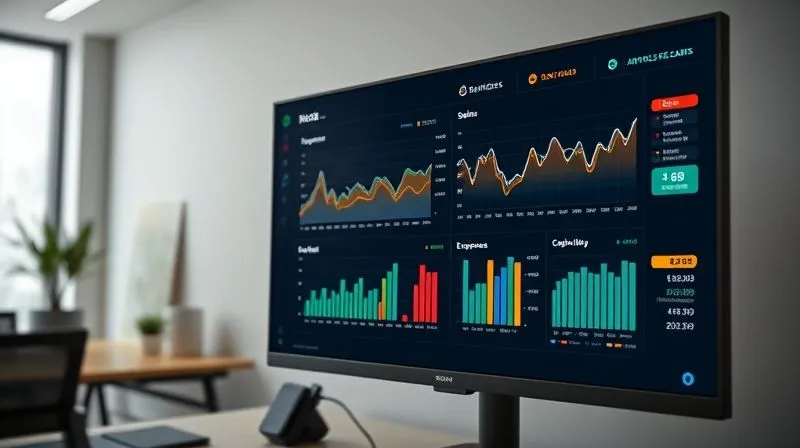
A well-designed dashboard provides an at-a-glance overview, enabling quick decision-making. There are many affordable tools and platforms that can help you create and automate these dashboards, integrating data directly from your accounting software or CRM.
Embracing Agile Adaptation
Agile methodology emphasizes flexibility, rapid iteration, and continuous improvement. When applied to your financial strategy, it means:
- Being Open to Change: Don't be emotionally attached to your original plan. Be ready to pivot when data suggests it's necessary.
- Experimentation: Test new pricing models, marketing channels, or operational processes on a small scale before full implementation.
- Feedback Loops: Actively seek feedback from your team, customers, and advisors to inform your financial and strategic adjustments.
The ability to adapt quickly is a competitive advantage. In a world where market conditions can shift overnight, the business that can rapidly course-correct when their small business plan financial projections are wrong is the one most likely to not just survive, but thrive. As Harvard Business Review often highlights, agility is key to navigating modern business complexities.
Leveraging Expert Insights and Community Support
You don't have to navigate the complexities of financial recalibration alone. In my years of working with small businesses, I've consistently seen that those who actively seek external advice and leverage community support are far more resilient and successful when their small business plan financial projections are wrong. There's immense value in an objective perspective and specialized expertise.
Mentors and Advisors
Identify experienced entrepreneurs or industry veterans who can offer guidance. A good mentor has likely faced similar challenges and can provide invaluable insights, often helping you avoid common pitfalls. They can act as a sounding board for your revised strategies and offer a realistic perspective on your market and operational assumptions.
- Business Coaches: Professionals specialized in helping you define and achieve your business goals.
- Industry Veterans: Individuals who have built and scaled businesses in your specific sector.
- Advisory Boards: A small group of experienced individuals who provide non-binding strategic advice.
Financial Professionals
While you, as the business owner, must understand your numbers, a qualified financial professional can provide the depth of analysis and technical expertise required for complex recalibrations.
- Accountants: Essential for accurate bookkeeping, tax planning, and understanding your historical financial performance.
- Financial Consultants: Can help you build sophisticated financial models, conduct scenario planning, and advise on funding strategies. They are particularly useful when your small business plan financial projections are wrong and require a complete overhaul.
- CFO Services (Fractional or Part-Time): Many small businesses cannot afford a full-time CFO, but a fractional CFO can provide high-level financial strategy and oversight on a part-time basis.
Community and Peer Support
Never underestimate the power of your entrepreneurial community. Connecting with other small business owners can provide both practical advice and emotional support.
- Peer Groups: Join local or online groups where entrepreneurs share experiences and solutions.
- Industry Associations: Often provide resources, networking opportunities, and industry-specific insights.
- Government Resources: Organizations like the SCORE (Service Corps of Retired Executives) and the Small Business Development Centers (SBDCs) offer free or low-cost counseling and training.
These external resources don't just provide answers; they equip you with better questions and a broader perspective, empowering you to make more informed decisions when your initial financial roadmap deviates from reality.
Case Study: Pivot and Prosperity at 'The Daily Grind'
Maria, the owner of 'The Daily Grind,' a charming neighborhood coffee shop, faced a daunting challenge just six months after opening. Her meticulously crafted small business plan financial projections were wrong – significantly so. Revenue was 30% below forecast, and operating costs were 15% higher, primarily due to slower-than-expected foot traffic and higher-than-anticipated ingredient costs.
The Problem: Maria's initial projections assumed a bustling morning rush from a nearby office complex that never fully materialized post-pandemic. She also underestimated the fierce competition from two established cafes within a half-mile radius, and her gourmet coffee bean supplier unexpectedly raised prices.
The Diagnosis: Instead of despairing, Maria leveraged her monthly financial review. She compared actual sales data with her projections, segmenting by time of day and product. She realized her afternoon and weekend sales were stronger than expected, but her weekday mornings were a ghost town. Her cost analysis revealed the supplier issue and higher utility bills due to extended operating hours.
The Recalibration & Strategic Pivot:
- Revised Projections: Maria adjusted her revenue forecasts to reflect realistic foot traffic and focused on optimizing her profitable afternoon/weekend slots. She also incorporated the new, higher ingredient costs.
- Strategic Shift: Realizing her location wasn't ideal for the morning commuter crowd she'd targeted, she pivoted. She introduced a "Work-From-Here" loyalty program for freelancers and students, offering unlimited refills and better Wi-Fi.
- Operational Adjustments: She negotiated a bulk discount with an alternative coffee supplier and adjusted her opening hours to align with actual peak demand, reducing utility costs during slow periods.
- New Offerings: To boost afternoon sales, she introduced a curated selection of local pastries and a "Happy Hour" for specialty teas and cold brews.
The Outcome: Within three months, 'The Daily Grind' stabilized its cash flow. By the end of the year, Maria’s revised projections proved accurate, and her business achieved profitability. Her ability to quickly acknowledge that her small business plan financial projections were wrong, diagnose the root causes, and strategically pivot not only saved her business but also forged a more resilient and profitable model tailored to her actual market.
Frequently Asked Questions (FAQ)
Q: How often should I review my financial projections? I recommend a tiered approach: a quick review of key metrics weekly, a detailed financial statement review monthly, and a comprehensive strategic re-evaluation of your full financial model quarterly. For startups or businesses in volatile markets, monthly comprehensive reviews might be necessary.
Q: Is it a sign of failure if my projections are consistently off? Absolutely not. It's a sign that you're learning and operating in a dynamic environment. The failure isn't in having inaccurate initial projections, but in failing to acknowledge them, diagnose the causes, and adapt your strategy. Consistent large discrepancies, however, might indicate a fundamental flaw in your initial market research or business model that needs deeper scrutiny.
Q: What's the difference between a financial forecast and a projection? While often used interchangeably, a 'forecast' typically refers to predicting future financial outcomes based on historical data and known trends (e.g., next quarter's sales based on last year's performance). A 'projection' is more speculative, often used for new businesses or new initiatives, and involves making assumptions about future events without extensive historical data. Both are educated guesses and require continuous adjustment.
Q: Should I share revised projections with investors or lenders if my small business plan financial projections are wrong? Yes, transparency is crucial. If your initial projections were part of a funding request, it's vital to communicate any significant deviations and present your revised, more realistic plan. Demonstrate that you understand the situation, have diagnosed the issues, and have a clear, actionable strategy to get back on track. This builds trust and shows your capability as a manager.
Q: What tools can help me track and adjust projections? For basic tracking, a robust spreadsheet (like Excel or Google Sheets) is often sufficient. For more advanced needs, consider accounting software with forecasting features (e.g., QuickBooks, Xero), dedicated financial modeling software, or business intelligence (BI) tools that can create dynamic dashboards and integrate data from various sources.
Key Takeaways and Final Thoughts
Discovering that your small business plan financial projections are wrong is not the end of your entrepreneurial journey; it's a pivotal moment for growth and learning. The true measure of a business leader isn't in their ability to predict the future flawlessly, but in their capacity to adapt, diagnose, and strategically recalibrate when reality inevitably deviates from the plan.
- Embrace Discrepancy: Understand that projections are living documents, not static prophecies.
- Diagnose Systematically: Don't just see the 'what,' find the 'why' behind the variances.
- Recalibrate Proactively: Update your assumptions and rebuild your financial model with real-world data.
- Adjust Strategically: Align your operations, marketing, and product offerings with your new financial reality.
- Build Resilience: Implement scenario planning and maintain a healthy contingency fund.
- Monitor & Adapt: Establish continuous review cycles and leverage data dashboards for agile decision-making.
- Seek Support: Don't hesitate to lean on mentors, financial experts, and your business community.
Remember, every challenge your business faces, including inaccurate projections, presents an opportunity to refine your vision, strengthen your operations, and build a more robust and resilient enterprise. Approach it with a problem-solving mindset, and you'll not only survive but thrive, emerging with a deeper understanding of your business and a sharper strategic edge.
Recommended Reading
- Prove D&I ROI: 5 Data-Backed Strategies for Skeptical Executives
- 7 Strategies: Mitigating Supply Chain Disruptions from Geopolitical Instability
- Why 70% of Change Efforts Fail: 7 Core Reasons & Solutions
- Unlock Innovation: How to Foster Dynamic Leadership in Your Hybrid Team
- 7 Ways to Slash Last-Mile Delivery Costs Without Hurting Service Quality





Comments
Leave a comment below. Your email will not be published. Required fields marked with *