


How to Ensure Critical Decisions are Made Quickly in Async Remote?
For over two decades in the business world, deeply immersed in the evolution of work, I've seen countless companies grapple with a fundamental challenge: making critical decisions swiftly. This challenge amplifies exponentially in an asynchronous remote environment, where time zones, communication gaps, and the absence of spontaneous hallway conversations can morph a simple choice into a week-long saga.
The pain point is palpable: missed opportunities, stalled projects, frustrated teams, and ultimately, a significant drag on innovation and growth. Many leaders, myself included, initially believed that the very nature of async work precluded rapid decision-making. We watched as urgent issues lingered in Slack threads or email chains, accumulating 'reply-alls' but little actual progress.
But I've learned, and helped organizations implement, that it doesn't have to be this way. In this definitive guide, I'll share the frameworks, tools, and cultural shifts I've personally witnessed transform organizations, providing you with actionable strategies to ensure critical decisions are made quickly in async remote, without sacrificing quality or inclusivity. We'll explore how to build a decision-making muscle that thrives on clarity, intentionality, and trust, regardless of where your team members are.
The Asynchronous Decision-Making Imperative: Why Speed Matters
In today's fast-paced market, the ability to make timely, high-quality decisions isn't just a competitive advantage; it's a survival mechanism. Delaying critical choices, even by a few days, can lead to significant financial costs, lost market share, and a decline in team morale. In an async remote setting, this challenge is exacerbated by the very benefits of asynchronous work – flexibility and reduced interruptions – which, if not managed correctly, can ironically slow down urgent processes.
I've observed that the perceived 'slowness' of async decision-making often stems not from the model itself, but from a lack of intentional design. Teams default to synchronous habits in an asynchronous world, leading to a frustrating mismatch. According to a Harvard Business Review article, the average cost of a delayed executive decision can range from hundreds of thousands to millions of dollars annually, depending on the industry and company size. These aren't just theoretical figures; I've personally seen projects shelved or products launched too late because a critical 'go/no-go' decision couldn't be reached in time.
The imperative, therefore, is to proactively engineer processes that enable speed while retaining the core benefits of async work. This means embracing structured communication, clear ownership, and leveraging technology to bridge geographical and temporal divides. It's about shifting from reactive problem-solving to proactive decision architecture.
Foundation 1: Clarifying Decision-Making Ownership and Scope
The single biggest killer of rapid asynchronous decisions, in my experience, is ambiguity around who owns the decision and what its boundaries are. Without this clarity, everyone feels responsible, yet no one is truly accountable, leading to endless discussions and circular feedback loops.
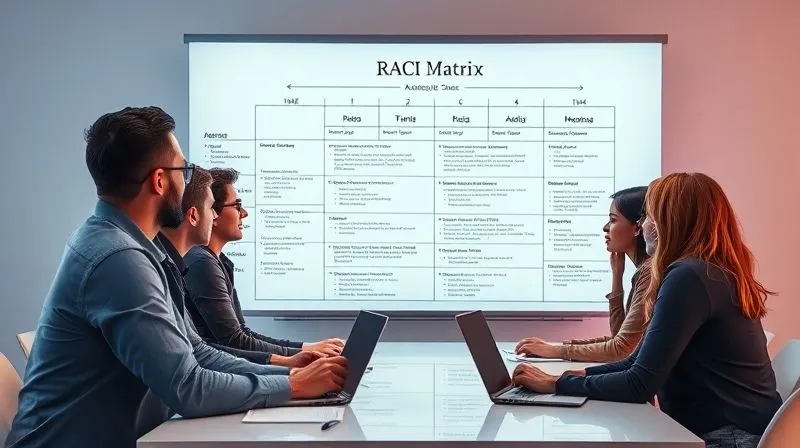
Defining RACI for Remote Teams
The RACI matrix (Responsible, Accountable, Consulted, Informed) is a powerful tool, but its application in async remote settings requires a nuanced approach. I advocate for making RACI assignments explicit for every significant decision. This isn't about bureaucracy; it's about reducing friction. The 'Accountable' person is the ultimate decision-maker, and this must be unequivocally clear.
- Identify the Decision: Clearly articulate what decision needs to be made.
- Assign Accountability (A): Designate ONE individual who is ultimately accountable. This person will make the final call.
- Assign Responsibility (R): Identify who will do the work to prepare the decision (gather data, draft proposals).
- Identify Consulted (C): List individuals or groups whose input is required before the decision is made.
- Identify Informed (I): Determine who needs to be kept in the loop after the decision is made.
The Single-Threaded Leader Concept
Drawing inspiration from Amazon's model, I often recommend the 'single-threaded leader' for critical, time-sensitive decisions. This is an individual who owns a specific outcome, has the authority to make decisions, and is dedicated to that task without significant competing priorities. This drastically cuts down on coordination overhead and accelerates the decision cycle.
- Benefits of Clear Ownership:
- Reduces 'decision by committee' paralysis.
- Empowers individuals to move forward confidently.
- Streamlines communication to relevant stakeholders only.
- Creates a clear point of contact for questions and updates.
Foundation 2: Standardizing the Decision-Making Process
Once ownership is clear, the next step is to standardize *how* decisions are presented, discussed, and finalized. Without a consistent process, every critical decision becomes an ad-hoc scramble, leading to inefficiencies and missed information.
The "Decision Brief" Template: A Game-Changer
I cannot overstate the power of a well-structured decision brief. This asynchronous artifact ensures that all necessary context, options, and recommendations are presented concisely, allowing stakeholders to review and provide feedback on their own time, without needing a synchronous meeting. It's the cornerstone of how to ensure critical decisions are made quickly in async remote.
- Problem Statement: Clearly define the problem or opportunity.
- Background/Context: Provide all necessary information leading to this decision.
- Options Considered: Present 2-3 viable options, even if one is preferred.
- Pros & Cons: For each option, list key advantages and disadvantages.
- Recommendation: State the preferred option and justify it with data/reasoning.
- Required Input/Action: Clearly state what feedback or approval is needed.
- Deadline: Set an explicit deadline for feedback/decision.
Setting Clear Deadlines and Escalation Paths
Asynchronous doesn't mean 'eventually.' Every decision brief must come with a firm deadline for feedback and a final decision. I've found that 24-48 hours is often sufficient for most critical decisions once the brief is well-constructed. Equally important is defining an escalation path: what happens if the deadline is missed, or if consensus isn't reached? This could involve the accountable person making the call unilaterally, or escalating to a higher authority, but it must be predefined.
Leveraging Technology for Asynchronous Collaboration
The right tools don't just facilitate async work; they actively accelerate decision-making when used strategically. Relying solely on email or general chat channels for critical decisions is a recipe for delay and confusion.
Choosing the Right Communication Stack
For asynchronous decision-making, I recommend a stack that includes:
- Dedicated Documentation Platform: Confluence, Notion, Google Docs for decision briefs and permanent records.
- Asynchronous Video/Voice Messaging: Loom, Veed, or Slack Huddles (recorded) for adding nuance or clarifying complex points without a live meeting.
- Project Management Tools: Asana, Jira, Trello for tracking decision status and ownership.
- Lightweight Polling/Voting Tools: Built-in features in Slack/Teams, or dedicated tools for quick consensus checks on less critical items.
Asynchronous Tools for Consensus Building
Beyond basic communication, some tools are specifically designed to help build consensus asynchronously:
- Miro/Mural: Virtual whiteboards for brainstorming, affinity mapping, and voting on ideas.
- Polly/Range: For structured check-ins, anonymous feedback, and quick polls to gauge team sentiment on options.
- Threaded Discussions: Tools like Twist or specialized channels in Slack/Teams allow for organized, focused discussions around a specific topic, preventing important context from getting lost.
| Decision Stage | Traditional Sync Method | Effective Async Tool |
|---|---|---|
| Information Gathering | Meeting, email chain | Notion, Confluence, Google Docs (shared) |
| Option Presentation | PowerPoint presentation (live) | Decision Brief (Notion/Confluence), Loom video explanation |
| Feedback & Discussion | Group debate (live) | Threaded comments, dedicated Slack channel, Miro board |
| Final Approval | Verbal agreement in meeting | Formal approval workflow (Asana, Jira), dedicated email confirmation |
Cultivating a Culture of Proactive Input and Trust
Technology and processes are only as effective as the culture that supports them. To truly ensure critical decisions are made quickly in async remote, you need a team that trusts each other, provides proactive input, and embraces radical candor.
The Power of Written Communication: Clarity Over Quantity
In async environments, written communication is paramount. It must be clear, concise, and comprehensive. I've coached teams to adopt a 'default to documentation' mindset. Every decision, every proposal, every piece of feedback should be captured in a way that is easily searchable and understandable by anyone, at any time. This reduces the need for clarifying questions and ensures all stakeholders have the same information.
"In an async world, your written word is your handshake, your presentation, and your conversation all rolled into one. Make it count." - My personal mantra for remote communication.
Fostering Psychological Safety for Dissent
Rapid decisions don't mean unchallenged decisions. A healthy async culture encourages respectful dissent and critical feedback. Team members must feel psychologically safe to voice concerns or propose alternative solutions, even when it means challenging the accountable person. This can be facilitated through anonymous feedback mechanisms or by explicitly inviting critical perspectives in decision briefs. The goal is not to avoid conflict, but to channel it constructively and asynchronously.
Case Study: How InnovateCo Streamlined Async Decisions
InnovateCo, a rapidly growing SaaS startup with a fully distributed team across 7 time zones, faced severe decision paralysis. Product feature decisions, marketing campaign approvals, and even hiring choices were routinely delayed by weeks. Their primary challenge was a reliance on endless email threads and informal Slack chats, lacking any structured process for critical choices.
InnovateCo's Solution: Working with my team, InnovateCo implemented a robust asynchronous decision-making framework. They started by:
- Adopting a Mandatory Decision Brief Template: Every critical decision now began with a concise, standardized brief outlining problem, options, recommendation, and deadline.
- Implementing RACI: For each brief, a clear 'Accountable' owner was assigned, along with 'Consulted' and 'Informed' parties.
- Leveraging Notion and Loom: Briefs were housed in Notion, with the 'Accountable' person often recording a short Loom video to walk through complex aspects, adding a personal touch without requiring a live meeting.
- Strict 48-Hour Feedback Window: A firm deadline for feedback was enforced, with an explicit escalation path if the deadline was missed or if a critical objection couldn't be resolved asynchronously.
Results and Learnings: Within three months, InnovateCo reduced its average critical decision-making time from 10-14 days to 2-3 days. Product launches accelerated, and team frustration decreased significantly. The key learning was that structured async communication, combined with clear ownership, not only made decisions faster but also more thoughtful, as individuals had time to process information before responding.

Avoiding Common Pitfalls in Asynchronous Decision-Making
Even with the best intentions and tools, certain traps can derail your efforts to ensure critical decisions are made quickly in async remote.
The "Reply All" Trap and Notification Overload
The digital equivalent of too many cooks in the kitchen. When everyone 'replies all' to a decision brief email or comments indiscriminately in a general chat, critical information gets buried, and the core discussion is diluted. I've seen this lead to decision-makers missing crucial input or simply giving up on sifting through the noise.
Ensuring Inclusive Participation
While assigning a single accountable person is crucial, it's equally important to ensure that diverse perspectives are genuinely considered. Async work can unintentionally sideline quieter voices or those who are less comfortable with written communication. Proactively reaching out to specific individuals for their input or using structured feedback forms can mitigate this.
| Pitfall | Impact | Solution |
|---|---|---|
| Ambiguous Ownership | Decision paralysis, endless discussion | Strict RACI assignment, single-threaded leader |
| Lack of Context | Misinformed decisions, repeated questions | Mandatory Decision Brief template |
| Unclear Deadlines | Decisions linger indefinitely | Explicit deadlines and escalation paths |
| Communication Overload | Key info missed, frustration | Threaded discussions, 'informed' role for updates only |
| Excluding Voices | Reduced quality of decisions, low morale | Proactive outreach for input, anonymous feedback options |
Measuring and Iterating on Your Async Decision Process
Like any critical business process, your asynchronous decision-making framework isn't a 'set it and forget it' solution. It requires continuous monitoring, feedback, and iteration to optimize its effectiveness.
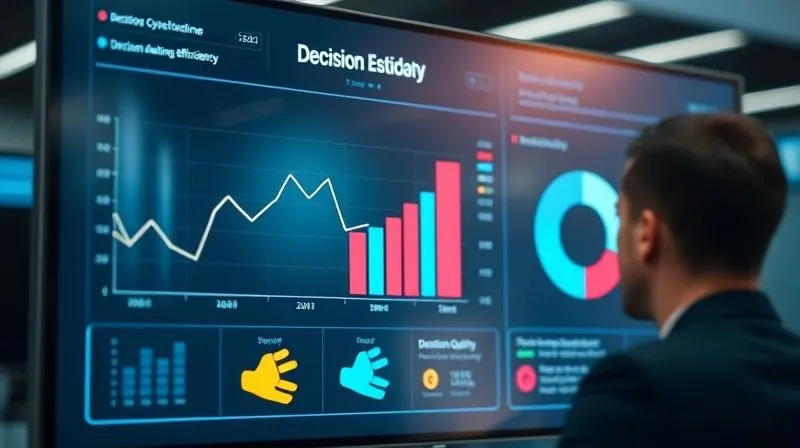
Key Metrics for Decision Velocity
How do you know if you're getting better at making decisions quickly? I recommend tracking a few key metrics:
- Average Decision Cycle Time: From the moment a decision brief is issued to the final approval.
- Decision Quality Score: A qualitative assessment (e.g., post-mortem surveys) of whether the decisions made were effective and well-received.
- Feedback Participation Rate: The percentage of 'Consulted' individuals who provided input by the deadline.
- Escalation Rate: How often decisions need to be escalated due to missed deadlines or unresolved conflicts.
Regular Retrospectives and Adjustments
Schedule quarterly 'Decision-Making Retrospectives.' During these sessions, review recent critical decisions: what went well? What slowed things down? Were all stakeholders satisfied with the process and outcome? Use these insights to refine your templates, tools, and cultural norms. This iterative approach is vital for long-term success. As marketing guru Seth Godin often emphasizes, continuous improvement is the only sustainable path.
Frequently Asked Questions (FAQ)
Q: Isn't asynchronous decision-making inherently slower than synchronous? Not necessarily. While synchronous meetings offer immediate back-and-forth, they often suffer from poor preparation, dominant voices, and time zone limitations. Well-structured asynchronous processes, with clear briefs and deadlines, can often be faster and lead to higher quality decisions because they allow for thoughtful, unpressured input from all stakeholders, regardless of their location or schedule. It shifts the burden from 'being present' to 'being prepared.'
Q: How do you handle truly urgent decisions that can't wait for a 24-48 hour async cycle? For 'tier 1' emergencies, a predefined synchronous emergency protocol is essential. This might involve an immediate huddle call with only the absolutely critical decision-makers (the 'Accountable' person and perhaps one or two 'Consulted' experts). The key is to reserve this for genuine emergencies and to document the decision and its rationale asynchronously immediately afterward for the 'Informed' parties. Avoid making everything an 'emergency.'
Q: What if team members don't provide feedback by the async deadline? This is where a clear escalation path is crucial. The accountable decision-maker should be empowered to proceed with the decision based on the input received, or to make the call themselves if no input is provided by the deadline. Consistent enforcement of deadlines, coupled with the understanding that 'no feedback means agreement,' fosters accountability. Repeated offenders might need direct coaching on their role in the async process.
Q: How can I ensure everyone feels heard in an async decision process? Beyond formal 'Consulted' roles, create channels for broader input on less critical decisions (e.g., anonymous polls, suggestion boxes). For critical decisions, ensure your decision briefs explicitly invite diverse perspectives and use tools that allow for structured, threaded feedback. Leaders must model inclusive behavior by actively seeking out and acknowledging varied viewpoints, even if they aren't ultimately chosen.
Q: Will this process lead to more bureaucracy and paperwork? Initially, there's a learning curve as teams adapt to structured documentation. However, in my experience, the initial investment in creating clear briefs and processes dramatically reduces the 'paperwork' of endless clarifying questions, follow-up meetings, and re-dos. It's about front-loading the effort to streamline the back-end, ultimately saving time and reducing friction. The goal is clarity and efficiency, not bureaucracy.
Key Takeaways and Final Thoughts
Ensuring critical decisions are made quickly in async remote environments isn't a pipe dream; it's an achievable reality with intentional design and consistent effort. I've witnessed firsthand how organizations transform from decision paralysis to agile execution by embracing these principles.
- Clarity is King: Unequivocally define decision ownership (RACI) and scope.
- Standardize Your Process: Adopt a robust 'Decision Brief' template with clear deadlines and escalation paths.
- Leverage the Right Tools: Utilize documentation platforms, async video, and collaboration tools effectively.
- Cultivate a Proactive Culture: Prioritize clear written communication and psychological safety for dissent.
- Iterate Relentlessly: Measure your decision velocity and conduct regular retrospectives to refine your approach.
The future of work is undeniably distributed and increasingly asynchronous. By mastering the art of rapid, high-quality async decision-making, your team won't just survive; it will thrive, innovate faster, and maintain a competitive edge. Start small, experiment, and empower your team to build a culture where critical choices move forward with purpose and speed. The investment in these foundational shifts will pay dividends for years to come.
Recommended Reading
- Cracking the Code: How to Get Executive Buy-In for Disruptive Internal Ventures
- Stop Overselling: 7 Strategies for Multi-Channel E-commerce Inventory Sync
- 7 Proven Strategies: Cut Supply Chain Carbon Without Raising Costs
- 7 Proven Strategies: Identify Disruptive Tech Trends Before Competitors
- Navigating Global Teams: 7 Strategies When Cultural Norms Clash





Comments
Leave a comment below. Your email will not be published. Required fields marked with *