


How to Fill an Unexpected Executive Vacancy Without a Ready Successor?
For over 20 years in Human Resources, I've witnessed firsthand the seismic shockwaves that ripple through an organization when a key executive unexpectedly departs. It’s a moment of truth, testing leadership, resilience, and the very fabric of a company’s strategic foresight. The immediate scramble, the palpable anxiety, and the looming threat of stalled initiatives can be overwhelming.
This isn't just a logistical hiccup; it's a profound leadership vacuum that can derail projects, erode team morale, and even impact investor confidence. The challenge is amplified when there isn't a clear, ready successor waiting in the wings—a scenario far more common than many would admit. The question quickly becomes: How do we navigate this crisis and ensure continuity?
In this definitive guide, I will share a structured, actionable framework—forged from years of experience and countless successful transitions—that empowers you to address this critical challenge head-on. You’ll learn not just to react, but to strategize, leveraging both internal potential and external expertise to secure your organization's future, even when facing the unexpected.
1. Immediate Crisis Management: Stabilizing the Ship and Communicating Clearly
When an executive role suddenly becomes vacant, the first priority isn't to find a replacement; it's to contain the immediate fallout and stabilize the operational environment. Panic can spread faster than news, so clear, calm communication is paramount.
Communicating with Transparency and Empathy
As leaders, our initial response sets the tone. I've seen organizations falter by either saying too much or, more commonly, too little. A vacuum of information breeds rumor and anxiety. Your goal is to acknowledge the change, reassure stakeholders, and outline the immediate next steps.
- Internal Stakeholders (Employees): Address the team promptly but thoughtfully. Acknowledge the departure (without dwelling on specifics, unless appropriate and agreed upon), reiterate the company's vision and stability, and introduce the interim plan. Focus on continuity and support.
- External Stakeholders (Clients, Partners, Investors): Work with PR and Legal to craft a consistent message. Reassure them that operations will continue uninterrupted and that leadership is actively managing the transition.
“In moments of uncertainty, clarity is kindness. Your team looks to you for direction and reassurance, not just solutions.”
Establishing Interim Leadership: The Stop-Gap Solution
An interim leader is not a permanent solution, but a crucial bridge. This individual steps in to maintain momentum, make critical decisions, and provide a familiar face during the search process. This is often an existing leader with strong operational knowledge and trust within the organization.
- Identify a Capable Internal Leader: Look for someone who is respected, understands the department's operations, and can command authority. This isn't about finding a perfect fit, but a competent caretaker.
- Define Clear Mandate and Duration: Clearly communicate the interim leader's responsibilities, decision-making authority, and the expected duration of their role. This prevents burnout and clarifies expectations.
- Provide Support and Resources: An interim role is demanding. Ensure the individual has the necessary support, whether it's delegating some of their original duties, providing additional administrative help, or offering coaching.
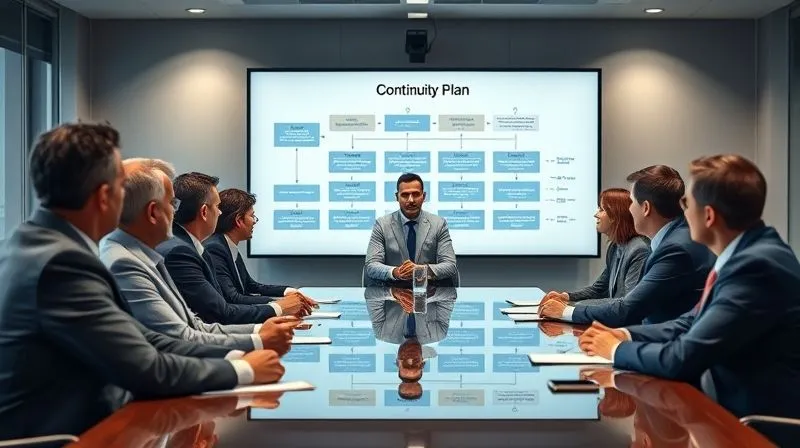
2. Rapid Role Assessment: Understanding the True Gap and Future Needs
Once the immediate crisis is managed, the real work of understanding the vacancy begins. This is more than just pulling up the old job description; it's a strategic deep dive into the role's current and future impact on the organization.
Deconstructing the Role: Beyond the Job Description
I've observed that many companies make the mistake of simply replacing like with like. However, the organization's needs evolve. The unexpected departure offers a unique opportunity to reassess. Ask:
- What was the departing executive's unique contribution? What were their strengths, weaknesses, and the informal networks they leveraged?
- What challenges and opportunities does the role now face? Has the market shifted? Are there new strategic priorities that require different skills?
- What are the critical, non-negotiable deliverables for this role in the next 12-24 months? Focus on impact, not just tasks.
- How does this role interact with other executive functions? Are there interdependencies that need to be strengthened or redefined?
Impact Analysis: Quantifying What's at Stake
Understanding the potential ripple effects of a prolonged vacancy helps prioritize the search and justify resources. Consider:
- Financial Impact: Potential revenue loss, project delays, increased operational costs.
- Operational Impact: Disrupted workflows, delayed decisions, decreased productivity.
- Team Morale and Retention: Increased workload for remaining team members, uncertainty leading to potential departures.
- Strategic Impact: Stalled initiatives, missed market opportunities, loss of competitive edge.
| Area of Impact | Potential Consequence | Mitigation Strategy |
|---|---|---|
| Financial | Projected revenue loss of 15% per quarter | Assign interim owner, prioritize critical projects |
| Operational | Decision paralysis on key initiatives | Empower director-level decision-making for routine tasks |
| Team Morale | Increased workload, potential burnout and attrition | Communicate support, offer flexible work, monitor engagement |
| Strategic | Delay in market entry for new product line | Reallocate resources from non-critical projects |
3. Leveraging Internal Talent: Uncovering Hidden Gems and Accelerating Development
Even without a 'ready successor' identified in formal succession plans, you might have strong internal candidates who are 'ready-ish' or could be with accelerated support. This is where a deep understanding of your internal talent pool becomes invaluable.
Emergency Talent Audit: Who's Ready (or Almost)?
I always advocate for a rapid, comprehensive internal talent audit. This isn't just about reviewing performance reviews; it's about identifying potential.
- Identify High-Potential Individuals: Look beyond direct reports to the vacant role. Who consistently exceeds expectations? Who takes initiative? Who demonstrates leadership qualities in cross-functional projects?
- Assess Adjacent Skills and Experiences: Does anyone possess a significant portion of the required skills, even if their current role is different? For example, a strong Head of Product might have the strategic acumen for a CTO role, given the right technical support.
- Conduct Informal Interviews and Soundings: Talk to direct managers, peers, and mentors. Gather qualitative data on leadership style, strategic thinking, resilience, and cultural fit.
- Gauge Interest and Readiness: Don't assume. Some high-potentials might be eager for the challenge, while others might prefer more preparation.
Mentorship and Accelerated Development Tracks
For those 'almost ready' internal candidates, a focused, accelerated development plan can bridge the gap. This demonstrates commitment to internal growth and can be a powerful retention tool.
- Dedicated Mentorship: Pair the candidate with a senior leader, either internal or external, who can provide guidance, share insights, and help navigate the complexities of an executive role.
- Stretch Assignments: Give them immediate, high-visibility projects that mirror the challenges of the executive role. This provides hands-on experience and tests their capabilities under pressure.
- Targeted Training: Identify specific skill gaps (e.g., financial acumen, public speaking, strategic planning) and provide intensive, customized training.
- Executive Coaching: A professional executive coach can provide invaluable support in developing leadership presence, strategic thinking, and navigating political landscapes.
Case Study: How Nexus Innovations Uncovered a Future Leader
Nexus Innovations, a mid-sized software firm, faced a sudden departure of their VP of Engineering. With no formal successor, panic set in. Instead of immediately looking externally, I advised a rapid internal audit. They identified Sarah, a Senior Engineering Manager, who, while lacking VP-level experience, consistently led complex projects and mentored her team effectively. Nexus put Sarah on an accelerated 6-month development track, pairing her with an external executive coach and giving her oversight of a critical new product launch. Six months later, Sarah was promoted to VP, bringing deep institutional knowledge and a fresh perspective, ultimately reducing hiring costs and boosting internal morale.
4. Strategic External Search: When You Must Look Outward
While prioritizing internal talent is crucial, there are times when the right solution lies outside the organization. This could be due to a highly specialized skill requirement, a need for fresh perspectives, or simply the absence of suitable internal candidates. This external search must be strategic and efficient.
Defining the Ideal Candidate Profile (Beyond the Obvious)
The role assessment conducted earlier is foundational here. Don't just list qualifications; define the impact you expect the new executive to make.
- Core Competencies: What are the non-negotiable skills and experiences?
- Leadership Style: What kind of leader thrives in your culture? Do you need a visionary, an operator, a turnaround specialist, or a consensus-builder?
- Cultural Fit: Beyond skills, will this person align with your company's values and work ethic? This is often overlooked but critical for long-term success.
- Growth Potential: Is this person capable of evolving with the company's future needs?
Partnering with Executive Search Firms: Maximizing Reach and Efficiency
When urgency and specialization are key, an executive search firm (headhunter) can be an invaluable partner. They have extensive networks and expertise in identifying and attracting top-tier talent.
- Select the Right Firm: Choose a firm with a proven track record in your industry and for similar executive roles. Ask for references and understand their process.
- Clearly Articulate Your Needs: Provide the firm with a detailed candidate profile, including cultural nuances and strategic objectives. Be transparent about the urgency.
- Maintain Active Engagement: Don't just hand it over and wait. Stay in regular communication, provide prompt feedback on candidates, and be prepared to move quickly.
- Leverage Their Market Insight: Executive search firms can offer valuable insights into market compensation, talent availability, and competitor strategies.

5. Expedited Onboarding and Integration: Speed Without Compromise
Hiring an executive, especially under pressure, is only half the battle. A swift, effective onboarding process is critical to ensure they become productive and integrated quickly. This is not about cutting corners, but about optimizing the experience.
The 30-60-90 Day Plan: Customizing for Urgency
A structured 30-60-90 day plan is essential for any new executive, but it needs to be accelerated and hyper-focused during an unexpected vacancy.
- Day 1-30 (Learn & Listen): Focus on understanding the business, meeting key stakeholders, and absorbing company culture. Provide access to critical documents, data, and a clear list of who to meet and what questions to ask.
- Day 31-60 (Assess & Plan): The executive should begin to identify key challenges and opportunities, develop initial hypotheses, and formulate a strategic plan for their area. Encourage them to present preliminary findings to senior leadership.
- Day 61-90 (Act & Deliver): Begin implementing key initiatives, making critical decisions, and driving measurable results. The focus shifts from learning to leading.
According to a study published in the Harvard Business Review, executives who receive structured onboarding are significantly more likely to succeed in their roles and stay longer with the company.
Cultural Assimilation: More Than Just Introductions
Cultural fit is often the make-or-break factor for executive hires. An expedited onboarding process must prioritize this.
- Assign a Peer Mentor: Pair the new executive with a seasoned, non-direct-report executive who can serve as a guide to the unwritten rules, internal politics, and cultural nuances.
- Facilitated Team Introductions: Beyond formal meetings, create opportunities for informal interactions with their direct reports and cross-functional partners.
- Values Reinforcement: Explicitly discuss company values and how they are lived out daily. Share stories and examples that illustrate the culture.
Building Resilience: Preventing Future Surprises and Proactive Succession Planning
While this article focuses on how to fill an unexpected executive vacancy without a ready successor, the ultimate goal is to prevent this situation from recurring. A robust, ongoing succession planning HR strategy is your best defense.
Proactive Succession Planning: A Continuous Process
Succession planning shouldn't be a reactive exercise; it needs to be an integral part of your talent management strategy. It's not just about identifying one successor, but building a pipeline.
- Regular Talent Reviews: Conduct annual or semi-annual reviews of your leadership pipeline, identifying high-potentials and assessing their readiness for critical roles.
- Identify Critical Roles: Pinpoint positions that would cause significant disruption if left vacant. These are your priority for succession planning.
- Develop Diverse Candidates: Don't just focus on a single successor. Cultivate a pool of 2-3 candidates for each critical role, ensuring diversity in thought, experience, and background.
- Invest in Leadership Development: Continuous learning and development programs are key to preparing future leaders. This includes executive coaching, leadership workshops, and challenging assignments.
As Deloitte's research consistently shows, organizations with mature succession planning programs experience greater stability and higher performance.
Developing a Robust Talent Pipeline
A true talent pipeline extends beyond immediate successors. It involves nurturing talent at all levels, creating a culture of growth and opportunity.
- Mentorship Programs: Formal and informal mentorship initiatives help transfer knowledge and foster leadership skills.
- Internal Mobility: Encourage employees to explore different roles and departments within the company. This broadens their experience and prepares them for diverse leadership challenges.
- Performance Management Integration: Link performance reviews with development plans, ensuring that high-performers are continuously challenged and prepared for future roles.
| Succession Planning Maturity Level | Characteristics | Risk Level |
|---|---|---|
| Reactive | No formal plan, ad-hoc replacement, high disruption | High |
| Emerging | Basic identification of successors, limited development | Medium-High |
| Proactive | Regular talent reviews, pipeline development, identified successors | Medium |
| Integrated | Succession planning as core business strategy, continuous development, diverse pipeline | Low |
The Role of HR in Navigating Executive Transitions
In these challenging times, Human Resources isn't just an administrative function; it's a strategic partner. HR plays a pivotal role in every step of filling an unexpected executive vacancy without a ready successor, from crisis management to long-term resilience building.
Strategic Partner, Not Just Administrator
HR professionals must step up as strategic advisors to the executive team. This means:
- Providing Data and Insights: Leveraging talent analytics to identify internal candidates, assess skill gaps, and understand market trends for external hires.
- Facilitating Difficult Conversations: Guiding leaders through communication strategies, managing employee anxieties, and mediating potential conflicts during transitions.
- Designing Development Pathways: Creating and implementing accelerated development programs for internal high-potentials.
Championing Change and Stability
HR often acts as the conscience and the compass during times of upheaval. We ensure that decisions are made not just for immediate gain, but with long-term organizational health and employee well-being in mind. We champion fairness, transparency, and a culture that adapts and thrives.
Maintaining Morale and Momentum During Uncertainty
The human element is often the most fragile during executive transitions. An unexpected departure can breed anxiety and uncertainty among employees. Maintaining morale and momentum is crucial to ensure productivity doesn't dip and valuable talent isn't lost.
Open Dialogue and Employee Engagement
I've found that honest, consistent communication is the most powerful antidote to fear. When leaders are transparent (within appropriate boundaries) and approachable, employees feel valued and informed.
- Regular Town Halls/Q&A Sessions: Create forums where employees can ask questions and receive direct answers from senior leadership.
- Manager Enablement: Equip middle managers with talking points and support to address their teams' concerns effectively. They are on the front lines.
- Pulse Surveys: Conduct short, frequent surveys to gauge employee sentiment and address emerging issues proactively.
Reinforcing Vision and Values
During times of change, people often look for anchors. Reiterate the company's core vision, mission, and values. Remind everyone what they are working towards and why their contributions matter. This reinforces a sense of purpose and collective identity.

Frequently Asked Questions (FAQ)
What's the biggest mistake companies make when an executive leaves unexpectedly? The most common and damaging mistake is panicking and rushing to fill the role without a thorough assessment of the actual needs. This often leads to a mis-hire, further disruption, and a waste of resources. Another mistake is failing to communicate effectively with employees, allowing rumors and anxiety to fester.
How long should an interim executive stay in the role? Ideally, an interim executive's tenure should be as short as possible, typically 3-6 months. This allows enough time for a thorough search and smooth transition without creating a perception of permanence that could deter external candidates or cause internal confusion. However, in complex situations, it might extend slightly longer.
Is it always better to promote internally than to hire externally for an executive role? Not always. While internal promotions boost morale and leverage institutional knowledge, sometimes an organization needs a fresh perspective, specialized skills not present internally, or a leader with experience navigating unique challenges (e.g., rapid growth, turnaround). The best approach is a strategic assessment of both internal and external options based on the role's specific needs and the company's strategic direction.
How can a small business without a dedicated HR team handle an executive vacancy? Small businesses face unique challenges but can still apply these principles. They should lean heavily on external resources like executive search consultants or HR advisory firms. The CEO or owner must personally take on the role of HR leader in this crisis, focusing on clear communication, rapid assessment, and leveraging their personal network for referrals. Prioritizing interim solutions and defining the absolute critical needs of the role becomes even more vital.
What if we identify an internal candidate, but they lack a few critical skills? Should we wait for them to develop? This is a common scenario. If the candidate possesses strong core leadership qualities, cultural fit, and a significant portion of the required skills, investing in accelerated development (mentorship, coaching, stretch assignments) is often a wise decision. The institutional knowledge and cultural alignment they bring can outweigh the time taken for targeted skill development. However, if the skill gaps are fundamental to the role's immediate success and cannot be quickly bridged, an external search might be more appropriate.
Key Takeaways and Final Thoughts
Navigating an unexpected executive vacancy without a ready successor is undeniably one of the most challenging situations an organization can face. However, with a strategic, methodical, and empathetic approach, it transforms from a crisis into an opportunity for growth and resilience.
- Act Swiftly, But Strategically: Stabilize operations and communicate clearly before rushing into a hire.
- Assess Deeply: Understand the true needs of the role, not just its historical functions.
- Look Inward First: Your next leader might already be within your ranks, needing only a push and support.
- Leverage Expertise: Don't hesitate to partner with executive search firms for specialized external talent.
- Onboard Smart: An expedited, structured onboarding ensures rapid integration and long-term success.
- Plan for Tomorrow: Use this experience to build a robust, proactive succession planning HR strategy.
Remember, leadership transitions are inevitable. Your ability to manage them effectively, with foresight and agility, is a true testament to your organization's strength. By following these steps, you won't just fill a vacancy; you'll reinforce your company's foundation, ensuring continuous leadership and unwavering momentum for the future. The path forward is clear, and with the right strategy, your organization will emerge stronger and more resilient.
Recommended Reading
- Prevent Critical Failures: A 5-Step Guide to Robust System Design
- The Ultimate Guide: Developing Effective Leadership for Remote Teams
- Transform Your Tiny Apartment: 7 Pro Tips for a Perfect Home Office
- Unlock Success: 7 Strategies to Overcome Succession Planning Resistance in HR
- Restore Operations After Cyberattack: 5 Critical Steps for Rapid Recovery





Comments
Leave a comment below. Your email will not be published. Required fields marked with *