


How to Fix Declining Revenue from Existing Clients with Low Upsell Rates?
For over two decades in the dynamic world of business growth and sales strategy, I've observed a recurring, often insidious problem that silently erodes even the most promising companies: the slow, painful bleed of revenue from existing clients, compounded by a frustrating inability to upsell or cross-sell effectively. It's a scenario that keeps CEOs and sales leaders awake at night, wondering why their once-loyal customers are either spending less or simply not growing with them.
This isn't just a minor setback; it's a critical indicator of deeper issues within your client relationships, your value proposition, or your sales approach. The pain is palpable: shrinking profits, increased pressure to acquire new (often more expensive) customers, and a sense of losing control over your most valuable asset – your current client base. Many businesses mistakenly focus solely on new acquisition, neglecting the goldmine they already possess.
In this definitive guide, I will share the frameworks, strategies, and actionable insights I've personally used and taught to transform declining client accounts into engines of sustainable growth. We’ll dissect the root causes of low upsell rates and revenue erosion, and I’ll equip you with a step-by-step methodology, supported by real-world analogies and data-driven approaches, to not only staunch the bleed but to cultivate a thriving, high-value client portfolio. You'll learn how to fix declining revenue from existing clients with low upsell rates, turning challenges into significant opportunities.
1. The Critical First Step: Deep Dive into Client Health Assessment
Before you can fix a problem, you must truly understand its nature and scope. Declining revenue isn't a single issue; it's a symptom. My first principle is always to conduct a forensic analysis of your existing client base to identify exactly where the revenue is leaking and why upsell opportunities are being missed. This isn't about blaming; it's about understanding.
Understanding Client Segmentation and Value Tiers
Not all clients are created equal, nor should they be treated identically. A robust client segmentation strategy is paramount. I advocate for segmenting clients not just by industry or size, but by their current value (Annual Recurring Revenue - ARR), their potential value (Lifetime Value - LTV), their engagement level, and their product adoption. Are they "Champions," "Loyalists," "At-Risk," or "Laggards"? Each segment requires a tailored approach.
- Champions: High ARR, high engagement, strong product adoption. Focus: Retention, advocacy, strategic upsells.
- Loyalists: Consistent ARR, good engagement, solid product adoption. Focus: Nurturing, identifying incremental upsells.
- At-Risk: Declining ARR, reduced engagement, possibly exploring alternatives. Focus: Immediate intervention, value re-demonstration.
- Laggards: Low ARR, minimal engagement, limited product adoption. Focus: Re-engagement, understanding barriers, potential churn.
This segmentation allows you to prioritize your efforts and allocate resources where they will have the most impact. You wouldn't spend the same amount of effort trying to upsell a Laggard as you would a Champion, at least not without a clear strategy for re-engagement first.
Identifying Early Warning Signals of Decline
Proactivity is key. Waiting until a client explicitly states they're reducing spend or churning is too late. You need to establish systems to detect early warning signals. These can include a drop in product usage, decreased engagement with support or account management, a lack of response to outreach, or even subtle shifts in communication tone. According to a Harvard Business Review article on customer loyalty, monitoring these signals can be far more effective than reacting to overt complaints.
I recommend setting up dashboards that track key metrics for each client. This could be anything from login frequency for a SaaS product to the number of support tickets opened, or even the frequency of account manager check-ins versus client-initiated contact. A sudden change in these patterns is a red flag.
| Client Health Metric | Healthy Threshold | Warning Signal |
|---|---|---|
| Product Usage Frequency | Daily/Weekly | Monthly or Less |
| Support Ticket Volume | Low/Stable | Sudden Spike/Drop |
| Engagement with AM | Regular Proactive | Client Unresponsive/Reactive Only |
| Contract Renewal Rate | >90% | Declining Trend |
| NPS Score Trend | Stable/Increasing | Consistent Decline |
Understanding these metrics provides the data points needed to initiate targeted interventions rather than generic outreach. It's about being a detective, not just a salesperson.
2. Re-evaluating Your Value Proposition for Existing Clients
One of the most common reasons for declining revenue and low upsell rates is a perceived stagnation of value. What made a client sign up initially might not be enough to keep them growing with you. The market evolves, their needs change, and new competitors emerge. Your value proposition isn't a static statement; it's a dynamic promise that needs constant revalidation.
The "Why Us, Still?" Question
Ask yourself, and more importantly, ask your clients: "Why do you continue to choose us, and why should you invest more with us?" The answers might surprise you. Often, businesses assume their value is inherent or self-evident. In reality, you need to continuously articulate and demonstrate that value, especially as new features are released or market conditions shift. This is where many companies fail to fix declining revenue from existing clients with low upsell rates – they assume past value guarantees future loyalty.
"Your value proposition is not what you think it is, it's what your customer perceives it to be. And perception, in the absence of clear communication, is often fleeting." - Industry Expert Insight
Conduct regular "value check-ins" with your key clients. These aren't sales calls; they are strategic conversations designed to understand their evolving challenges and to highlight how your current (and future) offerings directly address those challenges. This proactive approach reinforces your position as a strategic partner, not just a vendor.
Mapping Your Solutions to Their Evolving Needs
Your existing clients aren't static. Their business goals, challenges, and competitive landscape are constantly shifting. Are you keeping pace? A powerful exercise is to map your entire product/service ecosystem against the evolving pain points and aspirational goals of your client segments. This often reveals gaps where you could be offering more, or areas where your current offering is underutilized.
For example, a client who initially purchased your basic CRM might now be struggling with marketing automation. If you offer an integrated marketing module, but they don't know about its full capabilities or don't understand how it solves their new problem, it's a missed upsell. Your job is to connect those dots for them, explicitly demonstrating the ROI.
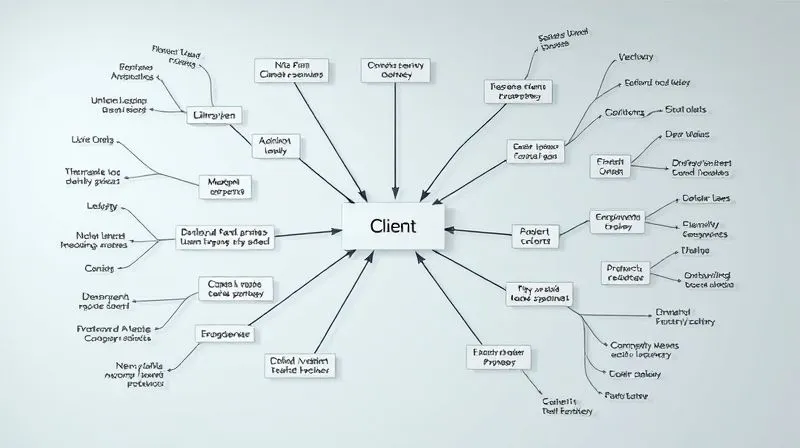
This visual mapping helps your sales and account management teams articulate a compelling story of continuous value, making upsells feel like natural progressions rather than forced additions.
3. Enhancing Customer Engagement & Relationship Management
At the heart of sustained client revenue and successful upsells lies a strong, proactive relationship. When interactions become purely transactional or reactive, you're setting yourself up for decline. Fixing declining revenue from existing clients with low upsell rates requires a fundamental shift towards relationship-centric client management.
The Proactive Communication Framework
Don't wait for problems to arise or for renewal season to connect. Implement a structured, proactive communication framework. This includes:
- Regular Check-ins: Scheduled, value-driven calls or meetings, not just "how are things?" but "Based on your goals, here's an insight..."
- Performance Reviews: Quarterly or semi-annual business reviews (QBRs/SBRs) where you demonstrate the ROI they're getting and discuss future strategic alignment.
- Personalized Content: Share relevant industry insights, best practices, or case studies tailored to their business.
- Feedback Solicitations: Actively seek feedback through surveys, interviews, and informal conversations.
These touchpoints build trust, deepen understanding, and allow you to uncover new needs or challenges that your offerings can address. They transform your team from vendors into trusted advisors.

Beyond the Account Manager: A Cross-Functional Approach
Reliance on a single account manager can be risky. What if they leave? What if they have a blind spot? I advocate for a "customer success team" approach, involving individuals from product, support, and even leadership. This demonstrates that the entire organization is invested in the client's success. It also provides multiple touchpoints and perspectives, enriching the relationship and uncovering more opportunities.
This cross-functional engagement also ensures that any identified issues are addressed comprehensively and that the client feels heard and valued by the entire organization. It's a powerful antidote to client apathy.
4. Strategic Upselling & Cross-selling: It's About Value, Not Pressure
Many companies struggle with low upsell rates because their approach is perceived as pushy or self-serving. True strategic upselling and cross-selling are about identifying genuine client needs and demonstrating how additional products or services will deliver tangible, incremental value. It's about being a problem-solver, not just a product pusher.
The 'Problem-Solution-Value' Upsell Matrix
This framework ensures your upsell conversations are always client-centric:
- Identify the Problem: What new or evolving challenge is the client facing that your current solution doesn't fully address? This requires deep listening and understanding.
- Propose the Solution: How does an additional product or service directly and effectively solve that specific problem? Be precise.
- Quantify the Value: What is the measurable benefit (time saved, revenue gained, cost reduced, risk mitigated) of adopting this new solution? Use data, projections, or case studies.
This approach moves the conversation away from "buy more" to "achieve more." It makes the upsell a logical and beneficial next step for the client, rather than an extra expense.
Training Your Team to Spot & Nurture Opportunities
Your frontline team – account managers, customer success, even support staff – are your eyes and ears. They interact with clients daily and are best positioned to spot nascent needs or frustrations that could be resolved with an upsell. However, they need to be trained to:
- Listen actively: Beyond the immediate question, what is the underlying challenge?
- Ask insightful questions: "What are your biggest priorities for the next quarter?" "What operational bottlenecks are you facing?"
- Understand your full product ecosystem: Not just what they sell, but how every offering solves specific problems.
- Articulate value: Move beyond features to benefits and ROI.
- Know when to escalate: When an opportunity is identified, how is it handed off or collaborated on with sales specialists?
This requires ongoing training, role-playing, and regular debriefs to share insights and refine strategies. It's how you empower your team to proactively fix declining revenue from existing clients with low upsell rates.
5. Implementing a Robust Feedback Loop & NPS System
You cannot improve what you don't measure or understand. A systematic approach to gathering, analyzing, and acting on client feedback is non-negotiable for reversing revenue decline and boosting upsells. The Net Promoter Score (NPS) is a powerful tool, but it's only the beginning.
Turning Feedback into Action: The Closed-Loop System
It's not enough to just collect feedback; you must close the loop. This means:
- Collect: Use various channels – NPS surveys, satisfaction surveys, direct interviews, online reviews.
- Analyze: Categorize feedback by theme, sentiment, and client segment. Identify recurring pain points and emerging needs.
- Act: Develop action plans based on the analysis. Prioritize changes to product, service, or processes.
- Communicate: Inform clients about the changes you've made as a direct result of their feedback. This builds immense trust and loyalty.
Clients who feel heard and see their input translated into improvements are far more likely to stay, spend more, and advocate for your brand. This directly impacts your ability to fix declining revenue from existing clients with low upsell rates.
Case Study: How InnovateTech Transformed Client Loyalty
Case Study: How InnovateTech Transformed Client Loyalty
InnovateTech, a mid-sized B2B software provider, was grappling with a 15% year-over-year decline in existing client revenue and stagnant upsell rates. Their NPS scores were mediocre, and they had no systematic way of acting on feedback. They were losing clients to competitors who offered more responsive service.
By implementing a robust closed-loop feedback system, they began by surveying all clients quarterly, followed by direct outreach to both detractors and promoters. Detractors received immediate calls from account managers to understand and resolve issues, while promoters were encouraged to share testimonials and participate in beta programs.
InnovateTech's product team then held bi-weekly meetings to review aggregated feedback, prioritizing feature enhancements and bug fixes directly based on client input. Within six months, they released two major updates that directly addressed the top three client pain points identified. Crucially, they communicated these changes clearly to their entire client base, highlighting that "Your feedback shaped this update!"
This systematic approach led to a 20-point increase in their NPS score within 12 months, a 10% reversal of revenue decline, and a 12% increase in upsell conversions as clients felt more valued and saw tangible improvements. It transformed their relationships from transactional to truly collaborative.
6. Personalization at Scale: Tailoring Offers and Interactions
In an increasingly commoditized world, personalization is no longer a luxury but a necessity. Generic communications and one-size-fits-all upsell pitches fall flat. To effectively fix declining revenue from existing clients with low upsell rates, you must tailor your approach based on deep understanding.
Leveraging Data for Hyper-Personalization
This goes beyond simply using a client's name. It means understanding their industry, their specific business challenges, their past purchase history, their product usage patterns, and their expressed preferences. CRM systems, marketing automation platforms, and customer data platforms (CDPs) are invaluable here.
Use this data to:
- Segment your email campaigns: Send targeted content that resonates with their specific needs.
- Tailor upsell recommendations: Suggest complementary products or services based on their current usage and likely future needs, not just generic bundles.
- Personalize support: Provide support agents with a comprehensive view of the client's history so they can offer more relevant and efficient solutions.
- Customize product onboarding for new features: Show them exactly how a new update impacts their workflow.
When clients feel truly understood and that your communication is relevant to their unique situation, engagement skyrockets, paving the way for organic growth.

Creating Individualized Client Journeys
Think about the entire client lifecycle, from onboarding to renewal and expansion. Are there opportunities to personalize each stage? For example, after a client successfully adopts a core product, can you trigger a personalized sequence of content that introduces them to complementary features based on their initial goals? Or, if a client is showing signs of reduced engagement, can you initiate a personalized outreach campaign offering tailored resources or a one-on-one consultation?
Personalization at scale builds loyalty and makes upsell opportunities feel like natural, helpful suggestions rather than unsolicited sales pitches. It’s a key strategy when you want to fix declining revenue from existing clients with low upsell rates.
7. Training Your Team for Relationship-Driven Sales
Your team is your most critical asset in reversing revenue decline. If they are not equipped with the right mindset, skills, and tools, even the best strategies will falter. The shift from transactional selling to relationship-driven growth is fundamental.
Shifting from 'Order Takers' to 'Value Creators'
Many sales and account management teams are conditioned to be reactive – answering questions, processing orders, or only reaching out when a contract is up for renewal. This mindset is a direct contributor to low upsell rates and revenue decline. I emphasize training your team to become proactive "value creators."
This involves:
- Deep Product Knowledge: Not just features, but how those features solve specific business problems.
- Industry Expertise: Understanding the client's industry, challenges, and competitive landscape.
- Consultative Selling Skills: Asking open-ended questions, active listening, diagnosing needs, and co-creating solutions.
- Value Articulation: The ability to clearly and persuasively communicate ROI and business impact.
- Objection Handling for Growth: Addressing concerns not just about cost, but about perceived need or implementation.
Invest in continuous training, coaching, and mentorship programs that reinforce these skills. Celebrate successes in client growth, not just new client acquisition. This cultural shift is paramount.
According to Forbes, fostering a relationship-driven sales culture significantly impacts long-term customer loyalty and revenue growth.Incentivizing Retention and Expansion
Examine your compensation structure. Does it disproportionately reward new client acquisition over retention and growth of existing accounts? If so, you're incentivizing the wrong behavior. Restructure commissions and bonuses to reward your team for:
- High Retention Rates: Keeping clients engaged and renewing.
- Upsell/Cross-sell Revenue: Expanding the footprint within existing accounts.
- Client Satisfaction (e.g., NPS scores): Rewarding teams for happy, loyal customers.
Aligning incentives with desired outcomes ensures that your team is motivated to nurture existing relationships and actively seek opportunities to add value, directly addressing how to fix declining revenue from existing clients with low upsell rates.
8. Leveraging Technology for Predictive Retention & Growth
In today's data-rich environment, relying solely on intuition is a recipe for decline. Technology, when strategically implemented, can provide the insights and automation needed to proactively manage client relationships and identify growth opportunities before they're missed.
CRM and AI for Proactive Interventions
Your CRM system should be more than just a contact database. It should be a dynamic hub for client intelligence. Integrate it with your product usage data, support tickets, marketing engagement, and financial records. This holistic view allows you to:
- Identify "At-Risk" Clients: Use AI-powered analytics to flag clients showing early warning signals of churn.
- Predict Upsell Opportunities: Based on usage patterns, industry benchmarks, and client profiles, predict which clients are most likely to benefit from specific upsells.
- Automate Personalized Outreach: Trigger automated, personalized communications based on client behavior (e.g., low usage triggers a "how-to" guide; high usage of a feature triggers an upsell pitch for an advanced module).
Tools like Salesforce, HubSpot, Gainsight, or Totango offer robust capabilities for this. The key is to leverage them not just for tracking, but for predictive analytics and proactive engagement.

Data Visualization and Reporting for Actionable Insights
Raw data is overwhelming. Effective data visualization and reporting are crucial for transforming numbers into actionable insights. Create dashboards that provide your team with real-time visibility into client health, upsell pipeline, and retention metrics. These dashboards should answer key questions like:
- Which client segments are showing the most growth potential?
- Which clients are most at risk of churn, and why?
- What are the most common reasons for successful upsells/cross-sells?
- What is the average time from initial sale to first upsell?
Regularly review these reports as a team to identify trends, celebrate successes, and adjust strategies. This data-driven approach is fundamental to how you fix declining revenue from existing clients with low upsell rates and foster a culture of continuous improvement.
McKinsey & Company highlights the transformative power of data and AI in delivering hyper-personalized customer experiences, directly impacting revenue growth and retention.9. Measuring Success and Iterating
The journey to reversing declining revenue and boosting upsell rates is not a one-time fix; it's a continuous process of measurement, learning, and adaptation. Without clear metrics and a commitment to iteration, even the most brilliant strategies will eventually lose their efficacy.
Key Metrics Beyond Revenue
While revenue growth is the ultimate goal, it's a lagging indicator. You need to track leading indicators that predict future success. These include:
- Customer Lifetime Value (CLTV): The total revenue a business can reasonably expect from a single customer account.
- Customer Churn Rate: The percentage of customers who stop using your product or service over a given period.
- Net Revenue Retention (NRR) / Net Dollar Retention (NDR): Measures the percentage of recurring revenue retained from existing customers over a specific period, including upgrades, downgrades, and churn.
- Upsell/Cross-sell Conversion Rate: The percentage of existing clients who purchase additional products or services.
- Product Adoption Rate: How many features or modules clients are actively using.
- NPS or CSAT Scores: Indicators of customer satisfaction and loyalty.
By tracking these metrics diligently, you gain a granular understanding of the health of your client relationships and the effectiveness of your growth initiatives.
| Metric | Target Value | Impact on Growth |
|---|---|---|
| Net Revenue Retention (NRR) | 120%+ | Strong indicator of sustainable growth from existing clients. |
| Customer Churn Rate | <5% | Directly impacts revenue stability and growth potential. |
| Upsell Conversion Rate | 15-25% | Measures effectiveness of expansion strategies. |
| Customer Lifetime Value (CLTV) | Increasing Trend | Long-term profitability and strategic client focus. |
The Power of A/B Testing and Continuous Improvement
Treat your upsell strategies, communication frameworks, and engagement tactics as hypotheses to be tested. A/B test different messaging for upsell campaigns, try varying frequencies for check-ins, or experiment with new value articulation methods. Analyze the results, learn from both successes and failures, and refine your approach.
This iterative mindset, coupled with a deep commitment to understanding and serving your existing clients, is how you build a resilient, growth-oriented business that doesn't just survive but thrives. It is the definitive answer to how to fix declining revenue from existing clients with low upsell rates.
Gartner emphasizes that focusing on customer lifetime value (CLV) is crucial for long-term sustainable growth and revenue generation.Frequently Asked Questions (FAQ)
Question: How quickly can I expect to see results after implementing these strategies? The speed of results can vary based on your industry, client base, and the depth of your existing challenges. However, by focusing on early warning signals and proactive engagement (Sections 1 and 3), you can often start to see improved client sentiment and reduced churn within 3-6 months. Significant upsell revenue growth typically takes 6-12 months as trust is rebuilt and new value propositions are adopted.
Question: My clients are price-sensitive. How do I upsell without alienating them? Price sensitivity often stems from a lack of perceived value. Focus intensely on the 'Problem-Solution-Value' framework (Section 4). Don't just present a higher price; demonstrate a quantifiable ROI or a significant reduction in pain points. Frame upsells as investments that will yield greater returns or efficiencies for them, rather than an added cost. Personalization (Section 6) is also key; show them why this specific upsell is uniquely beneficial to their business, not just a generic offering.
Question: What's the biggest mistake companies make when trying to fix declining revenue from existing clients with low upsell rates? The single biggest mistake is a reactive, rather than proactive, approach. Many companies wait until a client explicitly complains, reduces spend, or threatens to churn before taking action. This is often too late. By implementing a robust client health assessment (Section 1) and proactive engagement framework (Section 3), you can identify and address issues long before they escalate, turning potential declines into growth opportunities.
Question: Should I focus more on retention or upsells initially? You cannot effectively upsell a client who is considering churning. Therefore, the foundational focus must always be on retention and ensuring client satisfaction. Once a client is stable, engaged, and deriving consistent value from your core offering, then you can strategically introduce upsell and cross-sell opportunities. Think of it as building a strong foundation before adding more floors to the building.
Question: How important is product development in this process? Extremely important. While this article focuses on sales and relationship strategies, a stagnant product offering is a major contributor to declining perceived value and low upsell rates. Your feedback loop (Section 5) should directly inform your product roadmap. Continuously evolving your product to meet client needs and anticipate future challenges is paramount for long-term client growth. It's an ecosystem where sales, customer success, and product development must work in harmony.
Key Takeaways and Final Thoughts
Reversing declining revenue from existing clients and boosting low upsell rates is not a quick fix; it's a strategic imperative that demands a holistic, client-centric approach. As an industry veteran, I've seen firsthand that the most successful companies are those that prioritize their existing client relationships, treating them as partners in growth.
- Understand deeply: Segment your clients and identify early warning signals of decline.
- Re-validate your value: Continuously articulate and demonstrate your unique, evolving value proposition.
- Engage proactively: Build strong, multi-faceted relationships, not just transactional ones.
- Upsell strategically: Focus on solving problems and delivering quantifiable value, not just pushing products.
- Listen and adapt: Implement robust feedback loops and act on client insights.
- Personalize interactions: Leverage data to tailor communications and offers at scale.
- Empower your team: Train and incentivize them for relationship-driven growth.
- Embrace technology: Use CRM and AI for predictive insights and automation.
- Measure and iterate: Track key metrics and commit to continuous improvement.
By embracing these principles, you're not just fixing a revenue problem; you're building a resilient, sustainable growth engine powered by loyal, expanding client relationships. The investment in your existing clients will always yield the highest returns. Start today, be diligent, and watch your client relationships—and your revenue—flourish.
Deloitte emphasizes that effective customer lifecycle management is crucial for sustainable revenue growth and customer loyalty.Recommended Reading
- 5 Steps to Integrate Disruptive Tech Foresight into Innovation Strategy
- Unlock the Truth: Are Startup Accelerators Worth It for Your Founding Journey?
- Unlock True Impact: How to Assess Community Needs for Corporate Programs
- Escape Chaos: 7 Steps to Strategic Thinking in Daily Operations
- 7 Steps: Adjust Production Plans for Sudden Material Shortages & Stay Agile





Comments
Leave a comment below. Your email will not be published. Required fields marked with *