


How to Fix Persistent Operational Bottlenecks Slowing Growth?
For over 15 years in the consulting trenches, I've witnessed countless businesses, from promising startups to established enterprises, grapple with a silent, insidious killer: persistent operational bottlenecks. These aren't just minor hiccups; they're systemic blockages that stifle innovation, erode morale, inflate costs, and, most critically, bring growth to a grinding halt. The frustration is palpable when you know your team has potential, your product is strong, but something unseen is constantly pulling the brakes.
The problem often isn't a lack of effort or talent; it's a lack of clarity and a systematic approach to identifying and resolving these choke points. Many leaders apply quick fixes, only to see the bottleneck reappear elsewhere or, worse, create new, more complex issues. It's like trying to patch a leaky dam with duct tape – it might hold for a moment, but the underlying structural flaw remains.
In this definitive guide, I'll share my proven framework and expert insights on how to fix persistent operational bottlenecks slowing growth. We'll move beyond superficial solutions, delving into a strategic, three-phase approach that encompasses precision diagnosis, strategic intervention, and sustained optimization. You'll gain actionable steps, real-world analogies, and expert advice to transform your operational challenges into pathways for accelerated, sustainable growth.
The Silent Killer: Understanding the True Cost of Bottlenecks
Before we dive into solutions, let's truly grasp the impact of these bottlenecks. They are more than just an inconvenience; they are a direct drain on your company's vitality. I've seen them manifest in various forms, from inefficient approval processes to inadequate resource allocation, and their cumulative effect is devastating. It's not just about a delayed project; it's about the compounding loss of productivity, innovation, and competitive edge.
Consider the ripple effect: a bottleneck in one department can create a backlog for the next, leading to missed deadlines, dissatisfied customers, and overworked employees. This downward spiral impacts every facet of your organization. According to a study published in the Harvard Business Review, organizational friction, often caused by bottlenecks, can reduce productivity by up to 10-20% and significantly impact employee engagement.
- Financial Drain: Increased operational costs, wasted resources, lost revenue opportunities.
- Customer Dissatisfaction: Delays in delivery, compromised quality, tarnished brand reputation.
- Employee Morale & Turnover: Burnout, frustration, disengagement, and talented staff seeking greener pastures.
- Stifled Innovation: Inability to adapt, slow time-to-market for new products/services, loss of competitive advantage.
- Growth Plateau: The inability to scale operations effectively, leading to stalled expansion and market share erosion.
Phase 1: Precision Diagnosis – Unearthing the Root Causes
The first, and arguably most critical, phase in learning how to fix persistent operational bottlenecks slowing growth is accurate diagnosis. You can't treat a symptom and expect a cure. You must go deep, beyond the obvious surface-level issues, to identify the true root causes.
Step 1: Map Your Processes End-to-End
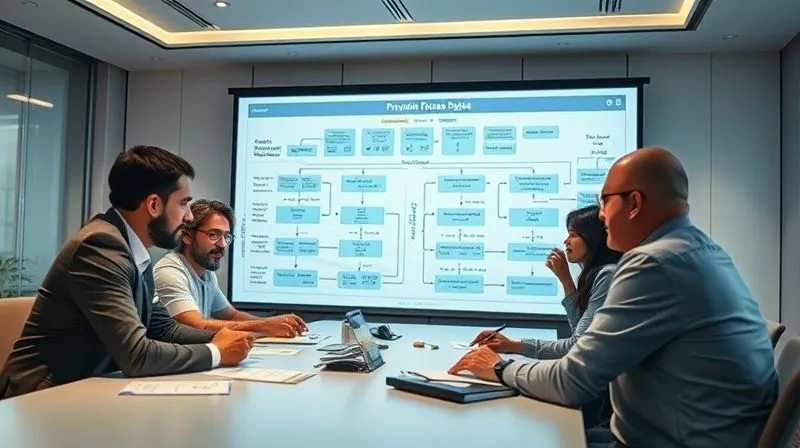
In my experience, many companies operate with undocumented or poorly understood processes. This ambiguity is a breeding ground for bottlenecks. You can't optimize what you don't clearly see. Process mapping is a powerful visualization tool that helps identify every step, decision point, and hand-off in a workflow.
"A process map is not just a diagram; it's a conversation starter, a diagnostic tool, and a blueprint for improvement. Without it, you're navigating blind." - Industry Expert Insight
- Identify Key Processes: Start with the most critical processes that directly impact growth or customer satisfaction (e.g., order fulfillment, customer onboarding, product development).
- Assemble a Cross-Functional Team: Involve individuals who actually perform the work at each stage, not just managers. Their on-the-ground perspective is invaluable.
- Document Each Step: From initiation to completion, meticulously record every action, decision, input, and output. Use swimlane diagrams to show departmental responsibilities.
- Identify Handoffs & Waiting Points: Pay special attention to where work transfers between teams or systems, as these are common bottleneck locations.
- Quantify Time & Resources: For each step, estimate the time taken, resources consumed, and potential delays.
Step 2: Data-Driven Performance Analysis
Once your processes are mapped, the next step is to overlay them with hard data. Subjective observations are helpful, but data provides irrefutable evidence of where the slowdowns truly lie. This is where you leverage operational metrics to pinpoint precise areas of inefficiency.
- Cycle Time: How long does it take for a process to complete from start to finish?
- Throughput: How many units or tasks can be completed within a given timeframe?
- Work-in-Progress (WIP): What is the volume of unfinished tasks or items waiting at each stage? High WIP often indicates a bottleneck.
- Defect Rate: How often do errors or reworks occur at specific points?
- Resource Utilization: Are resources (people, machines) over- or under-utilized?
Analyzing these metrics against your process maps will highlight the stages with the longest queues, highest wait times, or lowest throughput, unequivocally identifying your bottlenecks.
| Process Step | Average Cycle Time (hours) | WIP Count | Defect Rate (%) |
|---|---|---|---|
| Customer Order Entry | 2 | 5 | 1 |
| Inventory Check & Allocation | 0.5 | 20 | 0.5 |
| Production Scheduling | 4 | 15 | 2 |
| Manufacturing/Service Delivery | 8 | 50 | 3 |
| Quality Control | 1 | 10 | 0.8 |
| Shipping/Final Delivery | 3 | 5 | 0.2 |
Step 3: The Gemba Walk & Employee Insights
Data tells you *what* is happening, but a Gemba walk (a Lean management concept meaning 'the actual place') helps you understand *why*. This involves physically going to where the work is done, observing processes firsthand, and, most importantly, talking to the people on the front lines. I've found that the most profound insights often come from those closest to the work.
"You cannot improve what you do not understand. And you cannot understand without seeing and listening." - Taiichi Ohno, Father of the Toyota Production System
Encourage open, honest feedback. Ask open-ended questions like: 'What slows you down?', 'What's the most frustrating part of your day?', 'If you could change one thing about this process, what would it be?' Their perspectives are critical for identifying hidden inefficiencies, communication breakdowns, and system limitations that data alone might not reveal. This direct engagement builds trust and ensures that your solutions are practical and well-received.
Phase 2: Strategic Intervention – Dismantling the Bottlenecks
With a clear diagnosis in hand, the next phase focuses on implementing targeted solutions. This isn't about throwing resources at the problem; it's about strategic, impactful interventions designed to permanently remove the identified bottlenecks and improve how to fix persistent operational bottlenecks slowing growth.
Strategy 1: Lean Principles – Eliminate Waste, Maximize Flow
Lean methodologies, originating from the Toyota Production System, are incredibly powerful for bottleneck resolution. The core idea is to identify and eliminate 'waste' (Muda) in all its forms: overproduction, waiting, unnecessary transport, over-processing, excess inventory, unnecessary movement, and defects. By systematically removing waste, you naturally streamline processes and improve flow.
- Value Stream Mapping: A more advanced form of process mapping focused on identifying value-adding vs. non-value-adding steps.
- Implement 5S: Sort, Set in order, Shine, Standardize, Sustain. This creates an organized, efficient workspace, reducing search times and errors.
- Reduce Batch Sizes: Smaller batches reduce lead times, inventory, and the impact of defects.
- Standardize Work: Define the best practices for each task to ensure consistency and efficiency, reducing variations that cause delays.
- Implement Pull Systems: Instead of pushing work through, allow subsequent steps to 'pull' work as needed, preventing overproduction and excess WIP.
For deeper dives into Lean, I often recommend resources from the Lean Enterprise Institute. These principles are not just for manufacturing; they are highly applicable to service industries, software development, and administrative processes alike.
Strategy 2: Technology & Automation – Smart Tools for Smarter Operations
In today's digital age, leveraging technology and automation is no longer a luxury but a necessity for overcoming operational bottlenecks. Repetitive, manual tasks are prime candidates for automation, freeing up human capital for more complex, value-adding activities. This is a critical component of learning how to fix persistent operational bottlenecks slowing growth effectively.
Consider areas where data entry, report generation, routine communications, or basic approvals consume significant time. Robotic Process Automation (RPA), Business Process Management (BPM) software, and AI-powered tools can revolutionize these areas, dramatically accelerating workflows and reducing human error.
- RPA for Repetitive Tasks: Automate data transfer, form filling, and system integrations.
- BPM Suites: Design, execute, monitor, and optimize complex workflows across departments.
- AI & Machine Learning: For predictive analytics, intelligent routing, and anomaly detection that can preemptively identify potential bottlenecks.
- Integrated Platforms: Ensure your CRM, ERP, project management, and communication tools are integrated to reduce data silos and manual re-entry.
Strategy 3: Skill Development & Empowerment – Investing in Your People
No amount of process optimization or technology can fully compensate for an untrained or disempowered workforce. Your people are your greatest asset, and investing in their skills and giving them autonomy to solve problems can be a powerful antidote to bottlenecks.
Often, bottlenecks arise because employees lack the necessary skills to perform a task efficiently, or they don't have the authority to make critical decisions without multiple layers of approval. Comprehensive training programs, cross-training initiatives, and a culture of empowerment can address these issues head-on.
Case Study: How InnovateCo Accelerated Product Launches
InnovateCo, a mid-sized software firm, struggled with persistently slow product launch cycles, often delayed by weeks or months. My team identified a key bottleneck: the quality assurance (QA) team was constantly overwhelmed, becoming a choke point for releases. Rather than just hiring more QA staff, we proposed a multi-pronged approach focusing on empowerment.
First, we implemented a comprehensive cross-training program for developers, teaching them basic unit testing and integration testing protocols. Second, we empowered project leads with greater authority to allocate testing resources and make real-time decisions on minor bug fixes without escalating to senior management. This shift in responsibility, coupled with enhanced skills, allowed developers to catch and fix issues earlier, reducing the QA team's burden significantly. InnovateCo saw a 35% reduction in average product launch time within six months, demonstrating the power of investing in people.
As Harvard Business Review often highlights, empowered employees are more engaged, innovative, and proactive in identifying and solving problems, including those causing bottlenecks.
Phase 3: Sustained Optimization – Building a Resilient Future
Removing a bottleneck is a victory, but a temporary one if you don't establish mechanisms for continuous improvement. The final phase is about building resilience and a culture that proactively seeks out and resolves inefficiencies, ensuring you know how to fix persistent operational bottlenecks slowing growth not just once, but perpetually.
Continuous Monitoring & Feedback Loops
Once you've implemented solutions, it's crucial to monitor their effectiveness and collect ongoing feedback. This isn't a 'set it and forget it' exercise. Operational landscapes are dynamic, and new bottlenecks can emerge as your business grows or market conditions change.
- Key Performance Indicators (KPIs): Establish relevant KPIs for each optimized process (e.g., reduced cycle time, increased throughput, decreased error rate).
- Regular Reporting & Dashboards: Create accessible dashboards that provide real-time visibility into process performance. This allows for quick identification of deviations.
- Feedback Mechanisms: Implement structured channels for employees to report new issues, suggest improvements, or highlight areas of friction. This could be through regular team meetings, suggestion boxes (digital or physical), or dedicated feedback software.
- A/B Testing & Iteration: For digital processes, continuously test different approaches and iterate based on performance data.
Fostering a Culture of Continuous Improvement
The most successful organizations are those that embed continuous improvement into their DNA. This means shifting from a reactive problem-solving mindset to a proactive, preventative one. It's about empowering every employee to be a part of the solution, not just a cog in the machine.
"Continuous improvement is not just about making things better; it's about making better things possible." - Beyond the Bottleneck
Encourage a 'Kaizen' philosophy – small, incremental changes made regularly by everyone, leading to significant cumulative improvements. Celebrate small wins, recognize employees who identify and resolve inefficiencies, and provide training on problem-solving methodologies like PDCA (Plan-Do-Check-Act) cycles. This culture ensures that your organization remains agile and capable of adapting to future challenges, maintaining operational excellence.
As Forbes recently highlighted, a culture of continuous improvement is a key differentiator for high-growth companies.
Strategic Planning & Scenario Modeling
Finally, to truly build a resilient future, you must anticipate potential bottlenecks before they arise. This involves strategic planning and scenario modeling. As your business scales, what new pressures will your current processes face? What if demand doubles? What if a key supplier falters? Proactive planning helps you design processes that are inherently more robust and scalable.
Conduct regular strategic reviews where you analyze market trends, projected growth, and potential disruptions. Use tools like 'what-if' analysis and simulation software to stress-test your operational models. This forward-looking approach is paramount to not only fix persistent operational bottlenecks slowing growth but to prevent them from emerging in the first place.
| Scenario | Current Process Impact | Mitigation Strategy | Expected Outcome |
|---|---|---|---|
| 2x Demand Increase | Significant backlog, 30% missed deliveries | Automate 50% of order processing, cross-train 20% staff | 10% missed deliveries, manageable load |
| Key Supplier Disruption | Production halt for 2 weeks | Diversify supplier base (2 additional), maintain 1-week buffer inventory | Minimal disruption, 2-day delay |
| 50% Employee Turnover | Severe knowledge loss, 4-week onboarding delay | Standardize SOPs, implement mentorship program, enhance training modules | Reduced knowledge loss, 2-week onboarding delay |
Frequently Asked Questions (FAQ)
Q: How do I get buy-in from my team for process changes, especially when they're already overwhelmed? A: This is a common challenge. Start by involving them in the diagnosis phase (Gemba walks, feedback sessions). When they feel heard and contribute to identifying the problem, they're more likely to embrace the solution. Frame changes as 'making their jobs easier' or 'reducing frustration,' not just 'improving efficiency.' Pilot changes in small, manageable teams first to demonstrate success and build momentum. Emphasize that the goal is to fix persistent operational bottlenecks slowing growth, which benefits everyone.
Q: What if I identify multiple bottlenecks? Where should I start? A: When faced with multiple bottlenecks, prioritize based on impact and feasibility. Focus on the bottleneck that has the highest negative impact on your key objectives (e.g., revenue, customer satisfaction) and is also relatively feasible to address. Sometimes, resolving one major bottleneck can alleviate pressure on others downstream. Use a Pareto analysis (80/20 rule) to identify the 20% of bottlenecks causing 80% of your problems.
Q: Is it always necessary to invest in expensive new technology to fix bottlenecks? A: Not at all. While technology can be a powerful enabler, many bottlenecks can be resolved through process re-engineering, better communication, skill development, or simply clearer roles and responsibilities. Start with low-cost or no-cost solutions first. If a bottleneck persists despite these efforts, then evaluate technology as a strategic investment, ensuring it aligns directly with the problem you're trying to solve.
Q: How do I ensure changes stick and don't revert to old habits? A: Sustaining change requires consistent effort. This involves clear communication of the new processes, ongoing training, robust monitoring with visible KPIs, and continuous feedback loops. Leadership must champion the changes and model the desired behaviors. Regular audits and refresher training are also crucial. Make 'continuous improvement' a core value, not just a project.
Q: Can a small business effectively implement these strategies without a dedicated operations team? A: Absolutely. While a dedicated team helps, the principles are scalable. For a small business, it might mean the owner or a key manager takes on the 'operations specialist' role. Leverage simple tools for process mapping (even whiteboards and sticky notes), focus on direct observation, and actively engage your small team in problem-solving. The key is the mindset and systematic approach, not necessarily the size of the team.
Key Takeaways and Final Thoughts
Learning how to fix persistent operational bottlenecks slowing growth is not a one-time fix; it's an ongoing journey of diagnosis, intervention, and continuous optimization. My years in this field have taught me that the most successful businesses are those that view operational excellence not as a chore, but as a strategic advantage.
- Diagnose Deeply: Don't just treat symptoms. Use process mapping, data analysis, and direct observation (Gemba walks) to find root causes.
- Intervene Strategically: Apply targeted solutions using Lean principles, smart technology, and investment in your people's skills and empowerment.
- Optimize Continuously: Establish robust monitoring, foster a culture of improvement, and proactively plan for future challenges.
- Empower Your People: Your team is your greatest asset. Involve them, train them, and trust them to be part of the solution.
The path to unlocking your organization's full growth potential lies in systematically dismantling the barriers that hold you back. It requires discipline, data, and a commitment to continuous improvement. Embrace this challenge, and you'll not only fix persistent operational bottlenecks slowing growth but also build a more agile, resilient, and ultimately, more successful enterprise. The time to act is now – your future growth depends on it.
Recommended Reading
- Unlock Success: How to Analyze Competitors for Your New Small Business
- Navigating Geopolitical Blockades: 7 Strategies for Supply Chain Resilience
- Small Business Loan with Bad Credit? Here's The Secret!
- 7 Proven Ways: What to Do When Channel Partners Consistently Miss Sales Targets?
- Verify Franchisor Earnings: 7 Steps to Avoid FDD Fraud





Comments
Leave a comment below. Your email will not be published. Required fields marked with *