

What to do when global supply chains face sudden geopolitical blockades?
For over two decades in international business, I've witnessed firsthand the seismic shifts that can cripple even the most robust global supply chains. From natural disasters to economic downturns, I've seen companies scramble, but few challenges are as insidious and unpredictable as sudden geopolitical blockades. These aren't just logistical hiccups; they are strategic maneuvers that can sever critical arteries of global trade overnight, leaving businesses reeling.
The pain points are immediate and profound: soaring costs, production halts, missed deadlines, and a rapid erosion of customer trust. Many leaders feel paralyzed, caught between the need for immediate action and the overwhelming complexity of untangling interwoven international dependencies. It’s a crisis that demands not just a reaction, but a fundamental re-evaluation of how we build and manage our global networks.
In this definitive guide, I will share the frameworks and actionable strategies I've seen successful organizations implement to not just survive, but thrive, in the face of such disruptions. We'll explore proactive intelligence, strategic diversification, technological leverage, and robust contingency planning. My goal is to equip you with the insights and tools to transform vulnerability into resilience, ensuring your business can navigate the turbulent waters of global geopolitics.
1. Proactive Geopolitical Intelligence: Your Early Warning System
One of the gravest mistakes I've seen companies make is treating geopolitical risk as an 'if' rather than a 'when.' In today's interconnected world, political stability is a fluid concept, and waiting for a blockade to materialize before reacting is a recipe for disaster. The first, most critical step is to establish a robust geopolitical intelligence gathering and analysis system.
The Imperative of Geopolitical Foresight
This isn't about simply reading the headlines; it's about deep-dive analysis into political rhetoric, economic indicators, historical tensions, and social movements in regions critical to your supply chain. It requires dedicated resources, whether internal specialists or external consultants, who can interpret subtle shifts and predict potential flashpoints. Think of it as investing in an advanced radar system for your global operations.
Expert Insight: "Ignoring geopolitical risk is no longer an option; it's a strategic liability. Proactive intelligence allows you to anticipate, not just react, giving you precious time to pivot before a crisis paralyzes your operations."
Developing this foresight involves:
- Mapping Critical Nodes: Identify every geographical point and trade route that is essential to your supply chain – from raw material extraction to final delivery.
- Risk Profiling: For each critical node, assess its geopolitical risk profile. Consider political stability, regulatory environment, historical conflicts, and potential for sanctions or trade disputes.
- Scenario Planning: Develop a range of 'what if' scenarios based on potential geopolitical developments. What if a key port is closed? What if a major trade route becomes impassable?
- Monitoring & Alert Systems: Implement real-time monitoring of geopolitical events and establish an internal alert system that triggers specific response protocols when thresholds are met.

2. Diversification of Sourcing: Eliminating Single Points of Failure
Reliance on a single country or a handful of suppliers, while often cost-effective in calm times, becomes an existential threat during geopolitical crises. I've often seen companies fall into this trap, only to realize the devastating consequences when their sole source is suddenly inaccessible. Diversification isn't just a buzzword; it's a fundamental pillar of resilience.
Multi-Region and Multi-Supplier Strategies
This strategy involves spreading your sourcing across different geographical regions and engaging multiple suppliers for the same critical components or materials. It's about building redundancy, ensuring that if one faucet is turned off, others can still flow. This doesn't mean simply adding more suppliers; it means strategic, qualified diversification.
Actionable Steps for Diversification:
- Identify Critical Components: Determine which parts, materials, or services are most vulnerable to disruption.
- Geographic Dispersion: Seek out suppliers in politically stable and geographically diverse regions, even if initial costs are slightly higher.
- Supplier Tiering: Develop a tiered supplier strategy, with primary, secondary, and tertiary options for key inputs.
- Qualification & Vetting: Thoroughly vet all new suppliers to ensure quality, reliability, and ethical practices are maintained across the board.
Case Study: How TechInnovate Secured its Semiconductor Supply
TechInnovate, a mid-sized electronics manufacturer, faced a critical challenge when geopolitical tensions threatened their primary semiconductor supplier in Southeast Asia. Recognizing the vulnerability, they initiated a strategic diversification program. By identifying alternative suppliers in both North America and Europe, and investing in the qualification process, they established secondary sourcing channels. When a sudden trade restriction emerged, TechInnovate was able to rapidly shift 40% of its orders to these new partners, mitigating a potential 6-month production delay and saving millions in lost revenue. This proactive measure transformed a potential crisis into a manageable hurdle, demonstrating the power of strategic redundancy.
3. Building Supply Chain Agility and Flexibility
A rigid supply chain is a brittle one. When geopolitical blockades hit, the ability to pivot rapidly and adapt your logistics is paramount. This requires a fundamental shift from static, optimized routes to dynamic, flexible networks that can reconfigure on the fly.
Dynamic Routing and Alternative Logistics
Agility means having pre-planned alternative shipping routes, modes of transport, and even warehousing locations ready to activate. It's about being able to reroute shipments from a blocked port to an adjacent one, or shift from ocean freight to air freight (even with higher costs) for critical components when time is of the essence. This often involves cultivating relationships with multiple logistics providers.
Expert Insight: "Agility isn't just about speed; it's about the inherent capacity to change direction without breaking. In a geopolitical storm, this flexibility is your life raft."
Key elements of an agile supply chain include:
- Multi-Modal Transport Options: Don't rely solely on one method (e.g., sea freight). Explore rail, air, and road alternatives for different segments of your chain.
- Strategic Hub Locations: Establish distribution hubs in diverse geographical locations to serve as alternative entry or exit points for goods.
- Cross-Docking Capabilities: Implement systems that allow for quick transfer of goods between different transport modes or vehicles, minimizing storage time and increasing flow.
- Flexible Labor & Operations: Ensure your internal operations and labor force can adapt to changing demands and priorities during a crisis.

4. Leveraging Technology for Visibility and Rapid Response
You can't manage what you can't see. In the face of sudden blockades, real-time visibility into your entire supply chain, from raw materials to customer delivery, is non-negotiable. Technology is no longer a luxury; it's the bedrock of effective disruption management.
AI-Driven Predictive Analytics and Digital Twins
Modern supply chain management systems, enhanced with Artificial Intelligence and machine learning, can offer unparalleled insights. They can predict potential bottlenecks, model the impact of various disruptions, and even suggest optimal alternative strategies. Digital twins – virtual replicas of your physical supply chain – allow you to simulate scenarios and test responses without real-world risk. This technology empowers leaders to make data-driven decisions under immense pressure.
According to a Deloitte study, companies leveraging advanced digital capabilities in their supply chains significantly outperform their peers in resilience and efficiency. This isn't just about tracking; it's about foresight and optimization.
Here’s how technology helps:
| Technology Feature | Benefit in Crisis |
|---|---|
| Real-time Tracking & IoT | Pinpoint exact location of goods, identify stuck shipments, reroute dynamically. |
| AI-Powered Predictive Analytics | Forecast potential disruptions, model impact of blockades, suggest alternative routes/suppliers. |
| Digital Twin Simulation | Test contingency plans virtually, optimize responses before implementation. |
| Blockchain for Transparency | Enhance traceability, verify origin, and ensure compliance across the chain. |
| Integrated ERP/SCM Systems | Centralized data for holistic decision-making, rapid coordination across departments. |
5. Nearshoring, Reshoring, and Regionalization Strategies
The pursuit of hyper-efficiency and lowest-cost production led many companies to globalize their supply chains to an extreme. While beneficial in stable times, this strategy exposes vulnerabilities during geopolitical unrest. The trend towards nearshoring, reshoring, and regionalization is a direct response to these risks.
Balancing Cost, Risk, and Proximity
Nearshoring involves moving production or sourcing closer to your primary markets, often to neighboring countries. Reshoring brings production back to the home country. Regionalization focuses on building self-sufficient supply chains within distinct geographic blocs (e.g., North America, EU, ASEAN). These strategies reduce lead times, transportation costs, and crucially, exposure to distant geopolitical risks.
While often associated with higher labor costs, the benefits extend beyond mere cost-cutting:
- Reduced Lead Times: Faster response to market changes and disruptions.
- Lower Transportation Costs & Emissions: Shorter distances mean less fuel and a smaller carbon footprint.
- Enhanced Quality Control: Closer proximity allows for better oversight of manufacturing processes.
- Increased Resilience: Less exposure to international shipping lanes and distant political instability.
- Improved Intellectual Property Protection: Operating in regions with stronger legal frameworks.
As Harvard Business Review often highlights, the total cost of ownership, including risk and resilience, often makes these strategies more appealing than a simple unit-cost comparison might suggest.
6. Strategic Inventory Management and Buffer Stock
The 'Just-in-Time' (JIT) philosophy, while revolutionary for efficiency, leaves little room for error when a sudden blockade halts the flow of goods. In an era of increasing geopolitical volatility, a purely JIT approach can be perilous. The answer isn't to abandon JIT entirely but to strategically integrate 'Just-in-Case' (JIC) principles.
Just-in-Case vs. Just-in-Time in Volatile Times
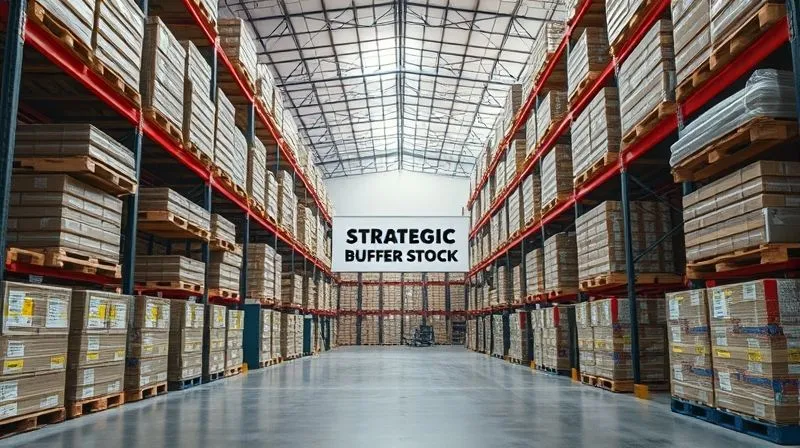
This means identifying critical components, raw materials, or finished goods that, if disrupted, would bring your operations to a standstill. For these items, maintaining a strategic buffer stock becomes essential. This buffer acts as a temporary bridge, buying your company time to activate alternative sourcing or logistics solutions during a blockade.
Expert Insight: "In a world where geopolitical blockades are a 'when,' not an 'if,' strategic buffer stock is not a cost; it's an insurance policy. It's about intelligent redundancy for critical vulnerabilities."
Implementing strategic buffer stock requires:
- Criticality Assessment: Determine which items are absolutely essential and have long lead times or limited alternative suppliers.
- Risk-Based Stockpiling: Don't stockpile everything. Focus on high-impact, high-vulnerability items.
- Distributed Inventory: Hold buffer stock in multiple, geographically diverse locations to prevent a single event from impacting all reserves.
- Dynamic Adjustments: Regularly review and adjust buffer levels based on evolving geopolitical intelligence and supply chain risk assessments.
7. Strengthening Supplier Relationships and Collaboration
In times of crisis, your suppliers are not just vendors; they are partners. The strength of these relationships can be the deciding factor in your ability to navigate a geopolitical blockade. A transactional approach will crumble; a collaborative one will endure.
Partnerships for Shared Risk and Innovation
This involves moving beyond simple contracts to foster deeper, more transparent relationships. Share your risk assessments, discuss potential disruptions openly, and collaborate on contingency plans. A strong relationship means suppliers are more likely to prioritize your needs, share vital information, and even innovate solutions with you when blockades strike.
As Forbes frequently emphasizes, collaborative supply chain management fosters resilience and mutual benefit.
Practical steps to enhance supplier collaboration:
- Regular Communication: Establish consistent, open channels for communication, not just about orders but about market conditions and potential risks.
- Joint Risk Assessments: Work with key suppliers to jointly identify vulnerabilities and develop shared mitigation strategies.
- Long-Term Agreements: Consider longer-term contracts that incentivize loyalty and stability, potentially including clauses for crisis management.
- Information Sharing: Be transparent about your forecasts and plans, enabling suppliers to better prepare and support you.
- Mutual Investment: Explore opportunities for joint investment in technology, process improvements, or even alternative production capacities.
8. Developing Robust Crisis Management and Contingency Plans
Even with the best proactive measures, some disruptions are unavoidable. When a geopolitical blockade hits, having a well-defined, actionable crisis management plan is paramount. This isn't just a document; it's a living framework that guides your organization through the chaos.
Scenario Planning and Rapid Activation Protocols
A robust plan anticipates various types of blockades and outlines specific response protocols for each. It clearly defines roles, responsibilities, communication hierarchies, and decision-making processes. The goal is to minimize reaction time and prevent paralysis.
According to Deloitte's insights on risk management, companies with comprehensive, tested contingency plans recover faster and sustain less damage during disruptions.
Key components of a crisis plan:
- Dedicated Crisis Team: Appoint a cross-functional team with clear leadership and responsibilities for activation and execution.
- Communication Strategy: Define internal and external communication protocols for stakeholders, customers, and the media. Transparency builds trust.
- Financial Contingencies: Allocate emergency funds or establish credit lines to cover unexpected costs like expedited shipping or alternative sourcing.
- Legal & Regulatory Review: Understand the legal implications of blockades, sanctions, and force majeure clauses in contracts.
- Regular Drills & Simulations: Periodically test your crisis plan with tabletop exercises to identify gaps and refine responses.
| Plan Element | Purpose |
|---|---|
| Crisis Communication Matrix | Define who communicates what, when, and to whom (internal/external). |
| Alternative Route & Supplier Database | Pre-vetted options for rapid activation during disruption. |
| Financial Impact Assessment Tool | Quantify potential losses and allocate emergency funds. |
| Legal & Compliance Checklist | Ensure all actions adhere to international trade laws and sanctions. |
| Escalation & Decision Tree | Clear pathways for critical decision-making under pressure. |
Frequently Asked Questions (FAQ)
How quickly can a company adapt to a major geopolitical blockade? The speed of adaptation heavily depends on the proactive measures taken before the blockade. Companies with robust geopolitical intelligence, diversified sourcing, and pre-tested contingency plans can often pivot within days or weeks for critical components, though full recovery and optimization of new routes can take months. Those without such preparations may face months of paralysis.
What's the role of government in mitigating these risks for businesses? Governments play a crucial role through diplomatic efforts to de-escalate tensions, providing early warnings to industries, offering financial aid or subsidies for reshoring/nearshoring initiatives, and negotiating trade agreements that diversify geopolitical dependencies. However, businesses should not rely solely on government intervention and must build their own resilience.
Is reshoring always the best option for every business? No, reshoring is not a universal panacea. While it significantly reduces geopolitical risk, it can introduce higher labor costs, limit access to specialized international talent or unique raw materials, and might not be economically viable for all industries or product lines. A balanced approach, often involving a mix of reshoring for critical components and regionalization or nearshoring for others, is usually more pragmatic.
How do small and medium-sized businesses (SMBs) handle such disruptions with limited resources? SMBs face unique challenges but can still build resilience. Focus on strategic partnerships with larger players or industry associations for shared intelligence and resources. Prioritize diversification for your most critical inputs. Leverage off-the-shelf, cloud-based supply chain visibility tools, and focus on building strong, transparent relationships with a smaller, trusted network of suppliers. Scenario planning can be simplified but is still essential.
What are the key metrics to monitor for geopolitical risk in the supply chain? Beyond traditional supply chain metrics, monitor indicators like the Political Instability Index (PII) for your sourcing regions, commodity price volatility for key inputs, currency exchange rate fluctuations, shipping insurance premiums for critical routes, and news sentiment analysis related to trade policies or international relations. These provide early signals of escalating risk.
Key Takeaways and Final Thoughts
Navigating the complexities of global supply chains in an era of unpredictable geopolitical blockades demands a proactive, multifaceted approach. It's no longer enough to be efficient; you must be inherently resilient. The strategies we've explored are not merely theoretical; they are battle-tested frameworks for survival and growth.
- Proactive Intelligence: Invest in foresight to anticipate, not just react.
- Strategic Diversification: Eliminate single points of failure across your sourcing and logistics.
- Agility & Flexibility: Build dynamic networks that can pivot rapidly.
- Technological Leverage: Utilize AI, IoT, and digital twins for unparalleled visibility and response.
- Regionalization: Balance global reach with localized resilience through nearshoring/reshoring.
- Buffer Stock: Strategically hold inventory for critical vulnerabilities.
- Strong Partnerships: Cultivate deep, collaborative relationships with your suppliers.
- Contingency Planning: Develop and regularly test robust crisis management protocols.
The global landscape will continue to evolve, presenting new challenges. However, by implementing these strategies, you can transform your supply chain from a vulnerable link into a strategic asset. Embrace resilience as a core competitive advantage, and your business will not only endure but emerge stronger from the inevitable storms of international trade. The time to act is now, to ensure your business is prepared for whatever the future holds when global supply chains face sudden geopolitical blockades.
Recommended Reading
- Unlock Growth: How to Implement an Inbound Lead Generation Funnel That Converts
- 7 Proven Steps: Overcoming Employee Resistance to Lean Manufacturing Changes
- Verify Franchisor Earnings: 7 Steps to Avoid FDD Fraud
- 7 Steps to Accurately Forecast & Manage Project Budget Deviations
- 7 Proven Pathways: Equity-Free Funding for Pre-Revenue Social Enterprises





Comments
Leave a comment below. Your email will not be published. Required fields marked with *