


How to Implement Strategic Thinking When Daily Tasks Overwhelm?
For over two decades in the business leadership arena, I've witnessed a recurring, almost insidious pattern that derails even the most brilliant leaders: the relentless tide of daily operational tasks drowning out strategic thought. It’s a silent killer of innovation and long-term growth, leaving executives feeling perpetually reactive rather than proactively shaping their future.
The problem isn't a lack of desire to be strategic; it's the sheer force of immediate demands – urgent emails, unexpected crises, back-to-back meetings – that conspire to consume every available moment. This tactical trap can make genuine strategic thinking feel like a luxury, a distant ideal reserved for off-site retreats rather than an integral part of daily leadership.
But what if I told you it doesn't have to be this way? In this definitive guide, I will share proven frameworks, actionable strategies, and expert insights that will empower you to embed strategic thinking into your routine, even when the daily deluge threatens to overwhelm. You'll discover how to create space, prioritize with purpose, and cultivate a strategic mindset that transforms your leadership from reactive to truly visionary.
Understanding the 'Tactical Trap': Why We Get Stuck
Before we can implement strategic thinking when daily tasks overwhelm, we must first diagnose the root cause of the overwhelm itself. The 'tactical trap' is a phenomenon where leaders become so engrossed in day-to-day operations and urgent problem-solving that they lose sight of long-term goals and strategic direction. It's like being a ship captain constantly bailing water instead of setting a course.
This trap often stems from several factors:
- The Tyranny of the Urgent: Immediate issues often appear more critical than long-term planning, demanding instant attention.
- Lack of Clear Prioritization: Without a robust framework, all tasks can feel equally important.
- Poor Delegation: An inability or unwillingness to delegate effectively keeps leaders mired in operational details.
- Culture of Reactivity: Organizations that reward firefighting over foresight inadvertently foster tactical thinking.
- Cognitive Overload: Constant context-switching and information bombardment reduce cognitive capacity for deep, strategic thought.
Recognizing these insidious forces is the first step toward breaking free. It's not about working harder; it's about working smarter and more intentionally.
"Strategy without tactics is the slowest route to victory. Tactics without strategy is the noise before defeat." - Sun Tzu. This timeless wisdom underscores the critical balance we must strike.

The 'Strategic Pause': Carving Out Dedicated Time
The notion that strategic thinking will magically emerge between meetings is a fallacy. You must intentionally create space for it. This isn't about finding extra hours; it's about reallocating existing time with purpose. I call this the 'Strategic Pause'.
Implementing the Strategic Pause:
- Block Non-Negotiable Time: Dedicate 1-2 hours, 2-3 times a week, in your calendar for strategic thinking. Treat these blocks like critical client meetings – unmovable and sacred.
- Change Your Environment: If possible, move to a different location. A quiet coffee shop, a secluded office, or even a different desk can signal to your brain that it's time for a different kind of work.
- Define Your Strategic Questions: Before entering your 'pause', have 1-3 big strategic questions you want to ponder. Examples: "What market shifts are on the horizon?", "How can we innovate our core offering?", "What's our biggest competitive threat in 3 years?".
- Eliminate Distractions: Turn off notifications, close irrelevant tabs, put your phone away. Create an environment conducive to deep work.
- Use Analog Tools: Sometimes, a whiteboard, sticky notes, or a notebook can foster non-linear, creative strategic thinking better than a digital screen.
According to a study published in the Harvard Business Review, leaders who intentionally carve out time for strategic thought are significantly more likely to achieve their long-term objectives and drive innovation within their organizations. This isn't just theory; it's a proven practice.
Prioritization with a Strategic Lens: The 3-Tier Model
When daily tasks overwhelm, everything feels urgent. The key to how to implement strategic thinking when daily tasks overwhelm lies in a robust prioritization framework that constantly references your overarching strategy. I advocate for a 3-Tier Prioritization Model:
Tier 1: Strategic Imperatives (20% of time)
These are tasks directly contributing to your 3-5 year strategic goals. They might not be urgent, but they are profoundly important. Examples: market research for a new product line, talent development for future leadership, exploring new business models. These are the tasks you tackle during your 'Strategic Pause'.
Tier 2: Critical Operational Enablers (50% of time)
These are essential tasks that keep the business running efficiently and support Tier 1. They are often urgent and important. Examples: managing key client relationships, resolving major operational bottlenecks, performance reviews, budget oversight. These are tasks that often require your direct involvement but can be streamlined.
Tier 3: Routine & Delegable Tasks (30% of time)
These are necessary but often less complex tasks that can either be automated, delegated, or batched. Examples: routine reporting, administrative tasks, minor email responses, internal meeting coordination. The goal here is to minimize your direct involvement.
| Priority Tier | Time Allocation | Characteristics | Example |
|---|---|---|---|
| Strategic Imperatives | 20% | High Impact, Low Urgency (often), Future-Oriented | New market entry analysis |
| Critical Operational Enablers | 50% | High Impact, High Urgency (often), Business Continuity | Key client issue resolution |
| Routine & Delegable Tasks | 30% | Low Impact (for leader), High Urgency (sometimes), Present-Focused | Routine report generation |
By consciously categorizing tasks and allocating your time, you ensure that strategic objectives receive the attention they deserve, rather than being perpetually pushed aside by the urgent.
Delegation & Empowerment: Freeing Your Strategic Mind
One of the most powerful levers for how to implement strategic thinking when daily tasks overwhelm is effective delegation. Many leaders struggle with this, often due to a belief that "it's faster if I do it myself" or a fear of losing control. This mindset is a significant barrier to strategic leadership.
Mastering Strategic Delegation:
- Identify Delegable Tasks: Review your Tier 3 tasks. Are there any Tier 2 tasks that could become Tier 3 with proper training or process?
- Empower Your Team: Don't just offload tasks; empower your team members with the authority and resources to complete them. Provide context, expected outcomes, and necessary training.
- Develop Your People: View delegation as a development opportunity for your team. It builds their skills, confidence, and engagement.
- Trust, But Verify: Establish clear check-in points and metrics, but avoid micromanagement. Trust your team to deliver.
- Provide Feedback: Constructive feedback is crucial for continuous improvement and building a culture of competence.
Case Study: How Apex Solutions Reclaimed Leadership Time
Apex Solutions, a mid-sized software company, found its CEO and senior management team spending nearly 70% of their time on operational issues. By implementing a structured delegation program, where department heads were empowered with greater decision-making authority for Tier 2 tasks and junior staff were trained for Tier 3, they achieved a remarkable shift. Within six months, senior leadership's time spent on strategic planning increased by 40%, leading to the successful launch of two new product lines and a 15% revenue growth in the following year. This demonstrated a direct correlation between effective delegation and the ability to implement strategic thinking when daily tasks overwhelm.
Leveraging Technology for Strategic Advantage
In our hyper-connected world, technology can be both a distraction and a powerful enabler. The key is to leverage it strategically to reduce the burden of daily tasks, thereby freeing up mental and physical bandwidth for higher-level thinking.
Strategic Use of Technology:
- Automation Tools: Identify repetitive tasks (e.g., data entry, report generation, scheduling) that can be automated using AI-powered tools or simple scripts. This frees up countless hours.
- Project Management Software: Centralized platforms like Asana, Monday.com, or Trello can bring clarity to workflows, track progress, and reduce the need for constant updates and coordination meetings.
- Communication Platforms: Optimize tools like Slack or Microsoft Teams for efficient, asynchronous communication, reducing email clutter and allowing for focused work blocks.
- Data Analytics Dashboards: Instead of manually compiling data, invest in dashboards that provide real-time, high-level insights, allowing you to quickly grasp performance without getting bogged down in raw numbers.
As Forbes highlights, leaders who embrace technological solutions to streamline operations are better positioned to focus on innovation and long-term vision. It's about letting technology handle the 'what' so you can focus on the 'why' and 'how'.

Cultivating a Strategic Mindset Daily
Strategic thinking isn't just about scheduled blocks; it's a way of looking at the world. It’s a mindset that can be cultivated and strengthened over time, even amidst the daily grind. This is crucial for how to implement strategic thinking when daily tasks overwhelm.
Practices for a Strategic Mindset:
- Ask "Why?": For every significant task or decision, ask "Why are we doing this?" and "How does this align with our long-term goals?". Challenge assumptions.
- Connect the Dots: Look for patterns, trends, and interdependencies between seemingly disparate events or data points. Strategic thinkers see the whole system, not just isolated parts.
- Think in Scenarios: Instead of just planning for one future, consider multiple possible futures. What if a competitor makes a bold move? What if technology disrupts your industry? This builds resilience and foresight.
- Seek Diverse Perspectives: Engage with people outside your immediate team or department. Diverse viewpoints challenge your assumptions and broaden your understanding of the landscape.
- Continuous Learning: Stay updated on industry trends, economic shifts, and emerging technologies. Read widely, listen to podcasts, attend webinars. Knowledge fuels strategic insight.
"The essence of strategy is choosing what not to do." - Michael Porter. This simple yet profound statement reminds us that strategic clarity often comes from disciplined focus and elimination.
Measuring Strategic Impact Amidst Daily Grind
It's not enough to just think strategically; you must also measure its impact. This reinforces the value of strategic effort and helps justify the time you allocate to it. When you're trying to implement strategic thinking when daily tasks overwhelm, demonstrating results is key.
Key Performance Indicators (KPIs) for Strategic Impact:
- Innovation Metrics: Number of new products/services launched, successful pilot projects, patents filed.
- Market Share Growth: Expansion into new segments, increased share in existing markets.
- Customer Lifetime Value (CLTV): Reflects long-term customer relationships built on strategic value.
- Employee Engagement & Retention: A strategic focus on culture and development often leads to better talent outcomes.
- Operational Efficiency Gains: Reductions in cost or time due to strategic process improvements.
- Long-Term Financial Health: Beyond quarterly numbers, look at indicators like sustained profitability, debt reduction, and investment in future growth.
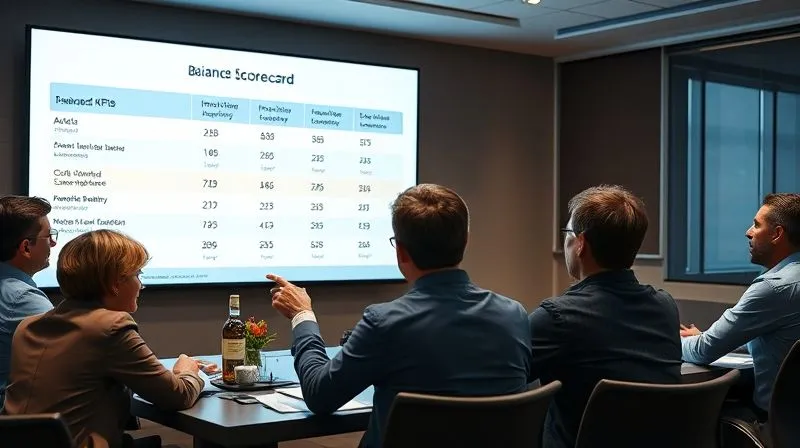
Regularly review these strategic KPIs (e.g., monthly or quarterly) in dedicated sessions, separate from operational reviews. This ensures that the long-term vision remains front and center, even when the daily pressures are intense. A balanced scorecard approach can be particularly effective here, combining financial, customer, internal process, and learning & growth perspectives.
Building a Strategic Culture
Ultimately, how to implement strategic thinking when daily tasks overwhelm isn't just an individual challenge; it's an organizational one. A truly strategic leader fosters a culture where strategic thinking is encouraged, rewarded, and integrated at all levels.
Elements of a Strategic Culture:
- Visionary Leadership: Leaders must consistently articulate and reinforce the long-term vision and strategy.
- Empowerment: Encourage employees at all levels to think beyond their immediate tasks and contribute to strategic discussions.
- Transparency: Share strategic goals and progress widely so everyone understands how their work contributes to the bigger picture.
- Learning & Development: Invest in training that develops strategic thinking skills throughout the organization.
- Strategic Communication: Ensure that strategic messages are clear, consistent, and frequently communicated across all channels.
- Reward Strategic Contributions: Acknowledge and reward individuals and teams who demonstrate strategic insight and initiative.
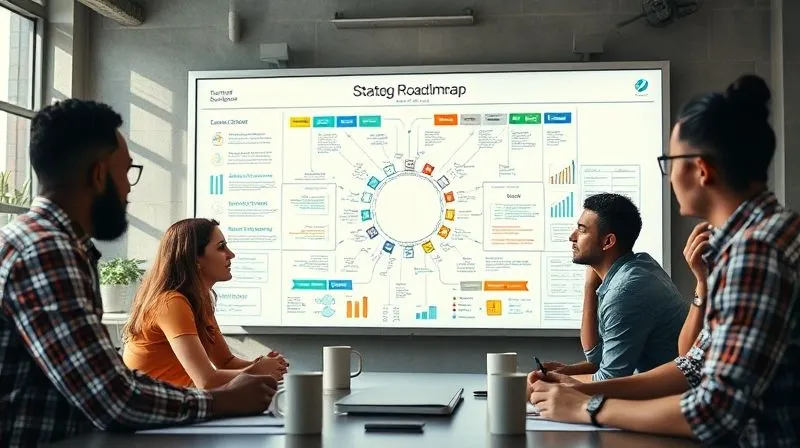
As often emphasized by management experts like Stephen Covey, effective leadership moves from managing things to leading people and from managing problems to creating opportunities. This shift requires a strategic culture. By embedding strategic thinking into the organizational DNA, you create a resilient, forward-looking enterprise that can navigate complexity and seize future opportunities, rather than merely reacting to present challenges.
Frequently Asked Questions (FAQ)
Q: How can I convince my team or manager to adopt more strategic thinking when they are also overwhelmed? The best approach is to lead by example and demonstrate tangible results. Start by implementing these strategies yourself. Share your 'Strategic Pause' insights, show how your refined prioritization leads to better outcomes, and highlight how delegation frees up critical resources. Then, present the business case: how strategic thinking directly contributes to growth, innovation, and problem prevention, rather than just firefighting. Frame it as an investment that pays dividends, not an additional burden.
Q: What if my industry is so fast-paced that long-term strategic planning feels impossible? Even in highly dynamic industries, strategic thinking is paramount. The difference is the time horizon and the agility of your strategy. Instead of a rigid five-year plan, focus on adaptive strategies with shorter cycles (e.g., 1-2 years) and continuous monitoring of environmental shifts. Scenario planning becomes even more critical. Strategic thinking isn't about predicting the future perfectly, but about building the resilience and foresight to adapt to it effectively.
Q: I'm an individual contributor, not a leader. Can I still apply these strategic thinking principles? Absolutely! Strategic thinking is a valuable skill at any level. As an individual contributor, you can apply these principles by asking how your daily tasks contribute to your team's or department's strategic goals. Prioritize your work based on its strategic impact, look for opportunities to automate or streamline your own tasks, and proactively offer solutions that align with larger objectives. This will not only make you more effective but also position you for leadership roles.
Q: How do I avoid analysis paralysis when trying to think strategically? Analysis paralysis often stems from a desire for perfect information or a fear of making the wrong decision. To counter this, establish clear decision criteria and timeboxes for strategic thinking. Embrace 'good enough' decision-making and the concept of 'failing fast' with small, reversible experiments. Strategic thinking should lead to action, not endless deliberation. Use frameworks like the "pre-mortem" to anticipate potential failures and mitigate them proactively, reducing the fear of action.
Q: What's the biggest mistake leaders make when trying to be more strategic? In my experience, the biggest mistake is failing to create protected, dedicated time for strategic thought and consistently allowing urgent, tactical demands to invade that time. Strategic thinking is a muscle; it needs regular exercise. Without intentional space and discipline, it will atrophy. Another common mistake is attempting to be strategic in isolation; true strategic leadership involves engaging and empowering your team to contribute to the vision.
Key Takeaways and Final Thoughts
Implementing strategic thinking when daily tasks overwhelm is not a utopian ideal; it's a critical discipline for effective leadership and sustainable organizational growth. It requires intentional effort, a shift in mindset, and a commitment to creating space for what truly matters.
- Prioritize ruthlessly: Use frameworks like the 3-Tier Model to allocate time based on strategic impact, not just urgency.
- Guard your 'Strategic Pause': Block and protect dedicated time for deep strategic thought.
- Empower through delegation: Free your mental bandwidth by trusting and developing your team.
- Leverage technology wisely: Automate routine tasks to create more time for strategic reflection.
- Cultivate a strategic mindset: Regularly ask "why," connect the dots, and seek diverse perspectives.
- Measure what matters: Track strategic KPIs to reinforce the value of your long-term efforts.
Remember, your role as a leader is not just to manage the present, but to shape the future. By consistently applying these strategies, you will not only navigate the daily deluge with greater ease but also lead your team and organization toward a more innovative, resilient, and prosperous future. The path to strategic clarity begins with a single, intentional step – take it today.
Recommended Reading
- Boost B2B Channel ROI: 7 Proven Strategies for Existing Networks
- Stop the Flood: 7 Proven Ways to Qualify Sales Automation Leads & Boost ROI
- Unlocking Impact: Practical Steps for Developing Servant Leadership
- Unlock the Secret to Faster Support: Optimizing Online Customer Support Response Time!
- Unlock Hidden Revenue: How Sales Analytics Fuels Upsell Success





Comments
Leave a comment below. Your email will not be published. Required fields marked with *