


How to mitigate supply chain disruptions from geopolitical instability?
For over two decades in operations management, I've witnessed firsthand the profound impact external forces can have on even the most meticulously planned supply chains. What was once a predictable flow can, in an instant, become a chaotic bottleneck, shattering profit margins and eroding customer trust. I've seen companies, both large and small, caught off guard, scrambling to react when proactive planning could have saved them millions.
Today, the specter of geopolitical instability casts a long, unpredictable shadow over global commerce. From trade wars and sanctions to regional conflicts and political upheavals, these macro events are no longer distant news; they are direct threats to your operational continuity, leading to raw material shortages, shipping delays, and escalating costs. The question isn't if your supply chain will face disruption, but when, and how prepared you are to weather the storm.
This isn't merely about reacting; it's about building an inherently resilient, agile, and future-proof supply network. In this definitive guide, I'll share my insights and provide a robust framework, complete with actionable strategies, expert advice, and real-world considerations, to help you effectively mitigate supply chain disruptions from geopolitical instability and transform vulnerability into a competitive advantage.
1. Enhance Supply Chain Visibility and Predictive Analytics
One of the most critical lessons I've learned in logistics planning is that you cannot manage what you cannot see. In the face of geopolitical uncertainty, blind spots in your supply chain are not just inefficiencies; they are ticking time bombs, waiting for a crisis to detonate. Enhancing visibility means gaining a comprehensive, real-time understanding of every node, every movement, and every potential bottleneck within your network.
This goes far beyond simply knowing where your shipments are. It involves deep dives into your tier-2 and tier-3 suppliers, understanding their locations, their dependencies, and their own risk profiles. Without this granular insight, you're making critical decisions based on incomplete information, which is a recipe for disaster when geopolitical winds shift unexpectedly.
The Power of Real-time Data
Leveraging advanced technologies like IoT sensors, AI-powered analytics, and blockchain can transform raw data into actionable intelligence. These tools allow you to monitor geopolitical hotspots, track freight movements with unprecedented accuracy, and even predict potential disruptions before they materialize. Imagine being able to anticipate a port closure due to political unrest weeks in advance, allowing you to reroute shipments proactively.
According to a recent report by McKinsey, companies with advanced supply chain visibility capabilities experienced 30% fewer disruptions and recovered 20% faster from unforeseen events. This isn't just about efficiency; it's about survival in an increasingly volatile world. The ability to model various geopolitical scenarios and their potential impact on your network is invaluable.
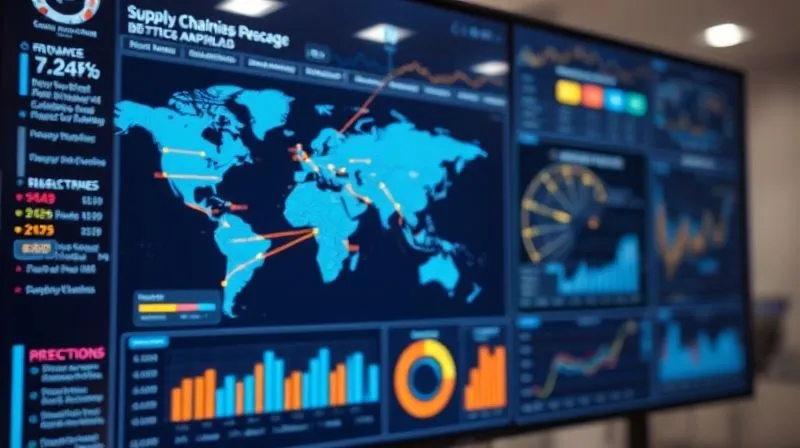
- Map Your Entire Network: Go beyond direct suppliers. Identify all critical upstream and downstream partners, their locations, and their interdependencies.
- Implement Real-time Tracking: Utilize GPS, RFID, and IoT sensors for precise monitoring of goods in transit and inventory levels.
- Integrate Data Sources: Consolidate data from ERP systems, TMS, WMS, and external geopolitical risk intelligence platforms into a single, unified view.
- Develop Predictive Models: Use AI and machine learning to analyze historical data, geopolitical news feeds, and economic indicators to forecast potential disruptions.
- Establish Early Warning Systems: Configure alerts for key performance indicators (KPIs) and geopolitical events that could impact your operations.
"Visibility isn't just about seeing; it's about understanding the 'why' behind the 'what' in your supply chain, enabling proactive strategic adjustments rather than reactive firefighting."
This proactive approach is paramount to how to mitigate supply chain disruptions from geopolitical instability effectively.
2. Diversify Sourcing and Geographic Footprint
Relying on a single source or a single geographic region for critical components or finished goods is perhaps the most significant vulnerability I've observed in many supply chains. While it might offer cost efficiencies in stable times, it transforms into an Achilles' heel when geopolitical tensions escalate or natural disasters strike. Diversification isn't a luxury; it's a strategic imperative.
I always advise my clients to think of their supply chain like an investment portfolio: you wouldn't put all your eggs in one basket, so why would you do it with your critical raw materials or manufacturing sites? Spreading your risk across multiple suppliers in different regions significantly reduces the impact of localized disruptions, whether they stem from political unrest, trade sanctions, or even a localized pandemic.
Beyond Single-Point Dependencies
True diversification means cultivating relationships with multiple suppliers for the same component, not just having a backup supplier, but actively engaging with several. This also involves strategically locating manufacturing facilities and distribution centers in politically stable and geographically diverse areas. For instance, if your primary manufacturing hub is in Southeast Asia, consider a secondary hub in Latin America or Eastern Europe.
This strategy often comes with an initial investment or slightly higher unit costs, but the long-term resilience and continuity it provides far outweigh these considerations. As Harvard Business Review highlighted, companies with diversified supply chains demonstrated superior financial performance during periods of global economic and political uncertainty.
- Reduced Exposure: Less susceptible to localized strikes, political instability, or trade barriers.
- Increased Flexibility: Ability to shift production or sourcing quickly in response to disruptions.
- Competitive Leverage: Multiple suppliers can foster better terms and innovation.
- Enhanced Resilience: A more robust network capable of absorbing shocks.
| Strategy | Pros | Cons |
|---|---|---|
| Single Sourcing | Cost efficiency, simpler management | High risk, low resilience, vulnerable to disruption |
| Dual Sourcing | Backup option, some cost efficiency | Moderate risk, requires managing two relationships |
| Multi-Sourcing (Regional) | High resilience, diversified risk, market access | Higher complexity, potential for increased costs |
| Multi-Sourcing (Global) | Maximum resilience, global market access, competitive pricing | Highest complexity, significant logistics overhead |
Embracing a multi-sourcing strategy is fundamental to how to mitigate supply chain disruptions from geopolitical instability.
3. Implement Robust Scenario Planning and Stress Testing
In my experience, many organizations excel at day-to-day operations but falter when faced with 'black swan' events – those rare, unpredictable occurrences that have massive consequences. Geopolitical instability often manifests in such a way. This is where robust scenario planning and stress testing become indispensable tools in your risk management arsenal.
Scenario planning isn't about predicting the future; it's about preparing for multiple possible futures. It involves identifying potential geopolitical risks, imagining their ripple effects across your supply chain, and developing pre-defined responses. This proactive mental exercise can significantly reduce panic and improve decision-making when a real crisis hits. It’s about building muscle memory for disruption.
Anticipating the Unforeseen
Start by brainstorming a range of plausible, high-impact geopolitical scenarios. What if a major trade route is blocked? What if sanctions are imposed on a key supplier's country? What if a major energy provider is nationalized? For each scenario, assess the potential impact on your lead times, costs, inventory, and customer commitments. This rigorous analysis allows you to identify critical vulnerabilities and develop specific contingency plans.
Stress testing takes this a step further. It involves simulating these scenarios, often using advanced modeling software, to see how your current supply chain would perform under duress. This can reveal unexpected weak points and areas where your existing contingency plans are insufficient. It’s a vital step for any business serious about understanding how to mitigate supply chain disruptions from geopolitical instability.
- Identify Key Geopolitical Risks: Work with intelligence agencies or consultants to identify potential flashpoints, trade policy shifts, or political instability in regions critical to your supply chain.
- Develop Plausible Scenarios: Construct detailed narratives for 3-5 high-impact scenarios (e.g., major port closure, key raw material embargo, currency crisis).
- Assess Impact: For each scenario, quantify the potential impact on lead times, costs, revenue, and customer satisfaction.
- Formulate Contingency Plans: Develop specific, actionable responses for each scenario, including alternative suppliers, transportation routes, and inventory adjustments.
- Regularly Review and Update: Geopolitical landscapes are dynamic. Review scenarios and plans quarterly or semi-annually, incorporating new intelligence.
"The best defense against an unpredictable future is not prediction, but preparation. Scenario planning transforms uncertainty into actionable foresight."
This rigorous preparation is key to knowing how to mitigate supply chain disruptions from geopolitical instability.
4. Build Strategic Inventory and Buffer Stock
In an era where 'lean' was once the undisputed king, the geopolitical realities of today demand a re-evaluation of inventory strategies. While excessive inventory ties up capital, a complete lack of buffer stock leaves you dangerously exposed to sudden disruptions. The challenge lies in finding the optimal balance – building strategic inventory without sacrificing financial agility.
I've seen companies that, in their pursuit of extreme leanness, found themselves completely paralyzed when a critical component from a single source was delayed due to an unexpected political event. The cost of lost production, missed sales, and damaged customer relationships far outweighed any inventory carrying costs they had avoided. This lesson is particularly poignant when considering how to mitigate supply chain disruptions from geopolitical instability.
Balancing Risk and Cost
Strategic inventory isn't about hoarding; it's about intelligent placement and calculated reserves of critical components or finished goods. This might mean holding a higher safety stock for items sourced from politically volatile regions, or for components with long lead times and limited alternative suppliers. It's a targeted approach, not a blanket increase.
Consider segmenting your inventory based on criticality and risk. High-value, high-risk items might warrant larger buffers, while low-risk, easily sourced items can maintain leaner levels. Tools for inventory optimization, often powered by AI, can help determine these optimal levels by factoring in lead time variability, demand fluctuations, and geopolitical risk indicators.
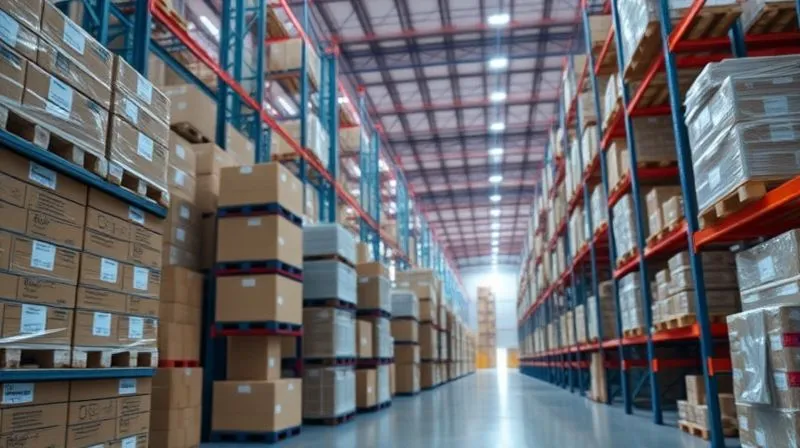
- Identify Critical Components: Determine which raw materials, sub-assemblies, or finished goods are essential for your operations and have high geopolitical risk.
- Calculate Optimal Safety Stock: Use advanced analytics to determine the ideal buffer for these critical items, balancing holding costs against the cost of disruption.
- Regional Hubs: Establish regional inventory hubs closer to key markets or alternative suppliers to reduce transit times and reliance on single shipping lanes.
- Consignment Stock: Explore agreements with key suppliers for consignment stock, where you only pay for goods as they are used, reducing your upfront capital outlay.
This balanced approach to inventory is a pragmatic answer to how to mitigate supply chain disruptions from geopolitical instability.
5. Foster Strong Supplier Relationships and Collaboration
In times of crisis, your suppliers are not just vendors; they are extensions of your own operations, and their resilience directly impacts yours. I've consistently observed that companies with deep, collaborative relationships with their suppliers navigate disruptions far more effectively than those who treat suppliers merely as transactional partners. Trust and open communication become your most valuable assets.
A strong supplier relationship means transparency, mutual understanding of risks, and a shared commitment to problem-solving. It's about moving beyond price negotiations to strategic partnerships where you collectively invest in resilience. When a geopolitical event hits, a trusted supplier is far more likely to prioritize your needs, share critical information, and work creatively to find solutions.
Partnership in Adversity
This collaboration extends to sharing your own risk assessments and scenario plans with key suppliers, and in turn, understanding their own vulnerabilities. Jointly developing contingency plans, cross-training staff, and even co-investing in new technologies or alternative production sites can create a formidable network of resilience. This proactive engagement is crucial for how to mitigate supply chain disruptions from geopolitical instability.
According to a study published in the Journal of Supply Chain Management, firms with high levels of supplier collaboration demonstrated significantly better performance during periods of market uncertainty. These relationships are built on consistent engagement, fair practices, and a recognition of shared destiny.
- Open Communication Channels: Establish regular, transparent communication with key suppliers regarding forecasts, potential risks, and performance.
- Joint Risk Assessments: Collaborate on identifying and assessing geopolitical risks that could impact both your operations.
- Incentivize Resilience: Offer long-term contracts, preferred status, or even financial support to suppliers who invest in their own resilience and diversification.
- Share Best Practices: Work together to implement best practices for inventory management, quality control, and crisis response.
Case Study: Phoenix Manufacturing's Resilience
Phoenix Manufacturing, a mid-sized aerospace component supplier, faced a critical disruption when political unrest in a key raw material producing country led to severe export restrictions. Instead of being paralyzed, Phoenix had cultivated deep relationships with its tier-1 and tier-2 suppliers over five years, engaging in quarterly risk reviews and even co-investing in a small, alternative raw material processing plant in a more stable region. When the crisis hit, their primary supplier immediately activated the pre-agreed contingency plan, diverting existing stock from the alternative plant and even leveraging their own network to secure additional materials from a third-party, albeit at a slightly higher cost. This proactive collaboration, driven by strong relationships, allowed Phoenix to maintain 95% of its production schedule, avoiding costly penalties and maintaining customer trust, while many competitors struggled severely.
6. Explore Nearshoring, Reshoring, and Regionalization
The pursuit of lowest-cost manufacturing locations often led companies to highly centralized, geographically distant production hubs. While this strategy yielded significant cost savings for decades, the escalating frequency and severity of geopolitical disruptions are forcing a fundamental re-evaluation. The concept of 'total cost of ownership' now heavily weighs in the costs of risk and resilience.
In my discussions with supply chain leaders globally, 'nearshoring' and 'reshoring' are no longer just buzzwords; they are becoming viable, strategic considerations for critical components and products. Moving production closer to home markets or to politically stable, geographically proximate regions can drastically reduce lead times, transportation costs, and exposure to distant geopolitical storms.
Rebalancing Global Production
Nearshoring involves moving production to a neighboring country, often leveraging trade agreements and cultural similarities. Reshoring brings production back to the home country, offering benefits like enhanced control, reduced intellectual property risk, and often, a boost to local economies. Regionalization, a broader strategy, focuses on establishing self-sufficient supply chains within major economic blocs.
While these strategies may entail higher labor or production costs, the benefits in terms of reduced risk, improved agility, shorter lead times, and enhanced quality control can create a compelling business case. Moreover, the environmental benefits of reduced long-haul shipping and the positive public relations from supporting local economies are increasingly important factors for stakeholders.
| Strategy | Pros | Cons |
|---|---|---|
| Nearshoring | Reduced lead times, lower shipping costs, cultural proximity, easier oversight | Potentially higher labor costs, limited skilled labor pool in some regions |
| Reshoring | Maximized control, reduced geopolitical risk, IP protection, public relations benefits | Significantly higher labor/production costs, initial investment in infrastructure |
| Regionalization | Distributed risk, resilient regional blocs, tailored market access | Requires significant strategic planning, potential for duplicate infrastructure |

These strategies offer tangible pathways for how to mitigate supply chain disruptions from geopolitical instability by fundamentally restructuring your network.
7. Leverage Technology for Agility and Automation
The digital transformation of supply chains is not just about efficiency; it's about building an intelligent, adaptive network capable of responding to unprecedented challenges. In my view, technology is the ultimate enabler for achieving the agility required to navigate geopolitical turbulence. From AI-driven forecasting to robotic process automation, these tools are no longer optional but essential for resilience.
Automation, for instance, can significantly reduce reliance on manual processes that are prone to human error and vulnerable to labor disruptions. AI and machine learning can analyze vast datasets to identify patterns, predict risks, and optimize routes or inventory levels far beyond human capabilities. This technological backbone is critical for any organization seeking to understand how to mitigate supply chain disruptions from geopolitical instability effectively.
The Digital Backbone of Resilience
Consider the role of digital twins in this context. A digital twin of your supply chain allows you to model changes, simulate disruptions, and test proposed solutions in a virtual environment before implementing them in the real world. This capability provides invaluable insights and reduces the risk associated with strategic decisions during times of uncertainty.
Furthermore, blockchain technology offers unparalleled transparency and traceability, providing an immutable record of every transaction and movement within your supply chain. This is particularly powerful for verifying the origin of goods, ensuring compliance with sanctions, and building trust in complex global networks.
- AI/ML for Demand Forecasting: Improve accuracy and adapt quickly to changing market conditions and geopolitical impacts.
- Robotic Process Automation (RPA): Automate repetitive tasks in logistics, procurement, and inventory management, reducing human error and increasing speed.
- Digital Twins: Create virtual models of your supply chain to simulate scenarios and test strategies without real-world risk.
- Blockchain for Traceability: Enhance transparency and verify the origin and authenticity of products, crucial for compliance and risk management.
- Cloud-based Collaboration Platforms: Facilitate seamless information sharing and coordination with global partners in real-time.
"Technology doesn't just make your supply chain smarter; it makes it more resilient, turning data into your most powerful shield against geopolitical storms."
Frequently Asked Questions (FAQ)
What is the most immediate step a company can take to address geopolitical supply chain risks? In my experience, the most immediate and impactful step is to gain complete visibility into your current supply chain, especially your tier-1 and tier-2 suppliers. You cannot defend against risks you don't even know exist. This involves mapping your entire network and investing in real-time tracking and data integration to identify immediate vulnerabilities and potential single points of failure. Simultaneously, establish an internal task force dedicated to monitoring geopolitical developments relevant to your key sourcing regions.
How can smaller businesses, with limited resources, effectively mitigate these risks? Smaller businesses can start by focusing on diversification of their most critical components or services, even if it's just identifying and onboarding a secondary supplier. Leverage cloud-based supply chain management tools which are often more affordable and scalable. Foster exceptionally strong relationships with existing suppliers, as mutual trust can be a lifeline during disruptions. Also, focus on building a strategic, albeit lean, buffer stock for items with long lead times or high risk. Collaboration with other small businesses in your industry to share intelligence or even co-source can also be a powerful strategy.
Is reshoring always the best option for reducing geopolitical risk? Not necessarily. While reshoring offers significant benefits in terms of control and reduced geopolitical exposure, it often comes with substantially higher production costs and may not be feasible for all industries or product types. It's a strategic decision that requires a thorough total cost of ownership analysis, weighing the increased operational costs against the potential savings from reduced risk, shorter lead times, and improved quality. Regionalization or nearshoring can often offer a more balanced approach, providing many of the benefits of reshoring without the full cost burden.
How often should a company update its supply chain risk management plan in the current geopolitical climate? Given the rapid pace of geopolitical shifts, I strongly recommend reviewing and updating your supply chain risk management plan, including scenario planning, at least quarterly. Critical geopolitical events can unfold rapidly, and your plan needs to be agile enough to adapt. Beyond formal reviews, maintaining a continuous monitoring system for global political and economic news, trade policy changes, and regional conflicts is essential. This continuous intelligence gathering should feed directly into your risk assessment process.
What role does government policy play in helping businesses mitigate these disruptions? Government policy plays a crucial, though often indirect, role. Trade agreements, tariffs, sanctions, and infrastructure investments directly impact supply chain costs and feasibility. Governments can also offer incentives for reshoring or nearshoring, provide intelligence on geopolitical risks, and even facilitate industry-wide collaboration on resilience initiatives. Businesses should actively engage with industry associations and policymakers to advocate for policies that support a resilient and competitive supply chain ecosystem. Understanding and adapting to these policies is a critical part of how to mitigate supply chain disruptions from geopolitical instability.
Key Takeaways and Final Thoughts
- Visibility is Paramount: You cannot manage risks you cannot see. Invest in granular, real-time supply chain visibility.
- Diversify Your Network: Avoid single points of failure by sourcing from multiple regions and suppliers.
- Plan for the Unforeseen: Implement robust scenario planning and stress testing to prepare for various geopolitical disruptions.
- Strategic Inventory is Key: Balance lean principles with intelligent buffer stock for critical components.
- Cultivate Strong Partnerships: Collaborative relationships with suppliers are your frontline defense during crises.
- Re-evaluate Geographic Footprint: Consider nearshoring, reshoring, or regionalization for enhanced control and reduced risk.
- Embrace Technology: Leverage AI, automation, and digital twins to build an agile and intelligent supply chain.
The landscape of global logistics is undeniably more complex and volatile than ever before. Geopolitical instability is not a passing phase; it's a persistent reality that demands a fundamental shift in how we approach supply chain management. As an industry specialist, I can assure you that those companies that proactively build resilience, embrace diversification, and leverage technology will not only survive these turbulent times but will emerge stronger, more agile, and ultimately, more competitive. The time to act is now – transform your vulnerabilities into strategic advantages and secure your future.
Recommended Reading
- The Hidden Peril: Unmasking the Legal Risks of Misclassifying Workers
- 7 Proven Strategies: Cut Inventory Costs Without Harming Service
- Mastering Budget Variances: How to Effectively Control Them in Business
- 7 Proven Steps: Boost Remote Staff Mental Health Measurably
- Unlock Success: 7 Strategies to Overcome Succession Planning Resistance in HR




Comments
Leave a comment below. Your email will not be published. Required fields marked with *