


How to Prevent Unidentified Risks from Derailing Projects?
For over two decades in project management, I've witnessed the silent, insidious force that can bring even the most meticulously planned projects to their knees: the unidentified risk. It’s not the risks we put on a register – the known unknowns like a potential vendor delay or a budget overrun – but the 'unknown unknowns' that emerge from the shadows, completely blindsiding teams and stakeholders. I've seen promising ventures collapse, not because of poor execution, but because a lurking, unforeseen challenge suddenly erupted, leaving everyone scrambling.
The pain point is universal: that gut-wrenching moment when a project, seemingly on track, hits an unexpected wall. It’s the market shift no one predicted, the regulatory change that came out of nowhere, or the technological flaw that wasn't supposed to exist. These are the risks that don't just cause delays; they can fundamentally alter project scope, destroy budgets, erode trust, and in the worst cases, lead to outright failure. The traditional risk management playbook often falls short when confronted with these invisible threats.
But what if there was a way to shine a light into these dark corners? This article isn't just about identifying more risks; it's about cultivating a mindset and implementing actionable frameworks to proactively discover, anticipate, and build resilience against those unidentified risks before they ever get a chance to derail your project. I’ll share seven expert strategies, complete with practical steps and real-world insights, to help you navigate the treacherous waters of the unknown and steer your projects toward success.
The Invisible Threat: Understanding Unknown Unknowns
Before we can prevent unidentified risks, we must first understand their nature. In project management, risks are often categorized into three types: known knowns (things we know and understand), known unknowns (things we know we don't know, like the exact duration of a task), and unknown unknowns (things we don't even know we don't know). It’s this last category that poses the greatest danger, as it exists entirely outside our current scope of awareness and planning.
Traditional risk registers excel at managing known unknowns. We identify them, assess their probability and impact, and develop mitigation plans. However, when an unknown unknown materializes, it bypasses these defenses entirely. It’s a blind spot, a black swan event within the project context, and its impact can be catastrophic because no contingency has been made. These are the risks that demand a fundamentally different approach – one focused on discovery rather than mere identification.
“The greatest risk is not knowing what you don’t know. True project resilience comes from actively seeking out and preparing for the unexpected, not just the anticipated.”

Shifting from Reactive to Proactive: A Paradigm Shift in Risk Management
The standard project management approach often leans reactive when it comes to risks outside the known register. We wait for a problem to surface, then scramble to fix it. To truly prevent unidentified risks from derailing projects, we must instigate a paradigm shift: moving from a reactive stance to a deeply proactive one, focusing on 'risk discovery' rather than just 'risk identification.'
Risk discovery involves creating environments and employing techniques specifically designed to unearth potential issues that are currently invisible. It's about questioning assumptions, challenging existing paradigms, and actively seeking out weak signals that might indicate a future problem. This isn't just about adding more items to a checklist; it's about embedding a culture of foresight and continuous inquiry throughout the project lifecycle.
Building a Culture of Vigilance
At the heart of proactive risk discovery is the organizational culture. Without a foundation of psychological safety, open communication, and a blameless learning environment, hidden risks will remain hidden. Team members must feel empowered to raise concerns, even vague ones, without fear of reprisal or being seen as negative. In my experience, this is often the most critical, yet overlooked, first step.
- Foster Psychological Safety: Ensure team members feel safe to speak up, challenge ideas, and admit mistakes.
- Encourage Open Dialogue: Create regular forums for discussing potential problems, not just progress updates.
- Promote Cross-Functional Collaboration: Break down silos to allow diverse perspectives to identify blind spots.
- Reward Foresight: Acknowledge and celebrate those who identify potential issues early, even if they don't materialize.
Strategy 1: The Power of Pre-Mortems and Reverse Brainstorming
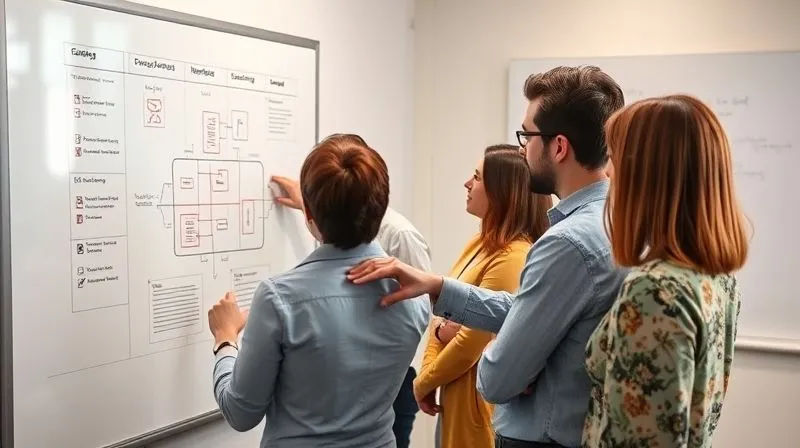
One of the most effective tools for unearthing unidentified risks is the pre-mortem. Unlike a post-mortem, which examines a project after it has failed, a pre-mortem is conducted early in the project lifecycle, often during the planning phase. The premise is simple: imagine the project has spectacularly failed, and then work backward to identify all the reasons why. This psychological technique helps overcome optimism bias and encourages teams to think critically about potential pitfalls.
Conducting an Effective Pre-Mortem Session
I've found that a well-facilitated pre-mortem can uncover dozens of previously unconsidered risks. Here’s how to run one effectively:
- Set the Scene: Gather the project team and key stakeholders. Announce that the project has failed catastrophically.
- Brainstorm Reasons for Failure: Individually, team members list every conceivable reason for the failure, no matter how outlandish. Encourage thinking outside the box – market collapse, key personnel leaving, technology malfunction, regulatory changes, etc.
- Share and Categorize: Have each person share their list. Group similar risks and discuss their potential impact and likelihood.
- Develop Mitigation/Prevention: For the most critical 'unidentified' risks uncovered, brainstorm proactive steps to prevent them or mitigate their impact if they occur.
- Integrate into Planning: Incorporate these new insights into the project plan, risk register, or contingency strategies.
Reverse Brainstorming for Hidden Flaws
A complementary technique is reverse brainstorming. Instead of asking 'How can we achieve success?', you ask 'How could we intentionally sabotage this project?' or 'What are all the ways this project could go wrong?' This reframes the problem and often uncovers creative, unexpected failure modes that traditional brainstorming might miss. For example, if designing a new software feature, you might ask: 'How could we make this feature utterly unusable?' The answers often highlight subtle design flaws or user experience issues that could become major risks.
| Pre-Mortem Scenario | Identified Risk | Prevention Strategy |
|---|---|---|
| Project X failed due to scope creep | Lack of formal change control process | Implement strict change control procedures |
| Project X failed due to unexpected competitor launch | Inadequate market intelligence | Establish continuous market scanning and competitor analysis |
| Project X failed due to critical skill gaps | Insufficient resource planning | Conduct skills inventory and training needs assessment |
Strategy 2: Leveraging Diverse Perspectives and Expert Networks
One of the primary reasons unidentified risks remain hidden is the 'echo chamber' effect. When teams are homogenous in thought, experience, or background, they tend to share similar blind spots. Breaking free from this cognitive trap is crucial for effective risk discovery. Embracing cognitive diversity significantly broadens the range of perspectives applied to a project, making it far more likely that someone will spot a potential issue that others overlook.
Beyond internal team diversity, actively engaging external consultants, subject matter experts (SMEs), and even peer groups can provide invaluable fresh eyes. These individuals bring different industry experiences, functional expertise, and a lack of inherent bias that can help uncover assumptions or external factors that the core team might be too close to see. As a veteran in the field, I often advise my clients to seek out 'friendly critics' – those who can offer constructive challenges to the project plan.
“Diversity isn't just a buzzword; it's a strategic imperative for risk management. Varied viewpoints act as a collective radar, scanning for threats that a uniform perspective would miss.”
According to a Harvard Business Review article, diverse teams are smarter and more innovative. This extends directly to risk management, as diverse teams are better equipped to identify and analyze a broader spectrum of potential problems. Actively solicit input from individuals with differing roles, departments, backgrounds, and even personality types.
Strategy 3: Scenario Planning and Stress Testing Project Resilience
Scenario planning is a powerful strategic tool that allows teams to explore multiple plausible futures, not just the most likely one. Instead of predicting the future, it helps you understand the forces that might shape it and develop adaptive strategies for various outcomes. This approach is particularly effective for uncovering unknown unknowns, as it forces you to think beyond your current assumptions and consider 'what if' situations that might otherwise be ignored.
Steps to Effective Scenario Planning
- Identify Key Driving Forces: What are the major trends, uncertainties, and factors that could impact your project (e.g., technological advancements, regulatory changes, economic shifts)?
- Develop Plausible Scenarios: Based on combinations of these driving forces, create 2-4 distinct, internally consistent narratives of how the future might unfold. These should be challenging and thought-provoking, not just optimistic or pessimistic variations.
- Analyze Project Impact: For each scenario, assess how your project would fare. What new risks emerge? What opportunities arise?
- Formulate Adaptive Strategies: Develop flexible strategies and contingency plans that would allow your project to succeed, or at least survive, in each of the developed scenarios.
Complementing scenario planning is stress testing. This involves deliberately pushing the project's boundaries and assumptions to their breaking point. For instance, what if a critical resource suddenly becomes unavailable for three months? What if a key technology fails completely? By simulating extreme conditions, you can identify vulnerabilities and single points of failure that might otherwise go unnoticed. This rigorous examination helps build project resilience, preparing it for shocks from unidentified sources.

Strategy 4: Continuous Environmental Scanning and Horizon Watching
Projects don't exist in a vacuum. They are constantly influenced by external forces – market shifts, technological innovations, regulatory changes, geopolitical events, and societal trends. Unidentified risks often originate from these external environments. Therefore, a critical strategy for prevention is continuous environmental scanning, or 'horizon watching' – systematically monitoring the broader landscape for weak signals that could indicate emerging threats or opportunities.
This goes beyond typical market research. It's about looking for anomalies, for nascent trends, for whispers of change that might not yet be fully formed. A small shift in public opinion, a new startup emerging in a niche area, a subtle policy debate – any of these could evolve into a significant unidentified risk if not monitored. I've often seen projects blindsided by changes that were visible on the horizon for those who cared to look.
Key Areas for Continuous Scanning
- Technological Landscape: Emerging technologies, disruptive innovations, cybersecurity threats.
- Regulatory and Legal Environment: Upcoming legislation, compliance changes, new industry standards.
- Market and Competitive Landscape: New entrants, shifts in customer behavior, competitor strategies.
- Socio-Cultural Trends: Demographic shifts, evolving societal values, public sentiment.
- Economic and Geopolitical Factors: Inflation, supply chain disruptions, political instability.
Regularly scheduled 'scanning sessions' with a diverse group of stakeholders can be incredibly valuable. Assign specific team members or even external advisors to monitor different areas. This proactive intelligence gathering transforms external uncertainties into actionable insights, helping you to prevent unidentified risks from becoming project destroyers. For further reading on this, consider exploring resources on Deloitte's insights on horizon scanning.
Strategy 5: Developing Robust Early Warning Systems and Metrics
While some unidentified risks are truly 'black swans,' many give off subtle signals before they become critical. The challenge lies in recognizing these weak signals amidst the noise of daily project execution. Developing robust early warning systems involves identifying and monitoring leading indicators that can hint at potential problems, rather than just relying on lagging indicators that tell you a problem has already occurred.
Traditional project KPIs (e.g., budget spent, tasks completed) are often lagging indicators. We need to shift our focus to metrics that predict future performance or highlight emerging issues. For example, a sudden, unexplained drop in team communication frequency might be a leading indicator of morale issues or hidden technical challenges. A slight but persistent increase in change requests might signal a deeper misunderstanding of requirements or scope creep.
Examples of Leading Indicators for Unidentified Risks
- Team Morale & Engagement: Declining participation in meetings, increased sick days, less proactive problem-solving.
- Stakeholder Engagement: Reduced responsiveness from key stakeholders, fewer proactive questions, missed review meetings.
- Quality Metrics: Small, recurring defects in early deliverables, increased rework time, higher-than-average bug reports.
- Vendor Performance: Slight delays in communication, minor deviations from SLAs, increased queries about specifications.
- External Environment: Mentions of competitor activities on social media, minor regulatory consultations, shifts in analyst reports.
Implementing a dashboard that tracks these specific leading indicators, along with regular reviews, can act as an invaluable radar. It's about developing an intuitive 'feel' for the project's health, backed by data, to catch those subtle shifts before they escalate into major unidentified risks. This allows you to intervene early, often when the risk is still manageable and less costly to address.

Strategy 6: Building Organizational Agility and Adaptive Capacity
Despite our best efforts, some unidentified risks will inevitably emerge. The true test of a project's resilience, and indeed an organization's maturity, lies in its ability to adapt swiftly and effectively when the unexpected occurs. This is where building organizational agility and adaptive capacity becomes paramount. It's about designing projects and teams that are not just robust, but also flexible and responsive to change.
Agile methodologies, with their iterative cycles, continuous feedback loops, and emphasis on emergent requirements, inherently build in a degree of adaptive capacity. They acknowledge that plans will change and that learning is continuous. However, agility isn't just for software development; its principles can be applied to any project. It involves empowering teams to make rapid decisions, fostering cross-functional collaboration, and maintaining a clear vision while allowing flexibility in the 'how.'
Case Study: How InnovateCo Navigated an Unforeseen Market Shift
InnovateCo, a mid-sized consumer electronics firm, was developing a new smart home device when an unexpected competitor launched a similar product with a disruptive pricing model. This was an unidentified market risk that threatened to make InnovateCo's product unviable. Instead of panicking or stubbornly sticking to their original plan, InnovateCo's project leadership, having cultivated an agile culture, quickly convened a 'sense-and-respond' session. They re-evaluated their product's unique value proposition, rapidly iterated on their marketing strategy, and even pivoted a core feature to differentiate. This adaptive capacity, built on empowered teams and flexible planning, allowed them to not only survive the market shock but also launch a successful, differentiated product within weeks of the competitor. This demonstrates how organizational agility can turn an unforeseen threat into a strategic advantage. For more on this, the MIT Sloan Management Review frequently publishes on organizational agility.
Strategy 7: The Role of Psychological Safety and Blameless Learning
I cannot overstate the importance of psychological safety in the context of preventing unidentified risks. If team members fear blame or punishment for raising concerns, admitting mistakes, or pointing out potential flaws, those vital pieces of information will remain hidden. This creates a dangerous environment where small, identifiable risks can fester and grow into massive, project-derailing problems, simply because no one felt safe enough to speak up.
Cultivating a culture of blameless learning means that when something goes wrong – whether it's a known issue or an emerging unidentified risk – the focus shifts from 'who is to blame?' to 'what happened, why did it happen, and how can we prevent it from happening again?' This approach encourages transparency, fosters continuous improvement, and ensures that valuable lessons are extracted from every challenge. It's about understanding the systemic factors that contribute to problems, rather than scapegoating individuals.
“The most dangerous risks are those we choose not to see. Psychological safety is the lens that allows us to see them, and blameless learning is the engine that drives us to fix them.”
When teams feel secure in their environment, they become proactive risk hunters. They are more likely to share 'weak signals' – those vague feelings or minor observations that, when combined with others, can coalesce into a clear picture of an emerging unidentified risk. This collective intelligence, fueled by trust and open communication, is arguably the most powerful defense against the unknown. It transforms potential failures into opportunities for learning and strengthens the entire project ecosystem.
Frequently Asked Questions (FAQ)
How do "unknown unknowns" differ from "known unknowns" in practical terms? Known unknowns are risks you are aware of but whose impact or probability is uncertain (e.g., 'We know the new software might have bugs, but we don't know how many or how severe'). You can plan for them with contingencies. Unknown unknowns are risks you are completely unaware of until they manifest (e.g., 'A sudden, unprecedented global pandemic'). They require a different set of strategies focused on discovery, resilience, and adaptability rather than direct mitigation.
Can small projects benefit from these extensive risk prevention strategies? Absolutely. While the scale of implementation might differ, the principles remain the same. A small project can still conduct a mini-pre-mortem, seek external advice from a colleague, or implement simple leading indicators. The cost of a small project derailing can be just as significant proportionally, making proactive risk discovery valuable regardless of size.
What's the biggest challenge in implementing a proactive risk discovery culture? The biggest challenge is often overcoming ingrained organizational habits and a fear-based culture. Shifting from 'blame' to 'learn' requires strong leadership commitment and consistent reinforcement. It also demands a significant investment in time and effort upfront, which some organizations may be reluctant to make without immediate visible returns.
How do I get buy-in from senior management for these non-traditional risk approaches? Focus on the long-term benefits and the cost of inaction. Frame it in terms of increased project success rates, reduced rework, enhanced organizational resilience, and improved reputation. Use compelling data (even anecdotal case studies from your own experience or industry examples) to demonstrate how unidentified risks have previously impacted projects and how these proactive strategies can mitigate those impacts. Highlight that these are investments in project stability and predictable outcomes.
Is there a specific tool or software that helps with unidentified risk management? While no single tool magically identifies 'unknowns,' several platforms can support the processes. Tools for collaboration (like Miro for pre-mortems), scenario planning software, environmental scanning tools (e.g., news aggregators, trend analysis platforms), and robust project management information systems (PMIS) that allow for tracking custom leading indicators can all contribute. Ultimately, it's the methodology and culture, not just the tool, that makes the difference.
Key Takeaways and Final Thoughts
Preventing unidentified risks from derailing your projects isn't about having a crystal ball; it's about cultivating a deep understanding of uncertainty and proactively building resilience. As an industry veteran, I’ve learned that the most successful projects aren't those that avoid all risks, but those that are best prepared for the unexpected.
- Shift Your Mindset: Move beyond traditional risk identification to active risk discovery.
- Embrace Foresight: Utilize tools like pre-mortems and scenario planning to explore potential futures.
- Diversify Your Perspective: Leverage varied viewpoints and external expertise to uncover blind spots.
- Build Adaptive Capacity: Foster an agile culture and robust early warning systems to respond swiftly.
- Prioritize Psychological Safety: Create an environment where concerns are raised, and learning is paramount.
Implementing these strategies requires commitment, but the payoff is immense: projects that are more robust, teams that are more prepared, and outcomes that are more predictable. Don't let the shadows of the unknown derail your next big endeavor. Take these insights, apply them diligently, and empower your projects to navigate the future with confidence and unparalleled resilience. Your journey to mastering the unknown starts now.
Recommended Reading
- 7 Strategic Steps: Prove Consulting ROI to Skeptical Clients Effectively
- Regain Your Edge: 7 Strategies to Beat Disruptors & Reclaim Advantage
- Website Traffic, Zero Sales? 9 Fixes for Your Small Business Funnel
- Why Is Our New Business Model Failing to Generate Revenue? 7 Key Reasons & Fixes
- 7 Proven Steps to Re-engage Churn-Risk Customers Post-Service Issue





Comments
Leave a comment below. Your email will not be published. Required fields marked with *