


How to Prove Corporate Philanthropy Drives Tangible Business Value?
For over two decades in the Corporate Social Responsibility (CSR) and business strategy space, I've witnessed a persistent challenge: the struggle to definitively link corporate philanthropy with concrete, measurable business outcomes. Many well-intentioned companies initiate giving programs, driven by a genuine desire to do good, only to face skepticism from stakeholders demanding proof of return on investment.
This skepticism isn't unfounded. In a world where every dollar spent must justify its existence on a balance sheet, philanthropic initiatives often get relegated to the 'nice-to-have' category, vulnerable to budget cuts during economic downturns. The problem isn't the act of giving itself, but the inability to articulate and demonstrate its strategic importance and the tangible business value it generates.
In this comprehensive guide, I'll share expert insights and battle-tested frameworks to help you move beyond anecdotal evidence. You'll learn how to strategically align your philanthropic efforts, measure their multifaceted impact, and ultimately, prove corporate philanthropy drives tangible business value, transforming it from a cost center into a powerful driver of growth, reputation, and talent acquisition.
Beyond Altruism: Understanding the Strategic Imperative of Corporate Giving
The traditional view of corporate philanthropy as a purely altruistic endeavor, separate from core business operations, is outdated. In today's interconnected world, consumers, employees, and investors increasingly expect companies to play a positive role in society. This shift has elevated philanthropy from a peripheral activity to a strategic imperative, demanding a more integrated and data-driven approach.
In my experience, true corporate philanthropy isn't just about giving; it's about investing in shared value. It's about finding the intersection between societal needs and business opportunities, creating a win-win scenario that benefits both the community and the company's bottom line.
When philanthropy is approached strategically, it becomes a powerful tool for achieving business objectives, from enhancing brand reputation to fostering innovation. It's about identifying social issues that resonate with your company's values and expertise, then deploying resources in ways that generate measurable impact for both the cause and your enterprise. This integrated approach, often referred to as strategic CSR, is what separates impactful giving from mere checkbook charity. It requires a clear vision, intentional planning, and a commitment to rigorous measurement.
To truly unlock the strategic power of your giving, it's crucial to understand that every philanthropic dollar spent is an investment. Like any investment, it requires careful consideration of potential returns, both social and financial. This mindset shift is the first step in proving that corporate philanthropy drives tangible business value, moving it from the 'expenses' column to the 'strategic assets' ledger. As Porter and Kramer famously argued in Harvard Business Review, integrating social impact into core strategy is not just good for society, but essential for competitive advantage.
The Foundational Pillars: Aligning Philanthropy with Core Business Objectives
The most effective corporate philanthropy isn't a random act of kindness; it's a carefully orchestrated strategy aligned with your company's mission, values, and long-term business goals. Without this alignment, efforts can feel disjointed and fail to generate significant value. I've often seen companies scatter their giving across too many causes, diluting their impact and making it impossible to track tangible returns.
Step 1: Identify Core Business Strengths and Needs
Begin by mapping your company's unique assets – its products, services, employee skills, supply chain, and market reach. Simultaneously, identify critical business needs, such as talent acquisition, market expansion, brand differentiation, or regulatory compliance. For instance, a tech company might leverage its software development expertise to support digital literacy programs, simultaneously addressing a societal need and nurturing a future talent pipeline.
Step 2: Define Shared Value Opportunities
Look for areas where your business strengths can genuinely address a societal need in a way that also creates economic value for your company. This 'shared value' approach is central to proving corporate philanthropy drives tangible business value. It's not about choosing between profit and purpose, but finding how purpose can drive profit. A food company, for example, might invest in sustainable agriculture initiatives that not only benefit farmers but also secure its supply chain and enhance its reputation for environmental stewardship.
Step 3: Integrate Philanthropic Goals into Business Strategy
Once shared value opportunities are identified, embed philanthropic goals directly into your strategic planning. This means setting clear, measurable objectives for your giving programs that complement and contribute to broader business objectives. If a goal is to improve employee retention, a philanthropic initiative focused on employee volunteerism should have metrics linked to engagement and turnover rates. This integration ensures philanthropy is seen as an investment, not an expense.
By following these foundational steps, you create a robust framework where every philanthropic dollar works harder, contributing to both social good and the company's strategic success. This intentional alignment is the bedrock upon which you can build a compelling case for how corporate philanthropy drives tangible business value.
Measuring the Unseen: Quantifying Impact on Brand Reputation and Customer Loyalty
While direct financial returns are often sought, some of the most profound business values of corporate philanthropy manifest in less tangible, yet equally critical, areas like brand reputation and customer loyalty. These are often harder to quantify but are absolutely essential for long-term business health. I've observed countless times how a strong commitment to social good can differentiate a brand in a crowded marketplace.
Leveraging Brand Perception Surveys
One effective way to measure impact is through comprehensive brand perception surveys. These surveys, conducted before and after significant philanthropic initiatives, can track key metrics such as consumer awareness of your CSR efforts, their perception of your company's ethics, and their likelihood to recommend your brand. Questions can include: 'How aware are you of [Company Name]'s efforts to support [Cause]?', 'Does [Company Name]'s involvement in [Cause] make you view the company more positively?', or 'How likely are you to choose [Company Name] over a competitor due to its social initiatives?'
Analyzing Customer Engagement Metrics
Beyond general perception, look at specific customer engagement metrics. Are customers engaging more with your content related to philanthropy? Are they sharing your CSR stories on social media? Track social media mentions, sentiment analysis, website traffic to CSR pages, and engagement rates on philanthropic campaigns. A spike in positive mentions or shares following a major community initiative is a clear indicator of enhanced brand affinity. According to a recent Deloitte study, a significant percentage of consumers are willing to pay more for sustainable and socially responsible brands.
These metrics, when tracked consistently, provide a powerful narrative demonstrating how corporate philanthropy drives tangible business value by cultivating a positive brand image and fostering a loyal customer base. They transform abstract notions of 'doing good' into quantifiable evidence of market differentiation and competitive advantage.

The Internal Dividend: Boosting Employee Engagement and Retention
Perhaps one of the most compelling, yet often underappreciated, ways corporate philanthropy drives tangible business value is through its profound impact on a company's internal culture, specifically employee engagement and retention. In today's competitive talent market, employees, particularly younger generations, seek meaning and purpose in their work. A robust philanthropic program directly addresses this need.
Employee Volunteerism Programs (EVP)
Structured employee volunteerism programs offer employees opportunities to contribute their time and skills to causes they care about, often during work hours. This isn't just about giving back; it's about team building, skill development, and fostering a sense of shared purpose. When employees feel their company supports their desire to make a difference, their loyalty and morale soar. I've seen firsthand how an EVP can transform a disengaged team into a highly motivated one, simply by empowering them to contribute to something bigger than themselves.
Impact on Recruitment and Onboarding
Beyond current employees, strong philanthropic initiatives are powerful recruitment tools. Prospective employees are increasingly scrutinizing a company's social impact record. Highlighting your commitment to corporate giving in recruitment materials and during interviews can attract top talent who are mission-aligned. During onboarding, integrating discussions about your company's social impact can instill a sense of pride and belonging from day one, contributing to higher retention rates.
Case Study: How InnovateTech Boosted Employee Morale and Reduced Churn
InnovateTech, a mid-sized software development firm, faced a consistent 25% annual employee churn rate, particularly among its younger engineers. Recognising that competitive salaries alone weren't enough, they launched 'Code for Good,' a skills-based volunteering program where employees dedicated one day a month to developing software solutions for local non-profits. The company actively promoted these projects internally and externally, celebrating employee contributions.
Within 18 months, InnovateTech saw a dramatic shift. Employee engagement scores, as measured by internal surveys, increased by 18%. More critically, their annual employee churn rate dropped to 15%, saving the company significant recruitment and training costs. Exit interviews frequently cited the 'Code for Good' program as a key reason for staying, and new hires often mentioned it as a primary factor in their decision to join. This tangible reduction in churn, directly linked to their philanthropic efforts, clearly demonstrated how corporate philanthropy drives tangible business value through improved talent management.
To truly understand the impact on employee metrics, consider tracking changes over time:
| Metric | Before Philanthropy Program | After 1 Year | Change |
|---|---|---|---|
| Employee Engagement Score | 65% | 78% | +13% |
| Employee Turnover Rate | 25% | 18% | -7% |
| New Hire Acceptance Rate (Mission-Aligned) | 40% | 60% | +20% |
These internal dividends – higher engagement, reduced turnover, and stronger recruitment – are direct financial and operational benefits that underscore how corporate philanthropy drives tangible business value.
Driving Innovation and Market Access Through Community Investment
Corporate philanthropy isn't just about giving; it can be a catalyst for innovation and a strategic pathway to new markets. By engaging with communities and addressing their needs, companies often uncover unmet demands, gain fresh perspectives, and build relationships that can lead to unforeseen business opportunities. I've guided companies through processes where their community investments directly informed product development.
Fostering Local Ecosystems
Investing in local communities, particularly in areas related to your industry, can strengthen the ecosystem from which your business draws talent, resources, and customers. For example, a manufacturing company funding STEM education programs in local schools is not only benefiting the community but also cultivating a future workforce and potentially generating goodwill that eases local operational challenges. This creates a virtuous cycle where community well-being and business success are intertwined.
R&D Synergies with Non-Profits
Philanthropic partnerships with non-profit organizations can sometimes evolve into collaborative research and development initiatives. Non-profits often have deep insights into specific societal problems and target demographics that companies might struggle to reach. By supporting their work, companies can gain invaluable data, test new ideas in real-world settings, and even co-create solutions that have both social impact and commercial viability. This can accelerate innovation cycles and open up entirely new product or service lines that resonate deeply with consumer values.
Consider a pharmaceutical company partnering with a global health non-profit to address a neglected disease. While the initial investment is philanthropic, the insights gained into disease vectors, patient needs, and delivery mechanisms could inform future R&D, potentially leading to new patents or market entries. This demonstrates how corporate philanthropy drives tangible business value by fostering innovation and creating new pathways to growth. Forbes often highlights examples of this synergy, showcasing how strategic partnerships can lead to breakthrough solutions.
Financial Metrics: Connecting Social Good to the Bottom Line
While many benefits of philanthropy are qualitative, there are also direct financial metrics that clearly demonstrate how corporate philanthropy drives tangible business value. These often require careful tracking and a strategic approach to resource management and investor relations. As an expert in this field, I always advise clients to look beyond immediate costs and consider the broader financial landscape.
Cost Savings from Resource Efficiency
Many philanthropic initiatives, particularly those focused on environmental sustainability, can lead to significant operational cost savings. Investing in renewable energy, waste reduction programs, or sustainable supply chains, often initiated under a CSR umbrella, directly reduces utility bills, material costs, and regulatory fines. These tangible savings can be calculated and attributed back to the philanthropic-driven sustainability efforts, offering a clear financial return.
Enhanced Investor Relations and ESG Scores
In today's investment climate, Environmental, Social, and Governance (ESG) factors are paramount. Strong philanthropic performance, particularly when well-documented and impactful, significantly boosts a company's ESG scores. Higher ESG scores attract socially responsible investors, potentially leading to lower capital costs, increased stock valuation, and greater access to investment funds. This is a direct financial benefit that demonstrates how corporate philanthropy drives tangible business value by enhancing a company's attractiveness to a growing segment of the investment community.
Risk Mitigation and Regulatory Compliance
Proactive philanthropic engagement in communities can mitigate various business risks. Companies with strong community ties often face fewer regulatory hurdles, receive more local support for expansion, and are less susceptible to negative public sentiment during crises. Furthermore, philanthropic efforts that align with evolving social expectations can pre-empt future regulations, saving potential compliance costs and avoiding legal battles. For instance, investing in ethical labor practices in the supply chain, while philanthropic in spirit, also protects against reputational damage and potential fines.

By systematically tracking these financial indicators, companies can build a robust case for how corporate philanthropy drives tangible business value, moving it from a perceived expense to a strategic asset that directly contributes to financial health and long-term sustainability.
The Data-Driven Approach: Building a Robust Impact Measurement Framework
Proving corporate philanthropy drives tangible business value requires more than just good intentions; it demands a rigorous, data-driven approach to impact measurement. This is where many companies falter, failing to establish clear metrics and consistent tracking mechanisms. As an expert, I emphasize that what gets measured, gets managed, and what gets managed, can be improved and justified.
Defining Key Performance Indicators (KPIs)
The first step is to define specific, measurable, achievable, relevant, and time-bound (SMART) KPIs for each philanthropic initiative. These KPIs should directly link back to both the social impact you aim to create and the business value you expect to generate. For example, if your initiative focuses on employee volunteerism, KPIs might include: number of volunteer hours, employee satisfaction with volunteer opportunities, and correlation with employee retention rates. If it's about brand reputation, KPIs could be: media mentions, positive sentiment analysis, and brand trust scores from consumer surveys.
Selecting Measurement Tools and Methodologies
Once KPIs are defined, identify the appropriate tools and methodologies for data collection. This could involve:
- Surveys: For employee engagement, customer perception, and community feedback.
- Financial Reporting: To track cost savings, investment returns, and revenue generated through philanthropic links.
- Social Listening Tools: To monitor brand sentiment and media coverage.
- CRM/HRIS Data: To analyze customer loyalty, employee retention, and recruitment success.
- Impact Assessment Frameworks: Utilising established frameworks like the Social Return on Investment (SROI) or Logic Models to systematically map inputs, activities, outputs, outcomes, and impacts.
Communicating Impact Effectively (Storytelling with Data)
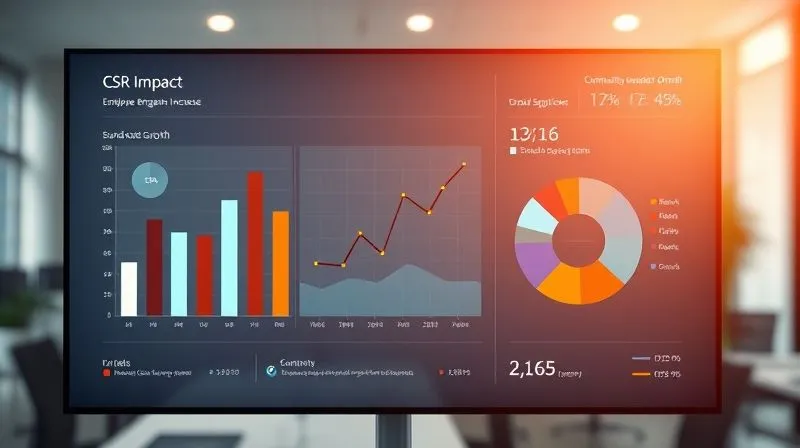
Collecting data is only half the battle; effectively communicating that data is crucial. This involves transforming raw numbers into compelling narratives that resonate with diverse stakeholders – from the C-suite to employees to the public. Use clear visuals, infographics, and concise language. Emphasize both the social good achieved and the corresponding business value. A well-crafted impact report, combining quantitative data with qualitative stories, is a powerful tool for demonstrating how corporate philanthropy drives tangible business value.
Here's an example of how KPIs might be structured for a literacy program supported by a publishing company:
| Business Objective | Philanthropic Initiative | Social KPI | Business KPI |
|---|---|---|---|
| Enhance Brand Reputation & Market Reach | Community Literacy Program | Number of children improved reading levels | Increase in brand mentions related to education; Increase in local market share for children's books |
| Employee Engagement & Retention | Employee Volunteer Reading Mentorship | Number of volunteer hours contributed; Number of children mentored | Increase in employee satisfaction scores; Decrease in voluntary turnover among participating employees |
| Innovation & Talent Pipeline | Sponsorship of local writing workshops | Number of young writers engaged; Quality of writing output | Identification of emerging talent for future recruitment; Insights into new literary trends |
By implementing a robust framework like this, you create an undeniable link between your giving and your growth.
Overcoming Skepticism: Presenting Your Philanthropic Value Proposition
Even with robust data, presenting the case for how corporate philanthropy drives tangible business value requires finesse and a deep understanding of your audience. Skepticism, particularly from financially focused stakeholders, is a common hurdle. My experience has taught me that transparency, consistency, and a clear narrative are your strongest allies.
- Speak Their Language: When presenting to the board or investors, frame the discussion in terms of risk mitigation, competitive advantage, market differentiation, talent acquisition, and financial returns. Translate social impact into economic terms whenever possible.
- Be Consistent with Data: Regularly report on your philanthropic impact, both internally and externally. Consistency builds trust and reinforces the idea that this is a strategic investment, not a sporadic expense.
- Highlight Shared Value: Continuously emphasize how your philanthropic efforts simultaneously address societal needs and advance business objectives. This reinforces the 'win-win' scenario.
- Showcase Employee Stories: Personal stories from employees who have participated in philanthropic initiatives can be incredibly powerful. They humanize the data and demonstrate the internal benefits that numbers alone cannot fully convey.
- Leverage Third-Party Validation: Cite reports from reputable organizations (e.g., studies on ESG impact, consumer surveys on brand trust) that corroborate the link between social responsibility and business success.
Transparency and authenticity are the twin engines of trust in corporate giving. When you openly share your goals, your progress, and even your challenges, you build credibility that is invaluable in overcoming skepticism and proving the genuine impact of your work.
Ultimately, overcoming skepticism is about building a compelling narrative backed by irrefutable evidence. It's about demonstrating that corporate philanthropy isn't just a cost, but a strategic investment that yields significant, measurable returns across multiple dimensions of your business. It's about showing that doing good is, in fact, good for business.

Frequently Asked Questions (FAQ)
How do I choose the right philanthropic initiative for my company? Choosing the right initiative is critical for maximizing both social and business value. I advise starting by identifying your company's core values, mission, and unique strengths (e.g., specific expertise, products, employee skills). Then, research societal needs that align with these strengths and your target markets. Look for areas where your involvement can create 'shared value' – benefiting both the community and your business. Engaging employees in the selection process can also boost buy-in and engagement.
What if our budget for philanthropy is limited? Can we still make an impact? Absolutely. Impact is not solely determined by the size of the monetary contribution. Small budgets can still yield significant results through strategic planning. Focus on skills-based volunteering, where employees donate their professional expertise (e.g., marketing, IT, legal) to non-profits. Leverage in-kind donations of products or services. Partner with other companies or non-profits to amplify your efforts. Even small, focused initiatives, consistently executed, can build reputation, engage employees, and demonstrate how corporate philanthropy drives tangible business value.
How often should we measure and report on our philanthropic impact? Measurement should be ongoing, integrated into your program management, not just a year-end activity. Key metrics should be tracked monthly or quarterly to allow for adjustments. Formal reporting to internal stakeholders (e.g., leadership, board) should occur at least biannually, with a comprehensive annual impact report for external audiences. Consistent reporting reinforces transparency and demonstrates a commitment to accountability, which is essential for proving how corporate philanthropy drives tangible business value.
Can small businesses also benefit from corporate philanthropy? Yes, perhaps even more so proportionally. For small businesses, philanthropy can be a powerful differentiator in local markets, building strong community ties and customer loyalty that larger competitors might struggle to replicate. It's a cost-effective way to enhance brand image, attract talent, and foster a positive company culture. The key is to choose initiatives that are authentic to your business and resonate deeply with your local community.
What are the common pitfalls to avoid when implementing philanthropic programs? One common pitfall is a lack of strategic alignment; initiatives that don't connect to core business values or objectives often fail to generate measurable value. Another is 'greenwashing' or 'purpose-washing,' where efforts are perceived as disingenuous or superficial. Avoid spreading resources too thin across too many causes. Finally, neglecting impact measurement is a major mistake, as it prevents you from demonstrating how corporate philanthropy drives tangible business value and inhibits continuous improvement. Focus, authenticity, and measurement are paramount.
Key Takeaways and Final Thoughts
- Strategic Alignment is Non-Negotiable: Ensure your philanthropic efforts are deeply integrated with your core business objectives to create shared value.
- Measure Beyond Monetary: Quantify impact on brand reputation, customer loyalty, and employee engagement, as these are powerful drivers of long-term business success.
- Leverage Internal Dividends: Recognize and track how philanthropy boosts employee morale, attracts top talent, and reduces turnover.
- Embrace Data: Implement robust impact measurement frameworks with clear KPIs to track both social and business outcomes.
- Communicate with Purpose: Translate data into compelling narratives that resonate with diverse stakeholders, addressing their specific concerns and demonstrating tangible value.
- See it as an Investment, Not an Expense: Shift your mindset and approach philanthropy as a strategic investment in your company's future, yielding returns far beyond immediate costs.
In my journey through the corporate world, I've seen the profound transformation that occurs when companies truly embrace strategic philanthropy. It's not just about compliance or optics; it's about building a resilient, purpose-driven organization that thrives by contributing positively to society. By adopting the frameworks and insights I've shared, you are now equipped to confidently prove that corporate philanthropy drives tangible business value, securing its rightful place as a critical component of your overall business strategy. Go forth, measure your impact, and lead with purpose.
Recommended Reading
- Star Employee Threatens to Quit? 7 Immediate Steps to Retain Top Talent
- Proving Tangible ROI: 8 Strategies for SDG-Aligned CSR Programs
- Why Do Customers Fume Over Support Channel Hops? 7 Fixes!
- Elevate Loyalty: 7 Steps to Craft Service Standards That Stick
- SEO Optimization for Small Business Website: The Ultimate Guide





Comments
Leave a comment below. Your email will not be published. Required fields marked with *