


How to Prove Email Marketing ROI to Your Skeptical Boss: A Definitive Guide
For over 15 years in the digital marketing trenches, I've witnessed a common, frustrating scenario: brilliant email marketing campaigns, meticulously crafted and executed, failing to gain the necessary executive buy-in. Why? Not because they weren't effective, but because their impact wasn't articulated in the language that truly resonates with the C-suite: Return on Investment (ROI).
It's a familiar pain point: you know your email efforts are driving engagement, nurturing leads, and building customer loyalty, yet your boss only sees the cost or dismisses it as a 'nice-to-have.' This skepticism often stems from a lack of clarity on how email marketing directly contributes to the bottom line, rather than a genuine disbelief in its power. They're asking, 'What's the tangible financial benefit?'
This comprehensive guide is designed to equip you with the frameworks, actionable strategies, and communication tactics needed to transform that skepticism into unwavering support. We'll move beyond vanity metrics to focus on hard data, compelling narratives, and irrefutable proof points that will not only justify your budget but position email marketing as a critical growth engine within your organization.
1. Speak Their Language: Translating Email Metrics into Business Value
The first step to proving email marketing ROI to your skeptical boss is to stop speaking 'marketing-ese' and start speaking 'business-ese.' Your boss cares about revenue, profit margins, customer lifetime value (LTV), and cost efficiency, not just open rates or click-through rates (CTRs). While these engagement metrics are vital for optimization, they are rarely sufficient for executive-level conversations.
The Core Financial Metrics That Matter to the C-Suite
- Direct Revenue Attributed: The most straightforward proof. How much revenue was generated directly from email campaigns?
- Customer Lifetime Value (LTV) Boost: How does email marketing contribute to customers staying longer and spending more over time?
- Customer Acquisition Cost (CAC) Reduction: Can email nurture leads more cost-effectively than other channels?
- Return on Ad Spend (ROAS) for Email: If you're using paid email acquisition, what's the return on that investment?
- Cost Savings: Does email automation reduce customer support inquiries or manual sales follow-ups?
"Your boss isn't just looking for data; they're looking for decisions. Present your email marketing ROI in a way that clearly highlights the financial implications and potential strategic moves."
To start, identify which of these financial metrics are most critical to your company's overall goals. Is it growth? Profitability? Customer retention? Tailor your reporting to align directly with these overarching business objectives.
2. Implement Robust Attribution Models and Tracking
Proving ROI is impossible without accurate data, and accurate data hinges on robust tracking and a clear attribution model. This is where many email marketing efforts fall short, making it difficult to connect the dots between an email and a sale.
Choosing the Right Attribution Model
Attribution models determine how credit for a conversion is assigned across various touchpoints. While 'last-click' is simple, it often undervalues email's role in the nurturing process. Consider:
- First-Touch Attribution: Gives 100% credit to the first interaction. Useful for understanding initial lead generation.
- Last-Touch Attribution: Gives 100% credit to the last interaction before conversion. Common but often incomplete.
- Linear Attribution: Distributes credit equally across all touchpoints.
- Time Decay Attribution: Gives more credit to touchpoints closer to the conversion.
- U-Shaped or W-Shaped Attribution: Assigns more credit to the first interaction, the lead creation, and the last interaction, with remaining credit distributed across middle touchpoints.
Discuss with your analytics team which model best reflects your customer journey. A multi-touch model often provides a more accurate picture of email's contribution, especially in complex sales cycles.
Implementing Robust Tracking for Email Campaigns
This is non-negotiable. Every link in every email must be properly tagged.
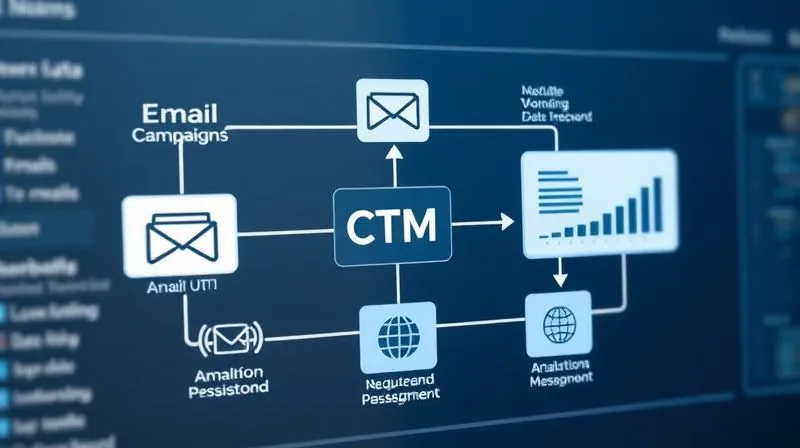
- UTM Parameters: Use consistent UTM parameters (source, medium, campaign, content, term) for every link in your emails. This allows Google Analytics (or your analytics platform) to accurately track traffic and conversions originating from email.
- CRM Integration: Ensure your email service provider (ESP) is deeply integrated with your Customer Relationship Management (CRM) system. This allows you to track individual customer journeys, from email open to sales conversion, and calculate LTV.
- Conversion Tracking: Set up clear conversion goals in your analytics platform for purchases, lead form submissions, demo requests, etc. Make sure these goals are correctly linked to your email campaign data.
- Unique Promo Codes: For specific campaigns, consider using unique, email-only promo codes. This provides a direct, irrefutable link between an email and a sale.
3. Quantifying Direct Revenue Generation from Email
This is often the easiest and most compelling way to prove ROI. Direct revenue generation comes from specific email campaigns that lead directly to a purchase or a sales-qualified lead.
E-commerce Sales & Transactional Emails
For e-commerce businesses, email is a direct revenue driver. Track sales generated from:
- Promotional Campaigns: Sales from newsletters, flash sale announcements, new product launches.
- Abandoned Cart Emails: These have exceptionally high conversion rates, directly recovering lost revenue.
- Post-Purchase & Re-engagement Flows: Driving repeat purchases and preventing churn.
Report not just the revenue, but the Return on Email Investment (ROEI): (Revenue from Email - Cost of Email Campaign) / Cost of Email Campaign. According to a study by Deloitte, email marketing consistently delivers one of the highest ROIs of any marketing channel.
Lead Nurturing to Sales Qualified Leads (SQLs)
In B2B or longer sales cycles, email's primary role might be lead nurturing. Here, the ROI isn't immediate revenue but the creation of highly qualified leads that sales can close.
- Track Lead Status Changes: Monitor how many MQLs (Marketing Qualified Leads) nurtured by email become SQLs (Sales Qualified Leads).
- Sales Cycle Acceleration: Does email nurturing reduce the time it takes for a lead to convert?
- Conversion Rate from Email-Nurtured Leads: Compare the close rate of leads who engaged with email vs. those who didn't.
- Assign a Value to an SQL: Work with sales to determine the average revenue generated by a closed SQL. Then, you can calculate the monetary value of email-generated SQLs.
| Campaign Type | Emails Sent | Revenue Generated | Cost | ROEI | ||
|---|---|---|---|---|---|---|
| Abandoned Cart Recovery | 5,000 | $25,000 | $500 | 4900% | ||
| Monthly Newsletter (Promo) | 50,000 | $75,000 | $2,500 | 2900% | ||
| Lead Nurturing Series | 10,000 | 200 | $1,000 | $200,000 | $1,000 | 19900% |
4. Demonstrating Indirect Value: The Unsung Heroes of Email Marketing
Email marketing's impact extends far beyond direct sales. These 'indirect' values are often overlooked but are crucial for a holistic ROI picture.
Customer Retention and Lifetime Value (LTV)
It's a well-known fact that acquiring a new customer is significantly more expensive than retaining an existing one. Email excels at retention.
- Onboarding Series: Reduces early churn by educating new customers.
- Loyalty Programs: Encourages repeat purchases and builds brand affinity.
- Re-engagement Campaigns: Brings back inactive customers.
- Personalized Content: Increases customer satisfaction and reduces the likelihood of switching to a competitor.
Track the LTV of customers who actively engage with your email campaigns versus those who don't. A higher LTV for email-engaged customers is a powerful ROI indicator. As marketing guru Seth Godin often emphasizes, building permission and trust with your audience through email is key to long-term business success.
Case Study: How 'Bloom Gardens' Boosted LTV with Personalized Email Sequences
Bloom Gardens, an online plant retailer, struggled with customer churn after the first purchase. By implementing a segmented, personalized email sequence based on plant type purchased and geographic location (for care tips), they saw a 20% increase in repeat purchases within 6 months and a 15% uplift in average customer LTV. This wasn't just about selling more; it was about building a community of loyal customers who felt understood and supported, directly impacting their bottom line.
Cost Savings through Automation and Self-Service
Email automation can significantly reduce operational costs.
- Automated FAQs: Reduces customer support tickets.
- Password Resets & Account Management: Self-service through automated emails.
- Training & Onboarding: Automated email courses can reduce manual training efforts.
- Sales Enablement: Providing sales teams with pre-qualified leads and automated follow-up content saves their time.
Quantify the time saved by your customer service or sales teams due to email automation and assign a monetary value to that time. This directly contributes to your overall ROI.
5. Crafting Your Narrative: The Executive-Level Report
Raw data is meaningless without context and a compelling story. Your ROI report isn't just a spreadsheet; it's your opportunity to tell a story of impact and value.
Storytelling with Data: From Raw Numbers to Insights
- Start with the Business Objective: Frame your report around a specific business goal (e.g., 'Increase Q3 Revenue,' 'Reduce Customer Churn').
- Present the Email Strategy: Briefly explain the campaigns and tactics used to address that objective.
- Show the Results (Metrics that Matter): Focus on the financial metrics discussed earlier (revenue, LTV, cost savings).
- Interpret the Data: Explain *what* the numbers mean and *why* they are significant. Don't just present a graph; explain the insight.
- Provide Actionable Recommendations: What's next? How will you build on this success?
Visualizing Your Impact
Visuals are incredibly powerful for communicating complex data quickly. Avoid dense tables of numbers. Instead, use:
- Bar Charts: For comparing performance across campaigns or time periods.
- Line Graphs: For showing trends over time (e.g., LTV growth, revenue trajectory).
- Pie Charts: For showing attribution distribution.
- Infographics: For summarizing key findings and impact.

Ensure your visuals are clean, easy to understand, and directly support your narrative. Use bold colors to highlight positive outcomes.
6. Addressing Objections: Proactive Communication Strategies
A skeptical boss will likely have objections. Anticipate them and integrate your answers into your presentation. This demonstrates foresight and confidence.
Anticipating Common Skepticism
- "Email is dead/spam": Counter with data on email's high ROI compared to other channels, and focus on permission-based, personalized strategies. Reference studies like the Statista report on email marketing ROI.
- "It's just correlation, not causation": This is why robust attribution and tracking (UTM parameters, unique promo codes) are crucial. Show direct links to conversions.
- "It's too expensive/time-consuming": Show cost savings through automation and the high ROEI. Compare the cost-effectiveness of email vs. other channels for similar results.
- "We could get these results with other channels": Highlight email's unique strengths: direct communication, personalization at scale, nurturing capabilities, and high engagement rates for loyal customers.
"Don't wait for the questions to come. Proactively address potential objections in your report. This shows you've done your homework and understand their perspective."
Presenting Solutions, Not Just Problems
Frame every challenge as an opportunity for improvement. If a campaign underperformed, explain *why* and *what* you learned, then present your plan to optimize future results. Your boss wants to see a strategic thinker, not just a reporter of numbers.
7. Benchmarking and Industry Context: Proving You're Not an Anomaly
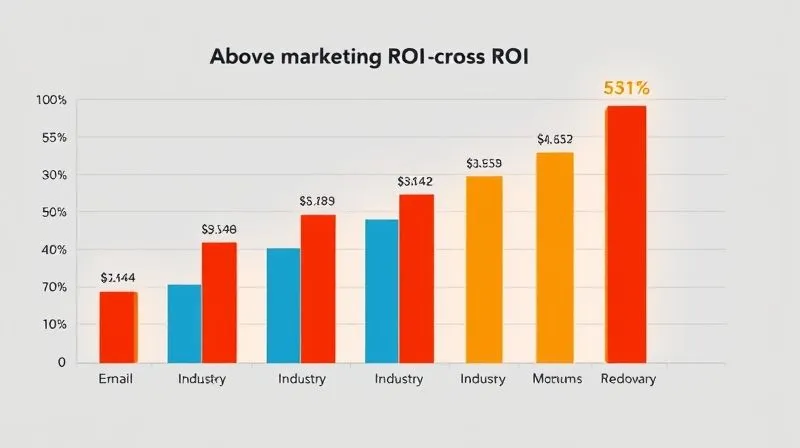
Context is king. Showing how your email marketing performance stacks up against industry benchmarks or competitors can add significant weight to your ROI claims. It moves the conversation from 'Is this good?' to 'How can we be even better?'
Comparing Against Industry Averages
Leverage reputable industry reports from sources like HubSpot, Litmus, Campaign Monitor, or Mailchimp. These reports often provide average open rates, CTRs, and conversion rates by industry.
- If your metrics are above average, highlight this as a testament to your team's effectiveness.
- If they are below average, frame it as a clear area for improvement with specific strategies you plan to implement (e.g., A/B testing, segmentation).
This demonstrates that you're not operating in a vacuum and that your performance is measurable against established standards.
Highlighting Competitive Advantages
If your email strategy is particularly innovative or leverages advanced personalization that competitors aren't using, point this out. Explain how this unique approach contributes to your superior ROI and positions your company favorably in the market.
8. Continuous Optimization and Iteration: A Future-Proof Strategy
Proving ROI isn't a one-time event; it's an ongoing process of testing, learning, and optimizing. Your boss will appreciate a forward-thinking approach that seeks continuous improvement.
A/B Testing for Incremental Gains
Regularly A/B test elements of your email campaigns to improve performance. This includes:
- Subject Lines: Impact open rates.
- Call-to-Actions (CTAs): Influence click-through rates.
- Email Copy & Layout: Affect engagement and conversion.
- Send Times & Days: Optimize for audience activity.
Document the results of your A/B tests, showing how small, data-driven changes lead to measurable improvements in key metrics, ultimately contributing to higher ROI.
Leveraging Personalization and Segmentation for Higher ROI
Generic emails yield generic results. Highly personalized and segmented campaigns consistently outperform mass blasts. Show your boss how investing in better data and segmentation tools translates directly into higher conversion rates and LTV.
- Behavioral Segmentation: Targeting based on past purchases, website activity, or email engagement.
- Demographic Segmentation: Tailoring content based on age, location, industry.
- Lifecycle Segmentation: Sending relevant content based on where a customer is in their journey (e.g., new subscriber, loyal customer, at-risk churn).
Demonstrate how a segmented campaign to a smaller, more relevant audience can generate more revenue than a broad, untargeted campaign, even with fewer sends.
| Test Element | Control (Open Rate) | Variant (Open Rate) | Impact on Revenue |
|---|---|---|---|
| Subject Line | 18% | 25% | +12% |
| CTA Button Color | 2.5% | 3.8% | +8% |
| Personalized Offer | 1.5% | 3.2% | +18% |
Frequently Asked Questions (FAQ)
How do I calculate the true cost of my email marketing efforts? The true cost includes not just your ESP subscription, but also content creation time (designers, copywriters), segmentation and automation setup, A/B testing, and analytics reporting. Don't forget the opportunity cost if your team is stretched thin. Factor in all these elements to get an accurate 'Cost of Email Campaign' for your ROEI calculation.
My boss only cares about immediate sales. How do I show long-term value? While direct sales are crucial, emphasize the LTV impact. Show how email-engaged customers have a higher average order value, more frequent purchases, and a longer customer lifespan. You can also present case studies of how initial email interactions led to significant revenue downstream, even if not immediately. Frame retention as a cost-saving measure (lower CAC).
What if my company doesn't have sophisticated attribution software? Start simple. Use consistent UTM parameters across all email links. Implement unique, email-only promo codes for specific campaigns. Integrate your ESP with your CRM. While multi-touch attribution is ideal, even last-click attribution with proper tracking is better than no attribution. Advocate for better tools by demonstrating the revenue you're *missing* without them.
Can email marketing really impact brand perception? Absolutely. Consistent, valuable, and on-brand email communication builds trust and reinforces your brand's identity. Surveys and sentiment analysis can indirectly measure this. For instance, track brand mentions or positive reviews from customers who are also highly engaged with your emails. While harder to quantify directly in ROI, it contributes to long-term customer loyalty and reduces churn, which has a financial impact.
How often should I report on email ROI? For tactical campaign-level performance, weekly or bi-weekly might be appropriate. For strategic ROI discussions with your boss, monthly or quarterly reports are usually sufficient, focusing on overarching trends, cumulative impact, and alignment with business goals. Always be ready with an ad-hoc report if a specific campaign's performance needs immediate attention.
Key Takeaways and Final Thoughts
Proving email marketing ROI to a skeptical boss isn't about magic; it's about strategic communication, meticulous data tracking, and a deep understanding of business objectives. By shifting your focus from vanity metrics to financial impact, you can transform how your email efforts are perceived.
- Speak the Language of Business: Focus on revenue, LTV, and cost savings.
- Track Everything: Implement robust attribution and UTM parameters.
- Quantify Direct & Indirect Value: Show both immediate sales and long-term benefits like retention.
- Craft a Compelling Narrative: Use data storytelling and strong visuals.
- Anticipate & Address Objections: Be proactive and confident.
- Provide Context: Benchmark against industry standards.
- Embrace Continuous Improvement: Show a path for ongoing optimization.
Remember, your goal isn't just to justify a budget; it's to position email marketing as an indispensable, high-performing asset that actively drives your company's growth. With these strategies, you're not just presenting data; you're building a powerful business case that your boss won't be able to ignore. Go forth and prove your worth!
Recommended Reading
- What Common Pitch Deck Mistakes Deter VCs? 9 Blunders to Avoid
- 7 Proven Strategies: Stop Client Revenue Decline & Boost Upsells
- 7 Proven Strategies: Negotiate Sales Deals & Maximize Profit Margins
- Unifying Brand Voice: 7 Steps to Bridge Departmental Silos
- How to Secure Remote Access for Cybersecurity Pros: 7 Steps





Comments
Leave a comment below. Your email will not be published. Required fields marked with *