


How to Prove ROI for Workflow Automation Implementations?
For over 15 years in operations management, I've seen countless organizations invest heavily in promising technologies, only to falter when asked the inevitable question: "What's the return on investment?" This isn't just a hypothetical scenario; it's a common, often crippling, challenge that can derail even the most transformative workflow automation initiatives.
The pain point is palpable: leaders championing automation often struggle to translate improved efficiency, reduced manual errors, or faster processing times into hard financial metrics that resonate with the C-suite. Without a clear, quantifiable demonstration of value, automation efforts can be perceived as mere cost centers or unproven experiments, leading to stalled projects, budget cuts, and missed opportunities.
In this definitive guide, I will share a robust, 5-pillar framework designed to empower you to not only implement workflow automation effectively but, more critically, to confidently prove its ROI. We'll delve into actionable strategies, real-world examples, and expert insights to help you build an undeniable business case and secure continuous investment in your automation journey.
The Core Challenge: Why ROI Proof Eludes Many
The inherent complexity of modern business processes, combined with the often-distributed nature of workflow automation benefits, makes calculating ROI a nuanced task. It's rarely as simple as 'X hours saved equals Y dollars.' Many organizations fall into the trap of focusing solely on direct cost reductions, overlooking a wealth of indirect and strategic benefits that, when quantified, paint a far more compelling picture.
Another significant hurdle is the lack of a clear baseline. Without meticulously documenting 'before' state metrics, any 'after' state improvements become speculative rather than demonstrable. This oversight is a critical error I've witnessed repeatedly, leading to an inability to answer the fundamental question: "Compared to what?"
"What gets measured gets managed, and what gets managed gets improved. But what isn't measured often remains a mystery, especially when it comes to the true impact of transformative technologies like automation."
Furthermore, the 'soft' benefits—like improved employee morale, better compliance, or enhanced customer experience—are often dismissed as unquantifiable. This is a mistake. While harder to measure, these intangibles often contribute significantly to the overall health and profitability of an organization and must be integrated into your ROI narrative.
Pillar 1: Defining Measurable Objectives & Baselines
The foundation of proving ROI for workflow automation implementations lies in meticulous pre-implementation planning. You cannot measure improvement if you don't know your starting point.
The Art of Pre-Automation Data Collection
Before a single line of code is written or a bot is deployed, you must establish clear, quantifiable objectives and gather comprehensive baseline data. This isn't just about identifying a problem; it's about putting a number to it.
- Identify Key Performance Indicators (KPIs): What specific metrics will this automation impact? Examples include cycle time, error rates, processing costs per transaction, manual touchpoints, compliance breaches, or employee time spent on repetitive tasks.
- Document the Current State: Map out the 'as-is' workflow. Understand every step, every handoff, every delay.
- Collect Baseline Data: For each identified KPI, gather data for a representative period (e.g., 3-6 months). This is your 'before' snapshot.
- Define Specific, Measurable, Achievable, Relevant, Time-bound (SMART) Goals: Instead of "improve efficiency," aim for "reduce average invoice processing time by 40% within 6 months."
- Engage Stakeholders: Ensure that business owners, IT, and end-users agree on what success looks like and how it will be measured. This fosters ownership and accountability.
- Establish a Data Collection Protocol: How will you consistently collect 'after' data to compare against your baseline? Automation itself can often assist in this.
According to a Deloitte study on intelligent automation, organizations that meticulously define their objectives and measure against baselines are significantly more likely to achieve and prove substantial ROI from their automation initiatives.
Pillar 2: Quantifying Direct Cost Savings
Direct cost savings are often the most straightforward, yet frequently underestimated, component of proving ROI for workflow automation implementations.
Reducing Manual Labor & Error Costs
The most obvious direct saving comes from reducing the human effort involved in repetitive, rule-based tasks. This doesn't necessarily mean headcount reduction, but rather freeing up valuable human capital for higher-value, more strategic work.
- Time Savings: Calculate the average time an employee spends on an automated task. Multiply this by the number of times the task is performed and the average loaded cost per employee hour.
- Error Reduction: Manual processes are prone to human error, which can lead to rework, compliance fines, lost revenue, and damaged reputation. Quantify the cost of these errors before automation. Post-automation, track the reduction in these incidents and their associated costs.
- Infrastructure & Software Savings: In some cases, automation can reduce reliance on legacy systems or manual tools, leading to direct savings on licenses, maintenance, or infrastructure.
Consider the average time a finance team spends on manual data entry for expense reports. If each report takes 15 minutes and 1000 reports are processed monthly, that's 250 hours. Automating this could reduce it to 5 minutes or less per report, saving 167 hours. At a loaded cost of $50/hour, that's $8,350 saved monthly, or over $100,000 annually, just in time savings.
| Category | Before Automation (Monthly) | After Automation (Monthly) | Cost Savings (Monthly) |
|---|---|---|---|
| Manual Labor (Time Savings) | 250 hours | 83 hours | $8,350 |
| Error Rework (Avg. Incidents) | 15 incidents | 2 incidents | $4,500 |
| Software Licenses (Redundant) | $500 | $0 | $500 |
| Total Direct Savings | N/A | N/A | $13,350 |
Pillar 3: Measuring Productivity & Efficiency Gains
Beyond direct cost savings, workflow automation implementations unlock significant gains in productivity and operational efficiency. These metrics are crucial for proving ROI, as they demonstrate how automation fuels growth and improves service delivery.
Beyond Headcount: Focus on Output & Throughput
Productivity isn't just about doing more with less; it's about doing the *right* things more effectively. Automation allows resources to be reallocated from mundane tasks to strategic initiatives, directly impacting throughput and output quality.
- Cycle Time Reduction: Measure the time it takes to complete an entire process, from start to finish. Automation often drastically cuts down waiting times and processing durations.
- Increased Throughput: How many transactions, reports, or customer queries can be processed in a given period? Automation can scale operations without proportional increases in human resources.
- Improved Data Accuracy: Automated data entry and validation reduce errors, leading to higher quality data for decision-making and fewer downstream issues.
- Faster Time-to-Market: For product development or service delivery, automation in design, testing, or provisioning can accelerate market entry.
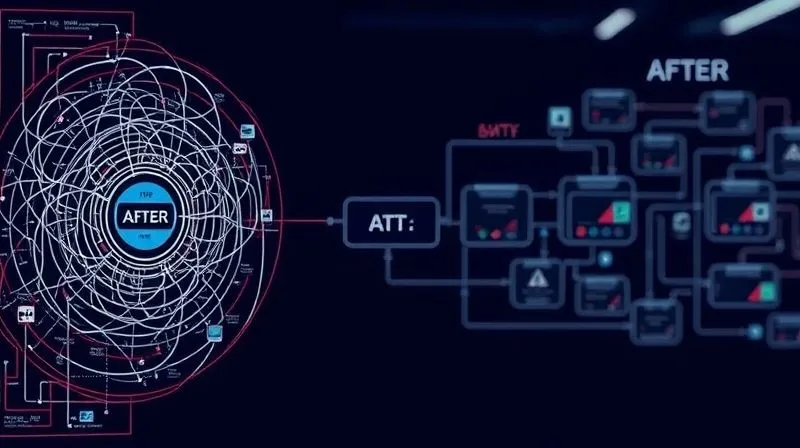
Imagine a customer onboarding process that previously took 5-7 business days due to manual data verification, multiple system entries, and approval bottlenecks. Automating these steps could reduce the cycle time to less than 24 hours. This translates to faster customer satisfaction, quicker revenue recognition, and a significant competitive advantage.
Pillar 4: Assessing Indirect Benefits & Risk Mitigation
While harder to put a dollar figure on, the indirect benefits and risk mitigation aspects of workflow automation are incredibly powerful for proving ROI and should not be overlooked.
Enhancing Employee Experience and Customer Satisfaction
Happy employees and satisfied customers are not just 'nice-to-haves'; they directly impact profitability and long-term sustainability. Automation plays a critical role in both.
- Employee Morale & Retention: Automating repetitive, tedious tasks frees employees from 'robot work,' allowing them to focus on more engaging, value-added activities. This boosts job satisfaction, reduces burnout, and can significantly lower recruitment and training costs associated with high turnover.
- Customer Experience (CX) Improvement: Faster service, fewer errors, and more consistent interactions lead to higher customer satisfaction. This can be quantified through Net Promoter Score (NPS), customer churn rates, and repeat business.
- Enhanced Compliance & Governance: Automated workflows ensure that processes consistently adhere to regulatory requirements and internal policies, reducing the risk of fines, legal issues, and reputational damage.
- Better Data Quality for Decision Making: With automated data capture and validation, the quality and reliability of data improve, leading to more informed and effective business decisions.
Case Study: How InnovateCo Boosted Employee Retention
InnovateCo, a mid-sized financial services firm, faced a growing problem of high employee turnover in their back-office operations. Employees consistently cited 'mind-numbing data entry' and 'endless reconciliation tasks' as primary reasons for leaving. Their annual turnover rate for these roles was 28%, costing the company an estimated $1.2 million annually in recruitment, onboarding, and lost productivity.
By implementing workflow automation for their most repetitive data processing and reconciliation tasks, InnovateCo was able to reallocate 60% of their back-office employees to customer-facing roles and strategic analysis. The remaining employees saw their roles enriched with more complex problem-solving and higher-value activities. Within 18 months, the turnover rate in these departments dropped to 10%, saving the company over $750,000 annually. Furthermore, customer satisfaction scores, measured by NPS, saw an 8-point increase due to faster service and more engaged human interaction.
As Harvard Business Review frequently highlights, engaged employees are significantly more productive and loyal, directly impacting a company's bottom line.
Pillar 5: The Strategic Impact & Future-Proofing Value
The ultimate layer of proving ROI for workflow automation implementations lies in its strategic value. This is where automation transcends tactical improvements and becomes an enabler of organizational agility, innovation, and competitive advantage.
Agility, Innovation, and Competitive Advantage
In today's rapidly changing business landscape, the ability to adapt, innovate, and respond quickly to market shifts is paramount. Automation provides this strategic leverage.
- Increased Agility: Automated processes are inherently more adaptable. They can be scaled up or down quickly, reconfigured for new requirements, or integrated with emerging technologies far more easily than manual, human-centric workflows.
- Enabling Innovation: By automating routine tasks, organizations free up human capital to focus on creative problem-solving, product development, and strategic planning. This accelerates innovation cycles.
- Competitive Differentiation: Companies that embrace automation can deliver products and services faster, more cost-effectively, and with higher quality than their competitors, creating a significant market advantage.
- Enhanced Data Analytics: Automation often generates cleaner, more consistent data streams, which are invaluable for advanced analytics, predictive modeling, and strategic insights.
"Automation isn't just about efficiency; it's about creating the strategic headroom for your organization to innovate, adapt, and ultimately, thrive in an increasingly competitive world."
While difficult to put a precise dollar value on, the ability to launch a new service 3 months faster than a competitor, or to pivot a business model in response to market demand, holds immense strategic value that far outweighs immediate operational savings. These are long-term investments in the future viability and growth of the enterprise.

Building Your ROI Narrative: From Data to Decision
Having gathered all your data across the five pillars, the next critical step is to synthesize it into a compelling narrative that resonates with decision-makers. Proving ROI for workflow automation implementations isn't just about numbers; it's about telling a story of transformation.
Crafting a Compelling Business Case
Your ROI presentation should be clear, concise, and tailored to your audience. The C-suite often cares most about financial impact and strategic advantage, while departmental managers might focus on operational efficiency and team morale.
- Quantify Everything Possible: Start with the hard numbers from direct cost savings and productivity gains.
- Monetize Intangibles: For indirect benefits like employee retention or customer satisfaction, try to assign a conservative monetary value. For instance, calculate the cost of churn saved due to improved morale.
- Present a Comprehensive View: Don't just show one metric. Combine direct savings, efficiency gains, and monetized indirect benefits into a holistic picture.
- Highlight Strategic Imperatives: Emphasize how automation enables future growth, competitive advantage, and risk mitigation.
- Use Visualizations: Charts, graphs, and dashboards can make complex data easily digestible.
- Tell the 'Before and After' Story: Use your baseline data to show a clear contrast and the tangible improvements achieved.
Here's a simplified example of how to structure your ROI summary for a compelling business case:
| Metric Category | Key Metrics | Annualized Value |
|---|---|---|
| Direct Cost Savings | Labor Hours Saved, Error Rework Costs, Infrastructure Reductions | $160,200 |
| Productivity & Efficiency Gains | Cycle Time Reduction (X%), Throughput Increase (Y%), Data Accuracy Improvement (Z%) | $95,000 (equivalent to additional capacity/revenue) |
| Indirect Benefits (Monetized) | Employee Turnover Reduction, Customer Churn Rate Decrease, Compliance Fines Avoided | $110,000 |
| Strategic Value (Qualitative/Future) | Increased Agility, Faster Time-to-Market, Innovation Capacity | Enables future growth estimated at >$500k/year |
| Total Quantifiable ROI | Sum of above | $365,200 (excluding future growth potential) |
Common Pitfalls and How to Avoid Them
Even with a robust framework, proving ROI for workflow automation implementations can be derailed by common mistakes. Learning from these pitfalls is crucial.
Ignoring Intangibles: The Hidden Value Traps
- Underestimating Implementation Costs: Don't just consider software licenses. Factor in training, change management, integration costs, and ongoing maintenance. A realistic cost assessment is vital for an accurate ROI calculation.
- Focusing Solely on Cost Reduction: As discussed, this misses the bigger picture of value creation. Expand your definition of ROI to include productivity, quality, and strategic benefits.
- Lack of Baseline Data: This is perhaps the most critical error. Without 'before' metrics, you have no objective way to measure 'after' improvements.
- Failing to Engage Stakeholders: If the people who perform the tasks, or those who benefit from the automation, aren't involved in defining objectives and measuring success, your ROI figures may lack credibility or buy-in.
- One-Time Measurement: ROI isn't a static number. Business processes evolve, and automation itself can be optimized. Continuous monitoring and re-evaluation are essential.
- Ignoring Change Management: Poor adoption due to inadequate change management can negate all potential ROI, as employees revert to old, manual ways. Invest in training and communication.
As a veteran in this space, I've seen promising projects falter because of an overemphasis on immediate, direct cost savings, neglecting the broader, more impactful strategic value. According to an article by Forbes Technology Council, a narrow focus on cost reduction is one of the top three pitfalls in automation journeys.

Frequently Asked Questions (FAQ)
What's the biggest mistake in measuring automation ROI? The biggest mistake is a narrow focus on only direct labor cost savings, ignoring the broader and often more significant benefits like improved data quality, enhanced customer experience, reduced risk, and increased organizational agility. This leads to an incomplete and often underwhelming ROI picture.
How do I measure the "soft" benefits like employee morale or customer satisfaction? While not directly financial, these can be monetized. For employee morale, track metrics like turnover rates, absenteeism, and employee engagement survey scores, then calculate the cost savings from their improvement. For customer satisfaction, monitor NPS, customer churn, and repeat purchase rates, then correlate these improvements to revenue growth or reduced customer acquisition costs.
Is ROI always positive immediately after implementation? Not necessarily. There's often an initial investment phase (cost of software, implementation, training) before the benefits fully materialize. A realistic ROI projection will include a break-even point and a timeline for achieving positive ROI, which can vary depending on the complexity and scale of the automation.
How often should I re-evaluate automation ROI? ROI should be continuously monitored. For major initiatives, I recommend reviewing key metrics quarterly for the first year, then semi-annually or annually thereafter. This allows for optimization, identifies new opportunities, and ensures the automation continues to deliver expected value as business needs evolve.
What if my initial ROI projections are off? It's crucial to understand why. Was the baseline inaccurate? Were implementation costs higher than expected? Did the automation not perform as anticipated? Use this as a learning opportunity to refine your approach, adjust the automation, or pivot your strategy. Transparency and a commitment to continuous improvement are key.
Key Takeaways and Final Thoughts
Proving ROI for workflow automation implementations is not a theoretical exercise; it's a strategic imperative. It's the critical link between investment and tangible business value, ensuring your automation initiatives gain traction, secure funding, and drive meaningful transformation.
- Start with a Solid Foundation: Define clear, measurable objectives and establish comprehensive baselines before you automate.
- Embrace the 5 Pillars: Quantify direct cost savings, measure productivity gains, assess indirect benefits, and articulate strategic impact.
- Build a Compelling Narrative: Translate your data into a clear, persuasive business case that resonates with all stakeholders.
- Avoid Common Pitfalls: Be realistic about costs, embrace all forms of value, and ensure continuous monitoring.
- Focus on Continuous Improvement: ROI is not a one-time calculation but an ongoing journey of optimization and adaptation.
In my experience, organizations that master the art of proving ROI for their workflow automation efforts are the ones that truly lead their industries. They don't just implement technology; they leverage it as a strategic tool to drive growth, enhance resilience, and build a future-ready enterprise. Your ability to articulate this value will not only justify your current investments but also unlock the potential for even greater innovation and success down the line. Go forth and prove your impact!
Recommended Reading
- 7 Reasons Why Your Qualified Small Business Sales Leads Aren't Converting
- 7 Proven Strategies: Boost Upsell Acceptance Without Customer Fatigue
- 7 Proven Strategies to Scale Marketplace Sales Without Huge Ad Spend
- 7 Steps to Accurately Forecast & Manage Project Budget Deviations
- 5 Steps: How to Fill an Unexpected Executive Vacancy Without a Ready Successor?





Comments
Leave a comment below. Your email will not be published. Required fields marked with *