


How to Rebuild Trust After a Major Team Conflict?
For over 15 years in leadership and organizational development, I've witnessed firsthand how quickly a high-performing team can unravel following a significant conflict. It’s not merely about bruised egos or differing opinions; it’s about the fundamental erosion of trust, the bedrock upon which all successful collaboration is built. When trust shatters, communication breaks down, productivity plummets, and the very fabric of team cohesion begins to fray.
The pain points are palpable: whispers replacing open dialogue, a reluctance to share ideas, missed deadlines, and a palpable tension that drains energy from everyone involved. Leaders often feel helpless, unsure of how to navigate the emotional minefield and restore a sense of normalcy, let alone rebuild what was lost. This isn't just a setback; it's a crisis that demands immediate, thoughtful intervention.
In this definitive guide, I will share battle-tested frameworks, actionable steps, and expert insights drawn from my extensive experience to show you precisely how to rebuild trust after a major team conflict. We'll explore the critical stages of recovery, from immediate stabilization to fostering long-term psychological safety, ensuring your team emerges stronger and more resilient than before.
Understanding the Anatomy of Trust Breakdown
Before we can effectively rebuild, we must first understand what broke. Trust isn't a monolithic entity; it's a complex interplay of reliability, competence, integrity, and benevolence. A major team conflict often attacks one or more of these pillars simultaneously, creating deep fissures.
I've seen conflicts rooted in everything from perceived unfairness in workload distribution to fundamental disagreements on strategic direction, or even personal clashes that escalate beyond professional bounds. Regardless of the trigger, the common denominator is always a perception of betrayal or injustice that makes individuals question the intentions and dependability of their colleagues or leaders.
"Trust is the highest form of human motivation. It brings out the very best in people." – Stephen R. Covey
When this happens, individuals retreat into self-preservation mode. They become less willing to take risks, share vulnerable information, or extend grace, leading to a downward spiral of suspicion and disengagement. Understanding this psychological impact is the first step toward crafting a healing strategy.
The Immediate Aftermath: Stabilizing the Environment
The moments immediately following a major conflict are crucial. Your primary goal as a leader is to stop the bleeding and prevent further damage. This isn't the time for deep dives into root causes, but for creating a safe space for initial processing.
1. Acknowledge the Conflict Publicly (and Privately)
Ignoring the elephant in the room only amplifies its presence. Acknowledge that a significant event occurred and that it has impacted the team. This doesn't mean assigning blame, but validating the experience of those involved. I often start with a simple statement like, "I understand that recent events have been challenging for everyone, and I want to assure you that we are committed to addressing this."
2. Ensure Psychological Safety for Initial Discussions
Individual conversations are often more effective initially than group settings. Offer one-on-one check-ins with key individuals, especially those directly involved. Listen actively, allowing them to vent and share their perspective without judgment. This helps to de-escalate emotions and gather crucial information.

3. Set Clear Boundaries and Expectations for Future Interactions
While emotions are high, it's vital to reiterate professional conduct standards. This isn't about stifling expression but ensuring that future interactions remain respectful, even when disagreements persist. "Moving forward, our discussions must always adhere to our company values of respect and collaboration."
Step 1: Facilitating Open, Honest Dialogue (The Core of Healing)
Once the immediate crisis is stabilized, the true work of rebuilding begins with structured, facilitated dialogue. This is where the team can collectively process what happened and start to forge a path forward. It requires courage, patience, and skilled mediation.
- Prepare the Groundwork: Before bringing the team together, ensure everyone understands the purpose of the meeting: not to rehash arguments, but to understand perspectives and commit to resolution. I always emphasize that the goal is forward movement, not dwelling on past grievances.
- Establish Ground Rules: Co-create rules for the discussion. These might include: "Listen to understand, not to respond," "Speak for yourself using 'I' statements," "Focus on behaviors, not personalities," and "Commit to confidentiality." Display these prominently.
- Facilitate a Shared Narrative: Guide the team through recounting the conflict from multiple perspectives. This isn't about finding a single 'truth' but about acknowledging different experiences. Ask open-ended questions like, "From your perspective, what happened?" and "How did that impact you?"
- Identify Commonalities and Disparities: After everyone has shared, highlight areas of agreement and disagreement. This visual mapping helps the team see where their understanding diverges and where common ground exists.
- Focus on Impact, Not Intent: A crucial shift is moving from defending intentions to understanding impact. Someone might not have intended to cause harm, but the impact of their actions was damaging. Acknowledging this impact is vital for healing.
Step 2: Acknowledging and Addressing Underlying Issues
A major conflict is rarely an isolated incident; it's often a symptom of deeper, systemic issues. True trust rebuilding requires identifying and tackling these root causes, whether they are process flaws, unclear roles, communication vacuums, or cultural misalignments.
Mini Case Study: How InnovateTech Realigned After a Product Launch Failure
InnovateTech, a fast-growing software company, experienced a catastrophic product launch due to a major conflict between the development and marketing teams. The development team blamed marketing for unrealistic timelines and poor communication of technical limitations, while marketing accused development of delays and a lack of responsiveness. The conflict escalated to public arguments and a complete breakdown of trust.
Their leadership, guided by an external facilitator, initiated a series of structured dialogues. They discovered the underlying issue wasn't malice, but a lack of integrated project management tools, ambiguous role definitions regarding feature ownership, and a culture that rewarded individual heroics over cross-functional collaboration. By implementing a new Agile framework, clearly defining inter-departmental hand-off points, and introducing shared KPIs that incentivized collaborative success, InnovateTech not only rebuilt trust but also launched their next product successfully, reducing time-to-market by 25%.
This case illustrates that sometimes, the conflict is a messenger. Leaders must be prepared to look inward at their own systems and processes. According to a Google study on psychological safety, addressing systemic issues that contribute to conflict is paramount for long-term team health.
| Root Cause Category | Common Symptoms | Intervention Strategy |
|---|---|---|
| Communication | Misunderstandings, lack of information, gossip | Structured feedback channels, communication protocols |
| Role Clarity | Duplication of effort, blame games, unmet expectations | Clear RACI matrix, job descriptions, cross-training |
| Process Flaws | Bottlenecks, inefficiencies, missed deadlines | Process mapping, Lean methodologies, agile adoption |
| Cultural Misalignment | Toxic behaviors, lack of shared values, low morale | Values workshops, leadership modeling, behavioral guidelines |
Step 3: Demonstrating Accountability and Commitment
Rebuilding trust is impossible without accountability. This applies to everyone involved, but especially to leaders. Your actions, or inactions, will be under intense scrutiny. This step is critical for showing the team that the conflict is being taken seriously and that genuine change is on the horizon.
1. Leader Takes Ownership First
As a leader, you must model accountability. Even if you weren't directly involved in the conflict, acknowledge your role in creating or allowing the environment where it festered. "I recognize that as a leader, I could have done more to prevent this escalation, and I take responsibility for that." This disarms defensiveness and sets a powerful example.
2. Facilitate Mutual Accountability
Guide team members to take responsibility for their part in the conflict. This isn't about finding fault but about acknowledging the impact of one's actions. "What could I have done differently?" is a powerful question to encourage self-reflection. This requires a safe space and often, skilled facilitation.
3. Commit to Specific Actions
Accountability isn't just about apologies; it's about concrete commitments to change. If a team member agrees to improve their communication, what specific steps will they take? If leadership commits to reviewing a process, what's the timeline? Document these commitments.
"Trust is built with consistency." – Lincoln Chafee
Step 4: Re-establishing Clear Expectations and Shared Goals
A significant conflict often clouds the team's purpose and individual roles. Re-establishing clarity around expectations and uniting the team around compelling shared goals is vital for redirecting energy from past grievances to future success.
1. Revisit and Realign Team Purpose and Vision
Bring the team together to remind them of their overarching mission and shared vision. Why do they exist? What impact do they aspire to make? This helps to shift focus from internal strife to external objectives. I often use vision-setting exercises to reignite passion.
2. Clarify Roles, Responsibilities, and Interdependencies
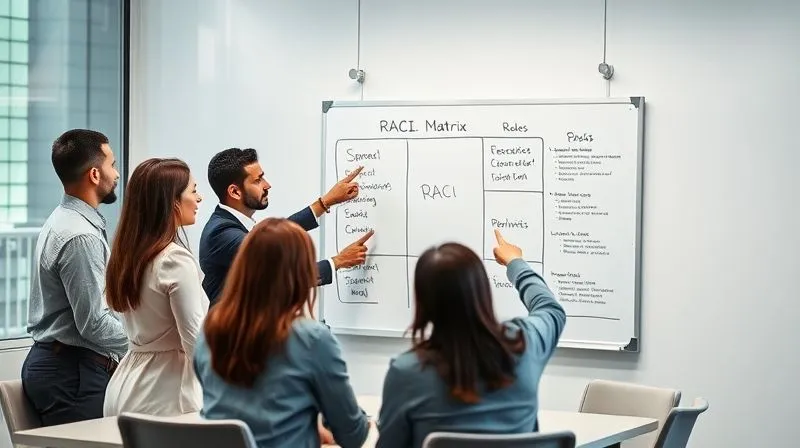
Ambiguity breeds conflict. Conduct a thorough review of individual roles and team responsibilities. Use tools like a RACI matrix (Responsible, Accountable, Consulted, Informed) to define who does what, especially at critical hand-off points. This prevents future 'turf wars' and misunderstandings.
3. Set New, Collaborative Goals
Develop new team goals that specifically require cross-functional collaboration and mutual support. These goals should be SMART (Specific, Measurable, Achievable, Relevant, Time-bound) and have clearly defined success metrics. Celebrating incremental wins towards these shared goals reinforces positive behaviors.
Step 5: Implementing Consistent Follow-Through and Support
Rebuilding trust is not a one-time event; it's an ongoing process that demands consistent effort and visible support from leadership. This is where the rubber meets the road, demonstrating that the commitments made are genuine and lasting.
- Regular Check-ins and Feedback Loops: Schedule regular, dedicated meetings to discuss progress, address new challenges, and provide constructive feedback. These can be weekly or bi-weekly for a defined period. Encourage both individual and team feedback.
- Monitor and Address Relapses: It's unrealistic to expect perfection. There might be minor disagreements or moments of tension. Address these promptly and privately, reinforcing the new norms and reminding the team of their commitments. Use them as learning opportunities, not failures.
- Invest in Team Development: Consider workshops on communication skills, emotional intelligence, or conflict resolution. Equipping your team with these tools empowers them to navigate future challenges more effectively. Forbes highlights the importance of ongoing development in this context.
- Celebrate Small Wins: Acknowledge and celebrate every step forward, no matter how small. Did a formerly feuding pair collaborate successfully on a task? Did the team resolve a minor disagreement constructively? Publicly recognize these positive shifts to reinforce the desired behaviors.
- Lead by Example: Your own behavior as a leader is the most powerful tool. Consistently demonstrate the values and behaviors you expect from your team: transparency, integrity, empathy, and a commitment to resolution.
Case Study: Phoenix Solutions' Journey from Discord to Unity
Phoenix Solutions, a mid-sized consulting firm, faced a significant internal crisis when a high-stakes client project failed spectacularly, leading to intense finger-pointing and a complete breakdown between their project management and delivery teams. Employee morale plummeted, and key talent threatened to leave.
The CEO, recognizing the severity, initiated a comprehensive trust-rebuilding program. They started with individual coaching for the project leads, followed by a facilitated offsite workshop focusing on shared values and re-establishing communication protocols. A key turning point was the implementation of a 'Blameless Post-Mortem' process for all projects, ensuring that failures were analyzed for systemic issues rather than individual culpability. They also introduced mandatory cross-training sessions, allowing project managers to shadow delivery teams and vice versa, fostering empathy and understanding.
Within six months, the internal climate had dramatically improved. Project success rates increased by 15%, and employee retention stabilized. The team learned not just how to work together, but how to truly support each other, showcasing how to rebuild trust after a major team conflict through structured intervention and commitment.
The Role of Psychological Safety in Sustaining Rebuilt Trust
Beyond simply resolving the conflict, the ultimate goal is to cultivate an environment of psychological safety. This is where team members feel safe to take interpersonal risks, speak up with ideas, ask questions, and even admit mistakes without fear of punishment or humiliation. It's the ultimate indicator that trust has not only been rebuilt but is now thriving.
What is Psychological Safety?
As defined by Harvard Business School professor Amy Edmondson, psychological safety is a shared belief held by members of a team that the team is safe for interpersonal risk-taking. It’s about feeling able to be yourself, to voice concerns, and to challenge the status quo without fear of negative consequences.
How Leaders Foster Psychological Safety:
- Model Vulnerability: Leaders who admit their own mistakes or uncertainties create space for others to do the same.
- Actively Solicit Input: Don't just ask for feedback; genuinely seek out dissenting opinions and ensure all voices are heard.
- Respond Constructively to Failure: Frame mistakes as learning opportunities. Focus on what can be improved, not who can be blamed.
- Embrace Conflict as a Healthy Process: Teach the team that constructive conflict, when managed well, leads to better outcomes.
A psychologically safe environment is inherently resilient to future conflicts, as teams have the tools and confidence to address issues before they escalate. It's the long-term dividend of successfully navigating the challenging journey of how to rebuild trust after a major team conflict.
Frequently Asked Questions (FAQ)
Q: How long does it typically take to rebuild trust after a major team conflict? A: There's no fixed timeline, as it heavily depends on the severity of the conflict, the willingness of all parties to engage, and the consistency of leadership's efforts. Generally, expect it to be a process, not an event. Initial stabilization might take weeks, but fully rebuilding and embedding new trust can take several months, or even a year, to solidify. Patience and persistence are key.
Q: What if one team member refuses to participate in the trust-rebuilding process? A: This is a challenging but not uncommon scenario. First, ensure you've had a private, empathetic conversation to understand their reluctance. It might stem from deep hurt, fear, or a lack of belief in the process. If their refusal persists and impacts the team's ability to heal, you may need to consider individual coaching, a temporary reassignment, or, in extreme cases, reassessing their fit within the team, especially if their continued presence actively sabotages collective efforts. Trust is a two-way street.
Q: Can trust ever be fully restored to its previous level? A: Often, yes, but it might evolve into a different, perhaps even stronger, form of trust. A team that successfully navigates and recovers from a major conflict often develops a deeper understanding of each other's resilience and commitment. The 'new' trust might be built on a foundation of shared vulnerability and proven ability to overcome adversity, which can be more robust than the 'untested' trust that existed before the conflict.
Q: What role does external mediation play in rebuilding trust? A: External mediators can be invaluable, especially when internal emotions are too high, or power dynamics are too complex for internal leaders to manage impartially. A skilled mediator brings objectivity, structured processes, and expertise in de-escalation and communication. They can help uncover root causes, facilitate difficult conversations, and guide the team towards mutually agreeable solutions, significantly accelerating the healing process.
Q: How can I prevent major conflicts from happening again in the future? A: While you can't prevent all conflicts, you can significantly reduce the likelihood of major ones. Focus on proactive measures: foster a culture of open communication and feedback, clarify roles and responsibilities regularly, invest in emotional intelligence and conflict resolution training, encourage psychological safety, and address minor disagreements swiftly before they fester. Regular team-building activities and celebrating successes also build a strong relational bank account.
Key Takeaways and Final Thoughts
The journey of how to rebuild trust after a major team conflict is undoubtedly challenging, but it is also one of the most rewarding leadership endeavors. It demands courage, empathy, and a steadfast commitment to your team's well-being.
- Acknowledge and Stabilize: Address the conflict immediately and create a safe space for initial processing.
- Facilitate Dialogue: Guide open, honest conversations with clear ground rules, focusing on impact.
- Address Root Causes: Look beyond the surface to systemic issues that fueled the conflict.
- Demonstrate Accountability: Lead by example in taking ownership and fostering mutual responsibility.
- Re-establish Clarity: Realign on purpose, roles, and collaborative goals.
- Ensure Consistent Follow-Through: Trust is rebuilt through consistent actions and ongoing support.
- Cultivate Psychological Safety: Aim for an environment where vulnerability and constructive conflict thrive.
Remember, a team that has successfully navigated and healed from deep conflict often emerges stronger, more resilient, and with a profound understanding of the importance of trust. Your leadership during this critical period will not only restore your team but will also forge a more cohesive and high-performing unit ready to tackle future challenges. Embrace the process, and your team will thank you for it.
Recommended Reading
- 7 Strategies: Integrating Urgent Requirements into Rigid Waterfall Plans
- 7 Strategies: How Resilient Leaders Prevent Burnout in Uncertainty
- Unlock Long-Term Profit: How Conscious Capitalism Transforms Your Business
- 7 Critical Legal Steps: Preventing Founder Equity & Control Disputes
- Mastering Scope Creep: Your Ultimate Guide to Project Consulting Success





Comments
Leave a comment below. Your email will not be published. Required fields marked with *