


How to Recover a Project Execution Budget Spiraling Out of Control?
For over two decades in the trenches of project management, I've witnessed the full spectrum of project challenges. One of the most insidious, and frankly, terrifying, situations a project manager can face is a budget spiraling out of control. It’s not just about numbers; it’s about team morale, stakeholder trust, and ultimately, the viability of the project itself. I’ve seen promising initiatives crumble, not due to a lack of vision or effort, but because the financial guardrails failed.
The moment you realize your project is bleeding cash faster than anticipated, a cold dread can set in. The feeling of losing control, the fear of accountability, and the pressure to deliver despite dwindling resources can be overwhelming. This isn't just a minor deviation; it’s a full-blown financial crisis that threatens to derail everything you've worked for. Many project managers make the mistake of hoping it will fix itself, or worse, try to hide the problem, which only exacerbates the issue.
But here’s the crucial insight: a spiraling budget, while alarming, is rarely irrecoverable if you act decisively and strategically. In this definitive guide, I will share the battle-tested framework I’ve employed to not only halt budget overruns but to bring projects back from the brink of financial disaster. We'll explore actionable strategies, real-world analogies, and expert insights to equip you with the tools to effectively recover a project execution budget spiraling out of control, restoring financial health and project confidence.
1. The Immediate Crisis Intervention: Stop the Bleeding First
When you discover your project budget is spiraling, your first priority is akin to a trauma surgeon in an emergency room: stop the bleeding. Panic is unproductive; swift, calculated action is essential. This initial phase is about immediate containment, not long-term solutions.
Identifying and Halting Non-Essential Spending
The very first step is to implement a temporary freeze on all non-essential expenditures. This requires a rapid, high-level review of current and planned spending. Think of it as hitting the pause button on everything that isn't absolutely critical to keeping the project operational for the next few days or weeks. This might include:
- Delaying new software licenses or hardware purchases.
- Postponing non-critical training or travel.
- Pausing external consulting engagements that aren't tied to immediate crisis resolution.
- Reviewing and potentially deferring marketing or communication activities.
Communicate this freeze clearly and immediately to your team and key vendors. Transparency, even in crisis, builds trust. Explain that this is a temporary measure to gain control and assess the situation.
Establishing a Crisis Monitoring Dashboard
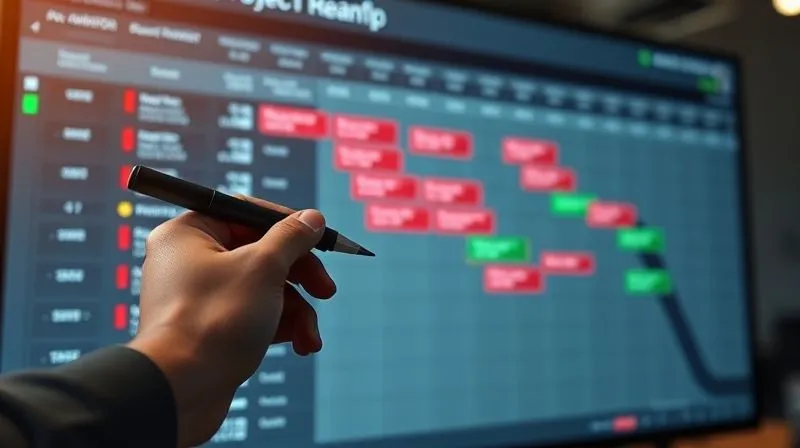
You can't manage what you don't measure, especially in a crisis. Immediately set up a simple, real-time tracking mechanism for all expenditures. This doesn't need to be fancy; a shared spreadsheet can suffice initially. The goal is visibility.
| Category | Current Burn Rate | Immediate Action |
|---|---|---|
| Labor Costs | $50,000/week | Review overtime, reassign non-critical tasks |
| Vendor Contracts | $30,000/month | Negotiate payment terms, pause optional services |
| Software/Tools | $10,000/month | Identify unused licenses, explore free alternatives |
| Other Expenses | $5,000/month | Categorize and scrutinize all miscellaneous spending |
This dashboard should be updated daily, if not more frequently, during the initial crisis phase. It provides the empirical data needed to make informed decisions and prevents further uncontrolled spending. As project management expert PMI (Project Management Institute) emphasizes, effective monitoring is the bedrock of project control.

2. Deep Dive Diagnostics: Unearthing the Root Causes
Once the immediate bleeding is stopped, it's time to become a detective. A spiraling budget isn't usually due to a single, obvious factor. It's often a confluence of issues, and failing to identify the true root causes will lead to superficial fixes that won't hold.
Conducting a Comprehensive Variance Analysis
This is where you compare your actual expenditures and progress against your original baseline. Don't just look at the numbers; understand the 'why' behind the variances.
- Scope Creep: Was there unauthorized additional work? Did requirements expand without corresponding budget adjustments?
- Poor Estimation: Were initial estimates overly optimistic or based on insufficient data?
- Resource Inefficiency: Are resources (people, equipment) being utilized effectively? Is there excessive rework or idle time?
- External Factors: Have market prices for materials or services increased unexpectedly? Were there unforeseen regulatory changes?
- Vendor Issues: Are external vendors delivering on time and within budget, or are there delays and cost overruns on their part?
- Risk Realization: Did identified risks materialize without adequate contingency planning?
I've often found that scope creep is the silent killer of budgets. A seemingly small, unapproved change can have a ripple effect on resources, timelines, and ultimately, costs. According to a study by KPMG, over 50% of projects experience scope creep, directly impacting budget adherence.
Interviewing Key Stakeholders and Team Members
Data alone won't tell the whole story. Talk to the people on the ground. Project team members, functional managers, and even key vendors often have invaluable insights into where the money is actually going and why. Ask open-ended questions:
- "What are the biggest challenges you're facing that impact cost?"
- "Are there any processes that feel inefficient or wasteful?"
- "Where do you see opportunities to save money or improve efficiency?"
"The most dangerous phrase in the language is 'we've always done it this way.' When a budget spirals, it's a loud alarm telling you to question every assumption, every process, and every habit." – An Experienced Industry Specialist
3. Rebaselining and Re-scoping: A New Financial Reality
Once you understand the root causes, it’s time to recalibrate. Trying to continue with an unrealistic original baseline is a recipe for continued failure and frustration. This step is about establishing a new, achievable financial and scope baseline.
Prioritizing Project Deliverables ruthlessly
Not everything is equally important. Engage with your key stakeholders to identify the absolute 'must-haves' versus the 'nice-to-haves'. This often involves difficult conversations and potential trade-offs. Use techniques like MoSCoW (Must, Should, Could, Won't) to categorize features and functionalities.
- Identify Core Value: What delivers the most critical value to the client or business? Protect these at all costs.
- Negotiate Scope Reductions: Be prepared to remove or defer less critical features. This is a direct way to reduce resource requirements and associated costs.
- Phased Delivery: Can the project be broken into smaller, independently valuable phases? This allows you to deliver core functionality sooner and potentially secure additional funding or re-evaluate later phases.
Developing a Revised Project Plan and Budget
With a clearer scope, you can now construct a new, realistic project plan and budget. This isn't just about cutting numbers; it's about intelligent reallocation and re-estimation. In my experience, this is where the rubber meets the road. It requires meticulous attention to detail and a willingness to challenge previous assumptions.
Case Study: Phoenix Labs' Budget Turnaround
How Phoenix Labs recovered from a 40% budget overrun
Phoenix Labs, a biotech startup, found its flagship drug development project facing a 40% budget overrun primarily due to expanding research avenues and unforeseen regulatory hurdles. Instead of panicking, the project manager initiated a deep-dive. They discovered that while some research was critical, other parallel experiments, though promising, were not absolutely essential for the initial regulatory submission. By engaging with lead scientists and stakeholders, they ruthlessly prioritized, deferring 25% of the research scope to a later phase. This immediate re-scoping, combined with negotiating a 15% discount on upcoming lab equipment purchases by committing to a bulk order, allowed them to re-baseline the project. The revised plan, though leaner, secured vital funding and ultimately led to a successful initial drug approval, with the deferred research picked up in a subsequent, better-funded phase.
4. Stakeholder Alignment and Communication: Bridging the Gaps
A revised plan is only as good as its acceptance by those who matter. When recovering a project execution budget spiraling out of control, transparent and consistent communication with stakeholders is paramount. Without their buy-in, even the best recovery plan is doomed.
Crafting a Transparent Communication Strategy
Don't sugarcoat the situation, but present it with solutions. Your stakeholders need to understand the gravity of the situation, the root causes, and, most importantly, the concrete steps you are taking to rectify it. Prepare a concise, data-backed presentation that outlines:
- The current budget status and projected overruns.
- The identified root causes (without finger-pointing).
- The proposed recovery plan, including scope adjustments and cost-saving measures.
- The revised budget and timeline.
- The implications of not taking these steps.
Be ready for tough questions. Emphasize that the goal is to save the project and deliver core value, even if it means adjusting expectations. As author and leadership expert Simon Sinek often stresses, trust is built on transparency, especially during difficult times.
Securing Buy-in for the Revised Plan
This isn't a monologue; it's a negotiation. Listen to stakeholder concerns and be prepared to make minor adjustments where feasible. The goal is consensus. Once buy-in is secured, formalize it. This might involve:
- Signed agreements on revised scope documents.
- Updated project charters or statements of work.
- Regular, scheduled progress updates to maintain transparency and accountability.
"In times of crisis, communication isn't just important; it's the lifeline that connects your recovery efforts to stakeholder support. Without it, you're navigating a storm alone." – An Experienced Industry Specialist
5. Cost Control Strategies: Beyond Simple Cuts
Cutting costs isn't just about slashing budgets; it's about smart, strategic optimization. This phase involves implementing detailed measures to ensure every dollar spent contributes effectively to the project's revised objectives.
Implementing Value Engineering and Lean Principles
Value engineering focuses on optimizing the value of a project by analyzing its functions. Can a less expensive material achieve the same performance? Can a simpler process deliver the same outcome? Challenge assumptions about 'how things must be done'.
Lean principles aim to eliminate waste in all its forms: overproduction, waiting, unnecessary transport, over-processing, excess inventory, unnecessary movement, and defects. For instance, if your team is spending excessive time on complex reporting that few stakeholders read, simplify or automate it. If internal approval processes are causing delays, streamline them.
Renegotiating Vendor Contracts and Resource Rates
Don't be afraid to revisit existing agreements. Many vendors are willing to negotiate if it means retaining a client, especially during challenging times. Focus on:
- Volume Discounts: Can you consolidate purchases or commit to larger volumes for better rates?
- Payment Terms: Can you extend payment terms to improve cash flow?
- Scope of Service: Can you temporarily reduce the scope of services from a vendor without impacting critical deliverables?
- Alternative Suppliers: Explore other suppliers for competitive quotes, even if just to gain leverage in negotiations with current vendors.
Review internal resource allocation as well. Are highly paid experts performing tasks that could be handled by more junior staff? Can some tasks be outsourced to more cost-effective regions without compromising quality?
6. Resource Optimization: Doing More with Less (or Smarter)
Often, a spiraling budget points to inefficiencies in how resources – human, material, and technological – are being utilized. This step focuses on maximizing output from available resources.
Optimizing Team Structure and Workflows
Evaluate your project team structure. Are there clear roles and responsibilities? Are there bottlenecks in workflows that cause delays and rework? Flat organizational structures, where appropriate, can sometimes improve communication and decision-making speed, reducing overhead.
- Skill Alignment: Ensure team members are assigned tasks that best leverage their skills, minimizing training costs and maximizing efficiency.
- Cross-Training: Cross-train team members on critical tasks to create redundancy and reduce reliance on single points of failure, which can cause costly delays.
- Process Streamlining: Map out key project processes. Where are the handoffs? Where are the delays? Can steps be eliminated or automated?
For example, if developers are spending significant time on manual testing, investing in automated testing tools, while an initial cost, can yield substantial long-term savings by reducing labor hours and catching defects earlier.
Leveraging Technology for Efficiency Gains
Technology isn't just an expense; it can be a powerful cost-saving tool. Look for opportunities to:
- Automate Repetitive Tasks: From reporting to data entry, automation reduces human error and frees up valuable team time.
- Cloud Computing: Utilize scalable cloud infrastructure to pay only for what you use, avoiding expensive on-premise hardware.
- Collaboration Tools: Invest in effective project management and collaboration platforms to reduce communication overhead and improve coordination, especially for remote or distributed teams.
| Area | Current Cost/Week | Tech Solution | Projected Savings/Week |
|---|---|---|---|
| Manual Reporting | $1,200 (30 hrs) | Automated BI Dashboard | $1,000 |
| On-Premise Servers | $5,000 | Cloud Migration (AWS/Azure) | $1,500 |
| Travel for Meetings | $3,000 | Advanced Video Conferencing | $2,500 |
The initial investment in technology might seem counterintuitive when trying to recover a project execution budget spiraling out of control, but the long-term efficiency gains can be substantial. It's about strategic spending, not just cutting everything.
7. Monitoring and Reporting: Sustaining Control
Bringing a budget back under control is a victory, but sustaining that control requires vigilance. This final phase is about establishing robust mechanisms to prevent future budget spirals and ensure long-term financial health.
Implementing Enhanced Earned Value Management (EVM)
EVM is a powerful project management methodology that integrates scope, schedule, and cost performance. It provides objective metrics to assess project performance and forecast future outcomes. While it might seem complex, even a simplified EVM approach can offer invaluable insights.
Key EVM metrics to track:
- Planned Value (PV): The budgeted cost of work scheduled.
- Earned Value (EV): The budgeted cost of work performed.
- Actual Cost (AC): The actual cost incurred for the work performed.
From these, you can derive critical performance indicators like Cost Variance (CV = EV - AC) and Schedule Variance (SV = EV - PV). These metrics give you early warnings of deviations, allowing you to take corrective action before problems escalate.
Establishing Regular Budget Reviews and Audits
Make budget reviews a non-negotiable part of your project cadence. These shouldn't be punitive exercises but rather opportunities for continuous improvement. Regularly scheduled deep-dive audits, perhaps quarterly or semi-annually, can identify systemic issues that might otherwise go unnoticed.
- Weekly/Bi-weekly Reviews: Focus on current burn rates, upcoming expenditures, and any new variances.
- Monthly Reviews: A more comprehensive look at overall financial health, forecasting, and adherence to the revised budget.
- Post-Mortem Analysis: After the project, conduct a thorough analysis of budget performance to capture lessons learned for future projects. This is how organizations truly build financial resilience.
Building a culture of financial awareness within the project team is also crucial. Every team member should understand how their work impacts the budget and be empowered to identify potential cost-saving opportunities or raise concerns. This collective vigilance is your strongest defense against future budget spirals.

Frequently Asked Questions (FAQ)
Q: What if stakeholders resist scope reductions or budget cuts? A: This is a common challenge. Your role is to present the stark reality of the situation with data, clearly articulating the consequences of *not* making these changes (e.g., project failure, incomplete delivery, significant delays). Frame the discussion around preserving core value and achieving critical objectives, even if it means sacrificing less essential elements. Offer phased delivery as a compromise, allowing some features to be built later.
Q: How do I handle team morale when implementing budget cuts? A: Transparency and empathy are key. Explain *why* these measures are necessary, emphasizing that it's about saving the project, not punishing the team. Involve the team in identifying efficiencies where possible, giving them ownership. Celebrate small wins and acknowledge their efforts during a difficult period. Avoid sudden, unexplained changes that can breed distrust.
Q: Is it ever too late to recover a project budget? A: While extremely challenging, it's rarely 'too late' to initiate a recovery effort. However, the later you start, the more drastic the measures will need to be, and the higher the risk of significant scope or timeline impacts. The moment you detect a sustained negative trend, that's the time to act. Prolonged inaction is the real killer.
Q: Should I bring in an external consultant for budget recovery? A: For highly complex projects, or when internal expertise is lacking, an experienced external consultant specializing in project rescue or financial turnaround can be invaluable. They bring an objective perspective, specialized tools, and often have experience with similar situations, which can accelerate the recovery process. This is a strategic investment that can prevent greater losses.
Q: How can I prevent a budget from spiraling in the first place? A: Prevention is always better than cure. Focus on robust upfront planning, detailed and realistic estimation, rigorous scope management (including a formal change control process), proactive risk management with adequate contingency planning, and continuous, accurate cost tracking from day one. Regular communication with stakeholders about budget status is also critical.
Key Takeaways and Final Thoughts
Recovering a project execution budget spiraling out of control is undoubtedly one of the toughest challenges a project manager can face. It demands courage, strategic thinking, and decisive action. But as an industry veteran, I can assure you it's a battle that can be won. By systematically applying the principles we've discussed, you can turn the tide.
- Act Immediately: Stop the bleeding and gain initial control.
- Diagnose Thoroughly: Understand the true root causes, don't just treat symptoms.
- Re-baseline Realistically: Create a new, achievable plan with stakeholder buy-in.
- Communicate Transparently: Keep everyone informed and aligned.
- Optimize Strategically: Implement smart cost control and resource efficiency.
- Monitor Continuously: Maintain vigilance to prevent future deviations.
Remember, a project's financial health is a direct reflection of its management. By embracing these strategies, you're not just saving a budget; you're safeguarding your project's future, reinforcing your leadership, and building resilience for your organization. The path won't be easy, but with conviction and a clear framework, you absolutely can bring your project back from the brink.
Recommended Reading
- Eliminate Glare: The Ultimate Guide to Solving Reflections in Shiny Product Photography
- Unlock the Green Advantage: How to Start Corporate Green Initiatives Effectively?
- How Small Law Firms Can Prevent GDPR Fines: A 7-Step Action Plan
- Unlock Your True Worth: How Small Businesses Calculate Value-Based Pricing
- AI Disrupts Your Startup's Niche? 7 Steps to Adapt, Innovate & Dominate





Comments
Leave a comment below. Your email will not be published. Required fields marked with *