


How to Reduce Cart Abandonment Caused by High Shipping Costs: An Expert's Playbook
For over 15 years in the e-commerce trenches, I've witnessed countless businesses, from budding startups to established enterprises, struggle with a silent killer of conversions: unexpectedly high shipping costs. It’s a common scenario: a customer meticulously fills their cart, excited about their potential purchase, only to hit the checkout page and see a shipping fee that feels like a punch to the gut. That moment, often referred to as 'shipping shock,' is where many promising sales journeys abruptly end.
This isn't just about losing a single sale; it erodes customer trust, diminishes brand perception, and directly impacts your bottom line. The data consistently shows that high shipping costs are a leading cause of cart abandonment, a problem that costs e-commerce businesses billions annually. It's a critical leak in your sales funnel that, if left unaddressed, can severely limit your growth potential and profitability.
But here’s the good news: this problem is entirely solvable. In this definitive guide, I’ll share proven frameworks, data-backed strategies, and real-world insights I’ve gathered over my career. We’ll dive deep into the psychology behind shipping costs, explore innovative pricing models, and equip you with actionable steps on how to reduce cart abandonment caused by high shipping costs, transforming a common pain point into a powerful competitive advantage.
Understanding the "Why": The Psychology of Shipping Cost Shock
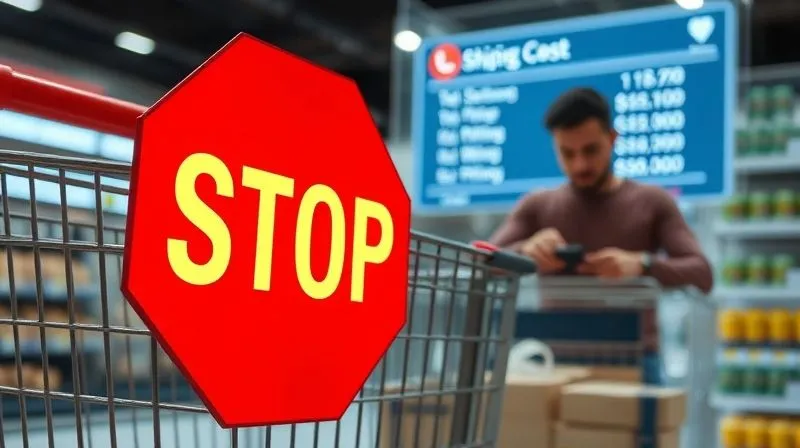
Before we can fix the problem, we must understand its roots. Shipping cost shock isn't just about the monetary value; it’s a psychological barrier. Customers often view the product price as the 'true' cost and anything added on top, especially for delivery, as an unwelcome surcharge. They perceive it as an extra fee for something they believe should be inherent to the online shopping experience.
Research from the Baymard Institute consistently highlights high shipping costs as the number one reason for cart abandonment. This isn't surprising when you consider the prevalent expectation of 'free' or heavily subsidized shipping, largely set by e-commerce giants. When your shipping costs deviate significantly from this perceived norm, friction occurs, and abandonment rates soar.
It’s crucial to remember that customers are not just buying a product; they're buying an experience. A transparent, fair, and predictable shipping policy contributes significantly to a positive experience. Conversely, hidden fees or exorbitant charges at the last minute can instantly sour the entire interaction, leading to a loss of trust and a missed conversion.
Strategy 1: Transparent Pricing from the Outset
One of the most effective ways to combat shipping shock is to eliminate the surprise. Transparency isn't just good practice; it's a powerful conversion tool. By providing clear shipping cost information early in the customer journey, you manage expectations and build trust. This proactive approach significantly reduces the likelihood of abandonment at checkout.
How to implement this:
- Display Shipping Costs on Product Pages: Use a simple calculator or clear statements like "Shipping calculated at checkout" with an estimated range. Better yet, if you offer flat rates or free shipping above a threshold, state it explicitly.
- Use Geolocation to Estimate: For more accurate estimates, leverage a customer's IP address to pre-populate their location and display a more precise shipping cost on the product or cart page.
- Create a Dedicated Shipping Policy Page: Link prominently to a comprehensive page detailing all shipping options, costs, delivery times, and any restrictions. This acts as a central hub for all shipping-related queries.
- Integrate into Cart Summary: As soon as an item is added to the cart, show the estimated shipping cost (or how much more they need to spend for free shipping) right there in the mini-cart or sidebar.
"Surprise is the enemy of conversion. When it comes to shipping costs, transparency transforms a potential deal-breaker into a predictable part of the purchase." - Industry Expert Insight
By making shipping costs visible early, you allow customers to factor it into their decision-making process upfront. This means those who proceed to checkout are already comfortable with the total cost, leading to a much higher conversion rate.
Leveraging Exit-Intent Pop-ups for Shipping Transparency
Even with clear information on product pages, some customers might still be caught off guard. An advanced tactic on how to reduce cart abandonment caused by high shipping costs is to deploy exit-intent pop-ups specifically addressing shipping concerns. If a customer moves their mouse to exit the page, a pop-up can appear, offering a reminder about your shipping policy, a link to the detailed shipping page, or even a one-time offer for reduced shipping to prevent immediate abandonment. This acts as a last-ditch effort to re-engage and clarify.
Strategy 2: The Art of "Free Shipping" – When and How to Offer It
The allure of "free shipping" is undeniable. It's a psychological trigger that can dramatically boost conversions, even if the cost is subtly absorbed elsewhere. However, offering blanket free shipping isn't always feasible or profitable for every business. The art lies in strategic implementation.
Effective Free Shipping Models:
- Free Shipping Thresholds: This is perhaps the most popular and effective method. Set a minimum order value (e.g., "Free shipping on orders over $50"). This incentivizes customers to add more items to their cart, increasing average order value (AOV) and offsetting the shipping cost.
- Conditional Free Shipping: Offer free shipping for specific products, during promotions, for loyalty program members, or for certain geographic zones. This allows for targeted application where it makes the most sense for your margins. As Forbes contributors often point out, the psychology of 'free' is incredibly powerful in e-commerce.
- "Absorbed" Shipping Costs: Carefully bake a small portion of the shipping cost into your product prices. While the customer still pays, the perception of "free" shipping at checkout often outweighs a slightly higher product price. This requires careful margin analysis.
- Flat Rate Shipping: While not "free," a predictable, low flat rate for all orders or specific order sizes can feel reassuringly simple and fair compared to variable rates. This reduces uncertainty.
Case Study: How ‘Botanical Blooms’ Boosted AOV with Free Shipping Thresholds
Botanical Blooms, an online plant nursery, struggled with a 25% cart abandonment rate, primarily due to shipping costs for their often bulky products. After analyzing their average order value of $40, I advised them to implement a "Free Shipping on orders over $60" threshold. They also clearly displayed a progress bar in the cart, showing customers how much more they needed to spend to qualify.
Within three months, their cart abandonment rate dropped to 18%, and their average order value increased by 15% as customers added small accessories or another plant to reach the free shipping threshold. The slight increase in AOV more than compensated for the absorbed shipping costs, leading to a significant boost in overall profitability. This strategy effectively addressed how to reduce cart abandonment caused by high shipping costs by leveraging customer psychology.

When considering free shipping, always perform a thorough margin analysis. Understand your average shipping cost per order, your average order value, and how much you can afford to absorb. The goal is to make free shipping a growth driver, not a profit drain.
Strategy 3: Localized & Tiered Shipping Models
One size rarely fits all in e-commerce, especially concerning shipping. A nuanced approach that considers geography and order characteristics can significantly optimize costs and improve customer satisfaction. Localized and tiered shipping models allow you to offer more competitive rates where it makes sense.
Implementing Smart Shipping Tiers:
- Geographic Zoning: Divide your shipping destinations into zones (e.g., local, regional, national, international). Offer different rates for each zone, reflecting the actual cost of delivery. This prevents customers close to your warehouse from subsidizing distant deliveries.
- Weight/Size-Based Tiers: For products with highly variable weights or dimensions, implement shipping tiers based on these factors. A small, light item shouldn't cost the same to ship as a large, heavy one.
- Speed-Based Tiers: Offer multiple shipping speed options (e.g., Standard, Expedited, Express) with corresponding price points. This gives customers control over how quickly they receive their order and how much they pay for it. Many customers are willing to pay more for speed, but appreciate the cheaper option.
- Click & Collect (BOPIS): If you have physical locations, offer Buy Online, Pick Up In Store. This eliminates shipping costs entirely for the customer and drives foot traffic to your stores, potentially leading to impulse purchases.
By tailoring your shipping options, you provide flexibility and fairness, addressing specific customer needs and cost sensitivities. This personalized approach is a powerful answer to how to reduce cart abandonment caused by high shipping costs.
| Shipping Tier | Cost | Notes |
|---|---|---|
| Standard (3-7 days) | $5.99 | Most popular, economical |
| Expedited (2-3 days) | $12.99 | Faster delivery for urgent needs |
| Express (1-2 days) | $24.99 | Guaranteed quick delivery |
| Free Shipping | $0.00 | Orders over $75 |
Strategy 4: Optimizing Logistics & Carrier Partnerships
Sometimes, the solution to high shipping costs isn't about how you charge the customer, but about how much you're paying your carriers. A deep dive into your logistics and carrier relationships can uncover significant cost-saving opportunities that you can then pass on to your customers, or use to fund free shipping initiatives.
Key Optimization Areas:
- Negotiate Carrier Rates: Don't just accept standard rates. As your volume grows, negotiate better terms with your primary carriers. Explore multiple carriers and leverage competitive bids. Sometimes, consolidating your volume with one or two carriers can unlock significant discounts. A comprehensive guide on retail logistics from Harvard Business Review emphasizes the importance of strategic partnerships.
- Package Optimization: Are you using the right-sized boxes? Oversized packaging leads to 'dimensional weight' charges, where you pay for the space your package takes up, not just its actual weight. Invest in efficient packaging solutions that protect your products while minimizing dimensions.
- Fulfillment Center Location: If you ship nationally, consider using multiple fulfillment centers strategically located closer to your customer base. This reduces transit times and, crucially, shipping zones, leading to lower costs.
- Consolidate Shipments: For customers ordering multiple items, ensure they ship together in the most efficient package possible. Avoid splitting orders unless absolutely necessary, as this doubles (or triples) shipping costs.
- Leverage Shipping Software: Use a shipping management platform that integrates with multiple carriers. These platforms often provide discounted rates, automate label creation, and help you compare costs across carriers for each shipment, ensuring you always get the best deal.
"Every dollar saved in logistics is a dollar that can be reinvested into customer value, either through lower shipping costs or better product offerings." - E-commerce Operations Veteran
A proactive approach to logistics management is fundamental on how to reduce cart abandonment caused by high shipping costs. It allows you to control the variables that directly impact your shipping expenses.
Considering Reverse Logistics and Drop Shipping
Beyond outbound shipping, consider your reverse logistics – the process of handling returns. An efficient and transparent return policy, including clear instructions on return shipping costs, can build trust and reduce initial purchase apprehension, indirectly impacting abandonment. If customers know returns won't be a hassle or an unexpected expense, they're more likely to complete the initial purchase. Similarly, if you use drop shipping, ensure your suppliers' shipping policies are aligned with your brand's commitment to transparency and reasonable costs. Hidden shipping fees from drop shippers can quickly erode your margins and damage customer perception.
Strategy 5: Leveraging Technology for Dynamic Shipping Rates
In today's fast-paced e-commerce landscape, static shipping rates can quickly become outdated or unprofitable. Dynamic shipping rate calculators, powered by advanced e-commerce platforms and integrations, offer real-time, accurate, and optimized shipping costs directly at checkout. This technology is a game-changer for businesses with diverse product catalogs or fluctuating carrier rates.
The Power of Real-time Calculation:
- Precision: Dynamic rates consider factors like product weight, dimensions, origin, destination, chosen shipping speed, and even current carrier surcharges to provide an exact cost. This eliminates overcharging or undercharging.
- Carrier Integration: These systems typically integrate directly with major carriers (UPS, FedEx, USPS, DHL, etc.), pulling real-time rates based on your negotiated contracts. This ensures you're always showing the most accurate and often, the most competitive price. Leading e-commerce platforms like Shopify often detail how dynamic shipping rates can be integrated.
- Flexibility: Easily adjust rules for free shipping thresholds, promotional rates, or specific product exclusions. The system automatically applies the correct logic.
- Reduced Manual Errors: Automating rate calculation significantly reduces the chance of human error, which can be costly in terms of both lost revenue and customer service issues.
Investing in a robust shipping rate calculator or integrating with a platform that offers this functionality can be a significant step in how to reduce cart abandonment caused by high shipping costs. It ensures fairness for both you and your customer.

Strategy 6: Subscription Models & Loyalty Programs
Beyond one-off purchases, consider how recurring revenue models and loyalty programs can transform the perception and impact of shipping costs. These strategies build long-term customer relationships and can make shipping a non-issue for your most valuable customers.
Building Loyalty Through Shipping:
- Shipping Subscriptions (e.g., "Prime" Model): Offer customers the option to pay a flat annual or monthly fee for unlimited free shipping. This is ideal for businesses with high repeat purchase rates. Once the subscription is paid, shipping becomes a non-factor for the customer, encouraging more frequent purchases.
- Loyalty Program Tiers: Integrate shipping benefits into your loyalty program. Higher tiers could unlock free standard shipping, expedited shipping discounts, or even complimentary returns. This incentivizes customers to climb the loyalty ladder.
- Bundle Deals with Shipping: Create product bundles that include "free shipping" as part of the package deal. This increases the perceived value of the bundle and can help move slower-selling inventory while absorbing shipping costs efficiently.
- Re-engagement Offers: For abandoned carts, specifically target customers with an offer of free shipping on their next purchase or if they complete their current order within a certain timeframe. This can be a powerful nudge.
These strategies shift the customer's mindset from "paying for shipping" to "investing in a better shopping experience." It's a powerful long-term play on how to reduce cart abandonment caused by high shipping costs by fostering loyalty.
Gamification of Shipping Benefits
Beyond standard loyalty tiers, consider gamifying your shipping benefits. For example, a customer might "level up" to free expedited shipping after five purchases, or unlock a special "shipping bonus" during their birthday month. This adds an element of fun and reward, making the pursuit of shipping benefits an engaging part of their customer journey. This approach not only addresses how to reduce cart abandonment caused by high shipping costs but also deeply embeds customer loyalty.
Strategy 7: The Power of In-Cart Value Additions
Sometimes, you can't eliminate the shipping cost, but you can soften its blow by adding perceived value elsewhere. This strategy focuses on making the overall offer so compelling that the shipping fee feels less significant, or even justified.
Enhancing Value to Offset Shipping:
- Free Gifts or Samples: Include a small, relevant free gift or product sample with every order. This adds an unexpected delight and makes the customer feel like they're getting more for their money.
- Personalized Notes or Packaging: A handwritten thank-you note or premium, branded packaging can significantly enhance the unboxing experience, adding a touch of luxury and care that justifies the overall cost.
- Extended Warranty/Guarantees: Offer an extended warranty or a no-questions-asked satisfaction guarantee. This reduces purchase risk and increases confidence, making the total price, including shipping, seem more reasonable.
- Exclusive Content or Resources: For certain niches, providing access to exclusive digital content, tutorials, or community access can be a unique value-add that costs you little but means a lot to the customer.
The goal here is to shift the customer's focus from the shipping cost itself to the holistic value proposition. When the overall perceived value significantly outweighs the total cost (product + shipping), the shipping fee becomes less of a barrier.

A/B Testing Your Shipping Strategies
Implementing any of these strategies without rigorous testing is like throwing darts in the dark. What works for one audience or product might not work for another. A/B testing is crucial for understanding the true impact of your shipping policies on conversion rates and profitability.
How to A/B Test Effectively:
- Isolate Variables: Test one change at a time. For example, compare a $50 free shipping threshold vs. a $75 threshold. Or compare flat-rate shipping vs. carrier-calculated rates.
- Define Clear Metrics: Track key performance indicators (KPIs) like cart abandonment rate, conversion rate, average order value (AOV), and gross profit per order.
- Segment Your Audience: If possible, test different strategies on different customer segments (e.g., new vs. returning customers, high-value vs. low-value products).
- Run Tests Long Enough: Ensure your tests run for a sufficient period (weeks, not days) to gather statistically significant data and account for weekly purchasing cycles.
- Analyze and Iterate: Don't just pick a winner; understand why one strategy performed better. Use these insights to refine your approach and run further tests.
According to Conversion Rate Optimization expert Peep Laja at CXL, "If you're not testing, you're guessing." This applies directly to how to reduce cart abandonment caused by high shipping costs. Continuous optimization is key to sustained success.
| Test Group | Abandonment Rate | Conversion Rate | AOV |
|---|---|---|---|
| Control (Flat Rate $7.99) | 62% | 1.8% | $85 |
| Variant A (Free Ship > $50) | 48% | 2.5% | $98 |
| Variant B (Free Gift + Flat Rate $7.99) | 55% | 2.1% | $87 |
Frequently Asked Questions (FAQ)
Q: Is it always better to offer free shipping, even if it means raising product prices? A: Not always. While free shipping is a powerful psychological incentive, the optimal strategy depends on your product margins, average order value, and competitive landscape. For low-margin or very heavy/bulky items, absorbing shipping costs entirely might be unprofitable. Sometimes, a transparent, reasonable flat rate or a strategic threshold is more sustainable. Always run the numbers and A/B test the impact on overall profitability, not just conversion rate.
Q: How do I calculate the right free shipping threshold without losing money? A: Start by calculating your current average order value (AOV) and your average shipping cost per order. Aim to set your free shipping threshold 15-30% above your current AOV. This encourages customers to add more items to reach the threshold, increasing your AOV and offsetting the shipping cost. Monitor the impact on AOV, conversion rate, and gross profit closely. Tools and analytics can help you model different scenarios.
Q: My products are very diverse in size and weight. How can I manage shipping costs effectively? A: For diverse product catalogs, a tiered shipping model combined with dynamic rate calculation is usually best. Implement weight-based or dimensional-weight-based tiers, and integrate with a shipping solution that pulls real-time carrier rates. This ensures customers are charged fairly based on the actual cost of shipping their specific order, preventing both overcharges and undercharges. Consider offering a predictable flat rate for smaller, lighter items to simplify the experience for common purchases.
Q: Should I offer international shipping if it's expensive and causes abandonment? A: International shipping can be complex and costly, but it also opens up vast new markets. If international abandonment is high due to costs, consider: 1) Clearly stating potential customs/duties upfront, 2) Partnering with a global fulfillment provider to reduce costs, 3) Offering only slower, more economical international options, 4) Geo-targeting your marketing to focus on regions where shipping is more viable. Sometimes, it's better to serve a smaller international market profitably than to offer worldwide shipping with high abandonment.
Q: What role does customer service play in reducing shipping-related abandonment? A: A significant one! Excellent customer service can proactively address shipping concerns before they lead to abandonment or resolve them post-purchase. Ensure your FAQ is robust regarding shipping. Provide multiple contact points (chat, email, phone) for shipping inquiries. Empower your support team to offer solutions like expedited shipping for loyal customers or small discounts to recover abandoned carts. A responsive and helpful support team builds trust, which can outweigh some shipping cost concerns.
Key Takeaways and Final Thoughts
Addressing how to reduce cart abandonment caused by high shipping costs is not a one-time fix; it's an ongoing optimization journey. It requires a blend of psychological understanding, strategic pricing, logistical efficiency, and technological leverage. Here are the critical takeaways:
- Transparency is Paramount: Eliminate shipping surprises by displaying costs early and clearly.
- Leverage "Free Shipping" Strategically: Use thresholds and conditions to boost AOV and conversions.
- Optimize Your Operations: Negotiate carrier rates, optimize packaging, and streamline fulfillment.
- Embrace Technology: Utilize dynamic rate calculators for precision and flexibility.
- Build Loyalty: Explore subscriptions and loyalty programs to make shipping a non-issue for repeat customers.
- Add Value: Sweeten the deal with free gifts, premium packaging, or extended guarantees.
- Test, Test, Test: Continuously A/B test your strategies to find what truly works for your unique business and audience.
As an industry veteran, I can tell you that every percentage point you shave off your cart abandonment rate due to shipping costs translates directly into increased revenue and stronger customer relationships. By taking a proactive, data-driven approach, you can transform this common e-commerce hurdle into a powerful lever for growth. The investment in optimizing your shipping strategy will pay dividends for years to come. Start implementing these insights today, and watch your conversions soar.
Recommended Reading
- 5 Ethical Pillars: How to Personalize Service Without Invading Privacy
- Liability for Foreign Subsidiaries: Navigating International Law Risks
- 7 Ways to Avoid Greenwashing: Promote Green Initiatives Authentically
- Mastering Remote Wellness: Prevent Burnout in Your Team Today
- Conflicting Goals? 7 Steps to Align Strategic Alliance Partners




Comments
Leave a comment below. Your email will not be published. Required fields marked with *