

How to Reduce Excess Inventory Holding Costs by 15% Quickly?
For over two decades in operations management, I've seen countless businesses struggle with a silent, insidious drain on their profitability: excess inventory. It’s not just about the space it occupies; it’s a complex web of capital tied up, increased risk of obsolescence, and hidden operational inefficiencies that can cripple even the most robust organizations.
Many leaders acknowledge the problem but feel overwhelmed by the sheer scale of their stockrooms, believing that a significant reduction is a long, arduous journey. They grapple with questions about demand volatility, supplier reliability, and the fear of stockouts, often leading to a paralysis that perpetuates the very issue they wish to solve.
Today, I'm going to share my battle-tested framework, a pragmatic, seven-step approach designed not just to chip away at inventory but to deliver a measurable 15% reduction in your excess inventory holding costs, quickly. We'll delve into actionable strategies, real-world analogies, and expert insights that will empower you to transform your inventory from a liability into a lean, dynamic asset.
The Hidden Drain: Understanding Your True Inventory Holding Costs
Before we can cut costs, we must understand them. Many companies only look at the direct cost of storage, but that's just the tip of the iceberg. Excess inventory holding costs are a multi-faceted beast, eating into your working capital and impacting your bottom line in ways you might not fully perceive.
Beyond the Obvious: Deconstructing Carrying Costs
When I talk about holding costs, I'm referring to the sum of all expenses associated with keeping goods in stock. This isn't just rent; it includes a variety of factors:
- Capital Costs: The interest on money tied up in inventory, or the opportunity cost of not investing that capital elsewhere.
- Storage Costs: Rent, utilities, insurance, taxes, and depreciation of warehouse equipment.
- Service Costs: Inventory management software, physical inventory counting, security, and material handling expenses.
- Risk Costs: Shrinkage (theft, damage, loss), obsolescence (products becoming outdated or unsellable), and deterioration.
"Excess inventory is not just a burden; it's a silent predator, eroding your cash flow, stifling innovation, and masking deeper operational inefficiencies."
– An Experienced Industry Specialist
According to a study by Deloitte, inventory carrying costs can range from 15% to 35% of the inventory's value annually, sometimes even higher. Imagine what a 15% reduction in those costs could do for your cash flow.
| Cost Category | Typical Range (% of Inventory Value) | Impact of Excess |
|---|---|---|
| Capital Costs | 6-12% | High - Tied-up capital, lost investment opportunity |
| Storage Costs | 2-6% | Moderate - More space, utilities, labor |
| Service Costs | 1-5% | Moderate - Increased management, handling, insurance |
| Risk Costs | 6-15% | Very High - Obsolescence, damage, shrinkage, spoilage |
Step 1: Rapid Data Audit & Segmentation – Know What You Hold
You can't fix what you don't understand. The first, and often most overlooked, step in how to reduce excess inventory holding costs by 15% quickly is a swift, incisive audit of your current stock. This isn't just a physical count; it's a deep dive into the data.
The ABC/XYZ Analysis Blitz
I always recommend starting with an ABC analysis, categorizing your inventory based on value contribution. 'A' items are high-value, low-volume; 'C' items are low-value, high-volume. Complement this with an XYZ analysis, categorizing by demand variability ('X' for stable, 'Z' for erratic). This combined approach gives you a powerful matrix to prioritize your efforts.
- Identify Your 'Dead Stock': Run reports for items with no movement in the last 6-12 months. These are immediate candidates for liquidation.
- Pinpoint 'Slow Movers': Look for items with significantly lower turnover rates than their category average. These are the next priority.
- Segment by Profitability: Understand which items genuinely contribute to your bottom line versus those that are simply consuming resources.
- Assess Shelf Life & Obsolescence Risk: For perishable goods or products with evolving technology, identify items nearing their expiry or becoming outdated.
This initial data blitz will immediately reveal pockets of excess inventory that are ripe for quick action. You’ll be surprised how much low-hanging fruit exists once you shine a light on the data.

Step 2: Sharpening Your Forecasting Blade – Precision Over Guesswork
Poor forecasting is the root cause of much excess inventory. If you're consistently over-ordering, you're consistently building up holding costs. To achieve a 15% reduction, you must make your demand forecasting more precise.
Leveraging Technology & Historical Data
This isn't about having a crystal ball; it's about using the tools available to you. Start by integrating all available data sources: historical sales, promotional calendars, market trends, even economic indicators. Many modern ERP and WMS systems offer robust forecasting modules.
"Forecasting isn't about predicting the future; it's about minimizing surprise. The more accurate your forecast, the less buffer stock you need, directly impacting your holding costs."
I've seen companies transform their inventory levels by simply moving from gut-feeling orders to data-driven projections. As Harvard Business Review often emphasizes, integrating cross-functional input from sales, marketing, and finance into your forecasting process significantly enhances accuracy.
- Statistical Models: Implement basic statistical forecasting models like moving averages, exponential smoothing, or regression analysis.
- Collaborative Planning: Engage sales and marketing teams to provide input on upcoming promotions, market shifts, and new product launches.
- Regular Review & Adjustment: Forecasts are not set in stone. Review them weekly or bi-weekly against actual sales and adjust promptly.
- Identify Seasonality & Trends: Understand the cyclical nature of your demand and long-term growth or decline patterns.
Step 3: Streamlining Procurement & Supplier Relationships
Your relationship with suppliers is a critical lever in managing inventory. A just-in-time (JIT) approach, while challenging, can drastically reduce your need for buffer stock and significantly cut excess inventory holding costs.
Negotiating JIT & Vendor-Managed Inventory (VMI)
Don't just accept standard lead times and minimum order quantities (MOQs). Engage your suppliers in strategic conversations. Can they offer smaller, more frequent deliveries? Are they open to Vendor-Managed Inventory (VMI) where they take responsibility for managing stock levels at your facility?
Case Study: How 'Global Gears' Cut Storage by 20%
Global Gears, a mid-sized industrial parts distributor, faced spiraling inventory costs due to long lead times from overseas suppliers and high MOQs. By implementing a focused supplier relationship management program, they achieved remarkable results. They identified their top 5 critical suppliers and initiated negotiations for smaller, more frequent shipments, even if it meant a slight per-unit increase. For their 'C' class items, they shifted to a VMI model with a local supplier, giving the supplier direct access to their inventory data. Within six months, Global Gears reduced their warehouse storage footprint by 20% and saw a direct 12% reduction in their total inventory holding costs, primarily through lower capital tie-up and reduced obsolescence risk.
- Strategic Supplier Segmentation: Categorize suppliers by criticality and spend. Focus your negotiation efforts on the most impactful ones.
- Negotiate MOQs & Lead Times: Challenge the status quo. Explore options for volume discounts at lower MOQs or faster turnaround for a premium.
- Develop Strong Partnerships: Share your forecasts and business plans with key suppliers. A transparent relationship fosters mutual benefit.
- Explore Consignment Inventory: For certain items, especially new or high-value components, consider consignment where you only pay when the item is used or sold.
Step 4: Optimizing Warehouse Layout & Movement Efficiency
An inefficient warehouse layout can contribute to excess inventory by making it harder to find, track, and move goods, leading to increased safety stock and slower turnover. Optimizing your physical space directly supports your goal to reduce excess inventory holding costs by 15% quickly.
The Power of Lean Principles in the Warehouse
Apply lean manufacturing principles to your warehouse operations. This means minimizing waste in motion, waiting, overproduction, and defects. A well-organized warehouse facilitates faster picking, reduces errors, and improves inventory accuracy.
- Layout Redesign: Reconfigure your warehouse for optimal flow, placing fast-moving items closer to shipping areas.
- Vertical Space Utilization: Don't just think horizontally; use vertical racking to maximize storage density.
- Slotting Optimization: Dynamically assign storage locations based on product velocity, size, and weight to minimize travel time.
- Regular Housekeeping: A clean, organized warehouse reduces damage and improves visibility, making it easier to identify and manage stock.
As experts at McKinsey & Company frequently point out, operational efficiency improvements, even seemingly small ones, accumulate to significant cost savings over time. Don't underestimate the impact of a streamlined physical environment.

Step 5: Aggressive Liquidation Strategies for Obsolete & Slow-Moving Stock
This is where courage meets cash flow. Holding onto obsolete or slow-moving inventory because you hope it will eventually sell is a costly mistake. That 15% reduction often starts with a willingness to cut your losses and free up capital.
Don't Let It Gather Dust: Smart Disposal Tactics
The cost of holding onto dead stock almost always outweighs the potential recovery value. Be ruthless in identifying these items from your data audit (Step 1).
"The most expensive inventory is the inventory you can't sell. Every day it sits in your warehouse, it's costing you money, space, and opportunity."
- Aggressive Discounting: Price to sell, even if it means selling below cost. Recovering some capital is better than none.
- Bundling: Package slow-moving items with popular products to increase their perceived value and move them out.
- Donation/Charity: For items with no market value, consider donating. This can offer tax benefits and build goodwill.
- Scrap or Recycle: As a last resort, dispose of items responsibly. The freed-up space and reduced carrying costs are often worth it.
- Flash Sales/Clearance Events: Create urgency with limited-time offers targeted specifically at moving excess stock.
Remember, the goal is to free up capital and space quickly. Don't let sentimentality dictate your inventory decisions. This is a crucial step if you want to see a tangible reduction in excess inventory holding costs by 15% quickly.
Step 6: Implementing Technology for Real-Time Visibility
In today's complex supply chains, flying blind is no longer an option. Technology provides the real-time visibility and analytical power needed to maintain lean inventory levels and quickly identify potential excesses.
ERP, WMS, and Predictive Analytics
Modern Enterprise Resource Planning (ERP) systems, Warehouse Management Systems (WMS), and specialized inventory optimization software are not just tools; they are strategic assets. They provide the data foundation for accurate forecasting, efficient warehouse operations, and proactive decision-making.
| Technology | Key Benefit for Inventory | Impact on Holding Costs |
|---|---|---|
| ERP System | Centralized data, integrated planning (sales, procurement, finance) | Improved forecasting, reduced data silos, better capital allocation |
| WMS (Warehouse Management System) | Real-time stock tracking, optimized picking/putaway, space utilization | Reduced shrinkage, improved accuracy, efficient space use |
| Inventory Optimization Software | Advanced forecasting, safety stock calculation, scenario planning | Minimizes overstocking, optimizes reorder points, reduces obsolescence |
Investing in the right technology can seem daunting, but the ROI from reduced holding costs, improved efficiency, and better customer service is often substantial. As the supply chain landscape becomes more volatile, robust technology isn't a luxury; it's a necessity for competitive advantage.
Step 7: Cultivating a Culture of Inventory Discipline
Technology and processes are vital, but without the right people and culture, even the best systems will falter. To sustain a 15% reduction in excess inventory holding costs, you need a team that understands and embraces inventory discipline.
Training, KPIs, and Continuous Improvement
It starts with education. Ensure everyone, from procurement to warehouse staff to sales, understands the impact of inventory on the company's financial health. Implement clear Key Performance Indicators (KPIs) and make them visible.
- Training & Awareness: Educate your team on the true costs of inventory and their role in managing it.
- Clear KPIs: Track metrics like inventory turnover ratio, days inventory outstanding (DIO), carrying cost of inventory, and order fulfillment rate.
- Accountability: Assign clear ownership for inventory performance across departments.
- Continuous Improvement: Foster a mindset of regularly reviewing processes, identifying bottlenecks, and implementing improvements.
- Cross-Functional Collaboration: Encourage regular meetings between sales, marketing, operations, and finance to align on inventory goals.
A culture where every team member feels responsible for inventory accuracy and efficiency is incredibly powerful. It ensures that the efforts to reduce excess inventory holding costs by 15% quickly are not just a one-off project but an ongoing operational standard.

Measuring Your 15% Reduction: KPIs and Monitoring
Achieving a 15% reduction in excess inventory holding costs isn't a one-time event; it's a journey that requires continuous monitoring and adjustment. You need clear metrics to track progress and validate your efforts.
Key Metrics to Track Progress
Here are the essential KPIs I recommend monitoring:
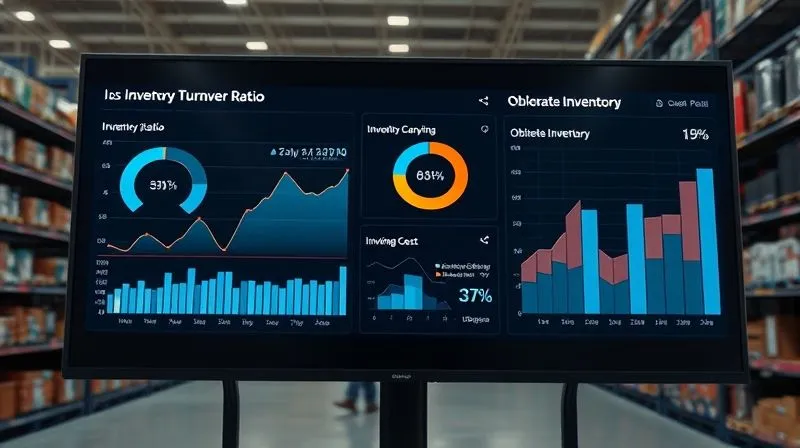
- Inventory Turnover Ratio: How many times inventory is sold and replaced over a period. A higher ratio generally indicates efficient inventory management.
- Days Inventory Outstanding (DIO): The average number of days it takes for a company to turn its inventory into sales. Lower is better.
- Inventory Carrying Cost Percentage: Total holding costs divided by the total value of inventory. This is your direct measure of success.
- Obsolete Inventory Percentage: The proportion of inventory that is no longer sellable. Aim to drive this to near zero.
- Service Level: The percentage of customer orders filled from existing stock. Crucial to balance cost reduction with customer satisfaction.
Regularly review these metrics, comparing them to previous periods and industry benchmarks. This data will not only confirm your 15% reduction but also highlight areas for further optimization.
Frequently Asked Questions (FAQ)
Is a 15% reduction in inventory holding costs realistic quickly? Absolutely. In my experience, focusing on dead stock, optimizing forecasting for top movers, and streamlining procurement for high-volume items can yield significant results within 3-6 months. The 'quick' aspect comes from targeted, aggressive action rather than a slow, incremental approach. It requires commitment and decisive execution of the steps outlined.
What if my products have long lead times or high minimum order quantities (MOQs)? Long lead times and high MOQs are common challenges. This is where strategic supplier relationship management (Step 3) becomes paramount. Explore options like safety stock optimization (using more advanced statistical models), negotiating partial shipments, or even finding alternative, more agile suppliers for a portion of your demand. Consignment inventory agreements can also be a game-changer here.
How do I manage seasonal inventory fluctuations without building up excess? Accurate seasonal forecasting (part of Step 2) is key. Beyond that, consider flexible staffing in your warehouse during peak seasons, pre-booking temporary storage, or exploring cross-docking strategies to minimize storage time. Strategic promotions during shoulder seasons can also help smooth out demand and avoid end-of-season overstock.
What's the biggest mistake companies make when trying to reduce inventory? The biggest mistake is cutting inventory indiscriminately without understanding demand patterns or supplier lead times, leading to stockouts and lost sales. Another common error is failing to address the root causes of excess inventory, instead just treating the symptom. You need a data-driven, holistic approach, not just a blunt axe.
How can small businesses implement these strategies without extensive resources? Small businesses can start with manual ABC/XYZ analysis using spreadsheets, focus on building strong personal relationships with key suppliers for better terms, and leverage affordable cloud-based inventory management software. The principles remain the same; the scale of implementation adjusts. Prioritize the steps that offer the fastest, most direct impact on your most expensive inventory.
Key Takeaways and Final Thoughts
Reducing excess inventory holding costs by 15% quickly is not just a pipe dream; it's an achievable goal with focused effort and a strategic approach. I've seen it done repeatedly in various industries.
- Understand Your True Costs: Look beyond direct storage to capital, service, and risk costs.
- Data is Your Ally: Conduct rapid audits and segment your inventory to identify quick wins.
- Forecast with Precision: Leverage data and collaboration to minimize guesswork.
- Engage Suppliers Strategically: Negotiate terms that support leaner inventory models.
- Be Ruthless with Dead Stock: Liquidate obsolete items quickly to free up capital and space.
- Embrace Technology: Use ERP, WMS, or inventory optimization tools for real-time visibility.
- Cultivate Discipline: Foster a culture where inventory efficiency is everyone's responsibility.
This isn't just about saving money; it's about optimizing cash flow, improving operational agility, and enhancing your company's overall financial health. Take these steps, implement them with conviction, and you'll not only hit that 15% target but also build a more resilient and profitable operation for the long term. The time to act is now – your bottom line will thank you.
Recommended Reading
- Why Your Emails Hit Spam: 9 Critical Fixes for Deliverability
- 5 Proven Strategies: Prevent Cultural Missteps in Global Business Talks
- AI Disrupts Your Startup's Niche? 7 Steps to Adapt, Innovate & Dominate
- 7 Proven Strategies: Eliminate Unconscious Bias in Remote Hiring Interviews
- 7 Proven Strategies to Fix Low B2B Explainer Video Conversions





Comments
Leave a comment below. Your email will not be published. Required fields marked with *