


How to Resolve Critical Resource Conflicts Across Concurrent Projects?
For over two decades in the project management trenches, I've witnessed firsthand the silent killer of ambitious initiatives: unresolved resource conflicts. I've seen promising projects grind to a halt, teams burn out, and strategic goals remain elusive, not due to a lack of vision or talent, but a fundamental failure in how resources are allocated and managed across competing demands. This isn't just a theory; it's a recurring pattern I've observed in startups and Fortune 500 companies alike.
The challenge of managing multiple concurrent projects is akin to conducting a complex orchestra where every musician (resource) is in high demand, often needed for several pieces simultaneously. When instrument (skill set) availability is scarce, or a key player is double-booked, the harmony quickly dissolves into cacophony. This isn't just about minor delays; it's about significant financial losses, reputational damage, and a corrosive impact on team morale and productivity. The pain points are palpable: missed deadlines, budget overruns, frustrated stakeholders, and an exhausted workforce struggling under the weight of unrealistic expectations. It's a critical dilemma that demands a strategic, not just tactical, response.
But what if there was a systematic, expert-driven approach to navigate this complexity? In this definitive guide, I will share the strategies, frameworks, and hard-won insights I've developed and refined over years of leading successful project portfolios. We will delve into proactive planning, strategic prioritization, advanced tooling, and essential communication tactics to not just mitigate, but truly resolve critical resource conflicts across concurrent projects, ensuring your initiatives move forward with clarity, efficiency, and sustained success. My aim is to equip you with the knowledge to transform your approach to resource management.
Understanding the Anatomy of Resource Conflicts
Before we can effectively resolve critical resource conflicts, we must first understand their true nature. A resource conflict is far more nuanced than simply one person being needed in two places at once. It encompasses a spectrum of issues, including skill gaps, over-allocation, unforeseen dependencies, and the strategic misalignment of project priorities. These conflicts manifest in various forms, each requiring a tailored approach for resolution.
I categorize these conflicts into several types: Direct Conflicts occur when the same individual or team is assigned to simultaneous, non-negotiable tasks on different projects. Indirect Conflicts arise from bottlenecks in specialized skill sets, where a particular expertise is scarce and in high demand across multiple initiatives, leading to a queue. Then there are Strategic Conflicts, which are perhaps the most insidious, where projects compete for resources because their organizational priority is unclear or constantly shifting. These often stem from a lack of a cohesive portfolio strategy rather than operational oversight.
The impact of unresolved resource conflicts is far-reaching and detrimental. Beyond the obvious project delays and budget overruns, they lead to significant dips in team morale, increased stress, and ultimately, higher rates of employee burnout and turnover. The quality of deliverables often suffers as resources are stretched thin, leading to rushed work and compromised standards. Furthermore, these conflicts erode stakeholder trust and can damage an organization's reputation for reliable project delivery. Recognizing these symptoms early is the first step towards a cure.
"Resource conflicts are not just logistical hurdles; they are often symptoms of deeper systemic issues in planning, prioritization, and communication within an organization."

The Foundation: Robust Capacity Planning and Resource Forecasting
In my experience, the most effective way to resolve critical resource conflicts across concurrent projects is to move beyond reactive fire-fighting and embrace a proactive, data-driven approach. This starts with robust capacity planning and accurate resource forecasting. Without a clear understanding of your available resources versus the demands placed upon them, you're essentially flying blind, destined to hit turbulence.
Capacity Planning involves a meticulous process of understanding the total available capacity of your workforce and comparing it against the estimated demand from all current and prospective projects. It's about knowing not just *who* you have, but *what skills* they possess, *how much time* they genuinely have, and *when* they are available. Here are the steps I advocate:
- Inventory Your Resources: Create a comprehensive database of all your human resources, detailing their skills, experience levels, certifications, and current availability (accounting for holidays, training, and non-project work). This provides a single source of truth.
- Estimate Project Demand: For every project, thoroughly estimate the specific skill sets and full-time equivalent (FTE) hours required for each phase. Don't just estimate overall; break it down by role and time period.
- Analyze Gaps and Surpluses: Compare your total resource capacity against the aggregated demand from all projects. This visualizes where you have critical shortages (over-allocation) and where you might have excess capacity (under-utilization).
- Develop "What-If" Scenarios: Use this data to model different project mixes or timelines. What if Project X is delayed? What if Project Y requires an additional senior architect? This allows for strategic decision-making before commitments are made.
- Regularly Update and Review: Resource availability and project demands are dynamic. This plan must be a living document, reviewed and updated at least monthly, or whenever significant project changes occur.
Resource Forecasting builds upon capacity planning by predicting future resource needs based on the project pipeline, strategic initiatives, and even market trends. It leverages historical data on project durations and resource consumption to anticipate future demands. This proactive foresight allows you to identify potential bottlenecks months in advance, giving you ample time to train existing staff, hire new talent, or engage external contractors. As a leader, I've always found that investing time in forecasting pays dividends in preventing future conflicts. For deeper insights into strategic planning, I often refer to articles from the Harvard Business Review.
According to a study by the Project Management Institute (PMI), organizations with mature resource management processes, including robust capacity planning and forecasting, report a 30% higher project success rate. This isn't just a coincidence; it's a direct correlation between foresight and favorable outcomes. Ignoring this foundational step is akin to building a skyscraper without blueprints – it's bound to collapse under its own weight.
| Resource Type | Current Capacity (FTE) | Project A Demand (FTE) | Project B Demand (FTE) | Project C Demand (FTE) | Total Demand (FTE) | Gap/Surplus (FTE) |
|---|---|---|---|---|---|---|
| Senior Developer | 10 | 4 | 3 | 5 | 12 | -2 |
| UI/UX Designer | 6 | 2 | 2 | 1 | 5 | 1 |
| QA Specialist | 8 | 3 | 4 | 2 | 9 | -1 |
Strategic Prioritization: The Art of Saying 'No' (or 'Later')
Once you understand your resource capacity and demand, the next critical step to resolve critical resource conflicts across concurrent projects is strategic prioritization. In many organizations, the biggest challenge isn't a lack of resources, but a lack of clarity on which projects genuinely matter most. When every project is labeled 'top priority,' then effectively, no project is. This creates a chaotic environment where resources are pulled in multiple directions, leading to inefficiency and frustration.
I've long advocated for a clear, objective framework to prioritize projects based on their strategic alignment, potential ROI, and risk profile. This isn't about subjective preferences; it's about making data-driven decisions that serve the overarching business objectives. Here are some effective prioritization frameworks:
- Weighted Scoring Model: Assign weights to various criteria (e.g., strategic alignment, financial return, market impact, risk reduction, regulatory compliance). Each project is then scored against these criteria, and the total score determines its priority. This provides a transparent and defensible ranking.
- MoSCoW Method: Categorize project features or entire projects into Must-have, Should-have, Could-have, and Won't-have. This is particularly useful for managing scope and ensuring critical elements receive the necessary resources first.
- Kano Model: While often used for product features, the Kano Model can be adapted to project selection, classifying projects based on how they delight customers (or stakeholders) versus basic expectations. This helps in understanding the true value proposition.
- Strategic Alignment Matrix: Plot projects against key strategic pillars of the organization. Projects that contribute most directly to these pillars receive higher priority.
The role of a dedicated Project Portfolio Management Office (PMO) is often crucial in driving this prioritization process. A well-established PMO acts as the gatekeeper, ensuring that new projects align with strategic goals and that resources are allocated according to the agreed-upon priorities. They facilitate the difficult conversations and provide the objective data needed to make these tough calls. Without such a governing body or clear framework, organizational politics and individual project championing can easily derail resource optimization efforts.
Case Study: How InnovateTech Streamlined Their Portfolio
InnovateTech, a rapidly growing software firm, faced a common predicament: 15 concurrent projects, all deemed 'critical' by their respective sponsors. This led to severe resource over-allocation, constant context-switching for key personnel, and project stagnation. Their senior developers, in particular, were working 60-hour weeks, yet no project was progressing satisfactorily. Employee morale was plummeting, and key deadlines were routinely missed.
By implementing a weighted scoring model, aligning projects directly with core business objectives and projected ROI, InnovateTech's leadership team, guided by a newly formed PMO, identified 5 truly strategic projects. They made the difficult, but necessary, decision to pause 7 less critical initiatives and re-scoped 3 others to fit available capacity. This strategic clarity allowed their senior developers to focus on fewer, higher-impact projects. The result? Project delivery times for the prioritized initiatives were reduced by an average of 20%, product quality significantly improved, and, crucially, team satisfaction saw a remarkable increase as the pressure of constant over-commitment was eased. This shift required difficult conversations and strong leadership, but the clarity and efficiency it provided were invaluable, demonstrating the power of disciplined prioritization.
"Prioritization isn't about choosing favorites; it's about making strategic choices that maximize organizational value with finite resources."
Implementing Flexible Resource Pools and Cross-Functional Teams
In my journey to help organizations resolve critical resource conflicts across concurrent projects, I've consistently found that rigid departmental structures are often a major culprit. When resources are strictly siloed within departments, it severely limits flexibility and exacerbates conflicts. The solution lies in creating more adaptable structures: flexible resource pools and cross-functional teams.
Resource Pooling involves creating shared groups of expertise that can be drawn upon by various projects as needed. Instead of a developer belonging solely to the 'Marketing Technology' department, they might be part of a 'Software Engineering Pool' that serves multiple business units. This approach offers several compelling benefits:
- Increased Flexibility: Resources can be quickly reallocated to high-priority projects or to address unforeseen demands, reducing idle time and preventing bottlenecks.
- Reduced Resource Conflicts: By centralizing resource management, it becomes easier to see who is available and where their skills can be best utilized across the entire portfolio, rather than within isolated departments.
- Enhanced Knowledge Sharing: Team members from different projects or departments collaborate more frequently, fostering a culture of shared learning and collective problem-solving.
- Better Skill Development: Exposure to a wider range of projects allows individuals to broaden their skill sets and gain diverse experience.
Of course, implementing resource pools comes with its own challenges, primarily around governance and accountability. Clear rules of engagement, defined roles for resource managers, and transparent communication protocols are essential to make this model effective. It requires a shift in mindset from 'my team's resources' to 'our collective organizational capacity.'
Complementing resource pooling are Cross-Functional Teams. These teams are composed of individuals from different functional areas (e.g., development, design, QA, marketing) who come together to work on a specific project or initiative. By bringing diverse skills together under one project umbrella, these teams can:
- Accelerate Delivery: Reduce dependencies on external departments, allowing for parallel workstreams and faster decision-making.
- Improve Communication: Co-located or tightly integrated cross-functional teams naturally foster better communication and collaboration, minimizing misunderstandings and delays.
- Enhance Problem-Solving: A variety of perspectives leads to more innovative and robust solutions.
I've seen organizations transform their project delivery simply by breaking down departmental walls and fostering a culture of shared resource ownership. It requires a significant shift in mindset from 'my team' to 'our collective capability,' championed by strong leadership. This approach empowers teams and significantly reduces friction when allocating scarce resources.
Leveraging Technology: The Power of Project Portfolio Management (PPM) Tools
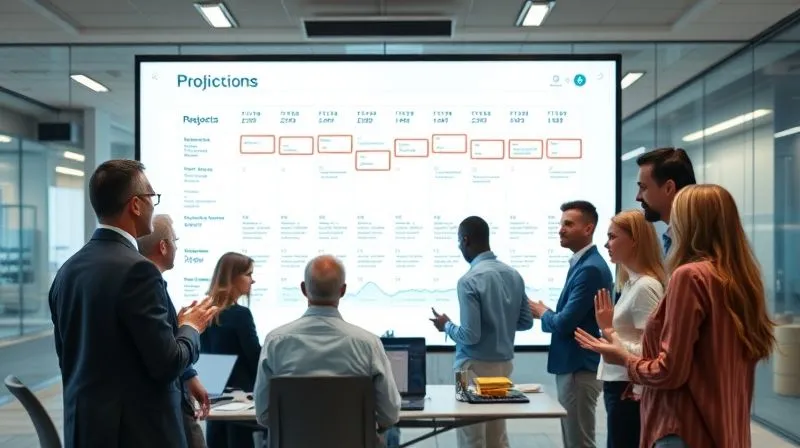
While robust processes and cultural shifts are vital, I can't overstate the importance of technology in helping to resolve critical resource conflicts across concurrent projects. Trying to manage complex resource allocation across multiple projects using spreadsheets is like trying to navigate a dense fog with only a compass – possible, but highly inefficient and prone to error. Modern Project Portfolio Management (PPM) tools offer a level of visibility, control, and analytical power that spreadsheets simply cannot match.
PPM tools are designed to provide a holistic view of all projects within an organization's portfolio, including their strategic alignment, progress, and, critically, their resource demands and utilization. Key features that directly address resource conflicts include:
- Centralized Resource Repository: A single, always up-to-date database of all human resources, their skills, availability, and cost. This eliminates conflicting information and provides a definitive 'single source of truth.'
- Demand and Capacity Planning: These tools graphically display resource demand against available capacity, instantly highlighting over-allocations and under-utilizations across the entire portfolio and for specific skill sets. This makes bottlenecks immediately apparent.
- Scenario Planning and What-If Analysis: Advanced PPM tools allow project managers and portfolio leaders to model different project start dates, resource assignments, or even project cancellations. This helps in understanding the impact of various decisions on resource availability before any commitments are made, enabling proactive conflict resolution.
- Real-time Dashboards and Reporting: Dynamic dashboards provide instant visibility into resource utilization, project progress, and potential conflicts. This real-time data empowers quicker, more informed decision-making and allows for rapid adjustments as project conditions change.
- Resource Leveling and Smoothing Capabilities: Many tools offer algorithms to automatically suggest adjustments to project schedules or resource assignments to optimize utilization and resolve over-allocations within defined constraints.
Gartner consistently highlights the significant ROI derived from robust PPM tool adoption, particularly in organizations managing multiple concurrent initiatives. It's not just an expense; it's a strategic investment in predictability, efficiency, and ultimately, greater project success. The ability to visualize resource loads, run simulations, and make data-backed decisions is transformative for complex environments. For further reading on the value of PPM, I recommend exploring reports from leading industry analysts like Gartner.
I've personally guided numerous clients through the selection and implementation of PPM tools, and the consistent feedback is a dramatic improvement in their ability to foresee and mitigate resource conflicts. These tools transform resource management from a chaotic guessing game into a strategic, data-driven discipline. They are indispensable for any organization serious about managing its project portfolio effectively and ensuring resources are always aligned with the highest strategic priorities.
| PPM Feature | Benefit | Impact on Conflicts |
|---|---|---|
| Centralized Resource Pool | Single source of truth for all resource data | Reduces over-allocation, improves visibility |
| Capacity Planning | Forecasts resource demand against supply | Identifies future bottlenecks proactively |
| Scenario Modeling | Tests 'what-if' project permutations | Optimizes resource deployment before commitment |
| Real-time Dashboards | Provides instant insights into utilization | Enables rapid response to emerging conflicts |
Communication and Collaboration: Your Unsung Heroes
While processes and tools are fundamental, I must emphasize that even the most sophisticated systems will fail without effective communication and collaboration. In my extensive experience, many critical resource conflicts don't stem from a lack of data, but from a breakdown in how that data is shared, discussed, and acted upon. People are at the heart of resource management, and fostering an environment of open dialogue is paramount to successfully resolve critical resource conflicts across concurrent projects.
Establishing Clear Communication Channels:
- Regular Inter-Project Sync Meetings: Schedule recurring meetings (weekly or bi-weekly) where project managers or resource coordinators from all concurrent projects can discuss upcoming resource needs, potential conflicts, and current resource availability. This creates a forum for proactive problem-solving.
- Dedicated Resource Managers/Coordinators: In larger organizations, assigning individuals specifically responsible for managing resource pools and facilitating allocation discussions can dramatically improve efficiency and reduce friction.
- Transparent Reporting: Ensure that resource utilization reports and project prioritization decisions are openly shared with all affected teams and stakeholders. Transparency builds trust and helps everyone understand the 'why' behind resource decisions.
- Standardized Request Processes: Implement a clear, simple process for project teams to formally request resources, ensuring all necessary information (skills, duration, priority) is captured upfront.
Fostering a Culture of Openness and Psychological Safety:
- Encourage Early Warning: Create an environment where team members feel safe to vocalize potential resource conflicts or personal over-allocations early, without fear of blame. Early detection is key to easier resolution.
- Focus on Solutions, Not Blame: When conflicts arise, the focus should always be on finding a pragmatic solution that benefits the overall portfolio, rather than assigning blame to individuals or specific projects.
- Active Listening: Project and resource managers must actively listen to their teams and colleagues. As the renowned management consultant Peter Drucker often stated, "The most important thing in communication is hearing what isn't said." In resource management, this means being attuned to subtle signs of stress, potential bottlenecks, and unspoken concerns from your project teams.
- Leadership by Example: Senior leadership plays a crucial role in modeling transparent communication and collaborative problem-solving. When leaders prioritize open dialogue and demonstrate a willingness to adjust based on shared information, the entire organization follows suit.
Ultimately, communication is the grease that keeps the complex machinery of concurrent projects running smoothly. It's about building bridges between teams, fostering a shared understanding of organizational priorities, and empowering individuals to contribute to solutions rather than just identifying problems. Without this human element, even the best tools and processes will fall short.
Continuous Monitoring and Adjustment: The Iterative Approach
Successfully resolving critical resource conflicts is not a one-time event; it's an ongoing, iterative process. The project landscape is constantly shifting, with new demands emerging, priorities changing, and unforeseen challenges arising. Therefore, a robust system of continuous monitoring and adjustment is essential to maintain optimal resource allocation and ensure your projects stay on track.
Key Monitoring Activities I recommend:
- Regular Resource Utilization Reviews: Conduct weekly or bi-weekly meetings to review actual resource utilization against planned allocations. Look for significant variances that might indicate emerging conflicts or shifts in demand.
- Track Project Progress Against Resource Burn Rate: Monitor whether projects are progressing as expected given the resources allocated. If a project is falling behind despite consuming its planned resources, it might signal an efficiency issue or an underestimated resource demand.
- Performance Metrics: Establish key performance indicators (KPIs) for resource management, such as resource capacity vs. demand, project completion rates within budget/schedule, resource utilization percentages, and even team satisfaction scores related to workload.
- Dependency Tracking: Continuously monitor inter-project dependencies. A delay in one project can have a cascading effect on resource needs in subsequent dependent projects.
Once potential conflicts or inefficiencies are identified through monitoring, the next step is timely Adjustment Mechanisms. These are the tools and techniques you'll use to course-correct:
- Resource Leveling: This technique aims to resolve resource over-allocations by delaying tasks to periods when the required resource is available. This often results in an extended project duration, but ensures resources are not over-committed. It's a critical tool when resource availability is a fixed constraint.
- Resource Smoothing: Unlike leveling, smoothing attempts to optimize resource utilization within the existing project deadline by moving tasks around without extending the project end date. It focuses on reducing peaks and valleys in resource demand to create a more even workload.
- Re-prioritization: As conditions change, be prepared to re-evaluate project priorities. What was critical last month might be less so today, allowing for resource reallocation.
- Resource Augmentation: If internal resources are truly stretched, consider bringing in temporary external contractors or consultants to fill critical gaps.
- Scope Adjustment: In some cases, the most pragmatic solution is to adjust the scope of a project to fit available resources, rather than over-committing and failing to deliver.
The iterative approach to resource management can be summarized in a simple loop: Monitor > Analyze > Adjust > Communicate. Each cycle refines your understanding and improves your ability to manage resources effectively. This continuous feedback loop is what allows organizations to adapt quickly and maintain agility in a dynamic project environment.

Cultivating a Culture of Resource Agility
Beyond processes, tools, and communication strategies, the ultimate key to truly and sustainably resolve critical resource conflicts across concurrent projects lies in cultivating a deep-seated organizational culture of resource agility. This is about embedding the principles of flexible, transparent, and strategic resource management into the very DNA of your company. It's not a one-time initiative but an ongoing commitment to how work gets done and how talent is valued.
From my perspective, a culture of resource agility is characterized by several key traits:
- Transparency: There is open and honest communication about resource availability, constraints, and project priorities. No hidden agendas, no hoarding of resources. Everyone understands the collective pool of talent and the demands placed upon it.
- Flexibility and Adaptability: Teams and individuals are willing to shift focus, adapt their schedules, and even temporarily move between projects based on the highest strategic need. This requires a mindset that values organizational success over individual project silos.
- Accountability: Clear ownership for resource decisions is established, whether through a PMO, a resource manager, or a collaborative leadership committee. Decisions are made, communicated, and followed through.
- Learning Orientation: After-action reviews and post-mortems regularly analyze how resource challenges were handled, identifying lessons learned and continuously improving processes. Failures are seen as opportunities for growth, not blame.
- Empowerment: Project managers and team leads are empowered to make informed resource decisions within established frameworks, and team members feel empowered to raise concerns early.
- Strategic Alignment as a North Star: Every resource decision, from hiring to allocation, is consciously tied back to the organization's overarching strategic objectives, ensuring that resources are always deployed where they can generate the most value.
I've observed that organizations that truly master resource allocation treat it not as a chore, but as a strategic advantage. It becomes an ingrained part of their operational rhythm, a continuous conversation rather than an annual headache. This cultural shift must be championed from the top. Senior leadership needs to consistently reinforce the importance of resource agility, allocate budgets for training and tools, and visibly participate in strategic resource planning. When leaders demonstrate a genuine commitment to optimizing resource utilization and protecting their teams from burnout, the entire organization aligns with this vision.
Ultimately, a culture of resource agility transforms resource conflicts from inevitable roadblocks into manageable challenges. It enables organizations to respond swiftly to market changes, capitalize on new opportunities, and deliver projects more efficiently and effectively, safeguarding both their strategic goals and the well-being of their most valuable assets: their people.
Frequently Asked Questions (FAQ)
Q: What if our organization doesn't have a dedicated PMO? How can we still effectively manage resource conflicts? A: While a PMO is ideal for centralized oversight, its functions can be effectively distributed. In the absence of a formal PMO, I recommend assigning a senior project manager or a cross-functional lead to act as a primary resource coordinator. This individual would be responsible for maintaining a centralized resource inventory (even if it's a shared spreadsheet or a simple database), facilitating inter-project communication regarding resource needs and availability, and escalating unresolved conflicts to senior leadership for strategic resolution. The key is to establish clear communication protocols and a simple, agreed-upon prioritization framework that all project leads understand and adhere to. Even without a formal PMO, the principles of visibility, communication, and consistent prioritization remain paramount for managing conflicts.
Q: How do I convince senior leadership to invest in expensive PPM tools for resource management? A: To secure investment in PPM tools, focus on quantifying the tangible costs of *not* investing. Present a clear business case highlighting the current impact of unresolved resource conflicts: delayed project launches leading to missed market opportunities, budget overruns due to inefficiencies, high rates of employee burnout and associated turnover costs, and the overall drag on productivity. Develop a clear ROI analysis, demonstrating how a PPM tool can mitigate these costs through improved efficiency, better project selection aligned with strategic goals, enhanced predictability in project delivery, and a reduction in wasted effort. Consider proposing a pilot program on a smaller scale to demonstrate concrete value and build internal champions before a full-scale rollout. Emphasize that it's a strategic investment in the organization's ability to execute its most critical initiatives, not just a software purchase.
Q: What's the difference between resource leveling and resource smoothing, and which is better for conflict resolution? A: Both are optimization techniques, but with different primary objectives. Resource leveling aims to resolve resource over-allocations by delaying tasks to periods when the required resource is available, even if it extends the overall project duration. It's used when resource availability is a fixed constraint and cannot be increased. Resource smoothing, on the other hand, attempts to optimize resource utilization within the existing project deadline by moving tasks around without extending the project end date. It focuses on reducing peaks and valleys in resource demand to create a more consistent workload. For resolving critical conflicts where resources are genuinely scarce and over-allocated, leveling is often necessary, accepting a potential schedule adjustment. Smoothing is better for optimizing efficiency and team well-being when some flexibility exists within the timeline. Often, a combination of both is required, applied strategically based on project priorities and constraints.
Q: How can I manage resource conflicts when some resources are external contractors or vendors? A: Managing external resources adds another layer of complexity, but the core principles remain. Key strategies include: 1. Clear Contracts: Ensure your contracts explicitly define the expected availability, deliverables, and a clear process for conflict resolution or changes in scope/availability. 2. Dedicated Liaison: Assign a single point of contact within your organization to manage communication and expectations with external resources. 3. Integrated Planning: Include external resources in your capacity planning and project schedules from the outset, treating them as part of your extended team for planning purposes. 4. Performance Monitoring: Regularly track their progress, availability, and adherence to agreed-upon terms. 5. Escalation Paths: Establish clear, pre-defined escalation paths within the contract for unresolved conflicts or performance issues. Proactive communication and clear contractual agreements are vital to prevent and resolve conflicts with external partners.
Q: What are some common pitfalls to avoid when trying to resolve resource conflicts? A: Several common traps can undermine your efforts to resolve resource conflicts effectively. These include: 1. Lack of Transparency: Hiding resource issues, project statuses, or true priorities from stakeholders. 2. Poor Data Quality: Relying on inaccurate, outdated, or incomplete resource availability and demand data. 3. Ignoring Soft Skills: Over-reliance on tools and processes without fostering effective communication, collaboration, and psychological safety among teams. 4. 'Everything is Critical' Syndrome: Failing to establish genuine project priorities, leading to constant resource contention. 5. Reactive Management: Only addressing conflicts when they become critical, rather than proactively planning and monitoring. 6. Isolated Decision-Making: Resource allocation decisions made in silos without considering the broader project portfolio impact. Avoiding these pitfalls requires a holistic approach encompassing people, process, and technology, with strong leadership buy-in.
Key Takeaways and Final Thoughts
- Embrace Proactive Planning: Robust capacity planning and resource forecasting are your first and most effective lines of defense against resource conflicts.
- Prioritize Strategically: Not all projects can be 'critical.' Implement clear, objective prioritization frameworks to align resources with true organizational value.
- Foster Flexibility & Collaboration: Break down organizational silos by creating flexible resource pools and empowering cross-functional teams to work together seamlessly.
- Leverage Technology: Utilize modern Project Portfolio Management (PPM) tools for unparalleled visibility, planning capabilities, and scenario analysis.
- Champion Communication: Open, transparent dialogue and psychological safety are crucial for early conflict detection, collaborative problem-solving, and maintaining team morale.
- Commit to Continuous Improvement: Resource management is an iterative process requiring ongoing monitoring, analysis, and adjustment to remain effective in a dynamic environment.
- Cultivate an Agile Culture: Embed transparency, flexibility, accountability, and a learning orientation into your organizational DNA to build long-term resource resilience.
Resolving critical resource conflicts across concurrent projects is undoubtedly one of the most challenging, yet ultimately rewarding, aspects of project and portfolio management. It demands a sophisticated blend of strategic foresight, operational rigor, technological acumen, and empathetic leadership. By adopting the systematic approach I've outlined – by understanding the anatomy of conflicts, building strong foundations, prioritizing strategically, leveraging technology, fostering communication, committing to continuous adjustment, and cultivating an agile culture – you're not just mitigating risks. You're actively building a more resilient, efficient, and successful project delivery engine that can navigate complexity with grace and achieve its strategic objectives. I encourage you to take these insights, adapt them to your unique organizational context, and start transforming your project landscape today. The path to seamless project execution, even amidst complexity, is truly within your grasp, and the benefits will resonate throughout your entire organization.
Recommended Reading
- Proving Tangible ROI: 8 Strategies for SDG-Aligned CSR Programs
- 5 Proven Strategies: Navigating Unforeseen Trade Barriers for Profit
- Q3 Profits at Risk? 7 Urgent Strategies to Hedge Currency Volatility Now
- 5 Proven Strategies: Conquer Digital Fatigue & Master Deep Work Remotely
- Launchpad: Acquiring Your First 10 Enterprise Clients on a Budget





Comments
Leave a comment below. Your email will not be published. Required fields marked with *