


How to Streamline Performance Reviews for Busy Managers?
For over 15 years in Human Resources, I've seen countless organizations grapple with a common yet debilitating challenge: the annual performance review cycle. What should be a powerful catalyst for growth and development often devolves into a bureaucratic nightmare, particularly for managers already stretched thin by their operational responsibilities.
I empathize deeply with the busy manager who views performance reviews as another burdensome task, a time sink that pulls them away from strategic initiatives and team leadership. This isn't just about ticking boxes; it's about the emotional and practical drain of a poorly designed system that undermines its very purpose.
In this definitive guide, I'll share expert insights, actionable frameworks, and proven strategies to not just simplify, but truly transform your approach. You'll learn how to streamline performance reviews for busy managers, making them efficient, impactful, and genuinely valuable for both the individual and the organization.
1. Re-evaluating the 'Why': Shifting from Compliance to Development
Before we even discuss 'how,' we must revisit 'why.' Many companies conduct performance reviews primarily for compliance, legal documentation, or compensation adjustments. While these are valid components, they shouldn't be the driving force.
In my experience, the most successful performance review systems prioritize employee development, growth, and continuous improvement. When managers understand the developmental 'why,' their approach shifts from judgment to coaching.
Actionable Steps for Shifting Focus:
- Communicate the Vision: Clearly articulate that the primary goal of reviews is employee growth and career progression.
- Train on Coaching: Equip managers with coaching skills, not just evaluation techniques. This is a fundamental shift in mindset.
- Separate Compensation Discussions: Consider decoupling performance discussions from immediate compensation talks. This allows for more open and honest developmental dialogue.
- Focus on Future Growth: Encourage forward-looking goal setting and skill development plans rather than dwelling solely on past performance.
"Performance reviews should be a springboard for future success, not merely a rearview mirror reflection. When managers embrace this, the process becomes naturally more engaging and less of a chore."
According to a Harvard Business Review article on performance management, companies that moved away from traditional annual reviews to more frequent, developmental feedback cycles saw significant improvements in employee engagement and performance. This isn't just theory; it's a proven model.
2. Leveraging Technology: Smart Tools for Smarter Reviews
One of the biggest time-sinks for busy managers is the administrative overhead of performance reviews. From tracking goals to compiling feedback and writing reports, manual processes are inefficient and prone to error. This is where modern HR technology shines.
Implementing the right performance management software can dramatically streamline performance reviews for busy managers. These platforms automate reminders, centralize data, and provide templates, freeing up valuable managerial time.

Key Technological Features to Look For:
- Automated Reminders: Notifications for upcoming reviews, feedback deadlines, and goal check-ins.
- Centralized Data: All employee performance data, goals, 1:1 notes, and feedback in one accessible place.
- Templates and Libraries: Pre-built review forms, competency libraries, and suggested feedback phrases to reduce writing effort.
- Goal Tracking: Easy input and monitoring of OKRs (Objectives and Key Results) or SMART goals.
- Analytics and Reporting: Dashboards that provide insights into team performance, goal progress, and review completion rates.
- Integration Capabilities: Seamless integration with existing HRIS (Human Resources Information System) or payroll systems.
Choosing the right platform is critical. As Gartner research consistently highlights, the usability and integration of HR tech are paramount for successful adoption and genuine efficiency gains.
3. The Power of Continuous Feedback: Beyond Annual Check-ins
The traditional annual review model is inherently flawed for busy managers. It forces them to recall an entire year's worth of performance, often leading to recency bias. Furthermore, feedback delivered once a year is rarely actionable or timely enough to drive real change.
Adopting a culture of continuous feedback is perhaps the most impactful strategy to streamline performance reviews for busy managers. It transforms performance management from an event into an ongoing dialogue.
Implementing a Continuous Feedback Loop:
- Regular 1:1 Meetings: Encourage weekly or bi-weekly check-ins. These are informal opportunities for immediate feedback, coaching, and support.
- Ad-hoc Feedback: Empower managers and employees to give and request feedback as needed, using simple digital tools or direct conversations.
- Peer Feedback: Integrate peer-to-peer feedback mechanisms. This broadens the perspective and reduces the sole burden on the manager.
- Mid-Year Check-ins: Supplement continuous feedback with a more structured, but still developmental, mid-year review. This acts as a pulse check and allows for course correction.
This approach distributes the effort of performance evaluation throughout the year, making the formal review (if still required) a mere summary of ongoing conversations, rather than a heavy, standalone event. It makes the 'review' less about a single document and more about an ongoing relationship.
4. Setting Clear Expectations: The Foundation of Fair Assessment
A significant portion of managerial time during reviews is spent clarifying expectations or justifying ratings. This friction often stems from a lack of clarity at the outset. Clear, measurable expectations are the bedrock of an efficient and fair performance review system.
When employees understand what's expected of them, how their performance will be measured, and what success looks like, the review process becomes far more objective and less contentious. This proactively addresses many common review challenges.
Strategies for Setting Crystal-Clear Expectations:
- SMART Goals: Ensure all goals are Specific, Measurable, Achievable, Relevant, and Time-bound.
- Defined Competencies: Clearly outline the core competencies required for each role and what proficiency looks like at different levels.
- Regular Goal Alignment: Periodically revisit and adjust goals throughout the year, especially in fast-paced environments.
- Role Clarity: Provide detailed job descriptions that clearly delineate responsibilities and reporting structures.
Example of Clear Expectation Setting:
| Area | Unclear Expectation | Clear Expectation |
|---|---|---|
| Customer Support | Improve customer satisfaction | Achieve a 90% CSAT score for Q3, with no more than 5% of tickets escalated, by implementing new FAQ resources. |
| Project Management | Manage projects better | Deliver 3 key projects on time and within 5% of budget by year-end, utilizing agile methodologies and weekly stakeholder updates. |
By investing time upfront in setting clear expectations, managers save exponentially more time during the review cycle itself, as there's less ambiguity to navigate.
5. Training and Empowering Managers: Not Just a Task, a Skill
We can streamline processes and implement technology, but without well-trained managers, the system will falter. Many busy managers haven't received adequate training on how to conduct effective performance reviews or deliver constructive feedback. They're often thrown into the deep end, expected to perform a critical HR function with minimal guidance.
Empowering managers with the necessary skills is an investment that pays dividends in review efficiency and employee engagement. It transforms a daunting task into a manageable and even rewarding part of their role.
Essential Training Areas for Managers:
- Active Listening: How to truly listen to employee perspectives and concerns.
- Constructive Feedback Delivery: Techniques for providing feedback that is specific, actionable, and delivered with empathy.
- Bias Awareness: Recognizing and mitigating unconscious biases (e.g., recency bias, halo effect) in evaluations.
- Goal Setting and Coaching: Guiding employees in setting their own goals and developing action plans.
- Difficult Conversations: Strategies for navigating challenging discussions with professionalism and respect.
Case Study: How InnovateTech Reduced Managerial Review Time by 40%
InnovateTech, a rapidly growing software company with 200 employees, struggled with manager burnout during their semi-annual review cycles. Managers reported spending an average of 15-20 hours per review period on documentation and preparation alone. After attending a training session on 'Delivering Effective Feedback' and implementing a new performance management software that centralized 1:1 notes and goal tracking, they saw a dramatic shift. Within six months, the average time spent on review preparation dropped to 8-10 hours, a 40-50% reduction. This was largely due to managers feeling more confident in their ability to articulate performance, having easy access to year-round data, and the software's streamlined forms. Employee engagement scores also improved, reflecting a more positive and developmental review experience.
6. Simplifying the Review Form: Less is More
The length and complexity of performance review forms can be a major deterrent for busy managers. Overly detailed forms with redundant questions or excessive rating scales add unnecessary administrative burden without necessarily adding value. To truly streamline performance reviews for busy managers, simplify the tools they use.
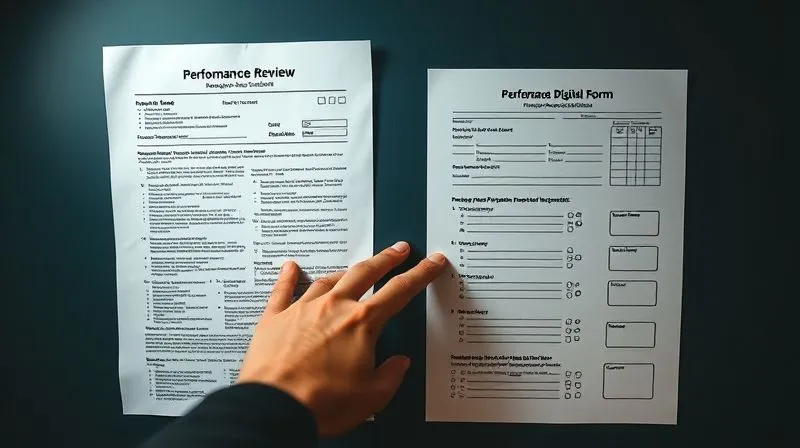
The goal is to capture essential information for development and decision-making, not to create a comprehensive biography of the employee's year.
Tips for Streamlining Review Forms:
- Focus on Key Areas: Limit questions to core competencies, primary goals, and developmental areas.
- Use Open-Ended Questions Sparingly: While valuable, too many open-ended questions can be time-consuming. Balance them with targeted questions.
- Clear Rating Scales: If using scales, ensure they are intuitive and well-defined (e.g., 3-5 point scale with clear descriptors).
- Self-Reflection Section: Include a concise section for employees to reflect on their own performance and goals, which helps managers prepare.
- Template Optimization: Utilize software templates that auto-populate basic employee information and allow for quick input.
Remember, the form is a tool, not the review itself. The real value lies in the conversation and the developmental plan that emerges.
7. Integrating Performance Reviews with Business Objectives
When performance reviews feel disconnected from the broader business strategy, they lose their relevance and become a chore. For busy managers, understanding how individual and team performance directly contributes to organizational objectives can transform their perspective on the review process.
Aligning individual goals with strategic company goals reinforces the purpose of performance management and makes the review process feel more meaningful and less like an isolated HR exercise.
How to Achieve Strategic Alignment:
- Cascade Goals: Ensure organizational goals are clearly cascaded down to departmental, team, and individual levels.
- Regular Strategic Check-ins: Incorporate discussions about how individual performance impacts business objectives during 1:1s and team meetings.
- Link to Organizational Values: Frame performance discussions not just around 'what' was achieved, but 'how' it was achieved, referencing company values.
- Demonstrate Impact: Provide managers with data and examples that illustrate the tangible impact of high performance on business outcomes.
As SHRM (Society for Human Resource Management) often emphasizes, effective performance management is fundamentally about driving organizational success through individual contribution.
8. Measuring Success: How Do You Know You're Streamlined?
Implementing changes without measuring their impact is akin to flying blind. To truly confirm you've learned how to streamline performance reviews for busy managers, you need metrics. This isn't just about HR; it's about business intelligence.
Measuring the effectiveness and efficiency of your new performance review process provides valuable insights and justifies the investment in change.
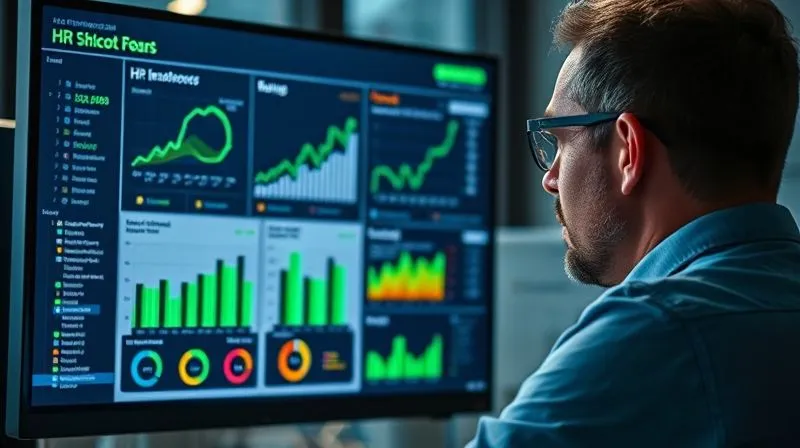
Key Metrics to Track:
- Manager Time Spent: Survey managers before and after implementing changes to quantify time savings.
- Review Completion Rates: Track the percentage of reviews completed on time.
- Employee Engagement Scores: Monitor changes in engagement, especially regarding feedback and development opportunities.
- Quality of Feedback: Assess the perceived helpfulness and constructiveness of feedback through employee surveys.
- Goal Attainment Rates: Track the percentage of employees meeting or exceeding their goals.
- Manager Satisfaction: Gauge manager satisfaction with the review process itself.
Regularly reviewing these metrics allows for continuous improvement and ensures that the streamlined process remains effective and valuable. This data-driven approach is crucial for any modern HR function, as noted by leaders in the field like Josh Bersin.
Frequently Asked Questions (FAQ)
Question: How do I get buy-in from senior leadership to invest in new performance management software or training? Detailed answer: Focus on the tangible business benefits. Present data on current managerial time spent, potential cost savings from reduced turnover (due to better development), and increased productivity. Frame it as an investment in human capital that directly impacts bottom-line results, using case studies like InnovateTech's. Highlight how it helps retain top talent and fosters a high-performance culture.
Question: My managers are resistant to continuous feedback. How can I encourage adoption without overwhelming them? Detailed answer: Start small. Don't demand a complete overhaul overnight. Introduce one new practice at a time, like mandatory weekly 1:1 check-ins focused purely on progress and support, not evaluation. Provide templates or conversation starters. Emphasize that continuous feedback actually reduces the burden of the annual review. Offer training that highlights the 'why' and 'how' of effective, brief feedback sessions, demonstrating how they save time in the long run.
Question: How can I ensure fairness and reduce bias in a more streamlined, less formal review process? Detailed answer: Fairness is paramount. Even with streamlining, robust training on unconscious bias for all managers is crucial. Implement clear, measurable goals and competencies upfront. Utilize 360-degree feedback tools to gather diverse perspectives, reducing reliance on a single manager's view. Regular calibration sessions among managers can also help normalize ratings and address potential biases before finalization. Technology can also help by providing structured input fields that guide managers.
Question: What if my company still requires an annual formal review for legal or compliance reasons? How can I streamline that? Detailed answer: If an annual review is mandatory, the goal is to make it a summary, not a discovery process. With continuous feedback and centralized data (from your HR tech), the annual review becomes a compilation of ongoing discussions and progress. The manager simply synthesizes information already gathered throughout the year, rather than starting from scratch. Keep the form concise, focusing on summarizing key achievements, developmental areas, and future goals, with references to specific examples recorded during the year.
Question: How do I handle underperforming employees within a streamlined, developmental review framework? Detailed answer: A developmental framework is actually ideal for addressing underperformance proactively. Continuous feedback allows for early intervention, setting clear performance improvement plans (PIPs) with specific milestones and support. The formal review then becomes a checkpoint for the PIP's progress. It shifts the conversation from 'you failed' to 'here's the support and resources available to help you succeed,' while still documenting non-performance if improvement isn't met over time.
Key Takeaways and Final Thoughts
- Shift Mindset: Prioritize development over compliance for a more engaging process.
- Embrace Technology: Leverage HR software to automate administration and centralize data.
- Foster Continuous Feedback: Distribute the review effort throughout the year, making it an ongoing dialogue.
- Set Clear Expectations: Define SMART goals and competencies upfront to reduce ambiguity later.
- Empower Managers: Invest in training to equip managers with essential feedback and coaching skills.
- Simplify Forms: Keep review documents concise and focused on core developmental areas.
- Align with Strategy: Connect individual performance to broader business objectives for greater relevance.
- Measure Impact: Track key metrics to ensure efficiency and effectiveness of the new process.
Learning how to streamline performance reviews for busy managers isn't a quick fix; it's a strategic evolution. By adopting these principles, you're not just making life easier for your managers; you're building a more agile, engaged, and high-performing workforce. The investment in time and effort upfront will yield exponential returns in productivity, retention, and overall organizational health. Embrace the change, empower your leaders, and watch your people thrive.
Recommended Reading
- Resolving Employee Policy Refusal: A 7-Step HR Framework
- 5 Steps: Master Personalized Service Despite Poor Customer Data
- Why Your TBL Goals Lack Executive Buy-In: 7 Solutions
- 7 Proven Strategies: How to Combat Declining Team Cohesion in Hybrid Workplaces
- 7 Proven Steps: Raise Small Business Prices & Keep Loyal Customers





Comments
Leave a comment below. Your email will not be published. Required fields marked with *