


Our qualified lead volume dropped, how to quickly recover?
For over 15 years in the trenches of B2B marketing and sales, I've witnessed the unsettling silence that descends when a once-thriving pipeline suddenly goes dry. It's a moment of panic, a scramble for answers, and a critical juncture where the wrong moves can deepen the crisis. I've seen promising companies falter not because of a bad product, but because they couldn't quickly diagnose and react to a sudden, inexplicable drop in qualified lead volume.
This isn't just a 'bad quarter' scenario; it's a direct threat to your revenue, your team's morale, and ultimately, your business's viability. The feeling is isolating – you know your product is valuable, your team is capable, yet the lifeblood of new opportunities has slowed to a trickle. The market hasn't disappeared, but for some reason, the right prospects aren't finding their way to you, or perhaps, aren't converting once they do.
This article isn't about generic 'growth hacks' or long-term strategic overhauls. It's a battle-tested playbook for immediate intervention. I'll walk you through a systematic approach to not only diagnose *why* your qualified lead volume dropped, but more importantly, *how to quickly recover* using actionable frameworks, real-world insights, and strategies designed for rapid impact. We'll focus on identifying the quickest wins and building momentum to stabilize and then accelerate your lead generation efforts.
Immediate Diagnosis: Pinpointing the Drop's Root Cause
When the alarm bells ring, the first instinct might be to launch new campaigns. Resist that urge. In my experience, the quickest recovery comes from a precise diagnosis. You can't fix what you don't understand, and often, the root cause isn't what it appears to be on the surface.
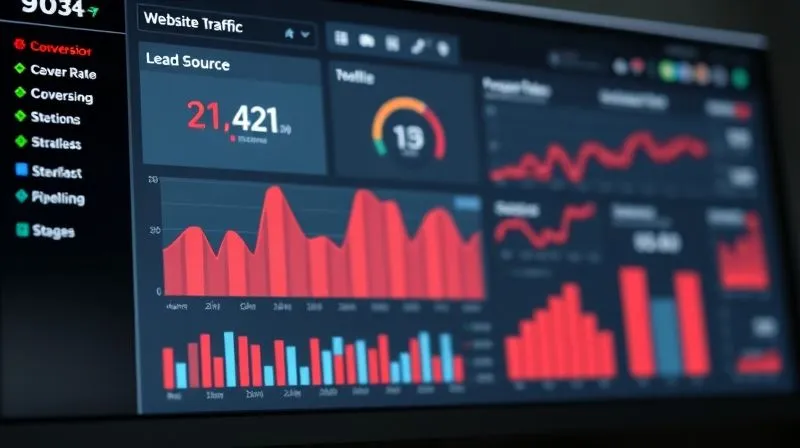
Data Analysis Checklist: Where Did the Leak Start?
- Website Traffic & Engagement: Has overall traffic decreased? Or is traffic stable but bounce rate up and time on page down? This points to a content or user experience issue.
- Lead Source Performance: Pinpoint which specific channels (PPC, organic, social, referrals, email) saw the steepest decline. Was it across the board, or isolated?
- Conversion Rates: Are visitors still coming, but not converting on landing pages or forms? Examine form completion rates, CTA click-throughs, and page load times.
- Lead Quality Metrics: Have the leads you *are* getting suddenly become less qualified? This could indicate a targeting problem or a change in your ideal customer profile (ICP).
- Sales Team Feedback: Are sales reps reporting a change in the conversations they're having? Are prospects less informed, or expressing different pain points?
- Market & Competitor Activity: Has a new competitor entered the market? Did a major industry event shift buyer behavior? Have your competitors launched aggressive new campaigns?
- Recent Changes: Did you launch a new website, change your pricing, update your CRM, or alter your ad creatives just before the drop? Sometimes the culprit is an internal change.
Expert Insight: "The data doesn't lie, but it rarely tells the whole story on its own. You need to combine quantitative analysis with qualitative feedback from your sales team and customers to truly understand the 'why' behind the numbers."
Start by pulling a detailed report for the last 90 days, comparing it to the previous 90-day period. Look for significant deviations. Don't just look at totals; break it down by channel, campaign, and even keyword. This granular view is your flashlight in the dark.
Re-Engage Your Warmest Leads & Past Opportunities
When new leads dry up, the fastest path to recovery often lies in re-energizing your existing database. These are people who already know you, have expressed some interest, and are far easier to convert than entirely cold prospects. This is your 'low-hanging fruit' strategy.
Reviving Stalled Pipeline Deals: Don't Leave Money on the Table
- Audit Your CRM: Identify all deals marked 'stalled,' 'on hold,' or 'no response' from the last 6-12 months.
- Personalized Re-Engagement: Craft highly personalized emails or LinkedIn messages. Reference their past interaction, offer new value (e.g., a relevant case study, a new feature, an invitation to an exclusive webinar), and ask a low-pressure question.
- Value-Add Re-Pitches: Don't just follow up; re-pitch with a fresh angle. Perhaps market conditions have changed, or your product has evolved to better address their pain point.
- Incentivize Re-connection: Consider a limited-time offer, a free consultation, or a trial extension to break the inertia.
Nurturing Inactive Leads: The Power of the Dormant List
Your marketing database likely holds a treasure trove of contacts who opted in but haven't engaged recently. These are not cold leads; they are simply dormant. A well-executed re-engagement campaign can reactivate a significant portion of them.
- Segmentation is Key: Segment your inactive leads by their original source, expressed interest, or industry. A generic email won't cut it.
- Educational Content Series: Send a short, high-value content series (e.g., "3 Trends in [Industry] You Can't Ignore," "A Quick Guide to Solving [Pain Point]"). Focus on education, not selling.
- Webinar or Event Invitations: Offer a live, interactive experience. Webinars are excellent for re-engaging and demonstrating expertise.
- "Are You Still Interested?" Campaign: A simple, honest email asking if they still wish to receive communications can cleanse your list and identify truly engaged prospects.
Case Study: How BrightPath Solutions Reanimated Dormant Leads
BrightPath Solutions, a SaaS provider, saw a 25% drop in new MQLs. Instead of panicking, their marketing team launched a targeted re-engagement campaign for leads who hadn't opened an email in 90 days. They segmented these 5,000 leads by their initial product interest and sent a personalized, three-part email series featuring new product updates and relevant industry insights. The result? A 12% re-engagement rate, leading to 60 new qualified sales opportunities within two weeks, effectively offsetting a significant portion of their lead drop without spending on new ads.
Optimize Existing Channels for Quick Wins
While you're re-engaging past leads, simultaneously look for ways to squeeze more qualified leads out of your currently active marketing channels. Small tweaks can yield surprisingly fast results, especially if you've identified specific channels underperforming in your diagnosis.
Website & Landing Page Conversion Boosts
Your website and landing pages are your digital storefronts. If they're not converting, every dollar spent driving traffic to them is wasted. Focus on immediate, high-impact changes:
- A/B Test Your CTAs: Experiment with different button text, colors, and placements. A simple change from "Submit" to "Get Your Free Guide" can dramatically increase conversions.
- Simplify Forms: Reduce the number of form fields. Only ask for essential information initially. A study by HubSpot showed that reducing form fields from 11 to 4 can increase conversions by 120%.
- Clarify Value Proposition: Is your unique selling proposition (USP) immediately clear within the first 5 seconds? Use clear, benefit-driven headlines and subheadings.
- Improve Page Load Speed: Slow pages kill conversions. Use tools like Google PageSpeed Insights to identify and fix bottlenecks.
- Add Social Proof: Integrate testimonials, case study snippets, or trust badges prominently near your conversion points.
Refining Ad Campaigns (PPC, Social)
If your paid channels are underperforming, don't just increase budget. Optimize what you have.
- Negative Keywords Audit: For PPC, aggressively add negative keywords to prevent irrelevant clicks that waste budget and generate unqualified leads.
- Ad Creative Refresh: Test new headlines, ad copy, and visuals. Sometimes ad fatigue sets in. Focus on solving specific pain points.
- Audience Refinement: Re-evaluate your targeting parameters. Are you reaching the right decision-makers? Consider lookalike audiences based on your best customers.
- Bid Strategy Review: Are you over-bidding for low-quality keywords or under-bidding for high-intent ones? Adjust your bid strategy based on conversion data, not just clicks.
| Optimization Area | Before (Conversion Rate) | After (Conversion Rate) | Impact |
|---|---|---|---|
| Landing Page CTA | 3.2% | 4.8% | +50% |
| Form Fields (Reduced) | 2.5% | 5.5% | +120% |
| PPC Negative Keywords | $45 | $32 | -29% |
| Ad Creative Refresh | 1.8% | 2.7% | +50% |
Leverage Your Network: Referrals & Partnerships
Word-of-mouth remains one of the most powerful lead generation tools, especially for qualified leads. People trust recommendations from their peers far more than any advertisement. When you need leads quickly, turning to your existing network and strategic partners is a highly effective, often low-cost strategy.
Implementing a Referral Program: Turning Customers into Advocates
Your satisfied customers are your best sales team. They understand your product's value and can articulate it authentically. A structured referral program can incentivize them to spread the word.
- Identify Your Advocates: Who are your happiest, most successful customers? Start there.
- Offer a Clear Incentive: What's in it for them? A discount, a gift card, an exclusive feature, or even a charitable donation in their name can work. Make it appealing for both the referrer and the referred.
- Make it Easy: Provide pre-written email templates, social media share buttons, or a simple referral link. The less friction, the more referrals.
- Communicate & Promote: Don't just set it and forget it. Promote your referral program through email, in-app messages, and customer success interactions.
According to a study by Harvard Business Review, customers acquired through referrals have a 37% higher retention rate. This isn't just about volume; it's about *quality*.
Strategic Alliance Opportunities: Power in Numbers
Look for non-competing businesses that serve the same target audience. A partnership can expose you to a new pool of highly relevant prospects.
- Co-Hosted Webinars: Partner with an industry influencer or complementary service provider to host a joint webinar. You share audiences and expertise.
- Content Collaboration: Create a joint ebook, whitepaper, or research report. Each partner promotes it to their audience, instantly expanding reach.
- Cross-Promotion: Feature each other in newsletters, on social media, or as recommended vendors.
- Affiliate Programs: For certain business models, setting up an affiliate program can quickly scale lead generation by leveraging a network of promoters.
Content & SEO Sprint: Attracting High-Intent Prospects
While SEO is often a long-game strategy, there are tactics you can deploy for quicker impact, especially when targeting high-intent, problem-aware prospects. The goal here is to quickly capture demand that already exists.
Identifying High-Value Keyword Gaps
Your immediate focus should be on keywords that indicate a buyer is close to making a decision. These are often long-tail, highly specific, and problem-solution oriented.
- "Near-Me" or Local Intent: If applicable, optimize for local search terms.
- "Best [Product/Service] for [Specific Need]": Target comparison and review keywords.
- "[Problem] Solution" or "How to Fix [Problem]": Create content directly addressing urgent pain points your product solves.
- Competitor Keywords: Analyze keywords your competitors rank for that you don't, especially those with high commercial intent.
Rapid Content Creation for Demand Capture
Focus on content formats that can be produced relatively quickly and directly answer buyer questions or solve immediate problems.
- "Fix-It" Blog Posts: Short, actionable guides directly addressing common customer pain points.
- Comparison Guides: "Our Product vs. Competitor X" or "Top 5 Solutions for Y." These capture prospects actively evaluating options.
- Webinars/Demos: Host a live session demonstrating how your product solves a specific, urgent problem. Promote it through email and social media for quick registrations.
- Updated Existing Content: Refresh your top-performing blog posts with new data, examples, and stronger CTAs. This can give them an SEO boost and improve conversion.
Sales & Marketing Alignment: Bridging the Divide
A sudden drop in qualified leads often highlights underlying fissures between your sales and marketing teams. Misalignment can lead to wasted marketing spend on unqualified leads and frustrated sales reps. A rapid recovery demands immediate, unified action.
Re-evaluating MQL/SQL Definitions
When our qualified lead volume dropped, how to quickly recover? Often, it starts with ensuring everyone agrees on what a "qualified lead" actually means. What criteria define a Marketing Qualified Lead (MQL) and a Sales Qualified Lead (SQL)?
- Joint Workshop: Bring sales and marketing leaders together for an intensive session. Define lead scoring criteria based on firmographics, behaviors, and expressed needs.
- Feedback Loop Establishment: Create a formal, frequent process for sales to provide feedback on lead quality. Is marketing sending over tire-kickers or genuinely interested prospects?
- Shared Goals & KPIs: Align on shared revenue goals and lead-to-opportunity conversion rates. When both teams own the same metrics, collaboration improves dramatically.
As Forrester Research highlights, companies with tightly aligned sales and marketing functions achieve 15% higher revenue growth and 30% higher profitability.
Joint Account-Based Marketing (ABM) Efforts
If you're in a B2B environment, ABM can be a rapid way to generate highly qualified leads by focusing resources on a predefined list of high-value accounts.
- Target Account List: Sales and marketing jointly identify 10-20 ideal target accounts that represent significant revenue potential.
- Personalized Outreach: Marketing creates highly personalized content and ad campaigns tailored to the specific needs and pain points of these accounts.
- Sales Engagement: Sales uses these personalized assets in their outreach, focusing on multi-threaded engagement across different decision-makers within the target account.
- Synchronized Campaigns: Ensure marketing campaigns and sales outreach are coordinated, creating a unified, consistent message.
Embrace Direct Outreach: Personalized & Targeted Campaigns
While inbound strategies build long-term pipelines, direct outreach can provide a more immediate influx of qualified leads, especially when executed with precision and personalization. This isn't about spamming; it's about strategic, value-driven communication.
Crafting Compelling Email Sequences
Cold email isn't dead; bad cold email is. Focus on providing value and relevance, not just pitching your product.
- Hyper-Personalization: Mention something specific about their company, recent news, or a shared connection. Show you've done your homework.
- Problem-Centric Opening: Start by identifying a common pain point that your prospect likely faces, and which your solution addresses.
- Clear, Single Call-to-Action: Don't overwhelm them. Ask for a 15-minute chat, offer a relevant resource, or suggest a quick demo.
- Multi-Step Sequence: A single email is rarely enough. Plan a sequence of 3-5 emails, each adding value and gently nudging towards the CTA.
- A/B Test Subject Lines: The subject line is critical for open rates. Test different approaches (e.g., question, benefit-driven, urgent).
LinkedIn Outreach Best Practices
LinkedIn is a goldmine for B2B lead generation. Use it strategically to connect with decision-makers.
- Targeted Connection Requests: Personalize every connection request. Reference something from their profile or a shared group.
- Value-Driven Messages: Once connected, don't immediately pitch. Share a relevant article, ask a thoughtful question, or offer a helpful resource.
- Engage with Their Content: Like, comment, and share their posts. Build rapport before any sales conversation.
- Use Sales Navigator: If your budget allows, Sales Navigator is invaluable for identifying and segmenting ideal prospects.
| Email Sequence Step | Open Rate | Reply Rate | Key Metric |
|---|---|---|---|
| 1. Pain Point Intro | 65% | 8% | Problem Recognition |
| 2. Value Proposition | 58% | 5% | Solution Interest |
| 3. Case Study/Social Proof | 50% | 3% | Trust Building |
| 4. Gentle Nudge/CTA | 45% | 2% | Action Taken |
Monitoring & Iteration: Sustaining Recovery & Growth
Recovering from a lead volume drop isn't a one-time fix; it's an ongoing process of monitoring, analyzing, and adapting. You need to keep a close eye on your efforts to ensure they're yielding the desired results and to pivot quickly if something isn't working. This agile approach is fundamental to not only recovering but sustaining long-term growth.
Key Performance Indicators (KPIs) to Track
Focus on the metrics that directly correlate with lead generation and quality, not just vanity metrics.
- Qualified Lead Volume (by Source): This is your primary metric. Track daily/weekly to spot trends immediately.
- Conversion Rates (from visitor to MQL, MQL to SQL): Understand where leads are dropping off in your funnel.
- Cost Per Qualified Lead (CPQL): Ensure your recovery efforts are cost-effective.
- Sales Accepted Lead (SAL) Rate: The percentage of MQLs that sales accepts as legitimate opportunities.
- Sales Velocity: How quickly leads move through the pipeline. A faster velocity indicates higher quality and better alignment.
Expert Insight: "Don't drown in data. Identify 3-5 critical KPIs that directly reflect the health of your lead generation and review them daily during a recovery period. This intense focus allows for rapid course correction."
Agile Marketing Loop: Test, Learn, Adapt
The best recovery plans are not rigid; they're flexible. Adopt an agile mindset:
- Short Sprints: Plan recovery efforts in 1-2 week sprints. This allows for quick implementation and evaluation.
- Daily Stand-ups: Brief daily meetings with sales and marketing to discuss progress, challenges, and next steps.
- A/B Testing Culture: Make A/B testing a fundamental part of every campaign, from email subject lines to landing page CTAs.
- Feedback Integration: Systematically collect and integrate feedback from sales and customers into your marketing strategies.
By continuously monitoring these KPIs and embracing an agile methodology, you won't just recover from a lead drop; you'll build a more resilient and efficient lead generation machine. Remember, the market is constantly shifting, and your strategy must evolve with it. The faster you can adapt, the stronger your pipeline will be.
Frequently Asked Questions (FAQ)
Q: How quickly can I expect to see results from these strategies when our qualified lead volume dropped, how to quickly recover?
A: While long-term SEO and content marketing take time, many of the strategies outlined here are designed for rapid impact. Re-engaging warm leads, optimizing existing ad campaigns, and direct outreach can show initial results within days to a couple of weeks. Full stabilization and significant recovery might take 4-6 weeks, depending on the severity of the initial drop and the speed of your execution. The key is to implement multiple strategies concurrently and monitor daily.
Q: What if my budget is very limited during this recovery period?
A: A limited budget doesn't mean you're out of options. Focus on the zero or low-cost strategies first: rigorous data analysis, re-engaging existing databases (email marketing is highly cost-effective), leveraging your customer referral network, and improving website conversion rates. Prioritize internal alignment between sales and marketing, which costs time, not money, but yields immense value. Only once these are maximized, consider targeted, small-scale paid experiments.
Q: Should I pause my current lead generation efforts if they're underperforming?
A: Not necessarily. A complete pause can create a deeper hole. Instead, identify the underperforming channels through your diagnosis. If a channel is generating absolutely no qualified leads, or at an unsustainable cost, then pause it. For others, optimize aggressively (as discussed in 'Optimize Existing Channels'). You need to keep some momentum while fixing the leaks, focusing resources on what has the highest potential for quick returns.
Q: How do I know if my leads are "qualified" enough, especially if I'm trying to recover quickly?
A: The definition of "qualified" is crucial and should be a joint agreement between sales and marketing. A qualified lead typically meets specific criteria (BANT: Budget, Authority, Need, Timeline, or similar frameworks). During recovery, it's better to err on the side of slightly broader qualification initially to increase volume, then tighten the criteria as the pipeline stabilizes. The key is sales feedback: if sales consistently rejects leads, your qualification criteria are too loose or misaligned.
Q: What's the biggest mistake companies make when their qualified lead volume drops?
A: The biggest mistake is panic-driven, unstrategic spending on new, unproven channels or simply throwing more money at failing campaigns. Without a clear diagnosis, you're just guessing. Another common error is failing to involve the sales team early and often. Sales has invaluable frontline insights into why leads might be dropping off or becoming less qualified. Recovery is a team sport, requiring tight alignment and data-driven decisions, not impulsive reactions.
Key Takeaways and Final Thoughts
A sudden drop in qualified lead volume is a serious challenge, but it is far from insurmountable. I've seen businesses not only recover but emerge stronger and more resilient by implementing a focused, data-driven approach. The key isn't to work harder, but to work smarter and with greater precision.
- Diagnose Before You Act: Understand the root cause of the drop before investing in new initiatives.
- Leverage Existing Assets: Your warmest leads, past opportunities, and current channels are your quickest path to recovery.
- Align Sales & Marketing: A unified front is critical for identifying and converting truly qualified leads.
- Focus on Value & Personalization: In all your outreach, prioritize providing genuine value and tailoring your message.
- Monitor & Adapt Relentlessly: Recovery is an ongoing process of testing, learning, and refining your strategies based on real-time data.
Remember, this isn't just about restoring numbers; it's about rebuilding confidence and optimizing your entire lead generation engine for future stability and growth. Approach this challenge with a calm, analytical mindset, execute these strategies diligently, and you will not only recover but likely forge a more robust and predictable lead pipeline than you had before. Go forth and recover!
Recommended Reading
- 5 Critical Questions: Choosing Your Small Business Legal Structure Wisely
- 7 Proven Strategies: Prevent Sub-Franchisee Underperformance in New Territories
- Unlock Sustainable Growth: Integrate Triple Bottom Line into Your Strategy
- 7 Steps: How to Rebuild Client Trust After a Major Service Failure?
- 7 Strategic Steps: Prove Consulting ROI to Skeptical Clients Effectively





Comments
Leave a comment below. Your email will not be published. Required fields marked with *