


Small Business MVP Failed: How to Pivot Product Development?
For over 15 years, specializing in guiding small businesses through the treacherous waters of product development, I've witnessed firsthand the crushing disappointment when an eagerly launched Minimum Viable Product (MVP) doesn't just underperform, but outright fails. It’s a common scenario, often misunderstood as a death knell rather than a crucial learning opportunity. I've seen countless promising ventures falter not because their core idea was inherently bad, but because they misinterpreted early market signals or lacked a structured approach to course correction.
The sting of an MVP failing can be profoundly demoralizing. You've poured time, precious resources, and immense passion into an idea, meticulously crafting what you believed was the perfect solution, only to find the market isn't responding as expected. This isn't just about a product; it’s about the future of your small business, the morale of your dedicated team, and the potential loss of your hard-earned capital. It’s a moment of truth, and many founders, understandably, panic, either abandoning the project entirely or stubbornly pushing forward with a flawed concept, digging themselves deeper into a hole.
But what if I told you that an MVP 'failure' is often the most valuable data point you can get? It’s not an ending, but a critical inflection point. In this comprehensive guide, I'll walk you through a proven, step-by-step framework to diagnose why your MVP faltered, how to gather crucial, unbiased insights, and most importantly, how to execute a strategic pivot in your product development process. We'll explore actionable strategies, real-world analogies, and expert insights to transform this challenging setback into your greatest competitive advantage, propelling your small business towards sustainable growth and market relevance.
Understanding the "Failure": It's Data, Not a Disaster
Before we even think about pivoting, we must fundamentally reframe our perception of an MVP that hasn't met expectations. In the lean startup philosophy, an MVP is not a fully formed, polished product; it's an experiment, a hypothesis testing tool designed to validate a core assumption about a market need or a proposed solution. If it "fails," it simply means your initial hypothesis was incorrect, or at least incomplete. This isn't a defeat; it is, in fact, incredibly valuable information – perhaps the most valuable you could have acquired at this stage.
The Lean Startup Philosophy Revisited
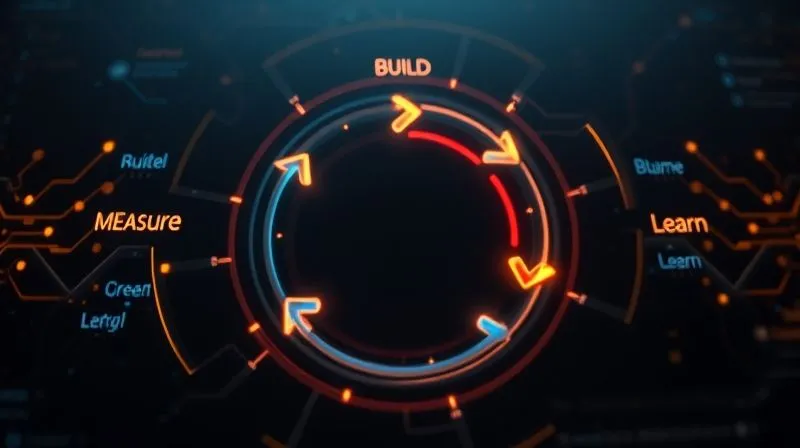
Eric Ries, the visionary behind "The Lean Startup," famously championed the build-measure-learn feedback loop. An MVP is specifically designed as the "build" part of this loop, engineered to generate empirical data for the "measure" stage, which then critically informs the "learn" phase. A "failed" MVP is merely a robust, unequivocal outcome from the 'measure' stage, telling you precisely what *doesn't* resonate with your target market. This kind of unambiguous feedback is infinitely more useful and less costly than making assumptions or guessing what users want.
"An MVP's primary purpose isn't to succeed, but to learn. If it fails, you've learned something profound and undeniable about your market, your underlying assumptions, or the efficacy of your proposed solution. Embrace the data, dissect it, and integrate its lessons; never fear its implications."
This critical perspective shift is paramount. It empowers you to move from a place of potential despair and self-doubt to one of strategic analysis, informed decision-making, and proactive problem-solving. Your initial investment – whether of time, money, or emotional energy – wasn't wasted; it bought you invaluable, hard-won market intelligence that will guide your next, more successful iteration. Think of it as paying for a highly specialized market research report, but one that you actively built and tested yourself.

Step 1: Conduct a Brutally Honest Post-Mortem Analysis
The first concrete, non-negotiable step in pivoting your product development is to meticulously dissect what happened. This isn't an exercise in assigning blame or pointing fingers; it's a rigorous, objective investigation aimed at understanding the root causes of your MVP's underperformance. You need to be methodical, data-driven, and unflinchingly honest with yourself and your team.
User Feedback Deep Dive
Start by prioritizing your users, or the conspicuous lack thereof. Did people even try your MVP? If so, what was their experience like? Don't just look at aggregated quantitative data; actively seek out rich, qualitative insights. Conduct one-on-one interviews with early adopters, or perhaps even more crucially, those who tried your product and abandoned it quickly. Ask open-ended questions about their initial pain points, their expectations when they first encountered your MVP, and precisely where your solution fell short of their needs or desires. Pay attention to their language, their emotional responses, and any surprising revelations.
Data Analytics Scrutiny
Dive deep into your analytics dashboards and reports. Where did users drop off in their journey? Which features were actively used, and which were conspicuously ignored? What were your key metrics like conversion rate, retention rate, and time spent on critical actions? Look for patterns, bottlenecks, and anomalies. Sometimes, the core idea is sound, but a specific flaw in the user experience, a technical glitch, or a misunderstanding of the user journey created an insurmountable barrier. Tools like Google Analytics, Mixpanel, Hotjar, or even simple server logs can provide a treasure trove of behavioral data.
Market Fit Re-evaluation
This is arguably the most critical aspect. Was your initial problem statement truly validated by the market? Did you build a solution for a problem that doesn't exist, isn't painful enough for users to actively seek a solution, or isn't a high-priority concern for your target demographic? This is where you courageously challenge your foundational assumptions about market need, demand, and the perceived value of your solution. It’s better to discover this now than after sinking years into a product nobody wants.
- Gather All Available Data: Begin by consolidating every piece of information you have. This includes user feedback from surveys, direct interviews, support tickets, and social media mentions. Combine this with hard analytics data from your tracking tools (e.g., Google Analytics, Mixpanel, Amplitude), and any sales or conversion data you've collected.
- Categorize and Theme Feedback: Systematically group similar issues, sentiments, and suggestions. Identify recurring themes related to usability challenges, missing critical features, confusion around the value proposition, or persistent technical bugs. Use affinity mapping or thematic analysis to make sense of large datasets.
- Quantify Impact Where Possible: Whenever feasible, assign metrics to the identified problems. How many users encountered this specific bug? What percentage of users dropped off at that particular step in the onboarding process? This helps prioritize which issues are most impactful and require immediate attention.
- Hypothesize Root Causes: For each major issue identified, brainstorm potential underlying reasons. Is it a fundamental design flaw? A deep misunderstanding of core user needs? A technical limitation that hindered performance? Or perhaps a mismatch between your marketing message and the actual product experience?
| Analysis Area | Observation | Hypothesized Cause | Action for Pivot |
|---|---|---|---|
| User Engagement | Low feature adoption (Feature X used by <10% of users) | Lack of clear perceived value for Feature X; Poor discoverability within the UI; Feature not solving a critical pain point | Rethink Feature X's core benefit proposition; Improve UX/UI for discoverability; Consider removal or significant redesign |
| Conversion Rate | High drop-off (70%+) at payment/signup stage | Complex or lengthy payment process; Unexpected hidden costs (shipping, taxes); Lack of trust signals; Perceived high price point | Simplify checkout flow (fewer steps); Be transparent about all costs upfront; Add testimonials/security badges; Re-evaluate pricing strategy |
| Retention | Users not returning after first 48 hours | Lack of ongoing value/engagement; Inadequate onboarding experience; Product doesn't integrate into daily workflow; Technical bugs on repeat use | Enhance onboarding experience with clear 'aha!' moments; Develop retention-focused features/notifications; Conduct user interviews on drop-off reasons |
| Market Feedback | Interviews reveal users seeking alternative solutions for a *related* but different problem than our MVP addressed | Our solution doesn't fully address the core, most painful problem; Competitors offer better alternatives for the identified pain point | Re-evaluate core problem statement; Deep dive into competitor strengths for the *true* pain point; Consider a shift in target problem or segment |
Step 2: Revisit Your Core Assumptions and Hypotheses
Every product, every feature, and every business model is built on a stack of underlying assumptions. When an MVP fails to gain traction, it's almost always because one or more of these foundational assumptions were incorrect, untested, or simply unvalidated. This step requires you to meticulously pull apart these assumptions and examine them under a magnifying glass, ready to discard those that have been disproven by market reality.
Original Problem vs. Perceived Solution
What problem did you *think* you were solving when you first conceived your MVP? And was your MVP truly the most effective, most desired, or even the most intuitive solution for that problem? Sometimes, the problem you identified is undeniably real, but your proposed solution simply misses the mark. It might be too complex, too niche, or not compelling enough compared to existing (even if imperfect) alternatives. Other times, the problem you initially identified isn't as critical, widespread, or painful for users as you initially believed, leading to low demand.
Target Audience Validation
Who exactly did you build this product for? Was your target audience clearly, precisely defined? Did you effectively reach them, and did your marketing resonate? It’s entirely possible that your MVP was a fantastic solution, but for an audience you *didn't* target, or that your assumed target audience doesn't actually exist in sufficient numbers or isn't interested in your specific solution. As a small business, narrowing your focus to a highly specific, underserved niche can often be a profound strength, not a weakness, allowing you to dominate a segment before expanding.
"The riskiest assumptions are often the ones we don't even realize we're making. They are embedded deep within our initial vision. Uncover them, test them rigorously, and be prepared to be proven wrong by the market – for that is the path to true insight."
This phase demands a rigorous, critical look at your initial business plan, product vision, and market segmentation. Don't be afraid to challenge deeply held beliefs about your market and customers. True innovation often comes from being willing to invalidate your cherished ideas. For more on validating business ideas and challenging assumptions, I highly recommend exploring resources on customer validation and market research, such as those found on sites like Harvard Business Review, which frequently publish authoritative articles on strategic market analysis and entrepreneurial pivots.
Step 3: Listen Actively: The Art of Customer Discovery
Once you have a clear, data-backed understanding of *what* went wrong with your MVP, the next crucial step is to understand *why* from the user's perspective. This is where active customer discovery becomes paramount – moving beyond mere data collection to building deep empathy and uncovering the often unarticulated needs, frustrations, and desires of your potential users.
Beyond Surveys: Empathic Interviews
While surveys provide invaluable quantitative data, one-on-one empathic interviews offer unparalleled qualitative depth. Engage in meaningful conversations with potential customers, existing users (especially those who churned), and even market experts or influencers. The goal is to truly understand their daily routines, their biggest struggles, their aspirations, and how they currently solve (or, more tellingly, fail to solve) the problem you're aiming to address. Use the "5 Whys" technique to get to the root of their motivations, frustrations, and decision-making processes. Listen far more than you talk.
Competitor Analysis with a Fresh Perspective
Re-examine your competitors, but this time, look at them through the lens of your failed MVP's lessons. What are they doing exceptionally well that you might have overlooked? More importantly, what gaps do they still have in their offerings that you could potentially fill with a cleverly pivoted product? Don't just copy their features; understand their core value proposition, how they communicate it, and how it resonates with their customer base. Look for areas of dissatisfaction among their users, as these represent potential opportunities for your pivot.
- Don't pitch your product: The primary objective is to understand their world, not sell them on yours. Keep the conversation focused on them and their experiences.
- Ask about past behaviors: Instead of asking "Would you use X?", ask "Tell me about a time when you needed to accomplish [task]. How did you do it? What was frustrating about it?" This provides concrete, historical context.
- Probe for pain points: Repeatedly ask questions like "What's the hardest part about [this activity]?" or "What annoys you most about [current solution]?" Dig into the emotional and practical costs of their problems.
- Listen for workarounds: How are they currently coping without a perfect solution? These workarounds often highlight the true need and the specific aspects of a problem that are most pressing.
- Identify unmet needs: What problems do they have that no existing solution (including your initial MVP) addresses well, or at all? These are the fertile grounds for your pivot.

Step 4: Ideation for the Pivot: Brainstorming New Directions
With a crystal-clear understanding of your MVP's shortcomings and a wealth of fresh customer insights, you're now in an excellent position to brainstorm potential pivot directions. This should be a highly creative, unconstrained session where all ideas are welcomed without judgment, before being rigorously filtered and evaluated.
The "What If?" Scenarios
Encourage your team to challenge every single assumption and component of your original idea. What if your product was tailored for a completely different audience? What if it solved a slightly different, but more acute, problem? What if it leveraged a completely different technology stack or approach? What if you adopted a radically different pricing or business model? Encourage "blue sky" thinking, even if ideas initially seem outlandish. The goal is to generate a wide, diverse range of possibilities, opening up unforeseen pathways.
Prioritizing Pivot Opportunities
Once you have a comprehensive list of potential pivots, you need a structured method to prioritize them. Use a consistent set of criteria to evaluate each option. This ensures objectivity and helps focus resources on the most promising avenues:
- Feasibility: Can you realistically build this new direction with your existing team, resources, and technical expertise? Do you need to acquire new skills or partners?
- Market Potential: Does this pivot address a significant, validated market need? Is there a large enough segment willing to pay for this solution? What's the potential for growth?
- Competitive Advantage: Can you create something truly unique, superior, or more defensible than existing solutions in this new space? What's your differentiator?
- Risk Assessment: What are the inherent risks associated with this particular pivot? (e.g., technical complexity, market adoption uncertainty, regulatory hurdles). How can these risks be mitigated?
- Alignment with Vision: Does this new direction still align, even broadly, with your broader company mission, values, and long-term vision? It shouldn't feel like a complete betrayal of your entrepreneurial spirit.
Case Study: How "TaskFlow" Pivoted from Project Management to Niche Automation
TaskFlow, a promising small startup, initially launched an MVP for a general-purpose project management tool, aiming for a broad market. Despite a sleek user interface and robust core features, it struggled significantly to gain traction against highly established competitors like Asana and Trello. Their post-mortem analysis revealed that while users found it "nice," it wasn't "essential" and didn't offer a compelling reason to switch. Crucially, in-depth customer interviews showed a strong, unaddressed need for *automation* within specific, highly repetitive business processes, particularly among small-to-medium marketing agencies struggling with client onboarding and recurring campaign setups. TaskFlow courageously pivoted, narrowing their focus entirely. They redesigned their tool to specialize in automating client onboarding workflows specifically for marketing agencies, embedding powerful, customizable automation features. By shifting from a generalist tool to a niche, automation-focused solution, their "MVP 2.0" quickly gained paying customers and achieved significant market penetration within their chosen vertical, demonstrating the profound power of a strategic pivot informed by deep, data-driven market understanding.
Step 5: The Pivot Strategy: Types and Execution
Not all pivots are created equal, and understanding the different types can help you articulate your new direction more clearly, manage expectations, and execute it more effectively. While Eric Ries outlines several common types of pivots in "The Lean Startup," I've observed these patterns repeatedly in the small business landscape, each demanding a slightly different approach to execution.
Zoom-In/Zoom-Out Pivot
A Zoom-In Pivot involves taking a single feature or a very specific aspect of your failed MVP that showed unexpected traction, and making it the entire product. Perhaps a minor utility resonated strongly with users, indicating a deeper, unmet need. Conversely, a Zoom-Out Pivot occurs when your MVP was too specific or niche, and you realize the larger platform, ecosystem, or broader problem space around that initial feature is the real, more expansive opportunity. This requires stepping back to see the bigger picture.
Customer Segment Pivot
This is a common and often highly effective pivot. You realize your product, or at least a significant part of it, solves a genuine problem, but for a different type of customer than you initially targeted. Your initial marketing and features might have been misaligned. Your subsequent messaging, feature development, and distribution channels would then need to significantly shift to appeal directly and powerfully to this newly identified, more receptive segment. This often means re-evaluating your buyer personas entirely.
Technology Pivot
Sometimes, the problem isn't the core idea or the market need, but the underlying technology chosen for the MVP. It might be too slow, too expensive to scale, too difficult to maintain, or simply not capable of delivering the core value proposition effectively. A technology pivot involves adopting a more robust, scalable, cost-effective, or user-friendly technology stack to deliver the core value more efficiently and reliably. This can be a significant undertaking but necessary for long-term viability.
Business Model Pivot
Your MVP might be technically sound and even somewhat desired by users, but your monetization strategy is fundamentally flawed or unsustainable. This pivot involves changing how you capture value from your customers. Examples include shifting from a one-time purchase to a subscription model, from a freemium model to a paid-only service, from direct sales to a marketplace model, or even exploring advertising-based revenue if appropriate. The goal is to find a model that aligns with customer value perception and ensures your business's financial health. For a deeper dive into pivot types and real-world examples that illustrate these concepts, I strongly recommend consulting resources directly from the source, such as The Lean Startup Co. blog, which provides authoritative insights from Eric Ries himself.
Step 6: Building Your "MVP 2.0": Leaner, Smarter, Faster
With a new, validated pivot strategy clearly defined, it's time to build again. But this isn't a restart from scratch; it's an informed, strategic evolution. Your "MVP 2.0" should be even leaner, smarter, and designed for faster validation than your first attempt. The lessons learned from the previous MVP are your guiding principles, ensuring you avoid past mistakes and build with greater precision.
Defining the New Hypothesis
Based on your chosen pivot, articulate a clear, concise, and testable new hypothesis. This hypothesis should encapsulate your core belief about the new direction. For example: "We believe that [new, specific target customer segment] will [perform this key action/achieve this outcome] if we provide [this specific, differentiated solution/core feature] because [this underlying, validated reason/pain point is addressed]." This hypothesis will serve as the North Star for your MVP 2.0, ensuring every development effort is purposeful.
Prioritizing Features for Validation
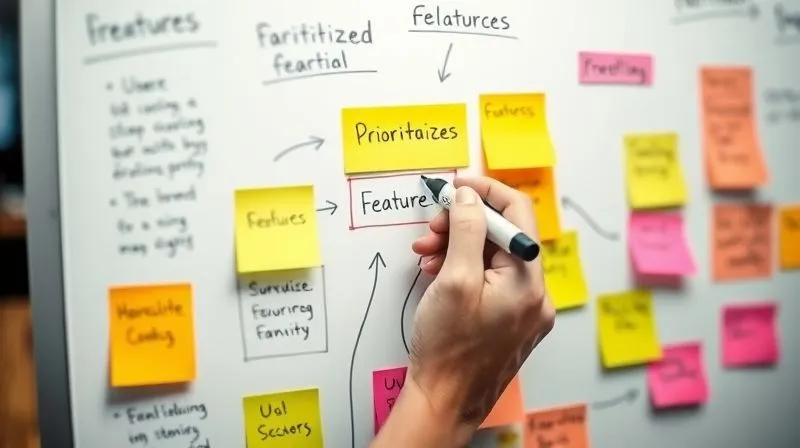
Resist the powerful urge to build everything you now *think* users might want. The key to MVP 2.0 is extreme focus. What is the absolute minimum set of features required to test your new hypothesis? Prioritize only those features that directly contribute to delivering the core value proposition of your pivot and validating your new assumptions. Each feature should be essential for learning, not just "nice to have." This laser focus minimizes development time, cost, and complexity.
"Speed in validation is paramount for small businesses. Build only what's absolutely necessary to learn, then iterate rapidly. Don't fall in love with your solution; instead, fall deeply in love with the problem you're solving and the validated needs of your customers."
This iterative, lean approach minimizes risk and conserves precious resources, which is critically important for a small business operating with limited capital and time. Think of your MVP 2.0 as a series of tightly controlled micro-experiments designed for rapid learning, rather than one grand, all-encompassing launch. For further insights into rapid prototyping and iterative design principles, leading academic institutions like Stanford's d.school offer excellent frameworks and methodologies that can be adapted for small business innovation.
Step 7: Launch, Learn, and Iterate (Again!)
Your MVP 2.0 is ready for its debut. Now, launch it, but always remember the fundamental principle: this is still a learning exercise, not the final destination. The build-measure-learn cycle never truly ceases in successful product development; it becomes an ingrained part of your organizational culture.
Measuring Success Metrics
Before you even launch, define clear, measurable success metrics for your MVP 2.0. These KPIs (Key Performance Indicators) should be directly tied to your new hypothesis and the intended outcome of your pivot. Are users engaging with the new core feature as expected? Is the conversion rate improving for your newly targeted segment? Are you seeing better retention rates or higher average revenue per user? Focus on a few critical KPIs that truly reflect the success or failure of your pivot, avoiding vanity metrics.
Establishing a Feedback Loop
Implement robust, continuous mechanisms for collecting feedback once your MVP 2.0 is live. This could include targeted in-app surveys, follow-up user interviews, comprehensive analytics dashboards, and easily accessible direct customer support channels. Make it incredibly easy for users to tell you what's working, what's confusing, and what's still missing. Be proactive in seeking out this information, rather than passively waiting for it. The faster you can gather and act on feedback, the faster you'll refine your product.
- Define Clear KPIs: Before launch, establish 2-3 critical, quantifiable metrics that will serve as your primary indicators of pivot success (e.g., specific feature usage rate, new user activation rate, churn reduction for a target segment, customer lifetime value).
- Implement Robust Tracking: Ensure all your analytics tools (e.g., Google Analytics 4, Mixpanel, custom event tracking) are correctly configured to monitor these new KPIs, as well as general user behavior, from day one.
- Gather Qualitative Feedback Continuously: Supplement your quantitative data with ongoing qualitative insights. Schedule regular user interviews, implement short in-app feedback prompts, and actively monitor social media and support channels for sentiment and suggestions.
- Analyze and Adapt Rapidly: Regularly review your data and qualitative feedback. What are the next biggest assumptions to test? What small, impactful improvements can be made immediately? Prioritize changes that offer the most learning or highest impact.
- Communicate Internally and Externally: Share learnings and decisions transparently with your internal team to maintain alignment and morale. If appropriate, communicate with early adopters about how their feedback is shaping the product, building loyalty and trust.
Frequently Asked Questions (FAQ)
How do I know if it's a pivot or a complete restart? A pivot, by definition, leverages some existing learning, assets, or team knowledge from the previous MVP, even if the direction changes significantly. You're building upon insights gained. A complete restart, on the other hand, implies abandoning everything – the idea, the market, the technology – and starting fresh with a completely new concept, often in a different industry or with an entirely new team. If you're using the hard-won insights from your "failed" MVP to inform your next strategic step, it's definitively a pivot. If you're simply throwing it all away and starting from zero, it's a restart. The distinction lies in the continuity of learning.
What if I don't have more budget for a new MVP? This is a very common and understandable challenge for small businesses. The key here is to embrace extreme lean thinking for your MVP 2.0. Can you validate your new hypothesis with a "concierge MVP" where you manually provide parts of the service? Can you use a simple landing page to gauge interest before building anything? Perhaps a clickable prototype without full backend development? Prioritize customer discovery and validation over complex engineering. Sometimes, a pivot can even involve a strategic shift to a lower-cost technology stack or a business model that generates revenue faster, thereby funding subsequent development. Resourcefulness is your greatest asset here.
How do I convince my team/investors that a pivot is necessary? Transparency, data, and a clear vision are your most powerful tools. Present your post-mortem analysis clearly and dispassionately, showing the objective data and qualitative insights that led to the conclusion that the initial MVP was not viable. Then, present your new pivot strategy, backed by fresh customer discovery, market validation, and a well-defined new hypothesis. Emphasize that a pivot is not a failure, but a strategic, data-driven adaptation that significantly increases the likelihood of long-term success. Frame it as a smarter, more informed path forward, demonstrating your leadership and commitment to the venture's ultimate success. Investors and teams respect honesty and strategic agility.
What are the common pitfalls to avoid during a pivot? A critical pitfall is making a "half-pivot" – changing slightly but not enough to address the core issues identified in your post-mortem. Don't fall into the trap of ignoring the data because it contradicts your initial, cherished vision. Be wary of "solutionizing" before you've fully understood and validated the problem you're now aiming to solve. And crucially, don't overbuild your MVP 2.0; maintain the lean mindset. Another significant pitfall is failing to communicate the pivot clearly and empathetically to your team and stakeholders, which can lead to confusion, reduced morale, and resistance to the new direction.
How quickly should a small business pivot after an MVP failure? While there's no universally fixed timeline, speed is absolutely critical for small businesses. Prolonging a failing strategy drains precious financial resources, exhausts team morale, and wastes valuable time. Once you have sufficient data from your MVP's performance and initial customer discovery (Steps 1-3), you should move quickly and decisively into ideation and planning for a pivot (Steps 4-5). The entire cycle, from initial analysis to the launch of your MVP 2.0, should ideally be measured in weeks or a few months, not quarters or years. Small businesses possess an inherent agility that larger corporations often lack; leverage this competitive advantage to iterate and adapt quickly.
Key Takeaways and Final Thoughts
Experiencing a "failed" MVP can undoubtedly feel like a devastating blow, a moment of profound discouragement. However, as an experienced industry specialist, I can assure you it is almost always a disguised opportunity – a pivotal moment for growth and redirection. It's a chance to learn invaluable lessons, adapt your strategy, and ultimately build something truly valuable that genuinely resonates with your target market.
- Embrace Failure as Data: Your initial MVP provided you with critical, empirical insights into what doesn't work. This knowledge is priceless.
- Analyze Relentlessly: Conduct a thorough, objective post-mortem using both quantitative analytics and rich qualitative user feedback to uncover root causes.
- Listen Deeply to Your Customers: Proactive, empathic customer discovery is the absolute bedrock of a successful pivot, revealing true needs and pain points.
- Be Agile and Strategic: Identify the right type of pivot for your situation and commit to building an even leaner, smarter MVP 2.0 for rapid validation.
- Iterate Continuously: Understand that the product development journey is an ongoing, dynamic cycle of building, measuring, learning, and adapting.
Remember, the entrepreneurial journey is rarely a straight line; it's often a winding path filled with unexpected detours and learning curves. The ability to recognize a misstep, gather profound insights from it, and strategically pivot is not a sign of weakness or indecision, but of true resilience, intelligent leadership, and astute business acumen. Your small business possesses an inherent agility that larger, more bureaucratic corporations often lack; leverage this competitive advantage to your fullest. Transform your MVP's lessons into your next big success story. Go forth, learn, and build with renewed purpose and unwavering determination!
Recommended Reading
- Scale Influencer Marketing Authentically: 7 Proven Strategies
- Small Business Loan with Bad Credit? Here's The Secret!
- Unlock Excellence: Improve Service Delivery in Operations Management
- 7 Proven Steps: Revitalizing Your Top Talent's Lost Motivation
- 7 Ways to Slash Last-Mile Delivery Costs Without Hurting Service Quality





Comments
Leave a comment below. Your email will not be published. Required fields marked with *