


Struggling to quantify strategic advisory ROI for long-term growth?
For over two decades in the strategic advisory space, I’ve witnessed countless organizations invest significant resources into high-level guidance, only to grapple with the perennial question: 'Was it worth it?' The immediate, tangible returns from strategic advisory can often feel elusive, a whisper rather than a shout, making it incredibly difficult to articulate its true value to stakeholders.
This struggle isn't a sign of poor advisory, nor a lack of impact. Instead, it highlights a fundamental disconnect in how we traditionally measure return on investment. Strategic advisory, by its very nature, deals with foundational shifts, cultural transformations, and future-proofing initiatives – outcomes that don't neatly fit into a quarterly P&L statement or a simple cash-on-cash calculation.
In this definitive guide, I will share the frameworks, methodologies, and practical insights I've developed and refined over years of working with diverse clients, helping them move beyond guesswork. You’ll learn how to identify, measure, and communicate the profound, long-term value generated by strategic advisory, transforming it from a perceived cost into a clearly demonstrable investment in sustainable growth.
The Core Challenge: Why Traditional ROI Falls Short for Strategic Advisory
The traditional concept of ROI is deeply rooted in transactional thinking: invest X, get Y back, with Y often being a direct, short-term financial gain. This model works beautifully for a new marketing campaign or a software upgrade, where cause-and-effect are relatively straightforward and immediate.
However, strategic advisory operates on an entirely different playing field. When a consultant helps a company redefine its market position, optimize its organizational structure, or pivot its entire business model, the 'return' isn't just about next quarter's sales figures. It's about resilience, competitive advantage, innovation capacity, and talent retention – all critical drivers of long-term value that manifest over months, even years.
I’ve often seen executive teams become frustrated when they can't point to a direct, immediate financial uplift from a strategic engagement. This isn't because the advisory lacked value; it's because the metrics they're applying are ill-suited to the nature of strategic change. We are often looking for an apple in an orange orchard.
The true ROI of strategic advisory often lies in its preventative power and future-proofing capability – preventing costly mistakes, unlocking unseen opportunities, and building a more robust, adaptable enterprise. These are inherently difficult to quantify with traditional, short-sighted metrics.
The impact of strategic advice is often systemic. It ripples through multiple departments, influences countless decisions, and shapes the company's trajectory in ways that are hard to isolate from other business activities. This complexity demands a more nuanced, holistic approach to measurement, one that acknowledges the multi-faceted and often indirect nature of its benefits.
Shifting the Paradigm: From Transactional to Transformational ROI
To genuinely quantify strategic advisory ROI for long-term growth, we must first liberate ourselves from the shackles of purely transactional thinking. Strategic advisory is not merely about optimizing existing processes; it's about transformation – enabling new capabilities, fostering a different culture, and fundamentally altering the competitive landscape for the client.
This shift in perspective requires us to broaden our definition of 'return.' It's no longer just about direct financial gains, but also about the strategic capabilities gained, the risks mitigated, the market opportunities unlocked, and the organizational health improved. These are the building blocks of sustainable, long-term growth.
Defining Long-Term Growth Beyond P&L
Long-term growth, when viewed through a strategic lens, encompasses far more than just revenue or profit expansion. It includes:
- Market Share Expansion: Gaining a stronger foothold in existing markets or successfully entering new ones.
- Innovation Capacity: The ability to consistently develop and launch new products, services, or business models.
- Operational Efficiency & Resilience: Streamlined processes, reduced waste, and the ability to withstand market shocks.
- Talent Attraction & Retention: Becoming an employer of choice, fostering a high-performance culture, and reducing costly turnover.
- Brand Equity & Reputation: Enhanced customer loyalty, public perception, and industry leadership.
- Strategic Agility: The capability to adapt quickly to market changes and competitive pressures.
Each of these elements contributes significantly to a company's enduring value and competitive advantage. Strategic advisory often targets these very areas, and therefore, our measurement frameworks must be sophisticated enough to capture their impact.
For instance, an advisory engagement focused on digital transformation might not immediately show a revenue spike, but it could drastically improve customer experience, reduce operational costs over time, and create entirely new revenue streams down the line. We need to track these intermediate, yet crucial, indicators.
Framework 1: The Balanced Scorecard for Advisory Impact
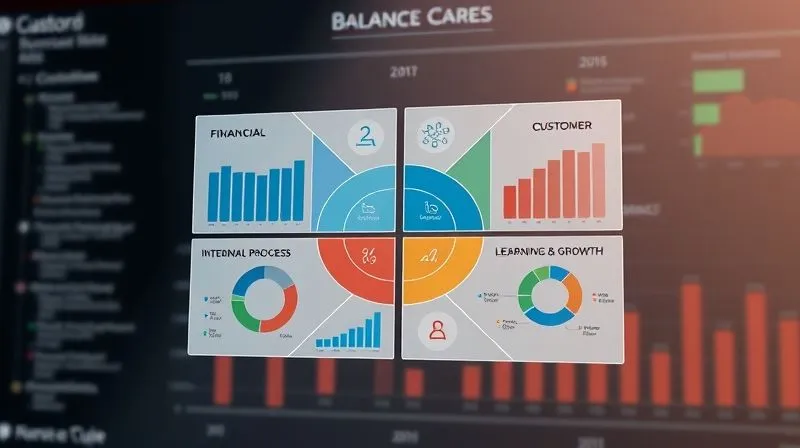
One of the most robust frameworks I've consistently found valuable for measuring strategic advisory impact is an adapted version of the Balanced Scorecard, originally developed by Robert Kaplan and David Norton. This approach moves beyond purely financial metrics to include customer, internal process, and learning and growth perspectives, providing a holistic view of organizational performance.
When applied to strategic advisory, it helps connect the intangible benefits of advice to tangible outcomes across these four critical dimensions. It forces a conversation about what success looks like from multiple angles, not just the financial one.
Adapting the Balanced Scorecard for Strategic Advisory
Here’s how we can tailor the four perspectives:
- Financial Perspective: While not the sole focus, this still matters. Metrics here might include improved profitability, revenue growth (long-term), cost reduction, or increased shareholder value. The key is to look at these over a longer horizon.
- Customer Perspective: How has the advisory impacted customer satisfaction, retention, market perception, or brand loyalty? Metrics could include Net Promoter Score (NPS), customer lifetime value (CLTV), or market share gains.
- Internal Process Perspective: Has the advisory improved operational efficiency, decision-making speed, product development cycles, or supply chain effectiveness? Track process cycle times, error rates, or project completion rates.
- Learning & Growth Perspective: This is crucial for strategic advisory. Has the engagement enhanced employee skills, fostered a culture of innovation, improved talent retention, or built new organizational capabilities? Metrics might include employee engagement scores, training hours, innovation pipeline health, or talent turnover rates.
By establishing clear objectives and corresponding metrics within each of these four areas *before* the advisory engagement begins, you create a powerful baseline for measuring progress and demonstrating value.
Implementing the Balanced Scorecard for Your Advisory Engagement
- Define Strategic Objectives: Clearly articulate the overarching goals the strategic advisory is designed to achieve (e.g., become market leader in X, reduce operational costs by Y%, foster an innovation culture).
- Identify Key Performance Indicators (KPIs): For each objective, select 2-3 measurable KPIs across the four Balanced Scorecard perspectives. These should be specific, measurable, achievable, relevant, and time-bound (SMART).
- Establish Baselines: Before the advisory work commences, rigorously measure the current state of each KPI. This is your starting point for assessing impact.
- Set Targets: Define what success looks like for each KPI at various milestones (e.g., 6 months, 1 year, 3 years post-engagement).
- Monitor & Report: Regularly track the KPIs against your baselines and targets. Create a clear reporting mechanism that communicates progress and challenges to stakeholders.
- Attribute Impact: While perfect isolation is impossible, use qualitative data (interviews, surveys) alongside quantitative data to build a compelling narrative of how the advisory contributed to the observed changes.
This structured approach allows for a comprehensive assessment of strategic advisory’s multi-dimensional impact, moving beyond a narrow financial lens.
| Perspective | Objective | Key Metric | Baseline | Target (3-Year) |
|---|---|---|---|---|
| Financial | Increase long-term profitability | Operating Margin Growth (3-year CAGR) | 5% | 8% |
| Customer | Enhance customer loyalty & market share | Net Promoter Score (NPS) | +25 | +40 |
| Internal Process | Improve decision-making speed | Average time from insight to action (days) | 45 days | 30 days |
| Learning & Growth | Foster innovation culture | Employee innovation participation rate | 15% | 30% |
Framework 2: The Value Realization Mapping (VRM) Approach
Another powerful methodology I’ve leveraged is Value Realization Mapping (VRM). This framework is particularly effective because it directly links advisory activities to specific business outcomes and, crucially, identifies the metrics that will prove those outcomes. It’s a proactive approach that starts with the desired value and works backward.
VRM helps demystify the 'black box' of strategic advisory by creating a clear line of sight from the advice given to the value generated. It’s about building a narrative of impact, supported by data, that resonates with all levels of an organization.
Mapping Advisory Initiatives to Key Performance Indicators (KPIs)
The core of VRM involves a structured process:
- Identify Strategic Objectives: What are the 2-3 critical strategic objectives the advisory engagement is designed to address? (e.g., entering a new market, optimizing supply chain, enhancing leadership capabilities).
- Define Advisory Initiatives: What specific actions, recommendations, or changes will the strategic advisory introduce to achieve these objectives? (e.g., market entry strategy development, supply chain diagnostic, leadership development program design).
- Map Value Drivers: For each initiative, identify the direct value drivers. How will this initiative logically lead to desired outcomes? (e.g., market entry strategy -> reduced risk of new market entry, faster time-to-market).
- Establish Measurable Outcomes: Translate these value drivers into concrete, measurable business outcomes. (e.g., reduced risk -> fewer unforeseen regulatory hurdles, faster time-to-market -> 10% quicker launch).
- Select KPIs and Baselines: Choose specific KPIs that will track these outcomes and establish their current baseline values. (e.g., 'number of regulatory issues encountered', 'average launch cycle time').
- Assign Accountabilities: Who within the organization is responsible for tracking these metrics and driving the associated changes?
Case Study: How InnovateCo Quantified Advisory Impact on Innovation
InnovateCo, a mid-sized technology firm, was struggling to quantify strategic advisory ROI for long-term growth related to their innovation pipeline. They engaged my firm to help them build a more robust, measurable innovation strategy. Using VRM, we mapped the advisory engagement to specific objectives.
Objective: Accelerate time-to-market for new products by 25% and increase successful product launches by 20% within 18 months.
- Advisory Initiatives: Streamlining product development processes, implementing agile methodologies, establishing cross-functional innovation teams.
- Value Drivers: Improved collaboration, faster iteration cycles, reduced waste in R&D, enhanced market responsiveness.
- Measurable Outcomes: Reduced average product development cycle from 12 months to 9 months, increased conversion rate from prototype to launch.
- KPIs: 'Average Product Development Cycle Time,' 'Prototype-to-Launch Conversion Rate,' 'Number of New Product Launches per Quarter.'
By establishing baselines (e.g., 12-month cycle, 30% conversion rate) and continuously tracking these KPIs, InnovateCo could clearly demonstrate that the strategic advisory led to a 20% reduction in cycle time and a 15% increase in conversion within the first year, directly contributing to their long-term growth objectives. This wasn't just about revenue; it was about building a sustainable innovation engine.
Quantifying the Intangible: Lagging & Leading Indicators for Growth
One of the biggest hurdles in proving strategic advisory ROI is the perception that its benefits are 'intangible.' While some benefits, like a stronger leadership culture or enhanced strategic alignment, might not have a direct dollar sign attached, they are far from immeasurable. The key is to identify both leading indicators (predictive metrics) and lagging indicators (outcome metrics) that serve as proxies for these 'intangibles.'

The Power of Proxy Metrics
Proxy metrics are indirect measures that correlate strongly with the desired, harder-to-measure outcomes. For example:
- Improved Decision-Making: Instead of trying to measure 'better decisions,' track 'time to decision,' 'number of project re-works due to poor initial decisions,' or 'success rate of new initiatives.'
- Innovation Culture: This can be proxied by 'employee participation in innovation challenges,' 'number of patents filed,' 'percentage of revenue from new products/services,' or 'employee feedback on psychological safety for new ideas.'
- Talent Retention & Engagement: Track 'employee turnover rates (especially for high performers),' 'internal promotion rates,' 'employee satisfaction scores related to growth opportunities,' or 'participation in internal learning programs.'
- Strategic Alignment: Measure 'percentage of projects directly linked to strategic goals,' 'employee understanding of company strategy (via surveys),' or 'speed of strategic pivot in response to market changes.'
As marketing guru Seth Godin often says, "If you can't measure it, you can't manage it." While we might not always be able to measure the 'thing' itself, we can almost always measure its symptoms or its effects. These proxy metrics, when tracked consistently, provide compelling evidence of the advisory's impact on organizational capabilities that drive long-term growth.
According to a study published in the Harvard Business Review, companies that effectively measure and manage their intangible assets, including organizational capabilities and intellectual capital, consistently outperform their peers in terms of market value and sustainable growth. Strategic advisory is often about building these very assets.
The Role of Data and Analytics in Proving Value
In today's data-rich environment, simply having data isn't enough; it's about transforming raw data into actionable insights that demonstrate the value of strategic advisory. Without a robust approach to data collection, analysis, and visualization, even the most impactful advisory work can remain unquantified.
I've seen organizations invest heavily in strategic insights, yet fall short in proving their ROI because they lack the infrastructure or expertise to systematically collect and interpret the relevant data. This is where a proactive, data-driven mindset becomes invaluable.
Building a Robust Data Infrastructure
Establishing a solid data foundation involves:
- Identify Data Sources: Pinpoint where the relevant KPIs and proxy metrics reside. This could be CRM systems, ERPs, HRIS, project management tools, customer feedback platforms, or even external market data.
- Ensure Data Quality: 'Garbage in, garbage out' is a timeless truth. Implement processes to ensure data accuracy, consistency, and completeness.
- Integrate Data: Where possible, integrate disparate data sources to create a unified view. Data lakes or data warehouses can be instrumental here.
- Implement Analytics Tools: Utilize business intelligence (BI) tools (e.g., Tableau, Power BI, Google Data Studio) to visualize trends, identify correlations, and generate reports. These tools make complex data accessible and understandable.
- Establish Reporting Cadence: Determine how frequently data will be reviewed and reported (e.g., monthly, quarterly). Consistency is key to tracking long-term trends.
- Qualitative Data Integration: Don't underestimate the power of qualitative data. Surveys, interviews, focus groups, and anecdotal evidence can provide crucial context and reinforce the quantitative findings.
By systematically leveraging data, you can build a compelling, evidence-based narrative around the impact of strategic advisory. This move from anecdotal evidence to data-backed insights is fundamental for any organization struggling to quantify strategic advisory ROI for long-term growth.

Communicating ROI: From Boardroom to Bottom Line
Even with the most sophisticated measurement frameworks and robust data, the value of strategic advisory can be lost if not communicated effectively. Proving ROI isn't just about numbers; it's about telling a persuasive story that resonates with different stakeholders, from the executive board to operational teams.
I've learned that presenting data in isolation is rarely enough. Context, narrative, and clear implications are essential to transform raw metrics into compelling evidence of value.
Storytelling with Data
When presenting the ROI of strategic advisory, consider these elements:
- Start with the Problem: Remind stakeholders of the initial challenge the advisory was brought in to solve. This sets the stage.
- Show the Journey: Illustrate the strategic interventions and changes implemented as a result of the advisory.
- Present the Evidence: Clearly display the KPIs and proxy metrics, showing the 'before and after' or the trend over time. Use clear charts, graphs, and summary tables.
- Connect to Business Outcomes: Explicitly link the observed changes in metrics back to the desired business outcomes (e.g., "This 15% reduction in cycle time directly contributed to us launching two new products ahead of competitors, securing a 5% market share increase").
- Highlight Long-Term Impact: Emphasize how the changes are building capabilities for sustained future growth, not just short-term gains.
- Address Qualitative Benefits: Don't shy away from discussing improved morale, enhanced collaboration, or a stronger strategic vision, even if they are harder to quantify directly. Use testimonials or survey data to support these points.
Effective ROI communication isn't just a report; it's a strategic conversation. It’s about building confidence in strategic investments and fostering a culture where long-term value creation is understood and celebrated.
Tailor your communication style and level of detail to your audience. The board might need a high-level summary with key financial implications, while a departmental head might require more granular operational data. Remember, the goal is to create alignment and reinforce the perception of strategic advisory as a value-generating partnership.
For further insights into effectively communicating business value, I often refer to resources from leading business publications like Forbes and McKinsey & Company, which frequently publish articles on strategic communication and value articulation.
Overcoming Common Pitfalls in ROI Measurement
Even with the best intentions, measuring the ROI of strategic advisory can be fraught with challenges. I've encountered several common pitfalls that can derail even the most meticulously planned measurement efforts. Understanding and proactively addressing these can significantly improve your ability to quantify strategic advisory ROI for long-term growth.
Best Practices for Avoiding Measurement Traps
- The Attribution Challenge: It's often difficult to isolate the impact of strategic advisory from other factors (market conditions, internal initiatives, competitor actions). Acknowledge this upfront. Instead of claiming 100% attribution, focus on demonstrating a strong correlation and contribution. Use control groups where possible, or build a logical narrative of how the advisory *enabled* the positive changes.
- Establishing a Clear Baseline: Without a precise 'before' picture, it's impossible to measure the 'after.' Many companies overlook the importance of rigorously documenting baseline performance metrics *before* the advisory engagement begins. This is non-negotiable for credible measurement.
- Avoiding 'Vanity Metrics': Not all metrics are created equal. Focus on those that genuinely reflect strategic progress and long-term value creation, rather than easily quantifiable but ultimately meaningless numbers. An increase in website traffic is a vanity metric if it doesn't translate to leads or sales for example.
- Lack of Long-Term Perspective: Strategic advisory benefits often accrue over time. Don't expect immediate, dramatic shifts. Establish measurement windows that are appropriate for the strategic nature of the advice (e.g., 1-3 years, not 3 months).
- Inconsistent Data Collection: Sporadic or incomplete data collection will undermine any measurement effort. Implement clear processes and assign ownership for continuous data gathering.
- Resistance to Change: Sometimes, internal teams may resist new measurement frameworks, viewing them as additional work or a way to scrutinize their performance. Emphasize that these frameworks are tools for collective learning and improvement, not just judgment.
By being aware of these potential pitfalls and building strategies to mitigate them, you can create a more robust, credible, and defensible case for the long-term ROI of your strategic advisory investments. It's about being pragmatic, persistent, and precise in your approach.
Frequently Asked Questions (FAQ)
How do you differentiate between advisory impact and other business factors? This is indeed challenging. My approach involves a combination of isolating variables where possible (e.g., through A/B testing or specific project measurements), establishing strong logical causal links, and using qualitative data from stakeholders to build a compelling narrative of contribution. We focus on demonstrating the advisory's *enabling* role – how it provided the insights, frameworks, or capabilities that allowed other factors to succeed. We also use a 'counterfactual' argument: what would have happened without the advisory? This helps frame the value of risk mitigation and opportunity capture.
What if our advisory engagement is very short-term? How can we measure long-term growth? Even short-term engagements can have long-term implications. For these, focus on measuring the *immediate outputs* that enable future growth. For example, a short-term advisory on market entry strategy might be measured by the quality of the strategy document, the clarity of the go-to-market plan, or the confidence of the leadership team in executing it. The long-term ROI would then be tracked through the execution of that strategy over time, linking back to the quality of the initial advice. The immediate 'return' is often in clarity, validated direction, and reduced uncertainty.
Is it always about financial metrics, even with a long-term view? Absolutely not. While financial health is ultimately critical, strategic advisory often focuses on building the *foundations* for future financial success. This includes non-financial metrics like innovation capacity, employee engagement, brand equity, operational resilience, and strategic agility. These are leading indicators of long-term financial performance. As discussed with the Balanced Scorecard, a holistic view is essential. Sometimes, the greatest ROI is preventing a catastrophic loss or unlocking a market opportunity that wouldn't have been seen otherwise.
How can smaller businesses apply these complex frameworks? The principles of these frameworks are scalable. For smaller businesses, the key is simplification. Instead of a full-blown Balanced Scorecard, identify 1-2 critical objectives and 1-2 KPIs for each across different perspectives. The Value Realization Mapping can be done with a simple whiteboard session. The goal isn't to create an overly complex system, but to instill a discipline of thinking about desired outcomes and how to measure them, even with limited resources. Focus on what's most impactful and pragmatic for your scale.
What's the first step for a company new to this? The very first step is to define what 'long-term growth' means specifically for your organization, beyond just revenue. Then, for your next strategic advisory engagement, dedicate time *before* the project starts to agree on 2-3 key strategic objectives and how you will measure success, using a combination of leading and lagging indicators. Get buy-in from all key stakeholders on these metrics. This upfront alignment is crucial.
Key Takeaways and Final Thoughts
- Traditional ROI metrics often fail to capture the multi-faceted, long-term value of strategic advisory.
- Shift your perspective from transactional to transformational ROI, embracing a broader definition of 'return.'
- Utilize frameworks like the **Balanced Scorecard** and **Value Realization Mapping** to systematically identify and measure advisory impact across multiple dimensions.
- Quantify 'intangibles' by leveraging powerful **leading and lagging proxy metrics** that correlate with desired long-term growth outcomes.
- Invest in **robust data and analytics infrastructure** to turn raw data into compelling evidence of value.
- Master the art of **storytelling with data**, tailoring your communication to different stakeholders to build a persuasive narrative of ROI.
- Proactively address common pitfalls like attribution challenges and the lack of a clear baseline to ensure credible measurement.
The journey to effectively quantify strategic advisory ROI for long-term growth is not always straightforward, but it is immensely rewarding. By adopting these expert-level approaches, you empower your organization to move beyond guesswork, making informed decisions about strategic investments and truly understanding the profound, lasting impact of expert guidance. Embrace the complexity, commit to robust measurement, and watch as your strategic advisory transforms from a cost center into a clearly demonstrable engine of sustainable growth.
Recommended Reading
- 7 Steps: Fix Negative Service, Rebuild Customer Loyalty & Trust
- Eliminate Glare: The Ultimate Guide to Solving Reflections in Shiny Product Photography
- 8 Strategies: Navigating Team Discord from a High-Performing Employee?
- 7 Proven Ways to Boost Working Capital with High Sales, Low Cash
- Unlock Peak Potential: How to Develop a Performance Coaching Culture





Comments
Leave a comment below. Your email will not be published. Required fields marked with *