


Urgent: How to assess and reduce critical operational risks post-crisis?
For over two decades in operations management, I've witnessed firsthand how even the most robust organizations can be blindsided by unforeseen crises. The initial shock of an event—be it a pandemic, a cyberattack, or a natural disaster—often overshadows the insidious, lingering operational risks that emerge in its wake, threatening to derail recovery efforts entirely.
The real challenge isn't just surviving the immediate crisis; it's navigating the treacherous landscape that follows. Businesses often scramble to restore normalcy, overlooking the subtle shifts in their operational environment that have amplified existing vulnerabilities and introduced entirely new threats. This oversight can lead to secondary failures, eroding customer trust, impacting financial stability, and ultimately, jeopardizing long-term viability.
In this definitive guide, I will share a battle-tested framework for precisely how to assess and reduce critical operational risks post-crisis. We’ll dive into actionable strategies, real-world insights, and practical tools, ensuring your organization not only recovers but emerges stronger and more resilient than before.
The Post-Crisis Reality: Why Operational Risks Escalate
When a crisis hits, the operational landscape fundamentally changes. Supply chains fracture, employee morale fluctuates, technological infrastructure is strained, and customer expectations shift dramatically. What once were minor inconveniences can rapidly transform into existential threats.
I've seen countless companies, despite having pre-crisis risk registers, struggle because their risk profiles become obsolete overnight. The interdependencies within an organization, often hidden during stable times, become glaringly apparent and incredibly fragile. This is why a reactive, piecemeal approach to risk management post-crisis is a recipe for disaster.
The true cost of a crisis isn't just the immediate damage; it's the amplified, unaddressed operational risks that fester, creating a domino effect of failures. Proactive, systematic assessment is not a luxury, but a strategic imperative.
According to a report by McKinsey, companies that proactively manage operational risks post-crisis not only recover faster but often gain a competitive advantage by building enhanced resilience. This isn't about avoiding all risk—an impossible feat—but about understanding its new contours and strategically mitigating its most critical impacts.
Phase 1: Immediate Post-Crisis Risk Identification and Triage
The moment the initial dust settles, your focus must pivot to rapid, targeted risk identification. Think of it as battlefield triage for your operations. Speed and accuracy are paramount here, as delays can compound problems exponentially.
My experience has taught me that a structured, yet agile, approach is essential. Don't wait for perfect data; work with what you have, and refine as you go. This phase is about identifying the most imminent threats to your core operations and stability.
Rapid Assessment Framework: The 3-Lens Approach
To effectively assess critical operational risks post-crisis, I advocate for a three-lens approach, focusing on different facets of your business simultaneously.
- The People Lens:
- Conduct rapid surveys and town halls to gauge employee well-being, capacity, and critical skill gaps.
- Identify key personnel who are single points of failure and develop immediate backup plans.
- Assess the impact on organizational culture and morale, as this directly affects productivity and risk-taking behavior.
- The Process Lens:
- Map your most critical end-to-end processes (e.g., order-to-cash, procure-to-pay, customer service).
- Pinpoint bottlenecks, dependencies, and external vulnerabilities that have emerged or worsened due to the crisis.
- Review emergency procedures: Did they work? Where were the failures?
- The Technology & Infrastructure Lens:
- Evaluate the stability and performance of critical IT systems, networks, and data security.
- Identify new cyber threats or vulnerabilities exposed by remote work shifts or increased digital interaction.
- Assess the physical integrity of infrastructure and equipment, especially if the crisis involved physical damage.
This initial triage isn't exhaustive, but it provides a crucial snapshot of your most pressing vulnerabilities. It helps you decide where to deploy your immediate, often limited, resources.

Phase 2: Deep-Dive Analysis – Unearthing Latent Vulnerabilities
Once the immediate threats are triaged, it’s time for a more comprehensive, forensic examination. This phase requires moving beyond surface-level observations to truly understand the root causes and potential cascading effects of risks. This is where you leverage data and analytical rigor.
In my experience, many organizations stop at the triage phase, believing they've addressed the problem. However, the most dangerous risks are often those that are not immediately apparent—the latent vulnerabilities that could trigger future crises.
Leveraging Data: Predictive Analytics and Scenario Planning
This is where data becomes your most powerful ally. Don't just collect data; analyze it for patterns, anomalies, and leading indicators of risk. Harvard Business Review emphasizes the importance of data-driven insights for building resilient supply chains, a concept equally applicable to all operational areas.
- Establish Key Risk Indicators (KRIs):
- Identify metrics that provide early warnings of operational stress (e.g., supplier lead time variability, employee turnover rates in critical departments, system downtime frequency, customer complaint volume).
- Monitor these KRIs continuously, looking for deviations from baselines or pre-crisis norms.
- Conduct Root Cause Analysis (RCA):
- For every identified risk, ask 'why' five times to uncover the underlying issues rather than just treating symptoms.
- Use tools like Fishbone diagrams or Fault Tree Analysis to systematically explore potential causes.
- Scenario Planning & Stress Testing:
- Develop plausible 'what-if' scenarios based on identified risks (e.g., 'What if our primary supplier goes bankrupt?', 'What if a key system experiences a 48-hour outage?').
- Simulate the impact of these scenarios on your operations, finances, and reputation. This helps you understand potential failure points and test your mitigation strategies.
To illustrate the power of scenario planning, consider the following comparison of risk likelihood and impact:
| Risk Category | Pre-Crisis Likelihood | Pre-Crisis Impact | Post-Crisis Likelihood | Post-Crisis Impact |
|---|---|---|---|---|
| Supply Chain Disruption | Low | Medium | High | High |
| Cybersecurity Breach | Medium | High | High | Critical |
| Talent Drain | Medium | Medium | High | High |
| Regulatory Non-Compliance | Low | Medium | Medium | High |
Phase 3: Crafting Robust Mitigation and Resilience Strategies
With a clear understanding of your critical operational risks, the next step is to design and implement targeted mitigation strategies. This isn't about simply putting out fires; it's about building inherent resilience into your operational DNA. Your goal is to not just reduce risk but to enhance your organization's ability to absorb, adapt to, and recover from future shocks.
I often tell my clients that true resilience comes from proactive design, not reactive fixes. It requires a shift in mindset from 'avoiding failure' to 'designing for continuous operation despite failure'.
Building Redundancy and Flexibility into Operations
Mitigation strategies vary widely depending on the nature of the risk, but several core principles apply to almost all post-crisis environments.
- Diversify & Decentralize:
- Reduce reliance on single suppliers, single data centers, or single points of failure in your talent pool.
- Explore geographical diversification for operations and manufacturing where feasible.
- Buffer & Inventory:
- Strategically increase safety stocks for critical components or finished goods, considering the trade-off with carrying costs.
- Build financial buffers to absorb unexpected costs or revenue shortfalls.
- Cross-Training & Upskilling:
- Invest in cross-training employees for critical roles to reduce dependence on individual expertise.
- Upskill your workforce in new technologies or crisis management protocols.
- Process Re-engineering for Agility:
- Simplify complex processes to reduce points of failure and increase adaptability.
- Implement agile methodologies where appropriate, allowing for quicker pivots and iterative improvements.
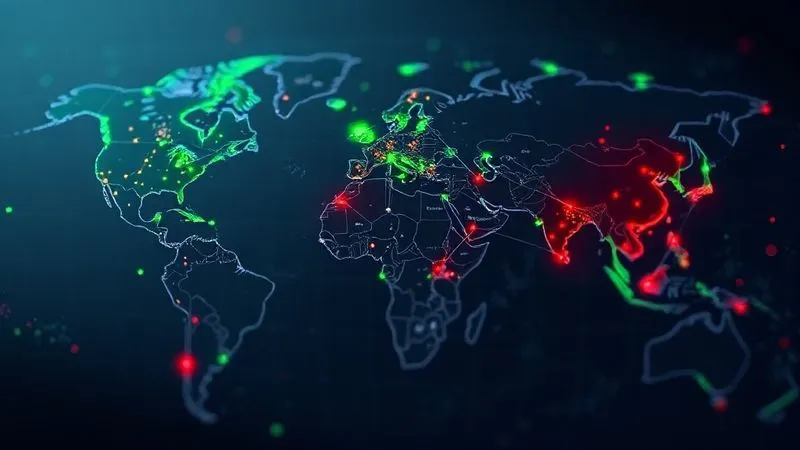
For instance, if your supply chain was heavily impacted, consider a 'regionalization' strategy, sourcing from multiple geographic areas to reduce exposure to localized disruptions. Deloitte's insights on operational resilience frequently highlight the importance of supply chain diversification.
Phase 4: Monitoring, Adaptation, and Continuous Improvement
Risk management is not a one-time event, especially not post-crisis. The operational environment remains dynamic, and new risks can emerge as quickly as old ones are mitigated. Continuous monitoring, adaptation, and a commitment to improvement are crucial for sustaining resilience.
I've observed that organizations that treat risk management as an ongoing process, embedded in their daily operations, are the ones that truly thrive in volatile times. It's about establishing a feedback loop that constantly refines your understanding and response to risk.
Case Study: How Apex Logistics Rebounded Stronger
Apex Logistics, a mid-sized freight forwarding company, faced a severe crisis when a major port closure crippled their primary shipping lanes. Their initial operational risk assessment revealed heavy reliance on a single port and limited alternative routes.
By implementing a continuous monitoring strategy, they established new KRIs for port congestion, geopolitical stability in shipping regions, and alternative route availability. They then used this data to adapt their shipping matrix, proactively rerouting containers through secondary ports even before official closures were announced. This resulted in a significant reduction in transit delays and demurrage fees, ultimately improving customer satisfaction by 20% within six months. This continuous adaptation allowed them to emerge stronger, having diversified their routes and built a more agile logistics network.
Regularly review your risk register. What new risks have emerged? Have the likelihood or impact of existing risks changed? Are your mitigation strategies still effective, or do they need to be updated? This iterative process ensures your operational resilience evolves with your environment.

The Human Element: Cultivating a Risk-Aware Culture
No amount of technology or process re-engineering can fully compensate for a lack of human awareness and accountability. The human element is often the weakest link, but it can also be your strongest defense against operational risks. Cultivating a robust risk-aware culture is paramount.
I've seen organizations with excellent systems fail because their employees didn't understand their role in risk management, or worse, felt penalized for reporting potential issues. Trust and transparency are the bedrock of an effective risk culture.
Leadership's Role in Post-Crisis Operational Risk Management
Leadership sets the tone. Their commitment to operational risk management must be visible and consistent. This involves:
- Clear Communication: Articulate the importance of risk awareness, the organization's risk appetite, and the channels for reporting concerns.
- Training & Education: Provide regular training on identifying, reporting, and mitigating operational risks relevant to each employee's role.
- Empowerment & Accountability: Empower employees to take ownership of risks within their purview and hold them accountable for adherence to risk protocols.
- Reward & Recognition: Acknowledge and reward proactive risk identification and mitigation efforts, rather than just focusing on outcomes.
As marketing guru Seth Godin often says, "The market rewards generosity, connection, and art." In the context of risk, this translates to a culture where information flows freely, employees feel connected to the organizational mission, and proactive risk management is seen as a form of 'art'—a creative solution to complex challenges.
Technological Enablers: Tools for Advanced Risk Oversight
While human insight is irreplaceable, technology can significantly enhance your ability to assess and reduce critical operational risks post-crisis. Modern tools offer capabilities that were unimaginable a decade ago, providing real-time visibility, predictive analytics, and automated reporting.
From my perspective, the right technology isn't just about efficiency; it's about enabling a deeper, more proactive understanding of your operational health. It allows you to move from reactive firefighting to predictive prevention.
Consider integrating various platforms to create a holistic risk management ecosystem:
- Enterprise Risk Management (ERM) Software: Centralizes risk registers, assessment data, and mitigation plans across the organization.
- Business Continuity Management (BCM) Software: Helps manage and test continuity plans, recovery procedures, and crisis communication.
- Supply Chain Visibility Platforms: Provides real-time tracking of goods, supplier performance, and potential disruptions.
- Cybersecurity Analytics & Threat Intelligence: Monitors network traffic, identifies vulnerabilities, and provides early warnings of cyber threats.
- Predictive Analytics & AI Tools: Analyzes vast datasets to forecast potential operational failures, equipment breakdowns, or demand fluctuations.
Here's a comparison of common tools and their primary benefits:
| Tool Category | Primary Benefit | Post-Crisis Utility |
|---|---|---|
| ERM Software | Centralized risk data & reporting | Holistic risk overview, tracking mitigation |
| BCM Software | Plan management & testing | Rapid activation of recovery protocols |
| Supply Chain Visibility | Real-time tracking & alerts | Identify bottlenecks, find alternative routes |
| Cybersecurity Analytics | Threat detection & prevention | Protecting vulnerable digital assets |
| Predictive Analytics | Forecasting potential failures | Proactive intervention, resource optimization |
Implementing these tools requires careful planning and integration, but the long-term benefits in enhanced operational resilience and reduced risk exposure are undeniable. Adhering to international standards like ISO 31000 for risk management can provide a robust framework for integrating these technologies effectively.

Frequently Asked Questions (FAQ)
Q: How quickly should we initiate a post-crisis operational risk assessment? A: Immediately after the crisis's peak impact subsides and basic business continuity is re-established. Delaying this assessment can lead to missed opportunities for proactive mitigation and expose your organization to secondary failures. The 'Urgent' in 'Urgent: How to assess and reduce critical operational risks post-crisis?' isn't just a keyword; it's a critical timeline.
Q: What's the biggest mistake companies make in managing post-crisis operational risks? A: The most common mistake is focusing solely on restoring pre-crisis operations without fundamentally reassessing the altered risk landscape. This 'return to normal' mentality often ignores new vulnerabilities and changed interdependencies, leaving the organization exposed to future shocks.
Q: How can small businesses with limited resources effectively manage operational risks post-crisis? A: Small businesses should prioritize. Focus on the 20% of risks that could cause 80% of the damage. Leverage free or low-cost tools for basic risk registers (spreadsheets), cross-train employees, and build strong relationships with diversified local suppliers. Community support and agile decision-making are key assets for smaller enterprises.
Q: Is it possible to completely eliminate operational risks after a crisis? A: No, completely eliminating operational risks is an unrealistic goal. The objective is to identify, assess, and mitigate the most critical risks to an acceptable level, building resilience and adaptability into your operations. The focus is on managing, not eradicating, risk.
Q: How often should we review our operational risk management framework post-crisis? A: Initially, reviews should be frequent—weekly or bi-weekly—as the environment stabilizes. Once a new steady state is achieved, a quarterly review is a good cadence, alongside ad-hoc reviews whenever significant operational changes or external events occur. Continuous monitoring of KRIs is essential between formal reviews.
Key Takeaways and Final Thoughts
Navigating the turbulent waters of a post-crisis environment demands more than just recovery; it requires a strategic re-evaluation of your entire operational risk posture. As an experienced industry specialist, I cannot stress enough the importance of moving beyond reactive measures to proactive resilience building.
- Act with Urgency, but with Structure: Don't confuse speed with recklessness. A systematic approach, even when fast-tracked, yields better results.
- Embrace Data & Analytics: Let data drive your decisions, from identifying KRIs to stress-testing scenarios.
- Build Redundancy & Flexibility: Design your operations to absorb shocks, not just withstand them.
- Cultivate a Risk-Aware Culture: Empower your people; they are your first line of defense and your most valuable asset.
- Leverage Technology Wisely: Integrate tools that provide visibility, predictive power, and automation.
The journey to operational resilience post-crisis is challenging, but it is also an unparalleled opportunity for transformation. By diligently following these steps to assess and reduce critical operational risks post-crisis, your organization can not only survive but truly thrive, emerging stronger, more adaptable, and better prepared for whatever the future may hold. The time to act is now.
Recommended Reading
- 5 Pillars to Prevent New Operations System Design Failures & Disruptions
- Tackling Child Labor: 7 Strategies for Complex Global Supply Chains
- Unlock USMCA Savings: 7 Steps to Leverage Rules of Origin
- Unlock Excellence: Improve Service Delivery in Operations Management
- Unlock Open Innovation ROI: 5 Strategies for Skeptical Executive Boards





Comments
Leave a comment below. Your email will not be published. Required fields marked with *