


What if IT consultant's solution fails post-implementation?
For over 20 years in IT consulting, I've witnessed firsthand the profound impact technology solutions can have on a business. I've also seen the crushing disappointment when a highly anticipated, costly IT consultant's solution fails to deliver post-implementation. It's a scenario no one wants to face, yet it's surprisingly common, leaving organizations scrambling, budgets drained, and trust eroded.
The immediate aftermath can feel like a crisis: productivity dips, user frustration mounts, and the strategic advantages promised by the new system vanish into thin air. You might question every decision, every dollar spent, and the expertise you hired. It’s a significant pain point that can stall progress and even threaten an organization's competitive edge.
But here's the critical insight I've gained: failure post-implementation isn't always the end. It's often a critical juncture, an opportunity to learn, adapt, and ultimately build a more resilient IT strategy. In this definitive guide, I'll share my battle-tested frameworks, actionable steps, and expert insights to help you not just recover, but transform a failed IT solution into a springboard for future success. We'll delve into root cause analysis, stakeholder re-engagement, remediation blueprints, and how to hold consultants accountable, ensuring you emerge stronger.
The Immediate Aftermath: Recognizing the Red Flags
When an IT solution falters post-implementation, the first step is often the hardest: admitting there's a problem. In my experience, organizations often try to 'power through' or minimize issues, hoping they'll resolve themselves. This is a critical mistake. Early detection and honest assessment are paramount.
What are the red flags? They can range from subtle to glaring:
- User Frustration: High volume of support tickets, vocal complaints, workarounds emerging.
- Performance Degradation: System slowdowns, frequent crashes, data inconsistencies.
- Missed KPIs: The solution isn't delivering on the agreed-upon metrics (e.g., efficiency gains, cost savings, improved data accuracy).
- Low Adoption: Users are avoiding the new system, sticking to old methods, or finding it too complex.
- Integration Headaches: The new system isn't communicating effectively with existing platforms.
"The first rule of successful IT project recovery is to stop digging. Acknowledge the problem, however uncomfortable, and then pivot to diagnosis." – An Industry Veteran's Mantra
Beyond Blame: Root Cause Analysis and Diagnostic Frameworks
Once you've acknowledged the problem, the next crucial step is to understand *why* the solution failed. This isn't about pointing fingers at the IT consultant, but about a systematic, objective investigation. I've seen countless post-mortems devolve into blame games, which helps no one. Focus on facts, data, and processes.
Implementing a 5 Whys Analysis
One of the simplest yet most effective tools is the 5 Whys analysis. It helps you drill down to the underlying causes by repeatedly asking 'Why?' For example:
- Problem: Users aren't adopting the new CRM.
- Why? (1) They find it too complex.
- Why? (2) The training provided was insufficient and generic.
- Why? (3) The consultant assumed a higher level of technical proficiency and didn't customize training for our specific use cases.
- Why? (4) Our internal team didn't adequately review the training plan or provide specific user profiles.
- Why? (5) Project management lacked a robust user acceptance testing (UAT) phase focused on real-world scenarios.
This reveals a multi-faceted problem, not just 'bad training' but a systemic oversight in project planning and UAT.
The Ishikawa (Fishbone) Diagram
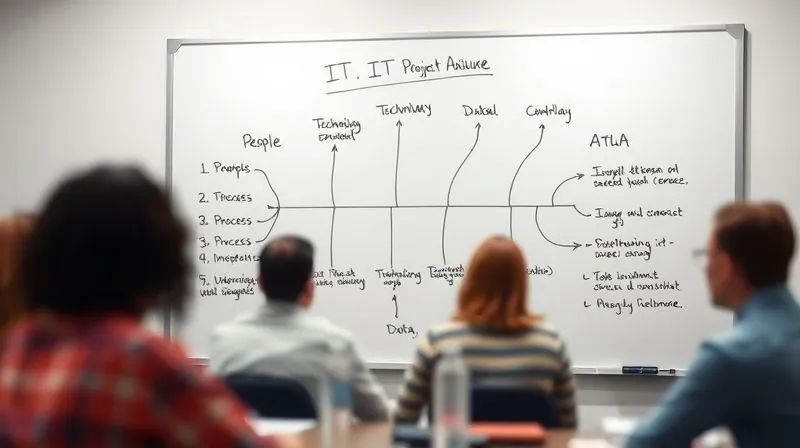
For more complex failures, an Ishikawa or Fishbone diagram can be invaluable. It categorizes potential causes into main branches like People, Process, Technology, Environment, and Data. This structured approach ensures no stone is left unturned.
Key Areas to Investigate:
- Requirements Gathering: Were the initial requirements clear, comprehensive, and accurately translated into the solution design?
- Solution Design & Architecture: Was the technical solution sound, scalable, and appropriate for your business needs and existing infrastructure?
- Implementation & Configuration: Were there errors in deployment, configuration, or data migration?
- Testing & Quality Assurance: Was testing thorough, covering all critical functionalities and user scenarios?
- Change Management & Training: Was there adequate preparation, communication, and training for end-users?
- Project Management: Were timelines, resources, and scope managed effectively?
- Stakeholder Engagement: Were key stakeholders consistently involved and aligned throughout the project lifecycle?
Re-Engaging Stakeholders: Rebuilding Trust and Alignment
A failed IT solution inevitably erodes trust – between the business and IT, between internal teams, and with the external consultant. Rebuilding this trust is paramount for any recovery effort.
Transparent Communication and Active Listening
Start with radical transparency. Acknowledge the failure openly and honestly. Communicate the findings from your root cause analysis without assigning blame. Instead, focus on shared understanding and a path forward.
- Hold Stakeholder Workshops: Bring together key business leaders, IT, and end-users. Facilitate open discussions about their pain points, what's not working, and their vision for a successful solution.
- Establish a Communication Cadence: Regular updates, even if there's no major news, demonstrate commitment and progress.
- Listen Actively: Don't just present; truly listen to concerns, suggestions, and frustrations. Validate their experiences.
As marketing guru Seth Godin often says, "People rarely buy what you do; they buy why you do it." In this context, stakeholders need to buy into *why* you're fixing the problem and *how* it will benefit them.
Case Study: How InnovateTech Salvaged a CRM Rollout
InnovateTech, a rapidly growing SaaS company, invested heavily in a new CRM solution, only to find sales teams reverting to spreadsheets post-launch. User adoption was below 20%. My team was brought in to assess the damage.
Our root cause analysis revealed that while the system was technically sound, the initial implementation overlooked crucial sales workflows and offered only generic training. Sales reps felt the system was slowing them down, not helping them.
We immediately launched a series of 'CRM Re-Engagement' workshops. Instead of telling sales what they should do, we asked them to demonstrate their current workflows and identify specific pain points with the new system. We then worked with the original consultant (who was brought back in with a revised scope) to customize the CRM interface and develop targeted training modules that directly addressed these pain points, incorporating their language and real-world scenarios.
Within three months, adoption climbed to 85%, and sales reported a 15% increase in lead conversion efficiency, directly attributable to the tailored CRM experience. This resulted from re-establishing trust and actively involving the sales team in the solution's refinement.
The Remediation Blueprint: Crafting an Actionable Recovery Plan
With a clear understanding of the root causes and re-engaged stakeholders, it's time to build a detailed remediation blueprint. This isn't just a fix; it's a strategic plan to get the project back on track and ensure long-term success.
Developing a Phased Recovery Strategy
A comprehensive recovery plan typically involves several phases:
- Immediate Stabilization: Address critical bugs, performance issues, or data integrity problems that are causing the most disruption. This might involve temporary workarounds while permanent fixes are developed.
- Solution Re-design/Configuration: Based on root cause analysis and stakeholder feedback, make necessary adjustments to the solution's configuration, workflows, or even architecture.
- Enhanced Training & Change Management: Develop targeted training programs, user guides, and ongoing support mechanisms. Appoint internal 'champions' to advocate for the system.
- Phased Re-rollout/Adoption: If the initial launch was a complete failure, consider a phased re-rollout to a smaller group of users, incorporating lessons learned before a broader deployment.
- Ongoing Monitoring & Optimization: Establish continuous monitoring of KPIs and user feedback channels to ensure the solution performs as expected and evolves with business needs.
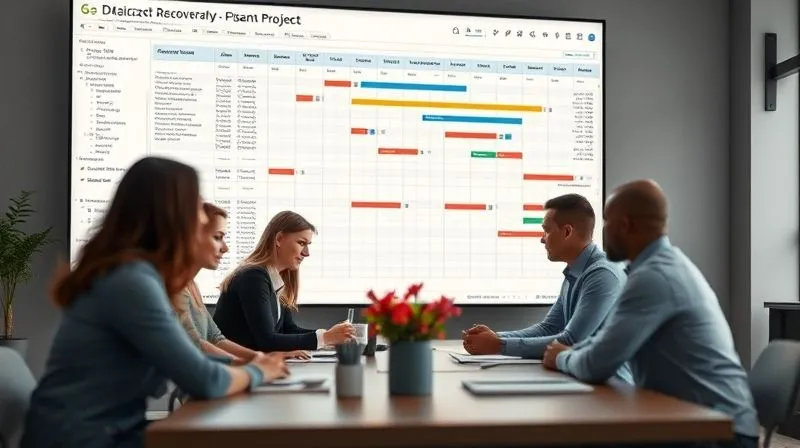
This phased approach allows for incremental wins, rebuilding confidence and momentum. Each phase should have clear objectives, deliverables, and success metrics.
Here's a sample framework for a remediation plan, highlighting key areas:
| Phase | Focus Areas | Key Activities | Duration |
|---|---|---|---|
| 1. Stabilization | Critical bug fixes, performance tuning, data integrity | Hotfixes, temporary workarounds, emergency data cleanse | 2-4 weeks |
| 2. Re-design & Refine | Requirements alignment, workflow customization, integration re-work | Stakeholder workshops, configuration changes, API adjustments | 4-8 weeks |
| 3. Re-enablement | User training, documentation, support structure | Customized training modules, user guides, helpdesk setup | 3-6 weeks |
| 4. Monitor & Optimize | Performance, adoption, continuous improvement | KPI tracking, feedback loops, feature enhancements | Ongoing |
Navigating Vendor & Consultant Accountability: Legal and Ethical Considerations
When an IT consultant's solution fails post-implementation, the question of accountability inevitably arises. This is a delicate area that requires a balanced approach – focusing on resolution while protecting your organization's interests.
Reviewing Contracts and SLAs
The first step is to meticulously review your contract with the IT consultant. Look for clauses related to:
- Scope of Work (SOW): Was the delivered solution within the agreed-upon scope? Were there deviations?
- Deliverables: Were all deliverables met to the specified quality standards?
- Performance Guarantees: Did the contract include any performance metrics or uptime guarantees that were breached?
- Warranty Periods: What is the warranty period for bug fixes and defects?
- Escalation Procedures: What are the agreed-upon steps for resolving disputes or performance issues?
- Termination Clauses: Under what conditions can the contract be terminated?
Understanding these contractual obligations forms the basis of your discussions. It's not about being adversarial initially, but about being informed.
Constructive Engagement vs. Legal Action
In my experience, the best path forward is usually constructive engagement. Approach the consultant with the findings from your root cause analysis. Present the facts, the impact on your business, and propose a collaborative remediation plan.
- Seek a Joint Resolution: Can the consultant contribute to the remediation efforts, perhaps at a reduced rate or for free, as part of their commitment to client satisfaction?
- Negotiate Remediation Terms: If additional work is required, can you negotiate favorable terms for the consultant's involvement?
- Document Everything: Maintain a clear, written record of all communications, issues, and agreed-upon actions.
Legal action should generally be a last resort, as it's often costly, time-consuming, and can damage reputations. However, if the consultant is unwilling to cooperate, or if there's a clear breach of contract with significant financial implications, seeking legal counsel may be necessary. For guidance on vendor management best practices, resources like the Harvard Business Review offer valuable insights into managing complex supplier relationships.
Strategic Change Management: Ensuring Adoption and Sustainability
A technically perfect solution is useless if users won't adopt it. This is where strategic change management becomes critical, especially after an initial failure where user trust is low. It’s about winning hearts and minds, not just deploying software.
Beyond Training: Fostering a Culture of Adoption
True adoption goes far beyond a one-off training session. It requires a continuous, multi-faceted approach:
- Executive Sponsorship: Strong, visible support from leadership is crucial. Leaders must articulate *why* the solution is important and model its use.
- User-Centric Design & Feedback Loops: Involve end-users in the remediation and refinement process. Their input is invaluable. Establish clear channels for ongoing feedback.
- Tailored Training & Support: Move away from generic training. Develop role-specific modules, micro-learning resources, and accessible support (e.g., dedicated helpdesk, internal champions).
- Incentivize Adoption: Consider gamification, recognition programs, or linking system proficiency to performance reviews.
- Communicate Value: Continuously highlight how the solution is improving their work, not just what it does. Show them the 'WIIFM' (What's In It For Me).
Successful change management isn't a project phase; it's an ongoing process. Gartner research consistently highlights change management as a top factor in IT project success, and its absence a major contributor to failure.
Measuring Success (Again): Defining New KPIs and Monitoring Progress
After a post-implementation failure, simply getting the system to 'work' isn't enough. You need to redefine what success looks like and establish robust mechanisms to track it. This helps validate your recovery efforts and ensures ongoing value.
Revisiting Key Performance Indicators (KPIs)
Go back to the drawing board with your stakeholders and redefine the KPIs. These should be specific, measurable, achievable, relevant, and time-bound (SMART).
- User Adoption Rate: Number of active users / Total potential users.
- System Uptime & Performance: Percentage of time the system is operational and response times.
- Support Ticket Volume & Resolution Time: Reduction in tickets related to the system, and faster resolution.
- Process Efficiency Gains: Measured time savings, reduced errors, or improved throughput.
- Data Quality & Accuracy: Reduction in data entry errors or inconsistencies.
- Business Impact: Direct correlation to revenue growth, cost savings, or customer satisfaction.
It's crucial to establish a baseline before remediation begins, so you can clearly demonstrate the impact of your recovery efforts. Regularly report these KPIs to all stakeholders, celebrating incremental successes.

Building Resilience: Lessons Learned and Future-Proofing Your IT Initiatives
The experience of an IT consultant's solution failing post-implementation, while painful, is an invaluable learning opportunity. It forces a critical examination of processes, partnerships, and internal capabilities. The goal isn't just to fix the current problem, but to build organizational resilience against future failures.
Conducting a Thorough Post-Mortem and Documentation
Once the solution is stabilized and performing, conduct a final, comprehensive post-mortem. This goes beyond the initial root cause analysis. It's about documenting:
- What went wrong: A detailed account of all identified issues.
- Why it went wrong: The root causes uncovered.
- What we did to fix it: The complete remediation plan and actions taken.
- What we learned: Key insights into process improvements, vendor selection, project management, and change management.
- Recommendations for the future: Concrete steps to prevent similar failures.
This documentation becomes a critical asset for future projects, forming a knowledge base that informs best practices and risk mitigation strategies. Share these lessons across the organization, making them part of your corporate memory.
Strengthening Internal Capabilities and Vendor Selection
The experience should also prompt a review of your internal IT capabilities and your approach to vendor selection. Consider:
- Internal Skill Gaps: Do you have the right talent internally to manage complex IT projects, oversee consultants, and support new systems?
- Project Governance: Are your project management methodologies robust enough? Do you have clear roles, responsibilities, and escalation paths?
- Consultant Vetting: How rigorous is your due diligence process for selecting IT consultants? Are you checking references, verifying expertise, and assessing cultural fit?
- Contract Management: Are your contracts comprehensive, clear, and protective of your interests?
By investing in these areas, you transform a negative experience into a catalyst for organizational growth and a stronger, more resilient IT ecosystem. Remember, the best defense against future failures is a strong offense built on lessons learned and continuous improvement. For further insights on IT governance and risk management, explore resources from leading IT research firms like Gartner.
Frequently Asked Questions (FAQ)
Question? How can I ensure my IT consultant takes responsibility for a failed solution?
Answer: The best approach is to start with a thorough internal root cause analysis, backed by data. Then, engage the consultant with these findings, referencing specific clauses in your contract regarding deliverables, performance, and warranties. Focus on a collaborative remediation plan first. If they are unwilling to cooperate, and you have clear contractual breaches, then legal counsel might be necessary, but always prioritize resolution over confrontation initially. Document all communications meticulously.
Question? What if the consultant has already been paid and is no longer responsive?
Answer: This is a challenging situation. Your immediate focus must shift to internal recovery. Review your contract for any post-payment support or warranty clauses. If none exist, or they are non-responsive, you'll need to allocate internal resources or engage a new, trusted third-party expert to diagnose and remediate the issues. Consider this a hard lesson in stricter payment terms tied to successful milestones and robust post-implementation support agreements for future engagements.
Question? How do I rebuild internal team morale after a high-profile IT solution failure?
Answer: Transparency and empathy are key. Acknowledge the frustration and the impact on your teams. Share the findings from your root cause analysis openly, focusing on what was learned, not who was to blame. Involve the teams in the remediation planning. Celebrate small wins during the recovery process. Most importantly, ensure that the new solution (or the fixed one) genuinely improves their work lives, delivering on its initial promise. Visible executive support and clear communication of progress are also vital.
Question? Is it always the consultant's fault if a solution fails post-implementation?
Answer: Rarely is it 100% one party's fault. My experience shows that failures are often a confluence of factors: unclear requirements from the client, inadequate change management, poor communication, insufficient internal resources, or a consultant's technical missteps. A thorough root cause analysis, as discussed, will reveal the contributing factors from both sides, enabling a fair assessment and a more effective recovery. Blaming solely the consultant often prevents the organization from learning its own critical lessons.
Question? How long should a recovery plan for a failed IT solution typically take?
Answer: The duration varies significantly based on the complexity of the original solution, the severity of the failure, and the resources available for remediation. Immediate stabilization could take weeks, while a full re-design, re-training, and re-adoption phase could stretch over several months. It's crucial to set realistic timelines, communicate them clearly, and manage expectations. Prioritize critical fixes first to stop the bleeding, then work on systemic improvements.
Key Takeaways and Final Thoughts
- Act Swiftly, Analyze Deeply: Don't ignore red flags. Conduct a thorough, blame-free root cause analysis to understand the 'why' behind the failure.
- Re-Engage & Rebuild Trust: Transparent communication and active listening are crucial for winning back stakeholders and fostering collaboration.
- Craft a Strategic Blueprint: Develop a phased, actionable remediation plan with clear objectives, deliverables, and success metrics.
- Hold Accountable, Collaboratively: Understand your contractual rights and engage consultants constructively to find a joint path to resolution.
- Prioritize Change Management: A technically sound solution needs robust, user-centric change management to ensure adoption and sustained value.
- Measure & Learn Continuously: Redefine success KPIs, monitor progress, and use every failure as a learning opportunity to build organizational resilience.
Facing a failed IT consultant's solution post-implementation can feel like a significant setback. However, with the right mindset, a structured approach, and a commitment to learning, it can transform into an opportunity. By following the steps I've outlined, you can not only recover lost ground but also emerge with a stronger, more resilient IT strategy and a deeper understanding of what it takes to drive true digital transformation. The journey might be challenging, but the lessons learned will be invaluable for your organization's future success.
Recommended Reading
- Stop the Leak: 7 Strategies to Cut Post-Sale Churn from Unresolved Issues
- 9 Proactive Strategies: Preventing Union Organizing Drives in Your Non-Union Workplace
- 7 Steps: Transform Vague Vision into Actionable Strategic Goals
- How to Overcome Founder Burnout While Scaling: 7 Essential Steps
- 7 Steps: How to Build Team Resilience After Project Failure?





Comments
Leave a comment below. Your email will not be published. Required fields marked with *