


What to do when franchise unit economics don't match projections?
For over two decades in the franchising world, I've witnessed the full spectrum of emotions that come with owning and operating a franchise. Among the most gut-wrenching experiences is the realization that your carefully constructed business plan, those optimistic projections, simply aren't materializing in your unit's actual performance. It's a common, often isolating, challenge that can quickly erode confidence and financial stability.
This isn't just about missing a target; it's about the very foundation of your franchise's viability. The discrepancy between projected and actual unit economics can stem from a myriad of factors – some within your control, others external. It can lead to cash flow issues, operational stress, and a constant battle against underperformance, leaving many franchisees feeling overwhelmed and unsure of their next move.
But I'm here to tell you that this situation, while challenging, is rarely insurmountable. This article will provide you with a definitive, expert-led framework to diagnose, recalibrate, and ultimately revitalize your franchise unit's financial health. We'll delve into actionable strategies, real-world insights, and a structured approach to not just fix the immediate problem, but to build a more resilient and profitable future for your business.
The Core Challenge: Why Projections Go Awry
Understanding why your franchise unit economics don't match projections is the critical first step. It's rarely a single, glaring error; more often, it's a confluence of subtle shifts and overlooked details. From my vantage point, these discrepancies typically fall into two broad categories: flaws in initial assumptions or gaps in execution.
Market conditions can shift rapidly, impacting everything from customer demand to supply chain costs. Operational inefficiencies, if left unchecked, can quietly bleed profitability. Sometimes, the initial due diligence might have been incomplete, or the franchisor's projections, while well-intentioned, didn't fully account for specific local market nuances or unexpected start-up costs. Identifying the root cause requires a forensic approach, digging deep into every aspect of your business model.
Initial Assumption Flaws vs. Execution Gaps
It’s vital to distinguish between these two fundamental issues. Initial assumption flaws mean that the underlying model or the environmental factors you based your projections on were incorrect from the start. Perhaps the market size was overestimated, or the competitive landscape underestimated. Maybe the cost of goods sold (COGS) in your specific region was higher than the franchisor's average, or labor costs were impacted by local minimum wage laws that weren't factored in.
On the other hand, execution gaps imply that your initial assumptions were sound, but the day-to-day operation isn't performing as expected. This could be due to poor management, inefficient processes, inadequate marketing execution, or a failure to adapt to minor market changes. For instance, if your projected customer acquisition cost was accurate but your conversion rate is significantly lower than anticipated, that's an execution gap. Understanding which category (or combination) your issues fall into will dictate your remedial strategy.
Phase 1: Deep Dive Diagnostics – Unearthing the Discrepancies
Before you can fix anything, you must understand precisely what's broken and why. This phase is about rigorous, data-driven investigation. Forget guesswork; we're looking for facts and figures that reveal the true story of your unit's performance.
1. Revisit Your Initial Business Plan & Assumptions
The first step in any diagnostic process is to go back to the blueprint. Your original business plan and the franchisor's disclosure document (FDD) financial performance representations are your baseline. Don't just skim them; dissect them.
- Review Original Projections: Pull out every financial projection you made or were provided with. This includes revenue forecasts, COGS, labor costs, occupancy costs, marketing spend, and any other significant line items.
- Identify Key Variables: What were the critical assumptions underpinning these projections? Was it a certain average transaction value, a specific number of customers per day, a particular labor efficiency ratio, or a fixed percentage for marketing? List them out.
- Compare to Actuals: Create a side-by-side comparison of your projected figures against your actual performance for the same period. Highlight every single variance, no matter how small. Look for patterns in these variances – are they consistently higher or lower than expected?
2. Conduct a Granular P&L Analysis
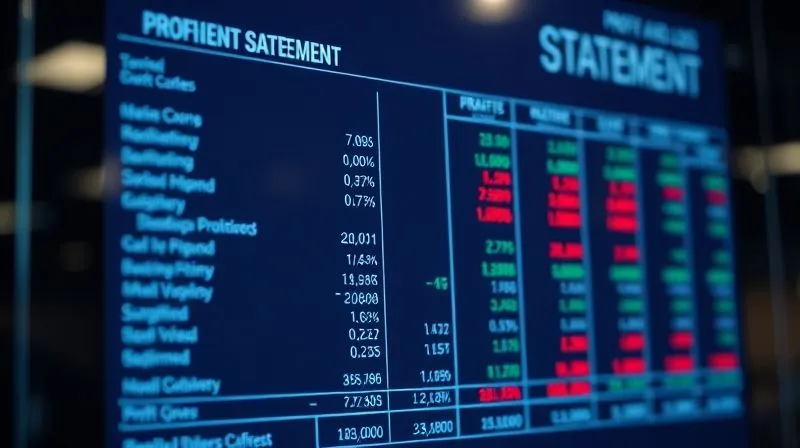
Your Profit & Loss (P&L) statement is the heartbeat of your business. A surface-level review isn't enough; we need to perform a surgical analysis to pinpoint exactly where money is being lost or where revenue isn't meeting expectations.
- Break Down Revenue Streams: If your franchise has multiple revenue streams (e.g., product sales, service fees, ancillary offerings), analyze each one individually. Is one underperforming more than others? Could one be optimized?
- Categorize All Expenses: Go beyond broad categories. Break down COGS by individual product components, analyze labor costs by shift or role, and scrutinize every recurring expense. Are there 'phantom' costs or subscriptions you're paying for but not utilizing?
- Analyze COGS, Labor, and Rent: These three are often the largest expense categories for most franchises. Compare your actual COGS percentage to industry benchmarks and your initial projections. Is your labor efficiency (sales per labor hour, or labor cost as a percentage of revenue) where it should be? Is your rent percentage sustainable given your current revenue?
This detailed P&L review often reveals surprising insights. I once worked with a coffee shop franchisee who realized their 'free samples' were costing them more than their marketing budget, significantly impacting their COGS percentage. It's these granular details that often hold the key to unlocking profitability.
3. Analyze Key Performance Indicators (KPIs) Beyond Financials
Financial statements tell you *what* happened, but operational KPIs explain *why*. These non-financial metrics are crucial for understanding the underlying health of your business and identifying execution gaps that directly impact your P&L.
Think about the operational drivers of your revenue and costs. For example, a lower-than-projected average transaction value (ATV) could indicate a problem with upselling or product mix. A high labor cost percentage might be due to low employee productivity or excessive overtime, not necessarily high wages.
- Conversion Rates: How many inquiries or walk-ins convert into actual sales?
- Average Transaction Value (ATV): How much does each customer spend on average?
- Customer Retention Rate: Are customers coming back, or is your business a 'one-and-done' experience?
- Labor Productivity: Sales generated per labor hour, or tasks completed per employee.
- Inventory Turnover: How efficiently are you managing your stock?
- Customer Satisfaction Scores (CSAT/NPS): Unhappy customers rarely become repeat customers.
"The numbers tell a story, but only if you know how to read between the lines of your P&L and operational data. Don't just see the variance; understand its root cause."
Phase 2: Strategic Recalibration – Actionable Steps for Course Correction
Once you've diagnosed the issues, it's time to act decisively. This phase focuses on implementing targeted strategies to improve both your top-line revenue and your bottom-line profitability. Remember, marginal gains across several areas often lead to significant overall improvement.
1. Optimize Revenue Streams
Boosting revenue isn't always about attracting more customers; it's often about maximizing the value from your existing customer base and refining your sales process. This requires a multi-pronged approach.
- Marketing & Sales Funnel Review: Analyze your entire customer journey. Where are prospects dropping off? Is your marketing message clear and compelling? Are your sales staff effectively converting leads? Consider A/B testing different offers or calls-to-action.
- Pricing Strategy Adjustment: Are you priced competitively, or are you leaving money on the table? This isn't just about raising prices; it could mean introducing premium options, bundles, or loyalty programs. Understand your value proposition and price accordingly. According to a study published in the Harvard Business Review, even a 1% improvement in price can lead to an 11% increase in operating profit.
- Upselling/Cross-selling Opportunities: Train your staff to identify opportunities to upsell (e.g., larger size, premium version) or cross-sell (e.g., complementary products/services). This can significantly increase your Average Transaction Value (ATV) without increasing customer count.
2. Cost Control and Operational Efficiency
While revenue growth is exciting, controlling costs is often the fastest path to improved profitability. This doesn't mean slashing indiscriminately; it means optimizing processes and negotiating smarter.
- Vendor Negotiation: Revisit all your supplier contracts. Can you negotiate better terms, bulk discounts, or explore alternative suppliers? Even a small percentage reduction in COGS can have a massive impact on your bottom line.
- Labor Optimization: This is often the largest controllable expense. Analyze staffing levels against peak and off-peak hours. Can you implement cross-training to improve flexibility? Are there tasks that can be automated or streamlined? Focus on maximizing productivity per labor hour.
- Technology Integration: Invest in technology that can reduce labor costs, improve inventory management, or enhance customer experience. This could be anything from a more efficient POS system to automated scheduling software or customer self-service kiosks.
- Waste Reduction: Whether it's food waste in a restaurant, excess inventory in retail, or inefficient energy consumption, waste directly impacts profitability. Implement strict inventory controls, train staff on portion control, and audit utility usage.
Case Study: "The Coffee Bean Dilemma"
I once consulted with a franchisee, 'Sarah,' who owned a popular coffee shop in a bustling urban center. Her sales were strong, often exceeding projections, yet her profit margins were consistently 5-7% below what she had planned. Her P&L analysis revealed an unusually high Cost of Goods Sold (COGS), specifically related to her main ingredient: coffee beans.
Upon investigation, we found two primary issues. First, her original bean supplier, while high-quality, was charging a premium that was no longer competitive. Second, her staff, while well-intentioned, had inconsistent pouring techniques and often over-portioned espresso shots, leading to significant waste over time.
We implemented a two-pronged strategy: Sarah successfully negotiated a new contract with an alternative, equally high-quality supplier, securing a 15% reduction in bean cost. Simultaneously, we introduced a rigorous training program for her baristas on precise portion control and waste monitoring. Within three months, her COGS percentage dropped by 4%, bringing her unit economics back in line with projections and significantly boosting her net profit. This demonstrated that even with strong revenue, profitability can be eroded by unoptimized costs.
| Cost Category | After Optimization | Impact |
|---|---|---|
| Before Optimization | $0.40/cup | 20% Reduction |
| $0.50/cup | 2.0 min/order | 20% Improvement |
| 2.5 min/order | 3% of inventory | 70% Reduction |
| 10% of inventory |
3. Review and Adjust Your Marketing & Sales Strategy
Your marketing and sales efforts are the engine of your revenue. If your unit economics aren't matching projections, it's crucial to reassess if your current strategy is effectively reaching your target audience and driving profitable sales. Are you spending money on channels that aren't delivering a strong ROI? Are you missing opportunities to connect with potential customers?
Consider these aspects: target audience (has it shifted or were your initial assumptions incorrect?), marketing channels (are you effectively using digital, local, and traditional channels?), messaging (is your unique selling proposition clear and compelling?), and most importantly, the ROI of your campaigns. Don't just spend; invest. Track every marketing dollar to ensure it's generating a positive return. For deeper insights on refining your approach, consider exploring resources like this article on The New Rules of Marketing from Harvard Business Review, which emphasizes adaptability and data-driven decisions.
Phase 3: Franchisee-Franchisor Collaboration & Support
One of the most significant advantages of franchising is the built-in support system. When unit economics don't match projections, leveraging your franchisor's experience and resources is not just an option; it's a critical strategy. You are not alone in this challenge.
1. Open Communication Channels
Too often, franchisees facing difficulties hesitate to communicate openly with their franchisor, fearing judgment or punitive action. My experience dictates the opposite: transparency builds trust and facilitates solutions. Schedule a meeting with your franchisor representative (e.g., your Franchise Business Consultant or Operations Manager). Come prepared with your detailed diagnostics (P&L analysis, KPI variances, proposed solutions). Presenting data and a proactive plan demonstrates your commitment and professionalism.
Discuss the discrepancies you've identified. Ask for their insights. They have a broader view across the entire system and may have encountered similar challenges in other units. Their perspective can be invaluable, offering solutions you might not have considered or validating your own findings.
2. Franchisor Support & Resources
Franchisors often have a wealth of resources designed to support their franchisees, especially during challenging times. These can include:
- Additional Training: For you or your staff, focusing on operational efficiency, sales techniques, or customer service.
- Marketing Fund Allocation: Specific support or co-op marketing initiatives for underperforming units.
- Operational Guidance: Best practices, updated manuals, or even on-site visits from operations experts.
- Purchasing Power: Leveraging system-wide volume to secure better vendor terms that you might not achieve individually.
- Peer Network: Connecting you with other successful franchisees who have overcome similar challenges.
Don't be afraid to ask for help. A strong franchisor understands that your success is their success. For more on the importance of this relationship, explore studies on franchisee satisfaction and support, such as those often featured by the International Franchise Association (IFA).
"In franchising, your success is intrinsically linked to the strength of your partnership. Leverage the franchisor's expertise; they've likely seen similar challenges before and possess the system-wide data to guide you."
Phase 4: Long-Term Sustainability & Future-Proofing
Addressing immediate discrepancies in unit economics is crucial, but true success lies in building a resilient business model that can adapt and thrive long-term. This phase is about establishing practices that ensure continuous improvement and safeguard against future misalignments.
1. Continuous Monitoring & Iteration
The diagnostic and recalibration process isn't a one-time event; it's an ongoing discipline. Establish a routine for monitoring your key financial and operational KPIs. Daily, weekly, and monthly reviews should become standard practice. Regularly compare actual performance against your revised projections. This continuous feedback loop allows you to identify minor deviations before they escalate into major problems, enabling agile adjustments.
Embrace a culture of iteration. If a new strategy isn't yielding the desired results, don't be afraid to pivot. Test, measure, learn, and refine. This iterative approach is essential for staying competitive in a dynamic market and ensuring your unit economics remain robust.
2. Adaptability to Market Shifts
The business landscape is constantly evolving, driven by technological advancements, changing consumer preferences, and economic fluctuations. Your franchise unit must be adaptable. Regularly conduct competitive analyses and stay abreast of industry trends. Are new competitors emerging? Are consumer demands shifting? How can your franchise adapt its offerings or service delivery to remain relevant and attractive?
This proactive adaptability can differentiate a thriving franchise from one that struggles. As Forbes contributor Seth Godin often emphasizes, successful businesses are those that continuously innovate and connect with their audience's evolving needs. Remaining stagnant is a recipe for falling behind. For insights into market dynamics, consider resources like McKinsey & Company's Strategy and Corporate Finance insights.
3. Strategic Planning for Growth
Once your unit economics are stabilized and on a positive trajectory, it's time to shift focus to strategic growth. Re-evaluate your long-term goals. Are there opportunities for expansion (e.g., opening additional units, expanding your service area)? Can you introduce new products or services that align with your brand and customer base? Strategic planning isn't just about financial targets; it's about envisioning the future of your business and mapping out the steps to get there.
This might involve setting new, more ambitious KPIs and developing detailed action plans to achieve them. It's about moving from a reactive problem-solving mode to a proactive growth mindset. This forward-looking perspective, backed by solid unit economics, is what transforms a surviving franchise into a truly thriving enterprise.
| Strategic Area | Revised Goal | Action Steps |
|---|---|---|
| Current Status | 8% in 12 months | Targeted local campaigns, loyalty program |
| 5% | 92% in 6 months | Staff training, feedback system implementation |
| 85% | 15% in 18 months | Ongoing cost review, revenue optimization |
| 12% |
Frequently Asked Questions (FAQ)
Q1: How quickly can I expect to see improvements after implementing these strategies? A1: The timeline for seeing improvements can vary significantly based on the severity of the initial discrepancy and the specific strategies implemented. Revenue-boosting initiatives, like adjusting pricing or improving sales training, might show results within weeks to a few months. Cost-cutting measures, such as vendor renegotiations or labor optimization, can impact your P&L almost immediately. However, systemic issues or market-driven challenges may require 6-12 months for substantial, sustainable improvement. Consistency in execution and continuous monitoring are key to accelerating positive change.
Q2: What if my franchisor isn't supportive or doesn't offer the resources I need? A2: While most franchisors have a vested interest in your success, situations can arise where support feels inadequate. First, ensure you've clearly articulated your challenges and provided comprehensive data. If direct communication isn't yielding results, consider escalating your concerns through the franchisor's official channels. Document all communications. If all internal avenues are exhausted, you might consider seeking advice from an independent franchise consultant or legal counsel specializing in franchise relations. Engaging with franchisee associations can also provide valuable peer support and collective advocacy.
Q3: Should I consider selling my franchise if economics don't improve after significant effort? A3: Deciding to sell is a major decision and should be a last resort after exhausting all viable options. Before considering a sale, ensure you've rigorously applied the diagnostic and recalibration phases, sought full franchisor support, and given your strategies sufficient time to yield results. If, after a dedicated period (e.g., 12-18 months) and with expert guidance, your unit remains unprofitable or unsustainable, then exploring a sale might be a pragmatic option to mitigate further losses. Consult with a franchise broker or business valuation expert to understand your unit's market value.
Q4: How do I differentiate between a temporary dip and a systemic problem in my unit economics? A4: A temporary dip is typically a short-term fluctuation caused by external, transient factors like seasonal changes, a local road closure, or a brief economic downturn, and performance usually rebounds naturally. A systemic problem, however, is a persistent and underlying issue that causes continuous underperformance regardless of minor external factors. The key differentiator is duration and pattern. If your unit's performance consistently falls short of projections over several quarters, despite market recovery or seasonal shifts, it likely indicates a systemic issue requiring fundamental operational or strategic changes, as outlined in this article.
Q5: What role does technology play in improving unit economics? A5: Technology plays a pivotal role in optimizing unit economics. Modern POS systems offer granular sales data, helping identify peak hours and best-selling products. Inventory management software reduces waste and optimizes ordering. Employee scheduling apps can optimize labor costs and productivity. CRM systems enhance customer retention and targeted marketing. Furthermore, data analytics platforms can provide deeper insights into operational efficiencies and customer behavior. Investing in the right technology can streamline operations, reduce costs, improve decision-making, and enhance the customer experience, all contributing to better unit economics.
Key Takeaways and Final Thoughts
- Data is Your Compass: Don't guess; diagnose. A granular P&L and KPI analysis is non-negotiable for understanding 'what' and 'why' your unit economics don't match projections.
- Actionable Recalibration: Focus on both revenue optimization (pricing, upselling, marketing ROI) and rigorous cost control (vendor negotiation, labor efficiency, waste reduction). Small gains accumulate significantly.
- Leverage Your Partnership: Your franchisor is a valuable resource. Communicate openly, seek their support, and utilize the system-wide expertise and tools at your disposal.
- Embrace Continuous Improvement: Unit economics management is an ongoing process. Implement continuous monitoring, remain adaptable to market changes, and plan strategically for long-term growth and sustainability.
- Be Proactive, Not Reactive: Identifying and addressing discrepancies early prevents small issues from becoming existential threats.
The journey of a franchisee is often one of constant learning and adaptation. When faced with the challenge of unit economics not matching projections, it's easy to feel disheartened. However, with a methodical approach, a commitment to data-driven decision-making, and the willingness to implement strategic changes, you absolutely can turn the tide. I've seen countless franchisees navigate these waters successfully, emerging with stronger, more resilient businesses. Trust the process, lean on your resources, and remain focused on building the thriving franchise you envisioned. For further reading on achieving franchise success, I recommend exploring insights from publications like Entrepreneur's Franchise section.
Recommended Reading
- 7 Proven Strategies: Unblocking Team Creativity in Innovation Projects
- 7 Proven Strategies: Preventing Director Conflicts in Corporate Governance
- Cracking the Code: How to Get Executive Buy-In for Disruptive Internal Ventures
- Communicate Bad News: 5 Steps to Keep Loyal Customers Happy
- How to Repair Brand Reputation: 7 Steps to Recover After a Major PR Blunder





Comments
Leave a comment below. Your email will not be published. Required fields marked with *