


How to Unblock a Team's Creative Stagnation in Innovation Projects?
For over 15 years in the trenches of innovation management, I've seen countless brilliant ideas wither on the vine, not due to lack of talent, but because teams hit an invisible wall: creative stagnation. It’s a silent killer of progress, turning vibrant ideation sessions into monotonous routines and groundbreaking potential into mere incremental adjustments. I’ve personally navigated these frustrating periods, both as a leader and a consultant, and I understand the deep-seated anxiety it can cause.
The pain point is palpable: projects stall, deadlines loom, and the pressure mounts, all while your team feels stuck in a rut. This isn't just about a few 'off' days; it’s a systemic issue where fresh perspectives are elusive, risk-taking is minimal, and the very spark that drives innovation seems to have dimmed. It impacts morale, productivity, and ultimately, your organization’s competitive edge.
But there is a way through. In this definitive guide, I will share the proven frameworks, actionable strategies, and expert insights I’ve honed over years of experience. You’ll learn how to diagnose the root causes of creative blocks and, more importantly, implement practical steps to effectively unblock a team's creative stagnation in innovation projects, reigniting their passion and driving tangible results. Let's transform your team's creative landscape.
Understanding the Roots of Creative Stagnation
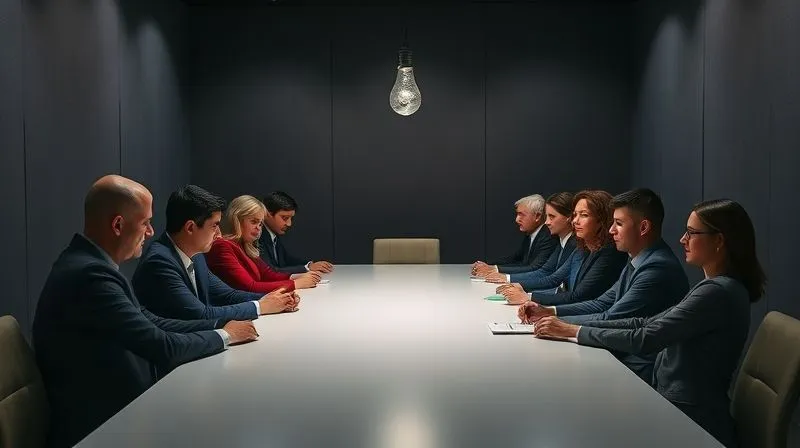
Before we can unblock anything, we must first understand why it’s blocked. Creative stagnation isn't a singular issue; it's often a symptom of deeper underlying problems within a team's dynamics, processes, or environment. In my experience, these roots are often subtle, festering unnoticed until they manifest as a complete halt in innovative thinking.
Fear of Failure and Lack of Psychological Safety
One of the most insidious inhibitors of creativity is the fear of failure. When team members worry about being judged, criticized, or penalized for ideas that don't pan out, they naturally retreat into safe, conventional thinking. This directly correlates with a lack of psychological safety, a concept championed by Harvard Business School professor Amy Edmondson, where individuals feel safe to take interpersonal risks.
Monotony and Routine
Humans are creatures of habit, and while routine can bring efficiency, it can also stifle creativity. Doing the same things, the same way, with the same people, can lead to a predictable thought process. Innovation thrives on novelty and disruption, which are inherently at odds with rigid routines. Your team might be performing tasks diligently, but if they're not encountering new stimuli or challenges, their creative muscles can atrophy.
Poor Leadership and Communication
Leadership plays a pivotal role. A leader who micromanages, dictates solutions, or fails to provide clear vision and feedback can inadvertently crush creative initiative. Similarly, poor communication channels, where ideas aren't shared effectively or feedback is unclear, can lead to misunderstandings and a reluctance to contribute. I’ve seen firsthand how a well-intentioned but stifling leader can inadvertently create a climate of creative scarcity.
Cultivating Psychological Safety: The Foundation of Creativity
If fear is the enemy of innovation, then psychological safety is its most powerful ally. It's the bedrock upon which genuine creativity and bold experimentation are built. Without it, even the most talented teams will hesitate to share nascent ideas or challenge the status quo.
Creating a 'Blameless' Environment
This isn't about avoiding accountability, but shifting the focus from blame to learning. When a new idea fails, the question shouldn't be 'Who messed up?' but 'What can we learn from this experiment?' This subtle but profound shift encourages team members to view failures as valuable data points, not personal shortcomings.
- Establish Clear Guidelines: Explicitly state that experimentation and 'intelligent failure' are encouraged. Communicate that the goal is progress, not perfection.
- Lead by Example: As a leader, openly share your own mistakes and what you learned. This vulnerability builds trust and signals that it's safe for others to do the same.
- Focus on Systems, Not Individuals: When things go wrong, analyze the process or system that contributed to the outcome, rather than singling out individuals.
Encouraging Experimentation and Curiosity
Psychological safety allows for a culture of 'what if?' Encourage your team to ask provocative questions, explore unconventional paths, and test hypotheses, even if they seem outlandish at first. Provide dedicated time and resources for these explorations.
“Innovation is not about being first to market; it’s about being first to understand the market’s needs and then iterating relentlessly.” – My experience has shown that this iterative approach, fueled by safe experimentation, is far more sustainable than a 'big bang' approach.
Case Study: How InnovateCo Reignited Their Spark
Case Study: How InnovateCo Reignited Their Spark
InnovateCo, a mid-sized product development firm, was struggling with a pervasive 'play it safe' mentality. Their innovation pipeline had dried up, and team meetings were dominated by cautious, incremental suggestions. After I consulted with them, we implemented a structured psychological safety program. This included:
- Weekly 'Failure Friday' sessions where team members shared small project setbacks and learnings, celebrated with non-alcoholic toasts.
- A 'Crazy Idea Fund' of $500 per team, per quarter, to test any concept, no matter how wild, with minimal oversight.
- Leadership openly acknowledging and even celebrating their own project missteps during all-hands meetings.
Within six months, InnovateCo saw a 40% increase in new idea submissions and launched two highly successful, previously unthinkable product features. Their team morale soared, and they effectively learned how to unblock a team's creative stagnation in innovation projects by building a foundation of trust.
Injecting Novelty: Breaking Routine and Challenging Assumptions
To truly unblock a team's creative stagnation, you must actively disrupt the patterns that lead to predictable thinking. Novelty is the fuel for new connections, fresh perspectives, and unexpected breakthroughs. It’s about intentionally introducing new stimuli into the team's environment and thought processes.
Cross-Pollination of Ideas
Encourage interactions between different departments or even external individuals. A marketing specialist might offer a completely fresh perspective on a technical engineering problem, and vice-versa. This isn't just about collaboration; it's about exposing teams to diverse mental models.
- Host 'Innovation Exchanges': Regularly rotate team members to shadow other departments for a day or week.
- Form Cross-Functional Squads: For specific innovation projects, intentionally build teams with members from wildly different backgrounds and skill sets.
- Invite Guest Speakers: Bring in experts from unrelated industries to share their challenges and solutions.
External Stimuli and Environmental Shifts
Sometimes, simply changing the scenery can work wonders. A new environment can break mental ruts and stimulate new thoughts. This could be as simple as moving a brainstorming session to a different room, or as elaborate as an off-site retreat.
- Field Trips: Visit a museum, a competitor's store, a supplier's factory, or even a public park. Observe, discuss, and challenge assumptions.
- 'Innovation Sprints' Off-Site: Dedicate a few days in a neutral, inspiring location to focus solely on a challenging problem.
- Introduce Diverse Information: Share articles, documentaries, or podcasts on topics completely unrelated to your core business to spark tangential thinking.
Structured Ideation Techniques: Beyond the Brainstorm
While traditional brainstorming has its place, it often falls short when teams are creatively stagnant. I advocate for more structured, facilitated ideation techniques that provide frameworks for generating diverse and novel ideas, pushing teams beyond their initial, obvious thoughts. These methods are crucial to effectively unblock a team's creative stagnation in innovation projects by giving them concrete tools.
SCAMPER Method
SCAMPER is an acronym for Substitute, Combine, Adapt, Modify (Magnify/Minify), Put to another use, Eliminate, and Reverse (Rearrange). It's a powerful tool for generating new ideas by prompting specific questions about an existing product, service, or process.
- Substitute: What can be replaced? (e.g., materials, people, processes)
- Combine: What elements can be merged? (e.g., ideas, functions, products)
- Adapt: What can be adjusted or borrowed? (e.g., from other industries, cultures)
- Modify/Magnify/Minify: What can be changed, enlarged, or reduced? (e.g., shape, color, features)
- Put to Another Use: How can it be used differently? (e.g., new target audience, new purpose)
- Eliminate: What can be removed or simplified? (e.g., features, rules, steps)
- Reverse/Rearrange: What if we did the opposite? (e.g., turn it upside down, reverse the process)
Mind Mapping & Reverse Brainstorming
Mind mapping is a visual tool that helps organize thoughts and explore connections. Starting with a central idea, branches extend outward with related concepts, fostering free association. Reverse brainstorming, on the other hand, flips the problem: instead of asking 'How can we solve X?', you ask 'How can we *cause* X?' or 'How can we make X worse?'. The solutions to these inverse problems often reveal novel ways to prevent or solve the original issue.
Provocation & Random Input
These techniques, often associated with Edward de Bono's lateral thinking, involve introducing seemingly irrelevant or absurd elements to shake up conventional thought. For example, picking a random word from a dictionary and forcing a connection to the problem at hand can lead to surprising insights. This deliberate disruption is key to breaking mental barriers.
| Technique | Primary Benefit | Best For |
|---|---|---|
| SCAMPER | Systematic idea generation from existing concepts | Improving existing products/services |
| Mind Mapping | Visual organization of ideas and connections | Exploring complex problems, initial ideation |
| Reverse Brainstorming | Identifying hidden problems and unique solutions | Overcoming entrenched problems, challenging assumptions |
| Random Input/Provocation | Disrupting conventional thought patterns | Breaking severe creative blocks, generating truly novel ideas |
Empowering Autonomy and Ownership: Fueling Intrinsic Motivation
One of the most powerful drivers of creativity is intrinsic motivation – the desire to do something for its own sake. When team members feel a sense of autonomy and ownership over their work, their creative output naturally flourishes. As Daniel Pink articulates in 'Drive', autonomy, mastery, and purpose are the cornerstones of motivation in the modern workplace. To truly unblock a team's creative stagnation in innovation projects, you must tap into these intrinsic desires.
Delegating Ownership, Not Just Tasks
Instead of assigning a task, delegate a problem. Give your team the freedom to explore different approaches, make decisions, and take responsibility for the outcome. This fosters a sense of accountability and empowers them to think creatively about solutions. Trust them to find the 'how'.
- Define the 'Why': Clearly articulate the purpose and desired impact of the innovation project, but leave the 'how' open-ended.
- Provide Resources: Ensure teams have the necessary tools, budget, and time to pursue their ideas autonomously.
- Step Back: Resist the urge to micromanage. Offer guidance and support, but allow them space to lead and experiment.
Implementing '20% Time' or Innovation Challenges
Inspired by companies like Google, allowing employees dedicated time (e.g., 20% of their week) to work on passion projects or explore new ideas of their own choosing can be incredibly effective. Even if not every project yields a commercial product, it keeps the creative juices flowing and can lead to unexpected breakthroughs. If 20% isn't feasible, consider shorter, focused innovation challenges or hackathons.
“Autonomy doesn't mean working alone; it means having control over your work, your team, and your contribution to a larger purpose. This sense of control is paramount for sustained creative output.” – My observation from leading diverse teams.
The Role of Leadership: Facilitating, Not Dictating Creativity
Leadership is not about having all the answers, especially in innovation. It's about creating the conditions for others to find them. An effective leader in an innovation context acts as a facilitator, a protector, and a supporter, helping to unblock a team's creative stagnation in innovation projects by removing obstacles and fostering an environment where ideas can thrive. Simon Sinek often speaks about leaders creating safe environments for their teams, and this directly applies to creative endeavors.
Active Listening and Amplifying Voices
Leaders must actively listen to all team members, not just the loudest or most senior. Create channels for quieter voices to be heard, such as anonymous suggestion boxes, structured feedback sessions, or one-on-one check-ins. When good ideas emerge, amplify them, giving credit where it's due and ensuring they receive the attention they deserve.
Providing Resources and Protecting Ideas
Innovation often requires resources – time, budget, tools, and access to information. Leaders must advocate for their teams, securing these resources and shielding them from bureaucratic hurdles or premature judgment. Protecting nascent ideas from being shot down too early allows them to mature and be refined.
- Be a Shield: Protect your team from external pressures or internal skepticism that might crush fragile new ideas.
- Be a Bridge: Connect your team with other departments, experts, or resources that can help develop their concepts.
- Be a Sounding Board: Offer constructive feedback and ask probing questions that help refine ideas, rather than dismissing them.

Embracing Failure as a Learning Opportunity
In the realm of innovation, failure is not an option; it's a certainty. The difference between successful and stagnant teams often lies in how they perceive and react to setbacks. To effectively unblock a team's creative stagnation in innovation projects, you must embed a culture where failure is seen not as an end, but as a crucial step in the learning process. This perspective shift is vital for building resilience and fostering continuous improvement.
Conducting 'Post-Mortems' and Learning Reviews
When an innovation experiment doesn't yield the desired results, resist the urge to move on quickly. Instead, conduct thorough post-mortems or learning reviews. These sessions should be blameless, focusing on what was learned, what could be done differently next time, and how the insights can inform future projects. Document these learnings systematically.
Iterative Development and Prototyping
Encourage a philosophy of rapid prototyping and iterative development. Instead of striving for a perfect, finished product from the outset, encourage teams to build minimal viable products (MVPs) or prototypes, test them quickly, gather feedback, and iterate. This approach reduces the perceived risk of failure, as each 'failure' is just a step towards refinement.
“Fail fast, fail often, but always fail forward. Every 'failed' experiment is a data point, guiding you closer to success. The true failure is not learning from it.” – This mantra has guided many successful innovation labs I’ve worked with.
Celebrating 'Intelligent' Failure
It sounds counterintuitive, but celebrating failures that provide valuable insights can reinforce a culture of experimentation. Recognize teams that took calculated risks, even if the outcome wasn't what was hoped for. This public acknowledgment reinforces the idea that learning is paramount and encourages future bold attempts.
According to a Deloitte study on innovation, organizations that embrace a culture of experimentation and intelligent failure are significantly more likely to achieve breakthrough innovations.
Measuring and Sustaining Creative Momentum
Unblocking creative stagnation is not a one-time fix; it's an ongoing process. To sustain creative momentum and ensure your team remains innovative, you need mechanisms for measuring progress, providing continuous feedback, and adapting your strategies. This proactive approach ensures your efforts to unblock a team's creative stagnation in innovation projects have lasting impact.
Tracking Innovation Metrics
While creativity can be elusive to quantify, its impact can be measured. Establish key performance indicators (KPIs) for your innovation efforts. These might include:
- Number of new ideas generated per quarter
- Percentage of ideas that move to prototyping phase
- Time-to-market for new innovations
- Employee engagement scores related to innovation
- Revenue generated from new products/services launched in the last 1-3 years
- Number of cross-functional collaborations
Regular Check-ins and Continuous Feedback Loops
Implement regular, structured check-ins specifically focused on creative output and innovation challenges. These aren't performance reviews, but rather opportunities to discuss what's working, what's blocking progress, and what support is needed. Establish feedback loops that allow team members to share their observations and suggestions on the innovation process itself.
Adapting and Evolving Your Approach
The innovation landscape is constantly changing, and your strategies to foster creativity should evolve with it. Regularly review the effectiveness of your methods, gather feedback from your team, and be prepared to adapt. What worked last year might need tweaking this year. This agility is key to long-term creative health.
| Innovation Metric | Measurement Frequency | Target Goal (Example) |
|---|---|---|
| New Ideas Generated | Quarterly | +20% per quarter |
| Prototyping Conversion Rate | Bi-annually | 25% of new ideas |
| Employee Innovation Engagement Score | Annually (Survey) | 4.0/5.0 |
| Revenue from New Products | Annually | 15% of total revenue |

Frequently Asked Questions (FAQ)
How do I deal with a dominant personality stifling team creativity? This is a common challenge. My approach involves a few steps: First, address it directly in a private, constructive conversation with the individual, explaining the impact on team dynamics. Second, implement structured ideation techniques that ensure equal airtime (e.g., 'round robin' idea sharing, anonymous submissions, or 'silent brainstorming' where ideas are written down before discussion). Third, empower other team members to speak up by explicitly stating that all voices are valued and protected. As a leader, you must actively moderate discussions to ensure everyone has a chance to contribute.
What if my team is remote – how do I foster creativity then? Remote teams can be incredibly creative! The key is intentionality. Use digital collaboration tools for virtual whiteboarding and mind mapping (Miro, Mural). Schedule dedicated 'virtual coffee breaks' or informal hangouts to foster connection. Leverage asynchronous communication for idea generation, allowing team members to contribute when their creative juices are flowing, not just during scheduled calls. Create virtual 'innovation challenges' with clear deadlines and rewards. Psychological safety is even more critical in remote settings, so ensure clear, empathetic communication from leadership.
How do I convince upper management to invest in creative initiatives? Translate creativity into business value. Present a clear business case by demonstrating how creative stagnation is costing the company (e.g., lost market share, declining product relevance, missed opportunities). Highlight the potential ROI of innovation initiatives, using examples from competitors or industry leaders. Show how psychological safety and structured ideation lead directly to tangible outcomes like new product features, process efficiencies, or increased customer satisfaction. Frame it as a strategic investment, not just a 'nice-to-have'.
What's the difference between brainstorming and structured ideation? Traditional brainstorming often relies on spontaneous, free-flowing ideas, which can be great but also susceptible to groupthink, dominant personalities, or a lack of direction. Structured ideation, on the other hand, provides specific frameworks and tools (like SCAMPER, design thinking sprints, or random word association) to guide the creative process. It's more disciplined, designed to push past initial obvious ideas, and ensures a broader, more diverse range of solutions. Both have their place, but structured methods are often more effective when facing genuine stagnation.
How long does it typically take to see results from these strategies? The timeline varies, but you can expect to see initial shifts in team dynamics and idea generation within a few weeks to a couple of months. Building a truly robust culture of innovation, however, is a continuous journey. Psychological safety, for instance, takes consistent effort to embed. Tangible innovation outcomes (e.g., new product launches) will naturally take longer, often 6-12 months or more, depending on the complexity of your industry and projects. The key is consistent application and patience.
Key Takeaways and Final Thoughts
Effectively addressing 'How to unblock a team's creative stagnation in innovation projects?' is not a simple task, but it's an immensely rewarding one. It requires a holistic approach that tackles the roots of the problem, fosters a nurturing environment, and equips teams with the right tools. From my years of experience, I can distill the most critical actions into these points:
- Prioritize Psychological Safety: It's the non-negotiable foundation for any creative endeavor.
- Inject Novelty Deliberately: Break routines and challenge assumptions to stimulate fresh thinking.
- Empower with Autonomy: Give teams ownership over problems, not just tasks, to fuel intrinsic motivation.
- Lead as a Facilitator: Support, protect, and amplify ideas, rather than dictating solutions.
- Embrace and Learn from Failure: View setbacks as valuable data, not dead ends.
- Measure and Adapt: Continuously track progress and evolve your strategies to sustain momentum.
Innovation is the lifeblood of progress, and your team holds the key to unlocking its full potential. By diligently applying these strategies, you're not just unblocking creative stagnation; you're building a resilient, dynamic, and perpetually innovative team ready to tackle tomorrow's challenges. The journey may have its bumps, but the destination – a thriving, idea-rich environment – is well worth the effort. Go forth and innovate!
Recommended Reading
- 7 Ways Small Businesses Boost Online Visibility on a Tight Budget
- 5 Proven Tactics: 'I Need to Think About It' to Close Sales
- 8 Legal Tax Strategies: Reduce Year-End Burden for Growing SMEs
- 7 Proven Strategies: Disconnecting from Remote Work When Home is the Office
- 7 Strategies: Integrating Urgent Requirements into Rigid Waterfall Plans





Comments
Leave a comment below. Your email will not be published. Required fields marked with *